
What the search for the best casino in Tasmania actually turns up
Data current as of 28 October 2026 and checked against the Australian Communications and Media Authority’s register of formal warnings and blocking actions.

Two licensed casinos operate inside Tasmania, both run by Federal Group, and that is the entire universe of legal casino play on the island. Reading the question at face value is the cleanest read of it. Anyone searching for an “online casino in Tasmania” has crossed into a federal prohibition: the Interactive Gambling Act 2001 makes it an offence to provide online casino games or online pokies to anyone physically in Australia, no matter which jurisdiction the offshore operator claims on its footer. The ACMA has spent 2026 and the years on either side of it quietly dismantling the sites that try to fill that gap, and the warnings it has published over the last three years read like a roll call of almost every brand a casual punter has seen advertised.
That makes the search less a choice between operators and more a choice between two routes. Inside Tasmania, the choice is Wrest Point in Hobart or Country Club in Launceston — both brick, both licensed, both with the same parent on the licence line. Outside them, the choice is between a blocked site and a blocked site, dressed in different colours. The page below sets out what Tasmania’s two casinos actually offer, what the federal and state rules cost a player, where to get help if the play has stopped being fun, and which offshore brands the ACMA has named by name.
Table of Contents
- Tasmania’s table games, poker machines, and the wider floor
- Comparing Tasmania’s two casinos and the licensed Australian alternatives
- The legal landscape behind the search
- What player wellbeing looks like inside Tasmania
- The licensed venues on Tasmania’s ground
- Operators the ACMA has named for offering prohibited services
- Calculating what an unregulated site actually costs a player
- The page’s read on Tasmania, the prohibition, and the offshore market
- Common questions about Tasmania’s casinos
Tasmania’s table games, poker machines, and the wider floor
The casino floor at Wrest Point and Country Club covers the same handful of traditional games — baccarat, blackjack, roulette, craps — with electronic gaming machines filling out the rest of the square metres. The catalogue is wider than the headlines suggest.
The live table game offering
Both Tasmanian casinos run live dealer tables in their gaming floors, with baccarat, blackjack and roulette on most nights of the week. Craps appears on the busier evenings and as a featured game around the calendar’s bigger dates. The wagering limits per table span the standard casino spread: low-stakes tables that keep a casual punter engaged, mid-range tables aimed at regular play, and a top tier reserved for the high-limit rooms. The casino does not publish those limits in a single published menu in the way an online casino publishes a paytable, so the limit on any given table is what it reads on the felt that night.
The roulette wheels themselves run both single-zero and double-zero layouts. Single-zero, or European, gives the house a tighter edge — 2.7 % on most bets against the 5.26 % of the American wheel. Neither casino advertises which is in play on which night; the layout sits on the table and the punter reads it before laying a chip.
Electronic gaming machines and the wider catalogue
The bulk of floor space, and most of the revenue, sits with the electronic gaming machines. Tasmania’s EGM count and game library on the casino floor is larger than what any individual venue publishes online. Each of the two casinos carries the standard progressive-jackpot range and a deep base of mid-volatility video-style games. Pubs and clubs around the state run a separate EGM licence under the Tasmanian Liquor and Gaming Commission, and that is where most Tasmanians’ interaction with the machines actually happens — not at the casino itself.
A note on the surrounding gambling landscape in Australia. South Australia runs 11,672 gaming machines across 471 venues outside Adelaide Casino (September 2023), Queensland 21,122 across 351 venues (October 2023), and the Northern Territory runs an outsized regulator compared with its population, holding the licences for 52 of Australia’s online bookmakers from a meeting room in Darwin. Tasmania sits inside the same federal prohibition as every other state and territory for online play.
Why the “online pokies Tasmania” search goes nowhere in particular
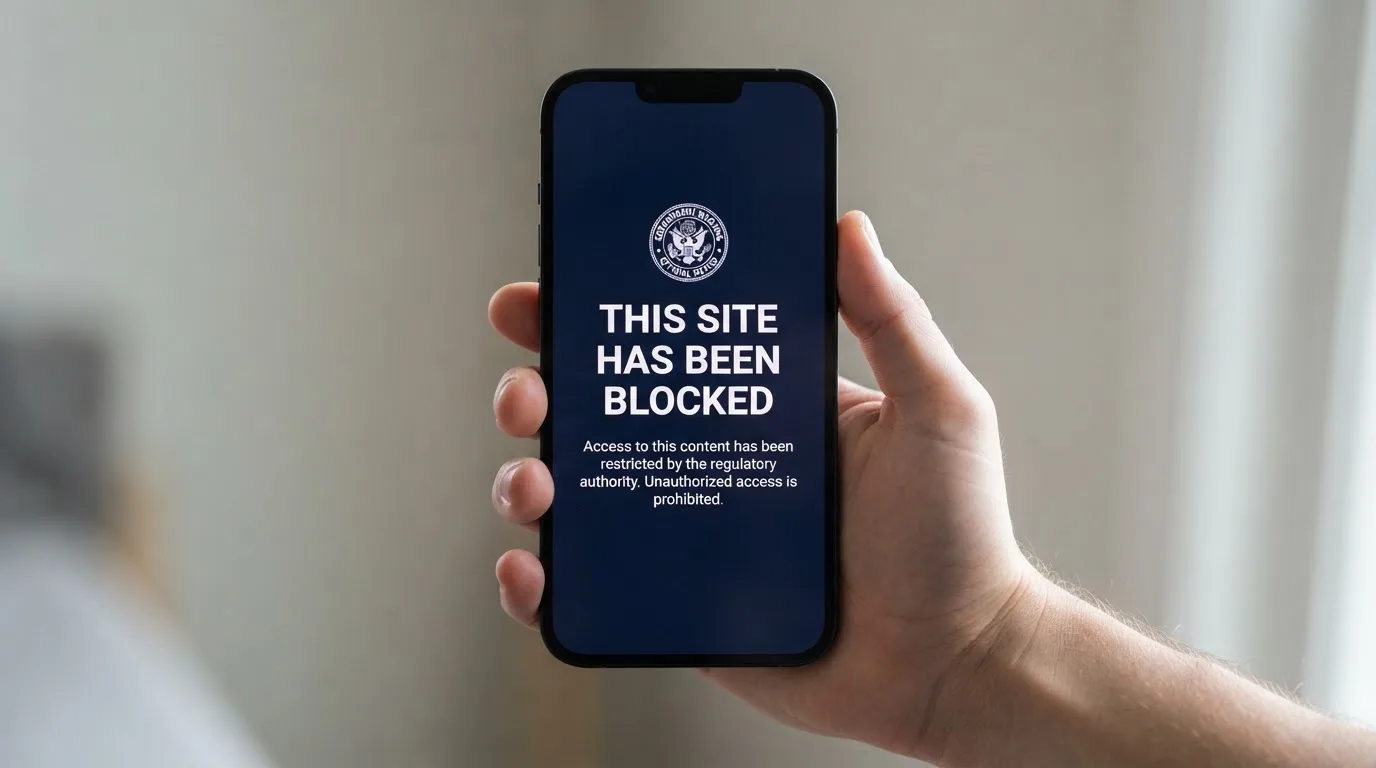
Searches that ask for online pokies from inside Tasmania read as a flat contradiction under the Interactive Gambling Act. The casino-grade game catalogue at Wrest Point or Country Club is the closest legal equivalent a Tasmanian can play; the ACMA has been issuing blocking requests since November 2019, and the sites that turn up at the top of the search results are largely among the 1,751 it has already asked Australian ISPs to block. The narrower catalogue inside the brick casino is the country’s response, and it is what is actually available.
Comparing Tasmania’s two casinos and the licensed Australian alternatives
A reader weighing the choice between Wrest Point and Country Club wants the practical comparison — distance, what’s on offer, what is around it — rather than a verdict that there can be only one. The page sidesteps a ranking the page has no business writing and lays out what each venue actually carries. Two mainland venues are useful reference points because the Tasmanian player’s only realistic on-island choice is between two Federal Group properties.
Wrest Point Hotel Casino — Hobart, the original
Wrest Point on Sandy Bay Road opened on 10 February 1973, the first legal casino in Australia, and it remains the better-known of the two. The complex is a working definition of a casino-resort: hotel rooms, multiple bars including the rooftop bar that gives the venue its most-photographed view across the Derwent, a row of restaurants, conference facilities and a gaming floor that has been extended and refurbished several times. A punter looking for a single destination with nightlife, dining and a late gaming session under the same roof finds it here. The trade-off is the cost of being inside Hobart’s tourism gravity well and the price that goes with it on a Friday evening in summer.
Country Club Casino and Resort — Launceston, the country cousin
Country Club opened in 1982 in a stately American South / Georgian design chosen for the rural setting around Launceston. The site doubles as a golf resort, with the course running through the grounds and the property’s rooms and conference centre supporting meetings trade that the Hobart property does not see. Country Club’s appeal is a quieter feel than Wrest Point, easier parking, and a more obvious family-plus-golf weekend rather than a city night out. A Hobart reader driving the two hours up the Midland Highway faces a trade-off in both directions: the drive back is not one most want to make after a late session.
Adelaide Casino and The Star Brisbane — mainland reference points
Adelaide Casino, commercially SkyCity Adelaide, sits inside the heritage-listed Adelaide railway station building on North Terrace. It runs 90 gaming tables and 950 gaming machines, holds the sole South Australian casino licence under the Casino Act 1997, and counts a maximum-bet rule that runs outside the venue but not inside it. The Star Brisbane at Queen’s Wharf replaced Brisbane’s Treasury Casino, which closed on 25 August 2024. The new venue sits inside the A$3.6 billion Queen’s Wharf precinct developed jointly by Star Entertainment Group and Hong Kong-based Chow Tai Fook Enterprises and opened in stages from 29 August 2024.
Both are reference points a Tasmanian reader only meets on a holiday. The feature that distinguishes them from Tasmania’s pair is scale: both mainland casinos are larger and run a wider table-game spread than Wrest Point or Country Club, which suits the longer-stay visitor willing to fly.
The legal landscape behind the search
Reading the legal frame is part of the answer here because the federal prohibition is what defines the field. Tasmania’s two casinos are licensed under the state’s own regime; every other site a Tasmanian might find offering casino games is offshore and is, by definition, providing a service the Interactive Gambling Act 2001 says cannot be provided to anyone in Australia.
What the Interactive Gambling Act 2001 actually does
The Interactive Gambling Act, as strengthened by the Interactive Gambling Amendment Act 2017, makes it an offence to provide online casino games, online pokies and in-play betting to a person in Australia. The individual player is not the target — the IGA goes after the provider — but a Tasmanian punter sitting on a blocked site has no Australian complaints body, no recourse if a withdrawal stalls, and a balance that may simply sit on a site an Australian ISP is no longer routing. The losses to illegal sites are estimated at around A$3.9 billion a year, and the share of gambling going through legal channels fell from 74 % in 2021 to 64 %, an indication that the offshore market is growing rather than shrinking.
How enforcement looks in practice
The Australian Communications and Media Authority investigates complaints, issues formal warnings and asks Australian internet service providers to block illegal services. The cumulative count of blocked sites since the first blocking request in November 2019 was 1,751 by June 2026, with more than 230 unlicensed services having left the Australian market since enforcement was strengthened in 2017. The June 2026 round alone blocked another 12 sites in one go. The list of named operators, by warning, is the next section’s content.
A practical point about age and identity. Inside Tasmania’s casinos, a patron proves they are 18 before being admitted to the gaming floor. Operators licensed to take Australian customers cannot accept credit cards, credit-related products or digital currency for online play, a ban that took effect on 11 June 2024. The legal deposit routes for licensed wagering are debit card, bank transfer, PayID/Osko and BPAY. An offshore site asking for a credit card or a crypto deposit is operating outside the rules and is a quick signal to leave.
What the 2026 reform changes for 2026
The Interactive Gambling Amendment (Gambling Reform) Bill 2026 passed Parliament on 19 August 2026, but its advertising and inducement measures commence on 1 January 2027. In 2026 the law is settled but not yet in force on those measures; a reader reading the page after 1 January 2027 will see a different operating environment for licensed operators, and offshore operators will find it harder to advertise to Australians at all.
What player wellbeing looks like inside Tasmania
A responsible gambling regime is part of any state that runs a casino licence, and Tasmania’s frame covers the venues, the EGM sector and the player directly. The next shelf is the practical support: the self-exclusion tools that actually bind, and the help lines that answer.

Cashless gaming and what it caps
Tasmania’s cashless gaming card reform took full mandatory effect for hotel and club poker machines in December 2025. Players carry a card rather than cash into the venue, and the card carries the loss limits the player chooses within a state-set framework: the default loss limits are A$100 per day, A$500 per month and A$5,000 per year, and a limit can be raised only after a minimum 24-hour wait that cools the impulse. The Tasmanian Liquor and Gaming Commission oversees the system, and the casino floor itself sits on a separate timetable.
A short note for the maths-curious reader. A 24-hour wait is not optional. It sits between the player and the moment of raising their own limit, and the design is the same pattern Victoria and other states have trialled: the friction is the point. A player who has decided to double their own daily ceiling on the spot is exactly the player the wait is built to slow.
BetStop and the registries that bind
BetStop, the National Self-Exclusion Register, has been live since August 2023 and binds every Australian-licensed online and phone wagering service. A punter who registers with BetStop is excluded across the legal bookmaker set for the period they nominate. The catch for a Tasmanian reading this page: BetStop does not extend to offshore online casinos. An offshore brand is not connected to the register, so a self-excluded punter who wanders onto an offshore site is on a site that does not know — and is not required to know — that the player is registered to take a break.
Gambling Helpline Tasmania and in-person support
Gambling Helpline Tasmania on 1800 858 858, run by Anglicare Tasmania’s Gamblers Help Service, provides free 24-hour phone counselling for anyone affected by gambling in Tasmania. The same service can help arrange venue-level self-exclusion at a specific casino. In-person counsellors are based in Hobart, Launceston, Devonport and Burnie, and the national Gambling Help Online service adds a chat channel for readers who would rather type than call. The basic drug is that the phone line is open at 3 a.m. as it is at 3 p.m., and the call is free from any Australian phone.
The licensed venues on Tasmania’s ground
The physical casino side of the search is the straightforward half of the answer: two licensed casinos, both run by Federal Group, both held under the same Tasmanian licence. The supporting detail — the operator’s structure, the licence history and how the company sits inside the state’s wider gambling policy — is what turns “two casinos” into a real choice for a reader deciding which to visit.
Wrest Point Hotel Casino — the visitor’s quick read
Wrest Point is at 410 Sandy Bay Road, Hobart, a 15-minute drive from the CBD on the lower slopes of the sandy bay. The complex runs hotel rooms across two towers, multiple bars (the rooftop bar the headline photograph sits on), a row of restaurants, conference and event space, and the gaming floor. The rooftop view runs across the Derwent and gives the venue its main evening photo. A reader planning a Hobart weekend sees the casino as one item on a longer list of attractions, not the single destination.
Country Club Casino and Resort — the visitor’s quick read
Country Club is at 74 Country Club Avenue, Prospect Vale, on Launceston’s southern outskirts. The property runs the 18-hole golf course, hotel rooms, dining, conference space and a smaller gaming floor than Wrest Point.
| Venue | Location | Opened | Operator |
|---|---|---|---|
| Wrest Point Hotel Casino | Hobart | 1973 | Federal Group |
| Country Club Casino and Resort | Launceston | 1982 | Federal Group |
Federal Group, the licence holder
Federal Group is the operator of record for Tasmania’s casino licence and, until August 2017, the exclusive holder of the EGM licence outside the casinos under the Gaming Control Act 1993. The company originated as the Federal Coffee Palace Company Limited, founded in Melbourne in June 1885, and the Farrell family acquired majority ownership of the holding company by 1989 and privatised the group in 1990. Federal Group remains Tasmanian family-owned. The Farrell family’s Mulawa Holdings reported profit rising from A$13.9 million to A$24.4 million in the year to 30 June 2018, on revenue of A$543 million, while paying about A$75 million in gaming taxes and licence fees to the Tasmanian government. The casino monopoly itself has been the subject of periodic political debate, but neither the venue licences nor the broader EGM structure has been re-auctioned inside the survey window.
Operators the ACMA has named for offering prohibited services
The Interactive Gambling Act prohibits the supply of online casino games to anyone in Australia; no state or territory issues such a licence. The ACMA’s enforcement record is therefore not a competitive ranking: each brand below appears because the regulator has put its own name on a formal warning against it for offering prohibited services to Australians. Subject support is reported only where research sources carry it, never as the operator’s own claim.
| Brand | ACMA action and date | Operator named by the ACMA | Subject support |
|---|---|---|---|
| RocketPlay | Formal warning, March 2026 | Pulsup Ltd (Rocketplay.com.au) | — |
| Level Up Casino | Formal warning, May 2022 | Dama N.V. | listings only |
| Woo Casino | Formal warning, March 2025 | Dama N.V. | listings only |
| Spirit Casino | Formal warning, May 2025 | Dama N.V. | — |
| National Casino | Formal warning, July 2025 | Consolutetish S.R.L. | listings only |
| Bizzo Casino | Formal warning, July 2025; earlier 2022 | Consolutetish S.R.L.; earlier TechSolutions | — |
| Ignition Casino | Formal warning, July 2025 | Bamboo Media | — |
| Instant Casino | Formal warning, February 2025 | EOD Code SRL | — |
| Jackbit | Formal warning, April 2026 | Ryker B.V. | — |
| Casino Intense | Formal warning, April 2025 | Sterplay Holding Ltd | listings only |
| Sky Crown | Formal warning, September 2022 | Hollycorn N.V. | listings only |
The table reads as the regulator’s own paperwork rather than as a shortlist: every brand on it is offering something Australia says it cannot offer. A punter weighing one against another is weighing the colour of the slot games, the size of the welcome package and the reliability of the withdrawal queue on a site the ACMA may already be asking ISPs to block. Dama N.V. appears four times across the set, an indication that the warning has not slowed the parent company’s launch cadence. Consolutetish S.R.L. appears twice. The same theme runs underneath the table.
RocketPlay — operator name published by the ACMA, not a recommendation
RocketPlay sits at the top of the list by date, having drawn a formal warning in March 2026 over Rocketplay.com.au, with the operator named as Pulsup Ltd. The warning is regulator action, not an endorsement, and the brand is on the list because the ACMA chose to put its name on it rather than because it is preferable to any other site on this page. Research carries no further specification on the brand and the row above reports it accordingly.
Level Up Casino — subject support sourced from listings, not from the operator
Level Up Casino drew a formal warning in May 2022, with Dama N.V. named as the operator. The subject-support field is reported as listings-only because the only sources are catalogue listings and reference pages the ACMA does not curate itself. The verdict on the brand sits with the warning on the regulator’s record: an Australian cannot legally play here, and the site is not connected to BetStop or to the Tasmanian harm-minimisation frame.
Woo Casino — same parent, separate warning
Woo Casino drew a formal warning in March 2025, again with Dama N.V. named as the operator. Dama N.V. has now been warned four times across the page for separate brands, an indication that the parent has continued to launch and rebadge rather than wind down its Australian-facing activity. Subject support is again listings-only.
Spirit Casino — the third Dama N.V. warning inside twelve months
Spirit Casino drew a formal warning in May 2025, with Dama N.V. named as the operator, two months after the Woo Casino warning. The cadence of warnings is the verdict the regulator is publishing: a parent company is being warned for each new brand rather than once and told to clean up. No further specification is available and the row above reports none.
National Casino — Consolutetish S.R.L., first warning
National Casino drew a formal warning in July 2025 with Consolutetish S.R.L. named as the operator, part of a batch that also covered Bizzo Casino and Ignition Casino. Subject support is listings-only because research carries no further specification. A punter on this site has no path through BetStop, no path through the Tasmanian Liquor and Gaming Commission, and no path through any Australian consumer-protection regime.
Bizzo Casino — two warnings, two operators, eight years apart
Bizzo Casino drew a formal warning in July 2025 with Consolutetish S.R.L. named as the operator, and an earlier warning in 2022 was issued to TechSolutions (CY) Group Limited and TechSolutions Group N.V. The 2022-to-2025 gap is the part of the story that matters: the brand carried the warning under one corporate structure and then surfaced again under a different one. A punter who knew the 2022 warning and then sees the 2025 one is looking at the same brand in a new wrapper.
Ignition Casino — Bamboo Media as operator
Ignition Casino drew a formal warning in July 2025 with Bamboo Media named as the operator, in the same enforcement batch as National Casino and Bizzo Casino. Subject support is no-data, and the row above reports it as such. The brand carries no Australian consumer-protection route regardless of which direction a punter reads it.
Instant Casino — the EOD Code SRL warning
Instant Casino drew a formal warning in February 2025 with EOD Code SRL named as the operator. Subject support is no-data, and the page reports it accordingly. Instant Casino is the kind of brand that tends to appear on affiliate review sites irrespective of the ACMA’s record; the regulator’s posture is unchanged.
Jackbit — Ryker B.V., April 2026
Jackbit drew a formal warning under the Interactive Gambling Act in April 2026 with Ryker B.V. named as the operator, in the same enforcement batch as CasinOK. Subject support is no-data. The brand is recent on the warning list and any punter finding it today is reading the same record.
Casino Intense — Sterplay Holding Ltd, April 2025
Casino Intense drew a formal warning under the Interactive Gambling Act in April 2025 with Sterplay Holding Ltd named as the operator. Subject support is listings-only. The row reports the regulator’s record without resolving into anything the brand says about itself.
Sky Crown — Hollycorn N.V., the September 2022 warning
Sky Crown drew a formal warning under the Interactive Gambling Act in September 2022 with Hollycorn N.V. named as the operator, the same enforcement batch that covered the operator’s Blue Leo service. Subject support is listings-only because research carries no further specification. Sky Crown is the oldest warning on the table.
What the cadence of warnings actually tells a reader
The regulator’s enforcement pace reflects how frequently the ACMA has been issuing names on warnings. From the date of the first blocking request in November 2019, the regulator’s running total reached 1,751 blocked sites by June 2026 — a rate of roughly a quarter of the cumulative count per year over the six-and-three-quarter-year window, with the share of monthly rounds varying widely. The set of names above is not a who-is-who of the offshore market; it is a sample of the brands the regulator has chosen to call out by name, and the maths shows the regulator is calling more out, not fewer.
Calculating what an unregulated site actually costs a player
The math on offshore play is not a bonus calculation in the conventional sense — no welcome package is on offer from any of the brands above because the ACMA’s record does not speak in those terms — but the cost argument is part of the answer. The expected-loss equation, run against the only known variables for a typical session of online pokies, gives a numerical handle on what sits behind the marketing headline.
The session cost the house takes, even before the regulator turns up
For a single session, expected loss equals the number of spins played times the stake per spin times one minus the return-to-player rate. Plug the page’s variables in: 200 spins at A$1 per spin on a 95 % return-to-player game gives an expected loss of 200 × A$1 × (1 − 0.95), or A$10 across the session. That is the house edge working as advertised. The site may add a daily 5-second interval between spins, the regulator may add a blocked site the next morning, and the player still walks out A$10 lighter on average.
What the rate of blocking tells us about the offshore pipeline
The blocking rate is the page’s prescribed calculation. The running total of blocked sites was 1,751 by 26 June 2026, and the first blocking request was in November 2019. The arithmetic is roughly 1,751 blocked sites spread over 80 months, an average of about 22 blocked sites per month since enforcement began — though the rate is not steady. The June 2026 round alone added 12, and other rounds have added in single digits. The page states the result as a band: somewhere in the order of low double digits to several dozen sites blocked per month across the period the ACMA has been enforcing, with the higher end of the band hit when the regulator runs larger batches. The implication is that the offshore pipeline is large enough to keep the ACMA publishing warnings at that run rate, not that it is shrinking.
Why the calculation never ends at a “good deal”
None of the offshore brands above carries an Australian consumer-protection route, none connects to BetStop, and none of them sits inside the Tasmanian cashless-gaming limit frame. A punter on a blocked site has lost the balance on it as well as the night’s play. The expected-loss arithmetic gives a ballpark figure for a typical session; the regulator’s blocking record is the part the arithmetic cannot see. Both point the same direction.
The page’s read on Tasmania, the prohibition, and the offshore market
The two casinos on the island are the only legal answer to the search. Wrest Point suits a Hobart weekend; Country Club suits a quieter break with a round of golf; neither suits a Tasmanian punter looking for an online casino, and the Interactive Gambling Act is the reason. A reader turning up here in 2026 has read the basic picture: two venues, one federal prohibition, a long list of offshore brands the ACMA has put on notice.
For Tasmanians visiting a casino for the first time, Wrest Point is the destination — Australia’s first legal casino, with the rooftop view and the highest-profile rooms. Country Club is a different shape of trip and works for anyone whose itinerary is built around the resort rather than the gaming. A mainland Australian weighing Adelaide Casino and the Star Brisbane will find both on a larger scale than either Tasmanian property; both carry the same federal prohibition on offshore play as Tasmania.
The bigger point is the part of the page that is not about either venue. The offshore market is large enough to take A$3.9 billion a year from Australians, and the legal share of total gambling has fallen from 74 % in 2021 to 64 %. None of that share is going through legal Tasmanian online casinos, because none such exists. What is increasing is the set of warnings on the ACMA register, the set of brands the regulator has named, and the size of the blocking round the regulator has been running in 2026.
Common questions about Tasmania’s casinos
What is the name of the main casino in Tasmania?
Tasmania has two licensed casinos rather than a single main one. Wrest Point Hotel Casino in Hobart opened on 10 February 1973 and was Australia’s first legal casino. Country Club Casino and Resort in Launceston opened in 1982 and is run by the same parent, Federal Group.
Where is the casino in Tasmania located?
Wrest Point is at 410 Sandy Bay Road, Hobart, on the lower slopes of the bay. Country Club is at 74 Country Club Avenue, Prospect Vale, on Launceston’s southern outskirts. Both are about 15 minutes from their respective city centres by car.
What is the minimum age to enter the casino in Tasmania?
The minimum age to enter the gaming floor is 18, set by Tasmanian licence conditions and matched by the federal Interactive Gambling Act for online play. Proof of age is required at the entrance and the casino checks identification before admitting a patron to the gaming floor.
Does the casino in Tasmania offer table games such as blackjack and baccarat?
Both Wrest Point and Country Club run live dealer tables for baccarat, blackjack, roulette and craps, with the limit and the felt varying by night. The roulette wheels run both European single-zero and American double-zero layouts. The machine side of the floor carries a broad catalogue of electronic gaming machines and progressive jackpots.
Are there hotels within walking distance of the casino in Tasmania?
Yes. Wrest Point is its own hotel-and-casino complex on Sandy Bay Road with rooms, bars and restaurants under the same roof. Country Club at Prospect Vale is its own resort with rooms, restaurants and a golf course. Both venues run dedicated on-site accommodation rather than relying on nearby hotels.
Can Australians legally play at an online casino instead of visiting the casino in Tasmania?
No. The Interactive Gambling Act 2001, as strengthened by the Interactive Gambling Amendment Act 2017, makes it an offence to provide online casino games to a person in Australia. The ACMA enforces that prohibition by issuing formal warnings, asking ISPs to block sites and publishing a running total of blocked services — 1,751 sites by 26 June 2026. The wagering side that is licensed under Australian law is racing, sport and lotteries, not casino games.