
Lightning Link online pokies in Australia — the cost of playing what the law already prohibits
The cabinet game is real. The online version is not, in any way an Australian resident can lawfully take it. That gap is what this page is about — the price of the offer, not the offer itself, and what the ACMA’s enforcement record says the reader is actually paying for when one of these sites loads.
Current as of 28 October 2026. Licence claims and ACMA actions verified against the Australian Communications and Media Authority register and the formal warnings the ACMA has published.
Table of Contents
- Why a Lightning Link online version is not a lawful product for an Australian player
- Landsca
- What the ACMA blocking record actually measures
- What a Lightning Link pokie actually is, and why its bonus design is the cost
- The mobile and app version of the same problem
- What “promo codes” and “no deposit bonuses” are worth on a site that cannot lawfully take the deposit
- What a player in Australia can lawfully do instead
- The arithmetic of an offer the law has already decided against
- The state-by-state rules the lawful version sits inside
- The Northern Territory’s role, and what it does not license
- What the reader pays for in plain terms
- What changes for the reader on 1 January 2027
- How the ACMA’s enforcement arc has actually shaped the market
- Frequently asked questions about Lightning Link online pokies in Australia
Why a Lightning Link online version is not a lawful product for an Australian player
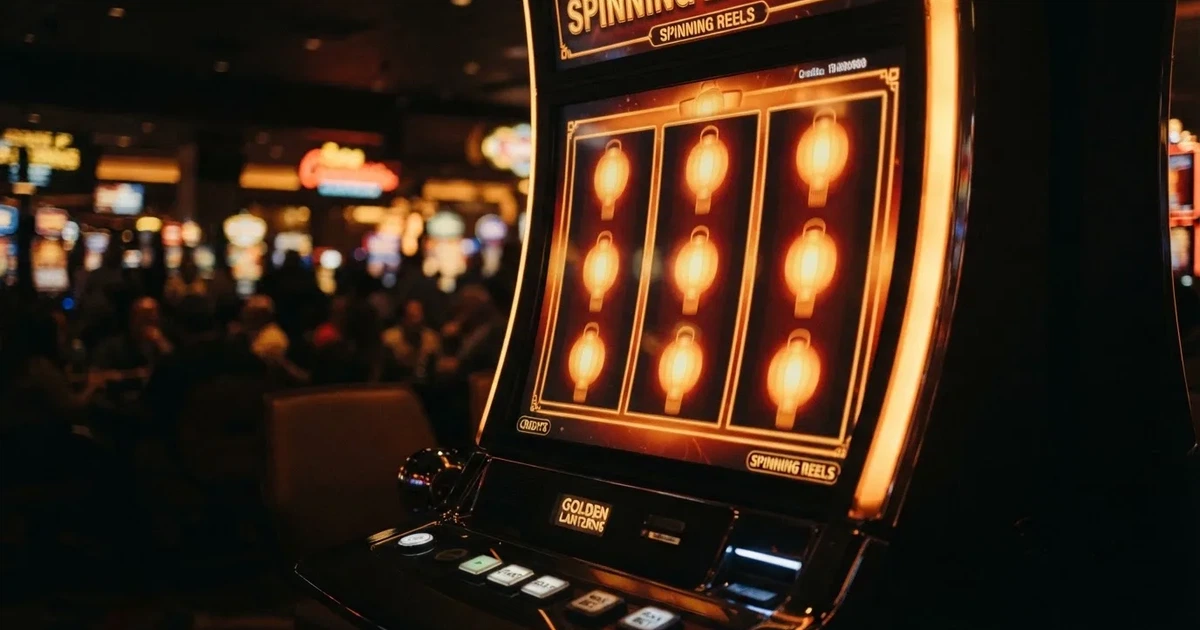
The land-based Lightning Link cabinet is licensed by Aristocrat for venues in Australia and overseas. Online, the game is sold under the same brand by Aristocrat’s online arm and by aggregators, but that licence is a supply licence: it authorises the operator to run the game, not the player in Australia to play it.
The Interactive Gambling Act 2001, strengthened by the Interactive Gambling Amendment Act 2017, makes it an offence to provide an online casino game or online pokies to a person physically in Australia. The federal prohibition does not depend on which licence the offshore site displays in its footer. It applies because the recipient is in Australia when the wager is placed. Wagering on a race or sporting event placed before the event is licensable; a spinning reel is not.
The National Self-Exclusion Register — BetStop — only binds Australian-licensed wagering services. It does not bind offshore casinos. The National Gambling Helpline on 1800 858 858 is the practical safety net for anyone who has been playing on an offshore site and wants to step back.
Landsca
The eleven brands the ACMA has formally warned over offering this product
A formal warning under the Interactive Gambling Act is not a poll result. It is the regulator naming an operator and stating that what it is offering to Australians is a prohibited interactive gambling service. A “Curacao licence” or “Anjouan licence” footer on the site does not change the warning. The following brands have all received one. None of them can lawfully offer an online Lightning Link pokie to a person in Australia.
The table below uses the regulator’s own date for the most recent formal warning. Where the ACMA has named the same operator more than once, both dates are given.
| Brand | ACMA action and date | Operator named by the ACMA | Subject support |
|---|---|---|---|
| RocketPlay | Formal warning, March 2026 (earlier May 2022 over Dama N.V.) | Pulsup Ltd (RocketPlay) | No data on any Lightning Link-specific offering |
| Level Up Casino | Formal warning, May 2022 | Dama N.V. | Listed in aggregator directories only |
| Woo Casino | Formal warning, March 2025 | Dama N.V. | No data |
| Spirit Casino | Formal warning, May 2025 | Dama N.V. | No data |
| National Casino | Formal warning, July 2025 | Consolutetish S.R.L. | Listed in aggregator directories only |
| Bizzo Casino | Formal warning, July 2025 (earlier 2022 over TechSolutions) | Consolutetish S.R.L. | No data |
| Ignition Casino | Formal warning, July 2025 | Bamboo Media | No data |
| Instant Casino | Formal warning, February 2025 | EOD Code SRL | No data |
| Jackbit | Formal warning, April 2026 | Ryker B.V. | No data |
| Casino Intense | Formal warning, April 2025 | Sterplay Holding Ltd | Listed in Australian press and aggregator material only |
| Sky Crown | Formal warning, September 2022 | Hollycorn N.V. | No data |
Every brand in the table has the same underlying problem. A “Curacao-licensed” or “Anjouan-licensed” footer is a business-licence claim, not an Australian consumer-protection claim. The federal prohibition applies to the service offered to the Australian recipient, not to the licence displayed at the foot of the page.
What changes between the brands, if anything
The “operator named by the ACMA” column is the only one that varies in any way that matters. The entity on the warning notice is the one the regulator has identified as offering the prohibited service; on some sites that entity is the trading company (Hollycorn N.V. for Sky Crown and Blue Leo), on others it is a regional wrapper the operator has put in front of itself. The wrapper does not shield the player. The ACMA names the parent where the regulator can establish the link, and the prohibition applies to whoever is actually offering the service.
The fact that RocketPlay has two warnings — one against Pulsup Ltd in 2026, one against Dama N.V. in 2022 — is not a footnote. It is the pattern that produces the rest of this page: when an operator is warned, it rebrands or restarts under a new shell and the cycle starts again.
What the ACMA blocking record actually measures
The 26 June 2026 round is the published snapshot. Since the first blocking request in November 2019, the ACMA had asked Australian ISPs to block 1,751 illegal gambling and affiliate marketing sites. In that round alone, twelve new domains were added: 7Signs, ChromaBet, Donbet, Duospin, Freshbet, Slots Gem, Jacks Club, Lucky Start, Pointsbetz, Spinrise, Vinyl Casino and Wildsino.
Over the seven years from the November 2019 first request to the June 2026 round, the ACMA’s blocking program has added about 250 sites per year on a straight-line count — 1,751 sites divided by roughly 6.6 years. A blocking request takes weeks to be effective at the ISP level; a new domain often appears within the same quarter. The arithmetic the ACMA’s own record supports: at this rate of new appearances, the operator behind any given blocked site is rarely more than one rebrand ahead of the next request.
The “230 unlicensed services that have left the Australian market since 2017” figure covers a different category: services the ACMA has not necessarily blocked but which have withdrawn from Australian-facing traffic after regulator action. A site that is no longer accepting Australian deposits is not necessarily gone — many reappear under a different brand on the same platform.
The estimate from H2 Gambling Capital’s 2025 report puts annual Australian losses to illegal sites at about A$3.9 billion. The same report notes that the share of Australian gambling going through legal channels fell from 74 per cent in 2021 to 64 per cent in 2025. The two numbers point in the same direction: more money is moving through offshore sites, not less, and the Australian-licensed wagering services are losing share rather than winning it back. A reader who finds one of the brands in the table above is at the receiving end of that trend.
What a Lightning Link pokie actually is, and why its bonus design is the cost
A Lightning Link cabinet — the Aristocrat format that has been in Australian pubs and clubs since the late 2010s — is a five-reel slot with a “hold-and-spin” bonus round that activates when six or more orb symbols land on the reels. The orbs lock in place, the other positions respin, and the bonus continues until three consecutive spins produce no new orb. The grand jackpot, the major, the minor and the mini each sit on their own orb symbol, and the grand jackpot fills the screen when all fifteen positions are filled.
This is the part that decides what the reader is paying for, and it is worth describing in plain terms because the marketing wraps it in celebration.
The hold-and-spin round is built to extend play. Each respin is a fresh chance to fill a position; the round does not time out by clock but by absence, which is the design. A “feature” that ends only when the player fails three times in a row is not an intermission — it is the main course of the session. A fixed time limit matters more here than any in-game prompt to keep playing, because the design is to keep prompting.
The minimum return-to-player the cabinets must hit varies by jurisdiction: 85 per cent in New South Wales, the Northern Territory and Queensland, 87 per cent at Crown Melbourne, 87.5 per cent in South Australia and 90 per cent in Western Australia. These are floors, not averages; individual cabinet configurations run above them. None of them changes what the hold-and-spin round is doing inside a single session.
The mobile and app version of the same problem
A Lightning Link app on a phone is offering the same unlicensed activity as a desktop site. The packaging changes; the offer does not. An app the user installs from a store outside the official Google Play or Apple App stores — because neither of those will carry an unlicensed casino product to an Australian audience — is the same product with a launcher icon on the home screen.
This is worth saying because the app form is the one that most often reaches a reader who is not looking for it. Affiliate pages describe a “Lightning Link pokies app” with screenshots; the reader downloads; the wallet is funded by credit card or crypto, both of which are illegal as a deposit route on a licensed Australian wagering service. The deposit side is the second hit of the same problem: the law that prohibits the game also prohibits the payment method that funds it, and an offshore site that accepts either one is operating outside the Australian rules in both respects.
A licensed Australian wagering service can take a debit card, a bank transfer, PayID/Osko or BPAY. It cannot take a credit card, a credit-related product or a crypto deposit. Penalties for a licensed operator taking the wrong payment are up to A$247,500. The same rule does not bind an offshore casino; the offshore site will take whatever the reader offers, because the offshore site is not bound by the rule at all.
What “promo codes” and “no deposit bonuses” are worth on a site that cannot lawfully take the deposit
The marketing layer of these brands is built around the bonus. A “Lightning Link casino no deposit bonus” headline is a sales page for a site the ACMA has warned. The phrase has currency because it appears on hundreds of affiliate pages; it has no value because the offer sits on top of a service that is itself prohibited, and the consumer protections that would let the reader enforce any of its terms are absent.
A reader who reaches a “free spins” or “no deposit” landing page is the target of an industry whose own regulator has decided that the product is unlawful. The cost of chasing that offer is not the bonus — the bonus is the hook. The cost is what happens after: deposits that cannot be enforced against, withdrawals that the offshore operator can delay on any pretext, and a site that can be blocked by the ACMA at any time with the balance still on it.
The Australian Communications and Media Authority’s blocking program is not theoretical. As of the 26 June 2026 round, 1,751 sites have been blocked since November 2019. The brand on the warning notice does not have to keep the site up for the reader to lose — it just has to keep accepting deposits until the ACMA’s next blocking request lands.
What a player in Australia can lawfully do instead
The legally licensed Australian product for the same itch is a land-based pokie in a pub, club or casino, or an online wager on a race or sporting event placed before the event with a Northern Territory-licensed bookmaker. There is no licensed online casino product in Australia.
The clubs and pubs where the Lightning Link cabinet actually sits are licensed state by state. New South Wales had 87,298 gaming machines outside casinos across 2,195 venues in June 2023, with player losses of A$8.18 billion in 2022-23. Queensland had 21,122 machines in 351 venues in October 2023; Victoria had 26,380 outside Crown Casino in 488 venues under a 30,000-machine statewide cap. The hold-and-spin cabinet lives in those venues under the same name; the reader who wants the game plays it there, where the state-based regulator governs the machine.
For someone who has already been playing offshore, the practical steps are simple and free. The National Self-Exclusion Register — BetStop — has been live since August 2023. It binds Australian-licensed wagering services; an offshore casino is not connected to it, but BetStop covers the licensed channel the reader might otherwise drift back toward. The National Gambling Helpline on 1800 858 858 is free, 24/7, with chat at Gambling Help Online.
The arithmetic of an offer the law has already decided against
A “Lightning Link casino no deposit bonus” offered by a brand on the ACMA list gives the reader the cost of an offshore casino at the level of the offer, not the bonus. The arithmetic that matters is not what the bonus pays out — the bonus is a marketing line. The arithmetic is what the reader loses if the offshore site holds the balance and the ACMA’s next blocking request lands.
At the ACMA’s published rate since November 2019 — 1,751 sites blocked in roughly 6.6 years, twelve new domains added in the 26 June 2026 round alone — the reader who funds a wallet on a warned site is funding a wallet the ACMA has already decided is going to be hard to reach. A “no deposit bonus” that the reader treats as free is being paid for by the reader’s time, the marketing pages that routed them there, and the deposit that the marketing page converts the bonus into once the wagering requirement has run.
The bonus is the bait. The wagering requirement is the hook. The site is the line. The reader pays for all of it in the same session.
What the regulator’s record actually says about the eleven brands
None of the brands in the table above is licensed to offer an online casino product to a person in Australia. The “licence” each one displays in its footer is a supply-side licence: it authorises the operator to run the game in the jurisdiction where the licence was issued, not to send it to an Australian recipient.
The April 2025 warning to Sterplay Holding Ltd over Casino Intense; the March 2025 warning to Dama N.V. over Woo Casino; the May 2025 warning to Dama N.V. over Spirit Casino; the February 2025 warning to EOD Code SRL over Instant Casino; the July 2025 warnings to Bamboo Media over Ignition Casino and to Consolutetish S.R.L. over National Casino and Bizzo Casino; the April 2026 warning to Ryker B.V. over Jackbit and CasinOK; the March 2026 warning to Pulsup Ltd over RocketPlay: these are the regulator’s own dates, in the regulator’s own register. None of them is contested by the operator. None of them is a request — each is a published formal warning.
A formal warning under the Interactive Gambling Act 2001 is the step before the ACMA asks the ISPs to block. The next step after the warning is, on the ACMA’s published pattern, a blocking request. RocketPlay has been warned twice and is still operating; the ACMA’s pattern is to issue the warning first and add the blocking request later.
The state-by-state rules the lawful version sits inside
The land-based cabinet is not unregulated. Each state and territory sets its own floor on return-to-player and its own venue rules.
| Jurisdiction | Minimum Return-to-Player (RTP) |
|---|---|
| New South Wales | 85% |
| Victoria | 85% (87% Crown Melbourne) |
| Queensland | 85% |
| Northern Territory | 85% |
| Australian Capital Territory | 87% |
| Tasmania | 87% |
| South Australia | 87.5% |
| Western Australia | 90% |
New South Wales sets 85 per cent as the minimum return-to-player and operates the largest installed base. Victoria matches the 85 per cent floor outside Crown Melbourne and runs a 30,000-machine statewide cap; the 87 per cent minimum applies at Crown Melbourne itself. Queensland, the Northern Territory and the Australian Capital Territory set their own floors in the 85-87 per cent band. Tasmania holds at 87 per cent. South Australia at 87.5 per cent. Western Australia at 90 per cent — the most player-favourable floor in the country, which is also the state that banned the machines outside the casino when Crown Perth opened in 1985.
Tasmania planned nation-leading mandatory pre-commitment cards for its machines; the implementation was delayed into late 2025. Western Australia continues to permit poker machines only at Crown Perth, where the count has grown from about 200 in 1985 to roughly 2,500. Federal Group held a monopoly licence over all of Tasmania’s machines from 1968 until November 2021, when the legislation moved oversight to the Tasmanian Liquor and Gaming Commission.
This is the regulatory frame around the cabinet the reader is being sold online. None of it applies to the offshore site. The offshore site is outside it by design.
The Northern Territory’s role, and what it does not license
The Northern Territory Racing and Wagering Commission regulates 52 of Australia’s online bookmakers, including Sportsbet, Bet365 and Ladbrokes. They are licensed in the Territory for tax reasons. The commission has no full-time staff and meets once a month in Darwin.
What the NTRWC does license is wagering on races and sporting events placed before the event. It does not license online casino games or online pokies. No state or territory in Australia does. The Northern Territory’s role is to be the licensor of the licensed product, not the licensor of every product the offshore market happens to put in front of an Australian reader.
The two products live in different legal universes, even when they sit on the same site. A wager on Saturday’s race placed with a Northern Territory-licensed bookmaker is a licensable activity. A spin on a Lightning Link cabinet on the same page is a prohibited one. The bookmaker’s licence does not licence the second product; the second product is offered because the operator has decided to take the risk of the warning.
What the reader pays for in plain terms
A reader who clicks through to one of the brands in the ACMA table and funds a wallet is paying for several things at once. The bonus is the smallest of them. The wagering requirement is what the bonus converts into. The offshore operator’s freedom to delay the withdrawal is what the wagering requirement buys the reader time against. The ACMA’s next blocking request is the cliff at the end of the runway. The reader pays for all of it with the deposit.
The choice is not between playing and not playing. The choice is between a land-based cabinet in a state-regulated venue, with the consumer protections that go with it, and an offshore site on the ACMA’s warning list, with the absence of those protections.
The lawful cabinet costs the reader the published minimum return-to-player and a session they can step away from. The offshore version costs the reader the same plus the absence of any recourse.
What changes for the reader on 1 January 2027
The Interactive Gambling Amendment (Gambling Reform) Bill 2026 passed Parliament on 19 August 2026. Its advertising and inducement measures commence on 1 January 2027. On a 2026 page, the reform is law with a start date. The inducement provisions will tighten the marketing layer around these brands; they do not change the prohibition on the underlying service, which has been in force since 2017.
What changes on 1 January 2027 is the surface area around the offer — the affiliate page, the bonus headline, the “no deposit” landing. What does not change is the offer itself. The reader who is reading this in 2027 will see the same warning list and the same underlying prohibition.
How the ACMA’s enforcement arc has actually shaped the market
The November 2019 first blocking request was the start of the ACMA’s published program. The 2017 amendments to the Interactive Gambling Act were the legal foundation. The August 2023 launch of BetStop added the consumer-protection layer. The 11 June 2024 ban on credit cards and crypto as deposit methods on licensed wagering tightened the payment side. The 26 June 2026 blocking round is the most recent published total.
Across the seven years from 2019 to 2026, the ACMA’s blocking program has reached 1,751 sites. The H2 Gambling Capital 2025 estimate puts the illegal-site loss figure at about A$3.9 billion a year, with the share going through legal channels falling from 74 per cent in 2021 to 64 per cent. The arc has been: stronger law, more blocking, more rebrand, more new domains. The reader at the end of the arc is the one being asked to fund a wallet on a site the regulator has already decided is going to be hard to reach.
Frequently asked questions about Lightning Link online pokies in Australia
Is it legal to play Lightning Link online pokies for real money in Australia?
No. The Interactive Gambling Act 2001 prohibits offering online casino games and online pokies to a person in Australia. No state or territory licenses the activity. The offshore licence the site displays in its footer does not change the federal prohibition; the prohibition applies to the recipient in Australia. The individual player is not prosecuted, but the offer is unlawful and the offshore site gives no Australian consumer protection.
What triggers the hold-and-spin bonus round on a Lightning Link machine?
Six or more orb symbols on the reels. The orbs lock in place, the other positions respin, and the round continues until three consecutive spins produce no new orb. The grand, major, minor and mini jackpots each sit on their own orb symbol; the grand fills the screen when all fifteen positions are locked.
Is Lightning Link available at regulated land-based venues in Australia?
Yes. The Aristocrat cabinet is licensed state by state and operates in pubs, clubs and casinos across the country. New South Wales, Queensland, Victoria and the other jurisdictions each set their own minimum RTP floor; Western Australia runs the machines only at Crown Perth. The land-based cabinet is the lawful version of the game.
Do Lightning Link promo codes work the same way across different cabinet themes?
The promo-code marketing on offshore sites is not connected to the Aristocrat cabinet. The codes advertised on affiliate pages are marketing tokens for an unlawful product. The cabinet itself has no promo code; it has a published paytable and a state-regulated minimum return-to-player.
Does a Lightning Link app on a phone offer a different game to the desktop version?
No. The app is the same unlicensed offer with a launcher icon. Neither the official Google Play nor the Apple App store will carry an unlicensed casino product to an Australian audience, so the app reaches the phone through the same channels as the desktop site. The deposit side is the same: credit cards and crypto are illegal as a payment method on a licensed Australian wagering service.
What separates the different Lightning Link reel sets from each other?
Each reel set carries its own paytable, its own progressive-jackpot tier structure and its own bonus-round behaviour. The hold-and-spin mechanic is shared; the four jackpots (mini, minor, major and grand) sit on each theme; the volatility profile differs from set to set. The aggregate published RTP varies between themes and between jurisdictions.