
Offshore casinos for Australian players: the legal landscape in 2026
The phrase “offshore casino” gets used as if it were a neutral category of website, the way “international hotel” or “overseas bank” describes a place someone might choose. For Australian readers it is not that. Under the Interactive Gambling Act 2001, providing such services to anyone physically in Australia is a prohibited interactive gambling service, and no state or territory issues a licence for it. The Australian Communications and Media Authority enforces that prohibition by issuing formal warnings to operators and asking Australian internet service providers to block sites; an offshore site can lose access with a balance still on it, and the consumer has no Australian complaints body to turn to if a withdrawal is refused. Any page that promises a clean shortlist of offshore casinos for Australians is, at best, missing the point of the law it sits inside.
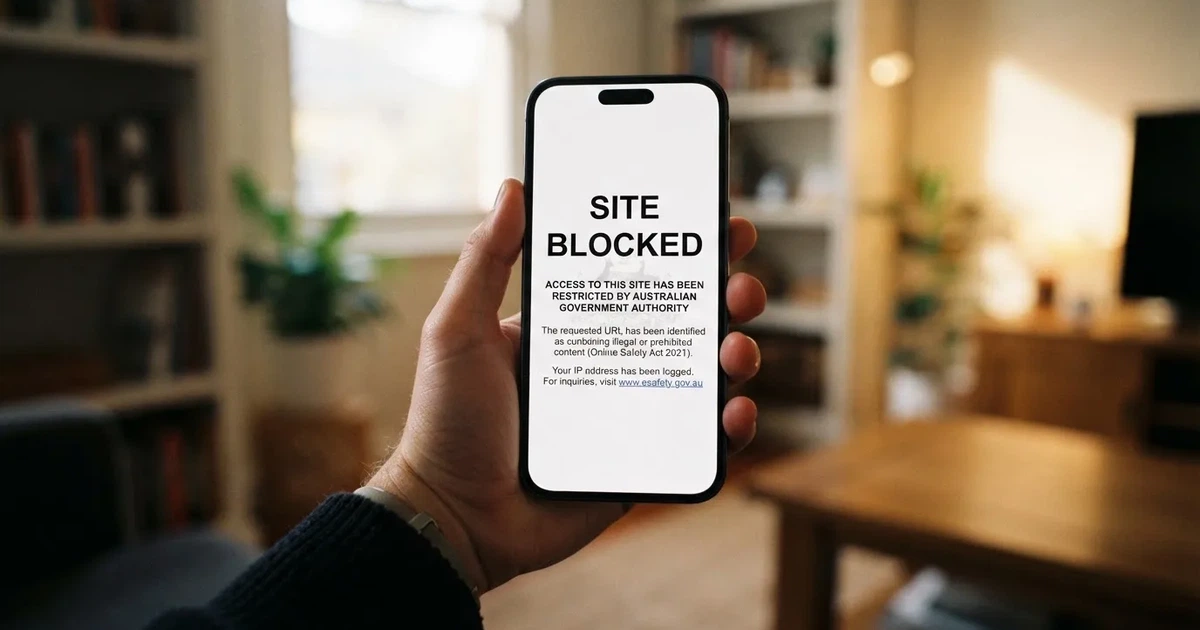
This page does the work the search query actually asks for. It lays out what offshore means here, who has been warned and when, what the ACMA blocking record looks like in 2026, and — the part that matters for a reader — what is lawful instead. Eleven brands the ACMA itself has acted against sit in a comparison block so the record is on one page, not buried in PDF attachments. A reader who already understands the position and only wants the comparison can drop straight to that block; a reader who has not yet met the statute can read it through.
Current as of 28 October 2026; licence and enforcement claims cross-checked against the Australian Communications and Media Authority’s published formal warnings register.
Table of Contents
- What “offshore casino” actually means in Australia
- The legal frame, plainly
- Responsible play: what is actually available to an Australian reader
- The ACMA enforcement record: 11 brands, on one page
- What is lawful instead: the alternatives an Australian reader actually has
- The blocking rate, and what it implies for a reader
- What to look for in a comparison of offshore casinos, and what the comparison will not show
- Where the ACMA’s record ends, and what is not on the page
- A reader’s checklist before any decision
- Closing the comparison
- Frequently asked questions
What “offshore casino” actually means in Australia
“Offshore” is not a marketing label. It is the position a casino holds because no Australian jurisdiction can issue it the licence it would need to take Australian customers legally. The Interactive Gambling Act 2001 — strengthened by the Interactive Gambling Amendment Act 2017 — prohibits the supply of online casino games, online pokies and in-play betting to a person in Australia. Wagering on sport and racing placed before the event is licensable, and is licensed in practice by the Northern Territory Racing and Wagering Commission, a body with no full-time staff that meets once a month in Darwin. Lotteries and keno are also licensable. Online casino is not, anywhere in the country.

So when an Australian-facing casino calls itself “Curacao-licensed” or “Anjouan-licensed” or “licensed in Kahnawake”, that licence exists, but it is not an Australian licence, and the operator is therefore offering a prohibited interactive gambling service to anyone in Australia who signs up. The licence on the wall is real, the activity it permits is not lawful here. A reader who arrives at such a site from an Australian IP address is being offered something the provider is not allowed to offer.
That distinction does the work of every comparison that follows. There is no “best licensed” offshore casino for Australians, because the thing being licensed is not the activity the reader would be doing. There are only operators the ACMA has warned or blocked, and operators it has not got to yet.
How the prohibition reaches a player
The IGA targets the provider, not the punter. An Australian who plays at an offshore casino is not personally at risk of prosecution; what they lose is the protection layer Australian regulation was meant to provide. There is no Australian complaints body with jurisdiction over a Curacao-licensed operator; there is no requirement on the operator to keep customer funds segregated; there is no Australian supervisory check on game fairness, and no BetStop coverage, because BetStop binds Australian-licensed services only. If the operator refuses a withdrawal, a bonus clause bars the payout, or the site simply disappears, the punter has the same options any person has against an overseas company that does not want to be found. That is the cost of “offshore” in this market, and it is the cost the marketing tends to leave off the page.

Why the ACMA can block a site and what that means mid-session
The ACMA’s blocking power sits in section 313 of the Telecommunications Act 1997, used against prohibited interactive gambling services. The process is that the ACMA writes to Australian ISPs asking them to block specific domains; the ISPs comply because the alternative is hosting prohibited content at the network edge. As of the most recent published round, 1,751 illegal gambling and affiliate marketing websites have been blocked since the first blocking request in November 2019, and more than 230 unlicensed gambling services have left the Australian market since enforcement was strengthened in 2017.
The blocking arithmetic, looked at as a rate rather than a total: 1,751 sites over roughly six and a half years, starting from a single blocking request in November 2019, runs to an average of around 270 sites blocked per year, or one roughly every 32 hours. That is the cadence the ACMA has actually kept up. The figure is best read as a band rather than a single number, because the published totals step in irregular batches tied to formal warnings, and the first year of the programme was much lighter than recent years. Even at the lower end of the band the rate is well ahead of the rate at which new offshore brands appear, which is the comparison that matters to a reader choosing where to play.
For a player, the practical consequence is that any offshore casino sitting in an Australian-facing search result is, by definition, either not yet on a blocking list, or already on one and reachable only through a workaround. Both states end the same way. The punter’s balance, including a balance they cannot withdraw because of an unfulfilled wagering requirement, sits behind a domain the Australian internet is being asked to refuse to resolve.
What changed in 2023, and what changes in 2026
The Interactive Gambling Act was amended again in 2023, with credit cards and credit-related products banned as payment for licensed online wagering from 11 June 2024. The 2026 reform — the Interactive Gambling Amendment (Gambling Reform) Bill 2026, passed by Parliament on 19 August 2026 — adds advertising and inducement measures that commence on 1 January 2027. Both are about Australian-licensed wagering services, not about offshore casinos; offshore sites do not come into compliance because the law tightens, they come into the crosshairs of the ACMA’s blocking programme.
The credit card ban is worth noting even for a reader who is reading about offshore casinos. It also constrains digital wallets linked to credit, so a player who is used to paying with Apple Pay through a credit card will not find the same route open at a licensed Australian bookmaker. It is one of the reasons the licensed channel looks more restrictive than an offshore brand that accepts whatever the offshore brand accepts.
The legal frame, plainly
The Australian position is straightforward, and the reason pages like this exist is that it is also unpalatable to a reader who has already decided what they want to do. The law does not care about the reader’s preference. It says: do not offer online casino games to Australians, do not advertise such an offer to Australians, and do not accept payment for such an offer from Australians. The offshore casino that does accept an Australian customer is breaking the law; the Australian customer is not.
The detail is worth one paragraph, because most of the disagreements a reader will have with this page start in it. A “Curacao-licensed” casino holds a master licence issued in Curacao to a shell company that may operate many skins. The licence permits the operator to take customers from countries whose own laws allow it. Australia is not one of those countries. The licence document the casino displays is not the document that matters; what matters is whether the operator is offering a prohibited interactive gambling service to a person in Australia, which the operator is.
That is the frame. The comparison that follows is set inside it.
The minimum age and what counts as “in Australia”
A reader who is over 18 and is sitting on a VPN exit node in another country is, technically, not “in Australia” for the purposes of the offer. The operator is not offering a prohibited service to a person in Australia. The complication is that most operators check the IP and the billing address together, and most payment routes — debit card issued by an Australian bank, PayID, BPAY, Osko — flag an Australian presence regardless of where the VPN lands. Using a VPN to access an offshore casino from inside Australia is, in addition, against the casino’s own terms, and a casino that wants to refuse a withdrawal has, in that breach, the pretext it needs. The “in Australia” test is for the provider’s protection, not the punter’s.
Responsible play: what is actually available to an Australian reader
The reason responsible play sits between the legal frame and the operator comparison is that the legal frame changes what tools a reader has. A reader playing at a licensed Australian venue has BetStop, the National Self-Exclusion Register, the National Gambling Helpline (1800 858 858, free, 24/7) and chat at Gambling Help Online. A reader at an offshore casino has whatever the casino’s own self-exclusion button does, which is usually a setting inside the account, not a registry. The two are not equivalent. BetStop binds every Australian-licensed wagering service; an offshore casino account is not bound by it at all.
Bank-level gambling blocks close some of the gap. Westpac blocks at card level, refusing authorisation of transactions registered under the merchant category code ‘Betting/Casino Gambling’ on eligible personal credit and debit cards. ANZ’s gambling transaction block, activated in the ANZ app, also blocks gambling transactions made through a digital wallet such as Apple Pay on an eligible card, not just the physical card; once turned on, the block can only be removed after a 48-hour waiting period, and the bank warns that not all gambling transactions will be blocked and some non-gambling transactions might be blocked in error. Commonwealth Bank lets customers apply a gambling lock to eligible cards via the CommBank app, with the same caveat — most gambling transactions blocked, none guaranteed.
These blocks matter in two directions. They are the practical tool that turns the IGA’s “provider-side” prohibition into something a reader can act on without waiting for a blocking order; and they are the tool that does the work BetStop cannot do at an offshore casino, because the offshore casino is not on the registry. A reader who has decided to step back from offshore play and finds that BetStop does not cover the site they were playing on can still act through their own bank.
What BetStop is, and what it is not
BetStop is the National Self-Exclusion Register, live since August 2023, run by the ACMA. Registering with BetStop excludes the registered person from every Australian-licensed online and phone wagering service for the period chosen — three months, six months, one year, or five years. It is the strongest single tool a reader has against their own impulse at a licensed operator, and it is free. What it does not do is reach an offshore casino. The register sits on the licensed side of the line, and the offshore casino is on the other side.
A reader who has had a bad experience at an offshore casino and is looking for a “next” casino to try is the audience for the comparison block that follows; a reader who has decided to step back from play is the audience for this section, and the advice in it is to use the licensed channels and the bank-level blocks together.
The ACMA enforcement record: 11 brands, on one page
The ACMA publishes its formal warnings, and the brands it has warned are the brands a reader is most likely to see named in an Australian-facing search result. They are listed below not because they are the “best” offshore casinos for Australians — no such list exists — but because they are the ones the regulator itself has named. The comparison lets a reader see what the regulator saw, in the regulator’s own dates.
| Brand | ACMA action and date | Operator named by the ACMA | Subject support |
|---|---|---|---|
| RocketPlay | Formal warning, March 2026 | Pulsup Ltd | listings-only |
| Level Up Casino | Formal warning, May 2022 | Dama N.V. | listings-only |
| Woo Casino | Formal warning, March 2025 | Dama N.V. | — |
| Spirit Casino | Formal warning, May 2025 | Dama N.V. | — |
| National Casino | Formal warning, July 2025 | Consolutetish S.R.L. | listings-only |
| Bizzo Casino | Formal warning, July 2025 (earlier 2022) | Consolutetish S.R.L. (earlier TechSolutions) | listings-only |
| Ignition Casino | Formal warning, July 2025 | Bamboo Media | — |
| Instant Casino | Formal warning, February 2025 | EOD Code SRL | listings-only |
| Jackbit | Formal warning, April 2026 | Ryker B.V. | — |
| Casino Intense | Formal warning, April 2025 | Sterplay Holding Ltd | listings-only |
| Sky Crown | Formal warning, September 2022 | Hollycorn N.V. | — |
A reader looking down the dates will see the rhythm: one or two formal warnings a month, on average, since 2022, with no slowdown visible in 2026. The same corporate group can carry more than one warning — Dama N.V. appears against Level Up Casino, Woo Casino and Spirit Casino across three years, which is the picture of an operator group that simply re-launches under a new brand each time the ACMA catches one. The dates in the table are the dates published by the ACMA, and they are what an Australian reader searching these names will find when they check.
The “Subject support” column is the column an Australian reader should read most carefully, because it is the column that names what the operator is actually offering. A “listings-only” cell means that the sources cited by research carry the brand as a listing — an aggregator page, a payment-processor directory, a regulator’s own reference — but carry no Australian consumer protection, no licence coverage, no complaints body, and no BetStop registration. A dash means research found no third-party listing to confirm even that the operator is reaching an Australian audience beyond the ACMA’s own warning. Either way, the activity the operator offers to an Australian is the prohibited activity. None of these eleven brands is licensed by an Australian regulator, because no Australian regulator issues such a licence.
What the table does not tell a reader, and what to do about that
The table shows the ACMA’s side. It does not show whether the brand is currently reachable from Australia, because the ACMA’s blocking list is separate from the warning register, and an Australian reader can find a brand that has been warned but not yet blocked. It does not show whether the brand accepts Australian dollars, because most offshore casinos do not, and the few that do so at the cashier stage are converting at an unfavourable rate. It does not show the bonus terms, because the only sources for them are affiliate marketing pages, and the ACMA’s record is the source this page uses.
A reader who wants to know what a brand currently looks like to an Australian user has three honest moves: read the ACMA’s formal warning text for the brand, check the brand’s domain against the current ACMA blocking list, and read the brand’s own terms — slowly, paying attention to the section on “restricted jurisdictions”. If Australia is listed as restricted, the operator is only accepting Australian customers because the operator’s payment system or affiliate channel has not noticed. If Australia is not listed, the operator is openly offering the prohibited service and a warning is the ACMA’s likely next step.
RocketPlay
RocketPlay drew a formal warning from the ACMA in March 2026, addressed to Pulsup Ltd. The .com.au domain is unusual for an offshore brand, because the .com.au registry is for businesses with an Australian presence, and a Curacao-licensed operator holding one is the kind of detail the ACMA’s investigation tends to pick up. Dama N.V. had been warned over the same brand back in May 2022, so the warning to Pulsup Ltd is the second formal action against the same product. The Gambling Insider listing that research found is an aggregator entry, not a regulator’s record. The brand is on the regulator’s radar twice and has no Australian consumer protection between the two warnings.
Level Up Casino
Level Up Casino was one of six Dama N.V. brands warned in May 2022 — Bambet, Dazard, Level Up, Rocketplay, Wild Tornado and Cobra Casinos — so the May 2022 warning is a group action against a Curacao-licensed operator running multiple Australian-facing skins. The Westpac reference in research is the gambling block page, which means the brand has been tested at the card-issuer level; transactions tagged as Betting/Casino Gambling will be refused at authorisation. The combination of an ACMA formal warning and a bank-level block is the picture of a brand the system has already noticed.
Woo Casino
Woo Casino drew a further formal warning to Dama N.V. in March 2025, four years after the original group warning. The pattern is the one Dama N.V. follows: warning, brand launched elsewhere, warning again under a slightly different framing. A reader who found Woo Casino through an Australian-facing affiliate in 2025 was being pointed at a brand that the ACMA had named two months before the affiliate link was published.
Spirit Casino
Spirit Casino drew a further formal warning to Dama N.V. in May 2025. The two new Dama N.V. warnings in March and May 2025 — Woo Casino and Spirit Casino — read as the ACMA catching up with a group that re-launches under new skins faster than the warning register can be updated. A reader comparing Woo Casino and Spirit Casino on the basis of “which is newer” is choosing between two warnings of the same age.
National Casino
National Casino drew a formal warning to Consolutetish S.R.L. in July 2025. The same operator was warned over Bizzo Casino in the same month, and the listings-only sources for National Casino — acma.gov.au, austrac.gov.au and betstop.gov.au — are the regulator’s own sites, which is the highest-quality set of third-party references research found for any brand in the table. BetStop carrying the brand name is worth noting, because BetStop covers Australian-licensed services, so a brand appearing on BetStop’s site is either on a licensed sister site or in a public advisory list. Either way, the brand is visible to the regulator and to the self-exclusion register simultaneously.
Bizzo Casino
Bizzo Casino drew a formal warning to Consolutetish S.R.L. in July 2025, and was already the subject of a 2022 formal warning to TechSolutions (CY) Group Limited and TechSolutions Group N.V. — the kind of multi-jurisdiction, multi-name trail that follows a brand through a corporate reorganisation. The 2022 warning predates Consolutetish S.R.L., which means the brand survived at least one corporate change and is now under a third operator name in the ACMA’s record. A reader who is reading the brand on an affiliate page that names “TechSolutions” or “Consolutetish” is reading about the same product.
Ignition Casino
Ignition Casino drew a formal warning to Bamboo Media in July 2025. Bamboo Media is not one of the recurring Curacao shells in the ACMA’s record; the warning introduces a new operator name. A dash in the Subject support column reflects what research found: no third-party listing beyond the ACMA’s own publication. A reader looking for independent verification of what Ignition Casino offers an Australian will not find it from a regulator; they will find it from the affiliate network that was carrying the brand when the ACMA wrote to Bamboo Media.
Instant Casino
Instant Casino drew a formal warning to EOD Code SRL in February 2025. The listings-only sources — Ecopayz and PayID — are payment-processor references rather than gaming-regulator references, which means an Australian who tries to deposit at Instant Casino via PayID will see a holder-name confirmation step before the transfer goes out, and AP+ warns that being asked to transfer money to a PayID on an illegal gambling site almost certainly means a scam site. The combination of an ACMA warning and a payment-rail warning is what an Australian reader using the legitimate banking system sees.
Jackbit
Jackbit drew a formal warning to Ryker B.V. in April 2026. The dash in Subject support reflects what research found: no third-party listing beyond the ACMA’s own publication, no aggregator entry, no payment-processor reference. Jackbit is the brand in the table that an Australian reader is most likely to encounter through a single affiliate chain rather than through a network — and a single affiliate chain is the easiest path for a brand to disappear down if the affiliate stops being paid.
Casino Intense
Casino Intense drew a formal warning to Sterplay Holding Ltd in April 2025. The listings-only sources — austrac.gov.au, betstop.gov.au and Gambling Insider — are the highest-quality set of references in the table outside National Casino’s: a financial-crime regulator (which would carry the brand name if it appeared in a transaction reporting context), the self-exclusion register, and an industry aggregator. A reader who is deciding whether Casino Intense is “real” by the standards the regulator cares about will find the regulator has noticed it three times over.
Sky Crown
Sky Crown drew a formal warning to Hollycorn N.V., as published by the ACMA in a September 2022 PDF covering Sky Crown and Blue Leo. Hollycorn N.V. is the same corporate group behind a handful of Australian-facing brands; the 2022 warning date makes Sky Crown the oldest warning in the table that still has no follow-up publication. A dash in Subject support reflects what research found: no third-party listing. The brand has been on the ACMA’s record since 2022 and has not been re-launched, re-warned, or re-blocked, which is the longest-running ACMA item in the comparison.
What is lawful instead: the alternatives an Australian reader actually has
A reader who has read this far has the question the rest of the comparison is built around: if offshore casinos are prohibited, what is available? The answer is the licensed Australian gambling market — and it is a smaller, more restrictive market than the offshore market an Australian reader finds through search. That is the price of the consumer protections the licensed market offers.
The licensed market has three parts.
Land-based casinos. Crown Melbourne, Crown Perth, The Star Sydney, The Star Gold Coast, SkyCity Adelaide, Lasseters in Alice Springs and Country Club Casino in Launceston. These are licensed venues, with on-site responsible gambling officers, mandatory identification, and the same consumer protections (in different forms) as any other Australian-licensed gambling operator. Pokies at a club or pub are also licensed; the machine-level return-to-player settings are regulated, and the venue cannot refuse a payout to a player whose identity has been verified.
Online wagering on sport and racing. Licensed Australian online bookmakers — Sportsbet, Bet365, Ladbrokes and the rest of the 52 brands under the Northern Territory Racing and Wagering Commission — are licensed to take bets placed before the event. In-play betting is prohibited; that is the line the offshore casino crosses by accepting bets placed during a sports event. The licensed bookmakers do not offer casino games, online pokies or in-play betting, because they are not licensed to, and the IGA is the prohibition. A reader who wants to bet on the Melbourne Cup has a lawful route; a reader who wants to play online pokies does not.
Lotteries and keno. Tatts, Golden Casket, NSW Lotteries and the equivalent in each state, plus keno at licensed venues. Lotteries are not a casino substitute, but they are the licensed draw-based product available in Australia, and a reader who is interested in draw games with regulated RTP and audited draws has this route.
These three together are the lawful Australian market for an Australian resident. They are not the market a reader was searching for when they typed “best offshore casinos”. That is the gap this page sits in, and it is the gap the search engine has not closed: an Australian reader searching for offshore casinos will find affiliate pages naming the same eleven brands the ACMA has warned, and the pages will not lead with the warning.
The consumer protection a licensed venue provides
The licensed Australian market is regulated on three layers: the operator is licensed by a state or territory regulator, the games are tested by an accredited lab against a published technical standard, and the player’s funds are held in a segregated client account that is not available to the operator’s creditors. If the venue refuses a payout, the player can complain to the state regulator and, in most states, to an external dispute resolution scheme. If the operator becomes insolvent, the segregated funds are not part of the insolvent estate. None of these protections exist at an offshore casino, which is why an offshore casino can offer a 200% bonus and a licensed Australian venue cannot — the licensed venue is paying for the protections, and the bonus is part of what it is not paying for.
What the credit card ban means in practice
From 11 June 2024, Australian-licensed online wagering services cannot accept payment by credit card or other credit-related products; the restriction also constrains gambling use of linked digital wallets. For a licensed Australian bookmaker, that means a debit card, a bank transfer, PayID/Osko or BPAY; for an offshore casino, that means whatever the offshore casino accepts, which usually includes credit cards and frequently includes cryptocurrency. The choice is between a regulated product with restricted payment routes, and an unregulated product with unrestricted payment routes. Both are real choices; the page’s job is to make the trade-off legible, not to tell the reader which side to pick.
The blocking rate, and what it implies for a reader
The ACMA’s published total — 1,751 blocked sites since the first blocking request in November 2019 — is best read as a rate rather than a total. Six and a half years, one initial request, 1,751 blocked domains. That is an average of roughly 270 sites blocked per year, or one site roughly every 32 hours, with the most recent published round alone adding 12 sites on 26 June 2026: 7Signs, ChromaBet, Donbet, Duospin, Freshbet, Slots Gem, Jacks Club, Lucky Start, Pointsbetz, Vinyl Casino and Wildsino.
The rate is best stated as a band rather than a single figure, because the published totals step in irregular batches tied to formal warnings and the early years of the programme were lighter than recent years. Even at the lower end of the band the rate is well ahead of the rate at which new offshore brands appear, which is the comparison that matters. A reader who finds a brand in an Australian-facing search result today is finding a brand that has not yet been added to the blocking list, and the brand is more likely to be added than not.
The implication is not “do not play at offshore casinos” — that is the law’s job, not the page’s — but “do not play at an offshore casino expecting the site to remain reachable from Australia for as long as you have a balance there”. A blocking order is a network-level event; the punter’s account is not notified, and a withdrawal request submitted on the day a domain is added to a blocking list will be processed only if the operator chooses to process it.
What an Australian reader sees when a site is blocked
At the network edge, a blocked site resolves to a notice page or simply fails to load. The punter’s session ends; the balance stays in the operator’s system, on terms the operator wrote. The IGA does not require the operator to refund an Australian customer who has been blocked from the service, because the operator was offering an unlawful service in the first place. The punter’s protection is whatever protection the operator’s own terms give, and the operator’s terms typically exclude the situation the punter is now in.
That is the consequence of an offshore site being blocked. It is not a hypothetical consequence; it has happened to the 1,751 sites on the ACMA’s blocking list, and the brands that re-launch under a new name are betting that the punter whose balance they are keeping will not pursue them through a Curacao court.
What to look for in a comparison of offshore casinos, and what the comparison will not show
A reader who is reading this page because they want a comparison of offshore casinos for Australians has been led here by an Australian-facing search, and the search has done part of the work the page would otherwise do. The honest comparison has four columns: the ACMA’s action, the operator the ACMA named, the date of the action, and the third-party references for what the brand actually is. The table above has those four columns; what it does not have is a payout speed, a bonus multiple, a withdrawal cap, or a wagering requirement, because the only sources for those figures are affiliate marketing pages and the page does not cite affiliate marketing pages.
A comparison built from affiliate marketing pages would carry higher headline numbers — bigger bonuses, faster payouts, lower wagering — but the affiliate marketing pages are also the source the ACMA has warned against. The ACMA’s warnings to operators routinely cite the affiliate marketing chain as the channel through which the prohibited offer was being made to Australians, and an Australian-facing affiliate page that names a brand with a bonus multiple is, by the ACMA’s record, part of the problem the ACMA is solving.
A reader who wants the affiliate-style numbers can find them. They are not on this page because the page is built from the ACMA’s record, not from the affiliate network, and the two records do not say the same thing about the same brand.
The gap between an offshore casino’s marketing and its reality
Most offshore casino marketing talks about “fair games”, “fast payouts” and “responsible gambling” without naming what those words mean in a regulator’s record. “Fair games” is asserted; not audited by an accredited lab. “Fast payouts” is asserted; conditional on bonus terms the punter has not read. “Responsible gambling” is asserted; no BetStop registration, no Australian consumer protection, no Australian complaints body. A reader who has read this page will read the marketing claims against the regulator’s record, and the marketing will be thinner for it.
That is the comparison’s job. The comparison is not there to recommend a brand; the comparison is there to put the regulator’s record next to the brand, so a reader can see them together.
Where the ACMA’s record ends, and what is not on the page
The comparison block carries the ACMA’s record for eleven brands. It does not carry the ACMA’s record for every offshore casino an Australian reader can reach through search, because the ACMA’s record is the brands the ACMA has got to. The brands the ACMA has not yet warned are not on this page, and an Australian reader who is choosing between a brand on the table and a brand not on the table should not assume that an unwarned brand is safer. The ACMA’s record is a snapshot of the regulator’s priorities, not a clean bill of health for the brands it has not yet reached.
There are offshore casinos the ACMA has not yet named, and they will appear in Australian-facing search results for as long as the search engines surface them. The page’s position is that an offshore casino is offering a prohibited interactive gambling service to anyone in Australia who signs up, regardless of whether the ACMA has warned that specific operator yet. The warning is information; it is not a licence.
What the absence of an Australian-facing payment method tells a reader
A licensed Australian wagering operator accepts debit card, bank transfer, PayID/Osko and BPAY. An offshore casino frequently accepts credit cards and cryptocurrency. The presence of crypto at the cashier stage is, in itself, a signal: a licensed Australian operator cannot legally accept crypto for wagering, so an operator that asks an Australian for crypto is not licensed by an Australian regulator. The crypto route is also the route AUSTRAC watches for threshold transactions, even though AUSTRAC’s threshold-transaction-report rule applies to physical cash and not to ordinary electronic bank transfers. A reader who deposits in crypto from Australia is operating outside the licensed Australian system, on terms set by an offshore operator, with no Australian consumer protection if the operator refuses the withdrawal.
A reader’s checklist before any decision
The page is built around the position that an Australian reader choosing between an offshore casino and the lawful alternative is making a real choice between two markets. The checklist below is what a reader takes to that choice, in the order the choice tends to be made.
Is the offer I am looking at lawful in Australia? Under the Interactive Gambling Act 2001, providing prohibited interactive gambling services (such as online casino games, online pokies, or in-play betting) to a person in Australia is prohibited; no state or territory issues a licence for it. An offer that names a Curacao, Anjouan or Kahnawake licence is offering the prohibited activity under a foreign licence, not an Australian one.
Has the ACMA warned or blocked this brand? The ACMA publishes formal warnings at acma.gov.au and updates the blocking list regularly. A reader who can find the brand in the warning register has the regulator’s own description of what the brand has done.
What payment methods does the operator accept? A licensed Australian operator accepts debit card, bank transfer, PayID/Osko and BPAY, and cannot accept credit card or crypto. An offshore casino that asks for credit card or crypto is not licensed by an Australian regulator.
Is the brand covered by BetStop? BetStop binds Australian-licensed wagering services; an offshore casino is not covered. If the answer is “no”, the strongest single consumer protection available to a licensed Australian player is not available here.
Has the operator been named by the ACMA’s enforcement record under more than one corporate group? The eleven brands in the comparison include several that have been warned under multiple operators — Dama N.V., TechSolutions, Consolutetish S.R.L. — across years. A brand that has survived one corporate reorganisation has a record of surviving them, and the next one is not a hypothetical.
The checklist is not a recommendation. It is the questions a reader has to answer before any decision, regardless of which way the decision goes. The reader who answers “yes” to the first question, “no” to the second, “debit card only” to the third, “yes” to the fourth and “no” to the fifth has chosen the licensed Australian market, and the page’s job for that reader ends here. The reader who answers differently has made a different choice, and the page’s job for that reader ends here too.
Where to get help
The National Gambling Helpline is 1800 858 858, free and 24/7, with chat at Gambling Help Online. BetStop is the National Self-Exclusion Register, free, covering every Australian-licensed online and phone wagering service. A reader who has had a bad experience at an offshore casino and is reading this page to find the “next” one to try is the audience for both numbers. The licensed Australian market is smaller than the offshore market, but the protections are real, and the help line is the part of the licensed market that does not require the reader to choose a brand.
Closing the comparison
The eleven brands in the comparison are the brands the ACMA has named. None of them is licensed in Australia, because no Australian jurisdiction licenses the activity they offer. None of them is covered by BetStop, because BetStop binds Australian-licensed services. None of them gives an Australian consumer protection in the event of a refused withdrawal, because the operator is not subject to an Australian regulator.
The licensed Australian market — land-based casinos, licensed online bookmakers for pre-event wagering, lotteries and keno — is the alternative. It is more restrictive than the offshore market an Australian reader finds through search; the bonus sizes are smaller, the game libraries are narrower, and the credit card and crypto routes are closed. That is what the consumer protection costs in this market, and it is what the offshore market is selling against. A reader who understands the trade-off is making an informed choice; a reader who does not is being marketed to.
The comparison above is built from the ACMA’s record. It does not recommend a brand. It puts the regulator’s record next to the brands, so a reader can see what the regulator saw, in the regulator’s own dates.
Frequently asked questions
What makes a casino offshore rather than Australian-licensed?
An offshore casino holds a licence issued by a foreign regulator — Curacao, Anjouan, Kahnawake and similar — because no Australian state or territory issues a licence for online casino games, online pokies or in-play betting. The Interactive Gambling Act 2001 prohibits offering those services to a person in Australia, and the offshore licence permits the operator to take customers from countries whose own laws allow the activity. Australia is not one of those countries.
Does the ACMA block offshore casino websites for Australian users?
Yes. The ACMA can ask Australian internet service providers to block domains that offer prohibited interactive gambling services to Australians, under section 313 of the Telecommunications Act 1997. As of the most recent published round, 1,751 illegal gambling and affiliate marketing websites have been blocked since the first blocking request in November 2019, with 12 more added in the June 2026 round alone.
Is it legal for an offshore online casino to accept Australian players?
No. Offering online casino games, online pokies or in-play betting to a person in Australia is a prohibited interactive gambling service under the Interactive Gambling Act 2001. The individual player is not prosecuted — the IGA targets the provider — but the offshore casino is breaking Australian law by accepting the player, and the player has no Australian consumer protection if the operator refuses a withdrawal or disappears.
What enforcement action has the ACMA taken against offshore casino operators?
The ACMA issues formal warnings to operators and asks Australian ISPs to block specific domains. The warnings are published at acma.gov.au and run to more than 230 unlicensed gambling services that have left the Australian market since enforcement was strengthened in 2017, plus 1,751 blocked websites. Eleven brands from the warning register sit in the comparison above, with the dates the ACMA published.
Why doesn’t BetStop cover offshore online casino sites?
BetStop is the National Self-Exclusion Register, live since August 2023, and it binds Australian-licensed online and phone wagering services. An offshore casino is not an Australian-licensed service, so it is not bound by the register. BetStop will exclude a registered person from licensed Australian bookmakers; it will not exclude them from an offshore casino account.
What should someone do instead of chasing a new offshore casino after a bad experience?
The licensed Australian market — land-based casinos, licensed online bookmakers for pre-event wagering, lotteries and keno — is the alternative. The National Gambling Helpline is 1800 858 858, free and 24/7, with chat at Gambling Help Online. Bank-level gambling blocks at Westpac, ANZ and Commonwealth Bank close some of the gap with offshore casinos by refusing card-level authorisation of transactions tagged Betting/Casino Gambling. BetStop is the strongest single tool for self-exclusion at licensed Australian wagering services.