
What paying by phone bill at an Australian online casino really costs in 2026
The marketing of pay-by-phone-bill deposits promises simplicity: one confirmation by SMS, money in the casino balance, no card numbers shared with the merchant. That simplicity is real. What the marketing rarely says is that, for an Australian player, the casino on the other end of the transaction cannot lawfully offer online casino games to anyone in this country. The phone-bill rail works. The merchant usually does not. The cost a reader pays for using the rail at an offshore casino is not the deposit; it is the loss of every Australian consumer protection that sits between a player and a refused withdrawal.
Currency current as of 28 October 2026 · licence status verified against the Australian Communications and Media Authority register
Table of Contents
- How a phone-bill deposit settles on a casino mobile screen
- Slot titles pitched at phone-bill depositors
- Pay-by-phone casinos compared side by side
- The fundamentals of carrier billing at a casino
- What Australian law actually says about phone-bill casinos
- Responsible gambling in the Australian context
- Payment rails, payout speed, and where phone-bill sits among them
- The eleven brands the ACMA has formally warned over
- How fast the ACMA is blocking sites
- Frequently asked questions
How a phone-bill deposit settles on a casino mobile screen
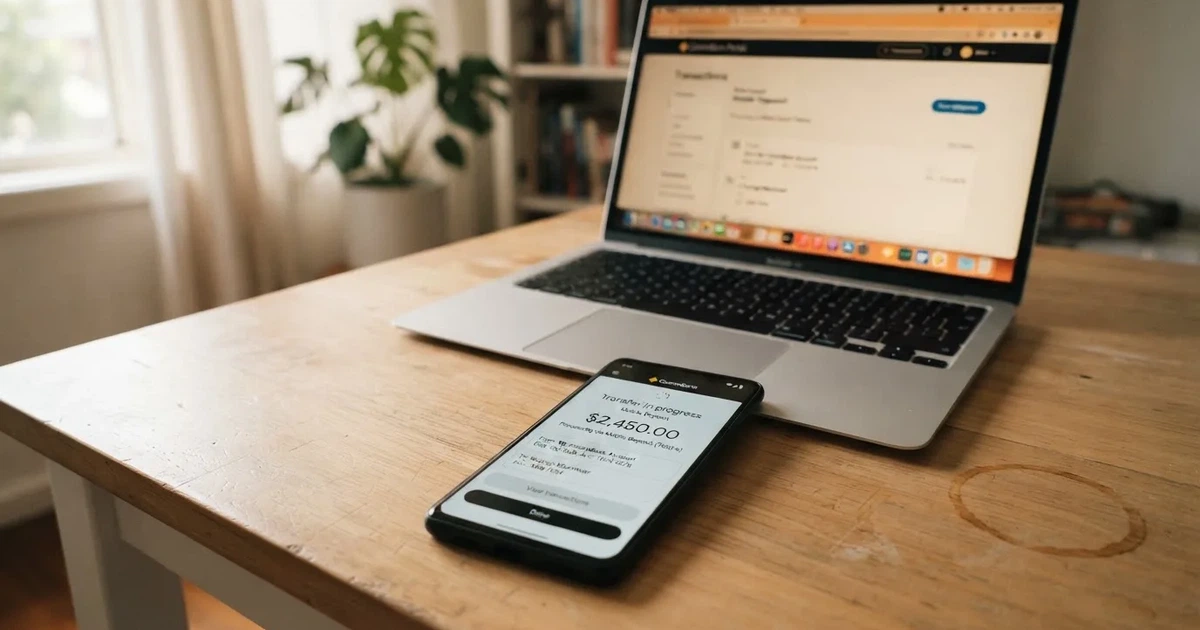
Mobile-first casino deposits work in a sequence that looks straightforward from the player’s screen. Open the casino app or mobile site, navigate to the cashier, choose a pay-by-phone or carrier-billing option, enter the deposit amount, confirm by tapping a button or by replying to an SMS. The amount appears in the casino balance within seconds. The charge lands on the next mobile phone bill or against prepaid credit.
Behind the screen sits a three-party arrangement. The merchant is the casino. The mobile network operator – Telstra, Optus, Vodafone/TPG in the Australian case – is the billing platform. The third party is the carrier-billing aggregator, the processor that handles the contractual and technical link between the merchant and the carrier.
Boku is the dominant carrier-billing aggregator globally. Founded in London in 2009, listed on the London Stock Exchange’s AIM market on 20 November 2017 through a £125 million initial public offering and trading under the ticker BOKU, the company describes itself as operating in over 90 countries and holding payment licences in more than 40. By Boku’s own count, the network spans more than 200 local payment methods, covering Direct Carrier Billing, mobile wallets and account-to-account rails. That is the rail a casino plugs into when it advertises a phone-bill deposit. Other aggregators in the same category include Fonix, Bango, Fortumo and Google Pay.
Three features of this rail shape what it costs the player.
Per-transaction caps sit low. Most Australian mobile operators cap a single carrier-billing transaction at $30, with daily limits in the $100-$300 range. Phone-bill is a have-a-quick-punt channel, not a bankroll channel. A player who deposits the maximum $30 has 150 spins at a $0.20 machine, and the rail gives them no path to a larger stake.
The fee the merchant pays the aggregator is high. Carrier billing typically costs the merchant 10-30% of the transaction value, against the 1-3% a card payment costs. The merchant wears this because the carrier absorbs the credit risk: if the phone bill goes unpaid, the mobile network operator eats the loss rather than the casino. The player does not see the merchant fee directly, but it does shape the kind of offer the casino can afford to advertise on this channel.
Withdrawals do not run through the same rail. A player who deposits $20 by phone and wins $200 has to withdraw to a bank account, e-wallet or, at unlicensed casinos, a cryptocurrency address. The phone-bill rail is inbound-only.
There is also an Australian-side mechanic worth pausing on. The Interactive Gambling Act 2001, as amended in 2023, prohibits Australian-licensed online wagering services from accepting payment by credit card or credit-related products, a restriction that, in practice, also reaches Apple Pay and Google Pay transactions funded by a credit-linked card. ANZ’s gambling transaction block, activated through the ANZ app, blocks gambling transactions on eligible cards including those routed through Apple Pay, and removing the block requires a 48-hour waiting period, with the bank explicitly warning that not all gambling transactions will be blocked and some non-gambling transactions may be blocked in error. Westpac’s gambling block runs at card level and refuses authorisation on transactions registered under the merchant category code for Betting/Casino Gambling on eligible personal credit and debit cards.
A phone-bill deposit sidesteps most of that, because the transaction routes through a different merchant code. The aggregator registers the payment as a digital-content purchase, not as a wager. That sidestep is the reason this rail is marketed at all – and it works precisely because the deposit looks, to the bank, like a different kind of transaction than the one the bank was trying to block.
Slot titles pitched at phone-bill depositors
The pages clustered around mobile-phone-bill deposits tend to spotlight the same handful of slot titles. The usual suspects are Gates of Olympus, Sweet Bonanza, Big Bass Bonanza, Starburst, Wolf Gold and a few others – mostly Pragmatic Play and NetEnt releases that load fast on a mobile connection and accept minimum bets of $0.20.
The reason these specific titles keep surfacing on phone-bill deposit pages is not their payout profile. It is their tolerance for very small stakes and the small download footprint. A $0.20 spin is the spin size that fits inside the $10 or $20 phone-bill deposit cap, so a player who deposits the maximum $30 and plays $0.20 spins has a 150-spin session to start with, which is precisely the kind of session a phone-bill deposit is sized for.
What is worth flagging: the RTP figure attached to a slot title is set by the developer, but the actual RTP configuration loaded by a casino can differ. Pragmatic Play in particular has shipped multiple RTP profiles for the same title, with both a 96.5% version and a 94% version in circulation across the offshore market. A phone-bill casino that publishes a return percentage without naming the configuration is publishing a number it may not actually be running. Researching that distinction is the gap between a 96.5% game and a 94% one, and most phone-bill deposit pages do not flag it.
The same caveat applies to volatility labels. A high-volatility stamp on a slot page is often a generic stamp rather than a measured characteristic of the specific build. A player who picks a slot by its volatility label rather than by the loaded configuration is taking the marketing at face value.
The provider angle that matters here is B2B licensing. Pragmatic Play, NetEnt, Evolution and the other major studios licence their games to operators, and that licence governs where the operator can legally offer them. Those licences do not extend to Australia for casino games – the studios do not licence online casino content to operators serving Australian customers. The fact that a casino page lists Pragmatic Play in its providers section therefore tells the player nothing about whether the provider has authorised that operator to take Australian players. It tells the player only that the operator is willing to display the studio’s logo.
Pay-by-phone casinos compared side by side
The comparison table below sets out eleven brands the Australian Communications and Media Authority has formally warned over offering prohibited interactive gambling services to Australian residents. This is not a ranking of how good any of them are. None of them can lawfully take an Australian deposit for online casino games, regardless of what licence they display. What the table shows is what the public record says about each: when the ACMA acted, which operating company the ACMA named, and whether the brand appears anywhere in public phone-bill or e-wallet listings. An em dash in the right-hand column means the brand does not appear in any public phone-bill or e-wallet listing; that is a gap in the public record, not a confirmation or denial.
| Brand | ACMA action and date | Operator named by the ACMA | Subject support |
|---|---|---|---|
| RocketPlay | March 2026 (also May 2022 over earlier operator) | Pulsup Ltd | — |
| Level Up Casino | May 2022 | Dama N.V. | Listed only at Westpac’s gambling-block merchant list |
| Woo Casino | March 2025 | Dama N.V. | — |
| Spirit Casino | May 2025 | Dama N.V. | — |
| National Casino | July 2025 | Consolutetish S.R.L. | Listed at AUSTRAC and Wikipedia contexts only |
| Bizzo Casino | July 2025 (also 2022) | Consolutetish S.R.L. | — |
| Ignition Casino | July 2025 | Bamboo Media | — |
| Instant Casino | February 2025 | EOD Code SRL | Listed at EcoPayz and PayID contexts only |
| Jackbit | April 2026 | Ryker B.V. | — |
| Casino Intense | April 2025 | Sterplay Holding Ltd | Listed at AUSTRAC, ITnews and NAB contexts only |
| Sky Crown | September 2022 | Hollycorn N.V. | — |
Two patterns stand out from the comparison. First, the operators named by the ACMA tend to be Curaçao- or Costa Rica-incorporated holding companies running multiple casino brands. Dama N.V. alone controls brands that received three separate warnings over five years. The brand name the player sees is rarely the legal entity that owns the operation.
Second, the right-hand column is mostly empty. Only four of the eleven brands appear anywhere in public phone-bill or e-wallet listings, and in each case the appearance is incidental – the brand is named on a regulator’s enforcement page or on a payments-directory entry, not because it advertises a carrier-billing deposit flow. For a player searching specifically for a pay-by-phone-bill casino, the public record on these eleven brands does not actually confirm that any of them accept phone-bill deposits. It confirms that all of them have been warned by the ACMA. Those two facts sit awkwardly together, and the second is the one that determines whether the player has any recourse if the withdrawal stalls.
The fundamentals of carrier billing at a casino
Carrier billing, or Direct Carrier Billing, is the family of payment methods that lets a customer charge a purchase to a mobile phone bill or to prepaid credit rather than to a card or bank account. The casino deposit use case is a sub-segment of that family, one that took off in the late 2010s as a way to reach players without bank cards or with cards blocked by gambling-merchant controls.

The transaction flow has three structural features that shape the cost the player pays.
Settlement is instant. The merchant receives the funds the moment the user confirms on the phone. From the player’s screen, the casino balance updates within seconds. From the merchant’s books, the funds are receivable in batches from the aggregator, typically on a weekly cycle. The appeal of the rail to the merchant is not the speed – card payments also clear fast for the merchant – but the bypass of the card network’s merchant-category controls, which is what makes the rail useful to a casino the bank would otherwise refuse.
The carrier absorbs the credit risk. If a phone bill goes unpaid, the mobile network operator – not the casino – eats the loss. This is why carrier billing costs merchants 10-30% per transaction, well above the 1-3% of card processing. It is also why per-transaction caps sit so low: a $30 cap bounds the carrier’s exposure on any single bill, and a $100-$300 daily limit bounds the monthly exposure on any single phone account.
Chargebacks run through the carrier. A player who disputes a phone-bill charge is disputing it with Telstra, Optus or Vodafone/TPG, not with the casino and not with Visa or Mastercard. The casino is not on the hook for the chargeback; the carrier is.
For a casino player in Australia specifically, the rail also has a friction advantage over the licensed alternatives. The credit-card ban that applies to Australian-licensed wagering under the Interactive Gambling Act 2001 does not, on its face, cover phone-bill transactions routed through a non-wagering merchant code. A bank running a gambling block will refuse a transaction coded as Betting/Casino Gambling but will pass a transaction coded as a digital-content purchase, which is how carrier-billing aggregators typically register the payment. The rail is, in effect, a way to side-step the bank-side block – a side-step the offshore casino industry markets as a feature and the Australian regulator reads as a problem.
That is the technology. It works. It is licensed in over 40 countries for legitimate digital-content purchases. What it does not do is make the merchant offering it lawful in Australia. The carrier-billing licence Boku and its peers carry is a payment-services licence – it authorises them to process payments, not to provide gambling. The licence to provide online casino games to Australian residents is held by no offshore operator, because no such licence exists for any operator in any jurisdiction that targets Australians.
What Australian law actually says about phone-bill casinos
The starting point is the Interactive Gambling Act 2001, the IGA, strengthened in 2017 by the Interactive Gambling Amendment Act. Together they make it an offence to provide online casino games – online pokies, online blackjack, online roulette, online baccarat – to a person in Australia. No state or territory in the country licences these products, and the licence the casino displays in its footer, typically Curaçao, Anjouan, sometimes Malta, is not a licence that covers Australian residents.
What is licensed in Australia is wagering on racing and on sporting events before the event, lotteries, and keno. The Northern Territory Racing and Wagering Commission regulates 52 of Australia’s online bookmakers – including Sportsbet, Bet365 and Ladbrokes – licensed in the Territory largely for tax reasons; the commission has no full-time staff and meets once a month in Darwin. That is the regulatory floor under which the licensed Australian market operates.
The enforcement body for the offshore market is the Australian Communications and Media Authority. The ACMA investigates complaints, issues formal warnings to operators, imposes civil penalties and, most visibly to players, directs Australian internet service providers to block illegal sites at the network level.
The cumulative ACMA blocking figure, as the regulator last reported it, is 1,751 illegal gambling and affiliate marketing websites blocked since the first blocking request was made in November 2019. In a single round reported on 26 June 2026, twelve more sites were added to the block list: 7Signs, ChromaBet, Donbet, Duospin, Freshbet, Slots Gem, Jacks Club, Lucky Start, Pointsbetz.com, Spinrise, Vinyl Casino and Wildsino. The rate of additions has not slowed.
The cost of the block to the player, when it lands, is binary. Any balance left in the casino account at the moment the site becomes unreachable from Australia is, in practice, gone. There is no Australian complaints body to approach, no Australian ombudsman, no Australian regulator that will help recover funds. The casino, when it bothers to respond to a complaint at all, operates under its own house rules and the law of its own jurisdiction.
The fundamentals of ACMA enforcement
The ACMA’s enforcement regime works in three layers: formal warning, civil penalty, and ISP blocking order. The first layer is what most offshore casino players encounter, because it is the cheapest for the regulator to issue and the easiest for the operator to ignore.
A formal warning does not stop the operator from continuing to offer its services. It puts the operator on notice that the ACMA considers its conduct to breach the IGA, and it is published on the ACMA website. The operator can continue to accept Australian players for weeks or months after the warning – the warning itself carries no cessation order. Civil penalties under the IGA do carry financial consequences (up to $247,500 per offence for individuals, more for companies), but civil penalty proceedings are reserved for the most persistent offenders and take time to bring. The ISP blocking order is what actually moves the site off Australian ISPs, and that requires a separate request to each affected provider.
What the warning list shows, when read across the brands, is a recurring operator pattern. Dama N.V., a Curaçao-incorporated holding company, was warned in May 2022 over Bambet, Dazard, Level Up, Rocketplay, Wild Tornado and Cobra Casinos. The same operator was warned again in March 2025 over Woo Casino and in May 2025 over Spirit Casino. Rocketplay was then warned again, this time under a different corporate wrapper – Pulsup Ltd, over Rocketplay.com.au – in March 2026. Consolutetish S.R.L. was warned in July 2025 over National Casino and Bizzo Casino; Bizzo Casino had previously been the subject of a 2022 formal warning to TechSolutions (CY) Group Limited and TechSolutions Group N.V.
The repeat pattern is the headline. When an operator is warned, the most common response is not to withdraw from Australia – it is to rename or rewrap. The player who treats a new offshore casino as inherently safer because it does not appear on any prior warning list is reading the wrong list. The list that matters is the operator list, and most operators running offshore casinos are not new. They are the same operators, under different names.
H2 Gambling Capital’s 2025 figures give the scale. Australians lose an estimated A$3.9 billion a year to illegal online gambling sites, and the share of gambling going through legal Australian channels fell from 74% in 2021 to 64% in 2025. The illegal share is not a side effect of the Australian market – it is one third of the entire market, by spend.
A fresh prohibition round in April 2026
In April 2026 the ACMA issued a formal warning to Ryker B.V. over Jackbit and CasinOK. The warning is the most recent entry in a sequence that now runs almost monthly, and it lands at a moment when the Jackbit brand has been actively marketed to Australian audiences through affiliate channels that emphasise the casino’s cryptocurrency rails and its bookmaker-style layout.
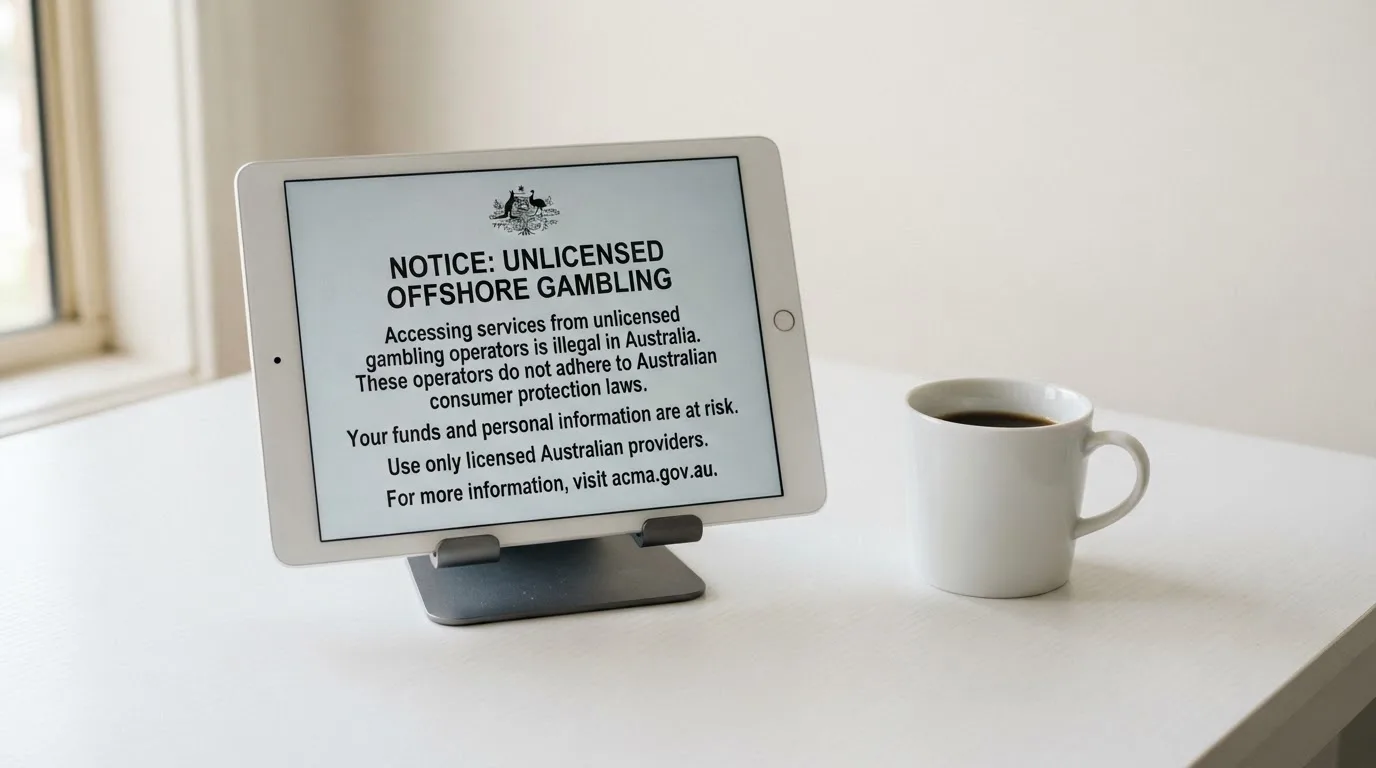
What the warning does not do is force Ryker B.V. to remove Jackbit and CasinOK from the Australian market immediately. It puts the company on notice, publishes the warning on the ACMA register and creates the conditions under which a civil penalty or an ISP blocking order can follow if the conduct continues. In practice, Jackbit’s Australian-facing domains remain accessible at the time of the warning, and may continue to be accessible for some weeks afterwards. The blocking round that follows will land on Australian ISPs, not on the operator.
For a player who reached Jackbit through a phone-bill deposit listing, the April 2026 warning is the strongest current signal that the operator is being actively pursued by the Australian regulator. The cost of continuing to play there, after the warning, is the cost of relying on an Australian ISP not yet implementing the block to reach a casino whose Australian-facing operation is being treated as unlawful by the regulator.
Responsible gambling in the Australian context
The Australian player-protection regime rests on three pillars: the National Self-Exclusion Register (BetStop), the National Gambling Helpline, and a banking-side layer of merchant blocks and credit-card bans. None of these pillars covers an offshore casino.
BetStop has been live since August 2023. A person who registers with BetStop is excluded, by law, from every Australian-licensed wagering service, online and phone, and the exclusion lasts a minimum of three months with options for one year, five years or permanent self-exclusion. The casino and racing operators licensed in Australia are bound by the exclusion. An offshore casino is not connected to BetStop at all. Registration with BetStop does not stop an offshore casino from accepting the registered person’s deposits; it stops only the Australian-licensed services. The Australian-licensed product (sports and racing bookmakers) and the offshore casino product are different regulatory universes, and BetStop only binds one of them.
The National Gambling Helpline (1800 858 858) is free, available 24/7 and offers chat support through Gambling Help Online. It is the most consistent piece of player protection that crosses the licensed/offshore divide – the helpline is funded for any Australian in distress, regardless of where they have been playing. The point of referring readers to it is not that it solves the legal exposure of an offshore casino – it does not – but that the financial harm of any session can be talked through with someone who is not selling the next one.
The banking-side protection layer has tightened since 2023. The credit-card ban that took full effect on 11 June 2024 prohibits Australian-licensed wagering operators from accepting payment by credit card or credit-related product. ANZ’s gambling block, activated through the ANZ app, blocks gambling transactions on eligible cards, including transactions routed through Apple Pay or Google Pay on the eligible card, and removing the block requires a 48-hour waiting period, with the bank warning that some non-gambling transactions may be caught in error. Westpac runs the same kind of block at card level, refusing authorisation on the merchant category code for Betting/Casino Gambling. Apple Pay itself does not charge the consumer a fee for transactions in stores, online or in apps; any surcharge comes from the merchant’s processing fees, not from Apple. The transaction limits and PIN requirements for Apple Pay are set by the card issuer or the merchant, not by Apple.
By the end of 2025, mobile wallet payments – Apple Pay, Google Pay and Samsung Pay combined – accounted for around 45% of all card payments in Australia by number. The size of the channel explains why the banks’ gambling-block work has been extended to digital-wallet transactions funded by eligible cards. The Reserve Bank of Australia’s July 2025 review proposes removing surcharges only on eftpos, Mastercard and Visa card transactions, explicitly leaving American Express outside the scope of the proposed surcharge ban.
The asymmetry remains the operative feature of the protection layer. The licensed bookmakers are bound by credit-card bans, by BetStop exclusions, by gambling-block cooperation. The offshore casino is bound by none of these. It accepts the same credit card the licensed bookmaker refused; it ignores BetStop because it never agreed to honour it; it does not sign up to the Australian bank-block scheme. That asymmetry is what makes the phone-bill rail – which sits outside all three pillars – the channel of choice for offshore marketing to Australian players.
Payment rails, payout speed, and where phone-bill sits among them
The payment-method menu at an Australian-licensed online bookmaker looks like this: debit card, bank transfer, PayID, Osko, BPAY. Apple Pay and Google Pay work at most of them, too, provided the underlying card is a debit card rather than a credit card. Cryptocurrency is not on the menu. Credit cards are not on the menu. Phone-bill is not on the menu.
PayID, sitting on top of Australia’s New Payments Platform, links a BSB-and-account-number to a memorable identifier – a mobile number, an email address, an ABN – and shows the name of the account holder before the transfer is sent. The visible account-holder name is the part the operator cannot easily fake: Australian Payments Plus explicitly warns that being asked to transfer money to a PayID on an illegal gambling site almost certainly means a scam site. PayID-based instant transfers are available at over 100 Australian financial institutions.
Osko, the real-time transfer layer above PayID, settles a bank-to-bank transfer in under a minute, 24/7, including weekends, whether addressed to a BSB and account number or to a PayID. The New Payments Platform itself became publicly accessible on 13 February 2018 and is owned by New Payments Platform Australia Ltd, a non-profit whose 13 shareholders include the Reserve Bank of Australia and the country’s major banks. Participants must keep the platform’s monthly outages to no more than two minutes; in 2021 the ACCC authorised the merger of NPP Australia with BPAY and eftpos into a single company, Australian Payments Plus. More than 25 million PayID identifiers had been registered on the platform as of April 2025.
BPAY is the older bill-payment rail. The payer enters a Biller Code and the Customer Reference Number (CRN) printed on the bill. It is slower than Osko – settlement is typically next business day – but it is universally supported in Australian online banking and works for any merchant that issues a BPAY bill.
AUSTRAC’s threshold-transaction reporting rule, which requires reporting of transfers of A$10,000 or more, applies only to physical cash. Ordinary electronic bank transfers are not subject to that per-transaction reporting requirement, regardless of the amount sent. The rule is a cash-economy rule, not a digital-payments rule.
The phone-bill rail sits outside this Australian ecosystem. It is licensed by the mobile network operators, processed by aggregators like Boku, and routed through non-gambling merchant codes, which is precisely why it is the rail the offshore casino industry markets to Australian players. It is faster than BPAY, simpler than Osko, and bypasses the credit-card ban and the bank gambling blocks described earlier. It also carries the IGA exposure that the licensed rails do not, because the merchant on the other end is, by definition, offering a service that is unlawful to provide to Australians.
The cost difference matters most for withdrawals. A deposit of $30 by phone bill cannot be withdrawn by phone bill. The withdrawal rail at an offshore casino is typically bank transfer (often to an overseas account, with currency-conversion charges on both ends), e-wallet or cryptocurrency. The processing times quoted by offshore casinos – instant, within 24 hours, 1-3 business days – are marketing claims that do not always survive a look at player complaint forums. The phone-bill rail is inbound-only for the player, and outbound waits can run from days to weeks depending on the operator. The fee shape is also asymmetric: free or near-free inbound, percentage-loaded outbound, with a withdrawal-cap layered on top.
The eleven brands the ACMA has formally warned over
RocketPlay
The ACMA’s most recent formal warning directed at this brand was issued in March 2026, naming Pulsup Ltd as the operator of Rocketplay.com.au. That warning sits on top of an earlier May 2022 formal warning that named Dama N.V. as the operator of Rocketplay along with five other Dama N.V. brands. Two warnings, two different operating companies, the same brand name on the Australian-facing side.
The recurrence tells the story the verdict needs to carry. A brand that has been warned twice over four years, under two different corporate wrappers, is not a brand that has cleaned up between warnings – it is a brand that has been re-launched each time the regulator caught up. The cost of playing at RocketPlay after the March 2026 warning is the cost of playing at a casino the Australian regulator has now flagged twice under two different operators.
Level Up Casino
The May 2022 ACMA formal warning named Dama N.V. as the operator of Level Up Casino alongside Bambet, Dazard, Rocketplay, Wild Tornado and Cobra Casinos. The brand has not been re-warned individually, which the marketing tends to read as a positive. It is not. The May 2022 warning was directed at the operator, and an operator-level warning covers every brand the operator runs, not just the ones named.
Level Up Casino appears in Westpac’s published gambling-block merchant list – that is what the public listing shows. It does not prove Level Up Casino accepts phone-bill deposits; it proves Westpac treats Level Up Casino’s transactions as gambling transactions and blocks them on eligible cards. A player whose deposit goes through anyway, via phone bill, e-wallet, or any other rail not covered by the bank block, is depositing to a brand the ACMA has had on file since 2022.
The verdict the public record supports: Level Up Casino is not a brand that has avoided the regulator’s attention. It is a brand that received the operator-level warning in 2022 and has not been re-warned only because the regulator moved on to the next operator-level action. The cost a player pays there is the cost of an undisturbed-looking brand name inside a repeatedly-warned operator.
Woo Casino
In March 2025, the ACMA issued a formal warning to Dama N.V. over Woo Casino. The warning came three years after the same operator was warned over six of its other brands, and it came after the Woo Casino site had been actively marketed to Australian audiences through affiliate channels throughout 2024.
Woo Casino does not appear in any public phone-bill or e-wallet listing beyond the ACMA’s own enforcement record. For a player researching Woo Casino specifically as a pay-by-phone destination, the public record shows an ACMA formal warning and nothing else. That asymmetry – active marketing, no public payment-rail confirmation – is itself the verdict. The brand is being marketed harder than the listing infrastructure supports, and the regulator’s March 2025 entry is the only piece of paper on file.
Spirit Casino
The May 2025 ACMA formal warning over Spirit Casino, again naming Dama N.V., is the third time in three years the same operator has come under ACMA action. Spirit Casino is a relatively young brand in the Dama N.V. portfolio, launched after the 2022 warning, and the May 2025 warning suggests the relaunch under a new name did not insulate the operator from continued enforcement attention.
The verdict: Spirit Casino is the third warning in the same Dama N.V. sequence in five years. The operator’s response to warnings has been to launch new brands; the regulator’s response has been to warn each new brand. The cost a player pays at Spirit Casino after May 2025 is the cost of being on the third name the regulator has flagged under the same operator, with the strong implication that the next name will be flagged too.
National Casino
National Casino received a July 2025 ACMA formal warning, with Consolutetish S.R.L. named as the operator. The brand had not previously appeared on the ACMA’s published warning list, which the marketing tends to treat as a clean record. The public record shows the brand named at AUSTRAC and Wikipedia contexts only, which is to say the brand is identified as a gambling-coded merchant, not specifically as a phone-bill deposit destination.
The verdict the public record supports: National Casino’s first ACMA warning was issued in July 2025, and the operator behind it – Consolutetish S.R.L. – is also the operator behind Bizzo Casino, which received a warning the same month. The player researching National Casino is researching an operator that the regulator has now flagged twice in the same enforcement round, under one corporate wrapper.
Bizzo Casino
Bizzo Casino is the brand on this list with the longest warning history. The ACMA issued a formal warning over Bizzo Casino in July 2025, naming Consolutetish S.R.L. as the operator. That is the second warning for the brand itself; an earlier 2022 formal warning was issued to TechSolutions (CY) Group Limited and TechSolutions Group N.V. Two operators, three and a half years apart, the same brand name on the Australian-facing side.
The verdict: Bizzo Casino has now been warned under two different operators within the same regulatory framework. The pattern – rewrap under a new operator, accept Australian players until the next warning – is the same one Dama N.V. has run with its portfolio. A player who treats Bizzo Casino’s July 2025 warning as a one-off is missing that the brand was on the warning list in 2022 under a different owner, with no clean-record period in between.
Ignition Casino
In July 2025, the ACMA issued a formal warning to Bamboo Media over Ignition Casino. Ignition Casino is the only brand on this list attributed to Bamboo Media as the operator, which makes the brand harder to track through portfolio-pattern analysis – there is no second Bamboo Media brand to cross-reference.
The public phone-bill or e-wallet listings show no appearance for Ignition Casino. The only public reference to the brand is the ACMA warning itself. The verdict: a brand known to the Australian regulator only because it has been warned, with no supporting public record of the payment channels it accepts. The cost of playing there is the cost of a casino with no Australian-licence claim and no public payment-channel trail beyond the regulator’s notice.
Instant Casino
The February 2025 ACMA formal warning over Instant Casino, with EOD Code SRL named as the operator, is the earliest 2025 warning on this list. EOD Code SRL is also the only operator on this list attributed to a single brand in the ACMA record, with no portfolio footprint to track.
Instant Casino appears in public listings at the EcoPayz and PayID context only – which is to say, the brand is named in payments-directory contexts where it is identified as a gambling-coded merchant, not specifically as a phone-bill deposit destination. The verdict: the public record on Instant Casino’s payment channels is thin, and the ACMA warning is the most concrete piece of information about it. A player reaching Instant Casino through a phone-bill deposit listing is reaching a brand that the public record does not actually confirm as accepting phone-bill deposits, only as one the ACMA has warned.
Jackbit
In April 2026, the ACMA issued a formal warning to Ryker B.V. over Jackbit and CasinOK. Jackbit has been actively marketed through affiliate channels that emphasise cryptocurrency deposits and a hybrid sportsbook-and-casino layout, and the warning is the Australian regulator’s response to that marketing push.
The verdict: Jackbit is the most recently warned brand on this list, and the warning names both Jackbit and CasinOK as products of the same operator – meaning an Australian player reaching CasinOK through the same affiliate channels is reaching the same enforcement target. The April 2026 warning is current. The cost of continuing to play at Jackbit after that warning is the cost of relying on an Australian ISP not yet implementing the block to reach a casino the regulator has flagged in the same month the player is reading this page.
Casino Intense
The April 2025 ACMA formal warning over Casino Intense, with Sterplay Holding Ltd named as the operator, is one of several 2025 warnings directed at smaller operators. Sterplay Holding Ltd does not appear elsewhere in the ACMA’s published warning record, which makes Casino Intense one of the harder cases to track through a portfolio pattern – but it also means Casino Intense is the only public face of this operator in the Australian context.
Casino Intense appears in public listings at AUSTRAC, ITnews and NAB contexts only – the brand is named in compliance and industry coverage without any specific confirmation that it accepts phone-bill deposits. The verdict: Casino Intense is a single-brand, single-warning operator on this list, with no broader pattern to read across and no public record of phone-bill support. The ACMA warning is the public-facing record, and the absence of any portfolio context is the absence of any reassurance.
Sky Crown
The September 2022 ACMA formal warning over Sky Crown, with Hollycorn N.V. named as the operator, is the oldest formal warning on this list. Hollycorn N.V. operates a wider portfolio of casino brands than any other operator named here, and Sky Crown is one of several Hollycorn brands that have come under regulator attention in different jurisdictions.
The verdict: Sky Crown carries the longest gap on this list between warning and the current page – between the September 2022 ACMA formal warning and 2026. The brand may have shifted its marketing away from Australia, or the operator may have continued with reduced visibility; the public record does not say which. A player researching Sky Crown today is researching a brand with a 2022 Australian warning and no subsequent re-warning, which is the closest this list gets to an undisturbed brand – and even that undisturbed status sits inside the same offshore market that has been the subject of 1,751 blocking requests since November 2019.
How fast the ACMA is blocking sites
The arithmetic of the ACMA’s blocking program, taken at face value, is straightforward. The first blocking request went to Australian ISPs in November 2019. The cumulative count of blocked sites, as the regulator last reported it, stood at 1,751 by June 2026. The window is six years and roughly eight months, or in months around 79.
1,751 sites over 79 months works out to an average of about 22 sites blocked per month, or roughly one site blocked every 33 hours, when averaged across the full enforcement window. The figure smooths over the period-by-period variation. The early years of the program – 2019 to 2021 – saw lower monthly rates as the ACMA built its case law and its blocking-request infrastructure. The 2022 to 2026 window has run at a faster pace, with individual rounds regularly adding eight to twelve sites at a time. The June 2026 round alone added twelve.
Stated as a band, accounting for whether November 2019 is counted as the first or the zeroth month, the rate comes out at roughly 21-23 sites per month, or about one site every 32-35 hours, when the window is the full November 2019 to June 2026 period. The condition that holds the band together is the assumption that the ACMA’s published cumulative figure is accurate and that November 2019 is taken as the starting point. A shorter window (say, the 2022 to 2026 stretch alone) would shift the rate up; a longer one would shift it down. Both endpoints change the number, not the conclusion.
The information in this rate is not the rate itself. It is what the rate implies about how an Australian player should think about brand longevity in this market. A new offshore casino launched this month, accepting phone-bill deposits, is being launched into a regulatory environment where roughly 22 such sites per month have been blocked on average since 2019. The marketing life of any one of those brands, measured against the ACMA’s enforcement pace, is short.
The same arithmetic does something else. It gives the player a sense of how often an offshore casino’s domain goes dark on Australian ISPs. If a brand’s average visible life on Australian ISPs, from launch to block, is the inverse of the blocking rate, then the implied lifetime is on the order of months to a couple of years at most – and any balance left in the account when the block lands is, in practice, lost. The math does not need a name attached to it. The ACMA’s own running total tells the same story in raw counts.
Frequently asked questions
How does paying by phone bill actually work as a casino deposit?
A player picks the phone-bill option at the cashier, enters an amount (usually $10 to $30) and confirms by SMS. The funds land in the casino balance within seconds; the charge appears on the next mobile bill or against prepaid credit. The processor is typically a carrier-billing aggregator like Boku, routing the payment to the player’s mobile operator under a non-gambling merchant code. Withdrawals do not run on this rail.
Does carrier billing make a casino any more legitimate for Australian players?
No. The carrier-billing licence held by Boku and similar processors is a payment-services licence, not a gambling licence. It authorises the processor to handle payments and does not authorise the merchant offering casino games to Australian residents. Under the Interactive Gambling Act 2001, no offshore operator can lawfully provide online casino games to a person in Australia, regardless of which payment rail is used. An Australian player using a phone-bill deposit at an offshore casino has no Australian licence, dispute-resolution body or self-exclusion register that covers the casino.
Is depositing via a mobile phone bill to an offshore casino something an Australian resident can lawfully do?
The IGA targets the provider, not the individual player, so an Australian resident is not personally prosecuted for depositing. The legal exposure sits with the operator offering the prohibited service. The practical cost is different: the player has no Australian consumer protection, no BetStop coverage, no bank-block cooperation, and no recourse if a withdrawal is refused. A balance held in an offshore casino account at the moment an ACMA blocking order takes effect on Australian ISPs is, in practice, unrecoverable. The law does not punish the player; the structure of the offshore market does.
What is the difference between pay-by-phone-bill and pay-by-mobile at a casino?
In commercial practice, none – the two phrases describe the same Direct Carrier Billing rail. Some casino pages use pay-by-mobile to mean mobile-wallet deposits (Apple Pay, Google Pay) made from a smartphone, which is a different rail: the funds come from a card or account, not from the phone bill itself. The distinction matters for Australian players because the IGA’s credit-card ban applies to credit-funded mobile-wallet transactions at Australian-licensed operators, while phone-bill deposits sit outside the credit-card ban altogether. The same transaction at an offshore casino is the casino’s problem, not the player’s.
Why would a landline phone bill payment option be offered for online slots?
A landline carrier-billing option is offered because the underlying Direct Carrier Billing rail works on any phone line with a bill, mobile or fixed-line, and because it lets a casino reach players who do not have a suitable mobile or who prefer to keep gambling spend off their mobile bill. In practice the vast majority of carrier-billing deposits are made by mobile, and the landline option is a smaller share of the market. The cost structure is identical: per-transaction caps, fee-heavy merchant processing, no withdrawals, chargeback rights routed through the carrier rather than the card network.