
Welcome bonuses for Australian players in 2026: what the offer really costs
A welcome bonus sits at the centre of almost every advertisement for an online casino an Australian reader sees on a search results page. It is the headline. It is the lure. And it is, without exception, an inducement from a site that cannot lawfully serve the person reading it. Every operator that markets a welcome bonus to an Australian IP address is doing so in breach of the Interactive Gambling Act 2001, and the Australian Communications and Media Authority has spent the last several years writing to them, blocking them and warning them off.

That is the picture this page sets out, and the picture the rest of the article builds on. What follows is not a ranking of which welcome bonus is best, because no welcome bonus in this market is legal to take up. It is an explanation of why the offers exist, what conditions typically wrap around the free cash and the free spins, what offshore status actually costs a player who deposits, and where to turn if the pull of these promotions starts to bite.
Data current as of 18 October 2026, verified against the ACMA’s formal warning register and against public guidance from the Reserve Bank of Australia and Australian Payments Plus.
Table of Contents
- How payments shape what a welcome bonus looks like to an Australian
- What a welcome bonus actually does
- The offshore reality behind every welcome bonus offer
- The blocking rate: how fast the ACMA is clearing the field
- The responsible-gambling side that does work in Australia
- Eleven offshore brands the ACMA has acted against
- Crypto and anonymity on the welcome bonus market
- Tax: where winnings stand
- Frequently asked questions
How payments shape what a welcome bonus looks like to an Australian
Money is where this market breaks from the markets most readers come from. A welcome bonus in Australia is not a credit-card-friendly proposition. The Interactive Gambling Act, as amended in 2023, blocks Australian-licensed online wagering services from accepting payment by credit card or any credit-related product. That prohibition, which took practical effect on 11 June 2024, runs at A$247,500 a pop for the operator who takes one. It also reaches the digital wallets a credit card might be tucked into — Apple Pay or Google Pay sitting on top of a Visa or Mastercard at an Australian bank sits inside the prohibition because the underlying funding is credit.

Outside the licensed wagering channel, however, no such rule governs an offshore casino. An offshore site will gladly take a Visa deposit, a Mastercard deposit, an Amex deposit, a deposit through a crypto wallet, or a deposit through a wire transfer. The Australian rules do not follow the money there. What does follow it is the bank on the Australian end, and most Australian banks now let a customer stop gambling transactions at card level.
Westpac’s gambling block, for instance, works on the card itself. The bank refuses authorisation of any transaction tagged with the merchant category code for betting and casino gambling on an eligible personal credit or debit card. ANZ runs a similar block, and crucially it covers gambling transactions routed through a digital wallet such as Apple Pay on an eligible card, not only the physical card swipe. Commonwealth Bank offers a gambling lock in its app that takes a few taps to engage. These are blunt instruments — ANZ itself warns that not every gambling transaction will be blocked and a non-gambling one might be — but they are the practical circuit-breaker between an Australian account and the offshore welcome bonus.
The wallet stack: Apple Pay, Google Pay, Samsung Pay
By the end of 2025, Apple Pay, Google Pay and Samsung Pay together accounted for around 45% of all card payments in Australia by number. That volume is what makes a digital-wallet prohibition interesting: where credit funding underwrites the wallet, the IGA ban bites. Apple itself charges nothing to the consumer for using Apple Pay in stores, online or in apps; any surcharge the user sees comes from the merchant’s own processing fees, not from Apple. Apple is also plain that transaction limits and PIN requirements for the wallet are set by the card issuer or the merchant, not by Apple — which means the gambling block on a Westpac card will be enforced on the wallet transaction at the moment the issuer declines it.
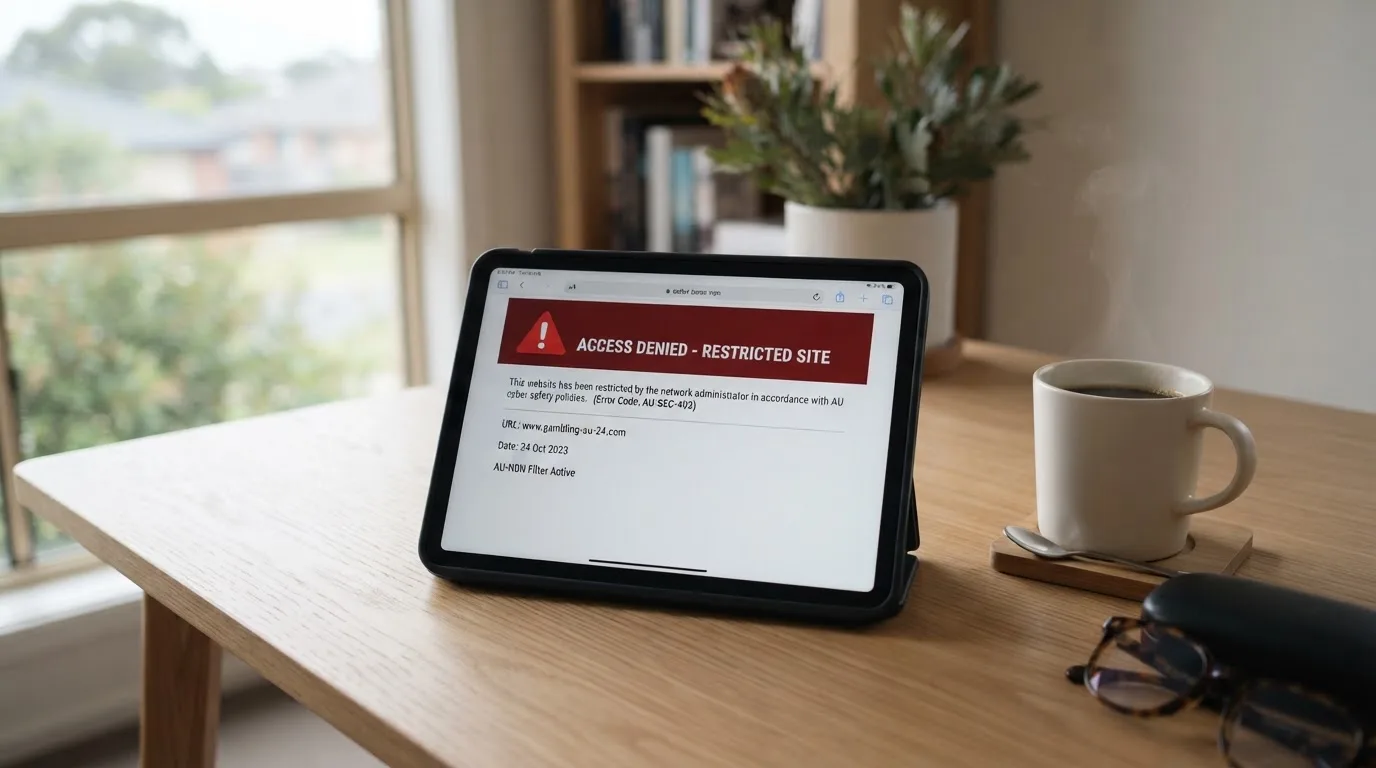
The honest reading: an Apple Pay transaction at an offshore casino is, in most Australian setups, a credit-funded transaction, and most Australian banks have a gambling block on it. A player who turns the block off to deposit is making a deliberate choice to bypass their own bank’s safety rail.
Card networks: the three-party and four-party distinction
American Express runs as a three-party scheme: it issues the card, runs the network and settles the transaction. Visa and Mastercard run as four-party schemes, separating the issuer, the acquirer, the network and the merchant. The structure matters in Australia right now because the Reserve Bank’s July 2025 review proposes removing surcharges only on eftpos, Mastercard and Visa transactions. American Express is explicitly outside the scope of that proposed ban. The practical effect for a player: Amex acceptance is narrower at Australian merchants, surcharges on it where it is accepted are not about to be capped, and offshore casino deposit pages often treat Amex as a separate rail with its own limits.
Bank transfers, PayID and Osko: the legal channels for licensed wagering
A licensed Australian online wagering service takes deposits by debit card, by bank transfer, by PayID or Osko, or by BPAY. PayID sits on the New Payments Platform, which went live to the public on 13 February 2018 and is owned by New Payments Platform Australia Ltd, a non-profit whose 13 shareholders include the Reserve Bank of Australia and the country’s major banks. By April 2025 more than 25 million PayID identifiers were registered on the platform.
A PayID transfer to a participating bank arrives in under a minute through Osko, twenty-four hours a day including weekends, whether addressed to a BSB and account number or to a PayID. The platform’s uptime obligation, written into its operating rules, caps monthly outages at no more than two minutes. PayID is available at over 100 Australian financial institutions. Critically, paying to a PayID shows the name of the account holder before the transfer is sent — and Australian Payments Plus warns that being asked to transfer money to a PayID on an illegal gambling site almost certainly means a scam site.
BPAY, the bill-payment service that has operated in Australia since 1997, runs through the online banking of more than 140 banks and financial institutions and is offered by more than 95,000 businesses. A BPAY payment is the payer entering a Biller Code and a Customer Reference Number — it is not the rail one uses to fund an offshore casino wallet. It is, however, the rail a licensed Australian wagering operator may expose for deposits, and its parent is now Australian Payments Plus, the same entity that runs PayID and Osko.
AUSTRAC’s threshold-transaction-report rule, which requires reporting of transfers of A$10,000 or more, applies only to physical cash. Ordinary electronic bank transfers are not subject to that per-transaction reporting requirement, regardless of the amount sent. There is no automatic reporting tripwire on a A$10,000 PayID to a stranger.
What a welcome bonus actually does
A welcome bonus is an inducement. The marketing word — and the marketing word is exactly that, an inducement — packages together a deposit match, a parcel of free spins or, less commonly in this market, a small no-deposit credit that turns into bonus balance on first play. Every variant shares the same underlying mechanism: the operator holds the bonus funds (and any winnings from bonus-funded play) in a separate balance, gated behind conditions the player must clear before any of it can be withdrawn as cash.
The wagering requirement is the load-bearing condition. A welcome bonus carries a multiple — typically somewhere between thirty and fifty times the bonus amount — that the player must turn over before the bonus balance converts into withdrawable cash. The deposit itself may or may not be part of the turnover, depending on the term. Free-spin winnings almost always carry their own wagering multiple on top of the bonus multiple. Maximum bet caps during wagering — a few dollars a spin, often lower — limit how fast a player can chew through the requirement. Maximum cashout caps are common on free spins in particular, sometimes sitting at a few hundred dollars regardless of what the bonus balance reaches.
The wagering multiplier in plain arithmetic
A bonus of A$200 with a 40x wagering requirement on the bonus alone is A$8,000 of required turnover. At a slot stake of A$1 per spin, that is 8,000 spins. At five seconds a spin — the industry working figure for a slot spin including the small animations and the bet-confirm tap — that is 40,000 seconds, or about 11.1 hours of continuous play. The figure is a statistical estimate, an average over many spins and many sessions: it is not a promise of payout, return or duration for any single player.
That 11 hours is also the figure against which the value of the bonus has to be measured. The bonus did not give the player A$200. It gave the player A$200 of house money that has to be wagered 40 times at the casino’s edge. Whether the player ends the 11 hours ahead, behind or roughly even depends on the return-to-player of the slots they played, the volatility of those slots and how the bonus balance interacted with their real-money balance through the wagering.
No-deposit bonuses: the marketing figure, the real cost
A no-deposit welcome bonus is the cleanest example of the inducement mechanic. The casino credits a small amount — typically A$10 to A$50 — to a new account on registration, with no deposit required. The marketing pitch is that this is “free money” or a “free trial”. In practice the bonus carries the highest wagering multiples in the catalogue (often 50x to 100x), tight maximum bet caps during wagering, restricted game lists, and almost always a hard maximum cashout ceiling that turns any reasonable win into a small fixed withdrawal regardless of what the balance shows.
The arithmetic runs against the player from the start. A$20 no-deposit bonus at 60x wagering is A$1,200 of required turnover, which is 1,200 spins at A$1 a spin and about 1.7 hours of play. The maximum cashout ceiling of A$100 on that bonus means the casino is offering 1.7 hours of its slots in exchange for what is, at best, a A$100 cheque. The marketing word “free” hides this: nothing about it is free, and the player is paying for the chance with time and the loss expectation the house edge imposes over those 1,200 spins.
Free spins: the conditional gift
Free spins bundled into a welcome package work the same way. A typical welcome offer is “100% up to A$1,000 plus 200 free spins”. The free-spin parcel credits in tranches across the first few days — twenty a day for ten days is a common pattern. Free-spin winnings credit as bonus balance and carry their own wagering multiple, often 40x. The maximum win from a free-spin package is frequently capped at a fixed amount well below what a hot session on the same slot could pay a real-money player.
The marketing word here is “free”, the same as for the no-deposit bonus. The reality is the same: the player is trading time at the slots for a capped, conditional payout that they would have received at higher expected value if they had simply deposited and played the slot for cash.
What an inducement is worth in expected loss
The expected loss on a bonus is the turnover multiplied by the house edge. A slot with a 96% return-to-player has a 4% house edge. A$8,000 of required turnover at 4% house edge is an expected loss of A$320 — which, set against the headline A$200 bonus, leaves the player about A$120 worse off on average if they complete the wagering.
That is the inducement’s arithmetic. The marketing offer was A$200 in bonus cash. The expected cost of clearing it is A$320 of house-edge loss, before counting the player’s own time or the volatility risk of blowing through the bonus balance before the wagering is complete. The mechanism does what the mechanism was designed to do: it brings the player to the slots, holds them there for the 11 hours the wagering takes, and converts the headline value of the bonus into a small expected loss that the casino books as marketing spend recovered.
The offshore reality behind every welcome bonus offer
A welcome bonus offer advertised to an Australian reader is, by definition, an offer from an offshore site that cannot lawfully serve Australian customers. The Interactive Gambling Act 2001, as amended by the Interactive Gambling Amendment Act 2017, makes it an offence to provide online casino games, online pokies or in-play betting to a person physically in Australia. No state or territory licenses online casino games. What is licensable is wagering on races and sport placed before the event, lotteries and keno — in practice licensed by the Northern Territory.
The Australian Communications and Media Authority is the enforcement body. The ACMA investigates, issues formal warnings, and directs Australian internet service providers to block illegal sites. By the reporting round of 26 June 2026, a total of 1,751 illegal gambling and affiliate marketing websites had been blocked since the first blocking request in November 2019. More than 230 unlicensed gambling services had left the Australian market since enforcement was strengthened in 2017.
In the same June 2026 round, the ACMA asked Australian ISPs to block 12 more illegal gambling websites: 7Signs, ChromaBet, Donbet, Duospin, Freshbet, Slots Gem, Jacks Club, Lucky Start, Pointsbetz, Spinrise, Vinyl Casino and Wildsino. The pace of blocking is not slowing. The ACMA has been running blocking rounds at roughly monthly intervals for years, with the cumulative count rising in step.
What an offshore licence does and does not give a player
An offshore casino typically displays a licence issued by Curaçao, by Anjouan, by the Philippines’ PAGCOR, or by a small set of similar jurisdictions. None of those licences extends Australian consumer protection to the player. None of them gives the player access to an Australian complaints body. None of them guarantees that a refused withdrawal can be escalated to a regulator who will act.
The Australian rules a player is used to — dispute resolution, responsible gambling interventions, the BetStop self-exclusion register, the National Gambling Helpline — do not apply to an offshore site. BetStop, the National Self-Exclusion Register, has been live since August 2023, and binds only Australian-licensed online and phone wagering services. The offshore casino is not connected to it. A player who self-excludes through BetStop remains free to deposit at an offshore site.
The pragmatic upshot: a welcome bonus from an offshore site is a contract with an entity the Australian player cannot effectively sue, regulated by a body the Australian player cannot effectively petition, paid in and out through payment rails the Australian player’s own bank may decline, and advertised in defiance of an Australian statute. The bonus is real. The protection that should sit around it is not.
The inducement reforms coming into force in 2026
The Interactive Gambling Amendment (Gambling Reform) Bill 2026 passed Parliament on 19 August 2026. Its advertising and inducement measures commence 1 January 2026+1. Law with a start date, not yet in force on a 2026 page.
What the reform does is straightforward. It bans inducements — the kind of marketing that includes welcome bonuses, deposit matches and “free” spin offers — from being shown to Australian customers by any operator, including offshore operators targeting Australia. The bill extends the ACMA’s enforcement reach to the offshore operators’ Australian-facing marketing, not only to the site itself.
The effect, once the reform commences, is that a welcome bonus offer visible to an Australian reader is in breach of an explicit advertising prohibition as well as the underlying prohibition on providing the service. The marketing word “inducement” becomes a term of art in Australian law.
The blocking rate: how fast the ACMA is clearing the field
The arithmetic the page is responsible for runs from two figures: the cumulative number of blocked sites since the first blocking request in November 2019, and the date that first request was made. As of the 26 June 2026 reporting round, the ACMA had asked Australian ISPs to block a cumulative total of 1,751 illegal gambling and affiliate marketing websites. The first blocking request went out in November 2019.
That is roughly six and a half years of blocking activity, November 2019 to June 2026. The blocking rate is therefore in the band of 260 to 275 sites per year — the headline figure — but the rate is not constant. Earlier years ran lower, recent years have run higher. The ACMA has been blocking sites at an annualised pace well above 300 in recent reporting rounds, and the cumulative total rises by roughly 20 to 30 sites per reporting round with rounds running at roughly monthly intervals.
The relevant point for a reader is not the headline rate but the shape of it: the rate is rising, the pipeline of sites being referred to the ACMA is not emptying, and the ACMA’s enforcement capacity has expanded over the period. A reader who expects the offshore welcome bonus market to be cleared in a single enforcement sweep is reading a different market from the one the ACMA is operating in.
The responsible-gambling side that does work in Australia
The Australian responsible-gambling infrastructure sits entirely on the licensed-wagering side of the divide. Offshore casinos are not part of it. The supports that work are these.
BetStop, the National Self-Exclusion Register, lets a person register once and be excluded from every Australian-licensed online and phone wagering service. Registration is free. The exclusion periods run from a minimum of three months up to a lifetime exclusion. Once registered, the person cannot open new wagering accounts with Australian-licensed operators, and existing accounts are closed. BetStop does not bind offshore casinos — a person who self-excludes through BetStop can still deposit at an offshore site, because offshore sites do not consult the register.
The National Gambling Helpline, on 1800 858 858, is free and runs 24 hours a day, every day. Web chat is available through Gambling Help Online. The helpline is staffed by counsellors and can connect a caller to face-to-face counselling, financial counselling and gambling-specific support services in their state or territory.
State and territory self-exclusion schemes operate separately. A person who wants to exclude themselves from a physical venue — a pokies pub or club, a casino floor — registers through their state’s scheme. The casino exclusion schemes are venue-specific, and the major Australian casino floors (Crown Melbourne, Crown Perth, The Star Sydney, The Star Gold Coast, SkyCity Adelaide) run their own exclusion registers on top.
Bank-level tools are a fourth layer. Westpac, ANZ and Commonwealth Bank all offer gambling transaction blocks at card level, accessible through their apps. The blocks refuse authorisation of transactions tagged with the merchant category code for betting and casino gambling on eligible personal credit and debit cards. ANZ’s block covers digital-wallet transactions on eligible cards, not only the physical card. Once ANZ’s block is turned on, removing it requires a 48-hour waiting period — a deliberate friction to stop a player from disabling the block in the heat of the moment.
What an Australian reader comparing welcome bonuses should actually do
The honest read of the picture is that no welcome bonus offer in this market is one an Australian reader should act on. The bonus terms the offshore casino advertises are not enforceable against it in Australia. The bonus balance the player accrues is held by an entity the player cannot effectively complain to. The deposit itself is going through a payment rail that most Australian banks will decline on request, and that the Australian government has — for the licensed channel — explicitly refused to support with credit funding.
If the pull of the offers is strong enough that the reader is still considering one, the right sequence is: register with BetStop first, set the bank-level gambling block on, and call the National Gambling Helpline on 1800 858 858 before depositing anywhere. That sequence is the inverse of the marketing sequence the offshore casino is running, and it is the one that protects the reader rather than the operator.
Eleven offshore brands the ACMA has acted against
The list below is not a ranking and is not a recommendation. Every brand on it is here because the ACMA itself issued a formal warning over it for offering prohibited online casino services to Australians. The order matches the ACMA’s own record, and the conditions attached to each brand’s welcome bonus — the deposit match, the free-spin parcel, the wagering multiple — are not given here because the only sources for them are affiliate marketing pages that have a financial interest in the numbers they publish.
| Brand | ACMA action and date | Operator named by the ACMA | Subject support |
|---|---|---|---|
| RocketPlay | Formal warning, March 2026 | Pulsup Ltd (Rocketplay) | Earlier Dama N.V. warning, May 2022 |
| Level Up Casino | Formal warning, May 2022 | Dama N.V. | One of six Dama N.V. brands named in the same warning |
| Woo Casino | Formal warning, March 2025 | Dama N.V. | One of two Dama N.V. follow-up warnings in 2025 |
| Spirit Casino | Formal warning, May 2025 | Dama N.V. | One of two Dama N.V. follow-up warnings in 2025 |
| National Casino | Formal warning, July 2025 | Consolutetish S.R.L. | Warning covers National Casino and Bizzo Casino jointly |
| Bizzo Casino | Formal warning, July 2025 | Consolutetish S.R.L. | Earlier 2022 warning to TechSolutions over the same brand |
| Ignition Casino | Formal warning, July 2025 | Bamboo Media | — |
| Instant Casino | Formal warning, February 2025 | EOD Code SRL | — |
| Jackbit | Formal warning, April 2026 | Ryker B.V. | Warning also covers CasinOK |
| Casino Intense | Formal warning, April 2025 | Sterplay Holding Ltd | — |
| Sky Crown | Formal warning, September 2022 | Hollycorn N.V. | Warning also covers Blue Leo |
RocketPlay
RocketPlay was the subject of a fresh ACMA formal warning in March 2026, issued to Pulsup Ltd over the Rocketplay service. An earlier warning had gone to Dama N.V. over Rocketplay in May 2022 as one of six brands covered by the same notice. The site operates outside any Australian licensing regime and cannot lawfully serve Australian customers. Where Rocketplay has been listed in affiliate marketing material that material is the only place those bonus terms have been published, and the only weight that material carries is the affiliate’s commercial interest in the numbers. The brand sits at the top of this list because the ACMA most recently named it.
Level Up Casino
Level Up Casino was named in the same May 2022 Dama N.V. warning that covered five other brands — Bambet, Dazard, Rocketplay, Wild Tornado and Cobra Casinos. The warning was issued under the Interactive Gambling Act 2001 for providing prohibited online casino services to Australian customers. The site holds no Australian licence and provides no Australian consumer protection.
Woo Casino
Woo Casino drew a further ACMA formal warning to Dama N.V. in March 2025. The earlier 2022 warning did not cover Woo Casino specifically; the 2025 action was a follow-up covering a brand the regulator had not previously addressed by name. The pattern of Dama N.V. warnings — 2022, March 2025, May 2025 — suggests the operator has been rotating brands to keep marketing reach as the ACMA names each one.
Spirit Casino
Spirit Casino drew the second of the two 2025 Dama N.V. follow-up warnings, issued in May 2025. The brand was not named in the 2022 round. As with Woo Casino, the warning pattern is one of the regulator chasing new brand launches from the same operator group.
National Casino
National Casino was the subject of an ACMA formal warning in July 2025 to Consolutetish S.R.L., the same notice that also named Bizzo Casino. National Casino has been listed in third-party gambling-industry listings and in the gambling-transaction guidance material of the major Australian banks and of AUSTRAC and BetStop. The listings do not change the site’s legal status in Australia — it remains an offshore site that cannot lawfully serve Australian customers.
Bizzo Casino
Bizzo Casino drew a July 2025 formal warning to Consolutetish S.R.L., and was the subject of an earlier 2022 formal warning to TechSolutions (CY) Group Limited and TechSolutions Group N.V. Two operators, two warnings, one brand — the regulatory history is unusually long for a single brand in this market. Bizzo Casino has appeared in affiliate marketing listings; those listings are the only public source for its bonus terms and carry the usual affiliate commercial interest in the figures.
Ignition Casino
Ignition Casino drew an ACMA formal warning in July 2025 to Bamboo Media. No further action data was carried in the research. The brand sits on the list because the ACMA named it; the bonus terms and the platform specifics are not given because the only sources are affiliate marketing pages.
Instant Casino
Instant Casino drew an ACMA formal warning in February 2025 to EOD Code SRL. The brand has appeared in payment-method listings for ecoPayz and PayID, neither of which is consistent with the brand operating inside the Australian licensing framework. An Australian-licensed operator does not need to be “listed” against PayID; PayID is a payment rail available to anyone with an Australian bank account. The brand’s appearance in payment-method listings reflects its deposit-page integration, not its legality.
Jackbit
Jackbit was the subject of an April 2026 ACMA formal warning to Ryker B.V., the same notice that named CasinOK. Jackbit has been one of the higher-profile crypto-friendly offshore casinos to surface in the Australian market in recent years, which puts it inside the cluster of brands a search for “best welcome bonus” is most likely to surface. The brand remains offshore and remains prohibited.
Casino Intense
Casino Intense drew an ACMA formal warning in April 2025 to Sterplay Holding Ltd. The brand has been listed in third-party gambling-industry material and in AUSTRAC and BetStop guidance listings. None of those listings changes the brand’s legal status in Australia.
Sky Crown
Sky Crown was the subject of an ACMA formal warning to Hollycorn N.V., published in September 2022. The same warning also covered Hollycorn’s Blue Leo service. Sky Crown has been a recurring name in affiliate marketing for Australian-facing bonus offers, and the ACMA warning is the regulator’s response to that marketing reach.
What the table makes clear
The table is not eleven operators ranked on bonus quality. It is eleven operators the ACMA has written to. Several of them are owned by the same parent — Dama N.V. appears three times in the operator column, Consolutetish S.R.L. twice, Ryker B.V. once for two brands, Hollycorn N.V. once for two brands. The pattern is the point: the offshore welcome bonus market is dominated by a small number of operator groups running many brands, and the ACMA’s enforcement is chasing those groups through their brand rotations rather than through a long tail of independent operators.
A reader comparing welcome bonuses across this list is comparing marketing material published by affiliate pages that have been paid to send traffic to the same handful of operator groups. The bonus terms are not independent benchmarks. They are the same operator’s marketing rotated through new brand shells.
Crypto and anonymity on the welcome bonus market
A subset of the offshore welcome bonus market brands itself as a “crypto casino”. Bitcoin, Ethereum, USDT and a handful of other coins are accepted as deposit and withdrawal. The marketing pitch adds two layers on top of the standard welcome bonus pitch: the deposit is “anonymous” because no bank is involved, and the payout is “instant” because there is no processing window.
The anonymity claim is partial at best. The crypto address a player deposits from is permanently recorded on the blockchain. The casino sees that address, and a chain-analytics firm can trace it. AUSTRAC, the Australian Transaction Reports and Analysis Centre, oversees Australia’s anti-money-laundering regime and registers digital currency exchanges; an Australian player buying crypto on a registered exchange has already been identified to that exchange. The crypto route is more anonymous than a credit card, and less anonymous than the marketing suggests.
The speed claim is more accurate. A Bitcoin or Ethereum transfer settles in minutes once the network confirms it. USDT on Tron settles in seconds. The speed advantage is real but it cuts both ways: an instant withdrawal to a crypto wallet is also an instant decision a player cannot unwind, and the casino can move money out as quickly as the player can.
The legal layer is the load-bearing one. The Interactive Gambling Act, as amended, restricts the use of digital currency as a payment method for licensed Australian online wagering services. An offshore site accepting crypto is, by definition, not a licensed Australian service. The player’s bank is not in the loop, the player’s identity is not verified by an Australian counterparty, and the ACMA’s enforcement reach over the site itself is the only Australian pressure on the operator.
The practical upshot: crypto on an offshore casino is the fastest, least friction-laden way to fund a prohibited service. The anonymity is marketing language. The Australian consumer has no protection in this rail and no Australian complaint body to escalate to.
Tax: where winnings stand
A recreational gambler’s winnings — from pokies, from a casino, from a lottery, from a licensed wagering service or from an offshore casino — are not assessable income under section 6-5 of the Income Tax Assessment Act 1997. Losses are not deductible. The position holds regardless of whether the activity is legal in Australia, because the income-tax question is a separate one from the IGA question.
A person who carries on a business of gambling — a professional punter, in the ATO’s working sense — is taxed differently, on net professional income. The threshold for that characterisation is high, and most readers of a page on welcome bonuses are recreational players. The ATO’s position is the model here; the right move for any reader with a non-trivial win is to check with a tax agent, not to take a paragraph from a casino-comparison page as the answer.
Frequently asked questions
Are online casino welcome bonuses legally offered to players based in Australia?
No. Every welcome bonus offer visible to an Australian reader is from an offshore site that cannot lawfully provide online casino games, online pokies or in-play betting to a person in Australia under the Interactive Gambling Act 2001. The ACMA has been writing to and blocking these sites since 2017, with more than 230 unlicensed services having left the Australian market and over 1,750 sites blocked since November 2019.
Why do offshore casino sites use welcome bonuses as their main marketing tool?
Because the offer itself is the marketing. A welcome bonus brings a player to the slots, holds them there for the hours the wagering takes, and converts the headline value of the bonus into a small expected loss for the player at the casino’s edge. The bonus is an inducement, and the inducement is the only thing the casino has to sell because the product is otherwise prohibited from being advertised to Australians.
What conditions typically apply before a welcome bonus can be withdrawn as cash?
A wagering multiple — usually 30x to 50x the bonus amount — that must be turned over before the bonus balance converts. A maximum bet cap during wagering, often a few dollars per spin. A maximum cashout cap, almost always present on free-spin winnings and often on the bonus itself. A game list restricting where the wagering can be cleared. A time limit, often 7 to 30 days, after which an uncleared bonus balance expires. None of these conditions is enforceable against the operator in Australia.
Do licensed Australian pokies venues offer anything similar to an online welcome bonus?
No. Australian-licensed venues — pubs, clubs and casino floors — run members’ schemes, loyalty programmes and promotional draws, but the “100% deposit match plus free spins” structure is an offshore-only construct. The Interactive Gambling Act prohibits online casino products outright, and the incoming reform bill extends that prohibition to the inducement marketing itself from 1 January 2026+1.
Can accepting a welcome bonus commit a player to ongoing marketing contact?
Yes. The standard offshore welcome bonus flow includes an opt-in to marketing communications, sometimes buried in the bonus terms, sometimes buried in the account registration. The marketing contact is not constrained by the Australian Spam Act exemptions that apply to licensed Australian wagering operators, because the offshore operator is not an Australian business for the purposes of those rules. Unsubscribe works; the volume rarely falls to zero.
Where can an Australian find independent support if bonus-chasing becomes a problem?
The National Gambling Helpline on 1800 858 858, free and 24/7, with web chat through Gambling Help Online. BetStop, the National Self-Exclusion Register, for self-exclusion from Australian-licensed online and phone wagering services. State and territory self-exclusion schemes for physical venues. Bank-level gambling transaction blocks through Westpac, ANZ and Commonwealth Bank, applied at card level and reaching digital-wallet transactions on eligible cards. The supports that work in Australia are the licensed-channel supports; offshore casinos are not connected to any of them.
Welcome bonuses for Australian players in 2026 — More on this topic at casino slots au.
See also Casino bonus codes Australia 2026.