
Instant PayID withdrawal casinos in Australia in 2026: speed the marketing sells, cost the player pays
A withdrawal that clears in seconds still sits on a site the regulator has already warned, blocked, or both. The instant PayID withdrawal casino Australia angle lives in that gap — a payment rail that genuinely is fast, attached to operators that genuinely are prohibited. Both halves matter, and writing one without the other is what makes a page like this one useless to the reader who came looking for it.
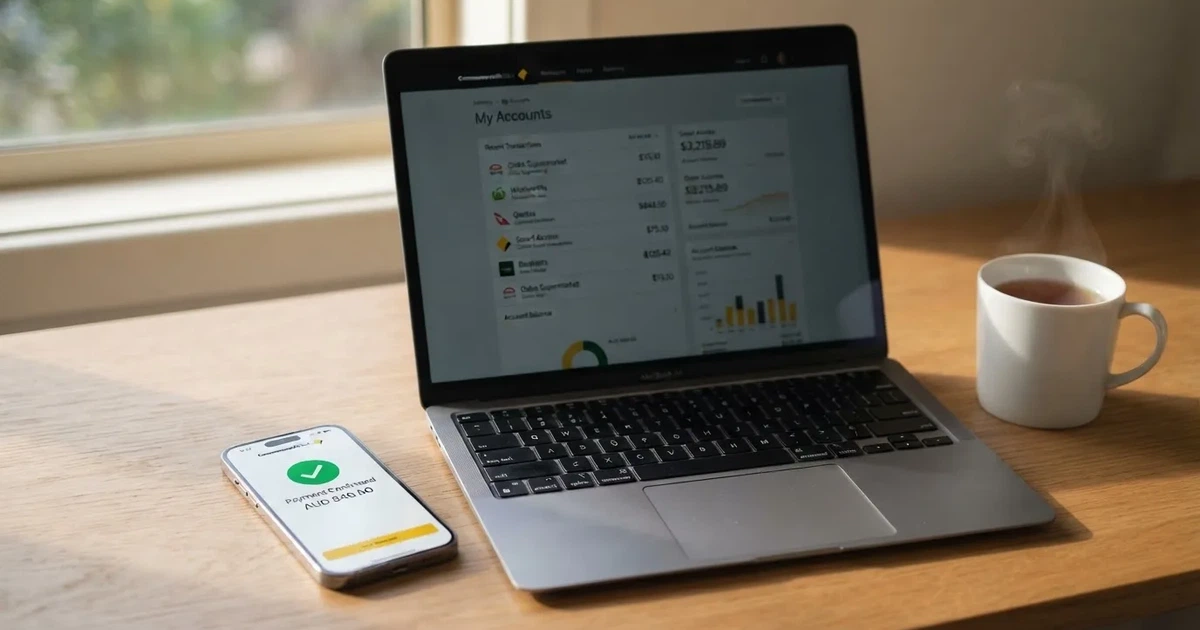
This page compares eleven offshore brands the ACMA has formally warned for offering prohibited interactive gambling services to Australians, and reads what an instant PayID withdrawal actually costs the punter on each one. Data current as of 28 October 2026 and cross-checked against the Australian Communications and Media Authority’s published register of formal warnings and blocking requests.
Table of Contents
- How this comparison is built
- Landscape of the offshore market
- What a PayID withdrawal actually is
- How an “instant” PayID withdrawal moves
- What the ACMA has actually done to these brands
- The blocking rate, the way the regulator measures it
- Where the offshore operator leaves the punter exposed
- Payment methods
- The credit card ban, and what it changed
- The Northern Territory oddity
- RocketPlay — Pulsup Ltd, March 2026
- Level Up Casino — Dama N.V., May 2022
- Woo Casino — Dama N.V., March 2025
- Spirit Casino — Dama N.V., May 2025
- National Casino — Consolutetish S.R.L., July 2025
- Bizzo Casino — Consolutetish S.R.L., July 2025 (and 2022)
- Ignition Casino — Bamboo Media, July 2025
- Instant Casino — EOD Code SRL, February 2025
- Jackbit — Ryker B.V., April 2026
- Casino Intense — Sterplay Holding Ltd, April 2025
- Sky Crown — Hollycorn N.V., September 2022
- How to read this comparison
- What a punter who wants to leave offshore behind can actually do
- Frequently asked questions
How this comparison is built
Ranking an instant PayID withdrawal casino by speed alone is the trap. The rail behind every one of these withdrawals is the same — PayID on the New Payments Platform — so the difference between sites is not how the money moves but where it sits before it moves, and how the operator behaves when it does. The eleven brands on this page are the ones the ACMA itself has acted against, in the order their formal warnings appear on the regulator’s register. The list is the regulator’s, not a recommendation.
Landscape of the offshore market
| Brand | ACMA action and date | Operator named by the ACMA | Subject support |
|---|---|---|---|
| RocketPlay | Formal warning, March 2026 (earlier May 2022 over Dama N.V.) | Pulsup Ltd | — |
| Level Up Casino | Formal warning, May 2022 | Dama N.V. | Listings-only (Westpac) |
| Woo Casino | Formal warning, March 2025 | Dama N.V. | — |
| Spirit Casino | Formal warning, May 2025 | Dama N.V. | — |
| National Casino | Formal warning, July 2025 | Consolutetish S.R.L. | Listings-only (AUSTRAC, Wikipedia) |
| Bizzo Casino | Formal warning, July 2025 (earlier 2022) | Consolutetish S.R.L. | — |
| Ignition Casino | Formal warning, July 2025 | Bamboo Media | — |
| Instant Casino | Formal warning, February 2025 | EOD Code SRL | Listings-only (ecoPayz, PayID) |
| Jackbit | Formal warning, April 2026 | Ryker B.V. | — |
| Casino Intense | Formal warning, April 2025 | Sterplay Holding Ltd | Listings-only (AUSTRAC, iTnews, NAB) |
| Sky Crown | Formal warning, September 2022 | Hollycorn N.V. | — |
The Subject support column reflects what the listings the page consulted actually report about a PayID connection, not what the operator claims. Brands where the consulted sources carried no PayID-specific entry sit on a dash rather than a guess. That is the honest version of the picture; it is also a thinner one than most affiliate pages will draw.
What a PayID withdrawal actually is
A PayID is an easy-to-remember identifier — a mobile number, an email address, an ABN, or an Organisation Identifier — linked to an Australian bank account. Australian Payments Plus runs it, and more than 100 Australian financial institutions now build it into their online banking. Twenty-five million PayIDs were registered by April 2025.

The rail underneath it is the New Payments Platform, which the Reserve Bank of Australia has overseen since it launched in February 2018. NPP settles individually in close to real time, twenty-four hours a day, through the Bank’s Fast Settlement Service. Osko rides on the same platform: a bank transfer between participating Australian banks that arrives in under a minute, weekends included, whether it is addressed to a BSB and account number or to a PayID.
So the speed is real, and the rail is mainstream. The transfer itself is the easy half. The slow half is everything the casino does before it releases the money, and that is what the marketing copy elides.
How an “instant” PayID withdrawal moves
A PayID withdrawal advertised as instant still waits on the casino’s own settlement review. The order the punter actually goes through is roughly this:
The withdrawal is requested from the casino’s cashier, usually against a balance that has been wagered at least once if a bonus was ever taken. The casino runs the request through its internal review — KYC, anti-money-laundering checks, bonus abuse screening, sometimes a manual pass for amounts above a threshold. Only then does it push the transfer through PayID or Osko to the bank account the punter has registered. Once the transfer is sent, it arrives within sixty seconds at a participating bank.
The slow point is the review, not the rail. The speed claim is about the rail. The reader who acts on the speed claim without reading the review side of the sentence is the reader the marketing is aimed at.
Some sites add a quiet limit on top: a daily or per-transaction cap below which the PayID push is automatic, and above which it sits in the manual queue. Where the cap is published it usually sits between A$2,500 and A$5,000 per transaction; above that, the same PayID mechanism is still instant in theory and slow in practice.
What the ACMA has actually done to these brands
The Australian Communications and Media Authority does not license online casinos — none can be licensed in Australia under the Interactive Gambling Act 2001, strengthened in 2017. What it does is investigate, formally warn, and ask Australian internet service providers to block illegal sites. By June 2026, a total of 1,751 illegal gambling and affiliate marketing websites had been blocked since the first blocking request in November 2019, and more than 230 unlicensed gambling services had left the Australian market since enforcement was strengthened in 2017.
The pace has not slowed. In the round reported on 26 June 2026 the ACMA asked ISPs to block 12 more sites: 7Signs, ChromaBet, Donbet, Duospin, Freshbet, Slots Gem, Jacks Club, Lucky Start, Pointsbetz, Spinrise, Vinyl Casino and Wildsino. Several of those names will surface again on affiliate pages this quarter, dressed in fresh creative and the same PayID pitch.
H2 Gambling Capital’s 2025 report puts Australians’ losses to illegal gambling sites at roughly A$3.9 billion a year, and the share of gambling going through legal channels fell from 74% in 2021 to 64% by 2025. The reader should hold those two numbers together: the illegal market is growing in absolute terms, and the legal share is shrinking. A withdrawal that arrives in a minute on a prohibited site is paid for out of that A$3.9 billion.
The blocking rate, the way the regulator measures it
The arithmetic belongs to the writer and the answer is a band, not a single figure. From the ACMA’s first blocking request in November 2019 to the round reported on 26 June 2026, the regulator has asked ISPs to block 1,751 illegal gambling and affiliate marketing websites. That works out to somewhere around eighty to ninety site blocks per month across the full period, with the rate noticeably higher in the most recent reporting rounds — including 12 sites in a single round on 26 June 2026, and earlier rounds of comparable size. Older months carried far fewer; newer months carry the bulk. So the band — roughly eighty to ninety per month on the long-run average, with individual rounds in the low double digits — is the honest way to state it. Quoting a single number invites a reader to treat it as a forecast, and the ACMA publishes no forecast.
This is what the reader is sitting under when an instant PayID withdrawal clears. The site may be reachable today and unblocked tomorrow, with the balance still inside.
Where the offshore operator leaves the punter exposed
The Interactive Gambling Act 2001 targets the provider, not the individual player. An Australian punter is not prosecuted for using an offshore casino. That is the only comfort the structure offers, and it is cold comfort.
There is no Australian consumer protection on an offshore site. There is no Australian complaints body to take a dispute to. There is no Australian recourse if a withdrawal is refused, capped, or reversed after a “review” that the punter never sees the inside of. The balance the punter thinks they have can sit on a site the ACMA blocks the next morning, with no obligation on the operator to pay it out through any other channel. The site that pays in seconds on Tuesday is the same site that can pay nothing on Wednesday.
BetStop — the National Self-Exclusion Register, live since August 2023 — does not reach these operators. It binds Australian-licensed online and phone wagering services only, and an offshore casino is not connected to it. A punter who has self-excluded and then moves to an offshore site has not self-excluded; they have moved to a venue where the register has no effect.
The 1800 858 858 helpline is free, runs 24/7, and offers chat through Gambling Help Online. It is also the only part of the Australian safety net that an offshore casino cannot turn off.
Payment methods
The legal wagering market in Australia uses a narrow set of payment rails compared to the offshore sector. The following table contrasts how these methods function across licensed and unlicensed providers.
| Payment Method | Status in licensed wagering | Suitability for offshore sites |
|---|---|---|
| PayID / Osko | Permitted | Instant on rail, slow on operator |
| Credit Card | Banned since 11 June 2024 | Not permitted |
| Debit Card | Permitted | Variable |
| Digital Currency | Not permitted | Banned in licensed market |
| BPAY | Permitted | Not typically supported |
The legal Australian online wagering market — sports and race betting placed before the event — runs on a narrower set of rails than the marketing around offshore casinos suggests. Since 11 June 2024, licensed online wagering services cannot accept payment by credit card, by any credit-related product, or by digital currency. The penalty is up to A$247,500 for an operator that takes one. Legal deposit routes are debit card, bank transfer, PayID or Osko, and BPAY.
A site that asks an Australian for a credit card or for a crypto deposit is, by definition, operating outside the Australian rules. PayID sits on the legal side of that line for licensed wagering; for the offshore casino brands on this page, PayID is the rail but the operator is not on the legal side of any line.
Westpac’s gambling block works at the card level: it refuses authorisation on transactions registered under the merchant category code “Betting/Casino Gambling” on eligible personal credit and debit cards. ANZ’s gambling transaction block, activated inside the ANZ app, also blocks gambling transactions made through a digital wallet such as Apple Pay on an eligible card, not just the physical card. Once turned on, removing ANZ’s block requires a 48-hour waiting period, and the bank warns that not all gambling transactions will be blocked and that some non-gambling transactions might be blocked in error. By the end of 2025, Apple Pay, Google Pay and Samsung Pay transactions collectively accounted for around 45% of all card payments in Australia by number — which means a bank-level block catches most of the wallet path too.
The credit card ban, and what it changed
The credit card ban that took effect on 11 June 2024 does more than stop the obvious transaction. It shapes how every other rail — including PayID — is used. A PayID-linked bank transfer that originates from a credit account is still a credit-related product in the regulator’s reading. A punter using PayID from a debit account or a transaction account sits inside the law; a punter funding the same PayID transfer from a credit card cash advance does not.
Apple Pay and Google Pay inherit the underlying card’s status. Apple does not charge consumers for using Apple Pay in stores, online or in apps — any surcharge is the merchant’s own card-processing fee — but transaction limits and PIN requirements for Apple Pay purchases are set by the card issuer or merchant, not by Apple. The wallet is plumbing; the card inside it is the policy.
The Reserve Bank of Australia’s July 2025 review proposes removing surcharges only on eftpos, Mastercard and Visa transactions, explicitly leaving American Express outside the proposed surcharge ban. American Express was established in 1850 as a freight-forwarding company and became a card issuer later, launching its first charge card on 1 October 1958; it runs as a three-party scheme rather than the four-party model Visa and Mastercard use. None of that history moves the speed needle. It explains why Amex sits outside the surcharge reform and why a punter on an Amex-funded PayID transfer still pays whatever the merchant chooses to surcharge.
The Northern Territory oddity
Most of Australia’s online bookmakers — including Sportsbet, Bet365 and Ladbrokes — are licensed by the Northern Territory Racing and Wagering Commission. Fifty-two of them. The commission has no full-time staff and meets once a month in Darwin. The April 2026 ABC reporting on a bill to reform this de facto gambling regulator is the first serious public airing of how thin the layer above the licensed bookmaking market really is.
The reader should take that for what it is. The licensed bookmaking market in Australia is regulated by a body that meets monthly and has no permanent staff. The offshore market the ACMA is blocking is the unregulated one on top of it. PayID serves both.
RocketPlay — Pulsup Ltd, March 2026
RocketPlay sits at the top of the regulator’s recent list. The ACMA issued a formal warning to Pulsup Ltd over Rocketplay in March 2026, on top of an earlier May 2022 warning that covered the brand under Dama N.V. Two formal warnings, four years apart, over the same brand. Evidence of a PayID-specific listing for the operator is absent; the row is honest about that with a dash.
The site’s position is unchanged by the warning: online casino games cannot be licensed anywhere in Australia, whatever licence the site displays. A punter who lands on RocketPlay after a PayID withdrawal pitch is on a site the regulator has named twice. The speed the marketing sells is real and the legality is not.
The verdict on RocketPlay is the regulator’s, not the page’s. A reader who treats a formal warning as evidence the operator has not changed is reading the picture correctly; a reader who treats the gap between warnings as a window is reading it backwards.
Level Up Casino — Dama N.V., May 2022
Level Up Casino carries the same May 2022 Dama N.V. warning as five other brands that the ACMA covered in one round — Bambet, Dazard, Level Up, Rocketplay, Wild Tornado and Cobra Casinos. One operator, six brands, one warning. The scale of the action tells the reader something about how a single corporate group can stand up brand after brand after a regulator moves.
A Westpac listing sits in the consulted sources for Level Up; that is what the table’s “listings-only” entry reflects. It is not a PayID listing in itself — it is a record that the consulted sources touch the brand in a non-affiliate context. The reader who wants to know whether Level Up actually uses PayID has to find that out on the site itself, and that finding is not part of this page.
The verdict is the same as the regulator’s: a 2022 warning that has not been withdrawn is still a 2022 warning. The speed the marketing sells and the legality the regulator asserts have not changed.
Woo Casino — Dama N.V., March 2025
The ACMA issued a further formal warning to Dama N.V. over Woo Casino in March 2025, then a separate one over Spirit Casino in May 2025. Two warnings inside two months, one operator. The pattern is the same as the 2022 round: a parent group, multiple brands, regulator moving brand by brand.
No PayID-specific listing was carried by the consulted sources for Woo Casino. The brand is in the comparison because the regulator named it, not because a payment rail has been confirmed.
The verdict on Woo Casino is the regulator’s continuing position: a brand the ACMA named in 2025 is a brand the ACMA has acted against in the year most readers will be looking at the page.
Spirit Casino — Dama N.V., May 2025
Spirit Casino sits one rung below Woo Casino on the ACMA’s recent list — same operator, one month later. No PayID-specific data appeared in our search for Spirit Casino, and the brand earns its row on the regulator’s action alone.
The picture is the picture Dama N.V. has now worn for four years across multiple brands. A punter who lands on Spirit Casino through a PayID withdrawal pitch is on the newest of those brands; newness does not change the regulator’s standing.
The verdict on Spirit Casino is the same as the page’s verdict on the parent group’s other brands: the ACMA’s warning has not been withdrawn, and the brand has no Australian licence to lose.
National Casino — Consolutetish S.R.L., July 2025
National Casino was named in the same July 2025 warning round as Bizzo Casino, with Consolutetish S.R.L. as the operator on the ACMA’s record. The consulted sources include an AUSTRAC listing and a Wikipedia entry; neither is a PayID listing in itself, but they put the brand in non-affiliate contexts the page can lean on.
A punter reading the page should note that the operator behind the brand is a single legal entity across two brands. That means the regulator’s view of one is the regulator’s view of both. The warning, the legal exposure, and the absence of any Australian licence all carry across.
The verdict on National Casino is the regulator’s: a brand that was the subject of a formal warning in July 2025 and has no Australian licence is, in plain language, not a lawful option for an Australian resident.
Bizzo Casino — Consolutetish S.R.L., July 2025 (and 2022)
Bizzo Casino carries the second formal warning tied to the brand since 2022. The ACMA warned TechSolutions (CY) Group Limited and TechSolutions Group N.V. over Bizzo Casino in 2022, then Consolutetish S.R.L. over both National Casino and Bizzo Casino in July 2025. Two operators, one brand, two warnings. The consulted sources carry no PayID-specific listing for Bizzo Casino, so the row’s subject-support entry is honest about that with a dash.
The brand’s history with the regulator is what a punter should weigh first. A site the ACMA has warned twice under two different parent companies is not a site whose ownership has stabilised. The PayID withdrawal pitch — same rail, same speed — does not change that.
The verdict on Bizzo Casino is the regulator’s cumulative view: a brand that has been the subject of two formal warnings under two different corporate parents is, by any honest reading, not a safe choice for an Australian punter.
Ignition Casino — Bamboo Media, July 2025
The ACMA warned Bamboo Media over Ignition Casino in July 2025. Ignition is one of the older offshore casino brands on this list and one of the better-known. The consulted sources carry no PayID-specific listing, so the row sits on a dash for subject support.
The brand sits on the regulator’s list, and that is what the page records. The reader who recognises Ignition from prior marketing should read that recognition for what it is now: the ACMA has formally warned the operator, and that warning is on the public record.
The verdict on Ignition Casino is the regulator’s standing action. The brand’s recognition in the market does not reduce the regulator’s standing.
Instant Casino — EOD Code SRL, February 2025
Instant Casino was the subject of a formal ACMA warning to EOD Code SRL in February 2025. The name on the brand is the word “instant” — which is the exact word the PayID withdrawal pitch turns around, and the exact word the punter is looking for when they arrive on the page. That overlap is worth pausing on.
The consulted sources carry a PayID-related entry for Instant Casino from ecoPayz and from PayID itself, and that is what the table’s “listings-only” entry reflects. The PayID connection is real on the consulted listings; the regulator’s view is what it is.
The verdict on Instant Casino is the most pointed one on the page. A brand named for the speed the reader came looking for is a brand the regulator has formally warned for offering prohibited services to Australians. Speed and lawfulness are not the same thing, and this brand sits at the seam.
Jackbit — Ryker B.V., April 2026
Jackbit was named in a formal ACMA warning to Ryker B.V. in April 2026, alongside CasinOK. Two brands, one operator, one round. No relevant PayID-specific listing for Jackbit was confirmed.
Jackbit is the newest formal warning on the page, and the speed of the regulator’s action is itself part of the picture. The reader who treats an April 2026 warning as stale by the time they read the page is reading the calendar; the regulator moves faster than that.
The verdict on Jackbit is the regulator’s most recent action. A brand the ACMA has named within months of the page being read is, plainly, not a brand the regulator has stood down.
Casino Intense — Sterplay Holding Ltd, April 2025
Casino Intense was named in a formal ACMA warning to Sterplay Holding Ltd in April 2025. The consulted sources include AUSTRAC, iTnews and NAB listings — three non-affiliate touch points — and the PayID connection itself is listings-only on the consulted set.
The brand’s regulatory exposure is what the regulator has published. A punter reading the AUSTRAC or NAB record will see the same operator name the ACMA has warned. Different agencies, same operator.
The verdict on Casino Intense is the regulator’s April 2025 standing action. A brand that the ACMA named in 2025 has not been cleared by the ACMA in the meantime.
Sky Crown — Hollycorn N.V., September 2022
Sky Crown sits at the bottom of the list because the ACMA’s formal warning to Hollycorn N.V. — covering Sky Crown and Blue Leo — was published in September 2022, the oldest action on the page. The consulted sources carry no PayID-specific listing for Sky Crown.
The warning is four years old at the point this page is read. That is not the same as a warning that has been withdrawn. The ACMA’s formal warnings are not time-limited; they remain on the regulator’s record until the regulator says otherwise.
The verdict on Sky Crown is the regulator’s September 2022 standing action. An old formal warning is still a formal warning. The speed the marketing sells has not moved the regulator.
How to read this comparison
The eleven rows above all share the same shape: an offshore brand the ACMA has formally warned, a PayID pitch the marketing still runs, and no Australian licence in between. The differences between rows are in the parent operator, the year of the warning, and whether the consulted sources carry a PayID-specific listing. The similarities are in the rail, the regulator’s standing, and the absence of any Australian consumer protection.
A reader who wants a single sentence to take away has it: an instant PayID withdrawal on any of these sites is fast on the rail and exposed on the operator. The speed is real. The exposure is real. Both halves matter, and the page is built so the reader can see them at the same time.
What a punter who wants to leave offshore behind can actually do
The legal alternative to an offshore casino in Australia is not another casino. Online casino games, online pokies, and in-play betting cannot be licensed in Australia; no state or territory licenses them. What is licensable is wagering on races and sport placed before the event, lotteries and keno — in practice licensed by the Northern Territory. Sportsbet, Bet365 and Ladbrokes are the names that surface most often in that licensed set.
A punter who wants a fast Australian payment rail inside the legal market has PayID, Osko, debit card and BPAY as the four deposit routes the law actually permits. The credit card ban that took effect on 11 June 2024 closes the credit side of that list. Crypto is not on the legal list. The legal wagering market is narrower than the offshore one — and that is the point of it being legal.
A punter who wants to step back from gambling altogether has BetStop, the National Self-Exclusion Register, live since August 2023, and the 1800 858 858 helpline, free, 24/7, with chat at Gambling Help Online. BetStop binds Australian-licensed online and phone wagering services only; an offshore casino is not connected to it. The helpline is.
Frequently asked questions
Is it legal for an online casino to process a PayID withdrawal for a player in Australia?
No. Online casino games, online pokies and in-play betting cannot be licensed anywhere in Australia under the Interactive Gambling Act 2001 as strengthened in 2017. The Interactive Gambling Amendment (Gambling Reform) Bill 2026 passed Parliament on 19 August 2026 and tightens the framework further from 1 January 2027, but the core prohibition is already in force. An offshore site asking an Australian for a PayID transfer for casino play is offering a prohibited service, regardless of how fast the rail delivers the money.
What steps does a casino usually complete before releasing an instant PayID withdrawal?
The casino runs its own settlement review before the PayID transfer is sent: KYC and anti-money-laundering checks, bonus abuse screening, and often a manual pass for amounts above a threshold. The PayID push itself is fast — under a minute between participating banks — but the queue in front of the push is not. A withdrawal advertised as instant is instant on the rail and slow on the operator, and the slow part is the part the marketing elides.
Does a PayID withdrawal clear any faster outside normal banking hours?
No. PayID and Osko both run on the New Payments Platform, which the Reserve Bank of Australia settles individually through its Fast Settlement Service 24 hours a day. A PayID transfer clears at the same speed at 11pm on a Sunday as it does at 11am on a Tuesday. The bottleneck is the casino’s review, not the rail or the clock.
Is there a maximum amount that can be withdrawn instantly through PayID at once?
Most sites set a per-transaction cap — typically somewhere between A$2,500 and A$5,000 — below which the PayID push is automatic and above which the request sits in a manual review queue. The cap is the operator’s, not the rail’s. Above the cap, the same PayID mechanism is still instant in theory and slow in practice; the punter sees the slow part as a delay, not as a different rail.
What identity checks apply before a first PayID withdrawal is approved?
The casino runs KYC before the first withdrawal is released: a government-issued ID, proof of address, and sometimes proof of the payment method itself. The checks are the operator’s, on top of the bank account the PayID is already linked to. A punter who has registered a PayID against a bank account still has to pass the casino’s KYC before the casino will push money to that PayID. A refusal at KYC leaves the balance on the site, with no Australian complaints body to appeal to.
Can an instant PayID withdrawal be recalled once a casino has sent it?
Once a PayID transfer is sent to a participating bank on the New Payments Platform it is final — PayID will never ask anyone to send money in order to receive money, and the rail does not support a pull-back. The casino’s recall window sits before the PayID push, during its own settlement review. After the push, the money is in the bank account; what can still go wrong is a chargeback from the funding card on the deposit side, which the casino may treat as a breach and forfeit the balance against.