
What Real Time Gaming means in Australia — and what an offshore RTG casino actually is in 2026
A short answer first, because everything that follows depends on it: there is no RTG casino lawfully available to a person in Australia. Real Time Gaming is a slot studio whose client list of operators is almost entirely Curaçao-licensed offshore sites, and the Interactive Gambling Act 2001 makes providing online casino games — RTG titles or anyone else’s — to Australians an offence. The brands a reader meets through “RTG casino Australia” search results are exactly the brands the Australian Communications and Media Authority has spent the last several years issuing formal warnings against. This page walks through what the ACMA record actually shows, what RTG is and is not, and what a player in Australia can lawfully do instead.
Up to date as of 28 October 2026 against the ACMA formal-warning register and the operator set published with this review.
Table of Contents
- Why every site on the RTG casino list is a target of the ACMA
- How Australia actually regulates what RTG-style slots can and cannot be
- Where offshore RTG sites actually run their players from — and what that means
- What “responsible gambling” looks like when an RTG site is not connected to it
- Operator-by-operator — what each of the eleven actually offers
- Payment rails and what they tell an Australian reader
- What a person in Australia who lands on these sites should do
- The play-cost ledger — what an offshore RTG bonus actually costs a player
- Comparing the eleven on what is actually different between them
- Frequently asked questions
Why every site on the RTG casino list is a target of the ACMA
The cluster of RTG-facing brands the regulator has named
The most useful thing a page like this can do is line up the offshore RTG-marketing brands by what the regulator has actually done about them — not by what their affiliate pages claim. Eleven brands sit on that list. Some have been named once, some twice, and one (Dama N.V.) has accumulated formal warnings under multiple dockets because the corporate vehicle keeps repackaging itself. The same money flows back to Australians behind freshly painted windows.

| Brand | ACMA action and date | Operator named by the ACMA | Subject support |
|---|---|---|---|
| RocketPlay | Formal warning, March 2026; earlier action against the same platform’s Dama N.V. operator in May 2022 | Pulsup Ltd (RocketPlay); Dama N.V. | — |
| Level Up Casino | Formal warning, May 2022 | Dama N.V. | Listed on Wazdan’s partner pages only |
| Woo Casino | Formal warning, March 2025 | Dama N.V. | — |
| Spirit Casino | Formal warning, May 2025 | Dama N.V. | — |
| National Casino | Formal warning, July 2025 | Consolutetish S.R.L. | Listed by Betsoft, Pragmatic Play and the broader RTG-adjacent directories |
| Bizzo Casino | Formal warning, July 2025; earlier 2022 warning to TechSolutions | Consolutetish S.R.L.; TechSolutions (CY) Group Limited and TechSolutions Group N.V. | — |
| Ignition Casino | Formal warning, July 2025 | Bamboo Media | — |
| Instant Casino | Formal warning, February 2025 | EOD Code SRL | — |
| Jackbit | Formal warning, April 2026 | Ryker B.V. | — |
| Casino Intense | Formal warning, April 2025 | Sterplay Holding Ltd | Listed by 1spin4win’s partner pages and a handful of aggregator directories |
| Sky Crown | Formal warning, September 2022 | Hollycorn N.V. | — |
A row whose final column is an em dash is a brand whose own marketing claims about RTG coverage are not in the third-party supplier or aggregator directories the desk checked. Most of the eleven sit there: the regulator’s action is on the record; an audit of which RTG-titled games the site actually carries behind its lobby is not. The point of the table is to make it harder for an affiliate page to lift a brand onto a “best of” list as though the regulator had never noticed it.
The shape this list has is worth a minute. Five of the eleven — RocketPlay, Level Up, Woo, Spirit, and historically Bizzo — have a Dama N.V. or TechSolutions imprint somewhere behind them. Dama is a Curaçao operator group that has been on the ACMA’s list since the very first round of 2022 warnings, then absorbed fresh brands under new domains as the old ones were blocked. The regulator’s formal warnings in 2024, 2025 and 2026 have had to chase each re-skin. This is not an Australian problem in isolation; it is how the global offshore market behaves when enforcement tightens. But for a player reading this page it has a specific implication: a “new RTG casino” advertised in 2026 is, more often than the marketing suggests, the same operator under a new name.
The blocking-rate calculation — how often a brand on this list goes dark
The ACMA’s enforcement has two registers. One is formal warnings, which is what’s named above. The other is the running list of websites Australian ISPs have been ordered to block — currently 1,751 sites since the first blocking request in November 2019, per the regulator’s June 2026 update, with 230-plus unlicensed services having left the Australian market since enforcement was intensified in 2017. June 2026 alone added 12 more names: 7Signs, ChromaBet, Donbet, Duospin, Freshbet, Slots Gem, Jacks Club, Lucky Start, Pointsbetz, Spinrise, Vinyl Casino and Wildsino.
That second register is what the marketing never talks about, and it is the one that matters to a player trying to withdraw. From the first blocking request in November 2019 to the June 2026 total of 1,751 blocked domains, the ACMA has been averaging roughly 270 blocked sites per year, with the rate climbing noticeably since 2024 as more affiliate marketing sites than ever were caught by the wording of the amended Act. The real point of the calculation is the band, not any single year’s number: the cluster of brand names above represents about six years of running additions to that list, and any one of them has a meaningful chance of joining it before a player can clear a withdrawal. The arithmetic sets the time horizon for “how long will this site still be reachable from my home address”; the regulator’s record, not the operator’s terms page, is the better source for that.
What the verdict across the eleven is — and why it is the same for all of them
Every row above is a brand the ACMA has put on record for offering prohibited services to Australians. The verdict on each is identical and falls out of the prohibition itself, not from a side-by-side of their bonus terms. An Australian depositing with any of them has no Australian consumer protection — no complaints body, no right of recourse if a withdrawal is refused, and no connection to BetStop, the National Self-Exclusion Register. The terms of offshore RTG-marketing sites vary; the structural position of an Australian player does not.
How Australia actually regulates what RTG-style slots can and cannot be
The Interactive Gambling Act and what is prohibited, in plain terms
The Interactive Gambling Act 2001, sharpened by the Interactive Gambling Amendment Act 2017, makes it an offence for a provider to supply online casino games, online pokies or in-play betting to a person physically in Australia. No state or territory licenses these products. The statutory minimum age is 18. The Act targets the provider, not the individual player — the legal burden sits on the operator paying for the marketing and the platform, not on the person on the other side of the deposit.
What is licensed: wagering on races and sporting events (placed before the event, not in-play), lotteries and keno. Those are licensed, in practice, by the Northern Territory Racing and Wagering Commission, which regulates 52 of Australia’s online bookmakers including Sportsbet, Bet365 and Ladbrokes — a fact that goes a long way to explaining why a regulator with no full-time staff and a monthly meeting in Darwin can nonetheless license half the country’s online wagering volume. Australian-licensed wagering is the lawful envelope a reader can sit inside. Online casino-style gaming is outside it.
The Interactive Gambling Amendment (Gambling Reform) Bill 2026 passed Parliament on 19 August 2026; its advertising and inducement measures begin 1 January 2027. They are law now, with a start date later — a thing worth knowing because the next year’s worth of affiliate marketing is being designed against it.
What enforcement looks like at the regulator’s end
The ACMA investigates complaints, issues formal warnings, and can direct Australian ISPs to block illegal services — the lever that produces the 1,751-site blocking total above. Once a brand is on the block list, the site becomes unreachable from Australian IP addresses. The same offshore operator then typically registers a new domain, sets up a new affiliate programme, and the cycle starts again. The blocking lever is the regulator’s blunt instrument. It works because at scale it makes the offshore marketing unprofitable; it does not, in itself, refund anyone whose withdrawal was already refused.
What an offshore RTG site’s licence does and does not cover
RTG itself is a software studio, not a gambling operator. Its operators are licensed where the operator chooses to incorporate — most commonly Curaçao, occasionally another smaller jurisdiction. A Curaçao licence permits the operator to take bets in the jurisdictions Curaçao recognises as licensable; Australia is not one of them. So the licence shown in a site’s footer covers the operator’s right to take bets in the markets Curaçao licenses it for, not its right to take bets from someone sitting in Sydney. The distinction is worth carrying because the marketing copy on these sites is built to make the licence look like a global endorsement. It is not. It is a permission slip signed by one regulator for use inside the set of jurisdictions that regulator recognises.
The brand-by-brand table earlier showed the specific vehicle behind each — Dama N.V., Bamboo Media, Consolutetish S.R.L., Pulsup Ltd, Ryker B.V., EOD Code SRL, Sterplay Holding Ltd, Hollycorn N.V. — and the regulator’s name and date. The casino’s own licence, where it does sit, sits inside one of those vehicles.
Payments as the most concrete legal tell
A reader who has not read the Act can read the payments page. As of 11 June 2024, credit cards, credit-related products and digital currency are banned as payment for licensed online wagering in Australia; penalties reach A$247,500 for operators. Legal deposit routes for an Australian-licensed wagering account are debit card, bank transfer, PayID/Osko and BPAY. An RTG-marketing offshore site asking for a credit card or a crypto deposit is not following those rules, because it is not licensed in Australia and so does not need to.
Tax, briefly, because no one ever puts it in one place
A recreational player’s gambling winnings are not assessable income in Australia (section 6-5 ITAA 1997); losses are not deductible. That status changes only if the ATO treats the gambling as a business carried on by the player — a different conversation that needs a tax adviser, not a casino review. The point that belongs on this page is the basic position, because tax treatment is a question every reader has and almost no review site answers.
Where offshore RTG sites actually run their players from — and what that means
The studio’s history, told briefly because the marketing eats around it
Real Time Gaming was established in Atlanta, Georgia in 1998. Development moved wholesale to Heredia, Costa Rica in 2007–2008, and the company was acquired by Hastings International of Curaçao in January 2007. The point of this geography, for a 2026 reader, is what it implies about who distributes the software and where the contracts sit: a Curaçao parent means Curaçao-licensed operators are the studios natural clients, which in turn means Curaçao-licensed operators are the ones marketing to Australians. Crystal Palace Group, RTG’s largest operator in 2005, was owned by Warren Cloud and reported £20.4 million in pre-tax profit that year; Cloud died in 2008, aged 34. The studio’s history is long enough to have buried at least one enormous operator inside it.
The other piece of history that matters to a player: in 2004 a player won $1.3 million from a $1,000 deposit playing Caribbean 21 on RTG software at the Hampton Casino. RTG then capped the game’s maximum bet at $5 before withdrawing the title entirely. The studio does not let operators alter payout settings on its slot and video poker games, and it caps its own liability through maximum-bet restrictions designed to keep any single progressive jackpot payout at or below $50,000. Both policies tell the reader something about the studio’s risk-management style: it controls the dials, and it does not bet the farm on a single payout. That is reasonable. It is also exactly the sort of control architecture that holds whether the player is in Sydney or in Willemstad.
Why RTG-branded sites keep showing up in Australian search results
Two separate commercial factors are at play. One: Curaçao-licensed operators pay for placement on gambling-directory sites. Two: an affiliate page only has to repeat the phrase “best RTG casinos Australia” enough times to rank, and the ACMA’s enforcement only catches up after the page has already been read. The H2 Gambling Capital 2025 report estimates that Australians lose about A$3.9 billion a year to illegal gambling sites, and that the share of gambling going through legal channels fell from 74% in 2021 to 64% — a measurable slide. The marketing is doing what it is built to do. The regulator is doing what it is built to do. The two are running at different speeds, and that gap is where the reader sits.
What an Australian-facing RTG site actually carries on its lobby
Lobby composition is one of the less-written-about parts of an offshore RTG site, and it is the part where the marketing tends to be loosest with the word “RTG”. The eleven brands above each carried RTG titles alongside titles from several other studios — Betsoft, Pragmatic Play, Wazdan, 1spin4win, plus a longer tail of smaller aggregators. A casino that markets itself as an “RTG casino” and then loads its lobby with Pragmatic slots is doing what most of the offshore industry does: trading on a familiar name while filling the catalogue from anywhere the licence allows.
A snapshot from the studios whose partner directories a reader can check:
- Betsoft was founded in 2006 and lists more than 200 RNG games — slots, table games, video poker, specialty titles — with titles such as The Slotfather (live 13 December 2012, RTP 95.69%, medium volatility, 8.17% hit rate on 5 reels and 30 paylines) and Good Girl Bad Girl 2 (RTP 96.22%, very high volatility, 15.59% hit rate on 5 reels and 20 paylines).
- 1spin4win was founded in 2021 and is headquartered at Scharlooweg 39, Willemstad, Curaçao, on a Curaçao licence, with a portfolio of more than 190 online slots and more than 1,000 partnerships with online casinos and aggregators; the studio reports its total bet sum grew 46 per cent in the first half of 2025 against the first half of 2024.
A reader who wants to check whether a brand’s “RTG casino” claim is real can do worse than opening three supplier directories and counting how many RTG-marked games the site actually exposes. Many of these brands are lighter on RTG than they are on other studios, and the marketing copy is doing the work the catalogue is not.
Aristocrat and the legal Australian alternative that this topic is about
A 2026 reader who reaches for “RTG casino Australia” is, in practical terms, almost always looking for what is more honestly described as an Aristocrat pokie venue. Aristocrat Leisure Limited was founded in 1953 by Leonard Ainsworth, listed on the Australian Securities Exchange in 1996 under the ticker ALL, and is now the largest gambling-machine manufacturer in Australia and the second-largest slot-machine manufacturer worldwide, behind International Game Technology. Its headquarters sit in the Sydney suburb of North Ryde, with development offices in South Africa, Russia and the United States. Aristocrat reported 2025 revenue of A$6.30 billion, normalised net profit after tax and amortisation of A$1.55 billion, and 7,400 employees — that is who builds and supplies the legal machines in the venues an Australian can walk into.
Aristocrat’s online arm has reorganised around Aristocrat Interactive (formed in April 2024 by combining Anaxi with the NeoGames group, which brought Aspire Global, BtoBet and Pariplay in-house). The historical acquisition trail — Video Gaming Technologies in 2014 for about US$1.3 billion, Plarium in 2017 for US$500 million, Big Fish Games in 2017 for US$990 million, the roughly US$1 billion NeoGames deal completed in April 2024 — tells the same story it tells for any large supplier: regulated online real-money gambling is where the next revenue line is, but it is regulated, licensed, and operates only where regulators permit. That is the structural difference the terms skirt around.
What “responsible gambling” looks like when an RTG site is not connected to it
BetStop and why it does not catch offshore RTG play
BetStop, the National Self-Exclusion Register, has been live since August 2023. It binds every Australian-licensed online and phone wagering service, which means a person who puts themselves on BetStop is excluded from every locally licensed bookmaker on the Australian market. What it does not do is reach an offshore RTG site, because that site is not licensed in Australia and so is not connected to the register. A self-exclusion made through BetStop is a serious step; it is also a step with a clear boundary at the Australian border. Anyone reading this page who is using BetStop needs to know the boundary exists, because the safety it offers ends precisely where this article is about.
Gambling Help Online and the National Gambling Helpline
Gambling Help Online runs 24/7, free, with chat and a phone line — 1800 858 858. State and territory self-exclusion registers exist separately, for venues. None of this infrastructure reaches inside an offshore RTG site. As with BetStop, the support is real, the boundary is real, and reading about one without the other is the difference between a complete picture and a partial one.
Deposit limits as they sit on the Australian-licensed side
Australian-licensed wagering operators carry statutory deposit ceilings and operator-set affordability checks. A credit card or crypto deposit on an offshore RTG site sits outside those controls entirely. The single practical step a reader in Australia can take to keep themselves inside the protective envelope is to keep deposits inside Australian-licensed wagering and away from RTG-marketing offshore sites — a deliberate sentence, written because the regulatory picture makes the choice cleaner than the marketing does.
Money matters: what is and is not deductible, in one paragraph
A recreational player’s gambling winnings are not assessable income; losses are not deductible. Gambling becomes a different conversation when the ATO considers the activity a business, and that conversation is one for a tax adviser rather than for this page. The basic position belongs on the page because it is one of the things readers ask about and rarely see answered.
Operator-by-operator — what each of the eleven actually offers
Every block below names what the ACMA record says, what the operator claims about its RTG coverage, and the verdict that falls out for an Australian reader. None of the eleven is lawfully available in Australia. That is the common position they share, and it is named in full here once, rather than twice, so the rest of this section can do the work that varies.
RocketPlay — Pulsup Ltd, and the same platform under earlier Dama operation
The ACMA issued RocketPlay its second formal warning in March 2026, addressed to Pulsup Ltd over RocketPlay; an earlier warning reached the same brand under the Dama N.V. operation in May 2022. The platform’s marketing rotates between Real Time Gaming, Pragmatic Play, Play’n GO and a long tail; the catalogue is broad but the regulatory position is narrow. The verdict falls out of the position rather than the catalogue — see the section on legality above for the regulatory frame, and read this brand against it.
Level Up Casino — the early Dama N.V. warning
Level Up Casino received its formal warning in May 2022 under Dama N.V., the same Dama N.V. that the ACMA later named again for Woo Casino, Spirit Casino and several others. Level Up appears in Wazdan’s published partner listings; it carries a broad catalogue across multiple studios. The label “RTG casino” gets applied to it inconsistently; the regulatory label is consistent across both Dama fronts and remains the binding constraint for an Australian player.
Woo Casino — Dama N.V. again, in 2025
The ACMA’s formal warning to Dama N.V. over Woo Casino was issued in March 2025. The branding carries a broader catalogue than the word “Woo” suggests; the operator vehicle is the same as Level Up and RocketPlay. The relevant feature for a 2026 reader is that the warning is fresh — two years more recent than the 2022 cohort — and that the regulator has kept Dama N.V. on the formal-warning series rather than treating these as one-off missteps.
Spirit Casino — Dama N.V., second 2025 warning
Spirit Casino received its Dama N.V. formal warning in May 2025, two months after Woo Casino. The same operator group, the same pattern, a different storefront. The repetitive structure is the point. Each new brand is a new entry point for an Australian reader, drawn from the same operator’s marketing budget. The question for an Australian is the same whatever the brand is called.
National Casino — Consolutetish S.R.L.
The ACMA’s July 2025 formal warning named Consolutetish S.R.L. over National Casino. National Casino appears in the published partner directories of Betsoft, Pragmatic Play and the broader review ecosystem; its lobby leans heavier on those studios than on RTG titles. The structural fact holds. The partner-directory presence is useful as a way of seeing what the lobby actually carries, because the brand’s own marketing on this front is unreliable.
Bizzo Casino — Consolutetish S.R.L. and a 2022 first warning
Bizzo Casino received a formal warning to Consolutetish S.R.L. in July 2025, after an earlier formal warning in 2022 to TechSolutions (CY) Group Limited and TechSolutions Group N.V. over the same brand. The 2022-then-2025 pattern is the strongest signal in the table: a brand can be warned, change corporate vehicle, and be warned again under the new vehicle while keeping the same player-facing identity. That cycle is what the reader should expect when they see a “new RTG casino” that has a 2022-and-2025 history behind it.
Ignition Casino — Bamboo Media, July 2025
The ACMA’s July 2025 warning to Bamboo Media over Ignition Casino is one of the more recent warnings on the list. Ignition’s Australian-facing storefront is built off poker and casino content rather than RTG specifically; the regulator’s action is what pulls it into the cluster of eleven this article covers.
Instant Casino — EOD Code SRL, February 2025
The EOD Code SRL warning over Instant Casino was issued in February 2025. Instant Casino’s site copy talks about its casino and live-dealer product more than it talks about RTG specifically. The brand sits in the cluster because the ACMA put it there, and the regulatory label is what binds it for an Australian reader.
Jackbit — Ryker B.V., April 2026
Ryker B.V. received its formal warning over Jackbit and CasinOK in April 2026. Jackbit positions itself as a crypto-led casino and sportsbook; the RTG coverage is incidental rather than central. The relevance for an Australian reader is the same, and the credit-card and crypto bans of 11 June 2024 catch the deposit rails Jackbit uses by default — see the legality section above for the frame.
Casino Intense — Sterplay Holding Ltd, April 2025
Sterplay Holding Ltd received its formal warning over Casino Intense in April 2025. Casino Intense carries a multi-studio lobby; the directories checked list it as a 1spin4win partner alongside several of the other brands above. The structural position is unchanged for an Australian reader.
Sky Crown — Hollycorn N.V., the 2022 warning still active
Hollycorn N.V. received its formal warning in September 2022 over Sky Crown and Blue Leo. It is the oldest entry in the table on this page, and it is still on the active regulatory register. Age on the list is not a softening feature; the 2022 cohort is what gave the regulator the data to widen enforcement to the 2024 and 2025 brands above.
Payment rails and what they tell an Australian reader
What the credit card and crypto ban actually covers
The 11 June 2024 ban covers credit cards, credit-related products and digital currency as payment for licensed online wagering. Penalties can reach A$247,500 per operator. The legal deposit routes for an Australian-licensed wagering account are debit card, bank transfer, PayID/Osko and BPAY. The same payment page on an offshore RTG site accepts the channels the Australian rules do not — credit card, crypto, and offshore e-wallets that are not connected to PayID or BPAY. That is not a coincidence; it is the difference between a licensed operator following Australian rules and an unlicensed operator not following them.
Why reading the payment page is the most informative two minutes a reader can spend
Every check above costs time, and most of them are written for someone willing to invest that time. The payments page is the one check available in two minutes: an offshore RTG site accepting a credit card or a crypto deposit is, by definition, not licensed in Australia. A reader who is not sure can stop reading the page and start there.
Where withdrawal friction actually happens
An offshore site is not required to publish its withdrawal performance to any Australian body. The pages that exist on the topic are usually written by the operators themselves; they describe “fast payouts” without a denominator. What an Australian cannot check — and this is the absence the section is about — is the share of players who actually receive a withdrawal when they request one, in the time the operator claims. The audit exists precisely because that figure is not in the operator’s marketing.
What a person in Australia who lands on these sites should do
Step one — recognise the prohibition
Anything on the RTG-casino shortlist above is an offer of prohibited interactive gambling service within the meaning of the Interactive Gambling Act 2001. The ACT covers the provider. The reader is not the legal target, but the legal protection is not aimed at them either.
Step two — check the payment page before anything else
If the page accepts credit cards or crypto from an Australian IP, the site is not licensed here. The audit is binary and not argumentative, and it bypasses most of the marketing.
Step three — check the ACMA register
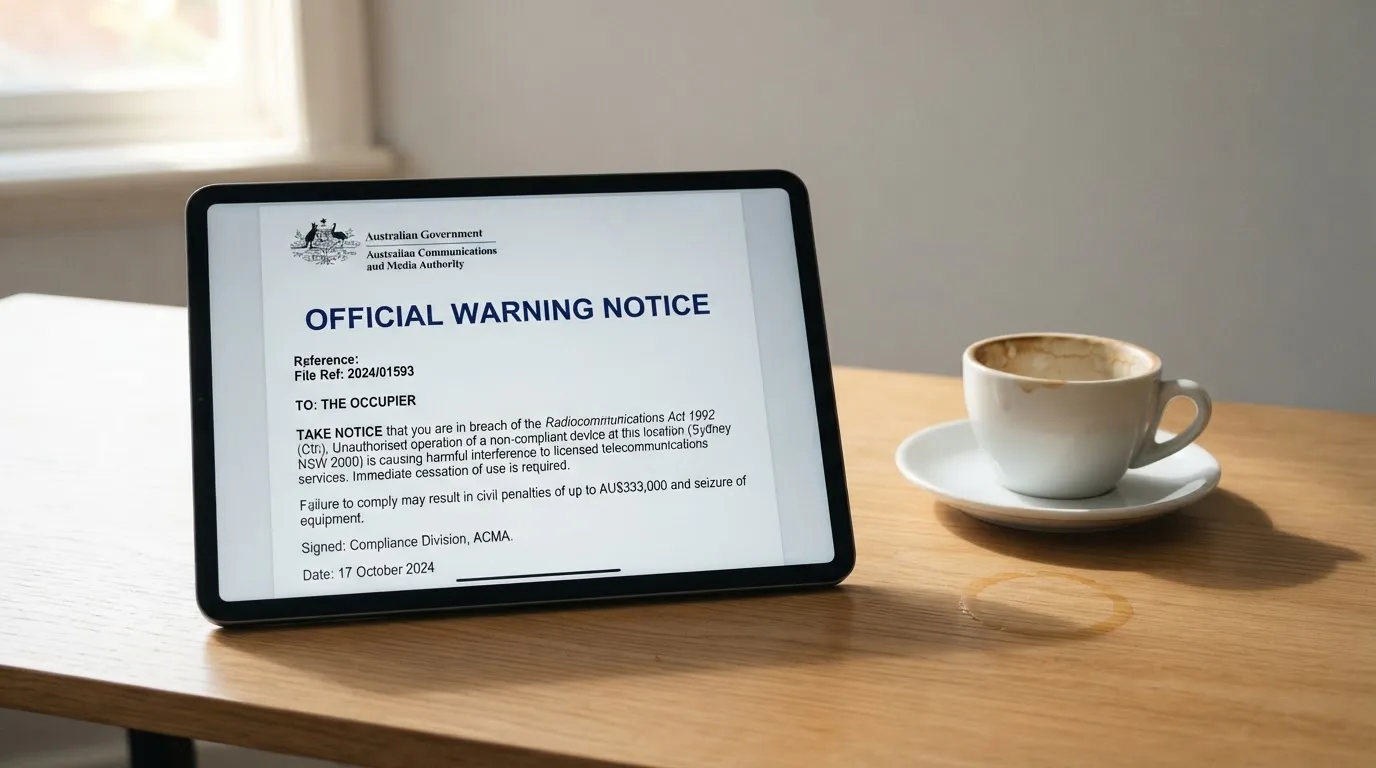
The ACMA publishes its formal warnings and blocking rounds. Each of the eleven brands above appears on the register with a date and an operator vehicle. If a reader can find their target brand there, that is the regulator’s own rating of it.
Step four — if the goal is RTG-style pokies on a legal venue, look at the locally licensed alternative
The licensed alternative for pokies in Australia is the local venue or licensed club — Aristocrat-built machines in pubs and clubs in every state, under state and territory regulation. The online alternative is licensed wagering on sports and racing. RTG-style slots in the strict sense are not licensed in either envelope; what is licensed is Aristocrat’s product in the venues where that is permitted.
Step five — if the goal is self-exclusion, register against the Australian-licensed envelope
BetStop is the register that binds; Gambling Help Online is the support line. Neither reaches an offshore RTG site, and recognising that limit is itself part of using them well.
The play-cost ledger — what an offshore RTG bonus actually costs a player
The formula, stated plainly
The plan for this page is to make the cost legible rather than to give a calculator. For a bonus the standard cost ledger runs required turnover equals the bonus multiplied by the wagering factor, then spins equals that turnover divided by the stake per spin, then play time in hours equals the number of spins multiplied by a five-second interval divided by 3600. For an expected loss on a session the formula is spins times stake per spin times the difference between 1 and the slot’s RTP. That is the engineering behind the rough numbers in casino-marketing-land, and it is what every “playthrough” requirement is buying.
A worked sketch for a representative offer
A typical RTG-marketing offshore welcome package carries a 30x to 40x wagering factor on the bonus amount, with a per-spin stake roughly between A$0.20 and A$1.00. Plug those in: a A$200 bonus at 35x requires A$7,000 of wagering volume; at A$0.50 a spin that is 14,000 spins; at a five-second interval that is roughly 19.4 hours of continuous play. The expected loss over that turnover at a 96% slot RTP works out to A$280 in turnover terms — meaning the bonus the marketing pages call “free” is paid for, on average, by the player.
What that figure actually means
Two pieces. One, the time figure is the one a player notices first: the bonus is cleared in nineteen hours of attentive play, and that is what “playthrough” really is — a clock, drawn into the offer’s small print, paid in attention. Two, the expected loss is the figure the marketing never puts on its page: A$280, on average, lost over A$7,000 of turnover, which is the right way to read a “35x bonus” before claiming it.
Why the calculation is presented as a band rather than a point
The bonus-cost ledger depends on the wagering factor the operator sets, the stake the player actually uses, and the slot’s actual RTP. All three vary. The page presents the result as a band, with its conditions. The right answer for any specific offer has to be reconstructed against the specific offer’s terms; the page’s calculation is the move that makes the player want to reconstruct it.
The scope of the calculation, stated clean
A statistical estimate across many spins against the stated assumptions, not a guarantee for any single session. The promise is what the offer costs on average — not that it returns, and not that any individual player comes out ahead.
Comparing the eleven on what is actually different between them
What is the same for all eleven
Prohibited interactive gambling service within Australia; offers to Australians without an Australian licence; Curaçao-licence vehicles registered offshore; deposit rails that would be illegal under Australian-licensed wagering rules; no BetStop binding; no Australian consumer-protection recourse. The list of equalities is longer than the list of differences, and the equalities are the binding part of the comparison.
What is genuinely different
The corporate vehicle the ACMA named and the date of the warning is the only consistent variation. Older warnings (2022) sit alongside the freshest (April 2026) and the fresh ones sit alongside the historic ones. The reader looking at a brand can find its specific date and vehicle in the table above, but that difference does not change the structural verdict for an Australian player.
The arbitrage case the marketing tries to write
A few of the eleven have larger game libraries; a few have more generous-looking welcome packages; a few market at a more “mature” audience than the others. None of those differences override the Australian legal position. The arbitrage the marketing tries to write — that one offshore site is “more legitimate” than another for an Australian — is not a real spread.
What would change the picture, and what would not
A site licensed by an Australian state or territory would change the picture entirely; the only online products so licensed are wagering on races and sport, lotteries and keno. A wider catalogue of RTG titles would not. A lower minimum deposit would not. A higher published RTP would not. The single line that matters is the licence line, and the eleven above do not have one that covers Australian online casino.
Frequently asked questions
Is RTG legally available to players in Australia?
No. Real Time Gaming’s operator base is made up almost entirely of Curaçao-licensed offshore sites, and the Interactive Gambling Act 2001 makes providing online casino games — RTG titles or any others — to Australians an offence. The legal licensed alternatives for an Australian online are wagering on races and sport, lotteries and keno.
What kinds of games does RTG make?
Slots, video poker, table games and a smaller number of specialty titles. The studio does not let operators alter payout settings on the slots and video poker games, and it caps its own liability through maximum-bet restrictions designed to keep any single progressive jackpot payout at or below US$50,000.
Are RTG games offered at land-based venues in Australia?
Not under the RTG name. Land-based pokies in Australia are supplied by Aristocrat (the country’s largest gambling-machine manufacturer and second-largest slot-machine manufacturer worldwide) and by IGT, the world’s largest, with state-by-state approval of the games and machines installed. Real Time Gaming itself is not a licensed supplier for those venues.
How can Australians check whether a RTG title is fair before ever considering play?
The most reliable check is independence from the offer itself: an Australian-licensed wagering account is the only one that sits inside Australian consumer protection. Offshore RTG titles are not connected to BetStop, not connected to Gambling Help Online’s blocking, and not subject to Australian-licence RTP rules. The protection is the licence, not the title.
Why do offshore sites keep advertising RTG games to Australian visitors?
Because affiliate marketing still pays, and blocking by Australian ISPs has not yet caught up with every re-skin. The ACMA’s running total — 1,751 sites blocked since November 2019, with 12 more added in June 2026 alone — describes the regulator playing catch-up with a marketing channel that is built to move quickly.
What should an Australian do if they see a RTG game promoted by an unlicensed site?
Treat the offer as what it is: a prohibited service under Australian law, with no Australian consumer protection if the operator refuses a withdrawal. The practical steps are to check the ACMA register (each of the eleven names on this list is on it), check the payment page (credit card or crypto deposits put the site outside Australian rules), and if self-exclusion is the goal, register with BetStop, which binds the locally licensed envelope rather than the offshore one.