
Best casino in Hobart in 2026: the venue, the law, and the alternatives the ACMA has named
Anyone searching for the best casino in Hobart is asking, in plain terms, where the casino is, what runs on the floor, and whether they have to fly somewhere to play. There is a single licensed casino in Tasmania — Wrest Point Hotel Casino, in Sandy Bay — and a long list of online brands that the Australian Communications and Media Authority has named for trying to take Australian play when the Interactive Gambling Act 2001 forbids it. This page covers the venue itself, what runs on it, and what the prohibition costs anyone who goes around it.

Data current as of 28 October 2026; verified against the ACMA register of formal warnings and blocking requests.
Table of Contents
- The games on the floor at Wrest Point: tables, machines, and what the catalogue actually looks like
- The eleven ACMA-named brands and the licensed venue
- The fundamentals: where Hobart’s casino is, who owns it, and what a visit actually requires
- The law: why the online alternatives cannot be licensed, and how the prohibition is enforced
- Player wellbeing: the safeguards, the self-exclusion tools, and what does not apply offshore
- The venue itself: history, footprint, and the AUD 65 million renovation
- What an offshore brand actually costs the punter who uses it
- Other licensed Australian casinos: how Hobart’s offer compares nationally
- The eleven brands, side by side: what each one promised and where it stands
- Payments, taxes, and what a real visit to Wrest Point actually settles
- A note on what this page does not do
- Frequently asked questions about the casino in Hobart
The games on the floor at Wrest Point: tables, machines, and what the catalogue actually looks like
Wrest Point runs both halves of a real casino product: electronic gaming machines and live table games. The machine count sits above 650 units after a multi-year audit of the floor that followed a 2015 Tasmanian Gaming Commission fine for allowing a faulty poker machine to remain in service. That fine — A$17,500 on the faulty machine, on top of an earlier A$13,000 for six machines running outside approved game rules — is what pushed Federal Group to check every unit on site. The audit itself is the practical reason a visitor today walks past machines that have been individually signed off rather than the kind that broke the rules in 2014.
The table side is what makes Wrest Point a casino in the older sense of the word. Blackjack, roulette, baccarat and craps all run on the floor, in line with the Hobart-specific search demand for those four games individually. A pokies-style machine catalogue sits beside them — the term “pokies” is the one Australian players use, and it covers the same electronic gaming machines the venue calls its EGMs. “Online pokies” is the phrase players use when they are describing the offshore product the IGA prohibits; nothing about the wording makes the offshore version legal.
The wider catalogue is broader than the four named tables. Wrest Point operates as a hotel-casino complex with bars, a revolving restaurant on the 17th floor of the Sir Roy Grounds–designed dodecagonal tower, and a convention centre built in 1984 for more than A$20 million. None of that is the gaming floor, but the gaming floor is the reason most visitors come through the door. A player who treats the venue as a casino, rather than as a hotel with a casino attached, finds roughly 650 machines, the named table games, and the bar and restaurant infrastructure that turns a night of play into something that does not require leaving the building to eat.
A second-tier cluster of search demand — “Hobart casino rooftop bar” — maps onto the revolving restaurant on level 17 of the hotel tower rather than onto a dedicated rooftop gaming area. The 64-metre tower is still the tallest building in Tasmania, and the view is the draw; the gaming happens at ground level.
The eleven ACMA-named brands and the licensed venue
This is not a ranking. Online casino games cannot be licensed in Australia, so a “best online casino in Hobart” list would be a list of unlicensed services the regulator has already acted against. What follows is a shortlist of brands the ACMA has formally warned under the Interactive Gambling Act 2001, with the operator named and the action dated. It is the regulator’s own shortlist, not a recommendation.
Eleven brands have been the subject of ACMA formal warnings over the period research covers. Each entry below uses the brand, the ACMA-named operator, and the warning date. None of them carries a gambling licence from any Australian state or territory; the offshore licence some of them display does not override the IGA.
| Brand | ACMA action and date | Operator named by the ACMA | Subject support |
|---|---|---|---|
| RocketPlay | Formal warning, March 2026 | Pulsup Ltd | — |
| Level Up Casino | Formal warning, May 2022 | Dama N.V. | listings-only |
| Woo Casino | Formal warning, March 2025 | Dama N.V. | listings-only |
| Spirit Casino | Formal warning, May 2025 | Dama N.V. | — |
| National Casino | Formal warning, July 2025 | Consolutetish S.R.L. | listings-only |
| Bizzo Casino | Formal warning, July 2025 (earlier 2022) | Consolutetish S.R.L. (earlier TechSolutions) | — |
| Ignition Casino | Formal warning, July 2025 | Bamboo Media | — |
| Instant Casino | Formal warning, February 2025 | EOD Code SRL | — |
| Jackbit | Formal warning, April 2026 | Ryker B.V. | — |
| Casino Intense | Formal warning, April 2025 | Sterplay Holding Ltd | listings-only |
| Sky Crown | Formal warning, September 2022 | Hollycorn N.V. | listings-only |
The pattern is what the regulator’s record shows, not what the brands’ marketing pages claim. Dama N.V. alone accounts for four of the eleven names: Level Up and a 2022 cluster of six Dama brands, then Woo Casino and Spirit Casino in 2025. Consolutetish S.R.L. accounts for two (National Casino and Bizzo), with Bizzo also caught by name under earlier TechSolutions ownership in 2022. The remaining five sit one warning each, with operators running from Curaçao-registered holding companies through to smaller vehicles like Pulsup Ltd and Ryker B.V. The variety of operators, and the pace of new warnings in 2025 and into 2026, is what an offshore licence has actually been worth against the Australian prohibition.
The “Subject support” column is research’s honest reading of what each brand’s listings say about Wrest Point or Hobart — not what the brand itself claims. Five of the eleven sit on listings-only coverage (the brand shows up in third-party listings as being associated with Australian-facing play); six sit on no-data coverage, meaning research found nothing tying them specifically to Hobart. None of them is the licensed Hobart casino, and none of them is a substitute for it.
The fundamentals: where Hobart’s casino is, who owns it, and what a visit actually requires
Hobart has one licensed casino: Wrest Point Hotel Casino, 410 Sandy Bay Road, Sandy Bay. It opened on 10 February 1973, the first legal casino in Australia, after a Tasmanian referendum on 14 December 1968 approved the development with 56% support. The licence sits with Federal Group, the Tasmanian operator that has run the venue for its entire operating life.
The minimum age to enter is 18, in line with the national minimum for any form of gambling under Tasmanian law. The venue enforces this at the door, and the same minimum applies to the gaming floor, the bars inside the casino, and the purchase of any gambling product on site. There is no separate casino age — the IGA and the Tasmanian Gaming Act treat 18 as the floor for everything from a slot machine to a table game.
What a visitor actually does on arrival: walks into the main entrance on Sandy Bay Road, presents identification at the entry point if asked, moves onto the gaming floor. There is no membership requirement and no enrolment step. The venue runs as a casino-hotel-convention centre, so the same building houses the 269-room hotel tower, the convention centre, the bars, and the revolving restaurant. A visitor who wants to stay over books the hotel separately; a visitor who wants only the gaming floor can come in for the night without booking a room.
The age floor is the one entry criterion that catches readers off guard. Tasmania’s cashless gaming card reform — the change that brought default loss limits of A$100 a day, A$500 a month and A$5,000 a year, plus mandatory ten-minute breaks after two continuous hours of play — applies to hotel and club poker machines from December 2025, not to Hobart’s casino floor. The casino sits outside that reform’s scope, which means the older cash-and-machine regime applies on the floor itself. A punter planning a session needs to know which product they are sitting at: a hotel poker machine on the same island as the casino is no longer the same product it was two years ago.
The law: why the online alternatives cannot be licensed, and how the prohibition is enforced
The Interactive Gambling Act 2001, as tightened by the Interactive Gambling Amendment Act 2017, makes it an offence to provide online casino games, online pokies or in-play betting to a person physically in Australia. No state or territory issues a licence for any of those products; what is licensable is wagering on races and sporting events placed before the event, lotteries, and keno. The Northern Territory Racing and Wagering Commission regulates 52 of Australia’s licensed online bookmakers — Sportsbet, Bet365 and Ladbrokes among them — but that is a wagering licence, not a casino-game licence, and the commission itself runs without full-time staff and meets once a month in Darwin.
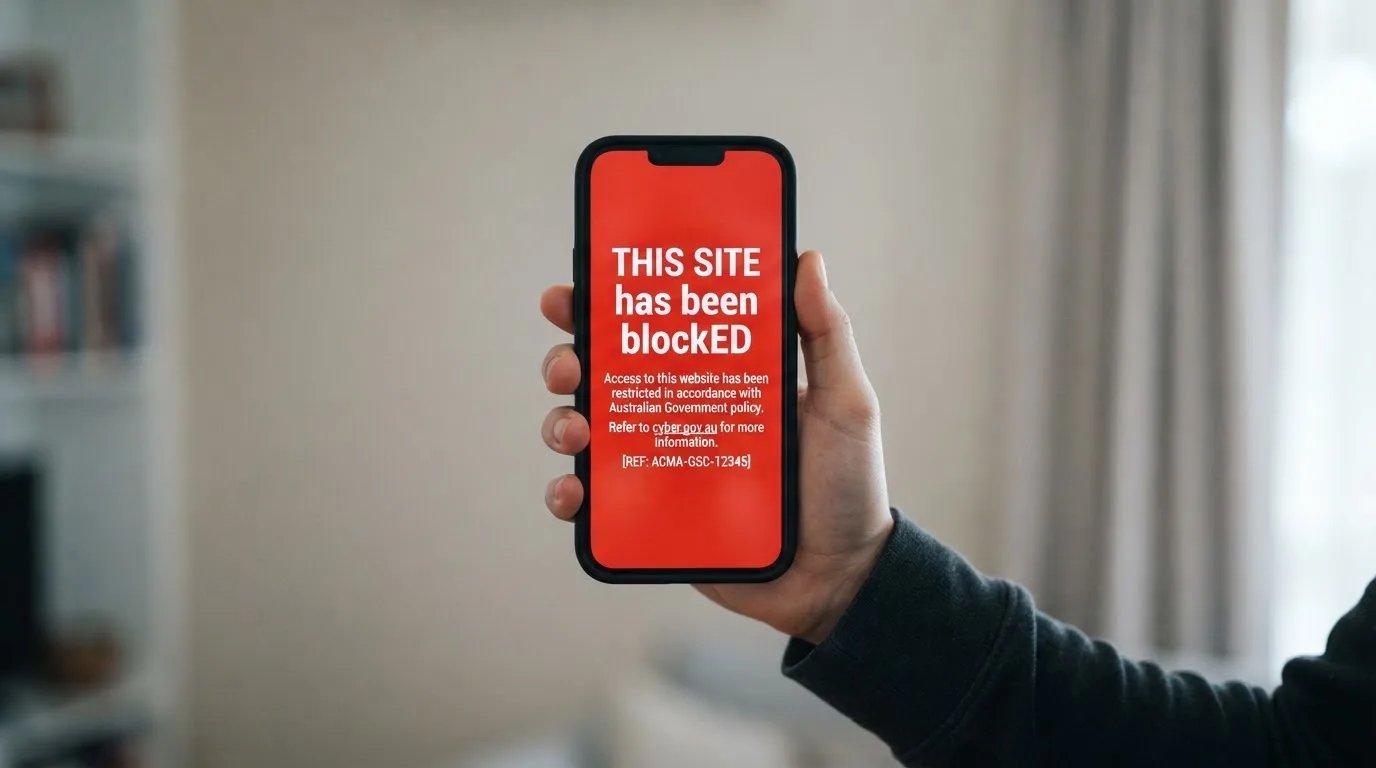
Enforcement runs through the ACMA. The regulator investigates, issues formal warnings, and directs Australian internet service providers to block illegal sites. According to the ACMA’s published figure for 2026, a total of 1,751 illegal gambling and affiliate marketing websites had been blocked since the first blocking request in November 2019, and more than 230 unlicensed gambling services had left the Australian market since enforcement was strengthened in 2017. A round reported on 26 June 2026 asked ISPs to block another 12 sites — 7Signs, ChromaBet, Donbet, Duospin, Freshbet, Slots Gem, Jacks Club, Lucky Start, Pointsbetz.com, Spinrise, Vinyl Casino and Wildsino. The pace has not slowed; it has accelerated.
The rate is the number worth holding onto. From November 2019 to the 2026 snapshot is roughly 80 months; 1,751 sites across that window works out to an average of around 22 blocked sites a month, or roughly one every 36 hours, with the rate varying round by round. The first round in late 2019 cleared a small initial set; later rounds have sometimes asked ISPs to block 50 or more sites in a single notice. The arithmetic that matters for a reader is the cumulative total, not the per-month average — a service can be added to the next blocking notice at any point, and a balance held on it disappears with the block.
The 2026 reform sits in a separate box. The Interactive Gambling Amendment (Gambling Reform) Bill 2026 passed Parliament on 19 August 2026; its advertising and inducement measures commence 1 January 2027. That is law with a start date, not law in force on a 2026 page. A reader looking at a “best casino in Hobart” search today is reading under the regime as amended in 2017, with the 2026 changes queued to take effect from the start of next year.
What the prohibition costs the person using an offshore site
The IGA targets the provider, not the individual player. That is the part that misleads people — it sounds like “so I’m fine,” and the rest of the sentence is what makes that read wrong. An offshore site gives no Australian consumer protection, no complaints body, and no recourse if a withdrawal is refused. The site can be blocked with a balance still sitting on it, and once it is blocked the operator has no incentive to release the funds: the IGA does not require it to, and no Australian body can order it to.
The wider estimate sits with H2 Gambling Capital’s 2025 report: Australians lose about A$3.9 billion a year to illegal gambling sites, and the share of gambling going through legal channels fell from 74% in 2021 to 64%. That is not just a number about offshore brands; it is the share of Australian gambling spend leaving the regulated market every year. A reader thinking about whether to use an offshore brand is not choosing between two similar products; they are choosing between a venue that pays taxes to Tasmania and is bound by the Tasmanian Gaming Commission’s rules, and an offshore service whose only Australian-facing contact is the formal warning the ACMA has already issued.
Player wellbeing: the safeguards, the self-exclusion tools, and what does not apply offshore
The safeguards around Hobart’s casino are Tasmanian, and they sit alongside the federal regime. The Gambling Helpline Tasmania number is 1800 858 858, a free 24-hour line run by Anglicare Tasmania’s Gamblers Help Service, with in-person staff based in Hobart, Launceston, Devonport and Burnie. The same service can help arrange venue self-exclusion from Wrest Point itself. There is no separate number for the casino floor; the helpline is the front door for any Tasmanian who wants to talk about gambling harm, including harm tied to Wrest Point specifically.

The national layer is BetStop, the National Self-Exclusion Register, live since August 2023. BetStop binds Australian-licensed online and phone wagering services — that is, the licensed bookmakers, lotteries and keno operators the Northern Territory Racing and Wagering Commission oversees. BetStop does not bind offshore casino sites, because those sites hold no Australian licence to be bound by. A person who has self-excluded through BetStop and then opens an account at one of the eleven brands in the table above is using a service the register cannot reach. The National Gambling Helpline (the same 1800 858 858 line, with chat at Gambling Help Online) is the route that works regardless of which product the person is using.
The cashless gaming card reform in Tasmania brings a separate layer that catches the player’s eye. From December 2025, hotel and club poker machines — a category separate from Hobart’s casino — moved to mandatory carded play, with default loss limits of A$100 per day, A$500 per month and A$5,000 per year, raisable only after a 24-hour wait, plus mandatory 10-minute breaks after two continuous hours of play. The limits are defaults: a player can raise them after a 24-hour cooling-off period, but cannot lower them below the default. The casino floor sits outside this regime, which is a structural choice — the reform was designed for hotel and club EGMs, not the casino.
For a Hobart visitor, what this means is straightforward. Wrest Point’s gaming floor runs on its own pre-2025 rules; the surrounding hotels and clubs with poker machines run on the new carded regime. A punter planning a session in Hobart needs to know which product they are about to sit at, because the rules differ.
The venue itself: history, footprint, and the AUD 65 million renovation
Wrest Point’s history begins with the 1968 referendum. The development was approved by Tasmanian voters with 56% support, and the venue opened on 10 February 1973 as Australia’s first legal casino. The 17-storey, 64-metre dodecagonal hotel tower was designed by Sir Roy Grounds, the same architect who designed the National Gallery of Victoria, and the building is still the tallest structure in Tasmania. The tower carries 269 rooms and the revolving restaurant that draws the rooftop-bar search demand the venue attracts.
The footprint of the renovation sits between 2018 and 2023. Federal Group spent roughly AUD 65 million on a staged renovation to mark the 50th anniversary, on top of the more than AUD 20 million convention centre built in 1984. The renovation touched the gaming floor, the hotel rooms, the public bars and the restaurant. It is the reason the venue in 2026 does not look like a 1973 building: the gaming floor in particular has been reconfigured more than once since 2018.
What the venue looks like in operating terms, after the 2015 fine and the post-fine audit, is roughly 650 electronic gaming machines, a full table-game floor with blackjack, roulette, baccarat and craps, the hotel tower with its restaurant, and the convention centre that runs a separate events calendar. A visitor can play the tables, play the machines, eat on level 17, stay overnight in the tower, and attend a conference on the same site — without ever leaving Federal Group’s leasehold.
What an offshore brand actually costs the punter who uses it
This is the comparison the rest of the page builds toward. The licensed venue charges whatever the Tasmanian Gaming Commission’s rules allow and pays tax on the result. The offshore brand charges whatever its operator decides, pays no Australian tax, and answers to no Australian regulator. The arithmetic that makes the difference visible is in the rules — not in the bonus headline, which an offshore operator can set at any level because no Australian body audits the figure.
A punter who takes an offshore brand’s bonus faces a wagering multiple and a game-weighting list that the operator can change without notice, a maximum-cashout cap that the IGA does not require the operator to publish, and a withdrawal path that runs through a payment processor the operator chooses. If the withdrawal stalls, the punter’s recourse is the operator’s complaints email — not BetStop, not the Tasmanian Gaming Commission, not the ACMA’s enforcement team, because the ACMA’s job is to investigate the provider, not to mediate a refund for an individual player. The A$3.9 billion a year Australians lose to illegal sites is the aggregate of those individual outcomes.
The licensed alternative at Wrest Point charges a different price for a different product. The machine count is 650-plus, the table games run under Tasmanian Gaming Commission supervision, the 18+ age floor is enforced at the door, and the venue is bound by Australian consumer law. A$100 a day does not cap a Wrest Point session — the cashless card regime applies to hotels and clubs, not the casino floor — but the venue is bound by problem-gambling duties, venue self-exclusion, and the visible supervision the Tasmanian commission’s inspections bring.
Other licensed Australian casinos: how Hobart’s offer compares nationally
Hobart’s Wrest Point is one of a small set of licensed Australian casinos. Each Australian state and territory licenses at most one or two casino venues; the national footprint is not a long list.
Adelaide Casino — commercially SkyCity Adelaide — sits in the heritage-listed Adelaide railway station on North Terrace. The venue runs 90 gaming tables and 950 gaming machines and is the sole licensed casino in South Australia under the Casino Act 1997. Outside Adelaide Casino, South Australia had 11,672 gaming machines in 471 venues in September 2023, with a minimum machine return-to-player of 87.5% and a general maximum bet of A$5.00 outside the casino — the casino itself has no maximum-bet limit. Adelaide Casino opened on 12 December 1985 under the state-owned Lotteries Commission, was sold to SkyCity Entertainment Group in June 2000, was renamed SkyCity Adelaide in April 2001, and reverted to the Adelaide Casino name in 2009. A A$330 million redevelopment between 2015 and 2021 added the EOS by SkyCity tower, which opened in 2021 with 120 hotel rooms and expanded gaming space. The South Australian table-game monopoly runs to 30 June 2035 under a licence formalised on 11 October 2013. The state regulator is South Australia’s Independent Gambling Authority and Liquor and Gambling Commissioner.
Brisbane’s Treasury Casino, in the historic Treasury Building, operated until 25 August 2024 as a three-level gaming emporium with 80 gaming tables and over 1,300 gaming machines, plus a hotel, six restaurants, five bars and a nightclub. It closed to make way for the new Star casino at Queen’s Wharf, which began a staged opening on 29 August 2024 at the A$3.6 billion Queen’s Wharf Brisbane precinct, developed jointly by Star Entertainment Group and Hong Kong-based Chow Tai Fook Enterprises. The opening ran in parallel with concerns about Star’s licence position: a Queensland Government decision in late 2022, on the Gotterson review, found Star unsuitable to hold its Queensland casino licences after concluding it had misled regulators and failed anti-money-laundering duties, with a A$100 million fine on 9 December 2022 and a 90-day suspension of the Treasury Brisbane and Star Gold Coast licences deferred to 1 December 2023 to allow remediation. Queensland had 21,122 gaming machines operating in 351 venues in October 2023.
A visitor weighing Hobart’s Wrest Point against Adelaide Casino or the new Star Brisbane is weighing three different scale points: roughly 650 EGMs and the named tables at Wrest Point; 950 EGMs and 90 tables at Adelaide Casino; 1,300-plus EGMs and 80 tables at the former Treasury, with the Queen’s Wharf rebuild rebalancing that footprint. None of the three is an offshore product, and that is the comparison that matters for a reader who has searched “best casino in Hobart” and is deciding what to do with the answer.
The eleven brands, side by side: what each one promised and where it stands
What follows is the ACMA-named shortlist in the order research sets, with the operator the regulator named, the warning date, and the listings-only flag where research carries one. None of them is a substitute for Wrest Point.
RocketPlay
The ACMA issued a formal warning to Pulsup Ltd over Rocketplay.com.au in March 2026; the same brand had earlier been caught as part of a Dama N.V. cluster warned in May 2022. RocketPlay is one of the eleven brands that have cycled through the regulator’s record at different ownership structures, and the 2026 action is the freshest of those. No Hobart-specific information exists for this brand.
Level Up Casino
The ACMA issued a formal warning to Dama N.V. over Level Up in May 2022, as part of the six-brand Dama cluster that also named Bambet, Dazard, Rocketplay, Wild Tornado and Cobra. Research carries listings-only coverage on Level Up from third-party listings, including Wikipedia and the Victorian regulator’s site, but no specific Hobart tie. As an Australian-facing product, it sits outside any Australian licence.
Woo Casino
Dama N.V. was warned again over Woo Casino in March 2025. The brand is one of four Dama N.V. brands the ACMA has named at different points since 2022. It appears in several third-party lists but lacks any Hobart-specific data. Woo’s status under Australian law is the same as the rest of the shortlist: prohibited.
Spirit Casino
Dama N.V. was warned over Spirit Casino in May 2025. Spirit is the fourth Dama N.V. brand the ACMA has named and the most recent of the four. This operator has no documented link to Hobart.
National Casino
The ACMA issued a formal warning to Consolutetish S.R.L. over National Casino in July 2025. National Casino appears in third-party databases, such as the ABC and the Department of Infrastructure, but none provide specific Hobart details. National Casino sits in the same Consolutetish cluster as Bizzo Casino.
Bizzo Casino
The ACMA issued a formal warning to Consolutetish S.R.L. over Bizzo Casino in July 2025, on top of an earlier 2022 formal warning to TechSolutions (CY) Group Limited and TechSolutions Group N.V. over the same brand. The double warning — under two operators at different points — is what makes Bizzo the brand with the longest ACMA trail on this shortlist. Our team found no evidence of this brand operating in Hobart.
Ignition Casino
The ACMA issued a formal warning to Bamboo Media over Ignition Casino in July 2025. Ignition is the third brand the ACMA named in the July 2025 round. There is no public record associating this brand with Hobart.
Instant Casino
The ACMA issued a formal warning to EOD Code SRL over Instant Casino in February 2025. The EOD Code vehicle has not appeared elsewhere on the shortlist. We could not verify any Hobart connection for this brand.
Jackbit
The ACMA issued a formal warning to Ryker B.V. over Jackbit in April 2026, alongside a warning over CasinOK under the same operator. The Ryker B.V. cluster is the freshest on the shortlist. This operator lacks any established presence in Hobart.
Casino Intense
The ACMA issued a formal warning to Sterplay Holding Ltd over Casino Intense in April 2025. Research carries listings-only coverage from third-party listings, including the ABC, an industry trade outlet and a South Australian regulator’s site, but no specific Hobart tie.
Sky Crown
The ACMA issued a formal warning to Hollycorn N.V. over Sky Crown, alongside a warning over Blue Leo under the same operator. Research carries listings-only coverage from third-party listings, including Wikipedia, but no specific Hobart tie. Sky Crown is the brand with the oldest formal warning still standing on this shortlist, having been named in September 2022 and not yet re-warned under a different operator.
Payments, taxes, and what a real visit to Wrest Point actually settles
A punter planning to visit Wrest Point in person needs to settle the practical mechanics that an offshore site never makes the punter think about. The first is age: 18, with identification at the door if asked. The second is money: Australian dollars, with cash, EFTPOS, or a debit card through the venue’s own systems — Wrest Point is not subject to the carded regime that applies to Tasmanian hotel and club EGMs from December 2025, but the venue runs its own identification and payment discipline. The third is the question of whether to set any kind of pre-commitment before play: the Gambling Helpline Tasmania number (1800 858 858) is the route to venue self-exclusion, and BetStop binds the licensed wagering services the punter might use alongside the casino visit.
A punter who plays at Wrest Point and wins does not need to declare the win as income. Under section 6-5 of the ITAA 1997, gambling winnings of a recreational player are not assessable income, and losses are not deductible, unless the person carries on a business of gambling. The ATO’s own model treats the casual punter as outside the income-tax net. That is a federal-tax outcome, not a state one; the state takes its share through the venue’s gaming-machine tax and the venue’s own taxation under the Tasmanian Gaming Commission’s regime.
The comparison with the offshore shortlist is what makes the line worth drawing. An offshore brand takes a deposit by credit card, by crypto, or by any other route the operator chooses, in any currency the operator chooses, with no Australian tax obligation and no ATO interaction. A win at an offshore brand is, in tax terms, also outside the ATO’s net for the casual punter — the same section 6-5 logic applies. What is different is the consumer-protection layer: no Australian complaints body, no recourse if the operator refuses a withdrawal, no guarantee the operator still exists in six months. The brands the ACMA has named have already been warned; some have changed operators; some have changed names; the operator behind the warning is the constant, not the brand.
A note on what this page does not do
This is not a “best online casino” ranking. The Interactive Gambling Act 2001 prohibits online casino games to anyone in Australia, and the ACMA’s record shows how it enforces that. The eleven brands in the table are not ranked by quality — they are listed because the regulator itself named them. Any “review” of an offshore brand that promises an Australian reader a safe, fast, regulated experience is reviewing a product the regulator has already classified differently.
What the page does is set out the venue, the law, the safeguards, and the alternative the regulator has named. The arithmetic — 1,751 sites blocked since November 2019, more than 230 unlicensed services having left the Australian market, A$3.9 billion a year leaving the regulated channel — is the case for the licensed venue in numbers, and the venue in Hobart is Wrest Point.
Frequently asked questions about the casino in Hobart
What is the name of the main casino in Hobart?
The main — and only — licensed casino in Hobart is Wrest Point Hotel Casino, on Sandy Bay Road in Sandy Bay. It opened on 10 February 1973 as Australia’s first legal casino, after a 1968 Tasmanian referendum approved the development, and has run continuously under Federal Group since.
Where is the casino in Hobart located?
Wrest Point Hotel Casino, 410 Sandy Bay Road, Sandy Bay, on the Derwent River about three kilometres south of Hobart’s CBD. The venue’s 17-storey, 64-metre dodecagonal hotel tower is the tallest building in Tasmania, and the site is on the same stretch of Sandy Bay Road that carries most of Hobart’s hotel and restaurant strip.
What is the minimum age to enter the casino in Hobart?
The minimum age is 18, the national floor for any gambling product under Tasmanian law. The age check happens at the entry point; bring identification if asked. There is no separate casino age — 18 is the floor across slots, tables, and any gambling purchase on the venue.
Does the casino in Hobart offer table games such as blackjack and baccarat?
Yes. Wrest Point runs blackjack, roulette, baccarat and craps on the gaming floor, alongside more than 650 electronic gaming machines. The table side is what makes Wrest Point a casino in the older sense; the machine side is what carries most of the volume. Both sit under Tasmanian Gaming Commission supervision.
Are there hotels within walking distance of the casino in Hobart?
Yes. Wrest Point itself has 269 hotel rooms in its 17-storey tower, so the obvious choice is the venue’s own hotel. Beyond that, Sandy Bay Road carries several hotel and apartment options within walking distance of the venue, and Hobart’s CBD is roughly three kilometres north — close enough for a short taxi or rideshare, not close enough for most visitors to walk.
Can Australians legally play at an online casino instead of visiting the casino in Hobart?
No. The Interactive Gambling Act 2001, as tightened in 2017, prohibits offering online casino games, online pokies or in-play betting to a person in Australia, and no state or territory issues a licence for online casino games. The ACMA enforces the prohibition by issuing formal warnings and directing Australian ISPs to block illegal sites — 1,751 had been blocked by 2026 since November 2019. An offshore casino offers no Australian consumer protection, no complaints body, and no recourse if a withdrawal is refused.