
Best Playtech online casinos in Australia: a 2026 reader’s view of what the market actually contains
Playtech is one of the larger software houses behind the slot machines, poker rooms and live-dealer tables that an Australian reader will see advertised by offshore sites. The headline question is sharper than it sounds: Playtech is a legitimate, FTSE 250-listed supplier, and the games it produces are legitimate products, but offering those products to Australians online is a separate matter and one the Interactive Gambling Act 2001 draws a clear line around. This page sits on that line and tries to give a reader a true picture of what sits on either side — what’s licensed, what’s prohibited, what offshore sites are doing, what those offers actually cost, and what an Australian reader who wants to compare their options is in practice choosing between.
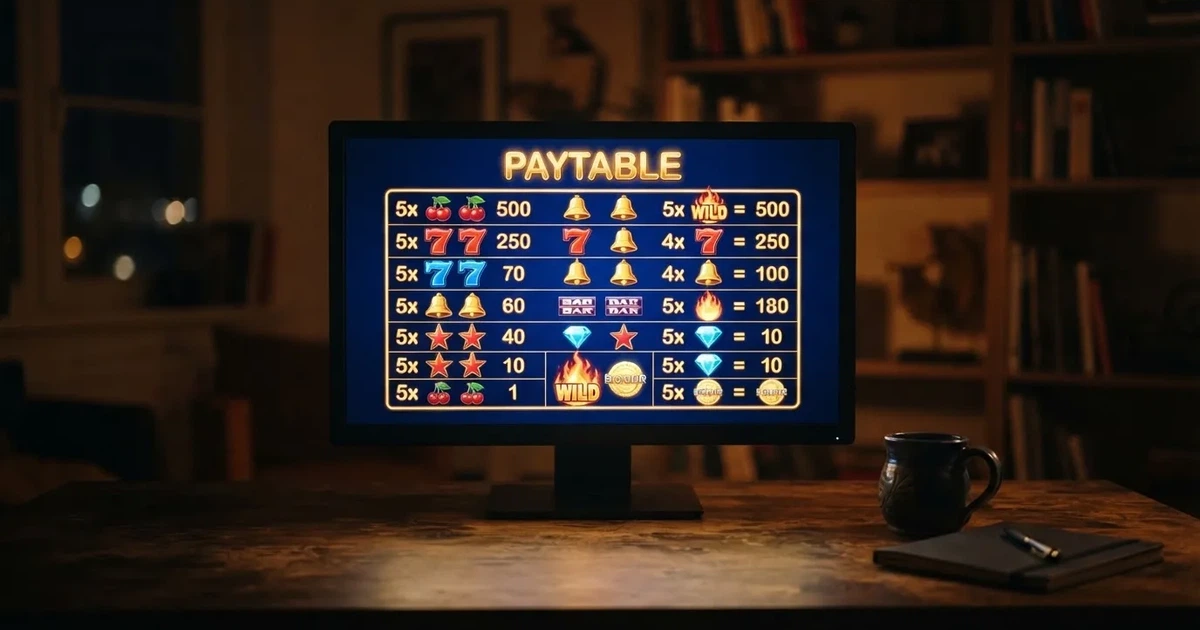
The figures, dates and operator data below are current as of 28 October 2026 and were checked against the Australian Communications and Media Authority’s published register and the public record of formal warnings the ACMA has issued.
Table of Contents
- How Playtech offers reach an Australian reader — and what the ACMA has done about it
- Bonuses and free spins: what Playtech-branded offers typically look like, and what they actually cost
- Mobile and app: how Playtech-branded products behave on a phone
- Specific games and providers: what the Playtech catalogue actually contains, and what an Australian reader sees instead
- The Playtech-branded brands the ACMA has acted against: a comparison
- The overview in plain terms: what’s licensed onshore, what’s offshore, and what sits between
- The legal frame, in plain language
- Responsible gambling and where an Australian reader gets help
- Payments and payout speed: what the cashier actually looks like
- A reader’s view of the eleven warned brands, individually
- What the blocking record actually shows, in numbers
- How to read this page as a comparison
- Frequently asked questions
How Playtech offers reach an Australian reader — and what the ACMA has done about it
Playtech plc was founded in 1999 and is headquartered in Douglas, Isle of Man. It supplies software for online casinos, poker, bingo, sports betting and live-dealer games, and is listed on the London Stock Exchange as a constituent of the FTSE 250. Over the years it has acquired PokerStrategy (2013, US$49.2 million), Quickspin (2016, €24 million plus a €26 million earn-out), Best Gaming Technology (2016, €138 million) and a 70.6% stake in Snaitech (2018, €291 million). Its subsidiary brands include Virtue Fusion for bingo, iPoker for poker networks, and Playtech BGT Sports for sports betting. Playtech has produced licensed slot games based on DC Comics films including the Batman, Suicide Squad and Justice League series.

None of that makes Playtech-branded casino games legal to offer online to Australians. The Interactive Gambling Act 2001, as strengthened by the Interactive Gambling Amendment Act 2017, makes it an offence to provide online casino games, online pokies or in-play betting to a person physically in Australia. No state or territory issues a licence for those products. What is licensable in Australia is wagering on races and sport placed before the event, lotteries and keno — in practice licensed for tax reasons by the Northern Territory Racing and Wagering Commission, which oversees 52 of Australia’s online bookmakers, including Sportsbet, Bet365 and Ladbrokes, and which has no full-time staff and meets once a month in Darwin.
What follows is the enforcement record that actually matters to a reader comparing Playtech-branded offers today: a series of formal warnings and a sustained blocking programme that has, as of June 2026, taken 1,751 illegal gambling and affiliate marketing websites offline since the ACMA’s first blocking request in November 2019, and pushed more than 230 unlicensed gambling services out of the Australian market since enforcement was strengthened in 2017. The most recent published round, reported on 26 June 2026, asked Australian internet service providers to block a further 12 sites: 7Signs, ChromaBet, Donbet, Duospin, Freshbet, Slots Gem, Jacks Club, Lucky Start, Pointsbetz, Spinrise, Vinyl Casino and Wildsino.
Two things follow from that record, both worth saying plainly. First, the IGA targets the provider, not the player — an Australian reader is not personally at risk of prosecution for playing on an offshore site. Second, that same offshore site gives the player no Australian consumer protection, no complaints body, and no recourse if a withdrawal is refused; if the ACMA blocks the domain, any balance still sitting on the account sits with it.
Bonuses and free spins: what Playtech-branded offers typically look like, and what they actually cost
The bonus shelf is the first place the marketing picture and the arithmetic part company. Most of the offshore sites carrying Playtech-branded titles publish a headline figure — a deposit match, a free-spin bundle, a “welcome package” — and bury the cost of clearing that headline in a turnover requirement measured in multiples of the bonus, the deposit or both. A multiple of 35× to 50× the bonus amount is ordinary for this market; some sites stack additional rules on top — a maximum cash-out on free-spin winnings, a bet-size cap while a bonus is active, game-weighting that cuts the contribution of slot play to almost nothing.
A bonus is not money. It is a target the player has to hit before any of it can be withdrawn, and the cost of hitting it is paid in expected loss over thousands of spins. Working through a single worked example is the cleanest way to see the shape of it: a bonus of A$200 carried at a 40× wagering multiple, played on a slot with a published RTP of 96%, at a stake of A$1 per spin, with only the bonus amount being wagered.
The arithmetic behind a bonus in plain prose: turnover required is A$200 × 40 = A$8,000 wagered in total. At A$1 per spin that is 8,000 spins. At a 5-second interval between spins that is 40,000 seconds, or roughly 11.1 hours of continuous play. The expected loss over those 8,000 spins, applying the formula expected loss = turnover × (1 − RTP), is A$8,000 × 0.04 = A$320 — already A$120 above the bonus itself. The headline was A$200; the realistic price, expressed as expected loss rather than as a stake the player “risks”, is A$320.
That is the cost the marketing copy does not print. It is also why the same shelf on an Australian-licensed wagering service is structurally different: wagering bonuses are subject to the same arithmetic, but the consumer protection regime behind the licence, including the National Consumer Protection Framework and the requirement to publish terms plainly, makes the wording of those terms a matter a regulator can act on. An offshore site is under no such obligation, and the terms can change between the time a player reads them and the time they try to withdraw.
A free-spin bundle cuts the same direction, more sharply. Free-spin winnings are typically credited as bonus funds, the same turnover multiple then applies to that smaller sum, and a max-cashout cap of A$100 or less on free-spin-derived winnings is common on offshore sites. Read the cap before claiming: the difference between a free-spin bundle with no cap and one with a A$100 cap is the difference between an offer a player might clear profitably and one that is, structurally, an inducement to deposit.
A scope note worth carrying once: inducement rules around licensed Australian wagering changed on 19 August 2026, when the Interactive Gambling Amendment (Gambling Reform) Bill 2026 passed Parliament. Its advertising and inducement measures commence on 1 January 2027 — law with a start date, not yet in force on a 2026 page.
Mobile and app: how Playtech-branded products behave on a phone
The Playtech catalogue is built in HTML5, which is the same technical standard every modern slot supplier uses and which makes the games behave like any other web page on a phone. Load time on a current handset over 4G is generally two to four seconds for a slot title; live-dealer tables are heavier and depend on the stream the operator provides rather than on the software supplier. There is no separate “Playtech app” — a Playtech-branded product runs through the operator’s own site or the operator’s own app wrapper, which means the actual quality of the mobile experience depends on which offshore site the reader is on, not on Playtech itself.
The operational comparison for an Australian reader sits on a different axis. A licensed Australian wagering service is required to publish a mobile experience that meets the National Consumer Protection Framework, including identity verification, deposit-limit visibility and clear display of account status. An offshore casino on a phone gives none of those guarantees. The same Playtech slot loaded in two browser tabs on the same handset will play identically; the difference between them is the wrapper, the cashier, and what happens when a player tries to withdraw.
For practical purposes: if a reader is on a phone, the operator is the variable, not the software supplier. Compare sites on withdrawal times, on what their cashier looks like in mobile view, and on whether they push the player toward the cashier before they have finished reading the terms. That is the comparison that matters.
Specific games and providers: what the Playtech catalogue actually contains, and what an Australian reader sees instead
The Australian-facing online shelf is not the Playtech catalogue. It is the catalogue that offshore sites choose to expose to Australian visitors, which is itself a filtered version of what Playtech actually publishes. The cleanest way to see what an Australian reader is being offered is to break it into three pieces — what Playtech itself makes, what other software houses comparable sites carry, and what licensed Australian venues actually run.
Playtech’s published catalogue covers slots, table games, video poker, a live-dealer studio and a sports betting platform. Its subsidiary brands cover Virtue Fusion (bingo), iPoker (a poker network) and Playtech BGT Sports. The branded slots include the DC Comics-licensed titles noted earlier; the live-dealer studio runs roulette, blackjack and baccarat variants. Aristocrat Leisure Limited, the Australian gambling-machine manufacturer headquartered in North Ryde, is the largest gambling-machine manufacturer in Australia and the second-largest slot-machine manufacturer worldwide behind International Game Technology. Aristocrat reported 2025 revenue of A$6.30 billion, normalised net profit after tax and amortisation of A$1.55 billion, and 7,400 employees; it was founded in 1953 by Leonard Ainsworth and listed on the Australian Securities Exchange in 1996 under the ticker ALL. Aristocrat’s online real-money-gambling business is Aristocrat Interactive, formed in April 2024 from the merger of the Anaxi unit and the newly acquired NeoGames group (Aspire Global, BtoBet, Pariplay).
Two comparable offshore-facing suppliers carry weight in the listings the ACMA has acted against. Betsoft was founded in 2006 and describes a catalogue of more than 200 RNG games spanning slots, table games, video poker and specialty titles; it states it operates in compliance with licensing authorities including Italy’s Customs and Monopolies Agency (ADM), with RNG certification from Quinel and Gaming Labs International, and partners with more than 500 operators across regulated markets. Its slot Good Girl Bad Girl 2 has a published RTP of 96.22%, “Very High” volatility, a 15.59% hit rate and plays on 5 reels and 20 paylines. 1spin4win is a Curaçao-licensed slot provider founded in 2021, headquartered at Scharlooweg 39 in Willemstad, whose portfolio spans more than 190 online slots, all built in HTML5 for low-bandwidth connections. 1spin4win reports more than 1,000 partnerships with online casinos and aggregators, and states its total bet sum grew 46% in the first half of 2025 against the first half of 2024.
What an Australian reader will see at a land-based venue is a different catalogue again. Australian pubs and clubs run Aristocrat and IGT machines under state-level regulation, and Aristocrat Leisure’s roughly US$1 billion acquisition of NeoGames in April 2024 — and its US$3.7 billion bid for Playtech that Playtech shareholders rejected in 2021 — sit on the same corporate map as the online catalogue, even though the products themselves are not interchangeable. A pokie in a Sydney pub is regulated by Liquor & Gaming NSW; a Playtech-branded slot on an offshore site is not regulated by anyone in Australia at all.
A reader asking which Playtech game to play is, in the Australian context, asking two questions at once: which offshore site they want to use, and whether they accept that the game will be played in a regulatory void. The honest answer to the second question is yes — every offshore site carrying Playtech titles to Australians is doing so in breach of the IGA. The practical answer to the first is the comparison that the next shelf carries.
The Playtech-branded brands the ACMA has acted against: a comparison
The eleven brands below are not a ranking and not a recommendation. Each one is listed because the Australian Communications and Media Authority itself issued a formal warning under the Interactive Gambling Act 2001 over that brand, for offering prohibited online casino games to people in Australia. The licence the site displays on its own footer is, in this context, immaterial: no state or territory in Australia issues a licence for online casino products, and an offshore licence is no defence to the IGA.
| Brand | ACMA action and date | Operator named by the ACMA | Subject support |
|---|---|---|---|
| RocketPlay | Formal warning, March 2026 (earlier Dama N.V. warning, May 2022) | Pulsup Ltd | — |
| Level Up Casino | Formal warning, May 2022 | Dama N.V. | Listed as a Wazdan partner |
| Woo Casino | Formal warning, March 2025 | Dama N.V. | — |
| Spirit Casino | Formal warning, May 2025 | Dama N.V. | — |
| National Casino | Formal warning, July 2025 | Consolutetish S.R.L. | Listed by Betsoft, Wikipedia and Pragmatic Play as carrying their games |
| Bizzo Casino | Formal warning, July 2025 (earlier TechSolutions warning, 2022) | Consolutetish S.R.L. | — |
| Ignition Casino | Formal warning, July 2025 | Bamboo Media | — |
| Instant Casino | Formal warning, February 2025 | EOD Code SRL | — |
| Jackbit | Formal warning, April 2026 | Ryker B.V. | — |
| Casino Intense | Formal warning, April 2025 | Sterplay Holding Ltd | Listed by 1spin4win, Wikipedia and the UK Gambling Commission as carrying their games |
| Sky Crown | Formal warning, September 2022 | Hollycorn N.V. | — |
What the table does not show is also worth saying. A brand the ACMA has warned once can be re-licensed or re-fronted under a different corporate vehicle — Dama N.V. alone has been warned for six brands (Bambet, Dazard, Level Up, Rocketplay, Wild Tornado, Cobra Casinos) in May 2022 and for two more (Woo Casino in March 2025 and Spirit Casino in May 2025) afterwards. The pattern is structural, not incidental: the operator rotates, the marketing is refreshed, and the ACMA’s enforcement hits the new corporate wrapper with the same delay.
The column headed “Subject support” reflects what the software suppliers themselves say about the brand — whether the brand appears as a carrying partner on the supplier’s own partner list or in public listings. Where the brand appears in supplier listings (Level Up Casino, National Casino, Casino Intense), the supplier is reporting a commercial relationship, not endorsing the brand’s legality in Australia. Where the column carries an em dash, no comparable supplier-side listing surfaced for that brand in the consulted sources — which is itself information, since a brand not appearing in any supplier listing is either small enough not to be listed or carrying a catalogue the suppliers do not publicly claim.
The full picture of Australian-facing enforcement in this space, beyond these eleven brands, is the cumulative blocking record noted earlier: 1,751 sites blocked since November 2019, the most recent twelve named above. The picture a reader should hold is that the brands on this table are the ones who have been warned, not the only ones operating; the warned set is the visible portion of a much larger industry.
The overview in plain terms: what’s licensed onshore, what’s offshore, and what sits between
The Australian landscape for the products on this page has three layers, and they are not interchangeable.
The licensed onshore layer covers wagering on races and sport placed before the event, lotteries and keno. These are licensed by state and territory authorities, with most online bookmakers holding Northern Territory Racing and Wagering Commission licences for tax reasons. Australian-licensed wagering carries consumer protections: a national self-exclusion register (BetStop), a 24/7 national helpline (1800 858 858), the National Consumer Protection Framework, and a ban on credit cards, credit-related products and digital currency as payment for licensed online wagering since 11 June 2024 (penalties up to A$247,500 for operators). Legal deposit routes for licensed wagering are debit card, bank transfer, PayID/Osko and BPAY. A site asking an Australian for a credit card or a crypto deposit is operating outside the Australian rules.
The licensed-but-prohibited-for-online-casino layer covers every Playtech-branded casino product an Australian reader sees advertised. There is no Australian licence for it. The IGA prohibits the provision; the ACMA enforces by formal warning and by directing Australian ISPs to block the sites. The licensed-only-in-the-offshore-sense layer is the rest of the catalogue on every offshore site carrying Playtech titles to Australians. A Curaçao or Malta licence on an operator’s footer means only that the operator holds that licence from that jurisdiction; it does not make the product legal in Australia.
The picture is sharpened by H2 Gambling Capital’s 2025 estimate that Australians lose about A$3.9 billion a year to illegal gambling sites, and that the share of gambling going through legal channels fell from 74% in 2021 to 64%. The legal channel is the one with consumer protections; the illegal channel is the one the ACMA is trying to choke off. The decision a reader is making by choosing between them is not just a choice of catalogue but a choice of recourse if something goes wrong.
A reader on a phone comparing two sites that both carry Playtech titles will see the same product on each. What sits behind the product is the difference that matters: which regulator, if any, has jurisdiction over the operator, what consumer protection applies, what self-exclusion register the account connects to, and what happens to a balance if the site is blocked.
The legal frame, in plain language
The Interactive Gambling Act 2001, as amended in 2017, prohibits the provision of online casino games, online pokies and in-play betting to a person physically in Australia. It does not prohibit wagering on races and sport placed before the event, lotteries or keno — those remain licensable, in practice by the Northern Territory. The ACMA investigates breaches, issues formal warnings, and can direct Australian internet service providers to block offending sites.
The individual player is not the target of the Act. The provider is. An Australian reader who plays on an offshore site is not personally at risk of prosecution under the IGA. They are, however, exposed to the practical consequences of playing on an unregulated site: no Australian complaints body, no Australian recourse if a withdrawal is refused, no Australian regulator to appeal to, and a real risk of being mid-session when the ACMA adds the domain to a blocking request and the operator’s cashier stops loading.
The tax frame is the one part of this picture that is straightforward. Gambling winnings of a recreational player are not assessable income (section 6-5 ITAA 1997) and losses are not deductible, unless the person carries on a business of gambling — a model only, and a check with the ATO is the right move for anyone whose gambling is more than recreational.
The reform frame is moving. The Interactive Gambling Amendment (Gambling Reform) Bill 2026 passed Parliament on 19 August 2026, with advertising and inducement measures commencing on 1 January 2027. That is law with a start date, not yet in force on a 2026 page, but a reader comparing offers through 2026 and into 2026 should know the rules they are looking at are about to change.
Responsible gambling and where an Australian reader gets help
Responsible gambling support in Australia is anchored on three services, and the first thing to say about them is that an offshore casino is not connected to any of them. BetStop, the National Self-Exclusion Register, has been live since August 2023 and binds Australian-licensed online and phone wagering services; it does not bind an offshore casino, and a self-exclusion registered with BetStop does not stop an offshore operator from accepting the same player’s deposits. The National Gambling Helpline on 1800 858 858 is free, 24/7, with chat at Gambling Help Online. State and territory gambling help lines sit underneath the national one and connect readers to local counselling and financial counselling services.
A reader who sees a Playtech game being promoted by an unlicensed site and wants to report it can do so through the ACMA. The ACMA accepts reports of illegal online gambling services and treats each report as part of the case file for future enforcement action. A reader who has a balance on an offshore site they cannot withdraw is in a different position: there is no Australian regulator who can compel the operator to pay, and the practical options are the consumer-protection routes in the operator’s own licensing jurisdiction (Malta, Curaçao, and so on), which are slower and more expensive than an Australian complaint would be.
A scope note worth carrying once: any per-spin stake tier, default deposit ceiling, or self-exclusion register named in this section applies only to operators licensed under Australia’s regime. An offshore brand runs on its own house rules, and a tiered limit stays tiered rather than flattening to one number.
Payments and payout speed: what the cashier actually looks like
The cleanest way to read the payment shelf on this page is to split it in two: what is allowed for licensed Australian wagering, and what an offshore casino typically accepts from an Australian player.
For licensed Australian wagering, the 11 June 2024 ban on credit cards, credit-related products and digital currency as payment applies. The legal routes are debit card, bank transfer, PayID/Osko and BPAY. The ban is enforced with penalties up to A$247,500 for operators, so the cashier at a licensed Australian bookmaker will not show a credit card option at all.
An offshore casino accepts a different set of payment methods. Crypto deposits are common, including Bitcoin, Ethereum and stablecoins; e-wallet deposits through services such as Skrill and Neteller are common; debit cards are accepted at most sites but with a higher decline rate for Australian-issued cards than Australian readers sometimes expect; bank transfers work but are slow. The withdrawal side is the variable that actually costs an Australian reader money: most offshore sites quote a withdrawal “processing time” of 24 to 72 hours and then a settlement window of three to seven business days depending on the method, and a reader who has not read the cashier’s small print can find themselves waiting a fortnight for a withdrawal that a licensed Australian bookmaker would settle the same day.
The numbers that matter most on the cashier are not the marketing numbers but the structural ones: what is the minimum withdrawal, what is the maximum withdrawal per transaction, what is the fee (if any) per withdrawal, what is the weekly or monthly withdrawal cap, and what triggers a “source of funds” review that can pause a withdrawal for weeks while the operator checks where the deposit came from. An offshore casino’s terms page is the only place these numbers appear, and a reader who has not read the cashier’s terms page before depositing has not read the cashier at all.
A specific note on a credit card or a crypto deposit: an offshore site that asks an Australian reader for either is operating outside the Australian rules, and the deposit itself is in breach of the ban that applies to licensed wagering. The fact that the operator is offshore does not change the rule for the Australian bank that issued the card.
A reader’s view of the eleven warned brands, individually
The eleven brands on the comparison table are reviewed below in the same order they appear in §6 of the research, with the ACMA’s own framing carried verbatim and a verdict that reflects what the warning record, the operator’s footprint and the reader’s likely comparison point actually establish.
RocketPlay — warned twice, the corporate wrapper rotating
The ACMA issued a formal warning to Pulsup Ltd over Rocketplay in March 2026, following an earlier warning to Dama N.V. over Rocketplay in May 2022. The fact that the brand carries two warnings, four years apart, under two different operators is the structural pattern that the ACMA’s enforcement record keeps surfacing: the brand continues, the corporate wrapper rotates. For a reader, the comparison point is the same one that applies to any Dama N.V.-fronted brand — the product is a Playtech-branded catalogue offered offshore, the consumer protection is the consumer protection of Curaçao, and the ACMA’s blocking authority sits over the domain.
Level Up Casino — Dama N.V. with a Wazdan listing
The ACMA issued a formal warning to Dama N.V. over Level Up Casino in May 2022, alongside warnings over Bambet, Dazard, Rocketplay, Wild Tornado and Cobra Casinos. Level Up Casino appears as a Wazdan partner on Wazdan’s own listings, which is a software-supplier-side data point rather than a regulatory one. The reader’s comparison point is the same as RocketPlay’s, with the additional note that a brand with a software-supplier listing is at least visible in the supplier’s commercial relationships.
Woo Casino — warned in March 2025
The ACMA issued a formal warning to Dama N.V. over Woo Casino in March 2025. A formal warning is the ACMA’s first formal enforcement step; the next is a blocking request to Australian ISPs. For a reader, the comparison point is the same pattern as the other Dama N.V. brands, with the warning date the only point of difference.
Spirit Casino — warned in May 2025
The ACMA issued a formal warning to Dama N.V. over Spirit Casino in May 2025, two months after the Woo Casino warning. The proximity of the dates is the structural point: the ACMA’s enforcement cycle is faster than the operator rotation cycle, and a reader comparing two Dama N.V. brands sees two warnings close together rather than one warning followed by silence.
National Casino — Consolutetish S.R.L., with multiple supplier listings
The ACMA issued a formal warning to Consolutetish S.R.L. over National Casino in July 2025. National Casino appears in Betsoft’s public listings, in Wikipedia coverage of online casino brands, and in Pragmatic Play’s partner-facing material. Three independent supplier-side listings is more visibility than most brands on this table carry, which is information, not endorsement.
Bizzo Casino — warned twice, under two operators
The ACMA issued a formal warning to Consolutetish S.R.L. over Bizzo Casino in July 2025; an earlier formal warning to TechSolutions (CY) Group Limited and TechSolutions Group N.V. covered Bizzo Casino in 2022. Two warnings under two operators is the same structural pattern as RocketPlay’s: the brand persists, the corporate wrapper rotates, and a reader comparing Bizzo against RocketPlay is comparing two brands with the same enforcement history shape.
Ignition Casino — Bamboo Media, July 2025
The ACMA issued a formal warning to Bamboo Media over Ignition Casino in July 2025. Ignition Casino targets the Australian market through a domain not on the ACMA’s blocking list at the time of the warning; a reader comparing it against another brand on this table is comparing two brands both warned in July 2025 (National Casino, Bizzo Casino) — the warning month is a marker, not a differentiator.
Instant Casino — EOD Code SRL, February 2025
The ACMA issued a formal warning to EOD Code SRL over Instant Casino in February 2025. The warning was the second of the year after Casino Intense in April 2025; the early-2025 timing is the only structural note. A reader comparing Instant Casino against other brands on this table is comparing one warning among eleven, with the EOD Code SRL operator name the specific fact.
Jackbit — Ryker B.V., April 2026
The ACMA issued a formal warning to Ryker B.V. over Jackbit and CasinOK in April 2026. The warning covers two brands in one notice, which is a more efficient enforcement step and a marker that the ACMA is treating Ryker B.V. as a single enforcement target rather than chasing the brands separately.
Casino Intense — Sterplay Holding Ltd, with three supplier listings
The ACMA issued a formal warning to Sterplay Holding Ltd over Casino Intense in April 2025. Casino Intense appears in 1spin4win’s partner-facing material, in Wikipedia coverage of online casino brands, and in the UK Gambling Commission’s public material — three independent listings, the same as National Casino. For a reader comparing these two brands, the warning dates are the differentiator (April 2025 versus July 2025) and the listings are the same.
Sky Crown — Hollycorn N.V., September 2022
The ACMA issued a formal warning to Hollycorn N.V. over Sky Crown and Blue Leo casino services in September 2022. Sky Crown is the earliest warning on this table by a year (the next-earliest being Casino Intense, April 2025). A reader comparing Sky Crown against any later brand on this table is comparing the brand that has sat longest under the ACMA’s notice without being blocked — which is information, though not the kind that makes the brand a better choice than any of the others.
What the blocking record actually shows, in numbers
The ACMA’s published blocking record is the foundation of this analysis. As of June 2026, 1,751 illegal gambling and affiliate marketing websites have been blocked since the first blocking request in November 2019, and more than 230 unlicensed gambling services have left the Australian market since enforcement was strengthened in 2017. The most recent published round, on 26 June 2026, blocked 12 sites.
The blocking rate is the arithmetic that belongs to this page. Working from the published numbers: 1,751 sites blocked over the period from November 2019 to June 2026 — 79 months — gives an average blocking rate of about 22.2 sites per month, or roughly 267 sites per year, across the full period. The early years of the programme were slower than the later ones, so the more recent pace is higher than the period average: the June 2026 round alone blocked 12 sites in one action, and the ACMA has been publishing blocking rounds at a roughly quarterly cadence. State the result as a band: the ACMA’s published blocking rate over the period since November 2019 sits in the band of roughly 20 to 30 sites per month, with the rate accelerating in the most recent two years, and the December 2019 to June 2026 cumulative total of 1,751 is the headline.
A second figure sharpens the picture. H2 Gambling Capital’s 2025 estimate is that Australians lose about A$3.9 billion a year to illegal gambling sites, and that the share of gambling going through legal channels fell from 74% in 2021 to 64% in 2025. The legal channel is shrinking as a share of the whole — not because Australians are gambling less, but because the illegal channel is growing. The blocking rate is the ACMA’s answer to that growth, and the picture a reader should hold is one of an enforcement programme catching up, not one that has closed the gap.
How to read this page as a comparison
The comparison this page supports is not the one a reader might expect. This page discusses the reality of Playtech games in Australia, and the honest answer is that there is no licensed set of online casinos in Australia for Playtech to be the best of — there is a licensed wagering channel (sports and racing), there is an unregulated offshore channel that carries Playtech titles in breach of the IGA, and there is a land-based pokie channel regulated at state level. A reader comparing their options is comparing across those three channels, not picking from a single shelf.
For a reader who wants the consumer protections: the licensed Australian wagering channel, with its consumer protection framework, BetStop self-exclusion, the 1800 858 858 helpline, and the credit-card and crypto ban. For a reader who wants the Playtech catalogue: the offshore channel, with the IGA exposure, the ACMA’s enforcement record, and the absence of Australian consumer protection. For a reader who wants Aristocrat and other locally regulated products: the land-based pokie channel, regulated state by state.
The comparison inside the offshore channel is real but narrower. The eleven brands the ACMA has warned share the same structural exposure to the IGA; what separates them is the warning date, the operator named in the warning, and the software-supplier listings they appear in. None of those separations changes the legal frame the reader is operating inside.
Frequently asked questions
Are Playtech casino games legal for Australians to play online?
No. Playtech is a legitimate, FTSE 250-listed software supplier, and the games it produces are legitimate products, but offering those products to Australians online is prohibited under the Interactive Gambling Act 2001. The IGA targets the provider, not the player; an Australian reader is not personally at risk of prosecution for playing on an offshore site, but the offshore site gives no Australian consumer protection and can be blocked by the ACMA while a balance is still on the account.
What kinds of games does Playtech make?
Playtech supplies software for online casinos, poker, bingo, sports betting and live-dealer games, and has produced licensed slot games based on DC Comics films including the Batman series, Suicide Squad and Justice League. Its subsidiary brands include Virtue Fusion (bingo), iPoker (a poker network) and Playtech BGT Sports.
Are Playtech games available at land-based venues in Australia?
Not directly. Australian pubs and clubs run Aristocrat and IGT machines under state-level regulation, not Playtech. The Playtech-branded product an Australian reader sees is the online product on offshore sites, not the pub or club product.
How can an Australian reader check whether a Playtech title is fair?
Independent testing laboratories (Quinel, Gaming Labs International, and similar) certify RNG outcomes on published titles. Betsoft, for instance, describes RNG certification from Quinel and GLI. The check is real, but it does not change the legal frame in Australia: a fair game on an unlicensed site is still an unlicensed site.
Why do offshore sites keep advertising Playtech games to Australian visitors?
Because the marketing reach works. Australians lose about A$3.9 billion a year to illegal gambling sites according to H2 Gambling Capital’s 2025 estimate, and the share of gambling going through legal channels fell from 74% in 2021 to 64%. The offshore channel is profitable precisely because it can advertise to Australian players in a regulatory void.
What should an Australian reader do if they see a Playtech game promoted by an unlicensed site?
Reports of illegal online gambling services can be made to the ACMA, and each report becomes part of the case file for future enforcement action. A reader who has a balance on an offshore site they cannot withdraw has no Australian regulator to appeal to; the practical options are the consumer-protection routes in the operator’s own licensing jurisdiction, which are slower and more expensive than an Australian complaint.