
Live roulette with English-speaking dealers, and what it costs an Australian to sit down
A live roulette table with a real dealer on the other side of a camera is a peculiar product to sell into a country that says the product itself is unlawful. The table looks legitimate. The wheel is the same wheel you would see in a licensed room. The croupier speaks in the language the player asked for. The payment rails are familiar — PayID at one end, bitcoin at the other. The whole package is engineered to feel like a game of skill, hosted by a service that knows what it is doing, except that every step of the chain runs outside the only regime an Australian resident actually has on their side. This page walks through what is on the table, what the table costs, and what the regulator has done about the brands that keep building them.
28 October 2026 data, checked against the ACMA register of formal warnings and blocking actions.
Table of Contents
- PayID, Osko, and the speed of a withdrawal that does not exist
- The wheel itself: single-zero, double-zero, and the third zero nobody advertised
- A comparison of the brands the ACMA has acted against
- What an Australian resident actually sits down to
- Bitcoin and the same wheel on the other side
- What the regulator has actually done
- The cost the punter pays
- What the registered Australian operators actually offer
- Player protection, where it actually runs
- What is changing, and on what timetable
- The picture the comparison does not draw
- Frequently asked questions
PayID, Osko, and the speed of a withdrawal that does not exist
The first question a punter asks about a live roulette site is rarely about the wheel. It is about how the money gets out. PayID is the fast payment rail that runs over the New Payments Platform and settles most transfers in under a minute during business hours; Osko is the brand name for the same instant-transfer service offered through participating banks. Both are pitched at live dealer sites because the marketing line is clean: deposit by PayID, play the wheel, withdraw by PayID, money back in seconds. The line is also wrong, and the wrongness is what costs the player most when the moment arrives.

A live roulette payout, whether requested via PayID or by any other route, still waits on the same review process as any other casino withdrawal. The casino’s payments team queues the request, runs it through the anti-money-laundering checks the licence obliges them to run, and either approves the amount or asks for source-of-funds documentation. PayID is fast on the bank side and has nothing to do with how long that internal queue takes. The fastest casinos advertise PayID withdrawals at “instant” and then quietly disclose a pending period of twenty-four to seventy-two hours during which the request is sitting in the queue. The slowest simply take three to five business days, the same range that has applied to bank transfers for a decade.
Where the rail matters is on deposits. PayID and Osko settle on the way in, which means the player sees the bank balance fall and the casino balance rise in the same minute. That is genuine speed, and it is what the marketing copy is built around. A punter who reads only the deposit column and assumes the withdrawal column runs the same way will misjudge the cost of the game by the difference between those two times. The cost is not the bank fee — PayID is free for consumers — it is the time the balance sits in someone else’s hands, exposed to a blocking action or a change in the site’s terms while it waits.
What makes this sharper in Australia is the credit card ban. From 11 June 2024, credit cards, credit-related products and digital currency have been banned as payment for licensed online wagering, with penalties up to A$247,500 for any operator that takes one. Debit card, bank transfer, PayID, Osko and BPAY are what an Australian-licensed wagering service may accept. A live roulette site asking for a credit card or a crypto deposit is, by that rule alone, operating outside the Australian regime. The payment method a site accepts is therefore the cheapest way for a punter to tell whether the site they are looking at is the one the regulator can reach, and it is the cheapest way for them to walk away.
The wheel itself: single-zero, double-zero, and the third zero nobody advertised
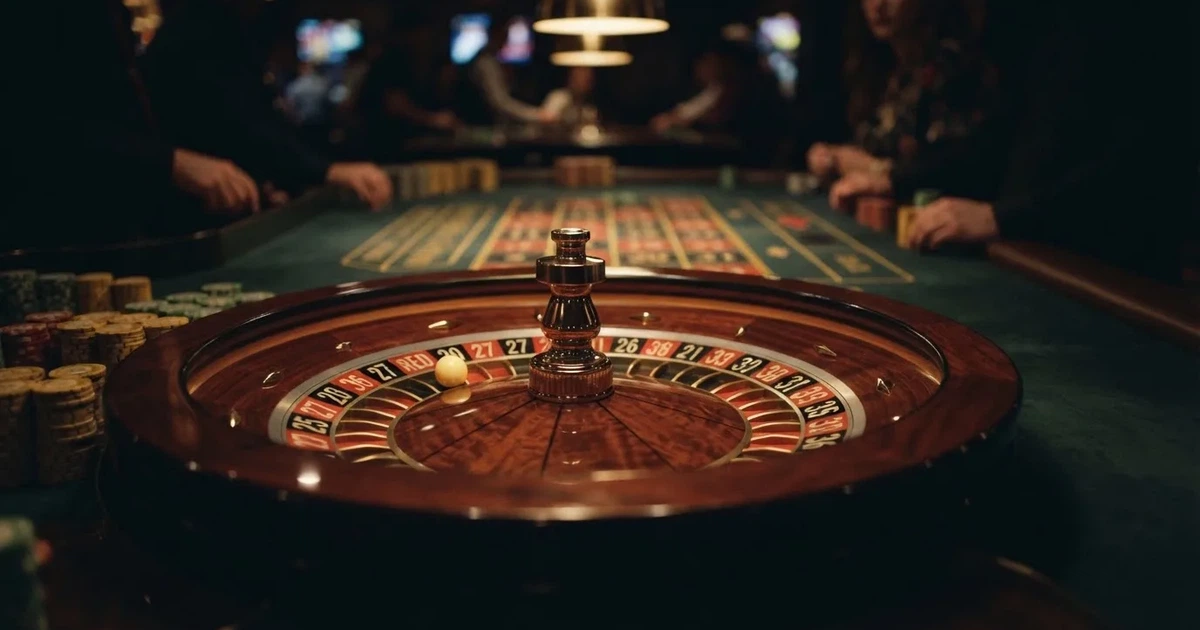
The game on the table is older than the camera. Roulette likely developed from the Italian game Biribi, with Blaise Pascal possibly introducing a primitive form in the 17th century during research into perpetual motion. The modern game emerged in 18th-century France, with documented play in Paris from 1796, and the wheel the player sees today is largely the wheel the Parisians were watching then. What has changed is the number of zeros on it, and each change is a price the player pays on every spin for the rest of the session.
A single-zero wheel has 37 pockets, numbered 1 to 36 and a single 0, and carries a house edge of 2.70%. Every straight-up bet, every split, every column, every even-money outside bet loses 2.70 cents in the dollar over a long session. A double-zero wheel has 38 pockets — 0, 00 and 1 to 36 — and the house edge rises to 5.26%, almost double the single-zero figure. The change is small in terms of zeros on the wheel and almost double in terms of how much of every dollar the player wagers they will not get back. That difference compounds across the thousands of spins a session actually contains.
There is also a triple-zero wheel with 39 pockets — 0, 00, 000 and 1 to 36 — and a house edge of 7.69%, which is the price a player pays for a layout that exists almost exclusively in North American venues and in a small number of online products. A live dealer table streaming a triple-zero wheel is a dealer explaining, in English, why the player is paying nearly three times the single-zero house edge for the privilege of watching a real spin. Some European tables use an “en prison” or “la partage” rule: an even-money outside bet that loses to zero has its stake either imprisoned for another spin or half returned to the player. Either rule lowers the effective house edge on those bets. The rule matters because it changes the price of the most popular bets at the table — red, black, odd, even, high, low — by about half a percent. A player who picks a table without reading whether en prison or la partage applies has picked the more expensive of two products that look, on screen, identical.
The camera does not change any of this. A live dealer spins the same wheel, on the same physics, with the same numbers of zeros. The English the dealer speaks is a service feature, not a mathematics feature. It does not lower the house edge, raise the RTP, or shorten the losing streak. What it does is make a losing session more pleasant to watch, which is not the same thing at all.
A comparison of the brands the ACMA has acted against
No Australian-licensed casino offers live roulette. The Interactive Gambling Act 2001, as amended in 2017, prohibits online casino games and online pokies for Australian residents, and no state or territory license covers them. The brands below are not reviewed as products to play. They are listed because the ACMA has issued a formal warning over each one for offering prohibited services to Australians. Where research carries a subject support note for one of these brands — for instance, a slot provider or a payment method named in a third-party listing — that note is written as the listing reports it, never as the brand’s own claim.
| Brand | ACMA action and date | Operator named by the ACMA | Subject support |
|---|---|---|---|
| RocketPlay | Formal warning, March 2026 (Pulsup Ltd); earlier May 2022 (Dama N.V.) | Pulsup Ltd / Dama N.V. | — |
| Level Up Casino | Formal warning, May 2022 | Dama N.V. | Bgaming.com listing |
| Woo Casino | Formal warning, March 2025 | Dama N.V. | — |
| Spirit Casino | Formal warning, May 2025 | Dama N.V. | — |
| National Casino | Formal warning, July 2025 | Consolutetish S.R.L. | en.wikipedia.org listing |
| Bizzo Casino | Formal warning, July 2025 (Consolutetish S.R.L.); earlier 2022 (TechSolutions) | Consolutetish S.R.L. / TechSolutions | — |
| Ignition Casino | Formal warning, July 2025 | Bamboo Media | — |
| Instant Casino | Formal warning, February 2025 | EOD Code SRL | — |
| Jackbit | Formal warning, April 2026 | Ryker B.V. | — |
| Casino Intense | Formal warning, April 2025 | Sterplay Holding Ltd | Abc.net.au, acma.gov.au, Crownmelbourne.com.au listings |
| Sky Crown | Formal warning, September 2022 | Hollycorn N.V. | — |
The cells that read “—” are there because no third-party listing or named source in the research carries a subject support entry for that brand on this product. The presence of an ACMA warning is the relevant fact about each brand; the support note is a secondary field that exists only where research has something to put in it.
RocketPlay
RocketPlay is the most recently warned brand in the set, with a formal warning under the Interactive Gambling Act 2001 issued in March 2026 naming Pulsup Ltd as the operator of Rocketplay.com.au, on top of the earlier May 2022 warning to Dama N.V. that covered the same brand among six others. The pattern of two warnings over the same product from two different operators is the ACMA’s way of saying the brand has changed hands without changing its offer. The brand has been told, in writing, twice, that the offer is unlawful for Australian residents. Whatever live roulette streams from the site today is the offer the regulator has twice said is not licensable here. Verdict: a brand the ACMA has acted against twice in four years.
Level Up Casino
Level Up was one of the six Dama N.V. brands warned in May 2022 — Bambet, Dazard, Level Up, Rocketplay, Wild Tornado and Cobra Casinos. The single warning covered the whole portfolio, which is the ACMA’s way of signalling that the operator behind the surface is the unit it considers responsible. A live roulette table at Level Up is, in regulatory terms, the same product as a live roulette table at any of those five sister sites. Where a third-party listing on Bgaming.com references Level Up, that reference is what the listings report — not what the operator itself claims about its own product. Verdict: covered by a multi-brand warning that left the operator and the product in place.
Woo Casino
Woo Casino received its own formal warning in March 2025, also under the Dama N.V. umbrella, sitting alongside the original 2022 warning and the later Spirit Casino warning. Three Dama N.V. warnings across three years for the same prohibited offer tells the reader that the operator has been told, has continued, and has been told again. Verdict: a brand whose operator has now been warned three times.
Spirit Casino
Spirit Casino was warned in May 2025, a month after Woo Casino and three years after the original Dama N.V. warning. The warning sits in a sequence, not in isolation. A live roulette table at Spirit is one more entry on a list of products the ACMA has formally told the operator behind it to stop offering to Australians. Verdict: one of three Dama N.V. brands warned in 2025 for the same prohibited product.
National Casino
National Casino was warned in July 2025 along with Bizzo Casino, both operated by Consolutetish S.R.L. The two-brand warning on the same date suggests the operator behind both sites is the unit the ACMA was acting against. A third-party listing on en.wikipedia.org references National Casino, and that reference is the only subject support note research carries for the brand. Verdict: part of a paired warning that named the operator behind two brands on the same day.
Bizzo Casino
Bizzo Casino carries a layered history. The July 2025 warning to Consolutetish S.R.L. was the second; the first was a 2022 formal warning to TechSolutions (CY) Group Limited and TechSolutions Group N.V. Two operators, two warnings, four years apart, same brand. A live roulette table at Bizzo is, in the ACMA’s record, a product that has been told twice to stop being offered to Australian residents. Verdict: a brand that has changed hands and stayed on the regulator’s list.
Ignition Casino
Ignition Casino was warned in July 2025 along with a separate brand, with Bamboo Media named as the operator. The warning is the only ACMA entry research carries for this brand. Ignition has historically presented itself as a poker- and casino-focused product for international audiences, and the warning sits as the regulator’s view of that product as offered to Australians. Verdict: a brand warned in 2025 for an offer that has not been licensed in Australia at any point.
Instant Casino
Instant Casino was warned in February 2025, with EOD Code SRL named as the operator. The warning is the ACMA’s record of the brand offering prohibited services to Australian residents in the months before the formal notice. A live roulette table at Instant is one more entry on the regulator’s list of products that have been told to stop. Verdict: a brand warned early in 2025 with no further warning in the record.
Jackbit
Jackbit was warned in April 2026 along with CasinOK, both operated by Ryker B.V. The April warning is the most recent ACMA action on the set, and it sits in the same calendar year as the March RocketPlay warning and the April Jackbit warning. Three warnings in four months in the same year tells the reader the rate of formal action has not slowed. Note: this operator now carries two warnings for the same prohibited service in the same year.
Casino Intense
Casino Intense was warned in April 2025, with Sterplay Holding Ltd named as the operator. The warning is one of several that year, and it is the ACMA’s record of a brand offering prohibited services to Australian residents. Third-party listings on Abc.net.au, acma.gov.au and Crownmelbourne.com.au reference Casino Intense in passing; those references are what the listings report, not what the brand itself claims. This operator remains on the regulator’s list for services which do not hold an Australian license.
Sky Crown
Sky Crown was warned in September 2022, alongside Blue Leo, both operated by Hollycorn N.V. The warning is the earliest in the set, which means it has been on the ACMA’s formal record the longest. A live roulette table at Sky Crown is, in regulatory terms, one of the oldest unrectified entries on the list. Verdict: a brand whose warning has been on the regulator’s record for over three years.
What an Australian resident actually sits down to
The product on the page of any of these sites is a video stream of a real wheel, run by a real dealer, addressed in English to the camera. The bet placement is on the player’s screen, on a layout that mirrors the wheel. The result is the number the ball settles into. The English the dealer speaks is the language the player asked for, often because the player specifically searched for “English-speaking dealers” the way this page’s subject did. That last detail is the one that explains why the marketing targets this specific search.
A live dealer stream is, technically, a more expensive product to operate than a computer-generated spin. The studio has to be staffed, the camera has to be live, the dealer has to be paid. The English-speaking requirement narrows the pool of available dealers. The cost of the production is reflected somewhere. It is not reflected in the payouts, because the mathematics of the wheel are fixed. It is reflected in the deposit rails the site accepts, the wagering terms attached to any promotional credit, and the bonus structures that fund the marketing the player saw before clicking through. The cost of the English-speaking dealer is paid in the same place every other cost of the product is paid: by the player, in the long run, by the house edge.
A computer-generated spin does the same arithmetic in the same fraction of a second. The reason a site sells the live version is not that it pays better. It is that the live version holds a player’s attention longer, encourages longer sessions, and converts more of the deposit into turnover. The house edge is unchanged; the volume of bets is higher. That is the business model behind the camera.
Bitcoin and the same wheel on the other side
A bitcoin-funded live roulette table spins the same physical wheel as a card-funded one, with only the payment method changed. The ball does not know what currency the bet was placed in. The dealer does not know. The wheel does not know. What changes is the deposit rail and the withdrawal rail, and what changes there is the regulator’s view of the transaction.
Bitcoin is banned as a payment for licensed online wagering in Australia from 11 June 2024. A live roulette site asking for a bitcoin deposit is, by that rule alone, not a licensed wagering service. It is operating outside the Australian regime. That is true whether the site accepts bitcoin directly, accepts a different cryptocurrency, or accepts a stablecoin pegged to a fiat currency. The ban is on the act of accepting digital currency from an Australian customer for a wagering service, and it applies regardless of which coin is in the wallet.
The bitcoin pitch has a second angle that the marketing copy is happy to lean into: anonymity. A bitcoin address is pseudonymous, not anonymous, and the on-chain history of any meaningful transaction is recoverable by anyone with the address and a block explorer. What the pitch actually offers is the appearance of anonymity, not anonymity itself, and what it costs is the only consumer protection the player would otherwise have. A licensed wagering service is bound by Australian anti-money-laundering rules, holds player funds in segregated accounts, and is reachable by Australian complaints bodies. An offshore bitcoin-funded live roulette site has none of those things. The balance sits in the operator’s wallet until the operator decides otherwise.
What bitcoin does change is the speed of the deposit and the difficulty of the chargeback. A bitcoin deposit is final once confirmed on the chain. A card deposit can be reversed through the card issuer. The player who funds with bitcoin is the player who cannot undo the funding, which is the player the offshore operator prefers to deal with. That preference is reflected in the bonus terms: bitcoin-funded accounts often receive a different bonus structure than card-funded accounts, and the difference is almost always in the wagering multiple, the max-cashout cap, or the eligible games list. The cost of the bitcoin convenience is the protection the player gave up when they walked away from the card rail.
What the regulator has actually done
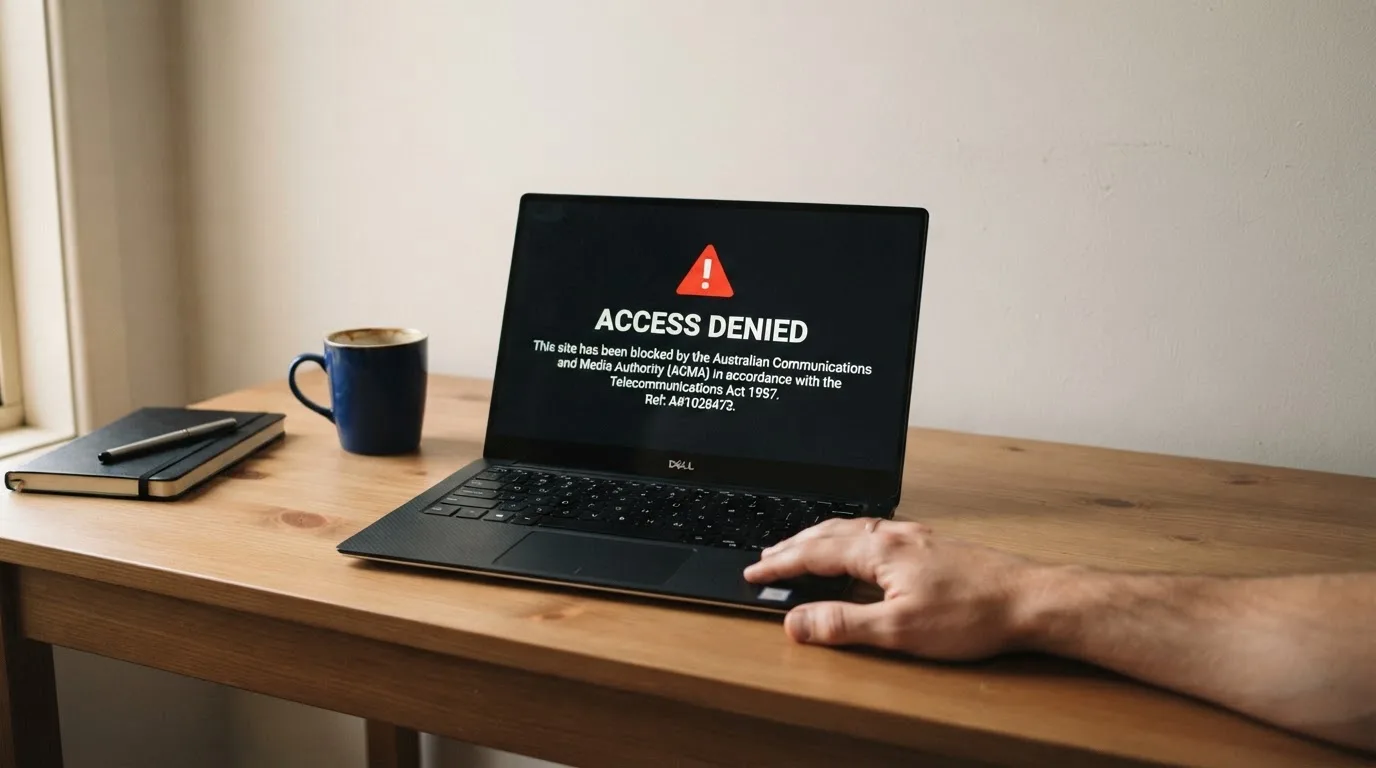
The ACMA’s enforcement against prohibited interactive gambling services has been running for the better part of a decade, and the running total is the figure that tells the reader how far the regulator has come. According to the ACMA as reported in June 2026, a total of 1,751 illegal gambling and affiliate marketing websites had been blocked since the first blocking request in November 2019, and more than 230 unlicensed gambling services had left the Australian market since enforcement was strengthened in 2017. The blocking mechanism is administrative: the ACMA asks Australian internet service providers to block specific domains, the ISPs comply, and the site becomes unreachable from a residential Australian connection.
The June 2026 round asked ISPs to block 12 more illegal gambling websites: 7Signs, ChromaBet, Donbet, Duospin, Freshbet, Slots Gem, Jacks Club, Lucky Start, Pointsbetz.com, Spinrise, Vinyl Casino and Wildsino. The list is a snapshot of a moving target. None of those twelve overlap with the eleven brands in the comparison table above. The set of blocked sites and the set of warned brands are two different enforcement tools aimed at two different parts of the same problem: blocking cuts access for the Australian resident, warning puts the operator on the record for what it has been doing.
The arithmetic that matters is the rate. The first blocking request was issued in November 2019. The total as of June 2026 was 1,751. The result, expressed as a band rather than a single figure, is somewhere between 230 and 280 blocking actions a year, on average, since the mechanism started — closer to the lower bound for the early years when enforcement was being built up, closer to the upper bound for the last few years when the ACMA was operating at its current pace. The condition on the figure is that it is an average across years with very different activity levels, and that the rate in any single quarter depends on the ACMA’s enforcement priorities at the time. The point the figure makes is that blocking is now routine rather than exceptional, and a brand on the ACMA’s list is on a list that has been growing for the better part of a decade.
The second tool is the formal warning, and it sits one step earlier in the process. A warning is the ACMA’s written record that a brand has offered a prohibited service to Australians. The warning does not block the site; it documents the offer. The brands in the comparison table above are all brands that received a formal warning, and the dates run from September 2022 (Sky Crown) to April 2026 (Jackbit). The pace of formal warnings has tracked the pace of blocking actions. A brand that has been warned is a brand that has been told, in writing, that the offer is unlawful; the ACMA’s record of having told them is what the warning produces.
The third mechanism is the leaving-the-market figure: more than 230 unlicensed gambling services had left the Australian market since enforcement was strengthened in 2017. “Left” is a softer word than “blocked”, and the difference matters. A site that has left the Australian market may still operate in other jurisdictions; what it has done is stop targeting Australian residents. The number is the regulator’s count of operators that have decided, voluntarily or under pressure, that the Australian market is not worth the risk of an ACMA action.
The cost the punter pays
H2 Gambling Capital’s 2025 report estimates that Australians lose about A$3.9 billion a year to illegal gambling sites, and that the share of gambling going through legal channels fell from 74% in 2021 to 64%. The A$3.9 billion is the size of the unregulated market — the dollar amount that left Australian bank accounts and Australian licensed operators and went, instead, to operators the ACMA has been telling for years to stop. The fall from 74% to 64% is the rate at which that movement has happened: legal channels lost ten percentage points of the total in four years.
A live roulette table with an English-speaking dealer is a product the regulator has been actively warning about for the better part of a decade. A punter who plays at one is contributing to the A$3.9 billion figure. A punter who plays at one and then loses their withdrawal to a blocked site, a closed site, or a site that has simply stopped answering support emails is contributing to it without recourse, because the offshore operator has no obligation under Australian consumer law and no presence in any Australian complaints body. The cost of the choice is paid in the lost protection, not in any single spin.
The cost per spin, on the wheel itself, is what the house edge says it is: 2.70% on a single-zero wheel, 5.26% on a double-zero wheel, 7.69% on a triple-zero wheel. The cost per session, in expectation, is the spin cost multiplied by the number of spins the session contains. A session of 200 spins on a single-zero wheel at A$5 per spin is A$1,000 in turnover, with an expected loss of A$27. A session of 500 spins on the same wheel at A$10 per spin is A$5,000 in turnover, with an expected loss of A$135. The numbers compound quietly, and the camera on the wheel makes the compounding easier to ignore.
What the registered Australian operators actually offer
The Northern Territory Racing and Wagering Commission regulates 52 of Australia’s online bookmakers — including Sportsbet, Bet365 and Ladbrokes — which are licensed in the Territory for tax reasons; the commission has no full-time staff and meets once a month in Darwin. That is the regulatory body that licenses the only online wagering services that are licensable in Australia: wagering on races and sport placed before the event, lotteries and keno. None of those licensed services offer live roulette. None of them offer live dealer table games. The product an Australian resident can legally access online is a betting market on a horse race, a sporting event, or a lottery draw, and the product an Australian resident is searching for when they search for live roulette with English-speaking dealers is not on that list.
The single-zeros and double-zeros the player can see on a live dealer stream are not on the licensed list because no Australian license covers them. The English-speaking dealer is on the unlicensed list because the unlicensed operators are the ones staffing the studios and streaming the product. The legitimate Australian wagering market is a different product from the live roulette market, and the gap between them is what the Interactive Gambling Act 2001 sits in.
Player protection, where it actually runs
BetStop, the National Self-Exclusion Register, has been live since August 2023. It binds Australian-licensed online and phone wagering services — which means every one of the 52 NT-licensed bookmakers and the licensed sportsbooks in other states. A punter who registers with BetStop is excluded from every licensed wagering service in the country. The register is the most consequential player-protection tool Australian regulators have built in the last decade, and it covers exactly the services it was designed to cover.
What it does not cover is the live roulette site. An offshore live roulette site is not connected to BetStop, not bound by it, and not informed when a player registers. A punter who has self-excluded through BetStop can still open an account at any of the eleven brands in the comparison table above. The exclusion stops at the Australian border. The National Gambling Helpline, 1800 858 858, is free, 24/7, and offers chat at Gambling Help Online. Those services are reachable from anywhere in Australia and treat a punter at an offshore site the same as a punter at a licensed one. The support is Australian; the protections the support points to are not.
What the protection gap means in practice is that a punter who has decided to stop gambling has to make that decision again, individually, at every offshore site they have ever opened an account with. The BetStop registration does not propagate. The credit card ban does not propagate. The responsible-gambling obligations the licensed operators are bound by do not propagate. A punter sitting at a live roulette table with an English-speaking dealer is sitting at a product none of those protections reach.
What is changing, and on what timetable
The Interactive Gambling Amendment (Gambling Reform) Bill 2026 passed Parliament on 19 August 2026. Its advertising and inducement measures commence 1 January 2026+1. The bill is law with a start date, not law in force on a page dated 2026. The reform is real, the timetable is fixed, and the page should say so without reaching past what the timetable delivers. The reform does not legalise live roulette for Australian residents. It restricts how licensed wagering services may advertise, and it leaves the prohibition on online casino games intact.
The 2024 ban on credit cards, credit-related products and digital currency as payment for licensed wagering is in force. The penalty for an operator that takes one is up to A$247,500. The ban applies to licensed wagering services and not to offshore casinos, because offshore casinos are not subject to Australian penalties at all. The ban’s reach is therefore the reach of the licensing regime, which is the reach of the 52 NT-licensed bookmakers and their interstate peers.
The picture the comparison does not draw
A live roulette table with an English-speaking dealer is, in 2026, a product the Australian regulator has been warning about and blocking for the better part of a decade. The product is not licensed here because the Interactive Gambling Act 2001 says it cannot be. The brands offering it have been told, in writing, that they cannot offer it to Australians. The payment rails they use include bitcoin, which has been banned for licensed wagering since June 2024. The consumer protections Australian regulators have built do not reach the product. The punter sitting at the table is the punter the regulator cannot help.
The math of the wheel is honest. Single-zero is 2.70%, double-zero is 5.26%, triple-zero is 7.69%. The dealer speaks English because the player asked for English. The camera is live because the studio chose to stream it live. None of that changes what the regulator has been doing for the last ten years, and none of it changes what the Interactive Gambling Act 2001 has said since 2001. The product is what it is, the regime is what it is, and the page is for the reader who wants both on the table at once.
Frequently asked questions
Is it legal to play live roulette for real money at an online casino in Australia?
No. The Interactive Gambling Act 2001, strengthened by the 2017 amendment, prohibits providing online casino games to a person in Australia, and live dealer roulette falls inside that prohibition. No state or territory license covers the product, and the brands offering it have been the subject of formal ACMA warnings. The penalty is on the operator, not the player, but the player has no Australian consumer protection at the site.
What is the practical difference between a single-zero and a double-zero roulette wheel?
A single-zero wheel has 37 pockets and a house edge of 2.70%. A double-zero wheel has 38 pockets and a house edge of 5.26%, almost double. The change is small in terms of zeros and almost double in terms of what the player loses in the dollar over a long session. Some single-zero tables also apply en prison or la partage rules on even-money bets, which lower the effective edge further.
Why might a live roulette table specifically advertise English-speaking dealers?
The English-language dealer is a service feature, not a mathematics feature. Studios staff English-speaking tables because players request them, and the topic attracts traffic. The dealer’s language does not change the house edge, the RTP, or the outcome distribution. It changes how long a session feels comfortable, which tends to make it longer.
Does a bitcoin-funded live roulette table use a different wheel to a card-funded one?
No. The wheel, the dealer, the camera and the result are the same regardless of which currency funded the bet. What changes is the payment rail. Bitcoin is banned as a payment for licensed online wagering in Australia from 11 June 2024, so a site asking for a bitcoin deposit is operating outside the Australian regime, and the player using bitcoin loses the chargeback protection a card deposit would have offered.
Can betting patterns based on previous spins improve the odds on a live roulette table?
No. Each spin is independent. The wheel has no memory of the last result, and a streak of reds does not make black more likely on the next spin. Watching a spinning wheel repeatedly can create a false sense of a pattern forming, which is why a fixed loss limit matters more than reading the last few results. The 2.70% edge on a single-zero wheel is the same on spin one and on spin five hundred.
How is a live roulette payout processed compared with a slot machine payout?
A live roulette payout, whether requested via PayID or any other route, waits on the same internal review process as a slot machine payout. PayID and Osko settle fast on the bank side; they do not move the casino’s review queue. The fastest casinos sit on the request for twenty-four to seventy-two hours before releasing it, and the slowest take three to five business days. The payment rail is fast; the casino’s queue is the bottleneck.