
What a casino VIP tier costs an Australian player, and why that question has no clean answer
A casino VIP program is, on paper, the softest perk a gambling site offers: a tier badge, a personal manager, faster withdrawals, a reload bonus calibrated to how much the player has already staked. The marketing version leans on those promises without saying what sits underneath them. The mechanics underneath are a turnover requirement, a tiering rule the operator can move, and a balance between what the player has already deposited and what the site is willing to let them cash out. Most pages on this subject treat those mechanics in the abstract. This one starts with the Australian position, because that position decides whether any of these tiers is even an option a reader can lawfully take.
The Interactive Gambling Act 2001, as amended in 2017, makes it an offence to provide online casino games, online pokies or in-play betting to a person physically in Australia. No state or territory licences them. The licence an offshore casino displays on its footer belongs to the regulator in Curaçao, Malta, Anjouan or Kahnawake — jurisdictions that have no standing in this country. The Australian Communications and Media Authority (ACMA) has, since November 2019, asked Australian internet service providers to block illegal gambling websites on a running list, and the count now sits at 1,751 blocked or de-listed sites, with more than 230 unlicensed services having left the Australian market since enforcement was strengthened in 2017. Data current as of 18 October 2026, verified against the ACMA register and the igamingbusiness round published on 26 June 2026.
That register is the only honest frame for what follows. Every brand in the comparison block below has been the subject of a formal ACMA warning. The mechanics of VIP tiering, deposit bonuses, no-deposit perks and crypto-funded fast-tracks are real mechanisms, and they are worth understanding precisely because they are being marketed to people who cannot lawfully redeem them. Understanding what an offer costs is not the same as being able to claim it; the rest of the page is the cost read through, with the ACMA’s own record as the floor.
Table of Contents
- How offshore VIP tiers are actually built
- The two bonus types VIP schemes actually pay out
- Crypto deposits and the promise of faster tier progress
- What the ACMA has actually done, and how often
- The legality frame around any VIP offer an Australian sees
- What responsible play looks like at an unlicensed venue
- A working read of the brands the ACMA has acted against
- Brand-by-brand read: what the regulator’s record actually says
- What the calculation behind the rate actually shows
- How the payment side of an offshore casino interacts with Australian bank rails
- Why this comparison is structured around warnings rather than bonuses
- Frequently asked questions
How offshore VIP tiers are actually built
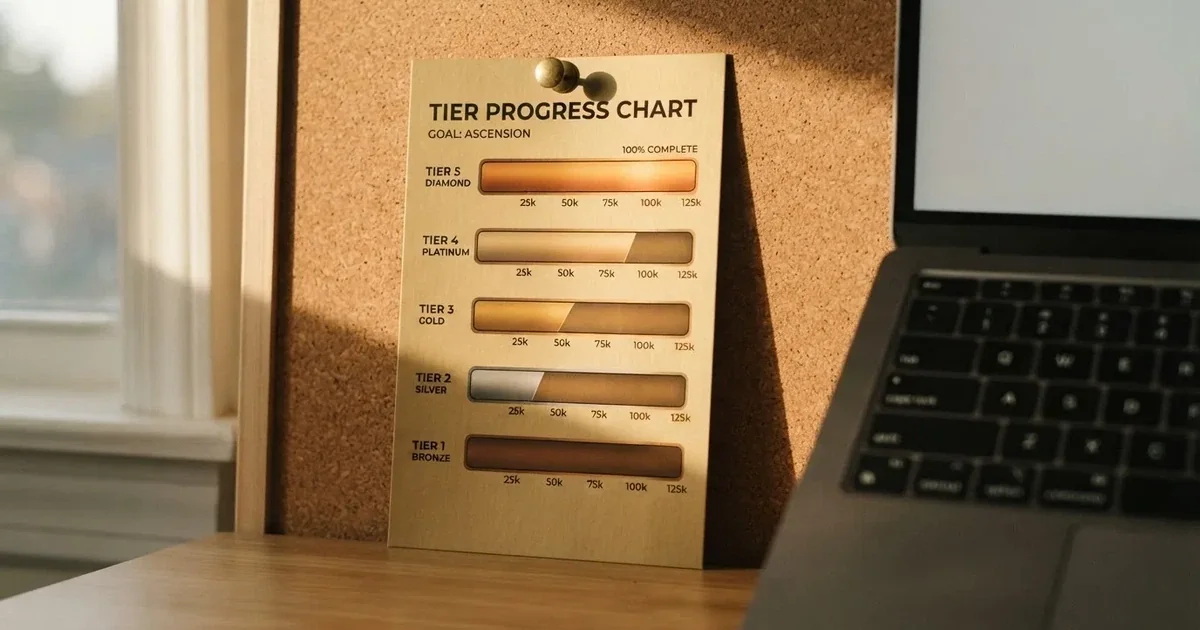
A VIP scheme is a rule the operator writes, and almost every operator writes it differently. The shape they share is a ladder of tiers — bronze, silver, gold, platinum, sometimes a named top tier above platinum — where each rung unlocks a thicker bundle of perks. The bundle is usually three things in combination: a higher reload bonus percentage on the next deposit, an allocation of free spins tied to a specific slot, and a personal account manager reachable by message rather than only through the support inbox. Higher rungs sometimes add cashback on net losses, faster withdrawal windows, and a higher ceiling on what one withdrawal can be.

What moves a player up that ladder is what the operator calls “comp points”, “loyalty points” or simply tier credits, and what they measure is, almost without exception, the cumulative amount wagered rather than the cumulative amount deposited. A player who deposits A$100 and wagers the entire balance ten times over has accumulated far more tier credit than the player who deposits A$500 and never plays it. The operator’s interest in this is straightforward: the larger the turnover, the larger the house edge collected, and the larger the bonus the player is then offered to keep the turnover going. The mechanic is not a reward for loyalty; it is a reward for play.
A useful concrete picture: a 100% reload bonus up to A$500 with a 40x wagering requirement on the bonus amount means a player who claims the maximum bonus must turn over A$20,000 before any of it becomes withdrawable. At a 96% return-to-player rate on the average slot, that A$20,000 in required wagering produces an expected loss of A$800 before the bonus is even cleared. The “free” A$500 has cost the player A$800 in expectation, on average, over the playthrough. That is the mechanism the marketing language of “exclusive VIP reward” is built on. The marketing word, in quotes, is “exclusive”, and the arithmetic that deflates it is the expected loss against the required turnover.
A second feature most VIP schemes share is a tier-down rule. Points expire if the account goes dormant for a set period, usually 30, 60 or 90 days. A player who builds a platinum tier over six months and then takes a month off finds themselves reset to a lower tier and locked out of the perks they had been earning toward. The mechanic is identical in logic to a frequent-flyer programme’s status clock, and it produces the same effect on behaviour: it penalises absence, so the player keeps playing to keep the tier. For a person who has already accepted that they are playing on an unlicensed site, that pressure compounds on top of a game already loaded against them.
The two bonus types VIP schemes actually pay out
The first is the deposit-gated bonus. The headline reads “200% up to A$1,000”, and what it means is that the operator matches the player’s next deposit, dollar for dollar up to the cap, in bonus funds. Bonus funds are not withdrawable directly. They sit in a parallel balance, and the player has to wager them through the required multiple before any winnings — not the bonus itself, only the winnings — become cash. A 200% match with a 35x playthrough on the bonus is, at a 96% return-to-player rate on the average slot, an expected loss of A$672 to release an A$1,000 bonus. The player needs to be prepared for that arithmetic before the deposit button is hit.

The second is the no-deposit bonus. The headline reads “A$50 free on signup, no deposit required”. The amount is real, in the sense that the operator credits the bonus balance without a deposit, but the same withdrawal restriction applies: the bonus carries its own wagering multiple, and the maximum cashable winnings from a no-deposit bonus are usually capped somewhere between 5x and 10x the bonus amount. A A$50 no-deposit bonus with a 50x playthrough and a 10x max cashout requires A$2,500 in turnover before the player can withdraw anything, and the player can never withdraw more than A$500 from it, however lucky the session is. The expected loss against that turnover, at 96% RTP, is A$100. The bonus pays out at most A$500 and costs an expected A$100 to clear — a ratio the marketing language does not invite the reader to compute.
The two types are not interchangeable. A deposit bonus offers a larger headline amount at the cost of tying real money into the playthrough; a no-deposit bonus offers a smaller headline amount at the cost of a tighter cap on what can ever come out of it. A player who values optionality prefers the deposit bonus, because there is no ceiling on what the bonus can produce. A player who values keeping real money out of the account prefers the no-deposit bonus, even though the upside is bounded. Neither version changes the underlying maths: the house edge keeps running through every spin the bonus requires.
Crypto deposits and the promise of faster tier progress
A separate subset of the market wraps its VIP scheme around a blockchain deposit. Bitcoin, Ethereum, USDT and a handful of altcoins are accepted; the deposit usually clears within minutes rather than days; and the operator markets the scheme with the language of “VIP crypto casino” or “Bitcoin VIP casino”. The marketing claim is that crypto deposits accelerate tier progression. The mechanism behind that claim, when operators say it plainly, is that crypto deposits are not subject to the same processing delays as card or bank transfer deposits, so the player can fund the account and start earning tier credit sooner.
That is a small benefit. The amount of tier credit a player earns is, in almost every scheme, a function of how much they wager, not how fast the deposit arrived. A player who funds A$500 in Bitcoin and wagers it once has earned the same tier credit as the player who funds A$500 by bank transfer and wagers it once. The marketing version of “crypto VIP” overstates the speed gain and understates what the player is actually buying into: a deposit method that, at an Australian-licensed operator, is not available at all, because the Interactive Gambling Act amendments that took effect on 11 June 2024 prohibit the use of digital currency as payment for licensed online wagering. A crypto deposit at an offshore casino is, in other words, a deposit into a venue that is, by Australian law, prohibited.
The reverse side of the crypto angle is the anonymity claim. Operators marketing themselves as anonymous crypto casinos argue that no name, address or proof of identity is required to play. That is true at sign-up, in the sense that the operator does not collect it. It is not true at withdrawal, where the operator asks for exactly the documents an Australian bank or a regulated payment processor will demand before letting a transfer leave the country. A player who has been told that no identity verification is needed at the offshore casino is, at the moment of trying to cash out, told something different, and at that point the operator holds both the balance and the documents. The anonymity the marketing promises is the anonymity of the deposit, not of the withdrawal. The page treats that distinction as the most consistently under-explained piece of any crypto VIP offer.
What the ACMA has actually done, and how often
The regulator’s record is the most useful evidence base for what an Australian reader is actually choosing between. The ACMA does not name brands in order to endorse them; it names them when it has issued a formal warning under the Interactive Gambling Act 2001, or when it has directed an Australian internet service provider to block the site. The block list is public and the warning register is public, so the comparison below is the comparison the regulator itself has assembled. Every brand in the comparison has been the subject of at least one formal warning, and most have been the subject of more than one.
The most recent blocking round reported on 26 June 2026 added twelve more sites to the running block list: 7Signs, ChromaBet, Donbet, Duospin, Freshbet, Slots Gem, Jacks Club, Lucky Start, Pointsbetz.com, Spinrise, Vinyl Casino and Wildsino. The running total of blocked and de-listed sites reached 1,751, with the first blocking request having gone out in November 2019. Across roughly six and a half years of enforcement, the average is somewhere between 250 and 270 sites per year added to the block list. That figure is the closest thing the public record has to a measure of how often a new prohibited service is identified, named and acted against.
The same ACMA record is the source for every brand in the comparison table below. The block list is the regulator’s answer to the marketing claim that the operator in question is “licensed and regulated”. It is licensed by somebody, somewhere. It is not licensed in Australia, and the regulator has, on the date stamped against the brand, said so in writing.
The legality frame around any VIP offer an Australian sees
The legal frame has three layers, and each one bites a different part of what an offshore VIP scheme is trying to do. The first layer is the prohibition itself. Online casino games and online pokies are not licensable in Australia; no state or territory issues a licence for them; the Interactive Gambling Act 2001, as amended in 2017, makes the provision of such services to a person in Australia an offence. The operator is the target of that prohibition, not the player — the IGA does not criminalise the individual who places a bet.
The second layer is the payment prohibition. Since 11 June 2024, Australian-licensed online wagering services cannot accept payment by credit card, by any credit-related product, or by digital currency. Penalties for licensed operators who breach that rule reach A$247,500. The legal deposit routes for licensed wagering — that is, wagering on races and sporting events placed before the event — are debit card, bank transfer, PayID via Osko, and BPAY. An offshore casino asking an Australian player for a credit card or a crypto deposit is, on the payment side, outside the Australian rules entirely; that is what an unlicensed venue looks like at the checkout.
The third layer is the consumer protection gap. BetStop, the National Self-Exclusion Register, has been live since August 2023 and binds every Australian-licensed online and phone wagering service. A player who has registered with BetStop cannot place a bet with any of them. An offshore casino is not connected to BetStop, and a self-excluded Australian player can still fund an offshore account and play there. The National Gambling Helpline is 1800 858 858, free, 24/7; chat is available at Gambling Help Online. The same phone number, at the offshore casino, will reach an account manager whose job is to keep the player playing rather than to keep the player safe.
The Interactive Gambling Amendment (Gambling Reform) Bill 2026 passed Parliament on 19 August 2026, and its advertising and inducement measures commence on 1 January 2027. As of the data snapshot for this page, that commencement date is still in the future; the prohibition is in force, the inducement provisions are not.
What responsible play looks like at an unlicensed venue
The responsible gambling advice that applies to an Australian-licensed venue does not apply at an unlicensed offshore casino, and that is the practical edge of the entire comparison. A licensed Australian wagering service is connected to BetStop, will process a self-exclusion request, and is required by the National Consumer Protection Framework to offer deposit limits, time-out periods and reality checks. An offshore casino has none of those obligations. The deposit limit, the time-out, the cool-off period and the self-exclusion are all features the operator has chosen to offer because they sell well, not features the operator is required to offer because an Australian regulator has told it to.
For a reader who has decided, after weighing those gaps, that the comparison is academic, the practical advice is unchanged. Track time, track spend, and stop when the budgeted figure is reached. Do not chase a tier: the time cost of a platinum rung at the rate required to clear a 40x bonus playthrough is, on average, dozens of hours of play for what the marketing calls an “exclusive perk” and the arithmetic calls an A$800 expected loss. Do not increase a deposit to chase a higher match percentage: the size of the bonus scales with the size of the deposit, and so does the size of the expected loss against the playthrough. The house edge keeps running through every spin, and the tier badge does not change that.
If the play has stopped being a choice and has become a compulsion, the help line is 1800 858 858, and the chat service at Gambling Help Online is open 24 hours. BetStop, for Australian-licensed services, is at betstop.gov.au. A self-exclusion through BetStop does not extend to offshore casinos, but it removes the licensed venues from the picture, and that is half of the available action.
A working read of the brands the ACMA has acted against
The eleven brands below are presented in the order the ACMA’s own record gives. None of them is recommended. Each one has been named, on the date stamped against it, in a formal warning under the Interactive Gambling Act 2001. The “subject support” column records what third-party listings or supporting pages research could confirm for the brand; where research found nothing to confirm, the entry is left blank rather than padded. The brand’s own marketing is not used as a source for any figure in the table.
| Brand | ACMA action and date | Operator named by the ACMA | Subject support |
|---|---|---|---|
| RocketPlay | Formal warning, March 2026 | Pulsup Ltd (Rocketplay.com.au); earlier Dama N.V., May 2022 | Listings reference the brand on Gamblinginsider.com |
| Level Up Casino | Formal warning, May 2022 | Dama N.V. | Westpac’s card gambling block lists Level Up among blocked merchants |
| Woo Casino | Formal warning, March 2025 | Dama N.V. | — |
| Spirit Casino | Formal warning, May 2025 | Dama N.V. | — |
| National Casino | Formal warning, July 2025 | Consolutetish S.R.L. | Listings on ACMA, AUSTRAC and BetStop reference the brand |
| Bizzo Casino | Formal warning, July 2025; earlier 2022 | Consolutetish S.R.L.; earlier TechSolutions | Listings reference the brand on Gamblinginsider.com |
| Ignition Casino | Formal warning, July 2025 | Bamboo Media | — |
| Instant Casino | Formal warning, February 2025 | EOD Code SRL | Listings reference the brand via ecoPayz and PayID pages |
| Jackbit | Formal warning, April 2026 | Ryker B.V. (Jackbit, CasinOK) | — |
| Casino Intense | Formal warning, April 2025 | Sterplay Holding Ltd | Listings on AUSTRAC, BetStop and Gamblinginsider.com |
| Sky Crown | Formal warning, September 2022 | Hollycorn N.V. | — |
Two patterns are worth pulling out of that table. The first is recurrence: Dama N.V. has been warned four times across the record, in May 2022 over six brands including RocketPlay, in March 2025 over Woo Casino, in May 2025 over Spirit Casino, and the same operator group sits behind several of the other entries through successive rebrandings. Consolutetish S.R.L. has been warned twice in a single month, in July 2025, over National Casino and Bizzo Casino; Bizzo Casino had already been the subject of a 2022 warning to TechSolutions (CY) Group Limited and TechSolutions Group N.V. The pattern is the same in both cases: the operator behind the brand changes, the brand persists, and the warning register records both.
The second is the gap between the warning and the block. A formal warning is not a block. The ACMA’s blocking power sits in section 313 of the Telecommunications Act 1997, and a site is added to the block list only after the regulator has gone through the formal warning process. A site that has been warned in 2022 can still be reachable from Australia in 2026, depending on which ISP the reader uses and whether the site has changed its domain in the meantime. The block list, of 1,751 sites, is the cumulative result; the warning register is the immediate present.
Brand-by-brand read: what the regulator’s record actually says
RocketPlay — ACMA warning, March 2026 (Pulsup Ltd); earlier May 2022 (Dama N.V.)
RocketPlay is the most recent addition to the ACMA’s formal warning register. The March 2026 warning names Pulsup Ltd as the operator of Rocketplay.com.au; the May 2022 warning names Dama N.V. as the operator of the earlier Rocketplay.com. The same operator group, the same brand, a fresh corporate wrapper: that is the playbook the regulator is documenting. The third-party listings research turned up for RocketPlay place it on Gamblinginsider.com; the operator’s own marketing is not used as a source for any figure in this write-up. The verdict on RocketPlay is that it has been the subject of two ACMA warnings across four years, and an Australian reader cannot lawfully redeem any of its VIP perks at the address the regulator named.
Level Up Casino — ACMA warning, May 2022 (Dama N.V.)
Level Up Casino was one of six Dama N.V. brands named in the May 2022 warning, alongside Bambet, Dazard, Rocketplay, Wild Tornado and Cobra Casinos. The Westpac card gambling block lists Level Up among the merchants whose transactions the bank will refuse to authorise, which is the practical Australian-side evidence that the brand is reachable from this country in the first place. The verdict on Level Up is that the operator was warned in 2022 and the brand has continued to operate; a reader in 2026 still sees the marketing and still sees the warnings.
Woo Casino — ACMA warning, March 2025 (Dama N.V.)
Woo Casino is the second Dama N.V. brand named in the warning register, and the third when Spirit Casino is added in May 2025. Three warnings across three years for one operator group is a pattern, and the pattern is the point. Research found no third-party listings covering this brand, so the entry remains blank. The verdict on Woo Casino is that the operator has been warned twice in 2025 alone; the marketing at Woo Casino is the same marketing that earned both warnings.
Spirit Casino — ACMA warning, May 2025 (Dama N.V.)
Spirit Casino is the second 2025 warning to Dama N.V., and the third in the cluster of Dama N.V. warnings on this register. The same blank entry on the subject-support column applies: research could not confirm any third-party listing tied to this subject, so nothing is asserted. The verdict on Spirit Casino is the same as the verdict on Woo Casino: one operator, two warnings in three months, the marketing unchanged.
National Casino — ACMA warning, July 2025 (Consolutetish S.R.L.)
National Casino is one of two Consolutetish S.R.L. brands named in the July 2025 warning; the other is Bizzo Casino. The third-party listings research confirms National Casino is referenced on the ACMA’s own register, on AUSTRAC’s threshold reporting guidance and on BetStop’s excluded-services list. The cross-reference between three Australian regulatory bodies is what makes National Casino the entry with the most Australian-side evidence in the table. The verdict on National Casino is that three Australian regulators have, in their own materials, named the brand, and an Australian reader can confirm that fact against the regulator’s own record.
Bizzo Casino — ACMA warning, July 2025 (Consolutetish S.R.L.); earlier 2022 (TechSolutions)
Bizzo Casino is the second Consolutetish S.R.L. brand named in the July 2025 warning; it is also the brand that was already the subject of a 2022 formal warning to TechSolutions (CY) Group Limited and TechSolutions Group N.V. The double warning, four years apart, with the operator changing between them, is the clearest single illustration in this register of the corporate-wrapper pattern the regulator has been documenting. The third-party listings research confirms Bizzo Casino is referenced on Gamblinginsider.com. The verdict on Bizzo Casino is that it has been warned twice for the same conduct under two different parent companies, and an Australian reader sees the brand unchanged across both warnings.
Ignition Casino — ACMA warning, July 2025 (Bamboo Media)
Ignition Casino is the Bamboo Media brand named in the July 2025 warning; no third-party listings surfaced for this operator. The verdict on Ignition Casino is the one the ACMA’s own publication supports: a formal warning under the Interactive Gambling Act 2001, and the marketing at the offshore casino unchanged after the warning.
Instant Casino — ACMA warning, February 2025 (EOD Code SRL)
Instant Casino is the EOD Code SRL brand named in the February 2025 warning; the third-party listings research confirms Instant Casino is referenced via ecoPayz and PayID pages. The PayID cross-reference is the interesting one for an Australian reader, because PayID is the Australian instant-transfer system and a PayID-bearing offshore casino is, by definition, an offshore casino asking an Australian player to use an Australian payment rail. The verdict on Instant Casino is that the regulator has warned the operator and the operator is still asking Australian players for Australian payment rails.
Jackbit — ACMA warning, April 2026 (Ryker B.V.)
Jackbit is one of two Ryker B.V. brands named in the April 2026 warning; the other is CasinOK. Research for this brand found no third-party listings to verify. Jackbit is also the brand most commonly associated in its own marketing with crypto deposits and crypto-denominated VIP tiers; the absence of third-party confirmation on the subject is itself information, and the reader should treat any crypto-VIP claim made by the operator’s own marketing as the operator’s claim rather than as confirmed fact. The verdict on Jackbit is that the ACMA’s April 2026 warning is the only Australian-side evidence the regulator has published, and that warning is the most recent formal action in the table.
Casino Intense — ACMA warning, April 2025 (Sterplay Holding Ltd)
Casino Intense is the Sterplay Holding Ltd brand named in the April 2025 warning; the third-party listings research confirms Casino Intense is referenced on AUSTRAC, on BetStop and on Gamblinginsider.com. The same three-regulator cross-reference that applies to National Casino applies here. The verdict on Casino Intense is the same one: three Australian regulators have, in their own materials, named the brand.
Sky Crown — ACMA warning, September 2022 (Hollycorn N.V.)
Sky Crown is the Hollycorn N.V. brand named in the September 2022 warning, alongside Blue Leo. No independent third-party listing was available to verify this brand. Sky Crown is also the oldest entry in the table, with the formal warning predating every other brand in the comparison by months or years. The verdict on Sky Crown is that it has been warned since 2022 and the marketing has continued unchanged; the warning register is older than most of the other entries, and that age is itself a data point.
What the calculation behind the rate actually shows
The blocking rate is the arithmetic of how many illegal sites the ACMA has identified and acted against per year, on average, since the first blocking request in November 2019. The running total reported on 26 June 2026 was 1,751 blocked or de-listed sites. From November 2019 to June 2026 is roughly six and a half years, or 78 months.
The band that comes out of the calculation depends on the denominator. If the 1,751 figure is divided across the full 78 months, the rate is around 22 sites per month, or roughly 265 sites per year. If the figure is divided across the period since enforcement was strengthened in 2017 — a longer window — the annual rate is much lower. The ACMA’s own framing in the June 2026 report places the first blocking request at November 2019, so the 78-month denominator is the one the regulator’s own timeline invites.
A reader should hold the figure as a band, not a single number. The ACMA has not added sites to the block list at a constant rate; some months add many, some add none, and the cumulative total reflects the regulator’s priorities as much as it reflects the size of the prohibited-services market. The useful reading is that the block list is currently growing by something in the order of 200-300 sites per year, that the rate has held in that band across the years since the 2017 amendments, and that any given brand on the ACMA’s warning register is, in expectation, somewhere between months and a couple of years away from being added to the block list itself.
That is the page’s insight from the calculation: the reader can place a single warning against the rate at which warnings turn into blocks, and a brand warned in 2026 should be read as one whose domain is more likely than not to be added to the block list within the next year or two. The brand’s own marketing does not give the reader that figure; the regulator’s record does, and the arithmetic over that record is what produces it.
How the payment side of an offshore casino interacts with Australian bank rails
The payment infrastructure research pulled together is the second-most-useful evidence base in this comparison, after the ACMA’s own register. The Reserve Bank of Australia’s July 2025 review proposes removing surcharges only on eftpos, Mastercard and Visa card transactions, explicitly leaving American Express outside the scope of the proposed surcharge ban. Amex was established in 1850 as a freight-forwarding company and later became a card issuer, launching its first charge card on 1 October 1958; unlike Visa or Mastercard’s four-party network, Amex traditionally issues cards and processes transactions itself as a three-party scheme. A reader who sees an Amex surcharge waived at an offshore casino is seeing the merchant pass through its own processing cost, not a network concession.
Three of Australia’s largest banks offer a card-level gambling block. Westpac’s block works at card level: it refuses authorisation of transactions registered under the merchant category code “Betting/Casino Gambling” on eligible personal credit and debit cards. ANZ’s block, activated in the ANZ app, also blocks gambling transactions made through a digital wallet such as Apple Pay on an eligible card, not just the physical card; once turned on, removing it again requires a 48-hour waiting period, and the bank warns that not all gambling transactions will be blocked and some non-gambling transactions might be blocked in error. Commonwealth Bank lets customers apply a gambling lock to eligible cards via the CommBank app, which automatically blocks most gambling transactions, though the bank also states it cannot guarantee all gambling-related purchases will be stopped. Apple Pay, Google Pay and Samsung Pay collectively accounted for around 45% of all card payments in Australia by number at the end of 2025; that is the share of transactions a card-level block catches only when it covers the underlying card, not just the wallet front-end.
The Australian instant-transfer system is Osko, via the New Payments Platform. Osko transfers between participating Australian banks arrive in under a minute, 24/7 including weekends, whether addressed to a BSB and account number or to a PayID. The New Payments Platform became accessible to the public on 13 February 2018, is owned by New Payments Platform Australia Ltd, and its 13 shareholders include the Reserve Bank of Australia and the country’s major banks. Participants must keep the platform’s monthly outages to no more than two minutes; in 2021 the ACCC authorised merging NPP Australia with BPAY and eftpos into a single company, Australian Payments Plus. More than 25 million PayID identifiers had been registered as of April 2025, and PayID is available at over 100 Australian financial institutions. Paying to a PayID shows the name of the account holder before the transfer is sent; AP+ warns that being asked to transfer money to a PayID on an illegal gambling site almost certainly means a scam site.
BPAY is the older Australian bill-payment rail, launched on 18 November 1997 and available in the online banking of over 140 banks and financial institutions. The payer enters the Biller Code and the Customer Reference Number printed on the bill; the service is run by Australian Payments Plus and is offered by over 95,000 businesses. AUSTRAC’s threshold-transaction-report rule, which requires reporting of transfers of A$10,000 or more, applies only to physical cash; ordinary electronic bank transfers are not subject to that per-transaction reporting requirement, regardless of the amount sent.
What those rail descriptions mean for an Australian reader is that the payment infrastructure exists, that the instant-transfer system can move money to a PayID in seconds, and that the regulator has explicitly tied the PayID receipt of money to an illegal gambling site as a near-certain scam signal. An offshore casino asking for a PayID deposit is asking the reader to send money through a system whose operator has publicly warned against doing exactly that.
Why this comparison is structured around warnings rather than bonuses
The structure of the comparison above is deliberate. A ranking of the eleven brands by bonus size, by number of free spins, or by reload percentage would be a ranking of the marketing the operator has chosen to put on its homepage, and the page’s own job is to say what an offer costs rather than to compile what an offer promises. A ranking of the brands by the date of the ACMA’s warning, by the operator group, or by the regulator’s own action is a ranking of the Australian-side evidence and lets the reader weigh the brands against the record rather than against the marketing.
Two readers will use this comparison in two different ways. The first is the reader who arrived at this page after typing “casino vip program australia” into a search engine, expecting a buyer’s guide. That reader wants to know what a tier costs and what a bonus is worth, and the sections on how offshore tiers are built and on the two bonus types are written for them. The second is the reader who has already noticed that the marketing at an offshore casino does not match the regulator’s record, and who wants to see the regulator’s record laid out next to the marketing. That reader wants the comparison table and the brand-by-brand read, and those sections are written for them.
Neither reader is told to play at any brand on the page. Neither reader is told the marketing is honest. Neither reader is recommended a venue. The page describes what is true, the regulator’s record is what makes it true, and the arithmetic over that record is what makes the record legible.
Frequently asked questions
Is an online casino VIP program legally available to someone in Australia?
No. The Interactive Gambling Act 2001, as amended in 2017, prohibits the provision of online casino games, online pokies and in-play betting to a person in Australia. No state or territory licences online casinos, and any operator offering a VIP scheme to an Australian resident is offering a service the regulator has, by name, acted against. The individual player is not prosecuted; the operator is. The balance the player has on the offshore site, however, has no Australian consumer protection behind it.
How does a VIP tier system decide when a player moves up a level?
Almost every offshore VIP scheme measures tier credit by cumulative amount wagered rather than by cumulative amount deposited. A player who deposits A$100 and wagers the balance repeatedly moves up faster than a player who deposits A$500 and plays it once. Tiers expire after a dormancy period, usually 30-90 days, so the system rewards continuous play and penalises absence. The mechanic is built to keep turnover high, not to reward loyalty as a separate virtue.
What turnover requirement usually applies before a VIP bonus can be withdrawn?
A reload bonus at an offshore VIP scheme typically carries a 35x-50x wagering requirement on the bonus amount. A 100% reload up to A$500 with a 40x playthrough requires A$20,000 in turnover before any winnings become withdrawable. At a 96% return-to-player rate on the average slot, that A$20,000 produces an expected loss of around A$800 against the playthrough. The “free” A$500 is, in expectation, an A$800 cost before it clears.
Do VIP programs that accept crypto deposits progress players through tiers any faster?
In theory the deposit clears faster, so the player can start earning tier credit sooner. In practice tier credit is a function of cumulative wagering, and the speed gain on the deposit does not change the wagering required. The crypto angle that matters more is the legal one: digital currency has been banned as a payment method for Australian-licensed online wagering since 11 June 2024, so a crypto deposit at an offshore casino is, on the payment side, outside the Australian rules entirely.
What is the difference between a VIP no-deposit bonus and a VIP deposit bonus?
A deposit bonus matches the player’s next deposit up to a cap and is unlocked only after a wagering requirement on the bonus amount. A no-deposit bonus credits a small amount without a deposit but caps the maximum cashable winnings, usually at 5x-10x the bonus amount. The deposit bonus offers a larger headline with no ceiling on winnings; the no-deposit bonus offers a smaller headline with a hard cap on what can ever come out of it. Both versions are subject to the same house edge on every spin.
How can a shortlist of VIP casino programs be compared without relying on the operator’s own marketing?
The regulator’s own record is the most useful comparator. The ACMA’s formal warning register and its block list are public and named by brand, and they let the reader place any marketing claim against the date a warning was issued. The payment rail the casino accepts is the second-most-useful comparator, because a casino asking an Australian reader for a PayID or a credit card deposit is asking the reader to use rails whose operators have publicly warned against that exact use. Third-party listings, where they exist, are the third comparator; the operator’s own homepage is the last.
What a casino VIP tier costs an Australian player, and why that… — More on this topic at casino slots au.
See also No-Deposit Casino Offers.