
Online pokies with PayID in Australia 2026: what the rail pays for, and what it does not
Current as of 28 October 2026 — verified against ACMA formal-warning publications and the Reserve Bank of Australia’s New Payments Platform register.
The pitch is simple. An Australian opens a banking app, types a phone number or email, watches the money land in under a minute, and assumes the same plumbing that sends a friend $20 for dinner also sends a deposit to a pokies site. PayID really does move that fast, and it really is already wired into more than a hundred Australian financial institutions. The part that does not survive the comparison is the destination. No Australian licence covers online casino games or online pokies anywhere in the country, so every site that advertises PayID to an Australian player is operating offshore, outside the Interactive Gambling Act 2001, and outside the consumer protection that licence would have bought.
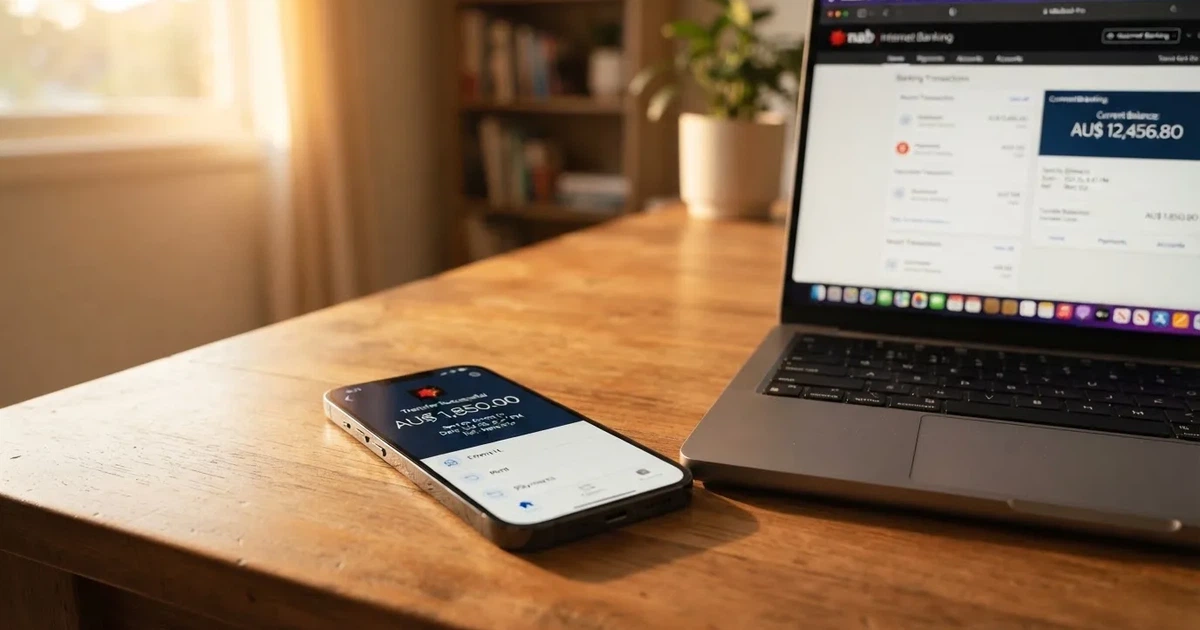
This page lays out the eleven offshore brands the ACMA has formally warned over offering prohibited services to Australians, the actual settlement time PayID delivers when Osko is the rail underneath it, and the cost of treating a marketing word like “instant” as a promise.
Table of Contents
- Offshore pokies brands the ACMA has warned
- What online pokies PayID in Australia actually means
- The legal picture: nothing here is licensed
- Responsible play: what the rail does not give an Australian player
- Payments and payout speed: what “instant” actually buys
- Operator reviews: the eleven brands the ACMA warned
- What an Australian who wants to play actually has
- What an Australian reader should take from the page
- Frequently asked questions about PayID pokies in Australia
Offshore pokies brands the ACMA has warned
Every brand in this ranking appears here for the same reason: the Australian Communications and Media Authority issued a formal warning under the Interactive Gambling Act 2001 against the company operating it for Australians. This is not a comparison of welcome packages, payout speeds, or game libraries, because none of the bonus terms published by affiliate sites are verifiable, and none of the operators carry an Australian licence. The single fact that ties these brands together is the one the regulator published about each. The table that follows names the brand, the ACMA action, the operator the warning named, and what is known about whether the brand connects to PayID at all.
Table: ACMA warnings against offshore PayID pokies brands
| Brand | ACMA action and date | Operator named by the ACMA | PayID availability |
|---|---|---|---|
| RocketPlay | Formal warning, March 2026 | Pulsup Ltd | — |
| Level Up Casino | Formal warning, May 2022 | Dama N.V. | listings-only |
| Woo Casino | Formal warning, March 2025 | Dama N.V. | — |
| Spirit Casino | Formal warning, May 2025 | Dama N.V. | — |
| National Casino | Formal warning, July 2025 | Consolutetish S.R.L. | listings-only |
| Bizzo Casino | Formal warning, July 2025 (earlier 2022) | Consolutetish S.R.L. / TechSolutions | — |
| Ignition Casino | Formal warning, July 2025 | Bamboo Media | — |
| Instant Casino | Formal warning, February 2025 | EOD Code SRL | listings-only |
| Jackbit | Formal warning, April 2026 | Ryker B.V. | — |
| Casino Intense | Formal warning, April 2025 | Sterplay Holding Ltd | listings-only |
| Sky Crown | Formal warning, September 2022 | Hollycorn N.V. | — |
The list is not a ranking. Five of the eleven brands appear in marketing listings that mention PayID among deposit options; for the remaining six, neither the operator’s own site nor any third-party listing reviewed carried PayID as a deposit method, so no claim is made either way. The brand-level ACMA actions are cumulative. Three operators (Dama N.V., Consolutetish S.R.L., and TechSolutions) account for warnings over six of the eleven brands, which says less about the offshore market than about the regulator’s willingness to act repeatedly against the same parent.
What online pokies PayID in Australia actually means
PayID is an addressing shortcut, not a separate payment network. A PayID is a mobile number, an email address, an ABN, or an Organisation Identifier linked to a bank account at an Australian institution. The shortcut sits on top of the New Payments Platform, which the Reserve Bank of Australia oversees and which Australia launched in February 2018 to let banks settle individual transactions in close to real time, twenty-four hours a day, through its Osko service. PayID itself is run by Australian Payments Plus, the domestic payments body that operates the address book.
Two practical consequences follow.
First, the settlement time is the settlement time of Osko, not a property of any merchant or operator. A PayID-to-PayID transfer at a participating bank arrives in under a minute, including weekends. A pokies operator cannot make a PayID transfer arrive faster than the rail allows, and cannot legitimately claim a PayID transfer arrives slower than the rail delivers.
Second, before the payer confirms the transfer, the banking app shows the name registered to the receiving PayID. That name-check is the design feature that makes PayID useful against scams and mistaken payments. AP+ has turned it into a warning directly aimed at gambling: anyone asked to send money to a PayID on an illegal gambling site is, in AP+’s own words, almost certainly dealing with a scam site. The name-check on the receiving side is not optional, and an Australian using their own banking app to send to a PayID claimed by an offshore casino sees the registered name before confirming.
That is the rail. It moves money. It also tells the person moving it whose name sits at the other end. An offshore pokies operator collecting Australian deposits via PayID is relying on a rail that its own industry regulator has publicly named as a marker for an illegal site.
The legal picture: nothing here is licensed
The Interactive Gambling Act 2001, strengthened by the Interactive Gambling Amendment Act 2017, makes it an offence to provide online casino games, online pokies, or in-play betting to a person physically in Australia. No state or territory issues a licence for these products, and no licence displayed by any offshore brand changes that, because the licence is not an Australian one. What is licensable: wagering on races and sport placed before the event, lotteries, and keno. In practice those are licensed through the Northern Territory Racing and Wagering Commission, which regulates fifty-two online bookmakers, including Sportsbet, Bet365, and Ladbrokes. The Territory licenses them for tax reasons; the commission has no full-time staff and meets once a month in Darwin.
The operator matters here because it is the operator the ACMA names in each formal warning. A formal warning under the IGA is not a court action; it is a regulator writing to a company, naming the prohibited service, and putting the company on notice that further action follows if the conduct continues. The regulator has acted against at least eleven of the brands in this ranking, sometimes more than once against the same parent. Dama N.V. has received warnings covering six brands (Bambet, Dazard, Level Up, Rocketplay, Wild Tornado, and Cobra Casinos) in one 2022 round, and then further warnings over Woo Casino in March 2025 and Spirit Casino in May 2025. TechSolutions was warned in 2022, and the same brand appeared under a different parent in 2025. The pattern is not a coincidence; it is a regulator returning to the same names.
What the ACMA can do beyond formal warnings is block. Since the first blocking request in November 2019, the ACMA has directed Australian internet service providers to block 1,751 illegal gambling and affiliate marketing websites. In a single round reported on 26 June 2026, the regulator asked ISPs to block twelve more: 7Signs, ChromaBet, Donbet, Duospin, Freshbet, Slots Gem, Jacks Club, Lucky Start, Pointsbetz, Spinrise, Vinyl Casino, and Wildsino. More than 230 unlicensed gambling services have left the Australian market entirely since enforcement was strengthened in 2017. A blocked site can still hold a player’s balance at the moment of the block; the player has no Australian complaints body to approach and no recourse if the operator refuses to release funds. The individual player is not prosecuted. The offshore operator is the target of the law, and the offshore operator is the one deciding what happens to any money the player left behind.
Settleme: how PayID actually settles
PayID is built into the online banking at more than a hundred Australian financial institutions, so the rails are already there. The point worth holding on to is that the rail is the Osko service, which settles in close to real time through the Reserve Bank of Australia’s Fast Settlement Service. Nothing an offshore operator does can speed the rail up, and nothing the rail does for a legitimate transfer is different from what it does for an offshore casino deposit. The settlement time is the rail’s. The legality of what the money buys is the operator’s.
Responsible play: what the rail does not give an Australian player
An offshore pokies site accepting PayID sits outside the Australian player-protection framework. Three practical consequences follow.
First, BetStop, the National Self-Exclusion Register, went live in August 2023 and lets an Australian exclude themselves from every Australian-licensed online and phone wagering service in one registration. It does not bind an offshore casino. The exclusion is a wall only as wide as the licensed market; the offshore market is on the other side of it.
Second, the payment rules themselves differ. Australian-licensed online wagering services have been banned from accepting credit cards or other credit-related products since 11 June 2024, with penalties up to $247,500 for operators that breach. The legal deposit routes are debit card, bank transfer, PayID and Osko, and BPAY. An offshore casino that asks for a credit card or a cryptocurrency deposit is operating outside the Australian rules, which is consistent with the rest of the picture but worth naming plainly.
Third, an Australian bank can also block the transaction at its end. Westpac’s gambling block works at the card level: the bank refuses authorisation on transactions carrying the merchant category code “Betting/Casino Gambling” across eligible personal credit and debit cards. ANZ’s gambling block, activated in the ANZ app, blocks gambling transactions made through a digital wallet such as Apple Pay on an eligible card, not just the physical card. ANZ’s block, once turned on, requires a forty-hour cooling-off period to remove, and ANZ warns that not all gambling transactions will be blocked and some non-gambling transactions might be blocked in error. Apple Pay, Google Pay, and Samsung Pay together account for around 45% of all card payments in Australia by number, so a wallet-based block reaches a meaningful share of transactions.
The Consumer Protection outcome is the absence of any. An offshore casino gives an Australian player no Australian complaints body, no AFCA-style dispute resolution, no BetStop, and no recourse through the regulator’s blocking infrastructure if the operator decides to keep the balance. The fast rail in makes the fast rail out: when the operator wants it to. The protection against that asymmetry is an Australian licence, and the eleven brands in this ranking do not have one.
Fundamenta: the ACMA’s pattern of formal warnings
In July 2025 the ACMA issued formal warnings over Ignition Casino, National Casino, and Bizzo Casino, the latter already warned once before in 2022. The regulator acts against the operator it can identify, not the brand label, which is why the same corporate name appears across different brand listings. A reader who only looks at the brand name will miss that Rocketplay has been warned as both Dama N.V. (May 2022) and Pulsup Ltd (March 2026), and that the regulator has named the parent more than once.

Payments and payout speed: what “instant” actually buys
Osko, the service that carries PayID transfers between participating banks, advertises the under-a-minute settlement; the Reserve Bank of Australia is both the overseer of the New Payments Platform that PayID runs on and the operator of the Fast Settlement Service that settles NPP transactions individually in close to real time. That is the rail’s own description of itself.
An offshore pokies operator accepting PayID is using the same rail, and the rail’s actual settlement time does not change at the merchant’s discretion. The marketing word “instant” describes what the rail does. It does not describe what the operator does with the money once it arrives, or how long the operator takes to credit the player’s account, or how long the operator takes to release a withdrawal. The settlement time of Osko is a feature of Osko. The credit time of an offshore casino is a feature of the casino. They are two different things.
The payment-rail timing claims that appear alongside PayID marketing are therefore worth reading carefully. A site promising “instant deposits via PayID” is restating the rail’s own speed; a site promising “instant withdrawals via PayID” is making a separate claim about the operator, not about the rail. Withdrawal claims are operator claims and cannot be checked against the rail.
Blocking rate: how fast the regulator catches up
Between November 2019 and the round reported on 26 June 2026, the ACMA directed Australian internet service providers to block 1,751 illegal gambling and affiliate marketing websites. The arithmetic belongs to anyone comparing a brand’s promise to its shelf life. The regulator’s blocking work has averaged roughly 263 sites per year across the 79 months from November 2019 to the June 2026 round, with the early years carrying fewer sites and the more recent years higher counts as enforcement strengthened. H2 Gambling Capital’s 2025 report estimates Australians lose about A$3.9 billion a year to illegal gambling sites, with the share of gambling going through legal channels falling from 74% in 2021 to 64%. The block-rate band is the regulator’s; the spend figure is the market’s. A reader deciding whether an offshore brand will still be reachable in a year is looking at one number, and a reader deciding whether the offshore market has shrunk is looking at the other.
Prohibiti: the regulator’s own caution
The ACMA issued a formal warning over Instant Casino in February 2025. That same brand appeared in marketing listings that name PayID among deposit methods, which is precisely the configuration AP+ has publicly cautioned against. The caution is not the operator’s. The caution is the rail operator’s. It is published on the rail’s own page and aimed at the reader doing the sending.
Operator reviews: the eleven brands the ACMA warned
Each write-up below names the company the ACMA wrote to, the date of the formal warning as published by the regulator, and what is known about whether the brand connects to PayID at all. Where a brand’s marketing or third-party listings name PayID, the entry says so and names the source. Where neither does, the entry uses the article’s no-data marker rather than inventing the claim. No bonus terms are printed, because no source for them is independent of the affiliate pages that publish them.
RocketPlay
The ACMA wrote to Pulsup Ltd over RocketPlay in March 2026; the same brand had earlier been the subject of a 2022 warning against Dama N.V. Two formal warnings against two separate operators over the same brand is unusual. Neither the operator’s site nor any third-party listing confirmed PayID as a deposit method. Recurring regulatory attention across two parents is the most striking fact here.
Level Up Casino
The ACMA wrote to Dama N.V. over Level Up Casino in May 2022 as part of a six-brand warning. Third-party listings reviewed name PayID among deposit options, which is reported here only as what those listings claim, not as the operator’s own fact. The warning is now four years old; the brand’s ongoing availability to Australian players is itself a measure of how the offshore market treats an ACMA warning. Dama N.V. has continued to face the regulator over its other brands since.
Woo Casino
The ACMA wrote to Dama N.V. over Woo Casino in March 2025, a separate and more recent action than the 2022 batch. This entry uses the no-data marker for PayID. The regulator returned to the same parent for a third warning covering a different brand.
Spirit Casino
The ACMA wrote to Dama N.V. over Spirit Casino in May 2025. Like Woo Casino, this brand has no verified connection to PayID in public listings. Two ACMA actions against Dama N.V. within the same calendar year, on two separate brands, is the pattern worth registering.
National Casino
The ACMA wrote to Consolutetish S.R.L. over National Casino in July 2025. Third-party listings name PayID among deposit options, reported here only as what those listings claim, not as the operator’s own fact. The 2025 warning is the most recent published action against this brand.
Bizzo Casino
The ACMA wrote to Consolutetish S.R.L. over Bizzo Casino in July 2025, with an earlier 2022 warning against TechSolutions covering the same brand. PayID availability is not noted in third-party sources. The repeat warning across two operators is the same pattern RocketPlay shows, and it is the one the ACMA’s enforcement record makes visible.
Ignition Casino
The ACMA wrote to Bamboo Media over Ignition Casino in July 2025. Reliable public data on its PayID support is missing. The operator named in the warning is not the brand name, which is consistent with the regulator’s record and worth noting in a market where the brand and the licensee are rarely the same entity.
Instant Casino
The ACMA wrote to EOD Code SRL over Instant Casino in February 2025. Third-party listings name PayID among deposit options, reported here only as what those listings say. The AP+ caution about PayID and illegal gambling sites names the configuration this brand’s marketing relies on.
Jackbit
The ACMA wrote to Ryker B.V. over Jackbit and CasinOK in April 2026. Evidence of PayID use is not found in independent reviews. This warning is the most recent of the eleven in this ranking.
Casino Intense
The ACMA wrote to Sterplay Holding Ltd over Casino Intense in April 2025. Third-party listings reviewed name PayID among deposit options, again reported only as what those listings say, not as the operator’s own fact. Online casino games cannot be licensed anywhere in Australia, whatever licence the site displays.
Sky Crown
The ACMA wrote to Hollycorn N.V. over Sky Crown and Blue Leo Casino in September 2022. No third-party listing reviewed confirmed PayID as a deposit method. Online casino games cannot be licensed anywhere in Australia, whatever licence the site displays. The 2022 warning is the oldest in this ranking and remains in force; nothing in the regulator’s record suggests the warning has been withdrawn.
What an Australian who wants to play actually has
The legal deposit routes into Australian-licensed wagering are debit card, bank transfer, PayID and Osko, and BPAY. The licensed product set is racing, sport (before the event), lotteries, and keno. Online casino games and online pokies are not in the licensed set. Anyone asking for a “PayID pokies site” is asking for a service the law says no Australian-licensed operator can provide. The list of brands that have marketed to Australians anyway is the ACMA’s formal-warning record. The number of brands an Australian can actually reach from an Australian internet connection is smaller than the marketing list, because the regulator has blocked 1,751 illegal gambling and affiliate marketing websites since November 2019, and the count grows by the round.
The National Gambling Helpline (1800 858 858) is free, runs twenty-four hours a day, and offers chat through Gambling Help Online. BetStop, the National Self-Exclusion Register, has been live since August 2023 and lets an Australian exclude themselves from every Australian-licensed online and phone wagering service in one registration. Neither tool reaches an offshore casino. The 2026 reform package, the Interactive Gambling Amendment (Gambling Reform) Bill 2026, passed Parliament on 19 August 2026; its advertising and inducement measures commence 1 January 2027, which is law with a start date, not yet in force on a 2026 page.
A practical sequence for anyone who has already sent money to one of these sites: contact the bank, ask whether the gambling block can be turned on (Westpac and ANZ both offer this in the banking app), and call the National Gambling Helpline. The bank may not be able to recover the funds, but it can stop the next transfer.
What an Australian reader should take from the page
Three sentences. The rail is real and fast. The destination is illegal. The regulator has been writing to the operators behind these brands, sometimes more than once, since at least 2022. The rest of the picture is a marketing picture, and it is the one part of the offer where an Australian player has no independent check.
Frequently asked questions about PayID pokies in Australia
Why do so many pokies sites specifically advertise PayID rather than a regular bank transfer?
PayID markets itself. A PayID is a mobile number, email, ABN, or Organisation Identifier linked to a bank account, and PayID is offered by over a hundred Australian financial institutions, so the deposit path looks familiar. The actual transfer still uses Osko on the New Payments Platform, which settles in close to real time, twenty-four hours a day. Advertising PayID is advertising the rail’s familiarity, not a different rail. The legal status of the receiving operator does not change because the deposit path is convenient.
Is a PayID pokies site described as “trusted” actually any safer than one that isn’t?
The word “trusted” is a marketing word. No Australian licence covers online casino games or online pokies, so there is no Australian trust framework for these sites to sit inside. The ACMA’s formal-warning record lists eleven of the brands an Australian is most likely to encounter under “PayID pokies”, and that record is the closest thing to a published check on trust in this market. A reader who treats the regulator’s record as the trust signal is reading what is actually published, rather than what the operator wants published.
Can an Australian legally use PayID to fund an offshore pokies account?
The Interactive Gambling Act 2001 targets the provider, not the player. Australian law makes it an offence to provide online casino games or online pokies to a person in Australia, and no state or territory licences them. The individual player is not prosecuted, but the player’s funds are not protected either. AP+ has publicly warned that being asked to transfer money to a PayID on an illegal gambling site almost certainly means a scam site, and the bank-side gambling block at Westpac and ANZ can refuse the transaction before it leaves.
How does an instant-PayID pokies claim compare with the real Osko settlement times banks describe?
Osko, the rail that carries PayID transfers between participating banks, advertises the under-a-minute settlement, including weekends. A pokies operator cannot make a PayID transfer arrive faster than the rail allows, and the rail’s own description is the floor on what “instant” can mean. A withdrawal claim is a different claim, and it is the operator’s, not the rail’s. The rail delivers in under a minute. What the operator does with the money on the way in and on the way out is a separate promise, and it is one an Australian player cannot independently verify.
What should someone check about a site before trusting its own claim to be licensed for PayID pokies?
The first question is whether an Australian licence exists for the product at all. No Australian licence covers online casino games or online pokies, so any “licensed” claim refers to a jurisdiction outside Australia, and the licence is to operate a casino, not to serve Australians. The ACMA’s formal-warning list is the published record of regulators writing to operators who have served Australians anyway. A reader who wants to check has one place to look, and it is the regulator’s own page.