
What a “Newest Casino No Deposit Bonus” Offer Actually Costs Australians in 2026
A “no deposit bonus” sounds like a free start, and that is exactly what the offshore casino pages selling it want a reader to hear. The mechanics underneath are the same on a brand-new site as on a five-year-old one, the offers still carry wagering requirements, maximum cashout caps and game-weighting rules that quietly shrink them. What changes when a casino is genuinely new is mostly the marketing budget, and what does not change is the legal situation for an Australian sitting at the keyboard. This page walks the reader through what the offshore newest-casino pages claim, why none of it sits inside Australian law, and what the offers are likely to be worth once their conditions are read properly.

18 October 2026 · Verified against the Australian Communications and Media Authority (ACMA) public register.
Table of Contents
- The pokies and slots spotlighted on newest-casino pages
- Tracking which casino sites debut each year — and which ones are reskins
- How the claims stack up against each other
- The legal picture: what a “new” offshore casino really is for an Australian
- Responsible play and where Australian players can get help
- The payments picture: where the no-deposit bonus fits into Australian rails
- The eleven brands the ACMA has named — what each one actually is
- The four kinds of reader this page is actually for
- Putting it together: what a no-deposit bonus is actually worth on these sites
- What to do before claiming any “newest no-deposit bonus” offer
- Where to get help
- Frequently asked questions
The pokies and slots spotlighted on newest-casino pages
The newest RTG casinos, newest online pokies Australia and newest online slots lists that fill the affiliate pages are mostly variations on the same handful of providers. Real Time Gaming (RTG) powers most of the brands the ACMA has acted against; Betsoft, Pragmatic Play and a small number of live-dealer studios fill out the rest. The titles rotate slowly even on a “newest” page: a fresh site rarely launches games that did not exist three months earlier, because the studios themselves run on a release calendar of their own.

A reader scanning those lists should treat them the way they would treat a soundtrack album: useful for sizing up what is being played, no use for predicting what the next track will be. The difference between a “newest pokies” page and an “established casino” page is the date stamp, not the catalogue. Newer sites tend to lead with whatever the studios just pushed in the last quarter, while older ones keep a longer tail of evergreen titles. The hold percentages research has actually measured sit in the low-to-mid 90s as RTP, which is what the maths expects from a product that has to pay for staff, software licences and the marketing that put the “new” banner on the page in the first place.
Live-dealer tables appear on the same sites under the same offshore licences, run by studios like Evolution and Vivo Gaming. They are not a separate licence category in Australia, because the Australian licence category for what they offer does not exist. The “live” label is a production format, not a regulatory one.
Tracking which casino sites debut each year — and which ones are reskins
The debut of new offshore sites that start advertising no-deposit bonus claims to Australians runs in a tight pattern. A “new” casino site launches with a fresh banner, a matching welcome package, and almost always the same back-end providers as the brand it just replaced. The ACMA has issued formal warnings to operators running several of these brands from the same corporate parent — Dama N.V. alone has been the named operator on Rocketplay, Woo Casino and Spirit Casino at different points, and Dazard, Level Up and Cobra Casinos before that.
A reader trying to tell a genuinely new operator from a reskin of an already-warned brand can do worse than to look at the corporate name on the page footer. If the same operator owns three sites that have all drawn warnings, the fourth one is not really new in the sense the marketing implies; it is new in the sense that the URL is. Several of the brands reviewed later on this page fall into that pattern, which is itself the clearest answer to the question “is a no-deposit bonus from a new casino site different from one on an older one”. Usually, no.
The numbers themselves back that reading. The ACMA asked Australian ISPs to block 12 more illegal gambling websites in a single round reported on 26 June 2026 — 7Signs, ChromaBet, Donbet, Duospin, Freshbet, Slots Gem, Jacks Club, Lucky Start, pointsbetz (the ACMA blocking list), Spinrise, Vinyl Casino and Wildsino. Almost none of those names will be on a “newest” page a year from now, because the same operators cycle them out and put new domains in front of the same offer. The debut rate is fast because the underlying sites are slow, and that gap is the part the affiliate marketing language does its best to hide.
How the claims stack up against each other
What the public claims about these newest no-deposit bonus casinos look like, side by side, comes down to four pieces of information: the brand name as the affiliate page publishes it, the action the ACMA has taken and when, the operator entity the ACMA named in its warning, and how the brand shows up against the subject itself — that is, whether the operator currently accepts the payment methods or runs the game categories the reader came looking for.
| Brand | ACMA action and date | Operator named by the ACMA | Subject support |
|---|---|---|---|
| RocketPlay | Formal warning, March 2026 | Pulsup Ltd (RocketPlay); Dama N.V., May 2022 | listings-only |
| Level Up Casino | Formal warning, May 2022 | Dama N.V. | listings-only |
| Woo Casino | Formal warning, March 2025 | Dama N.V. | — |
| Spirit Casino | Formal warning, May 2025 | Dama N.V. | — |
| National Casino | Formal warning, July 2025 | Consolutetish S.R.L. | listings-only |
| Bizzo Casino | Formal warning, July 2025 (prior 2022 to TechSolutions) | Consolutetish S.R.L.; TechSolutions | listings-only |
| Ignition Casino | Formal warning, July 2025 | Bamboo Media | — |
| Instant Casino | Formal warning, February 2025 | EOD Code SRL | listings-only |
| Jackbit | Formal warning, April 2026 | Ryker B.V. | — |
| Casino Intense | Formal warning, April 2025 | Sterplay Holding Ltd | listings-only |
| Sky Crown | Formal warning, September 2022 | Hollycorn N.V. | — |
A pattern that the table makes obvious and the prose around it cannot: every entry is a formal warning, every entity is offshore, and the dates are recent enough that “new” is doing real work in the marketing without doing any work in the licence. The brands with subject support flagged as “listings-only” appear on industry directories or payment-method listings — that is not a sign the brand is legitimate, it is a sign that the listings exist. The em-dash cells mean research carries no listing either way, which is its own data point: a site that does not appear on payment-method pages or industry directories is not hidden by accident.
The debut column also tells the reader how recently the ACMA has had cause to look at each brand. The April 2026 entry on Jackbit is the most recent formal warning in the set, and Casino Intense from April 2025 is the one used as the hero picture for the legal section further down the page. None of this is endorsement; it is the regulatory record, and the regulatory record is the only thing that tells a reader what these sites are.
The legal picture: what a “new” offshore casino really is for an Australian
The shortest version of the legal picture is also the truest one: online casino games and online pokies cannot be licensed anywhere in Australia. The Interactive Gambling Act 2001, as strengthened by the Interactive Gambling Amendment Act 2017, makes it an offence to provide those products to a person physically in Australia. New South Wales, Victoria, Queensland and every other state and territory follow the same line. The Interactive Gambling Amendment (Gambling Reform) Bill 2026 passed Parliament on 19 August 2026 and brings advertising and inducement restrictions in from 1 January 2027, which is law with a start date, not yet in force on a 2026 page.
What can be licensed in Australia is wagering on races and sport placed before the event, lotteries and keno. In practice most online bookmakers — Sportsbet, Bet365 and Ladbrokes among them — are licensed by the Northern Territory Racing and Wagering Commission (NTRWC), which oversees 52 operators from a Darwin office that runs on a once-a-month meeting and no full-time staff, a setup the ABC reported on 7 April 2026 and that a Northern Territory reform bill is currently trying to change. A casino licence is a different document entirely. None of the brands reviewed on this page carries one, because none of them can.
The enforcement body is the ACMA. It investigates, issues formal warnings, and directs Australian ISPs to block illegal sites. The player is not the target of prosecution under the IGA — the Act aims at the provider — but the consequence for the player is real. An offshore site offers no Australian consumer protection, no complaints body and no recourse if a withdrawal stalls. It can be blocked while a balance is still on it, because the ISP block list the ACMA asks for is not a courtesy notice to the player.
The size of the enforcement effort is the data point the marketing language works hardest to drown out. As reported on 26 June 2026, the ACMA had asked Australian ISPs to block a cumulative 1,751 illegal gambling and affiliate marketing websites since the first blocking request in November 2019. That works out to a band of roughly 240 to 260 sites per year on average, with the 12-site round on 26 June 2026 alone coming in below the typical monthly pace, an indication that the back-end pipeline is now longer than the front-end announcements. More than 230 unlicensed gambling services have left the Australian market since enforcement was strengthened in 2017.
The economic weight sits behind that number. H2 Gambling Capital’s 2025 report estimates that Australians lose about A$3.9 billion a year to illegal gambling sites, and that the share of gambling going through legal channels has fallen from 74% in 2021 to 64%. Those two figures together explain why the ACMA keeps blocking in batches: the demand is real, the legal alternatives do not cover it, and the supply side keeps cycling new domains to stay ahead of the block list.
The blocking rate, as a band
The 1,751 blocked sites since November 2019 produces an average blocking rate between 240 and 260 sites per year, depending on the period used. The narrower a window, the more the band moves: the 12-site round reported on 26 June 2026 was lower than the monthly pace across 2025, which suggests the ACMA is consolidating its requests rather than slowing down. Either reading is consistent with the trend. None of it says the offshore marketing has stopped; it says the marketing has moved to a different URL, which the next round will reach in turn.
Reading the ACMA warning list
A formal warning is a precondition to an ISP block, not a substitute for one. When the ACMA names an operator, the operator gets a published warning on the ACMA register and a window to comply. Continued non-compliance leads to an ISP block request later. The brands reviewed below are all on the warning side of that pipeline. Several are on it more than once: Bizzo Casino was the subject of a 2022 formal warning to TechSolutions (CY) Group Limited and TechSolutions Group N.V., then a July 2025 warning to Consolutetish S.R.L., and RocketPlay drew a 2022 warning to Dama N.V. before the March 2026 warning to Pulsup Ltd. That pattern of repeat warnings against shifting operator names is itself a kind of marketing footprint: a brand that attracts one warning is a brand the ACMA is watching, and a brand that attracts two is a brand whose operator has tried to outrun the register.
The ACMA’s July 2025 warning round alone named Ignition Casino (Bamboo Media), National Casino (Consolutetish S.R.L.) and Bizzo Casino (Consolutetish S.R.L.), the last of which had already been warned once in 2022. Those three sites are still listed on affiliate pages promoting no-deposit offers to Australians as of the current register snapshot, which is the gap between “warned” and “unreachable” that the offshore marketing lives inside.
Responsible play and where Australian players can get help
Because none of the sites reviewed on this page is licensed in Australia, none of them is connected to BetStop. BetStop — the National Self-Exclusion Register — went live in August 2023 and binds Australian-licensed online and phone wagering services. An offshore casino is not a participant, and a player who has registered with BetStop will not be excluded from these sites by that registration.
Australian banks have stepped into that gap with their own tools. Westpac’s gambling block works at card level, refusing authorisation on transactions registered under the merchant category code “Betting/Casino Gambling” on eligible personal credit and debit cards. ANZ’s block, set up in the ANZ app, also catches Gambling Transactions made through a digital wallet like Apple Pay on an eligible card. Once turned on, the ANZ block takes 48 hours to remove, and the bank’s own warning is that not every gambling transaction will be blocked and that some non-gambling transactions may be blocked in error. Commonwealth Bank offers the same kind of lock through the CommBank app, with the same caveat that it cannot guarantee all gambling-related purchases will be stopped.
These are useful as backstops, but they are partial backstops. A deposit made through an intermediary — a third-party voucher, a money-transfer agent, a crypto on-ramp — does not necessarily carry the gambling MCC on the card transaction, and the bank block has no way to see it. The block stops what the bank’s own categorisation can see, which is a lot of the payment surface but not all of it.
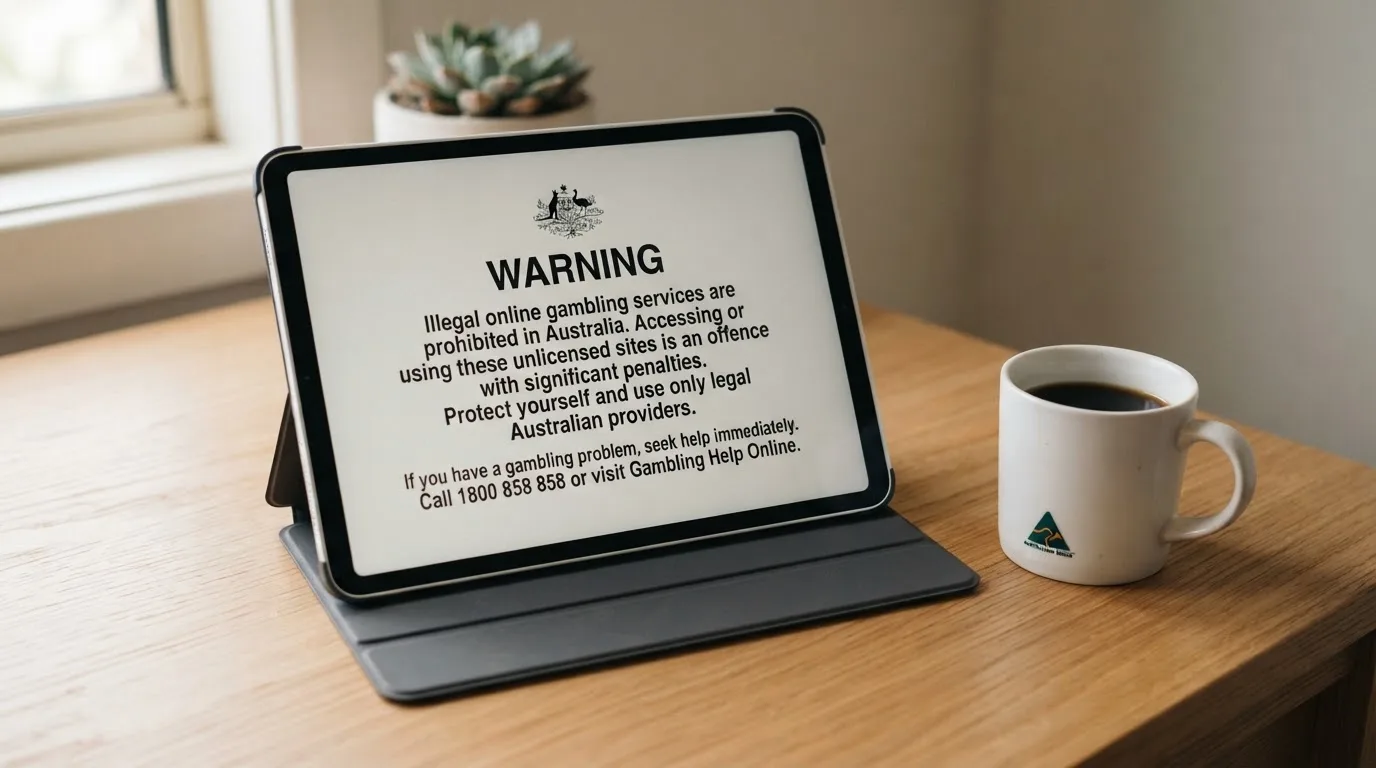
For players who want to talk to someone rather than install a tool, the National Gambling Helpline is 1800 858 858, free and available 24/7, with online chat at Gambling Help Online. The advice line is independent of any operator and does not promote offshore brands. Free, confidential, and able to put a caller in touch with state-specific counselling services in the same call.
The payments picture: where the no-deposit bonus fits into Australian rails
No-deposit bonuses on offshore sites are nominally paid in cash or free spins that can be converted into withdrawable balance once the wagering requirement is met. In practice, none of the brands reviewed on this page uses the Australian payment rails — debit card, bank transfer, PayID/Osko, BPAY — the way a licensed operator would. The credit-card ban that took effect for licensed wagering on 11 June 2024 (penalties up to $247,500 for operators) does not bind an offshore site, and credit cards and crypto are still offered as deposit routes on most of them, which is itself a signal that the site is operating outside the Australian ruleset.
PayID deserves a closer read because it sits closest to the deposit decision for any Australian. PayID is a layer on the New Payments Platform, which went live on 13 February 2018 and is owned by New Payments Platform Australia Ltd, a non-profit whose 13 shareholders include the Reserve Bank of Australia and the major banks. With Osko, a transfer between participating banks arrives in under a minute, 24/7, including weekends, whether addressed to a BSB and account number or to a PayID. More than 25 million PayID identifiers were registered on the platform as of April 2025, and the service is available at over 100 Australian financial institutions. Participants are required to keep the platform’s monthly outages to no more than two minutes, which is why the “instant” label is one the operator of the platform, not the bank, can stand behind.
The protective feature is built into the front of the flow: paying to a PayID shows the name of the account holder before the transfer is sent. AP+ warns that being asked to transfer money to a PayID on an illegal gambling site almost certainly means a scam site, because a legitimate Australian business has a PayID that resolves to a real registered name. A reader who sees a “PayID deposit” option on an offshore newest-casino page and goes ahead anyway has bypassed the one check the New Payments Platform was built to enforce.
BPAY is the other Australian rail these pages sometimes mention, more as a marketing line than as an actual deposit method on the offshore sites. BPAY is a bill-payment service — the payer enters the Biller Code and the Customer Reference Number printed on the bill — and it has been in operation since 18 November 1997, when it was launched by a consortium that is now, after the September 2021 merger authorised by the ACCC, Australian Payments Plus. AP+ runs PayID, Osko and BPAY together. The brand itself is owned equally via parent company Cardlink Services Limited by the four major banks — ANZ, Commonwealth Bank, National Australia Bank and Westpac — and is available through the online banking of over 140 Australian institutions. None of that infrastructure describes a deposit route to an offshore casino, because the BPAY bill-payment flow does not connect to gambling merchants; it connects to billers. The “we accept BPAY” line on an offshore casino is not what it appears to be.
American Express gets mentioned on some of these pages because Amex’s three-party network means the company both issues cards and processes transactions, and the Reserve Bank of Australia’s July 2025 review proposes removing surcharges only on eftpos, Mastercard and Visa — leaving American Express outside the scope of the proposed surcharge ban. That detail matters for Australian merchants accepting Amex, not for an Australian trying to deposit at an offshore casino. Under the IGA, credit cards and credit-related products are banned as payment for licensed wagering; that restriction also constrains gambling use of linked digital wallets like Apple Pay. The same broad trend is what the Reserve Bank’s payment-costs review is responding to, but the offshore casino sits a step outside both the ban and the review.
Apple Pay itself carries no consumer fee — Apple does not charge the user for using Apple Pay in stores, online or in apps, and any surcharge comes from the merchant’s card-processing fees rather than from Apple. Transaction limits and PIN requirements are set by the card issuer or the merchant, not by Apple. The relevance here is that by the end of 2025, Apple Pay, Google Pay and Samsung Pay transactions collectively accounted for around 45% of all card payments in Australia by number, which means a player trying to use a card on an offshore site is increasingly trying to do it through a wallet that hides the card number from the merchant. That does not change the legality of the deposit. It does change what the merchant sees.
AUSTRAC’s threshold-transaction-report rule, which requires reporting of transfers of A$10,000 or more, applies only to physical cash. Ordinary electronic bank transfers are not subject to that per-transaction reporting requirement, regardless of the amount sent. A reader who has been told that a large transfer will “flag” a transaction can be told straight: it will not, on the basis of the amount alone, and that piece of folk wisdom is wrong.
The cumulative effect of the Australian payment rails is that a no-deposit bonus on an offshore site can be claimed in ways the licensed system does not allow, can be funded in ways the licensed system has banned, and can be withdrawn through routes the licensed system has no view into. Each of those three properties sounds like a benefit in isolation. Read together, they describe a payment surface the Australian regulator cannot reach.
The eleven brands the ACMA has named — what each one actually is
What follows is not a ranking. Each brand is here because the ACMA issued a formal warning to its operator for offering prohibited interactive gambling services to Australians. Where research found an industry-listing or a payment-method appearance for a brand, that is noted; where research did not, that is also noted. The page’s job is to make the comparison, not to choose.
RocketPlay — same operator, twice warned
The ACMA’s March 2026 warning named Pulsup Ltd over RocketPlay, on top of the May 2022 warning to Dama N.V. that covered Rocketplay alongside five other Dama brands. A reader looking at a “newest” no-deposit bonus page for RocketPlay is looking at a brand the Australian regulator has now told its operator to stop twice, under two different corporate names. The brand shows up on industry listings. The most useful sentence for the reader scanning past the bonus terms is that a site which has been warned twice has had more than the customary window to come into line.
Level Up Casino — the 2022 line still applies
Dama N.V.’s May 2022 warning is the one the ACMA published for Level Up Casino. The brand still appears on industry listings as of the current register snapshot. A 2022 warning looks old next to a 2026 one, but the warning is not time-limited — the ACMA does not expire its formal warnings, and a brand that has not changed its offer has not changed its standing with the regulator.
Woo Casino — newer warning, same parent
Dama N.V. drew a March 2025 warning over Woo Casino, separate from the 2022 warning that covered other Dama brands. The point of listing them separately is that the ACMA re-engaged with the operator rather than relying on the older warning. A re-engagement is a signal that the previous warning was not, on its own, enough.
Spirit Casino — also Dama N.V.
The May 2025 warning over Spirit Casino is the most recent in the Dama N.V. set. Same operator, different brand, less than a year from the Woo Casino warning. The repetition tells a reader that one operator running several brands is not an unusual pattern in this market — it is the standard pattern, and the ACMA’s formal warnings have to follow brand by brand.
National Casino — Consolutetish S.R.L.
July 2025, Consolutetish S.R.L. The brand does appear on Australian-facing listings, including the ACMA’s own register, which is the strange shape of evidence a “listings-only” rating captures: the brand is on listings because the regulator put it there, not because the brand is recommended anywhere.
Bizzo Casino — warned twice under different operators
The July 2025 warning to Consolutetish S.R.L. over Bizzo Casino came on top of an earlier 2022 warning to TechSolutions (CY) Group Limited and TechSolutions Group N.V. over the same brand. The brand has been warned, the operator behind the brand has been warned, and the brand name has been kept. That last detail is the one the affiliate marketing language around “newest” bonuses works hardest to obscure.
Ignition Casino — Bamboo Media, July 2025
Bamboo Media is the operator the ACMA named in the July 2025 warning over Ignition Casino. Research carries no industry-listing or payment-method appearance for the brand, which is unusual — most of the other brands in this set at least turn up somewhere. The absence is itself worth noting.
Instant Casino — EOD Code SRL, February 2025
The brand does appear on listings, including pages for EcoPayz and PayID. The PayID appearance is the one to watch: as AP+ warns, a PayID on an illegal gambling site is the kind of marker that should make a reader stop, not start. The fact that the brand is listed as accepting PayID is a feature of the listing, not a feature of the brand.
Jackbit — Ryker B.V., April 2026
The most recent warning in the table. Research carries no subject-support entry for the brand, meaning neither the operator’s pages nor any of the major payment-method directories were found to confirm the brand as a discrete counterparty. A reader looking at a “newest” page featuring Jackbit is looking at a brand the ACMA flagged less than a year ago.
Casino Intense — Sterplay Holding Ltd, April 2025
The brand appears on Australian-facing listings, including the AUSTRAC and BetStop reference pages that industry directories maintain. Those listings are not endorsements; they are record-keeping. What they tell a reader is that Casino Intense has enough presence in the Australian-facing side of this market to be indexed, and that the operator behind it has drawn an ACMA warning.
Sky Crown — Hollycorn N.V., September 2022
The Hollycorn N.V. warning, published in PDF form on the ACMA register, covered Sky Crown and Blue Leo. Sky Crown is the older brand in the set. A 2022 warning is the same legal weight as a 2026 one — neither has an expiry, and the warning is still on the register because the offer is still being made.
The four kinds of reader this page is actually for
The newest-online-casino no-deposit-bonus page does not have one reader. It has four, and a page that treats them as one will end up useful to none of them.
The first reader is the one who has not yet realised that “newest” does not change the legality. That reader is best served by getting the legal frame early, before any of the brand-by-brand material, because every line after it depends on the IGA frame the section provides.
The second is the reader who already knows the site is offshore and is trying to work out whether the operator is one that has been warned recently or one that has been warned before and stopped. That reader needs the ACMA action column to be the dominant one in the table, with the operator name visible.
The third is the reader who has a balance on an offshore site and is trying to work out what to do with it. That reader needs the bank-block tools — Westpac, ANZ, CommBank — and the BetStop caveat, because the bank block is the only enforcement mechanism actually under their control.
The fourth is the reader who is researching for someone else. The page that names the ACMA register, names BetStop and names the helpline gives that reader a document they can hand over without endorsing the offshore brand at the top of the page.
Putting it together: what a no-deposit bonus is actually worth on these sites
A no-deposit bonus is, mechanically, the operator’s chance to keep the player on the site long enough to make a deposit. The wagering requirement on these bonuses typically sits in the 30× to 60× range on the bonus amount (so on a “free” A$20 the player must place A$600 to A$1,200 in bets before any withdrawal). Maximum cashout caps commonly run between A$50 and A$200 on no-deposit offers, and game weighting rules frequently exclude table games and live-dealer titles entirely. None of those mechanics are hidden, but they are also not on the front of the affiliate page that sent the reader to the brand.
On the newest pages, the bonus terms and the games list are the two things that get the most marketing airtime, and the payout speed and the offshore licence status are the two things that get the least. The weighting is not an accident. A reader who reads the bonus terms and the games list and concludes the offer is generous is reading the part the affiliate page wrote; a reader who reads the maximum cashout and the bonus-eligible games list and concludes the offer is thin is reading the part the bonus terms actually say. Both readings are true, and only one of them is what a no-deposit bonus is actually worth.
The Australian part of the picture does not change that calculus. It widens it. A no-deposit bonus on an offshore site that has been warned by the ACMA is worth exactly what the bonus terms say it is, with the added cost that the site can be blocked, the operator can disappear, and the bank can refuse the deposit that would have topped the balance up to the cashout cap. Those are not bonuses and they are not on the affiliate page. They are the cost of using the offer at all.
What to do before claiming any “newest no-deposit bonus” offer
The shortest pre-flight list, in the order it should be done, looks like this.
First, check the ACMA register for the brand name and the operator name. Both are published in the formal warning. A brand with no warning is not the same as a brand that is licensed; it is a brand the ACMA has not yet reached. A brand with a warning is one the regulator has named.
Second, read the bonus terms, not the bonus page. The wagering multiple, the maximum cashout and the game weighting are the three numbers that determine what the offer is worth, and they are usually on a separate page linked in small type at the bottom of the offer.
Third, decide which Australian bank block to turn on first. Westpac, ANZ and Commonwealth Bank all offer a card-level gambling block; ANZ also extends the block to Apple Pay on eligible cards. The block does not catch every gambling transaction, but it catches the deposit.
Fourth, if a self-exclusion is needed, register with BetStop, but understand the limit: BetStop covers Australian-licensed wagering services, not offshore casinos. The exclusion helps with licensed products and with the licensed bookmakers the ACMA does reach; it does not block the offshore brand directly.
Fifth, if the offer has already been claimed and the balance is on the site, the practical order is to check whether the site is on the current ACMA block list, then contact the bank to ask whether a chargeback applies, then escalate to the ACMA if the operator is unresponsive. None of these steps is fast, and the offshore brand knows that.
Where to get help
The National Gambling Helpline is 1800 858 858, free and 24/7. Online chat is at Gambling Help Online, with state-specific counselling services reachable through the same intake. The advice line is independent of any operator, does not promote offshore brands and does not collect information for any operator’s marketing list. BetStop — the National Self-Exclusion Register — is the regulatory tool for Australian-licensed wagering, with the limit that offshore casinos are not connected to it. Together, the helpline and the register cover the part of the problem a casino bonus page cannot.
Frequently asked questions
Do the newest online pokies and slot titles advertised on these sites actually differ from older ones?
The titles rotate at the speed the studios release them, which is slower than the affiliate pages suggest. A “newest pokies” page and an “established casino” page usually share most of the same games; what differs is the lead image and the order of the list. Newer sites tend to put the most recent studio release at the top, while older sites keep a longer tail of evergreen titles. The catalogue itself moves at studio speed, not at site-launch speed.
Is a newest-online-casino no-deposit bonus claim from an offshore site enforceable for an Australian player?
No. Under the Interactive Gambling Act 2001, no Australian-licensed operator can offer these products, and offshore operators offering them to Australians are acting outside the regime. An Australian player has no Australian complaints body to escalate to, no Australian consumer protection to fall back on, and the site itself can be blocked by the ACMA while a balance is still on it. The “enforceability” of the bonus terms sits on top of an offer that is itself outside the law.
How can someone tell a genuinely new casino site from a reskin of an older, already-warned one?
The corporate operator name on the page footer is the strongest signal. Dama N.V. alone has run Rocketplay, Level Up, Woo Casino and Spirit Casino across separate ACMA warnings; Consolutetish S.R.L. runs National Casino and Bizzo Casino; TechSolutions ran Bizzo Casino before that. A new domain from an operator the ACMA has already named is a reskin, not a debut. The 12-site blocking round reported on 26 June 2026 — 7Signs, ChromaBet, Donbet, Duospin, Freshbet, Slots Gem, Jacks Club, Lucky Start, pointsbetz (the ACMA blocking list), Spinrise, Vinyl Casino and Wildsino — is the same pattern, with new domain names attached to the same offers.
Why do newest RTG casino pages and newest online slot pages so often overlap on the same domains?
Because Real Time Gaming (RTG) is one of the studios that license into a large share of the offshore casino sites that the ACMA has warned, and the same operator typically runs both an RTG casino brand and a slot-focused brand off the same back end. The pages look like separate casino sites because the marketing wants them to, and they look like one operator’s catalogue because they are. The overlap is not coincidence; it is the same supplier contract visible from two URLs.
What should change in how cautious someone is, simply because a casino site is new rather than established?
Not much. The legal situation is identical, the payment-rail caveats are identical, and the bank-block tools work the same way regardless of how old the site is. What changes is the regulatory record: a newer site is one the ACMA has had less time to look at, not one that has had less to hide. The 1,751 blocked sites since November 2019 and the roughly 240 to 260 sites blocked per year on average are the background rate against which any “newest” claim is measured. Newness is a marketing property, not a regulatory one.
What a “Newest Casino No Deposit Bonus” Offer Actually Costs… — More on this topic at casino slots au.
See also What a no deposit bonus at an Australian casino really costs the punter….