
Wellbei the Well-Backed Shortlist: A Clearer Way to Read “Trusted” at AU-Facing Casinos in 2026
The phrase “most trusted online casino Australia” does a lot of work in a search query, and almost none of it on the page that returns the answer. Trust, in the Australian offshore casino market, is a reputation signal — a measure of how well a site has paid out, how it has handled disputes, whether its licence is current. It is not, and has never been, a measure of whether the site can lawfully accept a player sitting in Melbourne, Perth or Brisbane. Online casino games and online pokies cannot be licensed anywhere in Australia. Whatever licence a site displays at the bottom of its homepage, that licence is foreign, and the site itself is offering a service the Interactive Gambling Act 2001 says no provider may lawfully offer to a person in Australia. Reading these two things separately — trust as reputation, lawfulness as a separate question — is the only way to compare the eleven brands the ACMA itself has named in formal warnings, and it is the lens this page uses throughout.

Currency stamp: data current as of 28 October 2026, checked against the ACMA’s published formal-warning notices and accompanying reporting.
Table of Contents
- What “Trusted” Stands for in the Australian Offshore Market in 2026
- Licence Geography: Where an Offshore Authorisation Actually Runs
- Player Protection That Does and Does Not Reach an Offshore Site
- How the ACMA Has Drawn the Line in Recent Years
- The Fundamenta Trap: When a “Trusted” Name Quietly Disappears
- Where the Money Goes: H2 Gambling Capital’s 2026 Reading
- Responsible Gambling for Players Who Decide to Play Anyway
- Payment Methods for Licensed Wagering
- The Top 11 Landscape: Brands the ACMA Has Named in Formal Warnings
- Reading the Comparison Without Trust-Transfer
- What a Reader Can Take Away Without Leaving the Page
- The Prohibiti Question: When a Licence Changes Nothing
- Frequently Asked Questions
What “Trusted” Stands for in the Australian Offshore Market in 2026
A search for a trusted online casino in Australia reaches the same handful of names regardless of which ranking is read. They are familiar because they spend heavily on affiliate visibility, not because Australian regulators have certified them. Reputable offshore sites do exist — Curaçao-licensed operators with long payout histories, Malta-licensed brands, Kahnawake-licensed services — but a reputable licence is not an Australian licence, and what it authorises is the operation of an online casino under that jurisdiction’s rules, not the supply of online casino games to a person physically present in Australia. The distinction matters whenever a withdrawal goes wrong, whenever a term changes without notice, or whenever a player wants to file a complaint with a body that can compel an answer. None of Australia’s consumer-protection channels reaches an offshore site, and that fact does not move no matter how long the page’s footer logo has been on the operator’s homepage.
The honest framing, then, treats trust as two distinct questions. The first is whether the site pays out reliably and treats its customers fairly under its own rules. The second is whether the site is permitted to serve an Australian resident under Australian law. The two have nothing to do with each other — a site can be exemplary on the first and unlawful on the second, which is exactly the position the eleven brands reviewed on this page occupy.
Licence Geography: Where an Offshore Authorisation Actually Runs
The licences that appear most often on AU-facing casino footers sit in three jurisdictions. Curaçao issues the largest share; it is the cheapest to obtain, the lightest to maintain, and the most common stamp on the ACMA’s warning list. Malta’s MGA designation is rarer offshore but stricter, with ongoing capital, audit and responsible-gambling requirements. Kahnawake, in Quebec, holds to a Canadian federal framework and is uncommon in AU traffic. None of these authorisations extends into Australian territory. They permit the site to operate a casino in their home jurisdictions under their rules, and they sometimes require the site to refuse customers from countries where the service is illegal. A reliable signal that a site takes its licence seriously is precisely that refusal; an offshore casino accepting an Australian customer is offering a service it is not licensed for in this country.
There is one Australian regime that looks superficially similar. The Northern Territory Racing and Wagering Commission regulates 52 of Australia’s online bookmakers — Sportsbet, Bet365, Ladbrokes among them — and the reasons are largely tax-driven. The commission has no full-time staff and meets once a month in Darwin. What it licences is wagering on races and sport placed before the event, not online casino games or online pokies. No state or territory in Australia issues a licence for casino games online. A footer claiming otherwise is, at minimum, misdescribing the authorisation it holds.
Player Protection That Does and Does Not Reach an Offshore Site
An Australian-licensed online wagering service connects a customer to a defined set of safeguards. BetStop, the National Self-Exclusion Register, has been live since August 2023 and binds every Australian-licensed online and phone wagering operator — a self-exclusion sits across all of them in one registration. The National Gambling Helpline at 1800 858 858 is free, runs 24/7 and offers web chat through Gambling Help Online. A licensed operator is required to honour responsible-gambling commitments and answer complaints through the regulator. The credit-card ban introduced under the 2023 amendments to the Interactive Gambling Act, effective 11 June 2024, took away another risk path: licensed wagering cannot accept credit cards, credit-related products or digital currency, with penalties of up to $247,500 for operators who breach.
An offshore site sits outside every one of those rails. BetStop does not bind it, because it is not licensed by an Australian regulator and has no obligation to consult the register. The helpline still answers and can still help, but no Australian body can compel a withdrawal or require a refund. The credit-card ban applies to licensed services; for an offshore site, the question of which payment methods it accepts is purely its own, which is why a site that takes credit cards or crypto into Australian casino play has chosen to operate outside Australian rules. The next two sections examine what enforcement means for the picture.
How the ACMA Has Drawn the Line in Recent Years
The Australian Communications and Media Authority enforces the Interactive Gambling Act by two main levers. It issues formal warnings, which name the operator behind a brand and give the operator an opportunity to stop offering prohibited services to Australian customers. It also directs Australian internet service providers to block illegal sites at the network level, which removes them from view for most domestic customers without a VPN. The blocking programme started in November 2019 with the first blocking request, and by the round reported on 26 June 2026 a running total of 1,751 illegal gambling and affiliate-marketing websites had been blocked across that period. More than 230 unlicensed gambling services had left the Australian market since the 2017 strengthening of the regime.
The June 2026 round alone added twelve more names to the block list: 7Signs, ChromaBet, Donbet, Duospin, Freshbet, Slots Gem, Jacks Club, Lucky Start, Pointsbetz, Spinrise, Vinyl Casino and Wildsino. Earlier rounds in 2026 produced warnings to Ryker B.V. over Jackbit and CasinOK in April, and to Pulsup Ltd over RocketPlay in March. The pace of enforcement is the substance of the Fundamenta lens — the underlying register — and a calculation against it gives a sense of the cadence.
Over the roughly six and a half years from November 2019 to June 2026, 1,751 sites were blocked — a band of approximately 260 to 275 blocks per year, or close to twenty-two per month averaged across the whole period, with the rate visibly higher in the more recent rounds than in the earliest. The rate does not measure how many sites actually exist offshore; it measures how many the regulator has been able to identify, investigate and add to the block list within a given period. Operators also leave the Australian market without being blocked, and that route is not visible in the same count.
The Fundamenta Trap: When a “Trusted” Name Quietly Disappears
The trust signal at the top of a casino ranking is built from reviews and payout histories collected at a moment in time, and that signal ages quickly. A brand can carry a glowing reputation one quarter and change hands — or licence, or payment-processor roster, or terms — the next, with no visible break in service. Sites that ran on a Curaçao sub-licence a year ago may now be on a different Curaçao sub-licence holder, or on a fresh one because the previous holder fell out of standing. The Trust Signal in a search result does not always move when the underlying operator changes. Players reading older reviews should treat those reviews as describing the site under its previous ownership, not the site in front of them today.

A second, related pressure: the marketing layer that produces search rankings is fed by affiliate programmes. The same operator’s affiliate programme can promote half a dozen brand names from a single back office, with shared payment processing, shared ownership and shared terms. When the ACMA names an operator in a warning, it often names multiple brands at once — Dama N.V. in May 2022 covered six casino brands — which means a “new” brand the reader has not seen before may be run from the same office as a brand they already know, just with a domain the regulator has not yet reached.
Where the Money Goes: H2 Gambling Capital’s 2026 Reading
H2 Gambling Capital’s 2025 report, the most-cited external reading of the Australian offshore channel, estimates that Australians lose about A$3.9 billion a year to illegal gambling sites. The same report traces the share of gambling going through legal channels falling from 74% in 2021 to 64% — a ten-point slip in four years. The shift does not mean legal wagering is shrinking in absolute terms; the legal bookmaker channel has continued to grow, but the unregulated offshore casino channel has grown faster. A reader sizing the “most trusted” shortlist is sizing the offer that took those billions offshore, not a marginal niche. The marketing weight that produces familiar names is proportional to a market that regulators have not been able to close, which is also why it keeps cycling through brand names after each round of warnings.
Responsible Gambling for Players Who Decide to Play Anyway
A reader who decides to play at an offshore site after reading this page is not the page’s recommendation; that decision belongs to the reader, and it lives inside one risk shape that an Australian player should at least recognise. BetStop and the helpline still apply to the licensed Australian wagering side; an offshore casino is not bound by either, so the player has to build the guard rails themselves. The single most consequential lever sits at the bank: Westpac, ANZ and Commonwealth Bank all offer card-level gambling blocks that refuse authorisation on transactions registered under the merchant category code for betting and casino gambling. ANZ’s block, set up through the app, also blocks gambling transactions routed through a digital wallet like Apple Pay on the same card. Removal of the ANZ block requires a 48-hour wait, which makes the barrier meaningful rather than cosmetic. None of these banks guarantees the block will catch every transaction, and the Westpac page says so explicitly, but a card-level block closes the most direct deposit path short of opening a fresh account.
A second lever is the payment choice itself. Paying to a PayID on an illegal site is treated by AP+ as a warning sign of a scam site, because licensed Australian operators do not present a PayID for casino play. Crypto and credit cards, both available at most offshore casinos, are explicitly outside the permitted-method list for licensed wagering, and the regulator’s view of their use at offshore sites is straightforward.
Payment Methods for Licensed Wagering
| Payment Method | Status | Note |
|---|---|---|
| Debit Card | Permitted | Standard deposit route for licensed services. |
| Bank Transfer | Permitted | Instant via Osko/PayID. |
| BPAY | Permitted | Bill-payment service for regulated wagering. |
| Credit Card | Prohibited | Banned under 2023 IGA amendments. |
| Digital Currency | Prohibited | Banned for licensed online wagering. |
The Top 11 Landscape: Brands the ACMA Has Named in Formal Warnings
This is not a recommendation. Every brand below has been the subject of a formal warning from the ACMA for offering prohibited interactive gambling services to customers in Australia. Online casino games and online pokies cannot be licensed in Australia, regardless of what licence the site displays. The comparison that follows is a comparison of the regulator’s record — what the ACMA has named, when, and for which operator behind the brand — because that is what an Australian reader comparing names across these operators actually needs. Bonus terms are not covered: the only sources for them are affiliate marketing pages, and an offer cannot be evaluated when its terms cannot be verified against an authoritative source.
| Brand | ACMA action and date | Operator named by the ACMA | Subject support |
|---|---|---|---|
| RocketPlay | Formal warning, March 2026 (also covered under Dama N.V. in May 2022) | Pulsup Ltd (RocketPlay); earlier Dama N.V. | Listings-only (Gambling Insider) |
| Level Up Casino | Formal warning, May 2022 | Dama N.V. | Listings-only (Westpac) |
| Woo Casino | Formal warning, March 2025 | Dama N.V. | — |
| Spirit Casino | Formal warning, May 2025 | Dama N.V. | — |
| National Casino | Formal warning, July 2025 | Consolutetish S.R.L. | Listings-only (acma.gov.au, austrac.gov.au, betstop.gov.au) |
| Bizzo Casino | Formal warning, July 2025 (earlier warning 2022 under TechSolutions) | Consolutetish S.R.L.; earlier TechSolutions (CY) Group Limited and TechSolutions Group N.V. | Listings-only (Gambling Insider) |
| Ignition Casino | Formal warning, July 2025 | Bamboo Media | — |
| Instant Casino | Formal warning, February 2025 | EOD Code SRL | Listings-only (Ecopayz, PayID) |
| Jackbit | Formal warning, April 2026 | Ryker B.V. | — |
| Casino Intense | Formal warning, April 2025 | Sterplay Holding Ltd | Listings-only (austrac.gov.au, betstop.gov.au, Gambling Insider) |
| Sky Crown | Formal warning, September 2022 (ACMA formal-warning PDF) | Hollycorn N.V. | — |
The same operator shows up behind more than one brand, which is why the regulator names the holder, not the domain. Dama N.V. sat behind Level Up in 2022, was warned again over Woo Casino in March 2025 and again over Spirit Casino in May 2025. Consolutetish S.R.L. carries National Casino and Bizzo Casino, with Bizzo having already been the subject of a 2022 warning to TechSolutions. The pattern means a “new” brand is not necessarily a new operator; in many cases it is the same operator spinning a fresh domain after the previous one was named.
RocketPlay — Fresh Warning, Same Operator Pattern
The March 2026 formal warning to Pulsup Ltd over RocketPlay is the most recent ACMA action on the brand, but Dama N.V. had already been warned over Rocketplay in 2022 as part of a six-brand package. The site now presents under a new operator name from the one the ACMA named in the earlier round, yet the brand identity and affiliate footprint have continued unchanged. For a reader, this is a worked example of the change-of-ownership problem: the regulator’s record carries an old name and a new name against the same customer-facing identity. RocketPlay remains an active entry on listings that gather casino information for the Australian market, which is consistent with the picture of a brand continuing to operate under a new operator cover while the regulator’s name list updates.
Level Up Casino — Same Operator Across an Expanding Stable
Level Up sits inside the original Dama N.V. 2022 warning and has not, on the publicly available ACMA record, been the subject of a separately published fresh warning since. The operator named at the same time — Dama N.V. — went on to receive further warnings over Woo Casino and Spirit Casino, and a separate operator ended up carrying the RocketPlay warning in 2026. For a player reading older reviews of Level Up, the more relevant question is which operator now sits behind the brand rather than whether Level Up itself has been re-warned. The Westpac gambling-block page is one of the few external listings that names Level Up by domain, which is useful only as an indication that the brand is visible in routine Australian payment-consumption data.
Woo Casino — Operator With a Run of Warnings Since 2022
Woo Casino’s March 2025 warning is the second Dama N.V. action on the operator’s stable over twelve months — Spirit Casino followed in May 2025, and the May 2022 package still stands. The ACMA’s pattern is to keep escalating against the named operator rather than each brand individually, which means a reader cannot tell from a single brand’s warning whether the underlying operator is benign, on notice, or under sustained pressure. Woo Casino is in the second category: the operator has been warned, kept operating, and been warned again. That sequence is itself the regulator’s measurement of trust in the underlying operation, and it is the answer to the question the brand’s marketing page never quite answers.
Spirit Casino — Second 2025 Warning Against the Same Holder
Spirit Casino’s May 2025 warning arrived two months after Woo Casino’s, against the same Dama N.V. holder. Closely paired warnings against the same operator are the strongest signal the ACMA publishes short of an actual block, and that signal sits squarely on this brand without the brand itself having any direct prior history in the warning set. The implication is the same as for Woo Casino: a player evaluating Spirit Casino on the basis of the operator’s record is evaluating Dama N.V., and that operator’s record over 2022 to 2025 is the relevant one. Subject-support material from third-party listings does not exist for Spirit Casino in the form consulted, which is consistent with the regulator’s view that the operator’s audit trail is the authoritative source.
National Casino — A July 2025 Warning in a New Stable
The July 2025 formal warning against Consolutetish S.R.L. covered both National Casino and Bizzo Casino, marking the appearance of a new operator in the warning list alongside the continuing TechSolutions legacy on Bizzo. National Casino is referenced across ACMA, AUSTRAC and BetStop listings in the source set, which positions it as visible across multiple Australian touchpoints rather than only inside the ACMA’s own register. A reader comparing the eleven brands should note that pre-existing Australian institutional references on a brand do not improve the brand’s standing under the IGA; they simply confirm that the brand has been the subject of cross-agency attention in addition to the ACMA warning.
Bizzo Casino — The Only Brand With Two ACMA Warnings Across Two Operators
Bizzo Casino is the unusual case in the list: it was the subject of a 2022 formal warning under TechSolutions (CY) Group Limited and TechSolutions Group N.V., and then a second formal warning in July 2025 under Consolutetish S.R.L. The regulator has effectively named two different operators against the same brand across three years, which means the brand identity has outlived at least one change of operator and continues to do business under names that have accumulated regulator letters. For a player, this is the clearest case of the lifetime-vs-incumbent problem in the trust signal: a brand carrying dozens of affiliate reviews written under its previous operator is not the same entity its 2025 review would describe, and the ACMA’s record carries both at once.
Ignition Casino — A 2025 Warning With No Public Operator History Before
Ignition Casino sits in the same July 2025 warning round as National Casino and Bizzo Casino, but under a different named operator — Bamboo Media — that had not appeared on the ACMA’s published warning list before that point. The brand was already familiar to Australian-affiliate marketing before the warning, so its appearance on the regulator’s list is closer to the norm than the exception for offshore brands popular in Australian search results. No third-party listings in the consulted set give subject support for the brand on the casino-review side; the reference frame for the brand on those listings is dominated by affiliate and aggregator pages rather than independent operator reviews.
Instant Casino — An Operator-Led Warning Earlier in 2025
Instant Casino’s February 2025 warning named EOD Code SRL as the operator, predating the July 2025 cluster under Consolutetish S.R.L. and the March 2025 warning to Dama N.V. over Woo Casino. The brand receives listings coverage in the source set on two non-casino points — an e-wallet service page and the PayID information site — which is not a positive endorsement of casino-side trustworthiness, only a marker that the brand is visible enough in payment-side discussions to have a noticeable footprint. A reader who has not seen Instant Casino before the warning likely encountered it in affiliate placement; the brand’s relative visibility compared with newer arrivals is what pulled it into the ACMA’s enforcement reach.
Jackbit — Recent Warning, Limited Source Footprint
Jackbit’s April 2026 warning paired the brand with CasinOK under Ryker B.V., extending the ACMA’s reach into a fresh operator without prior warnings. Subject-support material in the consulted source set is thin to the point of absence, which is the most common shape the source footprint takes for newly warned brands: the regulator acts before any independent listings framework has had time to develop. The April warning was one of three published ACMA actions in the early part of 2026 — alongside the March warning to Pulsup Ltd over RocketPlay and the April warning to Ryker B.V. — and that density of activity inside a single quarter is a fair cross-section of the rate the regulator is running at.
Casino Intense — Mid-2025 Warning With Cross-Reference Listings
Casino Intense was warned in April 2025 under Sterplay Holding Ltd, and the brand carries listings on AUSTRAC’s public register, BetStop and Gambling Insider. The AUSTRAC reference is not an endorsement of the brand; it indicates only that the brand appears in compliance-side listings as is normal for an offshore casino with Australian exposure. BetStop’s appearance in the listing set is similarly informational — BetStop binds Australian-licensed operators, and an offshore casino’s appearance there is usually a marker that the brand has been flagged for player-protection attention rather than enrolled in self-exclusion processing.
Sky Crown — A Warning Whose Date Pre-Dates Most of the List
Sky Crown sits on the older end of the warning list, having been the subject of a September 2022 formal-warning PDF from the ACMA covering Sky Crown and Blue Leo under Hollycorn N.V. Most of the other operators in the list received their first warnings in 2025 or 2026, which makes Sky Crown the case where the regulator’s view of the operator has had the longest to settle. No subject-support material from independent listings exists in the consulted set; the regulator’s PDF remains the authoritative source on the brand, and the date of that PDF — three years before some of the other warnings here — is itself an indication that the regulator’s view of this operator stabilised earlier than some peers.
Reading the Comparison Without Trust-Transfer
Three things follow from the landscape above. First, the regulator’s record is the only authoritative cross-brand source on trust questions for these operators; affiliate rankings and review aggregators feed the same pool of names and reinforce the visibility the ACMA’s enforcement list already names. Second, the operator behind the brand is usually more stable than the brand itself, so a comparison should run on the named operator where the ACMA has named one. Third, an absence of subject-support material — the gap in the right-hand column for half the brands — is not a positive feature of those brands; it is a marker that the operator has chosen, or has been unable, to maintain a third-party presence that the consulted source set could verify. Where that presence is thinner, the regulator’s record carries more weight by default.
A reader stepping back from the table should not read it as a list of eleven equally-bad names and stop there. The variation across the list matters. A brand with two ACMA warnings across two operators, like Bizzo Casino, sits at one extreme; a brand with a single named-operator warning in 2025, like Casino Intense, sits at another. The platform chosen by the operator before the warning — how long they have been offering to Australians, how aggressively they used affiliate channels, which payment processors they routed through — is invisible in the regulator’s record but matters to whether a given player’s experience will look like the regulator’s worst-case outcome or a quieter version of it.
What a Reader Can Take Away Without Leaving the Page
The two facts a reader of this page should hold onto before searching further are these. Online casino games and online pokies are prohibited interactive gambling services under Australian law, and no offshore licence changes that for a player in Australia. The Trust Signal that produces the “most trusted” shortlist at the top of Australian casino search results is built from reputation data collected under one regulatory regime, applied to services that the regulator of the reader’s own country has repeatedly said are not licensable here. A reader who treats the two questions separately — Trust vs lawfulness — is in a position to evaluate any specific brand on its actual regulator record, which is what the landscape table above attempts to summarise.
The regulator’s record itself moves. The June 2026 round added twelve more blocked sites and brought the cumulative count to 1,751. The same year has seen three new operator-level warnings across three different operators, which is roughly consistent with the trailing year’s rate. The pace of ACMA action sets the pace at which the “most trusted” list at the top of search results updates — not because the regulator curates that list, but because the regulator’s block and warning lists remove or name the brands the search results rely on. A serious comparison of offshore casinos for an Australian reader has to be re-run when those lists update; the comparison above is a snapshot as of 28 October 2026.
The Prohibiti Question: When a Licence Changes Nothing
The footer of an offshore casino generally carries a licence number and a regulator logo. For the offshore brands reviewed above, those footers sit alongside an ACMA formal warning published in the same calendar year or one before. The licence the footer carries is real; the warning the regulator carries is also real. A reader who treats one as proof and ignores the other is reading the page wrong in either direction. The footer licence authorises the casino to operate in its home jurisdiction under that jurisdiction’s rules; the ACMA action tells the reader that the operator chose to offer prohibited services to Australian customers in addition. The two are not contradictory, and they are not mitigated by one another.
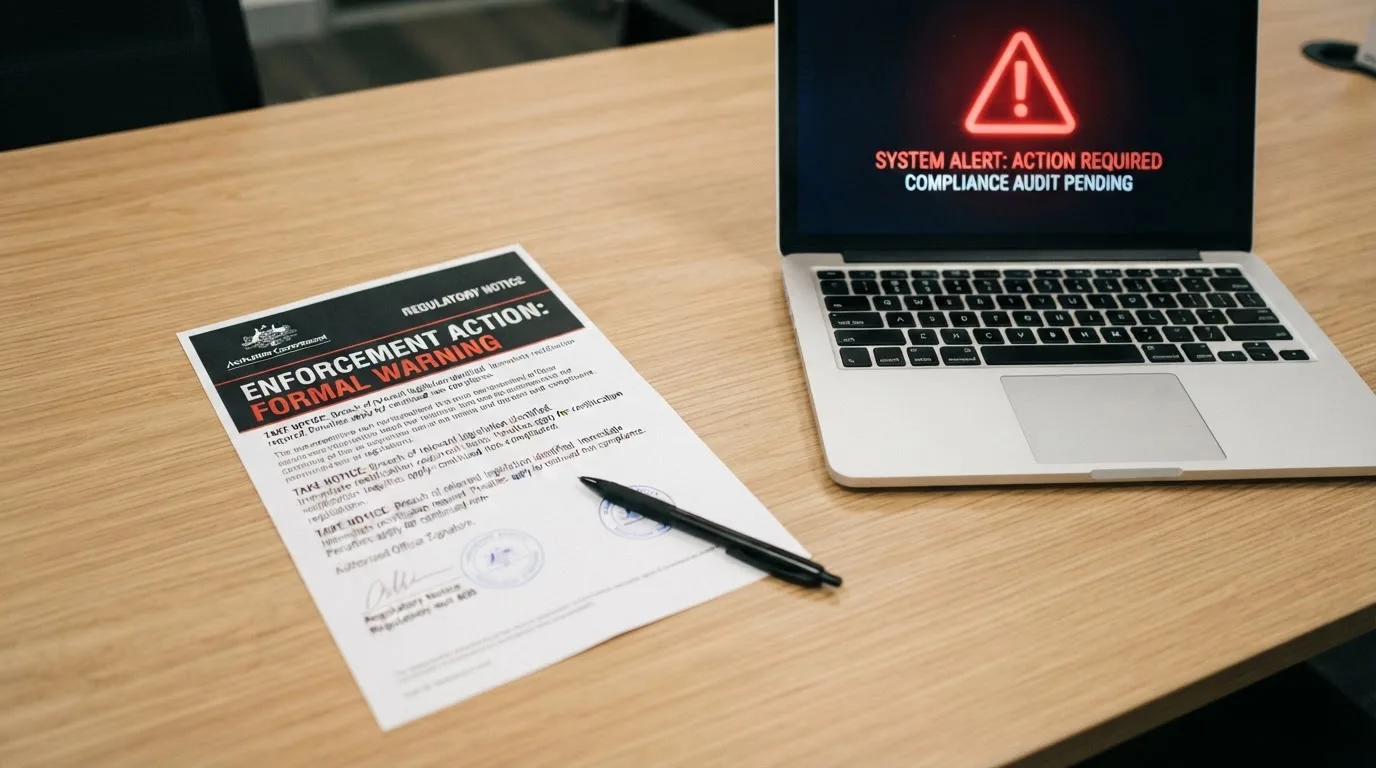
A workable rule, then: a licence is what the licence is, a warning is what the warning is, and an Australian resident of online casino games is, by definition, on the receiving end of a service that no Australian licence exists for. Any marketing claim that resolves this tension — “regulated internationally”, “licensed and trusted”, “secure and licensed for Australian players” — is performing the marketing function, not the regulatory one. The pattern is the point; the regulator’s record stands as the audit, and the marketing copy stands as the pitch. Comparing the eleven brands in this list by reputation alone, without the regulator’s record in view, is the comparison the regulator’s record was built to interrupt.
Frequently Asked Questions
Does being called a trusted online casino mean it is legal for a player in Australia to use?
No. “Trusted” describes reputation under a foreign licence — payout history, dispute handling, site stability — not Australian-law permission to play. Online casino games and online pokies are prohibited interactive gambling services under the Interactive Gambling Act 2001, and no state or territory in Australia licenses them. A trusted offshore casino remains unlawful for an Australian resident to use, and the ACMA may block the site or warn the operator at any time.
What does a casino’s overseas gambling authorisation actually cover, and where?
It covers the operation of an online casino under that jurisdiction’s rules — Curaçao, Malta, Kahnawake, occasionally the UK or Isle of Man — including capital, audit and responsible-gambling conditions set by the foreign regulator. It does not extend into Australia, and a reliable signal that an operator takes its licence seriously is precisely the refusal of customers from countries where the service is illegal. The Northern Territory licences online bookmakers for wagering on races and sport before the event, not casino games.
How are most trusted online casino rankings usually put together?
They are built from a mix of affiliate-marketing spend, player-review aggregators and payout-speed measurements, with very little regulatory cross-checking. The same operator can sit behind multiple brand names across the same ranking, and the ranking often refreshes more slowly than the regulator’s record. A reader who wants to compare names should read the ranking alongside the ACMA’s published formal-warning list, which gives the operator behind each brand and the date of action.
Can a casino’s reputation for trustworthiness change without a player noticing?
Yes. Operators change hands, change licences, change payment processors and change terms without changing the brand at the customer end. Reviews collected twelve months ago may describe the site under a different operator than the one currently named on the regulator’s warning list. The Australian Banking Association’s gambling-block pages also reference some of these brands directly, which can mean the brand is visible in card-block list data even when the brand itself is no longer being actively marketed under that name.
What separates a genuinely regulated operator from one that just claims trust on its own website?
A genuinely regulated operator shows the licence number, the regulator and the legal-entity name on its footer, and the entry checks out against the regulator’s own public register. A site that claims “regulated” without a working licence-number lookup on the regulator’s site is making a marketing claim, not a regulatory one. The ACMA’s formal-warning list is the cross-check for operators offering prohibited services to Australians, and the same operator can sit behind many different brand names across the regulator’s list.
Why might an online casino ranking for Australia still include unregulated offshore sites?
Because Australia has no licensed online casino market, the entire category is unregulated by Australian authorities. Every site on a “trusted Australian online casino” ranking for Australian readers is, by definition, unregulated in Australia — and the regulator’s warning list regularly includes them. The ranking ranks reputation, not lawfulness, and a reader who treats the ranking as a substitute for checking the ACMA’s list is reading past the qualifier the ranking itself does not print.