
Fast Payout Online Casinos in Australia — A Reader’s Reality
“Fast payout” is one of the most precise marketing claims in online gambling, and one of the cheapest to write on a landing page. The figure refers to the operator’s processing window — the gap between a player clicking Withdraw and the funds being released onto a payment network. What it does not refer to is the gap between release and arrival in an Australian bank account, the bank’s right to refuse a gambling-coded transaction, the verification ladder the first withdrawal sits behind, or whether the offer can lawfully be made to a person in this country at all. This page is the second set of questions, answered to the depth the material supports. The angle is the cost to the reader — the time lost, the friction encountered, the recourse that is not there — rather than the offer as it appears in marketing.
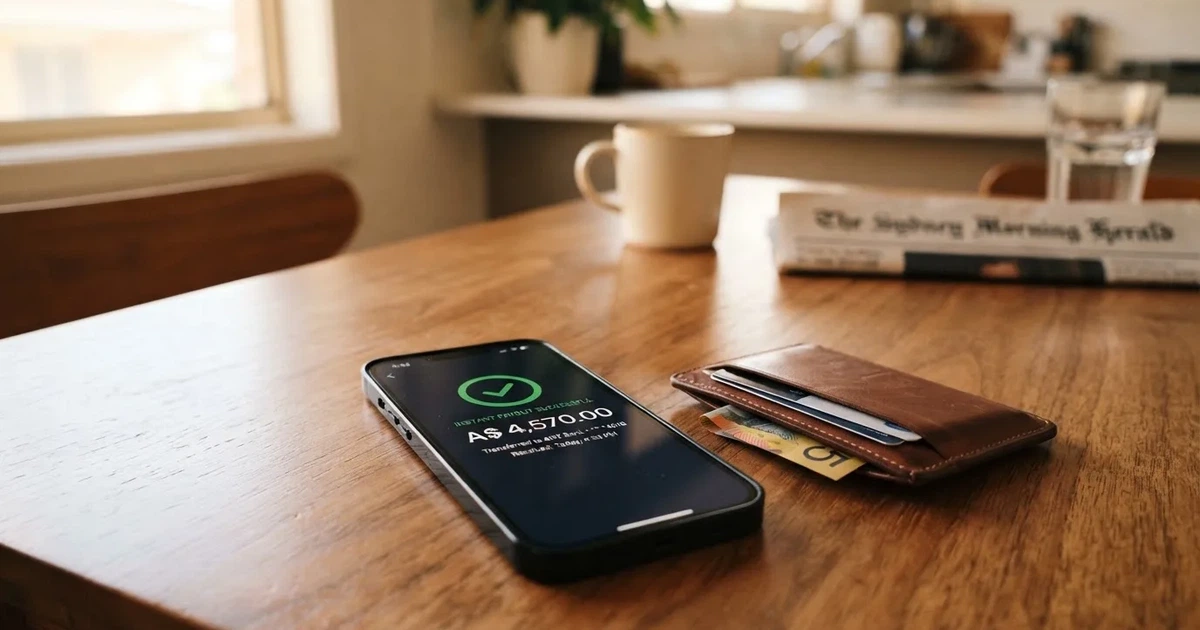
Current as of 18 October 2026 · verified against the Australian Communications and Media Authority’s formal warning register, the public data on the New Payments Platform and Australian Payments Plus, and the major Australian banks’ gambling-block terms.
Settlements on the Australian rail
The fast-payment rail an Australian bank account sits on is not what most offshore operators market against. It is faster than that — and the gap between the rail’s actual speed and the marketing figure is where the cost to a reader first shows up.
Settlements on the domestic fast-payment rail
The New Payments Platform (NPP) went live on 13 February 2018 and is owned by New Payments Platform Australia Ltd, a non-profit whose thirteen shareholders include the Reserve Bank of Australia and the country’s major banks. The platform caps monthly outages at two minutes and runs the products that matter to any Australian reader: PayID and Osko. Osko settles bank-to-bank transfers between participating Australian banks in under a minute, 24/7 including weekends, addressed either to a BSB and account number or to a PayID. PayID is the addressing layer; each PayID can be a phone number, an email address, an ABN or an organisation identifier, and over 100 Australian financial institutions issue them. By April 2025, more than 25 million PayID identifiers had been registered on the platform.
BPAY sits beside it as a separate channel — a bill-payment service rather than a person-to-person transfer. The payer enters a Biller Code and a Customer Reference Number (CRN) printed on the bill, and the funds arrive at the biller. BPAY has been live since 18 November 1997, is available through the online banking of over 140 Australian banks and financial institutions, and over 95,000 businesses offer it as a payment method. It is owned through Cardlink Services Limited, equally by ANZ, Commonwealth Bank, National Australia Bank and Westpac. In September 2021 the ACCC authorised merging BPAY Group, eftpos and NPP Australia under Australian Payments Plus (AP+), the same operator that runs PayID and Osko today.
What this rail is fast at is moving money between two Australian accounts, provided both ends accept the transaction. Australian Payments Plus itself warns that paying to a PayID shows the account holder’s name before the transfer is sent, and that being asked to transfer to a PayID on an illegal gambling site almost certainly means a scam site. The rail’s speed is not a defence against the rail being used for an unlawful offer, and the disclosure sits on PayID’s own page for that reason.
What an operator’s withdrawal window actually measures
The number an offshore operator publishes as a withdrawal time is the gap between Withdraw-clicked and funds-released-to-network. It collapses two real windows into one marketing figure. The first is the operator’s own processing window: internal review, anti-money-laundering checks, per-transaction rules, a verification ladder that pushes the first withdrawal out by 24 to 72 hours for many readers. The second is the payment rail’s window — sub-minute on Osko, hours on an e-wallet like Skrill or Neteller, one to five business days on a SWIFT wire.
Operators are well-advised to promise only the first window. The reader has no contract over the second; the rail and the player’s bank do. “Instant withdrawal” on the operator’s banking page is the first window in disguise, and it does not survive a refusal by the player’s bank.
Where an offshore operator meets an Australian bank
When an offshore casino’s payout arrives at an Australian bank, the bank screens the transaction against merchant category codes. Westpac’s gambling block works at card level: it refuses authorisation of transactions registered under ‘Betting/Casino Gambling’ on eligible personal credit and debit cards. ANZ’s gambling transaction block, activated through the ANZ app, also blocks gambling transactions made through a digital wallet such as Apple Pay on an eligible card — not only the physical card. Commonwealth Bank offers a comparable gambling lock through the CommBank app. None of these banks promises to catch every gambling transaction, and ANZ’s own disclosure warns some non-gambling transactions might be blocked in error; once activated, ANZ’s block takes 48 hours to remove.
The cost to the reader shows up here. A “fast payout” marketed as instant can land in three states. The transaction clears the rail and the bank accepts it. The transaction clears the rail and the bank declines it, with the funds held in transit until the operator’s payment processor reverses it — usually a few business days, sometimes longer, with no visibility to the player while it sits. Or the operator’s merchant category code is set generically, the bank never engages the block, and the operator’s marketing claim holds. The first and third states look identical to the reader at the receiving end. The middle state is the one that costs time, and the operator’s marketing line does not distinguish between them.
AUSTRAC, the Australian Transaction Reports and Analysis Centre, has its own threshold-transaction-report rule for transfers of A$10,000 or more — but only for physical cash. Ordinary electronic bank transfers are not subject to per-transaction reporting, regardless of amount sent. The reader who tries to argue with their bank after a declined transaction is not arguing against a regulator’s threshold; they are arguing against a merchant-category-code filter the bank set itself.
Card networks, digital wallets and the deposit end
At the deposit end the picture is shaped by a different rule, and the cost shifts. Under the Interactive Gambling Act 2001 as amended in 2023, Australian-licensed online wagering services cannot accept credit cards or credit-related products, a restriction that took practical effect on 11 June 2024 and carries operator penalties up to A$247,500. The same restriction constrains gambling use of digital wallets like Apple Pay when those wallets are funded from a credit line. Apple Pay itself charges no consumer fee in stores, online or in apps — any surcharge is the merchant’s card-processing cost, not Apple’s — and Apple states that transaction limits and PIN requirements are set by the card issuer or merchant, not by Apple.
By the end of 2025, Apple Pay, Google Pay and Samsung Pay transactions together accounted for around 45% of all card payments in Australia by number. Most of those transactions clear through eftpos, Mastercard or Visa. The Reserve Bank of Australia’s July 2025 review proposes removing surcharges only on those three networks, explicitly leaving American Express outside the scope of the proposed surcharge ban. American Express is a three-party scheme that issues its own cards and processes its own transactions, having launched its first charge card on 1 October 1958 after a freight-forwarding business going back to 1850. The practical effect for an Australian reader is that Amex surcharging can persist where surcharging on the three domestic networks cannot, and a deposit on Amex at an offshore site carries the bank’s gambling-block filter and the network’s own surcharge in one go.
For a reader, the question at the deposit end is which of these rails an offshore casino will route a deposit through, and whether that route survives the issuing bank’s gambling block. The marketing claim does not address either question, and the answer differs by bank, by card, by merchant-category-code classification and by the time of day.
The shortlist the ACMA has already named
The brands below are not a ranking and not a recommendation. Each one appears because the Australian Communications and Media Authority has issued a formal warning over it for offering prohibited online gambling services to Australians. The order follows §6 of the regulatory record; the composition of that order is not editorial.
Eleven brands, eleven formal warnings
The table shows the brand, the ACMA action and date as published, the operator name the ACMA named in that publication, and the independent listings that cover the brand in connection with payment methods — where any exist. “Not listed” means no third-party payment-method listing in the consulted sources carries the brand; that is not an assertion about the brand’s legitimacy, only about coverage.
| Brand | ACMA action and date | Operator named by the ACMA | Independent payment-method listings |
|---|---|---|---|
| RocketPlay | Formal warning, March 2026 (earlier May 2022) | Pulsup Ltd (earlier Dama N.V.) | Listed by Gambling Insider |
| Level Up Casino | Formal warning, May 2022 | Dama N.V. | Listed by Westpac |
| Woo Casino | Formal warning, March 2025 | Dama N.V. | Not listed |
| Spirit Casino | Formal warning, May 2025 | Dama N.V. | Not listed |
| National Casino | Formal warning, July 2025 | Consolutetish S.R.L. | Listed by ACMA, AUSTRAC and BetStop |
| Bizzo Casino | Formal warning, July 2025 (earlier 2022) | Consolutetish S.R.L. (earlier TechSolutions) | Listed by Gambling Insider |
| Ignition Casino | Formal warning, July 2025 | Bamboo Media | Not listed |
| Instant Casino | Formal warning, February 2025 | EOD Code SRL | Listed by ecoPayz and PayID |
| Jackbit | Formal warning, April 2026 | Ryker B.V. | Not listed |
| Casino Intense | Formal warning, April 2025 | Sterplay Holding Ltd | Listed by AUSTRAC, BetStop and Gambling Insider |
| Sky Crown | Formal warning, September 2022 | Hollycorn N.V. | Not listed |
For every brand, online casino games cannot be licensed anywhere in Australia. Whatever licence the site displays — Curaçao, Anjouan, Kahnawake — is issued under a regime that does not authorise the offer to a person in this country. The prohibition is worked through in full in the section on legality.
The brands one by one
Each entry below gives the regulatory record and the operator name the ACMA named. The verdicts at the end of each block are the page’s own judgement of what the record establishes — not a recommendation to use or avoid the brand, and not a description of what the brand claims to offer.
RocketPlay
RocketPlay has been on the ACMA’s record twice. The first warning, in May 2022, named Dama N.V. as the operator across six brands — Bambet, Dazard, Level Up, Rocketplay, Wild Tornado and Cobra Casinos. The second, in March 2026, named Pulsup Ltd over Rocketplay specifically. The brand survived an operator change between the two and remained published to Australian readers through both. Gambling Insider has referenced the brand independently of the regulator.
Verdict: The brand survived a change of operating company between the 2022 and 2026 warnings and was still being offered to Australian readers when the second warning published. Both operator names appear on the ACMA’s record.
Level Up Casino
Level Up sits inside the May 2022 cluster the ACMA warned Dama N.V. over. It was one of six brands named on that single publication, not the subject of a stand-alone warning. Westpac’s gambling-block merchant list has separately referenced the brand in connection with declined card transactions on Australian cards.
Verdict: One of six brands on the same May 2022 Dama N.V. publication. The warning’s unit is the operator, and Level Up is in the cluster rather than at its centre. The brand is the only one in the cluster with an independent listing on a major Australian bank’s merchant file.
Woo Casino
The ACMA warned Dama N.V. over Woo Casino in March 2025, separately from the 2022 cluster. Dama N.V. is the same operator named in May 2022 over six brands and again in May 2025 over Spirit Casino. No independent payment-method listing covers Woo in the consulted sources.
Verdict: Three years after the 2022 Dama N.V. cluster, the same operator was warned again — this time for Woo alone. The brand is the only one in the 2025 Dama N.V. warnings that was not in the 2022 cluster.
Spirit Casino
The May 2025 ACMA warning over Spirit Casino named Dama N.V. as the operator — the same operator named in May 2022 over six brands and in March 2025 over Woo Casino. Spirit is the third Dama N.V. brand on the ACMA’s record.
Verdict: Dama N.V.’s third brand in the ACMA’s record across three publications. The operator pattern across 2022, March 2025 and May 2025 is a record of recurrence that one operator name carries.
National Casino
The ACMA named Consolutetish S.R.L. over National Casino in July 2025, alongside a warning over Bizzo Casino under the same operator. The spelling of Consolutetish in the ACMA publication is reproduced here as it appears; readers searching for the operator by name will need the exact form to find the publication. ACMA, AUSTRAC and BetStop have separately referenced the brand.
Verdict: One of two Consolutetish S.R.L. brands named on the same ACMA publication. The company-name spelling is unusual enough to be a search gotcha for readers who try to verify the warning themselves.
Bizzo Casino
Bizzo Casino carries two ACMA warnings. The first, in 2022, named TechSolutions (CY) Group Limited and TechSolutions Group N.V. The second, in July 2025, named Consolutetish S.R.L. — the same operator named for National Casino in the same publication. Gambling Insider has separately referenced the brand.
Verdict: The only brand in this set with formal warnings under two distinct operating companies. Two operator names, two publications, one URL — the URL outlasted both operators’ regulatory position.
Ignition Casino
The ACMA named Bamboo Media over Ignition Casino in July 2025, in the same publication that named Consolutetish S.R.L. for National Casino and Bizzo Casino. Ignition was not on the earlier Dama N.V. or TechSolutions lists, and Bamboo Media does not appear elsewhere in this set.
Verdict: A non-Dama, non-TechSolutions brand warned alongside the Consolutetish pair. No third-party payment-method listing covers it. The operator’s name does not recur on this record.
Instant Casino
The ACMA named EOD Code SRL over Instant Casino in February 2025. ecoPayz and PayID have separately referenced the brand in connection with payment-method coverage.
Verdict: One formal warning, named in early 2025. The brand carries payment-method coverage listings separate from the ACMA record — the only brand in this set where the independent listings reach the rail layer (ecoPayz, PayID) rather than the regulator layer.
Jackbit
The ACMA named Ryker B.V. over Jackbit in April 2026, in the same publication as a warning over CasinOK. Jackbit is the most recent warning in this set and the operator has no other brand named in the consulted record.
Verdict: The newest warning on the ACMA’s record among these eleven brands. Ryker B.V. appears once, for two URLs, and the cluster is small enough that the publication reads as a single action rather than a pattern.
Casino Intense
The ACMA named Sterplay Holding Ltd over Casino Intense in April 2025. AUSTRAC, BetStop and Gambling Insider have separately referenced the brand.
Verdict: One formal warning, mid-2025. Three independent listings point at the brand alongside the regulator’s — the widest independent coverage in this set.
Sky Crown
The ACMA named Hollycorn N.V. over Sky Crown in a publication that also named the operator’s Blue Leo casino service. Hollycorn N.V. is a Curaçao-registered operator with a wider brand portfolio; only Sky Crown and Blue Leo appear in this ACMA publication.
Verdict: One of two Hollycorn N.V. brands on the same ACMA publication. The operator’s wider portfolio is not named here, and the publication does not represent the operator’s full Australian-facing footprint.
Fundamentals of the offshore offer
The term “fast payout” travels because the offer looks standardised. Each offshore casino lists a withdrawal time, a payment-method set, and a licence jurisdiction, and the reader compares numbers across pages. The cost is in what those numbers do not carry.

Fundamentals of the “fast payout” claim
The figure an offshore casino publishes as its withdrawal time is the operator’s own processing window, not a settlement time. Some operators run the same brand under different payout windows for different player tiers — a published “instant” sits behind a verification ladder that pushes the first withdrawal out by 24 to 72 hours for most readers, with subsequent withdrawals clearing faster once identity and source-of-funds checks have been satisfied. The verification ladder exists because of the same anti-money-laundering rules that licensed operators follow; the difference is that an Australian reader who reaches the top of the ladder at an offshore site has no Australian complaints body to escalate a refusal to, and the operator’s compliance team operates outside Australian jurisdiction.
The licence the site displays is, in this market, a payment for permission to operate against the Interactive Gambling Act 2001. Curaçao, Anjouan and Kahnawake licences are issued under regimes that do not authorise offering online casino games to Australians. A reader who relied on the licence as a guarantee has relied on the wrong document, and the cost shows up the first time the operator refuses a withdrawal or closes an account without explanation.
How offshore sites turn a rail claim into a marketing number
A reader who lands on an offshore casino’s banking page sees a withdrawal time attached to each payment method. The number is calibrated against the rail the operator expects to use — sub-minute for an Osko or PayID deposit-refund, hours for an e-wallet like Skrill or Neteller, days for a bank wire. The number does not address whether the rail will accept the transaction once the player’s bank sees the merchant category code.
Three readers, three outcomes. The first has a card issued by a bank with no gambling block active, the rail accepts the transaction, and the number on the page holds. The second has a card on Westpac, ANZ or Commonwealth Bank with a gambling block active, the rail declines the credit, and the “instant withdrawal” sits in transit until the operator’s payment processor reverses it — usually a few business days, sometimes longer, with the player’s balance effectively frozen for that period. The third has a card on a bank that engages the block selectively, and the outcome depends on the specific transaction. None of these outcomes is in the marketing claim, and the reader cannot tell in advance which outcome they will land in.
Prohibition on online casino games in Australia
The reason “fast payout online casino Australia” is the question it is, is that the offer the question describes is prohibited. The cost to the reader begins with the offer being unlawful to provide, and ends with the absence of an Australian complaints body if anything goes wrong.
The prohibition itself
The Interactive Gambling Act 2001 (IGA), strengthened by the Interactive Gambling Amendment Act 2017, makes it an offence to provide online casino games, online pokies or in-play betting to a person in Australia. No state or territory licenses online casino games. What is licensable is wagering on races and sport placed before the event, lotteries and keno — in practice licensed by the Northern Territory, where the Northern Territory Racing and Wagering Commission (NTRWC) regulates 52 of Australia’s online bookmakers, including Sportsbet, Bet365 and Ladbrokes, for tax reasons. The commission has no full-time staff and meets once a month in Darwin.
The minimum age for any wagering service is 18. The individual player is not prosecuted under the IGA — the law targets the provider — but an offshore site gives no Australian consumer protection, no complaints body and no recourse if a withdrawal is refused. The site can be blocked with a balance still on the player account, and the ACMA has used that power repeatedly.
The Interactive Gambling Amendment (Gambling Reform) Bill 2026 passed Parliament on 19 August 2026. Its advertising and inducement measures commence on 1 January 2027 — law with a start date, not yet in force on a 2026 page. A reader comparing this page against the rules in force at the time of reading should know that the framework is mid-revision, and that a comparison rendered after 1 January 2027 will read against different inducement rules.
Tax is the quiet piece. Gambling winnings of a recreational player are not assessable income under section 6-5 of the Income Tax Assessment Act 1997, and losses are not deductible, unless the person carries on a business of gambling. The model is recreational-only, and the ATO’s own guidance is the place to verify a particular situation. This rule is the same whether the operator is licensed or offshore; it is not a defence either way.
The enforcement record
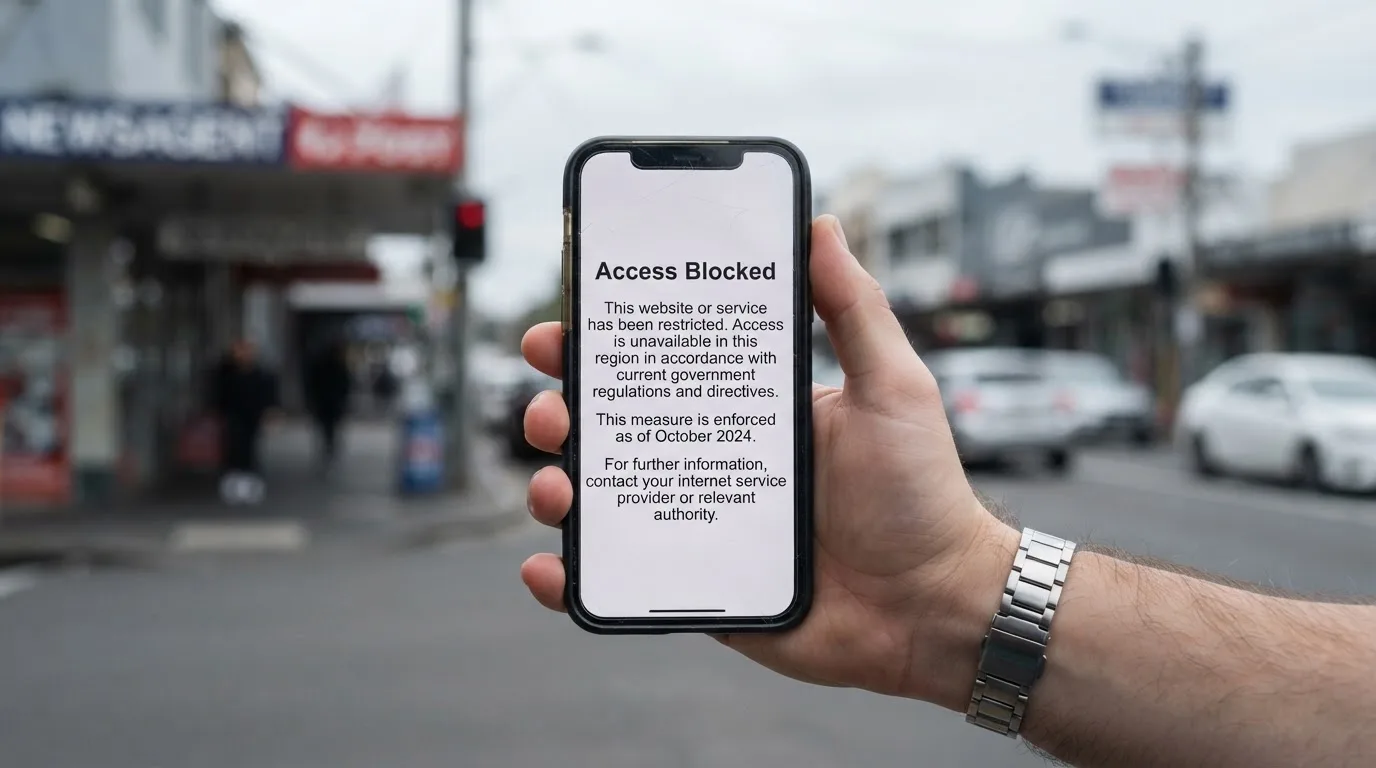
The Australian Communications and Media Authority enforces the IGA. It investigates, issues formal warnings, and directs Australian internet service providers to block illegal sites. By June 2026, 1,751 illegal gambling and affiliate marketing websites had been blocked since the first blocking request in November 2019, and more than 230 unlicensed gambling services had left the Australian market since enforcement was strengthened in 2017. In the round reported on 26 June 2026, the ACMA asked ISPs to block 12 more sites: 7Signs, ChromaBet, Donbet, Duospin, Freshbet, Slots Gem, Jacks Club, Lucky Start, Pointsbetz, Spinrise, Vinyl Casino and Wildsino.
Between November 2019 and June 2026, that gives a blocking rate of roughly 22 illegal sites per month across the regime’s first seven years — a band of between 20 and 25 per month depending on how the partial months at each end of the period are counted. The condition is that the figure is a snapshot of what the ACMA has formally requested ISPs to block, not the count of unique operators; some sites share infrastructure, and one block can take a cluster offline. H2 Gambling Capital’s 2025 report estimates Australians lose about A$3.9 billion a year to illegal gambling sites, and that the share of gambling going through legal channels fell from 74% in 2021 to 64% — a shift the regulator’s blocking record describes but does not reverse.
The eleven brands in the table above are not the regulator’s whole list. They are the subset of brands the ACMA has published a formal warning over, where the warning was specific enough to attach an operator name. Other sites appear on the blocking list without a formal warning; others appear on neither list and are nevertheless unlawful to provide. The picture is uneven by design — the ACMA prioritises warnings where the operator is identifiable and reachable for service.
Player protection in this market
The legal market offers player-protection tools the offshore offer cannot match. The argument for using the legal offer rests there — on the safeguards, not on the marketing.
BetStop and what it actually binds
BetStop, the National Self-Exclusion Register, has been live since August 2023. It binds Australian-licensed online and phone wagering services — the NTRWC’s 52 bookmakers, plus licensed lottery and keno products at state level. A player who registers is excluded from marketing by those services and from opening new accounts with them. The exclusion can be set for periods from three months to a lifetime, and the registration is confidential between the player and the operator.
BetStop does not bind offshore casinos; an offshore site is not connected to it, and registration on BetStop has no effect on a player account at an offshore casino. For a reader using an offshore site, the practical self-exclusion is whatever the offshore site itself offers — and the operator’s own self-exclusion sits behind the same verification ladder that sits behind the first withdrawal. The Australian framework’s guarantee is the part the offshore offer does not extend.
For an Australian reader, the practical question is what self-exclusion looks like if the offer being used is offshore. BetStop’s exclusion does. The exclusion is a contract between the player and the Australian-licensed services, enforceable by ACMA action if those services breach it, and the recourse for a breach is real. The offshore offer carries no equivalent contract.
Help, advice and the limits of the legal offer
The National Gambling Helpline (1800 858 858) is free, 24/7, with chat at Gambling Help Online. Financial counselling is available state by state, and the services do not require the reader to be using a licensed product; they are available to anyone whose gambling has become a problem, including readers who are using offshore sites. The helpline’s scope is the reader, not the licence status of the operator.
The legal offer itself is narrow. A reader who wants to play online casino games cannot do so lawfully in Australia. The closest lawful analogues are licensed pokies venues and land-based casinos in the states and territories that license them, both of which are subject to state-based harm-minimisation regimes — mandatory pre-commitment, time and spend displays, on-floor intervention — that the offshore offer does not match. BetStop’s exclusion does extend to wagering on races and sport at licensed Australian bookmakers, but it is a sports-betting exclusion, not a casino exclusion; an Australian reader who wants to stop gambling on casino games cannot do so by registering on BetStop alone, because BetStop does not bind the operators that offer casino games. The legal offer’s silence on casino is the offshore offer’s opening, and the reader who needs help with casino play needs the helpline before anything else.
Crypto and the offshore offer
The crypto side of fast-payout marketing asks whether settling in a cryptocurrency changes what the rail underneath it does, or whether it changes the legal position. The answer to the first is yes, narrowly. The answer to the second is no.
What crypto changes at the deposit and withdrawal end
Crypto removes the merchant-category-code step the Australian banking rail uses. A transfer in Bitcoin, Ethereum or USDT settles on a public blockchain without an Australian bank screening the merchant category. That is also the limit of what it changes: the speed of the rail is the speed of the blockchain’s confirmation — around ten minutes per confirmation on Bitcoin, some tens of seconds on Ethereum depending on gas — and settlement to a wallet the reader controls is fast by rail standards.
What the rail change does not address is the Australian legal position. The Interactive Gambling Act 2001 as amended in 2023 prohibits licensed online wagering services from accepting credit cards or credit-related products, and the same restriction is read to extend to crypto at licensed Australian bookmakers — a licensed Australian operator does not accept crypto deposits. An offshore casino that does accept crypto is still operating against the IGA, and the crypto deposit does not legalise the offer. The reader’s exposure to a refused withdrawal, a closed account and a frozen balance is unchanged.
The cost on the crypto side is different in kind, not in degree. A crypto withdrawal arrives in an address the reader controls, with no Australian bank to screen it. The exchange step at the receiving end — converting Bitcoin or USDT back to Australian dollars — is the reader’s own, and the cost there is the exchange’s fees and the asset’s volatility between withdrawal and conversion. A player who withdraws A$1,000 worth of Bitcoin and waits three days to convert because the exchange rate moves against them can find the converted value is A$940 by the time the sale clears. The volatility is not the casino’s risk; it is the reader’s, and the marketing claim does not price it.
What it does not change about the legal position
The reason a licensed Australian bookmaker does not accept crypto is the same reason an offshore casino cannot lawfully accept it from an Australian: the offer is prohibited, and the medium of the transfer does not change that. A reader who used crypto to deposit at an offshore casino, won, and attempted to withdraw back to a wallet is depending on the offshore operator’s own compliance stance for the payout — a stance that operates outside Australian consumer law and outside any Australian complaints body. If the operator refuses the withdrawal, the reader has the same avenues they would have had with a card deposit, which is to say none that originate in Australia.
AUSTRAC’s threshold-transaction-report rule applies to transfers of A$10,000 or more, but only to physical cash. Ordinary electronic bank transfers are not subject to per-transaction reporting, regardless of amount. Crypto transfers fall outside AUSTRAC’s threshold rule altogether; the reader who deposits via crypto at an offshore casino is also not protected by it, because the rule that triggers reporting does not apply. The cost of being outside the Australian framework is the absence of every safeguard the framework has.
Frequently asked questions
The questions below use the material in the page above. Each answer is the page’s own conclusion, not a restatement of the question.
What counts as a fast payout time for a casino transaction?
The figure an offshore operator publishes is the operator’s own processing window — the gap between Withdraw-clicked and the funds being released to a payment network. It does not include the time the player’s bank takes to clear the transfer or the time a gambling block may add to it. A sub-minute Osko transfer on the Australian rail can still be declined by the issuing bank if the merchant category code triggers a gambling block.
How quickly does an Osko bank transfer actually arrive between Australian banks?
Osko settles bank-to-bank transfers between participating Australian banks in under a minute, 24/7, addressed either to a BSB and account number or to a PayID. The constraint is whether both the sender’s and the receiver’s banks accept the transaction. On a transfer from an offshore casino to an Australian player account, the receiving bank screens the merchant category code; if the code is ‘Betting/Casino Gambling’ and the player has a gambling block active, the transfer is refused.
Is it legal for an online casino to offer fast payouts to players in Australia?
No. The Interactive Gambling Act 2001 makes it an offence to provide online casino games, online pokies or in-play betting to a person in Australia. No state or territory licenses online casino games. The licence an offshore casino displays is issued under a non-Australian regime and does not authorise the offer here. The reader is not prosecuted under the IGA; the operator is.
Do faster payout claims make an offshore casino any safer to use?
No. The withdrawal time is a rail claim, not a compliance claim. It does not address whether the site will pay out, what verification ladder sits behind the first withdrawal, whether the licence displayed is enforceable against the operator, or what recourse the reader has if a withdrawal is refused. Faster payout marketing does not change any of those.
What payment method typically settles quickest into an Australian bank account?
For a domestic transfer, Osko through PayID or BSB-and-account-number settles in under a minute at any participating Australian bank. For an offshore casino’s payout, the relevant constraint is the issuing bank’s merchant-category-code screening and any gambling block the reader has activated — both of which can refuse a transfer the rail itself would have cleared in seconds.
Fast Payout Online Casinos in Australia — More on this topic at casino slots au.