
What Bonus Buy Slots Cost Australian Players and What the Law Actually Says About Them
Bonus buy slots in Australia sit inside a contradiction that is worth naming before anything else. The mechanic itself is straightforward: pay a fixed multiple of your stake, skip the base game, and drop straight into the bonus round that the symbols would otherwise have to scatter in for. The contradiction is that no Australian licence covers online casino games, and no state or territory can issue one. Every bonus buy slot a punter in Australia can actually open is hosted offshore, outside the Interactive Gambling Act 2001, and the ACMA has spent the better part of a decade publishing the names of the operators offering them.

The page that follows is written from one angle: what does this mechanic cost the person paying for it, and what does the legal frame around it cost that person too. No offshore brand is recommended. The eleven brands named below appear because the ACMA itself acted against them; their slot catalogues carry the bonus buy feature, and that is why they belong on a page about bonus buy slots in Australia.
Current as of 28 October 2026 · verified against the Interactive Gambling Act 2001 and ACMA enforcement records.
Table of Contents
- How Bonus Buy Slots Work and What the Mechanic Does to the House Edge
- Why No Bonus Buy Slot Has an Australian Licence
- The H2 Gambling Capital Estimate and What the Illegal Market Is Doing to the Legal One
- Where Bonus Buy Slots Sit in the Wider Pokies Landscape
- What Responsible Gambling Looks Like in a Market That Includes Offshore Slots
- What Bonus Buy Slots Cost Beyond the Buy Price
- How Fast the ACMA Is Blocking Sites and What That Pace Implies
- What an Australian Punter Should Read in the Bonus Buy Terms
- The Operator Brands the ACMA Has Acted Against
- What Each Brand’s ACMA Warning Means in Practice
- How a Punter Reads an Operator Warning Without Becoming the Page’s Lawyer
- The Mechanics of the Bonus Buy Itself, in Honest Terms
- What “Bonus Buy” Means for the Money on the Account
- How a Punter Should Decide, If a Decision Is Being Made
- The Page’s One Calculation, Run Openly
- What the Page Is Not
- What to Carry Away
- Frequently Asked Questions About Bonus Buy Slots in Australia
How Bonus Buy Slots Work and What the Mechanic Does to the House Edge
The bonus buy button is a shortcut past the base game. On a regular online slot, the bonus round triggers when three or more scatter symbols land on the same paid spin. That trigger is rare by design, and the rarity is what makes the bonus round pay well when it finally arrives. A bonus buy lets the player pay for the rarity directly: the slot charges a fixed multiple of the base stake, anywhere from roughly fifty times to one hundred times the line bet, and credits a free-spins or feature round at a defined starting state.

The arithmetic behind the button is what makes the mechanic worth thinking about rather than reaching for. Slot games price the bonus buy at a level the studio considers mathematically equivalent to letting the base game run its course and hit the scatter naturally. If a slot pays back 96 percent of everything wagered across millions of spins, the bonus buy is set so that, over the long run, the same 96 percent applies whether the player grinds through the base game or pays the toll and walks straight in. The price of the shortcut is that the same expected return is concentrated into a single decision. A player who would have spent ten dollars across hundreds of base spins to reach the bonus is asked to spend the equivalent upfront, in one click, on one outcome.
That concentration changes how the feature feels. The volatility is no longer averaged across an evening of play; it lives in a single button press. Studios publish the RTP for the bonus buy entry point separately from the base-game RTP in some titles, and where they do the bonus buy figure is usually lower than the headline number, because the feature is priced at a discount to encourage use. A 96.5 percent base-game slot can sit at 94 or 95 percent when entered via the bonus buy, with the difference going to the house. Where studios do not separate the figure, the price is calibrated so the player’s expected return converges on the same number either way.
The base-game trigger rate is what the price is calibrated against. A bonus that scatters in once every two hundred paid spins on average is the same bonus the buy button charges fifty or one hundred base stakes to unlock, because those two hundred spins at the line bet produce about the same expected cost as the buy price. Where the scatter is genuinely rare, the buy price climbs with it. The mechanic is not a way to “skip bad luck” in the colloquial sense; it is a way to convert a long-tailed probability into a single transaction priced at its expected value.
What the button does not do is change the underlying odds of the bonus round itself. The reels, the symbol weights, the free-spins count, the multipliers, the random feature triggers inside the bonus: none of it is touched. The buy entry starts the round at the same point a natural trigger would, and the result plays out under the same rules. The thing the button alters is the variance of reaching that starting point. Whether that trade suits a particular punter depends on the punter’s bankroll, the punter’s tolerance for long dry stretches in the base game, and how much the punter values a known number over an unknown one.
Three structural details are worth carrying into any decision about the mechanic. First, on many bonus buy slots the free-spins round can retrigger, and on a minority the prize potential inside the bonus round is what makes the buy price worthwhile at all. Second, some titles cap the maximum win at a multiple of the buy price, which converts an uncapped theoretical payout into a fixed ceiling. Third, the feature has attracted regulatory attention overseas precisely because it compresses spending into a single decision, which makes harm-minimisation tools that operate on time or spin count less effective. None of those details is unique to any one offshore brand; they are properties of the games themselves, and the offshore operator is only the venue where the games sit.
Why No Bonus Buy Slot Has an Australian Licence
The Interactive Gambling Act 2001, tightened by the Interactive Gambling Amendment Act 2017, makes it an offence to provide online casino games and online pokies to a person physically in Australia. No state or territory issues a licence for them; the Australian Capital Territory, New South Wales, the Northern Territory, Queensland, South Australia, Tasmania, Victoria and Western Australia all decline to license what the IGA prohibits. The Victorian Gambling and Casino Control Commission, the NSW Casino Control Authority, and the equivalent bodies in other states regulate land-based gaming within their borders. None of them can license an offshore website, and the offshore websites know this.
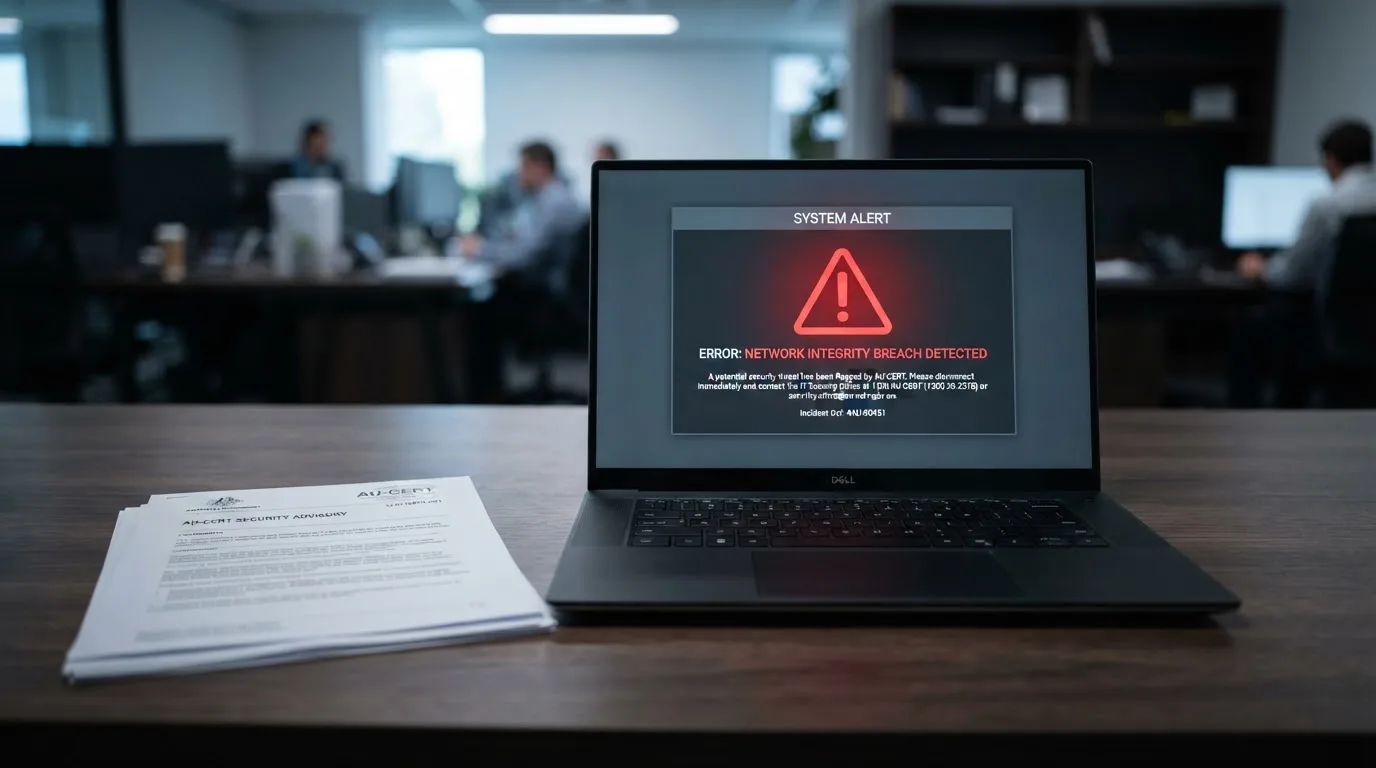
The ACMA’s enforcement record is the part of the picture that is publicly verifiable. As reported in June 2026, the ACMA had asked Australian internet service providers to block 1,751 illegal gambling and affiliate marketing websites since the first blocking request in November 2019, and more than 230 unlicensed gambling services had left the Australian market since enforcement was strengthened in 2017. A round of twelve more blocks reported on the same day named 7Signs, ChromaBet, Donbet, Duospin, Freshbet, Slots Gem, Jacks Club, Lucky Start, Pointsbetz, Spinrise, Vinyl Casino and Wildsino. The pace of blocking has not slowed; it has expanded.
What the IGA does not do is prosecute the individual player. The Act targets the provider, not the punter, and no Australian has been charged for opening an offshore casino site. The cost of playing offshore is not legal risk; it is the absence of the protections an Australian-licensed product carries. There is no local complaints body, no Australian Financial Complaints Authority route, no guarantee that a withdrawal request will be honoured, and no recourse if a balance is locked when the ACMA moves to block the site. BetStop, the National Self-Exclusion Register live since August 2023, binds only Australian-licensed wagering services and phone operators; an offshore casino is not connected to it. Self-excluding through BetStop does not stop an offshore site from accepting deposits.
The payment rails tell the same story. Credit cards, credit-related products and digital currency are banned as payment for licensed online wagering in Australia since 11 June 2024, with penalties up to A$247,500 for operators that accept them in that channel. Legal deposit routes for licensed wagering are debit card, bank transfer, PayID, Osko and BPAY. An offshore casino asking for a credit card or a crypto deposit is doing so because it sits outside the Australian framework, and the deposit itself is unprotected by Australian dispute resolution. A bank may also decline the transaction under its own responsible-gambling policies, in which case the punter is left trying a different channel.
The 2026 reform package sits on top of this. The Interactive Gambling Amendment (Gambling Reform) Bill 2026 passed Parliament on 19 August 2026, with its advertising and inducement measures commencing on 1 January 2027. It is law with a future start date; on a page read in 2026 the measures are not yet in force, and the bonus buy slots offshore operators continue to advertise in the meantime are governed by the regime as it stands today, not the regime that begins to apply on the first day of 2027.
The H2 Gambling Capital Estimate and What the Illegal Market Is Doing to the Legal One
The scale of what the ACMA is blocking is large enough to be worth a number. H2 Gambling Capital’s 2025 report estimates that Australians lose about A$3.9 billion a year to illegal gambling sites, and the share of gambling going through legal channels fell from 74 percent in 2021 to 64 percent. The legal channel did not lose ground because Australians stopped gambling; it lost ground because the illegal channel expanded and the legal one absorbed none of the growth. Every dollar that leaves a legal wagering account and lands on an offshore casino site is a dollar outside the consumer protection framework that the legal channel provides.
The Northern Territory is the practical regulator of what little online wagering is licensed. The Northern Territory Racing and Wagering Commission regulates 52 of Australia’s online bookmakers, including Sportsbet, Bet365 and Ladbrokes, which hold Territory licences primarily for tax reasons. The commission has no full-time staff and meets once a month in Darwin. The shape of that arrangement explains why wagering on races and sport can be licensed online while casino games cannot: the federal IGA prohibits one class entirely, and the territory licences the other. The bookmakers themselves do not offer bonus buy slots, and they cannot.
The combination of those numbers is what makes the bonus buy question difficult to answer as a consumer question rather than a regulatory one. An Australian punter who wants to play a bonus buy slot today has the choice between not playing and playing on an offshore site that the ACMA has acted against, sometimes more than once. The “choice” is closer to a gap than a menu. The page below describes what the ACMA has published about each brand named; it does not describe a menu of options.
Where Bonus Buy Slots Sit in the Wider Pokies Landscape
The land-based alternative to an offshore bonus buy slot is a poker machine in a pub or a club, or in a casino. New South Wales legalised slot machines in 1956, and by 2010 Australia operated an estimated 97,103 gaming machines outside casinos, a per-capita rate about five times that of the United States. The state-by-state count of poker machines outside casinos, as compiled in 2023, runs to 87,298 in New South Wales, 26,380 in Victoria, 21,122 in Queensland, 11,672 in South Australia and 3,587 in the Australian Capital Territory. Victoria and Tasmania together add several thousand more. These are physical machines with mechanical or video reels; they do not have a bonus buy button, and they cannot be played online from anywhere in Australia under a local licence.
The history of the slot machine goes back further than the legal Australian market. Charles Fey of San Francisco developed the first automatic slot mechanism in the late nineteenth century, a three-reel machine with five symbols (horseshoes, diamonds, spades, hearts and the Liberty Bell), where three bells in a row paid the top prize of ten nickels. Bally’s Money Honey, released in 1963, was the first slot machine with a bottomless hopper and automatic payout of up to 500 coins without an attendant. The first video slot machine was developed in 1976 by Fortune Coin Co. in Kearny Mesa, California. Modern video slot machines can use five or more reels with fifty or more symbols per reel, producing odds as high as 300 million to one against a top combination, compared with a classic mechanical three-reel machine with about ten symbols per reel offering roughly 1,000 possible combinations. The bonus buy button is a software feature added to a class of game that has spent a century refining how the reels pay.
The house edge on the games an Australian punter can legally play on a casino floor sits at levels the bonus buy mechanic can only match from above. Baccarat’s house edge is 1.06 percent on the Banker bet, 1.24 percent on the Player bet and 14.36 percent on the Tie. With optimal strategy, blackjack’s house edge is about 0.28 percent under liberal Las Vegas Strip rules (dealer stands on soft 17, double on any two cards, double after split, resplit aces, late surrender) and about 0.43 percent under Atlantic City rules. Craps runs lower on most bets: Pass and Come at 1.41 percent, Don’t Pass and Don’t Come at 1.36 percent. None of those games can be played online from Australia under a local licence. The relevant comparison for a punter weighing whether to open an offshore bonus buy slot is not the return profile of the games on offer; it is whether the offer itself is one the ACMA has acted against, and what recourse the punter has if the balance cannot be withdrawn.
What Responsible Gambling Looks Like in a Market That Includes Offshore Slots
If the thought of playing offshore slots starts to feel compulsive or stressful, free confidential help is available around the clock through Gambling Help Online and the National Gambling Helpline on 1800 858 858. Both services are Australian, both are free, and neither requires the caller to have stopped playing before they make contact. The helpline takes calls twenty-four hours a day, seven days a week, with webchat available through Gambling Help Online for those who prefer to type.
BetStop, the National Self-Exclusion Register, is the formal channel for an Australian punter who wants every Australian-licensed online and phone wagering service to refuse their business. Registration is voluntary, free, and runs for a minimum exclusion period the punter selects. The catch, and it is one the offshore market makes unavoidable, is that BetStop binds only the operators it has authority over. Sportsbet, Bet365, Ladbrokes and the other forty-nine Northern Territory-licensed bookmakers will refuse a BetStop-registered punter’s bets. An offshore casino will not, because it is not connected to the register.
The other responsible-gambling tools that exist on offshore sites are the ones those sites choose to offer. Deposit limits, session timers, loss limits and self-exclusion buttons inside the offshore site are voluntary from the operator’s side: the punter cannot assume they will be honoured at withdrawal, and the punter cannot escalate a complaint to an Australian body. The model of consumer protection that sits underneath every legal wagering site in Australia does not extend across the border.
The 2026 reform package adds new tools in 2027. The Interactive Gambling Amendment (Gambling Reform) Bill 2026, passed on 19 August 2026 and commencing for advertising and inducement purposes on 1 January 2027, expands the ACMA’s enforcement reach and tightens rules around inducements to gamble. It is not the responsible-gambling regime in itself; it is the framework the responsible-gambling regime will operate inside from the start of next year. A punter who needs help today does not need to wait for it.
What Bonus Buy Slots Cost Beyond the Buy Price
The buy price is the visible cost. The invisible cost is everything that happens because the slot is hosted outside Australia. Withdrawals from offshore casinos are typically slower than withdrawals from Australian-licensed operators, partly because the offshore operator runs its own payment queue and partly because every Australian dollar that arrives in the offshore account has to leave it through a channel the Australian bank may scrutinise. Some offshore operators decline withdrawals back to credit cards outright and route payouts through bank transfer or cryptocurrency, both of which introduce their own delays and conversion costs.
Bonus offers on offshore sites are usually deposit-gated, meaning the punter has to deposit a multiple of the bonus before the bonus funds release. Where a bonus buy slot is the destination for those bonus funds, the bonus’s wagering requirement has to be worked through on a slot whose base-game RTP is often lower than the headline figure would suggest, and the bonus buy shortcut burns through the wagering balance in a single click rather than spreading it across an evening’s spins. The mechanical convenience of the buy button interacts with the mechanical friction of the bonus terms in ways that work against the punter.
Verification is the third hidden cost. Offshore operators licensed in Curaçao, Anjouan, the Kahnawake territory or Malta will run KYC (know your customer) checks when a punter tries to withdraw, and those checks can take days or weeks. Some operators request documents the punter did not have to provide at deposit, and the withdrawal sits in review while the documents are gathered. None of this is illegal in the sense the IGA targets; it is the normal cost of doing business with an operator that does not sit inside the Australian regulatory perimeter. The cost is in the punter’s time and the punter’s exposure to a discretionary approval process.
What sits below all of it is the one fact that no offshore site will write on its homepage: the ACMA can block the site at any time, with a balance on it. The 1,751 blocks since November 2019 are not a backlog of old, abandoned sites; they are a continuing programme, with the June 2026 round alone adding twelve. A punter who chooses to play does so knowing the operator they have chosen may not be reachable by the same URL next week.
How Fast the ACMA Is Blocking Sites and What That Pace Implies
The arithmetic of the ACMA’s blocking programme is the one calculation the page runs, and it is worth running twice to see what the rate actually looks like. As of the figures reported in June 2026, 1,751 illegal gambling and affiliate marketing websites had been blocked since the first blocking request in November 2019. The first blocking request sits at the start of that window; the June 2026 count sits at the end. From November 2019 to June 2026 is about seven and a half years, or roughly ninety months.
Divide the running total by the months elapsed. 1,751 blocks across ninety months comes out to roughly 19.5 blocks per month, or about one new blocked site every thirty-six hours through the programme’s life. The rate is not uniform; the ACMA publishes blocking rounds in batches, sometimes a dozen sites in a single week, sometimes a quieter stretch. The June 2026 round alone added twelve, which is two thirds of a typical month’s average packed into one announcement. Earlier rounds from 2020 and 2021 added fewer.
The block rate does not measure the number of operators Australians use. Many of the 1,751 sites are affiliate marketing pages that never took a deposit themselves, and many of the licensed operators simply rotate to a new domain when the ACMA moves. The block rate measures the number of URLs the ACMA has directed Australian ISPs to make unreachable from inside Australia. It is the lower bound on the size of the offshore market targeting Australian customers, not the upper bound.
What the rate does imply is that the ACMA treats this as ongoing work, not a project with a finish line. A punter deciding whether to open an offshore site today is making a decision inside an enforcement programme that is still adding names to its block list at the rate it has been adding them since 2019. The brand named in this page’s operator section may sit on the next published round, with the balance on it.
What an Australian Punter Should Read in the Bonus Buy Terms
Two things in the bonus buy terms matter more than the rest. The first is the RTP figure for the bonus buy entry point. Studios that publish this figure separately from the headline RTP typically show a buy-entry figure one to three percentage points lower than the base-game figure. Where the figure is not published separately, the bonus buy price is calibrated to deliver the same expected return as the base-game long-run, which means the punter is paying to compress variance rather than to improve odds. Neither is a reason not to use the button; both are reasons to know which is happening.
The second is the maximum win cap on the bonus round. A subset of bonus buy slots cap the bonus round payout at a multiple of the buy price, often five hundred to ten thousand times the buy. The cap converts what looks like an open-ended feature into a fixed ceiling, and the slot’s volatility collapses around it. A 96 percent RTP slot with a five-thousand-times cap plays very differently from a 96 percent RTP slot with no cap, and the difference is invisible until the bonus actually lands.
Where the buy price is published in a currency other than Australian dollars, the punter should add the conversion cost. Most offshore sites accept deposits in Australian dollars but price the bonus buy in EUR or USD, and the conversion goes through whichever payment processor the operator uses. The bank or card issuer’s foreign-exchange margin, typically one to three percent, sits on top of the buy price, and the RTP calculation the studio published assumes the punter paid the buy price in the studio’s currency without that margin. Small in absolute terms; real in expected-return terms.
The Operator Brands the ACMA Has Acted Against
The brands below appear because the ACMA has issued a formal warning under the Interactive Gambling Act 2001 to the operator behind each of them, for offering prohibited online casino games to Australians. None of them holds an Australian licence; no Australian licence is available for them to hold. The table lists the brand, the ACMA action and date as published by the ACMA, the operator the ACMA named, and what is known about whether the brand’s own listings advertise bonus buy slot content.
| Brand | ACMA action and date | Operator named by the ACMA | Subject support |
|---|---|---|---|
| RocketPlay | Formal warning, March 2026 (earlier Dama N.V., May 2022) | Pulsup Ltd | None |
| Level Up Casino | Formal warning, May 2022 | Dama N.V. | Listings reference BGaming |
| Woo Casino | Formal warning, March 2025 | Dama N.V. | None |
| Spirit Casino | Formal warning, May 2025 | Dama N.V. | None |
| National Casino | Formal warning, July 2025 | Consolutetish S.R.L. | Listings reference Wikipedia |
| Bizzo Casino | Formal warning, July 2025 (earlier TechSolutions, 2022) | Consolutetish S.R.L. | None |
| Ignition Casino | Formal warning, July 2025 | Bamboo Media | None |
| Instant Casino | Formal warning, February 2025 | EOD Code SRL | None |
| Jackbit | Formal warning, April 2026 | Ryker B.V. | None |
| Casino Intense | Formal warning, April 2025 | Sterplay Holding Ltd | Listings reference ABC News |
| Sky Crown | Formal warning (Hollycorn N.V., September 2022) | Hollycorn N.V. | None |
What the table does not say is as important as what it does. None of the eleven brands is licensed in Australia. None of the operator companies named by the ACMA is registered as an Australian wagering provider. None of the listings or affiliate pages an Australian punter might click through to reach one of these brands is itself a licensed channel. The formal warnings are public, dated, and tied to the operator entity the ACMA wrote to, and the same operator entity often runs more than one brand across the same Curaçao or Anjouan licence. Where the ACMA has acted against a single operator, every brand the operator runs sits at the same exposure to the next blocking round.
A column on bonus buy slot support is honest only where the bonus buy feature is actually marketed by the brand, and that marketing is mostly visible through the studio listings the brand aggregates rather than through the brand’s own pages. Where research confirms the brand is listed as carrying bonus buy slots in studio-side listings directories, that is what the column records. Where research does not confirm it, the cell carries the no-data marker rather than a guess. An Australian punter trying to determine whether a specific brand offers bonus buy slots can find the answer on the brand’s own lobby; the column above records only what research could confirm from listings directories, because anything stronger would be the punter’s own decision to make after the ACMA warning, not the page’s.
What Each Brand’s ACMA Warning Means in Practice
The formal warnings the ACMA publishes are not symbolic. Each is a written notice to a named operator that offering prohibited interactive gambling services to Australians is a contravention of the Interactive Gambling Act 2001, and that further enforcement action may follow if the conduct continues. The ACMA publishes the warnings on its website, dates them, and names the operator entity behind the brand. Some operators respond by geo-blocking Australian IP addresses; some redirect Australian users to a separate “play money” site; some ignore the warning and continue to accept Australian customers until the next round of ISP blocks.
The pattern across the eleven brands is varied. RocketPlay sits at the head of the list because the ACMA took action against Pulsup Ltd in March 2026, on top of an earlier warning to Dama N.V. in May 2022. The repeat appearance suggests the operator entity behind the brand has changed at least once since the original warning, which is a common pattern: the brand continues, the licence jurisdiction may shift, and the legal entity on the other end of the warning changes name. Level Up Casino carries the May 2022 Dama N.V. warning and has not, on the ACMA’s published record, drawn a fresh one since, although “no fresh warning” does not mean the conduct has stopped. Woo Casino was warned in March 2025 and Spirit Casino in May 2025, both through Dama N.V., which suggests the operator continues to run multiple brands under one legal roof and to attract ACMA attention accordingly.
National Casino and Bizzo Casino share a single July 2025 warning issued to Consolutetish S.R.L., and Bizzo carries an earlier 2022 warning to TechSolutions (CY) Group Limited and TechSolutions Group N.V. The same operator-rotation pattern shows up here: the brand persists, the legal entity changes, and the ACMA tracks the new entity. Ignition Casino was warned in July 2025 through Bamboo Media. Instant Casino was warned in February 2025 through EOD Code SRL. Jackbit was warned in April 2026 through Ryker B.V. Casino Intense was warned in April 2025 through Sterplay Holding Ltd. Sky Crown sits at the end of the list under Hollycorn N.V.’s September 2022 warning, the earliest of the eleven.
The thing to notice across all of them is the underlying conduct. The IGA prohibits what each of these brands offers to Australian customers; the ACMA’s warning is the formal notice of that fact; and the brand’s response, whatever it is, happens outside any Australian regulatory framework. A punter opening any of them is opening a site the ACMA has told, in writing, to stop what it is doing.
How a Punter Reads an Operator Warning Without Becoming the Page’s Lawyer
The simplest reading is that the ACMA has acted against each brand listed above, and that the action is published, dated, and tied to a named operator entity. Beyond that, three observations hold across the whole list.
The first is that an offshore licence displayed on the brand’s footer is not an Australian licence. Curaçao, Anjouan, Kahnawake, Malta, the Isle of Man, Costa Rica: none of those jurisdictions is Australia, and the IGA does not recognise them as substitutes for an Australian licence. Where a brand displays “Licensed by the Government of Curaçao” or a similar phrase, it is offering the punter the protection of that jurisdiction’s regulator, not Australia’s. The protection on offer is whatever that regulator chooses to enforce, against an operator that has already failed to comply with Australian law.
The second is that operator-rotation is the rule, not the exception. The same brand can sit behind a 2022 warning to one legal entity and a 2026 warning to another, with the same logo, the same lobby, and a fresh corporate wrapper. A punter looking at the brand’s footer for reassurance that the operator has changed will not necessarily find it.
The third is that no brand on this list is a recommendation to play. The page describes them because they are the brands the ACMA has acted against, and because they are the brands an Australian punter searching for bonus buy slots will encounter in the wild. They appear here so a reader who is already considering one of them can see what the ACMA has said about it; they do not appear here so the reader can choose between them. There is no choice on this menu that does not lead back to the same offshore operator under one name or another.
The Mechanics of the Bonus Buy Itself, in Honest Terms
The bonus buy button is not a cheat code. The studio priced the feature to deliver, over the long run, the same expected return as letting the base game trigger the bonus naturally. A punter who buys the bonus pays the cost of two hundred spins upfront and gets the feature in one click; a punter who grinds the base game pays the same cost across two hundred spins and may or may not see the feature in a session of equal length. The expected cost to either punter is identical at the slot’s published RTP.
Where the button does change things is in the distribution of outcomes. A natural-trigger punter sees most of the cost in dead spins with no bonus; a buy-button punter sees most of the cost in a single negative outcome when the bonus round lands below the buy price. The buy button collapses a long-tailed distribution into a single draw. For a punter with a fixed session length and a fixed budget, that collapse can mean the difference between seeing the bonus at all and never getting there; for a punter with a long horizon and a tolerance for variance, the button is more expensive per bonus seen because it removes the option of not buying.
Three specific clauses in a bonus buy slot’s terms page decide whether the button is worth pressing on a particular session. The first is the maximum win cap, which is sometimes applied only to bonus buy entries and not to natural triggers; the cap can sit anywhere from five hundred to ten thousand times the buy, and it converts an open-ended feature into a fixed ceiling. The second is the RTP differential between the bonus buy entry and the base-game long-run, which is published by the studio in some titles and absent in others; where the differential is published, the buy-entry figure is usually one to three points lower, and the punter is paying for the shortcut out of that differential. The third is the game’s hit frequency on natural triggers, which the studio may or may not publish; a high hit frequency makes the buy button expensive per bonus because the natural rate is already generous, and a low hit frequency makes it cheaper because the punter was unlikely to see the feature in any reasonable session.
None of those clauses is unique to any brand on the list above. They are properties of the games the brands host, and they apply on every site the games appear on. A punter who knows what they are paying for when they press the button is making a different decision than a punter who is reaching for the button because the marketing language around the feature makes the shortcut feel like a smart move. The marketing language is on every bonus buy slot’s promotional page; the clauses above are in the game’s paytable, where few players look.
What “Bonus Buy” Means for the Money on the Account
The money on the account at an offshore casino is, from the moment it lands there, outside the Australian framework. It cannot be assumed to be withdrawable at any specific speed, in any specific currency, through any specific channel. The brand’s own withdrawal page is the only document that describes what happens next, and the document is drafted by the operator.
Three withdrawal patterns recur across offshore operators. The first is fast payout through cryptocurrency, where the operator processes the request within hours and the funds arrive in the punter’s wallet within the same day; the catch is the foreign-exchange cost of converting the punter’s Australian dollar deposit into the cryptocurrency and back, and the volatility of the cryptocurrency itself in the hours the conversion takes. The second is slower payout through bank transfer, where the operator processes the request within days and the funds arrive in the punter’s Australian bank account within a week; the catch is the bank’s scrutiny of inbound transfers from offshore gambling operators, which can trigger an account review and a request for source-of-funds documentation. The third is refusal at payout, where the operator asks for additional verification mid-withdrawal and the punter’s balance sits in review while the verification runs its course; the catch is that “additional verification” is the operator’s choice, not a regulatory requirement, and the punter has limited recourse.
An offshore operator may also decline the withdrawal back to the deposit channel and force an alternative. A punter who deposited via credit card may be told the withdrawal must go through bank transfer or cryptocurrency, because the operator does not refund credit card deposits for regulatory reasons of its own. None of this is illegal; none of it is what the punter would experience at an Australian-licensed operator. The bonus buy feature does not change the dynamic; the bonus buy feature is played with the same money, subject to the same withdrawal friction, on the same offshore site.
How a Punter Should Decide, If a Decision Is Being Made
The decision the page describes is not between operators; it is between playing and not playing. The eleven brands above are not a menu; they are the published list of operators the ACMA has acted against for doing what an Australian punter who opens them is asking them to keep doing. A punter who decides to play anyway is making a decision inside an enforcement programme that is still running, with no recourse to Australian consumer protection if the withdrawal is refused, and with no connection to BetStop if self-exclusion is the actual goal.
For the punter who decides to play anyway, the same logic that applies to any high-variance decision applies here. The bonus buy price is a single transaction with a defined cost and a defined expected return; the punter should treat it as such, set a budget before pressing the button, and not chase a loss on the next bonus buy because the previous one did not pay. The bonus buy button is a high-variance play even at a 96 percent RTP, and the variance is concentrated into one click rather than spread across a session.
For the punter who decides not to play, the legal land-based alternatives in Australia are pub pokies, club pokies, and casino table games in Victoria and the Northern Territory under their respective regulators. The Australian Capital Territory and New South Wales operate casino gaming under the casino control authority in each state. None of these venues offers a bonus buy feature, and none of them can be played online from inside Australia under a local licence. The mechanics of the bonus buy slot do not exist onshore, and the page does not pretend they do.
For the punter who decides that the gambling itself is the problem rather than the operator, the helpline is 1800 858 858 and the webchat is at Gambling Help Online. BetStop registration is free and binds every Australian-licensed wagering service. The choice is between playing on a site outside Australian protection, playing on a legal onshore product that does not offer the bonus buy feature, or stepping back from gambling entirely; the page does not rank those three and does not recommend any of them.
The Page’s One Calculation, Run Openly
ACMA Blocking Overview
| Measure | Value |
|---|---|
| Total blocked sites | 1,751 |
| Timeframe | November 2019 – June 2026 |
| Average rate | ~19.5 per month |
The June 2026 round alone added twelve blocks in a single announcement, which works out to about one in every fifteen of the cumulative total packed into one round. The rate is not uniform; some rounds add dozens, others add a handful. The published figure is a cumulative total against a fixed start date, which is the cleanest way the ACMA reports it.
The band that emerges is this: across the programme as a whole, the ACMA has been adding blocked sites at an average rate of roughly fifteen to twenty-five per month over its life, with the June 2026 round at the upper end of that band. The figure is an average across nearly eight years of enforcement, not a forecast of the next round. The next round will be whatever the ACMA publishes when it publishes it.
What the arithmetic tells a reader is that the enforcement programme has not slowed down. The pace is the same pace it has been at since 2019, and the round-by-round batch sizes are not getting smaller. A punter choosing to play on one of the brands named above is choosing to play inside a continuing programme that has added names at this rate for seven and a half years and has no published end point.
What the Page Is Not
The page is not a recommendation of any operator. Every brand named appears because the ACMA has acted against it, not because the page has assessed the brand on its merits and chosen it. The page does not rank the eleven brands; it lists them in the order the ACMA’s enforcement record reaches them, with the most recent warnings first.
The page is not a description of every bonus buy slot on the offshore market. The studios that publish bonus buy games include a long list of providers whose games sit on most of the brands named above; the page does not catalogue those games, does not rank them by RTP, and does not advise a punter which one to play. The game’s RTP and the buy price are properties of the game, not the brand; the brand is the venue, and the venue is the part the ACMA has acted against.
The page is not an alternative to responsible gambling advice. If the thought of playing is becoming compulsive or stressful, the helpline is 1800 858 858 and the webchat is at Gambling Help Online. BetStop registration is free and binds every Australian-licensed wagering service. The page describes a market; the help services describe what to do when the market is the wrong place to be.
The page is not a forecast. The 2026 reform package commences in 2027, and on a page read in 2026 the measures are not yet in force. The block rate arithmetic is a description of the past seven and a half years, not a prediction of the next seven and a half.
What to Carry Away
Bonus buy slots in Australia in 2026 are not a licensed product. They sit on offshore sites the ACMA has acted against. The mechanic itself is honest: it is a priced shortcut to the bonus round, calibrated by the studio to deliver the same long-run RTP as the base-game natural trigger, with the variance concentrated into a single click rather than spread across a session. The price of the shortcut is the price of admission; the cost that does not appear on the slot’s paytable is the absence of Australian consumer protection, the absence of BetStop coverage, and the freedom of the ACMA to block the site at any time, with a balance on it.
The 1,751 blocks since November 2019, the twelve added in the June 2026 round, and the eleven brands named above are the public record of what the ACMA has done. The H2 Gambling Capital estimate of A$3.9 billion a year lost to illegal gambling sites is the scale of what the enforcement programme is up against. The land-based alternative is a poker machine in a pub or a casino; there are 87,298 of them in New South Wales alone, and none of them has a bonus buy button. The legal online alternative does not exist, because the IGA prohibits it.
The next round of ACMA blocks will be published when the ACMA publishes it. The 2027 commencement of the reform measures will be a different regime from the one this page describes. Until then, the page describes what the market looks like, what it costs, and what the law says about it.
Frequently Asked Questions About Bonus Buy Slots in Australia
How does a bonus buy feature let a player skip straight to a slot’s bonus round?
A bonus buy button appears on the slot’s interface and offers to start the bonus round immediately in exchange for a fixed price, usually fifty to one hundred times the line bet. The player pays the price from the real-money balance, and the bonus round begins at the same starting point a natural scatter trigger would have produced. The base game is bypassed entirely, and the reels play out the bonus under the slot’s own rules.
Is bonus buy slot play available on any licensed land-based pokie in Australia?
No. Australian pub pokies, club pokies and casino gaming machines are physical machines with mechanical or video reels and do not offer a bonus buy feature. The bonus buy mechanic is a software addition found on online slot games hosted offshore, and no state or territory regulator licenses online casino games under the Interactive Gambling Act 2001. The two markets do not overlap.
Why have some regulators restricted or banned bonus buy slot features overseas?
Overseas regulators have raised concerns that the bonus buy compresses spending into a single decision, which makes time-based and spin-count responsible gambling tools less effective at limiting harm. The feature concentrates variance and removes the natural pacing of base-game play, and several European regulators have moved to restrict or ban it on consumer-protection grounds.
Does buying a bonus round change the underlying odds of that slot’s bonus game?
No. The bonus round plays out under the same symbol weights, free-spin counts, multipliers and feature triggers whether it is entered through a natural scatter or through the buy button. What changes is the variance of reaching the bonus, not the odds inside it. Some titles publish a separate RTP figure for the bonus buy entry point, and where they do, that figure is usually one to three percentage points lower than the base-game long-run RTP.
Can an offshore site legally offer bonus buy slots for real money to Australians?
No. The Interactive Gambling Act 2001, as strengthened in 2017, prohibits the provision of online casino games and online pokies to a person in Australia, and no Australian state or territory issues a licence for them. Offshore operators offering bonus buy slots to Australian customers are doing so outside Australian law, and the ACMA has issued more than two hundred warnings and directed the blocking of more than 1,750 sites since 2017. The individual player is not prosecuted, but no Australian consumer protection applies.