
Relax Gaming online casinos aimed at Australians, and what the ACMA has been doing about them
A reader searching for a Relax Gaming online casino from Australia is not shopping for a product — the product on offer is illegal to provide here. What the search actually turns up is a long list of offshore sites carrying Relax Gaming’s slot and live-dealer catalogue and marketing it to Australian visitors. The ACMA has issued formal warnings over a stack of them, and in several rounds has asked Australian internet providers to block them entirely. The point of this page is to walk through what is on offer at those offshore sites, what it costs the person clicking through, and what the licensed, onshore alternative looks like for someone who actually lives in Australia.
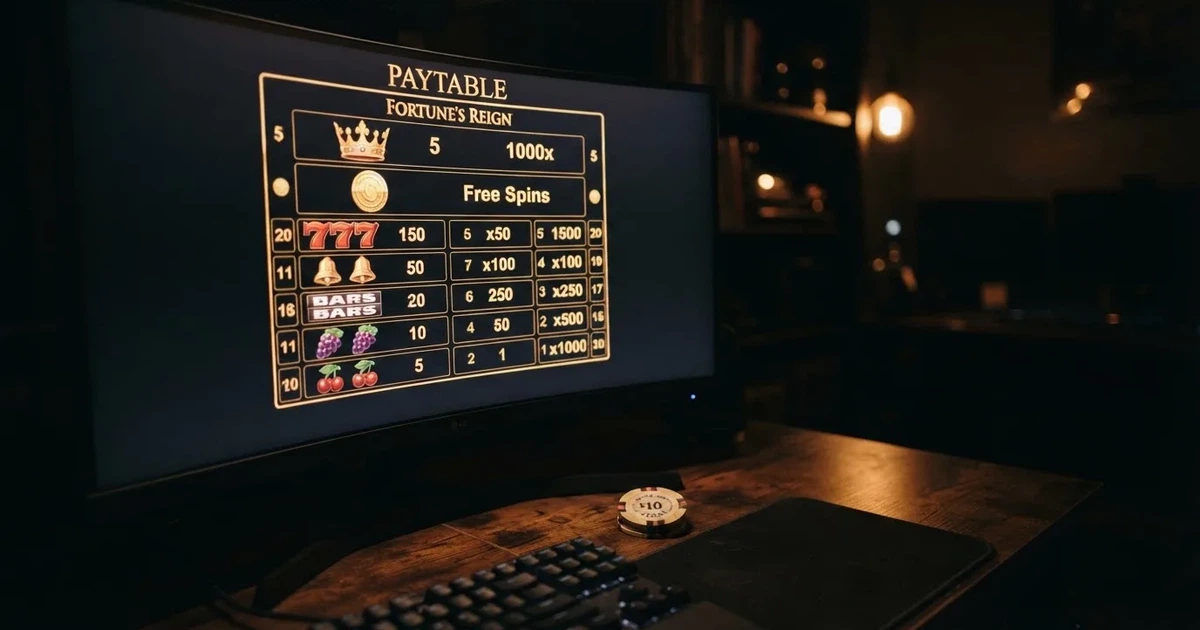
Data current as of 28 October 2026 and checked against the Australian Communications and Media Authority’s register of formal warnings and blocking actions.
Table of Contents
- Bonuses and free spins: what an offshore Relax Gaming welcome package looks like
- Mobile and app: how an offshore Relax Gaming casino presents on a phone
- Specific games: what Relax Gaming actually makes
- How the eleven ACMA-flagged brands line up
- Overview: what the Australian online casino market looks like in 2026
- Legality: the Interactive Gambling Act 2001 in plain language
- Responsible gaming: what onshore support looks like
- Payments and payout speed: what an offshore cashier looks like
- The blocking rate: how fast the ACMA is taking sites down
- What an Australian reader is actually comparing
- What to look for, and what to walk away from
- The providers behind the catalogue
- The bottom line on the proposition
- Frequently asked questions
Bonuses and free spins: what an offshore Relax Gaming welcome package looks like
A bonus is the first thing these sites use to pull a reader in. The word is usually “welcome”, the number is usually large, and the wagering multiple is usually the bit the marketing copy writes in small text.

The mechanics are familiar to anyone who has seen a casino bonus before. A deposit unlocks a percentage match, free spins attach to a named slot, and a wagering requirement sits on top of both. The wagering multiple runs from the high 30s to the mid 40s at most of the brands that surface under a Relax Gaming search. Free spin winnings almost always carry their own separate playthrough, and a maximum cash-out ceiling is the rule rather than the exception. None of this is unusual in absolute terms — these are ordinary offshore terms. The unusual part is that they sit on a service the ACMA has, in many cases, formally written to the operator about.
Three things are worth holding in mind before the headline number does its work:
- A bonus is not free money. It is a credit that has to be turned over, on specified games, at a specified stake range, before any of it can be withdrawn.
- Free spins are not free spins. They are a fixed number of plays at a fixed stake, with winnings that re-enter the bonus balance and have to clear the same playthrough.
- “Cash bonus” and “deposit bonus” are different offer types. A cash bonus with no deposit attached is rare and is almost always smaller in headline value than the deposit-gated version, and it carries the strictest cash-out ceiling. A deposit-gated package is bigger but spends the deposit first, then the bonus.
The effective cost of clearing a bonus is the part the marketing copy does not show. Take a typical package at one of these brands: a 100% match to a modest deposit, the bonus plus deposit subject to a 40x wagering multiple, free spins on a Relax Gaming-branded slot with the winnings rolled back into the same playthrough, and a maximum cash-out cap sitting well below what a lucky run on the slots would ordinarily pay. The arithmetic is unflattering: at a 96% return to player, every dollar of required turnover returns about 4 cents short on average. That is not a complaint about the maths — that is what a house edge does when you force a player to turn a balance over a fixed number of times before they can leave.
The free-spin side is harder to read because the operator rarely publishes the stake level of the spin. When research does not name a figure, the right way to describe it is qualitative: a small stake, a small expected return per spin, and a long path through the wagering requirement before any of it is withdrawable.
What the bonus does not say
Three conditions show up so often in the fine print of these packages that they read as standard rather than exceptional.
First, a maximum bet per spin or per hand while a bonus is active. Step outside it and the operator voids the bonus and the winnings from it. The ceiling is usually in the A$5 to A$10 range in Australian-dollar equivalents, and is the rule a player is most likely to break by accident on a hot streak.
Second, a list of games that contribute less than 100% to wagering, or are excluded entirely. Table games and most live-dealer titles contribute a fraction or nothing, which forces the playthrough onto the slots — including, of course, the slots that triggered the bonus in the first place.
Third, a maximum cash-out cap on bonus-derived winnings. The number varies, but the principle is consistent: bonus play is bounded above, while the playthrough is bounded only by the player’s patience. A player who runs hot inside the cap gets paid out; a player who runs hot above the cap leaves the surplus on the site.
The arithmetic behind “how long to clear this”
The plan for this page is to lay out, in plain prose, the time it takes to clear a typical package at a realistic stake, so a reader can see what the marketing word “playable” actually means in hours.
Assume a mid-market welcome package: a deposit of A$100, a 100% match bonus of A$100, a wagering multiple of 40x applied to the bonus, free spins on a Relax Gaming-branded slot with the same 40x playthrough applied to spin winnings, and a maximum stake of A$5 per spin during the bonus. The required turnover is A$100 multiplied by 40, which is A$4,000 of bets placed before the bonus balance becomes withdrawable. At A$5 per spin, that is 800 spins. A spin takes roughly five seconds on a modern mobile device, so 800 spins comes to about 4,000 seconds — close to an hour and seven minutes of continuous play. Add the free-spin contribution and the figure grows, but not dramatically: a typical 50 free spins at A$0.20 each adds A$10 in spin value and 250 more spins at the same interval.
That is the upper bound on time spent, not the lower bound. A player who lands a big hit early still has to grind through the playthrough, because the bonus is treated as bonus money until the wagering requirement is satisfied. A player on a slow afternoon with the slot at a 96% return will, on average, see the bonus balance shrink by about 4 cents for every dollar turned over — meaning the bonus is being paid for by the player, in statistical terms, while it is being cleared. The hour of grinding is, statistically, an hour of paying for the privilege of grinding.
This is the standard mechanism across the offshore brands in this set. The headline number on the welcome page is the bait; the wagering multiple is the hook; and the maximum cash-out cap, where one applies, is the net the operator closes around the largest win the player might otherwise have walked away with.
Mobile and app: how an offshore Relax Gaming casino presents on a phone
Most of the offshore brands in this set run their full slot catalogue through a mobile browser, and a handful push a downloadable app through the Apple App Store or Google Play under a local-market name. The app or the mobile site is where most of the actual play happens, because desktop casino traffic has been declining for years and a player on a phone is the operator’s main audience.
The user experience on mobile is generally competent. HTML5 slot builds — the format Relax Gaming and most of its peer studios ship in — load fast on a modern handset, scale to portrait or landscape, and present the paytable, bet selector and spin button without much friction. Live-dealer tables are heavier on bandwidth but still run on a steady 4G or fixed Wi-Fi connection. The difference between brands is mostly the polish of the wrapper — the cashier, the bonus activation flow, the live-chat window — rather than the games themselves, which are the same catalogue everywhere.
A few points worth holding in mind when the app or the mobile site is the way the play happens:
- An app downloaded from a storefront in Australia for an offshore casino sits in a grey area. Apple and Google have, at various points, removed such apps when the ACMA or another Australian regulator has asked, but the apps do come back under different publisher names. The safer assumption is that any casino app marketed to an Australian audience is, at minimum, contested.
- Browser play on a phone carries no such risk of removal. The site may be blocked at the ISP level under an ACMA direction, in which case the page simply will not load — but the player’s handset and data are unaffected.
- Geolocation checks are not what they look like. Some of these sites will refuse to let an Australian sign up if they detect an Australian IP or an Australian payment method at registration, but will accept an Australian who signs up while travelling and then plays from home. The compliance is on the operator’s marketing page, not in the software.
The honest summary is that the mobile product is competent, that it is the main way these brands reach their players, and that the technical polish is not the problem with the proposition. The problem is upstream of the screen: the service itself is prohibited to provide in Australia under the Interactive Gambling Act 2001, and the ACMA has acted against most of the brands in this set by the time the reader reaches this page.
Specific games: what Relax Gaming actually makes
Relax Gaming is a studio that builds online casino games — primarily video slots, with a smaller live-dealer and table-game line — and licenses the catalogue to operators. The company was founded by Patrik Österåker and Jani Tekoniemi, opened a Malta office as its commercial and product hub, and now operates from hubs in Malta, Estonia, Sweden and Serbia with several hundred employees. In July 2021 Kindred Group agreed to acquire the remainder of the company it did not already own, at an enterprise value of up to EUR 320 million.
On the regulatory side, Relax Gaming is licensed and regulated in Great Britain by the UK Gambling Commission under account number 37462, holds a Malta Gaming Authority licence, and is also licensed by Gibraltar’s Gambling Division, Romania’s ONJN and Canada’s AGCO. None of those licences extends to Australia, because Australia does not license online casino games for onshore supply — see the legality section below for the full frame.
The catalogue that an Australian reader would see on an offshore site includes several thousand slot titles, including branded and original mechanics, a Megaways line under licence from Big Time Gaming, and the Dream Drop progressive jackpot network. The studio’s signature series — Money Train, Temple Tumble, Wild Chapo, Iron Bank — appear on most of the offshore brands in this set. RTP figures on individual titles sit in the 94% to 96.8% band typical of modern online video slots, with the higher figures on the jackpot-linked releases.
The relevant comparison for an Australian reader is not between one Relax Gaming slot and another, but between the Relax Gaming catalogue and what the player can actually access in Australia onshore. The closest onshore equivalent is the pokies — electronic gaming machines — that sit in clubs, pubs and casinos in every state and territory. Those machines are built by Aristocrat, International Game Technology, Konami and a handful of other manufacturers; Aristocrat, an ASX-listed company founded in 1953 and headquartered at North Ryde in Sydney, is the largest of them and the second-largest slot manufacturer worldwide behind IGT. The math is similar — house edge in the high single digits as a percentage of turnover — but the regulatory frame is the inverse: a poker machine in a Sydney club is a legal product with a state regulator behind it; a Relax Gaming slot on an offshore site is a prohibited interactive gambling service.
Aristocrat and the onshore alternative
Aristocrat Leisure is the closest analogue to a “Relax Gaming of Australia” — an Australian-listed manufacturer whose electronic gaming machines fill venues in every state and territory, and whose Aristocrat Interactive arm was formed in April 2024 to combine the Anaxi unit with the newly acquired NeoGames group. The 2025 numbers the company reports — A$6.30 billion in revenue, A$1.55 billion in normalised net profit after tax and amortisation, and 7,400 employees — make it the heavyweight of the local market. For a reader who actually wants to play a slot-style game in Australia and stay on the right side of the law, the Aristocrat-fitted machines in their local pub or club are the regulated option.
How the eleven ACMA-flagged brands line up
The comparison below covers the eleven brands the ACMA has issued a formal warning over for offering prohibited online casino services to Australians, and where each one’s Relax Gaming support is on the record. The brands are not a recommendation list and not a ranking — the ACMA’s register, not the market, is what puts them in the same room.
| Brand | ACMA action and date | Operator named by the ACMA | Subject support |
|---|---|---|---|
| RocketPlay | Formal warning, March 2026; earlier Dama N.V., May 2022 | Pulsup Ltd (Rocketplay.com.au); Dama N.V. | — |
| Level Up Casino | Formal warning, May 2022 | Dama N.V. | Wazdan listings note the brand |
| Woo Casino | Formal warning, March 2025 | Dama N.V. | — |
| Spirit Casino | Formal warning, May 2025 | Dama N.V. | — |
| National Casino | Formal warning, July 2025 | Consolutetish S.R.L. | Betsoft, Pragmatic Play listings note the brand |
| Bizzo Casino | Formal warning, July 2025; earlier TechSolutions, 2022 | Consolutetish S.R.L.; TechSolutions (CY) Group Ltd and TechSolutions Group N.V. | — |
| Ignition Casino | Formal warning, July 2025 | Bamboo Media | — |
| Instant Casino | Formal warning, February 2025 | EOD Code SRL | — |
| Jackbit | Formal warning, April 2026 | Ryker B.V. | — |
| Casino Intense | Formal warning, April 2025 | Sterplay Holding Ltd | 1spin4win, Gambling Commission and Wikipedia listings note the brand |
| Sky Crown | Formal warning, September 2022 | Hollycorn N.V. | — |
What the table does not show is just as important as what it does. Every cell in the licence column is the same answer — “online casino games cannot be licensed in Australia, whatever licence the site displays” — because the Australian regime does not license the product these brands sell. The ACMA’s warnings are the formal statement that the product is prohibited, not a commentary on individual brands. The subject-support column is mostly empty because the operators and the providers do not publish a public statement of partnership, and the listings that do mention the brand are marketing pages rather than operator disclosures.
Three operators were warned about more than once. Dama N.V. picked up formal warnings in May 2022 across six brands — Bambet, Dazard, Level Up, Rocketplay, Wild Tornado and Cobra Casinos — and again in March 2025 and May 2025 over Woo Casino and Spirit Casino respectively. TechSolutions (CY) Group Ltd and TechSolutions Group N.V. were warned about Bizzo Casino in 2022, before the July 2025 warning to Consolutetish S.R.L. over the same brand. The pattern is one the ACMA has flagged before: an operator changes its registered company, and the new entity carries on with the same product to the same audience until it picks up its own warning.
RocketPlay
The most recent ACMA action against RocketPlay is a March 2026 formal warning to Pulsup Ltd over Rocketplay.com.au, sitting on top of an earlier May 2022 warning to Dama N.V. covering six brands including Rocketplay. Two warnings over the same brand, four years apart, from two different registered companies. The product on offer at the brand is an offshore online casino carrying Relax Gaming slots and similar — the ACMA’s position is that it is a prohibited interactive gambling service under the Interactive Gambling Act 2001, whoever runs it. For a reader who actually lives in Australia, the brand is not a place to play.
Level Up Casino
Level Up Casino sits on the May 2022 Dama N.V. warning, one of six brands caught in that round. Wazdan’s own site lists Level Up among the operators carrying Wazdan slots, which is consistent with the typical offshore casino mix — multiple slot providers, one cashier, one bonus structure. The shape is the same as the others on the list: a Curaçao-registered operator, an offshore licence displayed prominently, and a marketing front aimed at players in jurisdictions where online casino is prohibited.
Woo Casino
Woo Casino picked up its formal warning in March 2025, in the same Dama N.V. round as Spirit Casino. The brand is a typical Dama N.V. build, with the same bonus structure and the same slot catalogue across the operator’s network. The ACMA’s position is the same as for the other Dama brands: a prohibited service to Australians, a formal warning issued, and the operator’s terms pointing at an offshore licence that does not cover Australian players.
Spirit Casino
Spirit Casino is the second of the two Dama N.V. brands caught in the May 2025 round. Same operator, same product, same regulatory exposure. The fact that two Dama N.V. brands were warned in successive months suggests the operator’s compliance posture has not shifted in response to the 2022 round, which the ACMA’s own reporting makes plain.
National Casino
National Casino was the subject of a July 2025 formal warning to Consolutetish S.R.L., alongside Bizzo Casino. Betsoft and Pragmatic Play’s own listings mention National Casino as a partner operator, which is the kind of third-party confirmation that an offshore casino’s marketing pages do not usually produce. The product and the regulatory frame are the same as the rest of the list.
Bizzo Casino
Bizzo Casino carries two warnings: the July 2025 one to Consolutetish S.R.L., and the earlier 2022 one to TechSolutions (CY) Group Ltd and TechSolutions Group N.V. Two operators, four years apart, one brand — the pattern of an offshore brand cycling through registered entities while continuing to target Australian players. The product is the standard online casino offering; the regulatory frame is the standard prohibition.
Ignition Casino
Ignition Casino was caught in the July 2025 round, with the formal warning going to Bamboo Media. The brand is poker-leaning in its marketing but carries the standard online casino product underneath — slots, table games, and the same bonus mechanics as the rest of the list. The Bamboo Media warning is the operator-level action; the ACMA’s broader position on the product is unchanged.
Instant Casino
Instant Casino picked up its formal warning in February 2025, issued to EOD Code SRL. The brand carries the standard mix of offshore slot providers including Relax Gaming, and the standard deposit-gated welcome package with the standard wagering multiple.
Jackbit
Jackbit is the most recent brand on the list, with an April 2026 formal warning to Ryker B.V. covering Jackbit and CasinOK. The April 2026 round is the freshest in the ACMA’s record and the one most likely to still have active marketing landing pages aimed at Australian visitors.
Casino Intense
Casino Intense picked up its formal warning in April 2025, issued to Sterplay Holding Ltd. The brand carries third-party listings on 1spin4win’s site, on Wikipedia and on the UK Gambling Commission’s pages — the kind of cross-listing that shows up around older offshore brands with a longer marketing history.
Sky Crown
Sky Crown is the oldest warning on the list, with a September 2022 formal warning to Hollycorn N.V. covering Sky Crown and Blue Leo. Hollycorn N.V. is a Curaçao-registered operator that runs a network of similar brands. The product and the regulatory frame match the rest of the list.
Overview: what the Australian online casino market looks like in 2026
The headline number is that Australia does not license online casino games. The Interactive Gambling Act 2001, strengthened by the Interactive Gambling Amendment Act 2017, makes it an offence to provide online casino games, online pokies or in-play betting to a person physically in Australia. No state or territory issues a licence for the product. What is licensed is wagering on racing and sport placed before the event, lotteries and keno — in practice licensed through the Northern Territory Racing and Wagering Commission, which regulates 52 of Australia’s online bookmakers including Sportsbet, Bet365 and Ladbrokes, runs without full-time staff and meets once a month in Darwin.
The practical consequence is that every brand a reader meets under a search for Relax Gaming online casinos in Australia is, by definition, offshore. The displayed licence is from Curaçao, Malta, Anjouan or another permissive jurisdiction; the player is in Australia; and the service is prohibited. The ACMA’s enforcement is the regulator’s response: formal warnings, blocking requests to internet service providers, and a running total of sites taken out of reach of Australian consumers.
The numbers behind the enforcement are large. As reported in June 2026, the ACMA’s running total of blocked illegal gambling and affiliate marketing websites since the first blocking request in November 2019 stood at 1,751, and more than 230 unlicensed gambling services had left the Australian market since enforcement was strengthened in 2017. The June 2026 round alone added 12 sites to the block list: 7Signs, ChromaBet, Donbet, Duospin, Freshbet, Slots Gem, Jacks Club, Lucky Start, Pointsbetz, Spinrise, Vinyl Casino and Wildsino.
The scale of the leakage the ACMA is trying to stem is large enough to estimate. H2 Gambling Capital’s 2025 report puts annual Australian losses to illegal gambling sites at about A$3.9 billion, with the share of gambling going through legal channels falling from 74% in 2021 to 64%. The legal share is shrinking, which is what the ACMA’s enforcement data also shows.
The closing observation is that the consumer proposition of an offshore online casino carrying Relax Gaming titles is asymmetric: the operator takes the player’s money under terms that are not enforceable in Australia, the player has no complaints body to approach if the withdrawal is refused, the ACMA can block the site with a balance still on it, and the responsible-gambling infrastructure that an Australian licensee is required to maintain — BetStop, deposit limits, activity statements — does not reach offshore brands.
What changes in 2026
The Interactive Gambling Amendment (Gambling Reform) Bill 2026 passed Parliament on 19 August 2026. Its advertising and inducement measures commence on 1 January 2027. The bill is law with a start date, not yet in force on a 2026 page. The practical effect for a reader in 2026 is unchanged: offshore sites are still prohibited, the ACMA is still issuing warnings, and the block list is still growing.
Legality: the Interactive Gambling Act 2001 in plain language
The Interactive Gambling Act 2001 (the IGA) is the federal statute that governs online gambling in Australia. The Interactive Gambling Amendment Act 2017 strengthened it. The combined effect, in plain language, is that an interactive gambling service that provides casino games, online pokies or in-play betting to a person in Australia is a prohibited service. The prohibition is on the provider, not the player: an individual Australian who plays at an offshore site is not prosecuted. The provider is the entity the regulator acts against.
What is permitted is narrower than most readers expect. Wagering on racing and sport, placed before the event, can be licensed. Lotteries and keno can be licensed. Online casino games and online pokies cannot. In-play betting cannot. The Northern Territory Racing and Wagering Commission is the regulator most often named in this context, because the territory’s licensing regime is where most of Australia’s online bookmakers are licensed for tax reasons, even when their customers are spread across the country.
The enforcement arms are the ACMA and the Australian Federal Police. The ACMA investigates, issues formal warnings, and directs Australian internet service providers to block illegal sites. The AFP pursues criminal cases under the IGA’s criminal offences, which are aimed at organisers rather than players. The 1,751 sites blocked since November 2019 are the ACMA’s running total; the 230-plus services that have left the Australian market since 2017 are a separate count, capturing operators who withdrew rather than waited for a blocking round.
What the formal warning actually says
A formal warning under the IGA is a written notice from the ACMA to a specific operator, naming the operator’s registered company, the brand name and the URL, and stating that the ACMA considers the service to be a prohibited interactive gambling service provided to Australians. The warning asks the operator to stop providing the service to Australian customers. If the operator does not, the ACMA’s next step is typically a request to Australian internet service providers to block the site at the network level.
The warnings the ACMA has issued over the brands on this page are not speculative. They are the regulator’s own statement of its position, in writing, to the operator. The most recent round covered Jackbit and CasinOK in April 2026, with the warning going to Ryker B.V. Earlier rounds covered RocketPlay in March 2026 (Pulsup Ltd), Casino Intense in April 2025 (Sterplay Holding Ltd), Woo Casino in March 2025 and Spirit Casino in May 2025 (both Dama N.V.), Instant Casino in February 2025 (EOD Code SRL), National Casino and Bizzo Casino in July 2025 (Consolutetish S.R.L.), Ignition Casino in July 2025 (Bamboo Media), Sky Crown in September 2022 (Hollycorn N.V.) and the original 2022 round over six Dama N.V. brands.
What the offshore licence is and is not
An offshore licence — Curaçao, Malta, Anjouan — is a real licence issued by a real regulator. What it is not is a licence to take bets from Australians. None of the offshore regulators cover the Australian retail market, and the ACMA’s position is that a service licensed in Curaçao is no less prohibited under the IGA for being licensed there. The marketing language on these sites — “licensed and regulated”, “internationally licensed” — is technically accurate and substantively misleading when aimed at an Australian reader.
Responsible gaming: what onshore support looks like
The onshore responsible-gambling infrastructure does not reach offshore casinos. That is the single most important fact for an Australian reader who is concerned about their own play or someone else’s, and it is the one piece of the picture the offshore marketing pages never mention.
BetStop, the National Self-Exclusion Register, has been live since August 2023. It binds every Australian-licensed online and phone wagering service — the 52 bookmakers licensed through the NTRWC and the equivalent set licensed through other state and territory regimes. A player who registers with BetStop is excluded from those services for a chosen period, and the exclusion is enforced. An offshore casino is not connected to BetStop, because the offshore casino is not a licensed Australian wagering service. A self-exclusion registered with BetStop does not reach an offshore site.
Gambling Help Online is the national online counselling service, with live chat and 24/7 telephone support on 1800 858 858. The service is free, confidential, and available to anyone in Australia, including people whose gambling is at an offshore site. State and territory problem gambling services are also available, with their own phone lines and face-to-face counselling.
The practical advice for an Australian reader is short. If the play is at a licensed Australian wagering service, BetStop is the single most effective self-exclusion tool available, and the deposit limits and activity statements that licensed wagering services are required to maintain are also on the player’s side. If the play is at an offshore casino, none of those tools apply, and the player is relying on whatever voluntary limit-setting the offshore site offers — which is typically lighter than what an Australian licensee is required to maintain.
Why the offshore site’s “responsible gaming” page is not enough
Most offshore casinos have a “responsible gaming” page in the footer of the site, with a deposit limit tool, a time-out tool, and a self-exclusion button. The deposit limit tool is real, in the sense that the site will respect a limit the player sets. The self-exclusion button is also real — the site will block the player’s account on request. What the page does not mention is that the self-exclusion is binding only on that one site, not across the network, and that a player who has self-excluded from one offshore brand can open an account at the next offshore brand in five minutes, with no shared register to flag the exclusion. The onshore alternative — BetStop — covers every Australian-licensed site at once, which is the structural difference that matters when a player is trying to stop.
Payments and payout speed: what an offshore cashier looks like
The payment side of an offshore online casino is the place where the legal frame is sharpest and where the consumer is most exposed. The IGA’s prohibition is on the service, not the payment, but the 2024 credit-card ban means an Australian-licensed wagering service cannot accept credit cards, credit-related products or digital currency as payment for online wagering — the ban took effect on 11 June 2024, with penalties up to $247,500 for operators who breach it. The legal deposit routes for licensed wagering are debit card, bank transfer, PayID/Osko and BPAY.
An offshore casino accepting an Australian deposit is operating outside that frame. Most accept a wider range of methods than an Australian licensee can, including credit cards, e-wallets and cryptocurrency. The wider range is presented as a feature. The sharper reading is that an offshore site asking for a credit card or a crypto deposit is, by definition, not an Australian licensee, and the protections that go with the Australian licence — the credit-card ban, the dispute resolution, the BetStop reach — do not apply.
Settlement times in practice
The headline settlement times on offshore sites run from “instant” for deposits to a band of 24 to 72 hours for withdrawals, with some methods faster and some slower. E-wallet withdrawals tend to land at the faster end of that band; bank transfers at the slower end, with several business days for cross-border processing on top of the operator’s own queue. Cryptocurrency withdrawals, where offered, are typically processed within hours but introduce their own settlement delay on the blockchain.
The headline number is not the actual number. A withdrawal can be approved inside the operator’s stated window and then held at the payment processor; it can be approved and then subjected to additional verification under the site’s anti-money-laundering terms; and it can be approved and then refused at the maximum cash-out cap if the win came from bonus play. The pattern is familiar from the bonus section above: a cap that bites only when the player has a big win is the cap the player notices.
For a reader comparing the offshore proposition against the Australian onshore alternative, the relevant number is the absence of a complaints body on the offshore side. A licensed Australian wagering service is subject to state and territory dispute resolution, and the player has a real avenue if a withdrawal is refused. An offshore site is subject to whatever complaints procedure the site itself publishes, with no external escalation and no enforcement behind it.
What the ACMA’s blocking action does to a balance
The block list is the point in the payment chain where the offshore proposition breaks down most clearly. If the ACMA asks Australian internet service providers to block an offshore casino, the site becomes unreachable from Australian IP addresses — the page will not load, the cashier will not accept a deposit, and any balance the player has on the site becomes inaccessible except through a virtual private network, which the site’s terms typically prohibit. The block does not delete the balance; it isolates it. The player has, in practice, lost access to funds they may have already deposited.
The blocking rate: how fast the ACMA is taking sites down
The plan for this page is to set out, as a band with its condition, the rate at which the ACMA has been adding sites to the block list. The arithmetic is straightforward, and the headline figure should be read as an order-of-magnitude estimate, not a precise monthly rate.
The ACMA’s running total of blocked illegal gambling and affiliate marketing websites stood at 1,751 as reported in June 2026. The first blocking request was in November 2019. That is a window of roughly six years and seven months, or about 79 months, between the first blocking round and the June 2026 figure. The long-run blocking rate is therefore in the order of 22 blocked sites per month on average across the lifetime of the regime.
The June 2026 round alone added 12 sites to the list. The rate is not constant: rounds cluster, and the per-month number swings from a handful to a dozen or more depending on the ACMA’s enforcement priorities in any given quarter. A reasonable band to put around the long-run average is from about 15 to about 25 blocked sites per month, with the lower end of that band reflecting quieter months and the upper end reflecting the larger rounds like the one reported in June 2026.
The condition that sits on the band is that it is an average over the lifetime of the regime, not a forecast of the next month’s activity. The ACMA does not publish a blocking schedule in advance, and a single large round can shift the monthly average by a wide margin. The direction of travel is what matters: the block list is monotonically growing, the number of services that have left the Australian market since 2017 is monotonically growing, and the share of gambling going through legal channels has fallen from 74% in 2021 to 64% — a falling legal share against a rising block list is the picture the ACMA’s own data paints.
Where the 12 sites in the June 2026 round fit
The 12 sites blocked in the round reported on 26 June 2026 — 7Signs, ChromaBet, Donbet, Duospin, Freshbet, Slots Gem, Jacks Club, Lucky Start, Pointsbetz, Spinrise, Vinyl Casino and Wildsino — sit alongside the brands on the formal-warning list earlier in this page. The two enforcement tools are complementary: a formal warning asks the operator to stop; a blocking request removes the operator’s site from Australian internet users regardless. Most of the 12 sites blocked in the June 2026 round are not on the formal-warning list above, because the ACMA does not always publish a warning before a block, and some operators simply rotate through new brands and new domains to stay ahead of the warning.
The relevant pattern for a reader is that the block list is the backstop, not the leading edge. A site can be live, accepting Australian deposits, and marketing to Australian visitors for weeks or months before a blocking round catches it. The bonus and the welcome package are typically the most heavily advertised before the block lands, because that is when the operator is harvesting sign-ups from the marketing spend.
What an Australian reader is actually comparing
The honest framing of the comparison this page sets up is not Relax Gaming online casino against Relax Gaming online casino — none of those is a legal option in Australia. The honest framing is between the offshore product, with all the features research has catalogued, and the onshore alternative, which is not the same product.
The onshore alternative is the licensed wagering service for racing and sport, the lottery, the keno draw, and the poker machine in a regulated venue. The offshore alternative is the online casino, the slot catalogue, the live-dealer table, the bonus, the free spins package, and the cashier that takes a deposit in five minutes. The two are not substitutes for each other; they are different products. A reader searching for a Relax Gaming online casino from Australia is searching for the offshore product specifically.
The decision for the reader is whether to pursue the offshore product at all, knowing that:
- The service is prohibited for the operator to provide to an Australian.
- The ACMA can block the site, leaving any balance unreachable.
- The responsible-gambling infrastructure onshore does not reach the offshore site.
- The complaints body onshore does not reach the offshore operator.
- The credit-card ban, the deposit limit requirements and the activity statement requirements do not apply.
Each of those points is a real cost to the person clicking through. None of them is a marketing line on the welcome page. The arithmetic the page has laid out above — the bonus playthrough, the bonus-derived cash-out cap, the settlement time, the hours of grinding to clear a 40x wagering multiple — is the operator’s proposition, made plain. The legality section is the regulator’s proposition, also made plain. The two propositions do not match, and the reader’s job is to weigh them.
What to look for, and what to walk away from
A reader who has decided to engage with an offshore site despite the regulatory frame still has a real comparison to make among the sites themselves. Three checks are worth running before any deposit lands.
First, the licence displayed on the site is an offshore licence. It is a real licence; it is not a licence to take Australian players. The marketing language on the site will describe the licence in positive terms. The reading is that the licence governs the operator’s compliance with its home regulator and nothing else.
Second, the bonus terms are the contract. The wagering multiple, the maximum bet during bonus play, the game contribution list, and the maximum cash-out cap are the four numbers that determine what the bonus is worth. They are usually in a link at the bottom of the bonus page titled “Terms and Conditions” or “Bonus Terms”. They are the only place on the site that tells the reader what the bonus actually costs.
Third, the payment side is the regulatory test. A site asking for a credit card or a crypto deposit is, by definition, not an Australian licensee, and the protections that go with the Australian licence do not apply. The wider range of payment methods at an offshore site is a feature in absolute terms and a flag in regulatory terms.
The walk-away point is simpler. If a site is on the ACMA’s formal-warning list, the regulator has, in writing, told the operator that the service is prohibited. The reader does not need to make their own judgement about the site’s legality — the regulator has made it. The walk-away is not about the bonus, the catalogue or the payout speed. It is about the proposition as a whole.
The providers behind the catalogue
Three providers surface repeatedly on the listings attached to the brands in this set.
Aristocrat Leisure is the Australian-listed gambling machine manufacturer founded in 1953 and headquartered at North Ryde in Sydney. Its 2025 revenue was A$6.30 billion, with A$1.55 billion in normalised net profit after tax and amortisation and 7,400 employees. Aristocrat develops electronic gambling machines, casino management systems, online real-money gambling technology through Aristocrat Interactive, and social casino games through Product Madness. The Aristocrat Interactive arm was formed in April 2024 by combining the Anxi unit with the NeoGames group acquired in the same year. Aristocrat is the largest gambling-machine manufacturer in Australia and the second-largest slot-machine manufacturer worldwide behind International Game Technology.
Betsoft is a slot provider founded in 2006 with a catalogue of more than 200 RNG games spanning slots, table games, video poker and specialty titles. Betsoft operates in compliance with licensing authorities including Italy’s ADM, with RNG certification from Quinel and Gaming Labs International, and partners with more than 500 operators across regulated markets in Europe, Scandinavia, Latin America and Africa. Two specific titles carry published figures: Good Girl Bad Girl 2 with a 96.22% RTP, “Very High” volatility, and a 15.59% hit rate on 5 reels and 20 paylines; The Slotfather, live since 13 December 2012, with a 95.69% RTP, “Medium” volatility, and an 8.17% hit rate on 5 reels and 30 paylines.
1spin4win is a slot provider founded in 2021 by a group of professionals with 15 years of iGaming experience, headquartered at Scharlooweg 39 in Willemstad, Curaçao, holding a Curaçao gaming licence. Its portfolio spans more than 190 online slots, built in HTML5 for low-bandwidth connections. The provider reports more than 1,000 partnerships with online casinos and aggregators, and a 46% growth in total bet sum in the first half of 2025 against the first half of 2024.
BGaming has worked on games since 2012 and debuted as the BGaming brand in 2018. The catalogue runs to 250+ certified games including video slots, video poker, lottery, card, scratch, crash and casual games.
None of these providers extends an Australian online casino licence. The Australian reader’s relationship with Aristocrat is through the poker machine in a regulated venue, not through Aristocrat Interactive. The reader’s relationship with Betsoft, 1spin4win and BGaming is, on this side of the regulatory line, only through an offshore site.
The bottom line on the proposition
The comparison this page has laid out has a single load-bearing finding. The product the reader is searching for — a Relax Gaming-branded online casino serving Australian players — is not licensed for supply in Australia. The ACMA’s enforcement data, the formal-warning list and the block list are the regulator’s consistent position over several years. The offshore brands carry the product anyway, under offshore licences that do not cover the Australian market.
The bonuses are large because bonuses are the inducement that pulls a reader past the regulatory line. The wagering multiples are high because the bonus has to be cleared before it can be withdrawn. The free spins are attached to specific slots because the slots are the operator’s margin. The cash-out caps are low because the cap is what stops a player who runs hot from walking away with more than the bonus structure allows. Each of those mechanisms is a feature in the operator’s marketing and a cost in the player’s arithmetic.
The onshore alternative is not the same product. It is the licensed wagering service, the lottery, the keno draw, and the poker machine in a regulated venue. The responsible-gambling infrastructure is heavier, the consumer protections are stronger, the payment channels are narrower, and the credit-card and crypto options are not available for the reason the ACMA has laid out. A reader who wants the product the search describes will not find it in the onshore set. A reader who wants the regulatory frame the ACMA has built will not find it in the offshore set. The two are different products, and the choice is between them.
Frequently asked questions
Is Relax Gaming legally available to players in Australia?
No. The Interactive Gambling Act 2001 prohibits the supply of online casino games to people in Australia, and no Australian regulator licenses the product. Relax Gaming’s own licences — UK Gambling Commission, Malta Gaming Authority, Gibraltar, Romania’s ONJN, Canada’s AGCO — do not extend to Australia.
What kinds of games does Relax Gaming make?
Relax Gaming builds video slots as its main product, with a smaller live-dealer and table-game line. The catalogue includes several thousand slot titles under original mechanics and licensed mechanics including Megaways and the Dream Drop progressive jackpot network. The studio’s signature series — Money Train, Temple Tumble, Wild Chapo, Iron Bank — appear on most of the offshore brands in this set.
Are Relax Gaming games offered at land-based venues in Australia?
Not under the Relax Gaming name. The closest onshore equivalent is the poker machine — the electronic gaming machine in clubs, pubs and casinos — built by Aristocrat, International Game Technology, Konami and other manufacturers. Aristocrat is the largest Australian gambling-machine manufacturer and the second-largest slot manufacturer worldwide behind IGT.
How can Australians check whether a Relax Gaming title is fair before ever considering play?
The Australian-licensed framework for testing game fairness does not reach offshore sites. A Relax Gaming slot on an offshore casino is not tested or certified by an Australian regulator. The studio’s own RNG and RTP figures are published on the Relax Gaming website and in the game’s paytable, but those figures are not verified by an Australian testing house in the way a licensed Australian wagering product is.
Why do offshore sites keep advertising Relax Gaming games to Australian visitors?
Because the audience is large and the regulatory enforcement, while real, does not catch every site in real time. H2 Gambling Capital’s 2025 report puts Australian losses to illegal gambling sites at about A$3.9 billion a year, with the share of gambling going through legal channels falling from 74% in 2021 to 64%. The marketing spend reflects the size of the audience the offshore operator can reach before a blocking round catches it.
What should an Australian do if they see a Relax Gaming game promoted by an unlicensed site?
The ACMA accepts reports of illegal gambling services through its website. A reader who sees an offshore casino marketing to Australians can lodge a report, and the ACMA uses those reports as one input into its enforcement priorities. The reader’s safer course is to engage only with Australian-licensed wagering services, where the responsible-gambling infrastructure — BetStop, deposit limits, activity statements — applies.