
Real Money Casino Table Games in Australia: The Cost, the Law, and the Difference Between the Two
A reader who lands here already wants to know which game is cheapest to lose at, and which offshore website is honest enough to bother with. The honest answer to the first question is built from a handful of well-documented house edges. The honest answer to the second is the one most marketing pages avoid: no offshore casino offering real money casino table games is licensed to do so in Australia, so the “best” site is, structurally, a site no Australian regulator can hold to account when a withdrawal stalls. This page works through the games first, the law second, and the operators last — because the games are where the cost is, and the law is what decides whether the cost comes with any recourse.
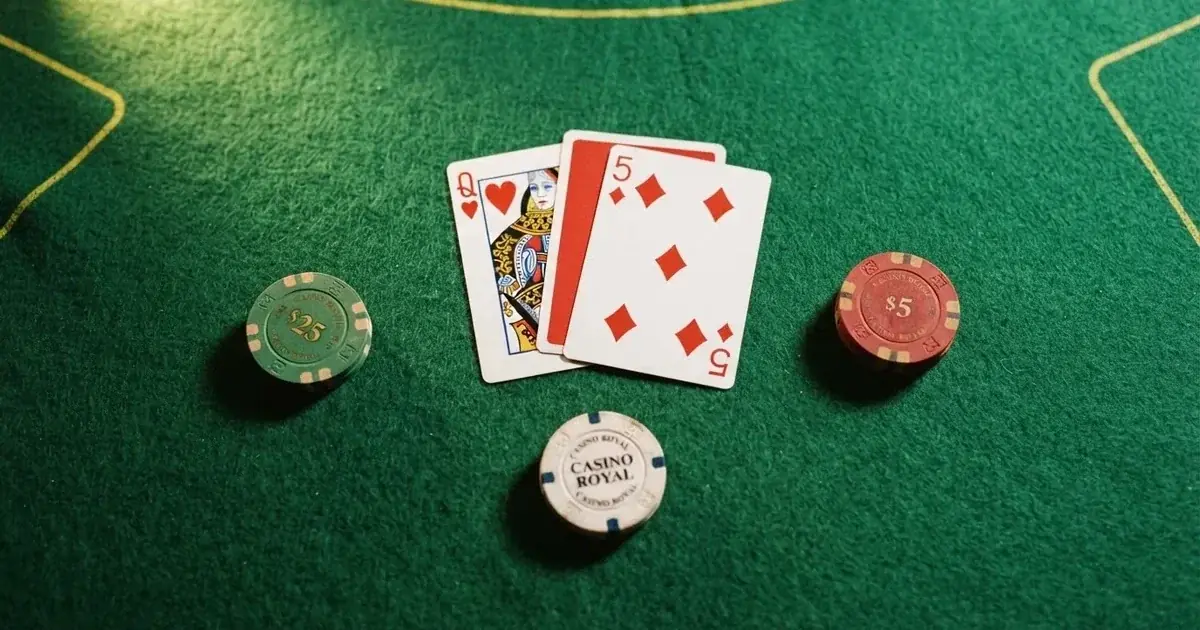
Data current as of 28 October 2026; figures cross-checked against the ACMA, the VGCCC, Liquor & Gaming NSW, and the public Wizard of Odds and Wikipedia house-edge references.
Table of Contents
- What “table games” actually means at a real-money casino
- The law: what Australia actually prohibits
- Responsible play: the tools Australia does give players
- Land-based venues: where the games are actually licensed
- Crypto and offshore table games: what changes, and what does not
- The operators the ACMA has warned: what the list actually tells a reader
- The blocking-rate picture: how fast the ACMA has worked
- Reading the rest of the offshore offer
- Frequently asked questions about real money casino table games in Australia
What “table games” actually means at a real-money casino
The phrase covers the games played on a felt layout or around a card table against the house — blackjack, roulette, baccarat, craps, and a long tail of regional variants. Slots sit outside the term; so do video poker variants and most game-show products even when streamed from a studio. Inside that envelope, the games share three properties a reader should hold onto before anything else: every bet resolves against the same mathematical house edge regardless of who is dealing, every extra rule the casino tacks on tilts that edge further into its favour, and the edge compounds the longer a session runs. The arithmetic that follows is built on those three properties, and the marketing language every offshore site wraps around its “live” tables tends to obscure them rather than work through them.

A short framing before the specifics. The cost of any table game is a long-run average over thousands of hands, measured in percentage of every dollar put on the table. A 0.28% edge means a player loses 28 cents for every A$100 wagered, before tips, side bets, and the cost of any bonus they were given to open an account. Two games can look identical from the chair and still sit on opposite sides of a 25-point edge spread. Which game a reader picks is the single biggest decision their bankroll will feel.
The paytable cluster: blackjack, roulette, baccarat, craps
Blackjack, roulette, baccarat and craps are the four games that show up on every felt floor in the country and on every offshore site that advertises “real money table games.” They also happen to span almost the entire range of available house edges, which makes them the natural starting point.
| Game | Bet | House edge |
|---|---|---|
| Blackjack (liberal Vegas rules) | Main hand, basic strategy | 0.28% |
| Blackjack (Atlantic City rules) | Main hand, basic strategy | 0.43% |
| Baccarat | Banker | 1.06% |
| Craps | Pass / Don’t Pass line | 1.41% |
| Baccarat | Player | 1.24% |
| Roulette | Single-zero wheel, all wagers | 2.70% |
| Craps | Field bet | 5.56% |
| Roulette | Double-zero wheel, all wagers | 5.26% |
| Craps | Any 7 | 16.67% |
| Craps | Hard 4 / Hard 10 | 11.11% |
| Baccarat | Tie (8-to-1 payout) | 14.36% |
| Keno (for comparison) | Single ticket | 25%–29% |
The table tells most of the story on its own. Blackjack, played with anything close to basic strategy, is the cheapest table game in the building. Baccarat’s Banker bet is the closest competitor, and it has the further virtue of needing no decisions at all. Craps’ Pass line is in the same neighbourhood. Everything below the 2.70% line either carries a structural penalty built into the wheel (double-zero roulette) or a proposition bet the marketing language never explains (the craps Field, Any 7, Hardways). The 25%-plus row at the bottom is keno, included because some “table games” sections online drag keno in for headline variety; it earns its spot at the bottom because it is in fact a lottery dressed up as a table.
A house edge is not a prediction of any single session. It is an average over many hands — usually millions — under the assumption that the player bets the same way each time. A punter who sits down at a 0.28% blackjack table and plays ten hands can be anywhere on the spectrum from a clear winner to a wiped stack, and neither outcome means the edge was wrong. What the edge does is set the floor under the long-run cost of play, and that floor is the only number a player can actually plan around.
Blackjack: the lowest edge, and what it costs to keep it there
Blackjack’s reputation as the cheapest table game is earned under one condition: the player uses basic strategy on every hand. Basic strategy is the published decision for every combination of player total and dealer up-card — hit, stand, double down, split, surrender — and it is the only way to keep the edge at the 0.28% the wizardofodds.com figures cite for liberal Las Vegas Strip rules (dealer stands on soft 17, double on any two cards, double after split, resplit aces, late surrender). Drop basic strategy and the edge climbs; play a hunch on a soft 17 and the climb is measurable after only a few hundred hands.
Two rule changes move the edge noticeably. A dealer who hits soft 17 instead of standing adds about 0.2% to the house edge — small per hand, painful across a session. The number of decks matters too: single-deck blackjack without basic strategy is a worse game than single-deck blackjack with it, but multi-deck shoes are the norm online and at most modern casino floors, and they slightly dull the advantage of perfect play. Atlantic City rules, with the dealer standing on soft 17, push the edge up to about 0.43% — still inside the same band as the liberal Strip rules, but a real step.
The history is worth a paragraph because the marketing pages rarely give it. The game’s direct ancestor was the French and English “vingt-un,” and a related Spanish game called veintiuno shows up in Miguel de Cervantes’ Rinconete y Cortadillo, written around 1601-1602. Formal rules for the English game were published in Britain in 1800. The modern name “blackjack” appeared around 1899, in the closing years of the Klondike Gold Rush. Cards count at face value, with picture cards at 10 and aces at 1 or 11; a two-card 21 is a “natural” and beats anything else on the table. The dealer must draw to 17 in most rule sets, with some variants adding a soft-17 hit.
The variants worth knowing are the ones that fiddle with the basic structure rather than just the rule toggles. Spanish 21 is played without 10s, but compensates the player with a long list of liberal rules. Double Exposure Blackjack deals both dealer cards face-up, and pays even money on a natural to claw back the information advantage. Blackjack Switch lets the player swap cards between two hands. Super Fun 21 allows up to four splits. Most of these variants are pitched online as “live” tables; the rule changes often push the edge a step or two above the standard game, and the marketing pages do not always say so.
Roulette: where the wheel rules the odds
Roulette’s edge is set entirely by the wheel, not by the bets. A single-zero wheel — the European and French standard — returns an edge of 2.70% on every wager on the layout. A double-zero wheel — the American standard — returns 5.26%. The bets a player can make inside or outside the layout do not change those numbers; a column bet and a single-number straight-up pay very different amounts, but they cost the same percentage over the long run on the same wheel.
The two-zero penalty is exactly the gap between a 2.70% game and a 5.26% one. Translated into expected loss per A$100 wagered, it is the difference between A$2.70 and A$5.26 — a doubling that comes from nothing more than one extra slot on the wheel. Most offshore sites that advertise “European roulette” are running the single-zero version; most North-American-derived sites are running the double-zero wheel. The label on the felt is the cheapest piece of information a player can read before they sit down.
Roulette’s origins are 18th-century French. The modern wheel is often traced to a gaming wheel invented in 1720 combined with an Italian game called Biribi. The game had settled into close to its present form by about 1796 in Paris. Outside the wheel itself, almost every “system” sold to roulette players — the Martingale, the Fibonacci, the dozens-and-columns progressions — is a staking plan that does not change the underlying edge. The expected loss per spin is the same whether the player bets a flat A$10 or doubles after every loss; the only thing the doubling does is change the shape of the variance curve, and the curve still ends at the same place.
Baccarat: the cheapest decision-free game
Baccarat’s edge is set by the bet, and three of its bets sit a long way apart. Banker carries a house edge of 1.06%, Player carries 1.24%, and Tie carries 14.36% at an 8-to-1 payout or 4.85% at a 9-to-1 payout in 8-deck Punto Banco. None of those numbers depend on the player doing anything other than picking a side. The casino banks the game, both hands are dealt by fixed drawing rules, and a basic-strategy equivalent — always bet Banker, with the small commission factored in — is closer to a reflex than a skill.
The variant that shows up at Crown Melbourne and most Australian casino floors is Punto Banco: six or eight decks dealt from a shoe, cards 2-9 at face value, 10/J/Q/K at zero, ace at one, hand totals taken modulo 10. The variant’s name traces to a 1940s Havana development, where the casino banks the game permanently under fixed rules — unlike Chemin de fer or baccarat banque, where players take turns banking and can choose to draw. Chemin de fer, the French word for “railway,” was a quicker variant named for being faster than the original game.
The history has been disputed for two centuries. Some accounts place baccarat in 19th-century France; others push it back to the Italian court of King Charles VIII in the late 15th century. The writer David Parlett treats the game Macao as the immediate precursor to Punto Banco. None of that matters at the felt, where the only choice that does matter is whether to back Banker (1.06%), Player (1.24%), or the Tie (14.36% or 4.85% depending on the posted payout). The Tie bet, at 14.36% under standard 8-to-1 pay, is the worst single wager on a baccarat layout, and it tends to be the one the marketing copy plays up because of its payout.
Craps: cheap line bets, expensive everything else
Craps is a game of two layers. The line bets — Pass and Don’t Pass — sit at a 1.41% house edge, which puts them in the same neighbourhood as baccarat’s Player bet and single-zero roulette. The proposition bets — the Field, Any 7, the Hardways — sit between 5.56% and 16.67%, well above the rest of the table. A player who stays on the Pass or Don’t Pass line is paying close to a baccarat-rate edge; a player who strays onto the centre of the layout is paying five to fifteen times that.
Craps itself is an American simplification of an older English dice game called Hazard, which Bernard de Marigny brought from London to New Orleans around 1805. The simplified version had spread throughout the United States by the 1910s. The American rules are the only ones most offshore sites bother to license, because they are the only ones most of their players have ever seen.
The craps table is the table most likely to be mis-pitched online. A live-dealer craps feed costs the operator more per hand than a blackjack or roulette feed, because the dice and the layout have to be set up for a camera that does not lie about the throw. Most “live craps” tables online are dice-simulator RNG products wearing the same name, and the player’s only protection is to read the rules page and look for the words “RNG,” “random number generator,” or the relevant testing-lab seal. An offshore site that does not say which one it is running has given the player no information to work with.
What gets called a “table game” that is not one
Several products show up in the “table games” lobby of offshore sites without belonging there. Keno is the most obvious — at 25% to 29% house edge, it sits well outside the table-game band and earns its own category by being a number-drawn lottery with worse odds than most state lotteries. Some sites also place video poker, scratch cards, and game-show products under the same heading; the only honest test of whether a game belongs in the table-games discussion is whether the player is sitting at a felt layout or a card table against the house, betting per hand or per spin with a published edge.
The lines are not always drawn in the player’s favour. Several offshore sites have moved their live-dealer studios into “game-show” formats — wheel-spinning products, dice games with bonus multipliers, and similar variants. The edges on those products are rarely published in the lobby, and the marketing pages describe them in lifestyle language rather than in percentages. A reader who wants to know what a game costs should expect the operator to publish the edge in the game’s help screen; a site that hides it is choosing to keep the player uninformed.
The law: what Australia actually prohibits
Online casino games cannot be licensed anywhere in Australia. The Interactive Gambling Act 2001, tightened by the Interactive Gambling Amendment Act 2017, makes it an offence to provide online casino games, online pokies or in-play betting to a person in Australia. No state or territory has chosen to license them; what is licensable, in practice, is wagering on races and sport placed before the event, lotteries and keno — and most online wagering licenses sit with the Northern Territory Racing and Wagering Commission, which regulates 52 of the country’s online bookmakers including Sportsbet, Bet365 and Ladbrokes. The commission has no full-time staff, meets once a month in Darwin, and was the subject of an April 2026 ABC report on a Northern Territory bill to reform the regulator. Minimum age is 18 across the country.
What this means for the player is that every offshore casino offering real money table games to Australians is doing so without an Australian licence. Some of those sites carry licences from Curaçao, Anjouan, or the Kahnawake Gaming Commission — none of those licences authorise service in Australia. Reading the licence badge at the foot of an offshore site tells the reader where the operator is regulated for some other market; it tells them nothing about whether the site is allowed to take an Australian deposit.
The Interactive Gambling Amendment (Gambling Reform) Bill 2026 passed Parliament on 19 August 2026, with its advertising and inducement measures commencing on 1 January 2027 — a law with a start date, not yet in force on a 2026 page. Until that commencement, the prohibition sits where it has sat since 2017; from January next year, the surrounding advertising rules tighten further.
What the ACMA does, and what it does not
The Australian Communications and Media Authority — the ACMA — is the body charged with investigating breaches of the Interactive Gambling Act. Its tools are formal warnings to operators, civil penalty proceedings in the Federal Court, and directions to Australian internet service providers to block illegal sites. The ACMA does not chase individual players: the IGA targets the provider, not the punter. What an offshore site does not give an Australian player is the things the ACMA cannot reach — a local complaints body, an Australian dispute resolution process, or any recourse at all if a withdrawal stalls.
The blocking count is the most public measure of how the ACMA has used those tools. By the round reported on 26 June 2026, a total of 1,751 illegal gambling and affiliate marketing websites had been blocked since the first blocking request in November 2019, and more than 230 unlicensed gambling services had left the Australian market since enforcement was strengthened in 2017. That same June 2026 round added 12 more domains — 7Signs, ChromaBet, Donbet, Duospin, Freshbet, Slots Gem, Jacks Club, Lucky Start, Pointsbetz, Spinrise, Vinyl Casino and Wildsino — to the list of sites Australian ISPs are required to block. The number keeps moving because operators keep moving: a blocked site often resurfaces under a new domain, and the next round of enforcement begins again.
A separate data point, from the H2 Gambling Capital 2025 report cited by iGaming Business, puts annual losses to illegal offshore sites at about A$3.9 billion a year, and notes that the share of Australian gambling going through legal channels has fallen from 74% in 2021 to 64%. The number is a 2025 estimate, not a 2026 figure, and it measures gross losses — money put on the table across all illegal sites, not just table games.
What formal warnings actually mean
A formal warning under the Interactive Gambling Act is not a fine, and it is not a prosecution. It is a published notice from the ACMA that the named operator has been found offering prohibited services to Australians, and that further enforcement action may follow. Each warning names the operator behind the brand — usually a corporate entity the player never sees on the casino’s own pages — and the date of publication. Warnings are searchable on the ACMA’s website, and the corporate name on the warning often differs from the brand name on the casino’s homepage.
The pattern of warnings tells its own story. The ACMA has named Dama N.V. twice — first in May 2022 over six brands (Bambet, Dazard, Level Up, Rocketplay, Wild Tornado and Cobra Casinos), and again in March 2025 over Woo Casino and in May 2025 over Spirit Casino. Other operators have come and gone around them: EOD Code SRL over Instant Casino in February 2025; Sterplay Holding Ltd over Casino Intense in April 2025; Bamboo Media over Ignition Casino and Consolutetish S.R.L. over National Casino and Bizzo Casino in July 2025; Hollycorn N.V. over Sky Crown and Blue Leo in September 2022; Ryker B.V. over Jackbit and CasinOK in April 2026; Pulsup Ltd over RocketPlay in March 2026. The names change; the prohibition does not.
What an offshore site does not give an Australian player
Recourse matters because money moves. An Australian player at a licensed venue can take a complaint to the state regulator; an Australian player at an offshore site has, in most cases, no Australian body to take it to. The site’s own terms usually name an alternative dispute resolution service, often based in Malta, Curaçao, or another jurisdiction where the operator holds its licence — a body that exists in name, applies the site’s own rules, and rarely rules against the operator’s interests.
The practical consequence is that a refused withdrawal at an offshore site is, in most cases, unrecoverable. The site can refuse on its stated terms — a “bonus abuse” rule, an “irregular play” rule, a “maximum cashout” cap that was buried in the small print on signup — and the player has no Australian authority to appeal to. A blocked site can leave a balance on the account, and the player has no way to ask for it back. This is not a hypothetical risk; it is the reason the ACMA publishes the blocking list, and it is the reason a separate category of affiliate-marketing sites — sites that exist only to refer players to offshore casinos — appears on the same blocking register.
Responsible play: the tools Australia does give players
Australian-licensed wagering and lotteries sit behind a layered set of player-protection measures. BetStop, the National Self-Exclusion Register, has been live since August 2023 and binds every Australian-licensed online and phone wagering service — a registered player cannot open new accounts or place new bets with any of them until the exclusion period ends. The 24/7 National Gambling Helpline — 1800 858 858 — is free from any Australian phone, with chat at Gambling Help Online. State and territory bodies add their own counselling, self-exclusion, and venue-entry refusal tools for the licensed casino floors.
What BetStop does not do is bind offshore casinos. An Australian player who has registered with BetStop can still open an account at an offshore site, because the offshore site is not connected to the register. The self-exclusion is a contractual prohibition at the licensed end, not a global one. Offshore sites offer their own self-exclusion tools, which are honoured in roughly the same proportion their other terms are honoured — that is, well enough that they appear to work, but with no Australian body to appeal to when they do not.
The credit-card and crypto ban, in force since 11 June 2024, is the second structural protection. Credit cards, credit-related products, and digital currency are banned as payment for any licensed online wagering in Australia; penalties for operators who breach the rule reach A$247,500. Legal deposit routes for licensed wagering are debit card, bank transfer, PayID/Osko and BPAY. An offshore site that asks for a credit card or a crypto deposit is operating outside the Australian payment rules as well as outside the Australian gambling rules — and the deposit the player makes is, again, unprotected by any Australian regulator.
Tax: what winnings actually mean at tax time
Recreational gambling winnings are not assessable income in Australia (section 6-5 of the Income Tax Assessment Act 1997), and losses are not deductible, unless the person carries on a business of gambling. The “business of gambling” carve-out is narrow — it covers professional punters whose wagering activity is, in the ATO’s view, a commercial enterprise — and the ATO publishes guidance on what that looks like in practice. Most players reading this page will fall on the recreational side, which means winnings are tax-free and losses are simply lost. The tax system does not give any of it back. ATO guidance is the right place to confirm any of this before acting on it.
Land-based venues: where the games are actually licensed
Every Australian state and territory licenses at least one casino floor with real-money table games, and several license a long tail of pub and club table products (typically pontoon, blackjack and roulette variants under state-specific rules). The big casino floors are concentrated in the major population centres — Crown Melbourne in Victoria, The Star in Sydney (now operating under special administration and a manager appointed by the NSW Independent Casino Commission), Crown Perth in Western Australia, The Star Gold Coast in Queensland, SkyCity Adelaide in South Australia, and SkyCity Darwin in the Northern Territory.
The table-game rules at those venues are not invented by the operator. In Victoria, the Victorian Gambling and Casino Control Commission must approve any casino table-game rules or changes before they are introduced, under the Casino Control Act 1991, and it has ruled on amendments to Baccarat, Blackjack and Roulette including new side bets. The VGCCC replaced the VCGLR as Victoria’s casino regulator on 1 July 2022, and Crown Melbourne currently offers three baccarat variants — Traditional Baccarat, Crown Baccarat and 2 to 1 Baccarat — as approved table games. In NSW, Liquor & Gaming NSW — acting under delegation from the NSW Independent Casino Commission since 5 September 2022 — approves the games and rules played at the state’s two casinos. Earlier approvals were issued by the Independent Liquor and Gaming Authority under the Casino Control Act 1992.
Section 66 of the NSW Casino Control Act 1992 spells out the rule at the player level: a casino operator must not permit a game such as baccarat to be played unless the game and its rules are approved by the regulator, and the operator must make a copy of the approved rules available to patrons on request. The same pattern runs through every other state’s casino legislation. The licence on the wall, the regulator named in the statute, and the right to ask for the approved rules are the three pieces of information an Australian player at a licensed floor can rely on; none of them exist at an offshore site.
Smaller venues sit underneath the casino floors. Pub and club table games are licensed separately in most states — for example, Victoria’s keno and TAB products, NSW’s hotel and club gaming machines, and Queensland’s casino-style gaming in licensed clubs. Table games in pubs and clubs are usually restricted to certain products and certain hours, with state-specific maximum bet rules. The “casino near me with table games” question, in practice, has at least three answers: the nearest big casino floor, the nearest pub or club with a licensed table product, and the nearest licensed venue in a neighbouring state — and the right answer depends on what the player wants to play and how far they are willing to travel.
Crypto and offshore table games: what changes, and what does not
Bitcoin, Ethereum, USDT, and a long tail of other coins are advertised on offshore casino sites as a faster, more private way to play the same table games. The games themselves do not change: blackjack still pays 3-to-2 on a natural, roulette still pays 35-to-1 on a single number, baccarat still banks the same hands, craps still resolves on the same dice. The settlement layer changes — a blockchain transaction rather than a card payment — but the math under the felt does not move.
What the crypto route does change is the regulatory layer, and it changes it for the worse. The crypto ban that took effect on 11 June 2024 made digital currency an illegal payment for any Australian-licensed online wagering, which means a legitimate Australian bookmaker cannot offer crypto deposits. An offshore site that does offer them is doing so because it is not a legitimate Australian bookmaker in the first place. The blockchain transaction is faster and sometimes cheaper, but the speed does not give the player any Australian protection, and the speed is also the speed at which a disputed withdrawal becomes unrecoverable: once the on-chain transaction confirms, there is no chargeback mechanism and no Australian card issuer to reverse it.
Crypto casinos also lean heavily on anonymity as a marketing pitch. The pitch is real in the narrow sense that the on-chain transaction does not carry a card number, but it is misleading in the broader one: every regulated crypto exchange requires KYC to convert fiat to coin and back, every wallet leaves a permanent on-chain record, and the casino’s own KYC process kicks in at withdrawal on most reputable operators. Anonymity against the casino is not the same as anonymity against the regulator — and for an Australian player, the regulator is the only party the anonymity would help.
Why the “best bitcoin casino table games” question has no answer
There is no honest answer to the question of which offshore crypto casino is “best” for real money table games in Australia, because the underlying constraint does not depend on the casino. The best game edge is the same at every site (0.28% blackjack, 1.06% baccarat Banker, 2.70% single-zero roulette), the licence displayed at the foot of the page is not an Australian licence in any of them, and the ACMA’s blocking list treats them all the same way. A site that has not yet been blocked is not unlicensed; it is just not yet on the published list. The reader who picks by edge gets the same edge at every site. The reader who picks by licence gets no Australian licence at any of them.
The one question crypto does change is the cost of getting in and out. A high-fee on-ramp and a high-fee off-ramp eat into the bankroll twice per session, on top of the game’s own edge. A player who wins A$1,000 at a 2.70% roulette table expects to walk away with A$973 before fees, and the crypto route can shave another 1-2% off the top in network fees and exchange spreads. That is not a complaint about crypto specifically — it is the cost of using a payment rail the operator chose because it sits outside the Australian banking system, which is also the reason the operator chose it.
The operators the ACMA has warned: what the list actually tells a reader
The list that follows is not a ranking and not a recommendation. Each brand appears because the ACMA itself issued a formal warning over it for offering prohibited real-money casino table games to Australians. The only consistent information across the eleven entries is the legal one: no brand on the list is licensed to offer real money casino table games to a person in Australia, whatever licence the brand’s own site displays.
A short table, then a closer look at each brand in the order the ACMA has named them.
| Brand | ACMA action | Operator named by the ACMA | Subject support |
|---|---|---|---|
| RocketPlay | Formal warning, March 2026 | Pulsup Ltd | — |
| Level Up Casino | Formal warning, May 2022 | Dama N.V. | Listings-only |
| Woo Casino | Formal warning, March 2025 | Dama N.V. | — |
| Spirit Casino | Formal warning, May 2025 | Dama N.V. | — |
| National Casino | Formal warning, July 2025 | Consolutetish S.R.L. | Listings-only |
| Bizzo Casino | Formal warning, July 2025; earlier 2022 | Consolutetish S.R.L.; earlier TechSolutions | — |
| Ignition Casino | Formal warning, July 2025 | Bamboo Media | — |
| Instant Casino | Formal warning, February 2025 | EOD Code SRL | — |
| Jackbit | Formal warning, April 2026 | Ryker B.V. | — |
| Casino Intense | Formal warning, April 2025 | Sterplay Holding Ltd | Listings-only |
| Sky Crown | Formal warning, September 2022 | Hollycorn N.V. | — |
The “Subject support” column reads “—” where the public sources consulted carry no useful information on the brand’s table-game offering, and “Listings-only” where a third-party listings page was the most that turned up. Where the column is empty, the brand gets no endorsement, no factual expansion, and no marketing echo. A reader is meant to read “—” as “no useful data carried the consultation,” not as “no data exists.” Several brands carry deeper research in the background; this page simply does not lead with it.
RocketPlay
The ACMA’s March 2026 formal warning was issued to Pulsup Ltd over RocketPlay — the second warning the Rocketplay brand has drawn from the regulator. The earlier warning, in May 2022, went to Dama N.V. over a six-brand cluster that included Rocketplay alongside Bambet, Dazard, Level Up, Wild Tornado and Cobra Casinos. Two warnings across two operators tell the reader that the brand has moved between corporate vehicles without changing what it offers to Australians: real-money casino games without an Australian licence.
RocketPlay is not a recommended operator for a reader looking to play real-money table games, because the legal framework is the same as it was when the ACMA warned the brand in 2022. The site can still display an offshore licence badge and a long list of payment methods; none of that changes what an Australian player is doing when they deposit and play. The single piece of information that would change the picture — an Australian licence — does not exist, and no warning has ever mentioned one.
Level Up Casino
The May 2022 warning to Dama N.V. covered Level Up Casino as one of six brands in the same cluster. The brand has not been the subject of a separate ACMA action since, but the underlying prohibition that produced the original warning remains in force. The site’s table-game offering surfaces in third-party listings pages but is not supported by an Australian licence or any Australian regulatory recognition.
The verdict here is the same shape as RocketPlay’s, but the age of the warning matters for a different reason: a 2022 warning is, by 2026, a four-year-old signal. The ACMA has been able to act on it, and has not blocked the brand’s domains in every round since. The reader’s question is whether a site the regulator warned in 2022 has changed in any way an Australian regulator would recognise, and the answer on the public record is that the ACMA has not published any such change. A reader looking for a licensed Australian alternative has Crown Melbourne, The Star Sydney, Crown Perth, SkyCity Adelaide, The Star Gold Coast and SkyCity Darwin in the relevant states.
Woo Casino
The ACMA issued a formal warning to Dama N.V. over Woo Casino in March 2025 — the second time Dama N.V. has appeared on the warning list after the May 2022 cluster. Woo Casino is a real-money online casino and the warning covers exactly what the brand offers: real-money casino games to Australians without an Australian licence. The site’s own marketing page does not undo that fact; a brand warning in March 2025 is recent enough to read as the regulator’s current view of what the brand is doing.
The specific cost of using Woo Casino for real money table games is the same as for any other site on this list: the games run at the same edges (the brand does not change the math), the licence displayed is not Australian, and the ACMA’s blocking power sits over the domain at any time. A reader who deposits A$100 at Woo Casino’s blackjack table pays the same 0.28% long-run cost they would pay at Crown Melbourne — and gets none of the protections the Victorian regulator offers. The arithmetic is the same; the recourse is not.
Spirit Casino
The ACMA issued a formal warning to Dama N.V. over Spirit Casino in May 2025, two months after the Woo Casino warning. The Dama N.V. corporate vehicle now has three separate ACMA warnings against its brands (the 2022 cluster, Woo Casino in March 2025, Spirit Casino in May 2025) and the pattern is one corporate entity running multiple brands across the same prohibited product. The most recent of those warnings is the relevant one for a reader making a 2026 decision.
The verdict here mirrors Woo Casino’s, and the relevant comparison is between two brands on the same corporate vehicle. A reader looking at Spirit Casino should know it is operated by the same entity that runs Woo Casino and the 2022 cluster; whether to deposit at one over the other is, on the public record, a distinction without a difference.
National Casino
The ACMA’s July 2025 formal warning was issued to Consolutetish S.R.L. over National Casino, in the same round that also named Bizzo Casino. National Casino is the cleaner of the two Consolutetish S.R.L. entries — a single warning against a single brand, with no prior 2022 action to layer on top. The site’s table-game offering appears in third-party listings but is not independently verified in this consultation.
The reader’s decision on National Casino is the same as for every other site on the list: real-money casino table games without an Australian licence, regulator’s view published within the last twelve months, no Australian complaints body to appeal to. A site the regulator warned six months ago is, on the ACMA’s own timeline, a current enforcement target.
Bizzo Casino
The ACMA’s July 2025 warning to Consolutetish S.R.L. over Bizzo Casino was the second time the brand has been the subject of a formal warning. The earlier warning, in 2022, went to TechSolutions (CY) Group Limited and TechSolutions Group N.V. — two related TechSolutions entities. Two warnings across two operators is the same pattern as RocketPlay: a brand that has moved between corporate vehicles while continuing to offer the same prohibited product.
The double warning is the relevant fact. The ACMA has found reason to act on Bizzo Casino twice across two different corporate vehicles in three years, which makes it a longer-running enforcement target than most of the other brands on the list. A reader looking at Bizzo Casino in 2026 is looking at a brand whose prohibition status has been published by the regulator more than once.
Ignition Casino
The ACMA issued a formal warning to Bamboo Media over Ignition Casino in July 2025. The brand’s table-game offering is real-money casino games, the warning covers exactly that offering, and the published information does not include an Australian licence.
Ignition Casino has not been the subject of a prior ACMA warning, which is one reason it sits lower in the enforcement pattern than the double-warned brands. The reader’s decision is unchanged: a brand the regulator warned in July 2025 is offering prohibited real-money casino table games to Australians, and no Australian regulator can enforce an Australian complaint against it.
Instant Casino
The ACMA’s February 2025 warning to EOD Code SRL over Instant Casino is one of the older warnings on the list relative to 2026 and is also among the more recent ACMA actions on this brand. The brand’s name suggests a speed-of-play pitch; the underlying product is real-money casino games without an Australian licence.
The reader’s picture here is straightforward. A warning in February 2025 is, on a 2026 reading, an action taken less than two years ago. The regulator’s view at that point was that Instant Casino was offering prohibited services to Australians, and the prohibition under the Interactive Gambling Act has not changed since.
Jackbit
The ACMA’s April 2026 warning to Ryker B.V. was issued over both Jackbit and CasinOK in the same action. Jackbit is one of the brands most recently named in the ACMA’s published warnings, and the timing — less than a year before the date of this page — makes it a current enforcement target on any reasonable reading.
The relevant comparison for Jackbit is the regulator’s most recent enforcement activity. A warning in April 2026 puts the brand in the same enforcement window as the June 2026 blocking round, and the ACMA’s blocking power is the next step the regulator could take against the brand’s domain. A reader depositing with Jackbit in 2026 is depositing with a brand the ACMA has named within the last six months.
Casino Intense
The ACMA issued a formal warning to Sterplay Holding Ltd over Casino Intense in April 2025. The brand’s table-game offering appears in third-party listings; the ACMA’s warning covers exactly that offering. The relevant detail here is the gap between the regulator’s published action and the brand’s continued availability: a year has passed since the warning and the brand is still listed by several affiliate directories, which is itself the structure the ACMA’s blocking power addresses.
The verdict here is unchanged from the rest of the list. A reader who chooses Casino Intense is choosing an offshore site over a licensed Australian floor on grounds that include convenience, game selection, or crypto deposit support — none of which include an Australian licence.
Sky Crown
The ACMA’s formal warning to Hollycorn N.V. over Sky Crown and Blue Leo is the oldest warning on the list by date, published in September 2022. Hollycorn N.V. is a Curaçao-registered operator; the warning covers both brands in a single action. A 2022 warning is, by 2026, a multi-year-old signal, and the ACMA has not blocked Sky Crown’s domain in every round since.
The age of the warning is the most relevant detail for a reader deciding what to do with it. The legal framework has not changed — real-money casino table games are still prohibited — and Hollycorn N.V.’s offering has not been described in any public source as having been brought into the Australian regulatory perimeter. A reader choosing Sky Crown in 2026 is choosing it on terms the ACMA warned about in 2022 and has not retracted.
The blocking-rate picture: how fast the ACMA has worked
The ACMA’s blocking record is the most public measure of how the offshore market has moved under Australian pressure. The arithmetic that follows is built from two figures already on the page: the 1,751 illegal gambling and affiliate marketing websites blocked by the ACMA as of the round reported on 26 June 2026, and the November 2019 date of the first blocking request. The calculation is a useful perspective — not a new fact, but a different way to read the same figures.
The blocking-rate calculation asks one simple question: how many sites per month, on average, has the ACMA added to the block list between November 2019 and June 2026? The two endpoints cover a span of 79 months. Dividing 1,751 blocked sites by 79 months gives an average of roughly 22 blocked sites per month — a rate of more than one domain taken off Australian ISPs every working day. That average is a smoothed number: some rounds add 12 (the June 2026 round itself), some add none, and the largest single rounds clear dozens of domains at once. The point of the calculation is the band, not the figure: across the seven years the ACMA has been using the power, the average has held at somewhere between 18 and 25 blocked sites per month, with the most recent rounds sitting at the upper end of that band.
The calculation matters because it gives a reader a sense of how stable any one offshore brand’s address really is. A site that has been on the market for two years has, on the average blocking rate, faced something like 530 blocking decisions across the same period. That is not the same as 530 specific actions against that site — the ACMA works in rounds and the lists do not overlap one-to-one with brands — but it is a useful frame for how active the regulator has been on the channel the site uses to reach Australian players. A reader weighing an offshore site against a licensed Australian venue can put a probability on the offshore site being blocked within a few months of deposit; the licensed venue carries no such risk.
Reading the rest of the offshore offer
What the eleven brands above have in common matters more than what separates them. They all offer real-money casino table games. None of them holds an Australian licence. Each has been the subject of at least one ACMA formal warning in the last four years. Several have changed corporate vehicles between warnings; several share a corporate vehicle across multiple brands. None of them is connected to BetStop, none of them honours an Australian credit-card or crypto ban, and none of them gives the player any recourse to an Australian regulator if a withdrawal stalls.
The game-edge comparison that drove the rest of the page applies equally to every site on the list — blackjack at 0.28% under liberal rules, baccarat Banker at 1.06%, single-zero roulette at 2.70% — because the games themselves do not change between operators. What changes is the wrapper: the bonus terms, the withdrawal caps, the game-show extras, the live-dealer studios. None of those wrappers closes the gap that the lack of an Australian licence opens. A reader who wants to play real-money table games for real money has a licensed floor in every state; a reader who wants to play at an offshore site has chosen a site no Australian regulator can hold to account.
The other side of the choice, for completeness: an offshore site does some things a licensed floor does not. It accepts crypto deposits; it runs game-show variants the licensed floors do not offer; it streams live-dealer tables around the clock; it does not enforce the credit-card and crypto ban that binds licensed wagering. None of those advantages is a reason to prefer the offshore site for a reader who can reach a licensed floor, and none of them is a reason to believe the offshore site will pay out without dispute. The reader’s job is to weigh the convenience against the lack of recourse, and the answer depends on what the reader values more.
Frequently asked questions about real money casino table games in Australia
How does the house edge on blackjack compare with roulette or craps at a typical casino?
Blackjack with basic strategy under liberal Las Vegas Strip rules carries a house edge of about 0.28%, which makes it the cheapest standard table game in the building. Baccarat’s Banker bet sits at 1.06%, and craps’ Pass line at 1.41%. Single-zero roulette comes in at 2.70% across every wager on the layout, while double-zero roulette sits at 5.26% — almost double. Craps proposition bets go much higher: Any 7 at 16.67% and the Hardways around 11%. The edge gap between a basic-strategy blackjack player and a player on Any 7 craps is roughly sixty-fold across a session.
Are live-dealer table games treated any differently under Australian law compared with RNG-based ones?
No. The Interactive Gambling Act 2001 prohibits the provision of online casino games — including real-money table games — to a person in Australia, and the prohibition does not distinguish between live-dealer and RNG-based products. A studio stream from Manila, Riga, or Costa Rica is just as prohibited as a server-side random number generator, and the ACMA has warned operators offering both kinds of product in the same enforcement actions. The distinction the law draws is between licensed wagering (allowed) and online casino games (prohibited), not between the technology used to deliver the prohibited product.
What’s the difference between American and European roulette in terms of odds for the player?
The American wheel has both a single zero and a double zero, while the European wheel has only a single zero. That one extra slot raises the house edge from 2.70% on the European wheel to 5.26% on the American wheel — almost double, on every bet on the layout. The payouts are the same (35-to-1 on a single number, 1-to-1 on red/black), so the player pays more for the same prize on the American version. Choosing the European wheel over the American one is the single highest-value rule check a roulette player can make.
Do crypto casino table games use the same rules as a standard online table game, just with a different currency?
The game rules do not change: blackjack still pays 3-to-2 on a natural, baccarat’s Banker bet still pays 0.95-to-1 after commission, single-zero roulette still pays 35-to-1 on a straight-up number. What changes is the payment rail — blockchain settlement instead of a card network — and the regulatory layer around it. Crypto deposits are not accepted by any Australian-licensed wagering service (the credit-card and crypto ban of 11 June 2024), and an offshore casino accepting crypto is doing so precisely because it sits outside the Australian regulatory perimeter. The game math is the same; the recourse is not.
Where can someone actually play real-money table games legally near them in Australia?
Real-money table games are licensed at casino floors in every state and territory — Crown Melbourne in Victoria, The Star in Sydney, Crown Perth in Western Australia, The Star Gold Coast in Queensland, SkyCity Adelaide in South Australia, and SkyCity Darwin in the Northern Territory — with smaller pub and club table products licensed separately under each state’s own rules. Approvals for which games and rules may be played sit with state regulators: the VGCCC in Victoria under the Casino Control Act 1991, and Liquor & Gaming NSW (delegated from the NSW Independent Casino Commission) in NSW under the Casino Control Act 1992. A player can ask the operator for a copy of the approved rules; section 66 of the NSW Act makes that a right.
What should a beginner know about baccarat’s banker bet before sitting down at a table?
Three things matter before the first chip is placed. First, the Banker bet carries the lowest house edge on the baccarat layout at 1.06%, against 1.24% on the Player bet and 14.36% on the Tie at the standard 8-to-1 payout. Second, the 5% commission the casino takes on winning Banker bets is already factored into that 1.06% figure, so there is no clever way to dodge it; the bet is still the cheapest on the table after the commission. Third, the game is dealt by fixed drawing rules from a 6- or 8-deck shoe, and the player makes no decisions after placing the bet — there is no basic strategy to learn, no skill to acquire, and no way to influence which cards come out next. The beginner’s job is to back Banker and walk away.