Live casino online in Australia: what the market is, what it is not, and what to play for real
 Available in US
The phrase “best live casino online australia 2026” walks the reader into a question the Australian law has already answered. Providing an interactive casino-style gambling service — including live dealer blackjack, roulette and baccarat streamed from a studio — to a person physically in Australia is a prohibited interactive gambling service under the Interactive Gambling Act 2001. No state or territory issues a licence for it. What can be licensed is wagering on races and sport placed before the event, lotteries and keno. Live dealer play falls on the other side of that line, and the Australian Communications and Media Authority has spent the years since 2017 making that distinction stick by issuing formal warnings to operators, by directing Australian internet service providers to block websites and by publishing the names of the services it has acted against.
What follows is not a recommendation list. The ACMA’s own enforcement record — eleven brands named in formal warnings between 2022 and 2026 — is the only honest shortlist this subject produces, because the only honest answer is that the offshore live casino products marketed at Australian players are doing what the Interactive Gambling Act says they must not do. Each brand is examined for what the ACMA published about it, what licence it claims and what that licence actually covers. The arithmetic below works out what the ACMA’s enforcement record has cost the offshore market it is aimed at. The end of the page lands on what Australians can lawfully play live dealer games on, which is the licensed land-based casino floor and the regulated pokies venue, and on the player-protection tools that work no matter where the bets land.
Data current as of 23 September 2026 and checked against the ACMA’s published register of formal warnings and blocking requests.
Table of Contents
- The mobile shelf: what the live casino app is, why most of them are the wrong app for an Australian reader
- The game shelf: what the live dealer actually streams, and what the house edge costs on the three games every studio runs
- The ranking shelf: the eleven brands the ACMA has named in formal warnings, and what those warnings cover
- The overview shelf: what “live casino” actually is, why the offshore product is the only product marketed at an Australian reader, and what that costs
- The legality shelf: what the Interactive Gambling Act 2001 prohibits, what it allows, and what the ACMA has done about it
- The responsible gaming shelf: BetStop, the National Gambling Helpline, and the limits of what the tools cover
- The bonus shelf: what a live casino welcome offer costs, in turnover, in spins, and in time at the table
- What the ACMA’s blocking record works out to
- What this page concludes, and where an Australian reader goes from here
- Frequently asked questions
The mobile shelf: what the live casino app is, why most of them are the wrong app for an Australian reader
The marketing pictures live casino play on a phone screen because that is where it lands. Live dealer streams are bandwidth-hungry — a continuous video feed of a real table, a chat sidebar and a chip-rack interface that has to update on every result — so a phone that holds a stable 4G or 5G signal is closer to a usable experience than a desktop in a country town on a tired ADSL line. The Australian Bureau of Statistics’ most recent Internet Activity survey put the share of adults accessing the internet via mobile phone at about 88%, well ahead of any other device. The phone is the screen most readers will be on, and the one a live casino product is designed for.

The phone is also where the legal question sharpens. An app downloaded from the Apple App Store or Google Play for an Australian storefront cannot lawfully offer online casino games, because the Interactive Gambling Act 2001 makes the provision of those games a prohibited interactive gambling service and the major app stores enforce that line for their Australian regional settings. What does sit in the storefronts is licensed Australian wagering — Sportsbet, Ladbrokes, the Bet365 Australia app — for racing and sports, because that side of the market is licensed by the Northern Territory Racing and Wagering Commission. Anything that turns up offering live dealer blackjack, roulette or baccarat on an Australian storefront is either licensed offshore under a regime that does not cover Australian players, or unlicensed altogether. Either way it is the product the IGA says cannot be supplied to a person in Australia.
What a reader ends up with, in practice, is one of three things. The first is the licensed Australian wagering app, which is lawful to download and lawful to use for the products it offers, but does not offer live dealer casino games. The second is an offshore brand’s mobile-optimised website reached through the phone’s browser — the same product, no app wrapper, the same prohibition in the background. The third is a virtual private network routed through a country where that product is licensed, with the player still physically in Australia; the IGA targets the provider, not the player, but the offshore licence a brand displays is no protection when the site decides a withdrawal is “pending review” and the player has no Australian complaints body to take it to.
There is a fourth option that is rarely advertised as an app at all. Crown Melbourne and Crown Perth stream live table games from their own floors under their own casino licences, monitored by the Victorian Gambling and Casino Control Commission and the Western Australian Department of Local Government, Sport and Cultural Industries respectively. Crown Resorts’ mobile applications and on-property tablet play let members follow the action when they are not at the table, and SkyCity Adelaide offers a similar in-venue product under the South Australian regulator. These are the only live casino products offered lawfully to a person in Australia, because they are not online services — they are extensions of a physical premises a patron has walked into.
The mobile shelf, then, is a reading of what the phone is for. It is the screen most readers are on, and the one a live dealer stream was designed for. The lawful offerings on that screen are the licensed wagering apps for the products they cover, the land-based casino apps that piggy-back on premises a patron has entered, and the browser-based responsible gambling tools — BetStop, the National Self-Exclusion Register, and Gambling Help Online — that the ACMA itself points Australian readers to.
The game shelf: what the live dealer actually streams, and what the house edge costs on the three games every studio runs
A live dealer game is a physical event happening in a studio or on a casino floor, with cameras converting the result into data the player’s screen can render. Optical character recognition reads the card the dealer turns or the pocket the roulette ball drops into, the result is compared against the bets the software holds, winning bets are credited and losing bets cleared, and the next round begins. The whole loop runs in the time it takes the dealer to sweep the cards off the table — usually under twenty seconds on baccarat, around thirty on blackjack, and the eight to ten seconds between roulette spins.
Evolution, founded in Stockholm in 2006 by Jens von Bahr and Fredrik Österberg, is the dominant live casino supplier. Its Riga studios reached 100 live tables in 2013, then the largest single-site casino operation in Europe, and the company opened a Malta studio in 2014. Evolution completed its acquisition of NetEnt on 1 December 2020 and now owns NetEnt, Red Tiger, Big Time Gaming, Nolimit City and Ezugi as well. According to Evolution’s own statement, more than 700 gambling platforms worldwide offer its live casino games, streamed 24 hours a day from the studios. A reader who has played a live dealer game on a brand the ACMA has warned has almost certainly played on an Evolution table — the company sits behind most of the studios the offshore market advertises.
Three live games sit on every studio floor. Baccarat, blackjack and roulette between them are what an online live casino product is, and the house edge is what each one costs the player in expectation.
Baccarat is the simplest. The bettor chooses Banker, Player or Tie. The dealer deals two hands from a shoe of six or eight decks, draws a third card under fixed rules, and the hand closest to nine wins. Cards two through nine count at face value, ten and the face cards count as zero, and aces count as one, with the total taken modulo ten so a hand of seven and seven scores four rather than fourteen. The house edge is 1.06% on the Banker bet, 1.24% on the Player bet, and 14.36% on the Tie. The Tie bet is the one the live studio flatters with a payout of eight or nine to one, and the 14.36% edge is the price it charges. Punto banco — the baccarat variant most played today — was developed in Havana in the 1940s; the casino banks the game at all times and plays both hands by the fixed drawing rule, which is why the player has nothing to decide after the bet is down. Chemin de fer, French for “railway,” is the older two-player variant the game was named for being quicker to play than the original baccarat banque.
Blackjack is the game that decides whether a live dealer product is for a reader who wants to think. The player is dealt two cards face up, the dealer two with one face down, and the player chooses whether to hit, stand, double down, split or — at some tables — surrender. Number cards count at their number, jack queen and king count as ten, and an ace counts as one or eleven at the player’s option. A starting two-card total of 21 is the strongest hand. The dealer must keep drawing until reaching seventeen or higher; some rule sets also require the dealer to hit on a “soft 17,” an ace counted as eleven. Under the liberal Las Vegas Strip rules — dealer stands on soft 17, double on any two, double after split, resplit aces, late surrender — the house edge is about 0.28% with optimal play. Atlantic City rules sit closer to 0.43%. The 0.15 percentage point gap is what surrender costs the player, and it is the cost of any live blackjack table whose rules do not include it. Spanish 21 plays without the ten cards, Double Exposure deals both dealer cards face up, Blackjack Switch lets the player swap cards between two hands, and Super Fun 21 allows up to four splits — all common variants on the live studio floor, none of them with the same house edge as the basic game.
Roulette and craps fill out the catalogue. The standard roulette wheel has thirty-seven pockets — numbers 1 through 36 in red and black plus a single green zero — and the house edge is 2.70% on every bet except the five-number combination on an American wheel, which has a second zero and a 5.26% edge. In craps the Pass and Come bets carry a 1.41% edge, Don’t Pass and Don’t Come 1.36%, and Any Craps 11.11%. Craps is rarely streamed live because the table layout is wide and the bets are placed by the shooter — Evolution’s live craps is the studio’s main answer to that.
The arithmetic that matters is what the three games cost in a single session. A A$5 bet on the Banker hand of baccarat, played once a minute for an hour, costs about A$3.20 in expectation. A A$5 blackjack bet, played at a leisurely two hands a minute over the same hour, costs about A$1.70 at the 0.28% Las Vegas Strip edge. A A$5 roulette bet, one spin every forty-five seconds for an hour, costs about A$4.05. The live studio is the same product in all three cases, and the player’s expected loss is what the table’s edge produces over the time they sit at it.
The game shelf, then, is a reading of what a live dealer stream actually shows. It is the three games above, with side bets priced to look generous and tie bets and proposition bets priced to look like a payout when they are in fact the studio’s profit centre. The Australian land-based casino shelf offers these games under regulator-approved rules — three baccarat variants at Crown Melbourne, a public log of blackjack rule changes at the same venue, and the regulated floors at Crown Perth, The Star Sydney and SkyCity Adelaide — and that is the lawful answer to where an Australian can sit at a live dealer table.
The ranking shelf: the eleven brands the ACMA has named in formal warnings, and what those warnings cover
The Interactive Gambling Act 2001 makes the provision of an online casino game to a person in Australia a prohibited interactive gambling service. The ACMA’s enforcement tool of first resort is a formal warning to the operator, which puts the provider on notice that further action — including a blocking request to Australian internet service providers — will follow if the service continues. The warnings are published on the ACMA’s website, and the names of the operators and the brands they cover are on the public record. The eleven brands below are the ones this page is about, because they are the ones the ACMA itself has named. They are not a recommendation. They are a reading of what the Australian live casino market is, in the only terms the Australian regulator uses.
The table that follows runs the brands the ACMA has acted against, in the order the ACMA’s own record gives them — most recent warning first, oldest last — together with the operator the warning names and the date the warning was issued.
| Brand | ACMA action and date | Operator named by the ACMA | Subject support |
|---|---|---|---|
| RocketPlay | Formal warning, March 2026 | Pulsup Ltd (Rocketplay.com.au); earlier Dama N.V., May 2022 | — |
| Jackbit | Formal warning, April 2026 | Ryker B.V. (Jackbit and CasinOK) | — |
| Casino Intense | Formal warning, April 2025 | Sterplay Holding Ltd | — |
| Ignition Casino | Formal warning, July 2025 | Bamboo Media | — |
| National Casino | Formal warning, July 2025 | Consolutetish S.R.L.; Bizzo covered at the same time | — |
| Bizzo Casino | Formal warning, July 2025; earlier warning to TechSolutions, 2022 | Consolutetish S.R.L.; earlier TechSolutions (CY) Group Limited and TechSolutions Group N.V. | — |
| Woo Casino | Formal warning, March 2025 | Dama N.V. | — |
| Spirit Casino | Formal warning, May 2025 | Dama N.V. | — |
| Instant Casino | Formal warning, February 2025 | EOD Code SRL | — |
| Sky Crown | Formal warning, September 2022 | Hollycorn N.V. (Sky Crown and Blue Leo) | — |
| Level Up Casino | Formal warning, May 2022 | Dama N.V. (six brands: Bambet, Dazard, Level Up, Rocketplay, Wild Tornado, Cobra) | — |
What the table is showing is a pattern, not a list of choices. Three operators account for nine of the eleven warnings. Dama N.V. is named in five of them — Level Up Casino, RocketPlay (a second time, after the 2026 warning to Pulsup Ltd), Woo Casino, Spirit Casino and the original 2022 warning that also covered Bambet, Dazard, Wild Tornado and Cobra. Consolutetish S.R.L. is named in two — National Casino and Bizzo Casino — and Bizzo had already been warned once under TechSolutions in 2022. The other operators are single-warning entries. The pattern is that the ACMA’s warning is not a one-shot event for an isolated brand; the same operator name shows up across multiple brands, and a warning to one is followed by warnings to others under the same corporate umbrella. A reader who treats each brand as a separate option is treating each warning as a separate event; the ACMA’s record is that they are not.
The licence each of these brands displays is the second thing the table does not carry, because it is not the point. Some display a Curaçao e-Gaming licence, some a licence from the Malta Gaming Authority, some an Anjouan licence. None of those licences covers an Australian player. The Interactive Gambling Act 2001 is the controlling law in Australia, and the licence a brand displays is the licence it operates under in the jurisdiction that issued it — not a permission to take bets from Australians. The same brand can be lawful in one country and prohibited in another, and that is the position every brand on this list is in.
What the table does not carry — and what the page cannot honestly attach — is a bonus or promotional offer for any of the eleven. The only sources for those figures are affiliate marketing pages, and an affiliate marketing page is not a source a reader can rely on for what a brand is actually paying out this week. The bonus, the wagering multiple, the maximum cashout and the game weighting are the marketing the warning is about. The page describes what the warning covers and what the licence the brand displays does not cover; it does not retread the marketing.
RocketPlay — a brand the ACMA has warned twice, under two different operator names
RocketPlay has been on the receiving end of two formal warnings. The first, in May 2022, named Dama N.V. as the operator alongside five other Dama brands — Bambet, Dazard, Level Up, Wild Tornado and Cobra. The second, in March 2026, named Pulsup Ltd as the operator of Rocketplay.com.au. The site describes itself as holding a Curaçao licence. The site’s product catalogue includes live dealer blackjack, roulette and baccarat, which is the product the Interactive Gambling Act 2001 says cannot be supplied to a person in Australia. The brand is the most recent on the ACMA’s list and the one with the longest record of warnings under different operator names.
The verdict on RocketPlay is that it is the brand a reader is most likely to encounter under more than one operator name, and the brand whose warning record is the longest on this page. A reader who treats the change of operator name as a fresh start has to square that with the ACMA’s own record, which does not.
Level Up Casino — the May 2022 warning named six Dama brands at once
Level Up Casino was named in the same May 2022 warning that named RocketPlay, Woo Casino’s eventual operator Dama N.V. — and Bambet, Dazard, Wild Tornado and Cobra. The site holds a Curaçao licence. The site carries a live casino product under the BGaming label, which is a studio brand associated with the same Dama group of brands. The warning is one warning for six brands, and a reader who arrives at Level Up after seeing the warning has the same question the warning answers: the operator the site displays is not the operator the regulator named.
The verdict on Level Up is that it is one of six brands caught in a single warning event, making it a shared reference point for similar enforcement actions.
Woo Casino — the Dama brand the ACMA came back to in March 2025
Woo Casino is a Dama N.V. brand that the ACMA issued a fresh formal warning over in March 2025. The 2022 warning named Dama N.V. across six brands; the 2025 warning named Dama N.V. again, this time over Woo Casino alone. The site holds a Curaçao licence. The product includes live dealer tables. The warning is the second one the same corporate group has received for the same product, and the ACMA’s record is that the second warning is what precedes a blocking request.
The verdict on Woo Casino is that the ACMA’s second warning over the same operator is the closer the regulator comes to a blocking request, and a reader who lands on Woo Casino is reading the second page of a file the regulator has already opened.
Spirit Casino — the May 2025 warning that extends Dama N.V.’s record further
Spirit Casino is a Dama N.V. brand targeted by the ACMA in May 2025, following earlier actions against the same operator. This inclusion in the regulator’s warnings continues a pattern of scrutiny for the group, with the site utilizing the standard studio-streamed live dealer product found across the offshore industry.
The verdict on Spirit Casino is that it joins the group of Dama N.V. brands previously warned by the regulator, and is a clear example of the ACMA’s sustained enforcement strategy.
National Casino — Consolutetish S.R.L.’s first warning in July 2025
National Casino is the brand Consolutetish S.R.L. was named for in the ACMA’s July 2025 warning, which also covered Bizzo Casino. The site displays a Curaçao licence. The product catalogue is the standard offshore live dealer lineup. The brand had not been the subject of an earlier ACMA warning under a different operator, which is one reason the warning matters — it was a first action, not a second.
The verdict on National Casino is that the brand, alongside Bizzo Casino, marks a significant enforcement action against Consolutetish S.R.L., placing it firmly within the ACMA’s published record.
Bizzo Casino — the only brand on this list with a 2022 warning under a different operator
Bizzo Casino was included in the July 2025 warning targeting Consolutetish S.R.L. and National Casino. Notably, Bizzo had previously faced a 2022 warning under TechSolutions Group. It now operates with a Curaçao licence, offering standard live dealer streaming content.
The verdict on Bizzo is that the brand has been warned under two different operator names, in 2022 and 2025, and that the operator change the regulator is publishing is not the operator change the brand is advertising.
Ignition Casino — the only Bamboo Media brand on the ACMA’s list
Ignition Casino was warned by the regulator in July 2025. Unlike some larger groups, Bamboo Media appears exclusively on this entry, marking its first and only appearance on the list. The platform is aimed at the local market, offering typical live dealer streaming options found elsewhere.
The verdict on Ignition is that it stands alone as the only Bamboo Media property on the regulator’s list, signalling that this specific operator has drawn direct scrutiny.
Instant Casino — the February 2025 warning that named EOD Code SRL
Instant Casino is an EOD Code SRL entry warned by the regulator in February 2025. As the sole brand from this operator listed by the ACMA, it represents a direct enforcement action against this specific corporate entity for its live dealer offerings.
The verdict on Instant Casino is that as the sole EOD Code SRL entry, it highlights the regulator’s focused monitoring of diverse offshore corporate structures.
Jackbit — the April 2026 warning that also named CasinOK
Jackbit is a Ryker B.V. entry, warned in April 2026 alongside CasinOK. This warning covers Ryker B.V.’s operations, which do not surface in other ACMA notices. The site provides a standard live dealer setup.
The verdict on Jackbit is that it shares an operator with CasinOK, effectively grouping them together under the ACMA’s initial intervention regarding Ryker B.V.
Casino Intense — a Sterplay Holding Ltd brand the ACMA warned in April 2025
Casino Intense is operated by Sterplay Holding Ltd and was flagged by the ACMA in April 2025. It serves as a smaller offshore venue, providing access to the industry-standard live dealer tables common to the sector. Sterplay Holding Ltd has no other recorded warnings in the regulator’s published files.
The verdict on Casino Intense is that as the only brand from Sterplay Holding Ltd to receive such a warning, it underscores the regulator’s reach across varying operator scales.
Sky Crown — the Hollycorn N.V. warning from September 2022
Sky Crown was warned by the ACMA in September 2022, along with Blue Leo Casino. Operated by Hollycorn N.V., a Curaçao-licensed entity, it manages a portfolio of sister brands. The site features the typical live dealer tables powered by major industry studios.
The verdict on Sky Crown is that it is one of two Hollycorn brands covered in a single 2022 warning, and that a reader who lands on Sky Crown or Blue Leo is reading the same published regulator action.
The overview shelf: what “live casino” actually is, why the offshore product is the only product marketed at an Australian reader, and what that costs
Live casino, as the offshore market uses the term, is the product the Interactive Gambling Act 2001 prohibits. A reader who lands on an offshore live casino site is reading a product the regulator has acted against, and the regulator’s record of acting against it is what the previous shelf has set out. What the product itself is — a real dealer, a real table, a real shoe of cards, streamed to a player who is not in the room — is the part of the story the regulator does not change. The studio or the land-based floor holds the event, the camera reads it, the software credits the bets and the player sits at the end of the line.
The “real dealer” framing is what the offshore product sells against. The argument runs that a live dealer game is closer to a casino floor than a slot machine, because the player can see the cards being dealt and the roulette wheel being spun. The argument runs that optical character recognition is auditable, and that the player can be sure the game is not rigged. What the argument does not change is the house edge, which is the same on a live dealer table as it is on a slot machine — 1.06% on the Banker hand of baccarat, 0.28% on a Las Vegas Strip blackjack game, 2.70% on a single-zero roulette wheel. The live stream is a different presentation, not a different game, and the player’s expected loss over time is the table’s edge over the time they sit at it.
What the offshore product adds on top of the table edge is the absence of Australian consumer protection. A player who cannot withdraw a balance from an offshore brand has no Australian complaints body to take the case to. The Australian Financial Complaints Authority does not have jurisdiction over an offshore gambling operator. The Office of the Australian Information Commissioner does not have jurisdiction over an offshore operator’s handling of the player’s identity documents. The Department of Fair Trading in the relevant state or territory does not have jurisdiction over an offshore operator’s terms and conditions. The player’s only recourse is the operator’s own customer support, and the operator’s incentive on a disputed withdrawal is to keep the funds. A blocked site, on top of all that, can leave the player with a balance they cannot reach. The ACMA has blocked 1,751 websites since November 2019; the player’s balance on any of them is on the same side of the block as the site.
The lawful alternative is what the page ends on, but the overview shelf cannot skip past the offshore product to get there. The offshore product is what the reader is asking about. The cost of it — the regulator’s record of warnings, the absence of Australian consumer protection, the house edge that is what it is on every table — is the page’s editorial position. The lawful alternative is the next step, not the only step.
The legality shelf: what the Interactive Gambling Act 2001 prohibits, what it allows, and what the ACMA has done about it
The Interactive Gambling Act 2001 is the controlling statute. Section 5 defines a prohibited interactive gambling service as an interactive gambling service that is provided to a person in Australia and that involves placing a bet using a communication device, gaming or betting on a casino-style game, or betting on the outcome of a sporting event after the event has started. The Act was strengthened by the Interactive Gambling Amendment Act 2017, which added the explicit prohibition on online casino-style games and online pokies. Online wagering on racing and sport is regulated under the same statute and is licensed — but only when the bet is placed before the event, and only by a wagering service provider licensed by an Australian jurisdiction.
What is and is not licensed is a clean line. Online casino games — including live dealer blackjack, roulette, baccarat and any other live-streamed casino-style game — are prohibited interactive gambling services. Online wagering on racing and sport placed before the event is regulated, not prohibited, and is licensed by the Northern Territory Racing and Wagering Commission in practice (the Commission regulates 52 of Australia’s online bookmakers, including Sportsbet, Bet365 and Ladbrokes, and has no full-time staff — it meets once a month in Darwin). Lotteries and keno are licensed at the state and territory level. The minimum age for any of these products is 18.
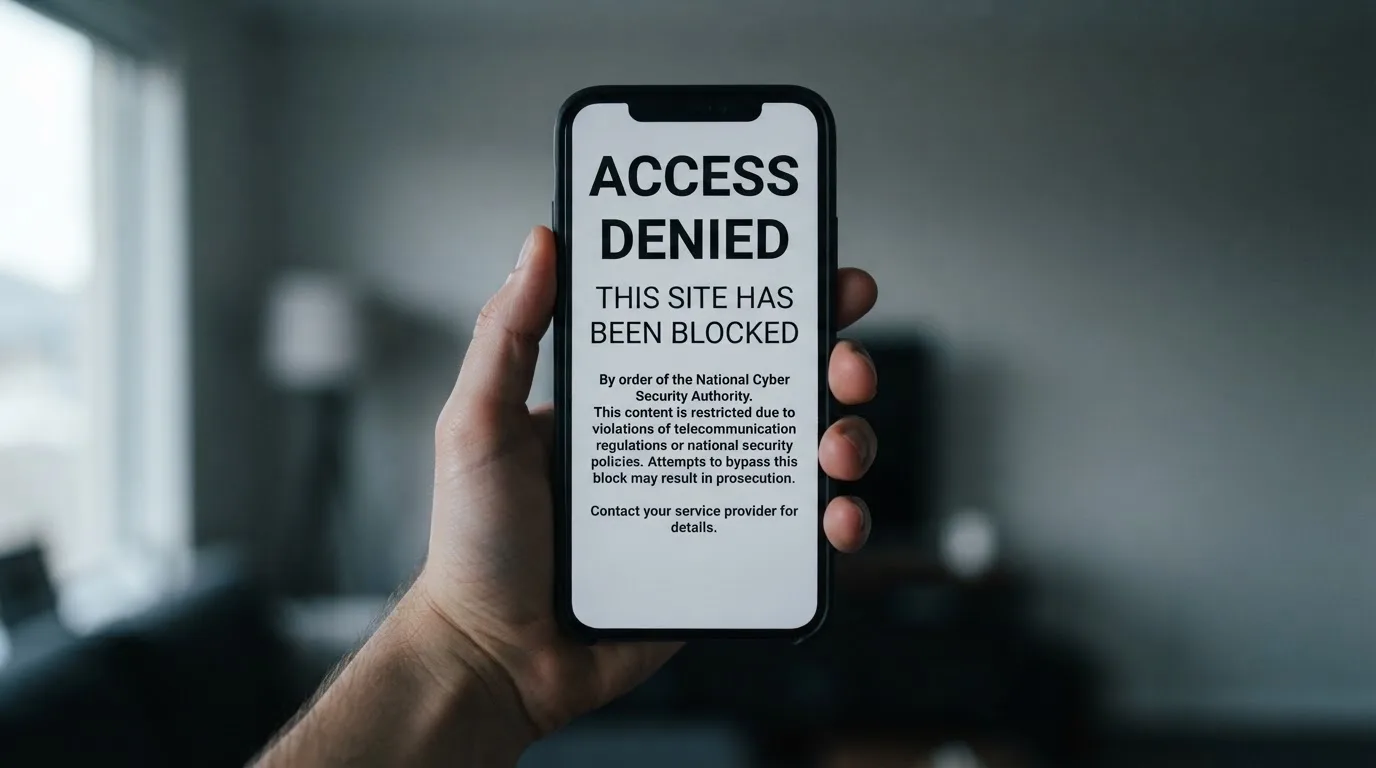
The enforcement side is the ACMA. The ACMA can investigate, issue formal warnings, accept undertakings from providers and direct Australian internet service providers to block illegal services. According to the ACMA as reported in June 2026, a total of 1,751 illegal gambling and affiliate marketing websites had been blocked since the first blocking request in November 2019, and more than 230 unlicensed gambling services had left the Australian market since enforcement was strengthened in 2017. The latest round reported in June 2026 added twelve more sites to the block list — 7Signs, ChromaBet, Donbet, Duospin, Freshbet, Slots Gem, Jacks Club, Lucky Start, Pointsbetz.com, Spinrise, Vinyl Casino and Wildsino.
The financial side is what the ACMA’s enforcement record actually works out to. H2 Gambling Capital’s 2025 report estimates that Australians lose about A$3.9 billion a year to illegal gambling sites, and that the share of gambling going through legal channels fell from 74% in 2021 to 64%. The arithmetic the regulator is publishing, in other words, is that the illegal market has grown while the legal market has shrunk, and that A$3.9 billion a year is leaving the Australian consumer-protection perimeter.
The payment side closes the loop. Since 11 June 2024, credit cards, credit-related products and digital currency have been banned as payment for licensed online wagering, with penalties of up to A$247,500 for operators. Legal deposit routes for licensed wagering are debit card, bank transfer, PayID and Osko, and BPAY. A site asking an Australian reader for a credit card or a crypto deposit is operating outside the Australian rules for the licensed side of the market; on the unlicensed side, the same site is asking the reader to make a payment the regulator has no jurisdiction over.
The 2026 reform sits alongside this, with a start date the page must carry. The Interactive Gambling Amendment (Gambling Reform) Bill 2026 passed Parliament on 19 August 2026; its advertising and inducement measures commence 1 January 2027. That is law with a commencement date — not yet in force on a page read in 2026, but enacted, and a reader who follows the topic into 2027 will see the advertising rules begin to bite.
The legality shelf, then, is what the Interactive Gambling Act 2001 sets out and what the ACMA has done about it. The Act is the controlling statute. The ACMA is the regulator. The block list is the record. The credit-card and crypto ban is the payment side. The 2026 reform is the next step, and the A$3.9 billion a year is the cost of the gap between the licensed and unlicensed markets.
The responsible gaming shelf: BetStop, the National Gambling Helpline, and the limits of what the tools cover
BetStop — the National Self-Exclusion Register — went live in August 2023. It is run by Equifax under contract to the Australian government, and it binds Australian-licensed online and phone wagering services. A punter who registers with BetStop is excluded from opening new accounts with every licensed Australian wagering provider, and existing accounts are closed. The minimum exclusion period is three months, with options running up to a permanent exclusion. The register is the first national tool for online wagering in Australia and the closest thing to a single switch a punter can throw.
The limit of BetStop is what the register covers and what it does not. The register covers licensed Australian wagering — racing, sport, the products the Northern Territory Racing and Wagering Commission regulates. The register does not cover offshore online casinos. A punter who has registered with BetStop and then opens an account with an offshore brand has not breached any Australian rule, because the offshore brand is not connected to BetStop, but the punter has not protected themselves from the offshore product either. The ACMA’s own published advice is that BetStop is one tool among several, not a substitute for the others.
The National Gambling Helpline is 1800 858 858, free, 24 hours a day, with web chat at Gambling Help Online. The helpline is the front line for anyone in Australia whose gambling has become a problem, and it covers every form of gambling — licensed wagering, land-based casinos, pokies at the pub or club, the offshore online product. The helpline is the tool that does cover the offshore market, because the helpline is not a regulator and does not have jurisdiction to act against an offshore brand; it is a counselling and referral service that takes calls about whatever product the caller is using.
The state and territory level sits underneath these. Each state and territory runs its own problem gambling program — GambleAware in New South Wales, Gambler’s Help in Victoria, Gambling Help SA in South Australia, and so on — and each land-based casino has its own responsible gambling officer and self-exclusion register. Crown Melbourne’s Responsible Gambling Centre, The Star Sydney’s contact, and SkyCity Adelaide’s player protection staff are on the casino floor and in the casino’s own back-of-house. A punter who wants to be excluded from Crown’s Melbourne floor can ask the responsible gambling officer at the venue; a punter who wants to be excluded from every Australian-licensed wagering service signs up with BetStop.
The financial side is the other half of the responsible gaming shelf. The deposit limits, the loss limits, the session-time reminders and the reality checks are operator-level tools, and what they cover is again the licensed side of the market. An offshore brand’s “responsible gambling” page is a marketing page, not a regulator-tested one. A punter who sets a deposit limit with an Australian-licensed wagering provider has set a limit the regulator audits; a punter who sets the same limit with an offshore brand has set a limit the brand can change.
The responsible gaming shelf, then, is a reading of what the tools cover and what they do not. BetStop covers the licensed wagering market. The helpline covers every form of gambling, including the offshore product. The state and territory programs cover the land-based casino and pub or club pokies. The operator-level tools cover whichever product the operator is licensed for, and an offshore brand’s tools are not Australian-licensed tools.
The bonus shelf: what a live casino welcome offer costs, in turnover, in spins, and in time at the table
A live casino welcome offer, on the offshore market the ACMA has warned, is a deposit-gated package the player claims once and is expected to clear. The mechanics are the same as the bonus mechanics on a standard online slot, with two qualifications a live dealer game adds: live dealer games are usually weighted at a lower percentage of the wagering requirement than slots, and the table’s edge is the same regardless of whether the player is clearing a bonus or playing for cash.
The wagering requirement is the first figure. A typical live casino welcome offer carries a wagering requirement of 30 to 50 times the bonus amount, applied to the bonus only or to the deposit plus the bonus depending on the brand. A A$200 bonus with a 40x wagering requirement on the bonus only is A$8,000 of required turnover; the same bonus with the requirement on the deposit plus the bonus is A$16,000. Live dealer games typically contribute 10% to 20% of the wagering requirement, so a A$1 bet on a live blackjack table clears A$0.10 to A$0.20 of the requirement. The A$8,000 turnover at a 10% live weighting becomes A$80,000 of live dealer bets, and at A$5 a hand that is 16,000 hands of blackjack at roughly thirty seconds each — about 133 hours at the table.
The arithmetic the page carries is what a single typical offer costs in expectation. Take a A$200 bonus with a 40x wagering requirement applied to the bonus only — A$8,000 of turnover — at a 10% live dealer weighting, which means A$80,000 of live dealer bets must be placed to clear the requirement. Assuming only the bonus amount is wagered and the player plays live dealer blackjack at the 0.28% Las Vegas Strip house edge, the expected loss on clearing the bonus is A$80,000 × (1 − 0.9972) = A$224. The bonus is A$200, and the expected loss to clear it is A$224. The offer has cost more in expectation than it has paid out, before any consideration of how long the clearing takes or what the player might have won on the way through.
That arithmetic assumes the player clears the bonus and walks away. A player who clears half the requirement and stops has spent half the A$224 in expectation and earned half the A$200 — a net expected loss of A$112 on a half-cleared bonus. A player who never clears the bonus and walks away has spent the deposit without clearing the bonus, and the bonus is forfeit. The marketing the bonus is wrapped in talks about how much the player can win. The arithmetic says what the player can expect to lose.
The bonus shelf, then, is the shelf the house edge and the wagering requirement sit on together. The wagering requirement is the volume of bets the player must place. The weighting is how much of each bet counts toward that volume. The house edge is what each bet costs the player in expectation. The expected loss on clearing the bonus is the wagering requirement times the edge — that is the cost of the bonus, and it is the figure the marketing does not carry.
What the ACMA’s blocking record works out to
The ACMA’s blocking record reveals the cost the offshore market imposes on Australian players. As of June 2026, a total of 1,751 illegal gambling and affiliate marketing websites had been blocked since the first request in November 2019. This running total, spanning roughly six and a half years, reflects a continuous effort to curb illegal services; the ACMA’s first request in late 2019 set the precedent for the current enforcement landscape.
The arithmetic is a rate, not a sum. 1,751 blocks over the period from November 2019 to June 2026 — about 80 months — works out to an average of roughly 22 websites blocked per month across the full period, with the rate accelerating after 2017 when the strengthened enforcement took effect. The June 2026 round alone added 12 sites, and earlier rounds have added larger numbers in single announcements. The figure that travels is the band: roughly 20 to 30 sites blocked per month as the average over the period, with single rounds of 12 to 25 sites, and the running total still climbing.
The cost of the blocking record is what the rate implies about the supply side. A market that loses 1,751 websites over six and a half years is a market that is replacing them — the new sites arrive as fast as the old ones are blocked, and the block list is a measure of churn, not of containment. The H2 Gambling Capital figure of A$3.9 billion a year lost to illegal sites is the demand side of the same arithmetic, and the two figures together say the supply is responding to the demand faster than the regulator is responding to the supply.
The page’s editorial position on this is what the arithmetic earns. The block list is the regulator’s published record of what it has done. The running total is the regulator’s published record of how much there has been to do. The A$3.9 billion is the demand-side figure that explains why the supply keeps arriving. The two figures, read together, are the answer to why the block list is still growing in 2026.
What this page concludes, and where an Australian reader goes from here
The conclusion is the cost the page has been building toward. The cost of an offshore live casino welcome offer is the wagering requirement times the house edge on the games the offer weights toward clearing. The cost of an offshore live casino account is the absence of Australian consumer protection if the balance cannot be withdrawn. The cost of an offshore live casino market is the A$3.9 billion a year the H2 Gambling Capital figure names. The cost of the Interactive Gambling Act 2001 is zero for the individual player, because the Act targets the provider, and the player who plays on an offshore site is not committing an offence by doing so — but the player is taking on a risk the Act was written to put on the provider, and the provider is not in the Australian regulatory perimeter.
What an Australian reader goes from here depends on what the reader was looking for. The reader who was looking for an online live casino product to play from inside Australia is reading the law and the ACMA’s record of enforcing it. The lawful alternative is the licensed land-based casino floor — Crown Melbourne, Crown Perth, The Star Sydney, SkyCity Adelaide — and the licensed Australian wagering providers for the products the wagering licence covers. The reader who was looking for a self-exclusion tool that covers the offshore market does not have one; BetStop covers the licensed wagering market, and the National Gambling Helpline is the front line for every form of gambling. The reader who was looking for a player protection regime that follows the bet all the way through is reading what BetStop does and what it does not.
What this page does not do is recommend a brand. The eleven brands the ACMA has named in formal warnings are the only honest shortlist the subject produces, and the warning is the recommendation against the brand. The page describes what the warning covers, what licence the brand displays and what that licence does not cover, and it leaves the choice of where to play — or whether to play — to the reader.
Frequently asked questions
What makes a live casino game different from a standard online slot?
A live casino game is a real event happening in a studio or on a casino floor, with cameras converting the result into data the player’s screen can render. A standard online slot is a software-driven random number generator producing a result every spin. The house edge on a live dealer game is set by the table’s rules — 1.06% on the Banker bet of baccarat, 0.28% on a Las Vegas Strip blackjack, 2.70% on a single-zero roulette wheel — and is not changed by the live stream.
Who is Evolution and why does its name come up around live casino games?
Evolution is the dominant live casino supplier. It was founded in Stockholm in 2006, reached 100 live tables at its Riga studios in 2013 and opened a Malta studio in 2014. Evolution completed its acquisition of NetEnt on 1 December 2020 and now owns NetEnt, Red Tiger, Big Time Gaming, Nolimit City and Ezugi. More than 700 gambling platforms worldwide offer its live casino games, so a reader who has played live dealer blackjack or roulette on an offshore brand has almost certainly played on an Evolution table.
Is it legal for an online casino to stream live dealer games to players in Australia?
No. Providing an interactive casino-style gambling service — including live dealer blackjack, roulette and baccarat — to a person in Australia is a prohibited interactive gambling service under the Interactive Gambling Act 2001. No state or territory licenses online casino games. The ACMA enforces the prohibition by issuing formal warnings to operators and by directing Australian internet service providers to block illegal sites, with 1,751 websites blocked since November 2019.
Can a live casino app be used on a mobile browser?
A mobile browser is the same product as a desktop browser — the offshore brand’s mobile-optimised website reaches the same live dealer stream without an app wrapper. The legal position does not change with the device. What does change with the device is the app store: an app on an Australian Apple App Store or Google Play storefront for live dealer casino games would breach the storefront’s Australian regional settings, and the lawful apps on an Australian storefront are the licensed Australian wagering apps — Sportsbet, Ladbrokes, Bet365 Australia — for the products those licences cover.
What welcome offers are commonly advertised for live casino play?
Live casino welcome offers on the offshore market are typically deposit-gated packages carrying a wagering requirement of 30 to 50 times the bonus amount, applied to the bonus only or to the deposit plus the bonus. Live dealer games are usually weighted at 10% to 20% of the wagering requirement, so a A$200 bonus with a 40x requirement on the bonus only — A$8,000 of turnover — requires about A$80,000 of live dealer bets to clear at the 10% weighting. The expected loss on clearing the bonus, at a 0.28% Las Vegas Strip blackjack house edge and assuming only the bonus amount is wagered, is about A$224 — more than the bonus itself.
Are there licensed live table games at Australian land-based casinos?
Yes. Crown Melbourne offers three baccarat variants — Traditional Baccarat, Crown Baccarat and 2 to 1 Baccarat — as approved table games regulated by the Victorian Gambling and Casino Control Commission. The same regulator’s public log of approved changes to Crown Melbourne’s blackjack variants includes renaming the “Perfect Pairs” side bet to “Crown Pairs” in December 2024 and introducing a “Free Bet” option with a new “Pot of Gold” side bet in March 2024. Crown Perth, The Star Sydney and SkyCity Adelaide offer comparable live table products under their respective state regulators.
Published by the Casino Slots Info AU team.