
Mines casino game in Australia: what the tile grid is, why no online version is lawful, and what the regulator has actually been doing
The Mines casino game runs on a five-by-five grid of face-down tiles with a set number of hidden mines. A player stakes an amount, picks how many mines to place, then reveals tiles one at a time. Every safe reveal lifts a multiplier on the stake. Hit a mine and the round ends with the stake lost. Cash out before the next reveal and the running multiplier is paid. That is the whole mechanism, dressed up by software into something that looks more strategic than it is — each tile is an independent draw from a fixed field, with no memory of what came before. What a punter is choosing, in practice, is how much of the stake to give back to the house in exchange for a smaller chance of a longer run.
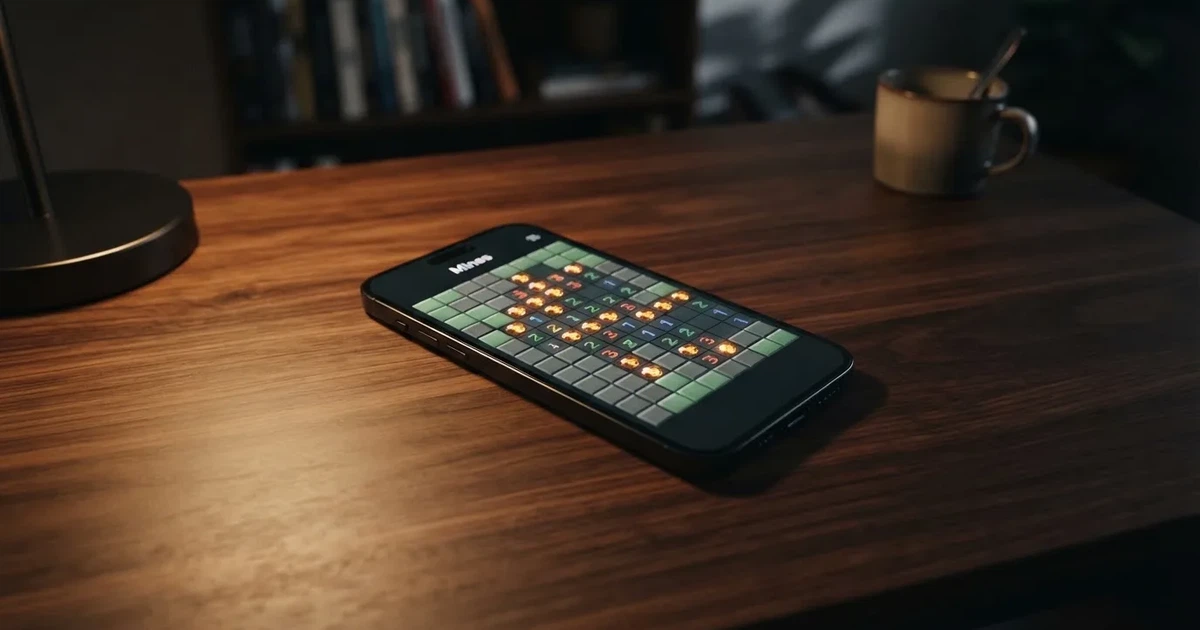
The page below is written for an Australian reader who has searched for “mines casino game australia 2026” and is trying to sort the mechanics from the marketing. The sorting matters because the legal frame around online casino games in Australia is unusually clear and unusually poorly understood. No online casino game — Mines, pokies, blackjack, baccarat, anything not on the short list of licensed wagering — can be offered to a person physically in Australia. The regulator is the ACMA, the statute is the Interactive Gambling Act 2001 as tightened in 2017, and the consequence for an offshore operator is a formal warning, a website block, or both. Mines is not a grey area. It is in the prohibited category, alongside every other casino game.
So the shape of this page is what its name suggests: how the game works, why almost every “Mines casino” an Australian can actually reach is unlawful, what the regulator has done about specific operators, and what the practical cost looks like for someone who goes ahead anyway. Where the ACMA has acted against a brand that hosts Mines, the brand is named below with the warning date, the operator company, and the consequence the page can already see.
Current as of 28 October 2026, against the ACMA’s published register of formal warnings and blocking requests.
Table of Contents
- How Mines actually works, and what the marketing tends to leave out
- Why “Mines casino Australia” is not a lawful search for an Australian
- What the regulator actually does: formal warnings, blocking requests, and the asymmetry they create
- The eleven brands: what the ACMA has said about each, and what the operator still asks of an Australian reader
- Bonuses, free spins and promo codes: what they cost a Mines player, and why the wording matters
- Payments, payout speed and the Australian angle on deposits and withdrawals
- Responsible play: why Mines rewards a stop decision made before the round starts
- What the Interactive Gambling Amendment (Gambling Reform) Bill 2026 changes, and when
- Tax: what ATO rules say about a recreational punter’s Mines winnings
- Native terms and Australian spellings worth holding on to
- What a reader who has reached this page should actually do
- Frequently asked questions
How Mines actually works, and what the marketing tends to leave out
A round of Mines starts with a stake, a grid size, and a mine count. The game shipped by Spribe — the studio behind the better-known Aviator — uses a five-by-five grid of 25 tiles, with the player choosing anything from one to twenty mines before the first reveal. The mathematical core is straightforward: each tile is either a mine or a multiplier step, the two outcomes are exclusive, and the longer a player survives without hitting a mine, the larger the multiplier they bank when they cash out.

The paytable grows roughly geometrically, which is why the running number climbs fast in the early reveals and feels as though it is “due” to keep climbing. It is not. The probability of the next tile being safe is fixed by the mine count, and it shrinks with every safe reveal. A common 5-mine setup leaves 20 safe tiles out of 25 before the first click, 19 out of 24 after, and so on. By the time a player has revealed ten safe tiles in a row, the chance the next tile is a mine is better than one in three. The multiplier offered at that point is large because the risk is also large. The house edge, the slice of every dollar staked that the operator keeps over millions of rounds, sits in the low single digits for Mines — competitive for a casino product — and it manifests in practice as the moment at which a rational player should stop, which is almost always sooner than the moment they actually do.
That gap — between the stop point the arithmetic implies and the stop point a player feels like taking — is what the game is selling. The grid format makes it look like skill, because the player makes each decision click by click. It is closer to a binary option that pays out if you happen to stop just before a mine, dressed in tiles.
The game’s lineage is honest about what it is. Casino Mines is a staked adaptation of the Minesweeper puzzle format, which itself traces back to Ian Andrew’s 1983 game Mined-Out and Tom Anderson’s 1987 SunOS game Mines. Microsoft’s Minesweeper debuted in 1990 in the Windows Entertainment Pack and shipped with Windows until Windows 8 dropped it as a built-in title in 2012. None of those predecessors cost money to lose at, and that is the only meaningful difference.
The studio side carries its own caveats. Spribe was founded in 2018 and built its reputation on Aviator, which launched in January 2019. The UK Gambling Commission suspended Spribe OÜ’s UK remote gambling software licence on 30 October 2025 after finding the company had been hosting casino games without the separate remote casino game host licence that its business model required. Spribe’s public register entry for its Gambling Software Remote licence (number 057302-R-333085-003) remains active as of the current listing, but the Game Host (Casino) Remote licence application is shown as in progress. None of this changes the Australian position, which is set by the IGA, not by what any overseas regulator does or does not allow.
Why “Mines casino Australia” is not a lawful search for an Australian
The Interactive Gambling Act 2001, tightened by the Interactive Gambling Amendment Act 2017, makes it an offence to provide online casino games, online pokies or in-play betting to a person in Australia. No state or territory licenses them. What is licensable in Australia is wagering on races and sport placed before the event, lotteries and keno — in practice licensed by the Northern Territory through the NTRWC. The NT regulator is, on paper, the body that oversees 52 of Australia’s online bookmakers, including Sportsbet, Bet365 and Ladbrokes, even though it has no full-time staff and meets once a month in Darwin. The bookmaker licences exist for tax reasons, not because Australia is a permissive market for online betting.
The consequence for a reader is that a Mines casino site, however famous, however well reviewed in international trade press, however plausible the Curaçao or Anjouan licence it displays, is offering an Australian resident a prohibited service. The licence the site displays is a licence to operate from somewhere else. It is not a licence to take Australian bets. The fine print at the bottom of the page that says the site does not target Australian residents is, in practice, a disclaimer against the same statute the regulator enforces.
The regulator has form. The ACMA, the Australian Communications and Media Authority, investigates, issues formal warnings and directs internet service providers to block illegal sites. As reported in June 2026, a total of 1,751 illegal gambling and affiliate marketing websites had been blocked since the first blocking request in November 2019, and more than 230 unlicensed gambling services had left the Australian market since enforcement was strengthened in 2017. That is the cumulative result of six and a half years of blocking requests, formal warnings and quiet exits under regulator pressure. The figure to keep in mind is the rate, not the total — because the rate is the only one that says anything about how the market looks this year.
The rate at which sites are being blocked is the most telling metric here, as it clarifies what the running total and the first-block date actually answer. Between November 2019 and June 2026 is roughly six and a half years, or about 78 months. Dividing 1,751 sites by 78 months gives an average of just over 22 blocked sites a month. The honest way to state that is a band rather than a single figure: the monthly pace runs somewhere in the low twenties across the full period, with bursts above that when the ACMA issues a coordinated blocking round — the June 2026 round alone asked ISPs to block 12 more sites in one go, names like 7Signs, ChromaBet, Donbet, Duospin, Freshbet, Slots Gem, Jacks Club, Lucky Start, Pointsbetz.com, Spinrise, Vinyl Casino and Wildsino. Even on a quiet month the regulator is removing sites faster than new ones can clear the same ISPs and reappear under a new domain. A punter who opens an account with an offshore brand today is betting that the site will not be on the next list.
The economic scale of the illegal side is large enough that the rate matters. H2 Gambling Capital’s 2025 report estimates that Australians lose about A$3.9 billion a year to illegal gambling sites, and that the share of gambling going through legal channels fell from 74% in 2021 to 64%. The fall is not because Australians are gambling less. It is because more of what they spend is going through sites the regulator cannot license. Mines sits inside that shift.
What the regulator cannot do is prosecute the punter. The IGA targets the provider. A reader reading this page is the customer the regulator is trying to protect by chasing the operator. The things the regulator cannot do for that reader are also worth knowing: an offshore site gives no Australian consumer protection, no complaints body, and no recourse if a withdrawal is refused. The site can be blocked with a balance still on the account, and the operator has no obligation to return it. The site can vanish entirely. Both outcomes are visible in the operator history below.
What the regulator actually does: formal warnings, blocking requests, and the asymmetry they create
The ACMA’s enforcement runs on two parallel tracks. One is the formal warning, which is published and dated and tied to a specific operator company. The other is the blocking request, which is sent to Australian ISPs and is harder for a reader to track because the published list aggregates by site rather than by operator. A formal warning is a quiet step in that sequence — the ACMA’s way of saying, in writing, that an operator is providing a prohibited service and needs to stop. The next step, when the warning is ignored, is a blocking request. The list of 12 sites blocked in the June 2026 round is what the next step looks like.
The published register of formal warnings is the part of the ACMA’s work that an Australian reader can actually look up, which is why the rest of this page leans on it heavily. The list below is ordered by ACMA action date and covers brands the regulator has named in writing.
| Brand | ACMA action and date | Operator named by the ACMA | Mines support |
|---|---|---|---|
| Bizzo Casino | Formal warning, July 2025 (earlier warning, 2022) | Consolutetish S.R.L. (2025); TechSolutions Group N.V. (2022) | — |
| National Casino | Formal warning, July 2025 | Consolutetish S.R.L. | Listed in Mines coverage directories |
| Ignition Casino | Formal warning, July 2025 | Bamboo Media | — |
| RocketPlay | Formal warning, March 2026 (earlier warning, May 2022) | Pulsup Ltd (2026); Dama N.V. (2022) | — |
| Jackbit | Formal warning, April 2026 | Ryker B.V. | — |
| Woo Casino | Formal warning, March 2025 | Dama N.V. | — |
| Spirit Casino | Formal warning, May 2025 | Dama N.V. | — |
| Instant Casino | Formal warning, February 2025 | EOD Code SRL | — |
| Casino Intense | Formal warning, April 2025 | Sterplay Holding Ltd | Listed in coverage directories |
| Level Up Casino | Formal warning, May 2022 | Dama N.V. | Listed in coverage directories |
| Sky Crown | Formal warning, September 2022 | Hollycorn N.V. | — |
A few things stand out from the table. The first is that several operators appear more than once — Dama N.V. has at least three separate warnings across different brands and dates, and Bizzo Casino was warned first in 2022 and again in 2025. That recurrence is the regulator signalling that a warning is not, on its own, a deterrent for these groups. The second is that the operator company named by the ACMA is often not the same as the brand name a player sees. A punter looking at “Jackbit” or “Woo Casino” or “Spirit Casino” is dealing with Ryker B.V., Dama N.V. and Dama N.V. respectively — Curaçao-registered companies that operate a portfolio of brands. A formal warning to one brand on the portfolio is a warning to the company, not to the brand. The company does not need to wind down its other labels.
The third thing the table does not show is the volume of formal warnings the ACMA has issued in total. The brands above are the ones the page names, but they are a subset of the ACMA’s published register for the period. The same names that surface in the formal warning list also surface in blocking rounds, sometimes years apart.
That is also the point at which Mines gets specific. None of the brands above is on the page because it offers Mines specifically. They are on the page because the ACMA has acted against them, and the proposal each one makes to an Australian resident — Mines included — is for a prohibited service. A “Mines casino login” page on any of these domains is a Mines casino that the regulator has already said is illegal to use from Australia. Whether the Mines tile grid is the front-of-house product or one slot among hundreds is irrelevant.
The eleven brands: what the ACMA has said about each, and what the operator still asks of an Australian reader
Each entry below covers one brand the ACMA has formally warned, in the order the ACMA’s most recent action places it. Note that online casino games — including Mines — are entirely prohibited for Australian residents, irrespective of the licence or registration the site presents.
Bizzo Casino
Two formal warnings, five years apart. The first was issued to TechSolutions (CY) Group Limited and TechSolutions Group N.V. in 2022. The second, in July 2025, was issued to Consolutetish S.R.L. — a different operator company for the same consumer-facing brand. A reader is being asked to trust a brand that has been on the regulator’s published register twice across two different parent companies. That is what the ACMA’s two warnings, taken together, say about the operator’s willingness to stop.
National Casino
Formal warning to Consolutetish S.R.L. in July 2025, the same round as the Bizzo Casino warning above. The two brands share an operator company on the regulator’s register. The brand shows up in Mines coverage directories — that is, listings that catalogue which casinos host a Mines game — but the ACMA’s action is against the brand’s offer of casino games to Australians generally, not against a specific Mines product.
Ignition Casino
Formal warning to Bamboo Media in July 2025. Ignition positions itself as a poker- and casino-focused site rather than a pokies site, but the warning is over offering prohibited interactive gambling services to Australians. The same applies to Ignition as to any other entry on this list.
RocketPlay
Formal warning to Pulsup Ltd in March 2026, with an earlier Dama N.V. warning to Rocketplay.com.au in May 2022 alongside five other Dama brands. The 2026 action is the most recent ACMA formal warning on this list, and the only one this year for this brand. Two separate operator companies, four years apart.
Jackbit
Formal warning to Ryker B.V. in April 2026. Jackbit is the second-most-recent warning on the list, after RocketPlay. The site has not been the subject of an earlier ACMA warning under the same brand.
Woo Casino
Formal warning to Dama N.V. in March 2025. The warning is one of three Dama N.V. warnings on this list, covering three different brands. A reader who arrives at Woo Casino through an affiliate link is dealing with the same operator company that has been warned twice since for other labels.
Spirit Casino
Formal warning to Dama N.V. in May 2025, two months after the Woo Casino warning. Same operator company, different brand. The proximity of the two warnings makes the point: a formal warning is, in practice, a warning to the portfolio rather than to the single brand it names.
Instant Casino
Formal warning to EOD Code SRL in February 2025. The earliest warning on the table, and the only one issued to EOD Code SRL for this brand.
Casino Intense
Formal warning to Sterplay Holding Ltd in April 2025. The brand shows up in coverage directories that catalogue Mines availability, but the ACMA’s action is over the broader offer of interactive gambling services to Australians. No such service holds an Australian licence.
Level Up Casino
Formal warning to Dama N.V. in May 2022, part of a six-brand round that also covered Bambet, Dazard, Rocketplay, Wild Tornado and Cobra Casinos. The earliest of the three Dama warnings on this list. Level Up shows up in Mines coverage directories. It is a prohibited service for anyone in Australia.
Sky Crown
Formal warning to Hollycorn N.V., published September 2022, covering both Sky Crown and Blue Leo. Hollycorn is the operator company behind a portfolio of brands, and the warning is the only one on this list tied to that operator. The service is not legal for Australian residents.
Bonuses, free spins and promo codes: what they cost a Mines player, and why the wording matters
The search terms a reader types into a search engine for “slots mines promo code” or “slots mines bonus code” reach the same place every other online casino search reaches: a marketing page that frames a deposit match or a free-spins package as a windfall. The marketing is built to make the offer feel additive — extra money on top of the deposit, free chances to play — and the small print is built to convert that windfall back into expected value at the house’s expense.
The mechanism is the same for Mines as it is for any other casino game, because the bonus is paid by the casino and the wagering requirements are calculated across the casino’s full game library. A “Mines no-deposit bonus” still runs through the same review process as any other bonus before a withdrawal is permitted. What that means in practice is that the bonus amount is multiplied by a wagering factor — typically somewhere between 35 and 50 — to produce a required turnover in real money bets before any withdrawal is allowed. On a game like Mines, with a house edge in the low single digits, the required turnover is many times the bonus amount, and the expected loss over the wagering period is the turnover multiplied by the house edge. A free-spin package works the same way: the spins have a fixed stake, the winnings are credited as bonus money, and the same wagering multiple applies.
The reason this matters on a Mines page is that the grid game rewards small, frequent decisions — exactly the rhythm a long wagering requirement is built to extract value from. A punter with a 40-times turnover to clear is mathematically committed to several hundred Mines rounds at minimum. Each round is an independent draw from the same fixed probability field. The arithmetic does not care how confident the player feels after a run of safe tiles.
The standard terms to read before claiming are the same as for any other casino product. The wagering multiple is the headline number. The maximum cashout from a no-deposit bonus is often capped well below the headline bonus value, which means the player’s upside is bounded even if they hit a long multiplier run during wagering. The eligible games list sometimes excludes Mines from wagering contribution, in which case the bonus is unusable on this product and the player is betting on something else to clear it. None of these terms are exotic. They are what every offshore casino bonus looks like, and they are the reason a “Mines promo code” page tends to lead with the deposit match and end with a small-print wagering multiple the reader is meant to skim past.
The honest summary is that the cost of a bonus on Mines is the expected loss over the wagering requirement, plus the constraint the requirement places on the player’s stop-decision during play. A punter who would have stopped after three safe tiles in a normal round will, during wagering, often press on for a fourth or fifth because the bonus is only cleared by playing. That is the bonus’s real cost. It is not on the marketing page.
Payments, payout speed and the Australian angle on deposits and withdrawals
The payment frame for an Australian punter using an offshore Mines casino is split into two distinct cases, and they look nothing like each other. The first is what an Australian-licensed wagering site is allowed to take. The second is what an offshore casino actually takes in practice.
Australian-licensed online wagering — the only kind of online betting that is lawful in Australia — has its payment rails set by statute. Credit cards, credit-related products and digital currency have been banned as payment for licensed online wagering since 11 June 2024, with penalties up to $247,500 for operators that break the rule. The lawful deposit routes for a licensed bookmaker are debit card, bank transfer, PayID/Osko and BPAY. The rule is narrow: it applies to the licensed wagering sector, which means it binds Sportsbet, Bet365 and the other NT-licensed bookmakers, and it does not bind offshore casinos because offshore casinos are not within the rule’s reach. An Australian reader who has not realised this distinction will sometimes assume that the credit-card ban extends to the offshore market as well. It does not. Offshore sites take credit cards, take crypto, and process withdrawals back through the same rails.
The result is that the offshore Mines casino uses a different and looser payment stack than the licensed side. Payout speed at offshore sites is a function of the operator’s internal queue and the payment rail the punter chose. The fastest combinations — crypto withdrawals approved within hours — sit next to the slowest, which is a withdrawal that simply does not arrive. The reason the slowest case exists is that the offshore site has no Australian complaints body behind it and no obligation to pay. The BetStop register, the National Self-Exclusion Register that has been live since August 2023, binds Australian-licensed services; an offshore casino is not connected to BetStop, which means the self-exclusion mechanism Australian readers may have heard of does not apply to any of the brands on this page.
The practical decision for a reader who has decided to proceed anyway is wire-frame, not romantic. A withdrawal method that produces a paper trail inside the Australian banking system — a bank transfer to an Australian account — gives the punter at least a record of the transaction. A withdrawal method that does not — a crypto transfer to a non-custodial wallet — gives no record at all. Neither protects the punter from a refusal to pay. One gives a paper trail if the matter ends up with a regulator or a court, and the other gives nothing.
The other half of the cost is what happens to the money on the way in. H2 Gambling Capital’s estimate of A$3.9 billion a year lost to illegal gambling sites is the spend side of the same ledger the page has been looking at. Some of that A$3.9 billion returns to Australian bank accounts in the form of winnings. Some of it does not, because the offshore operator keeps it, the offshore operator is blocked before the withdrawal is processed, or the offshore operator disappears. The estimated loss is the gross figure. The net loss to Australian households is higher.
Responsible play: why Mines rewards a stop decision made before the round starts
The responsible play story for Mines is unusually specific, because the game’s structure makes one decision matter more than any other. That decision is the stop point — the multiplier at which the punter will cash out and end the round — and it has to be made before the first tile is revealed. After a run of safe tiles, the player’s appetite for risk grows, the multiplier on offer grows with it, and the arithmetic of the next click does not care which direction the player’s appetite has moved in.
The reason this matters on a Mines page is that the same shape — small frequent decisions, an escalating number, and a binary outcome on the next click — is the shape of the responsible play problem the regulator worries about. The National Gambling Helpline (1800 858 858) is free, runs 24/7, and has a chat line at Gambling Help Online. BetStop, the National Self-Exclusion Register, binds Australian-licensed online and phone wagering services. An offshore Mines casino is not connected to BetStop, which means a self-excluded Australian punter can still reach an offshore brand from the same device and the same account. The tools that work on the licensed side do not extend to the offshore side, which is the practical cost of the legal frame this page keeps returning to.
The rule of thumb that fits the game is the rule of thumb that fits every game with a fixed house edge: decide the stop point, the stake, and the session length before the session starts, and treat any of those numbers as immovable once a round is in progress. The grid format is the only thing that makes Mines different from any other casino game, and the difference is in the wrong direction. The grid makes the player feel in control of each click, and the player’s felt control at the moment of the click is the thing the game’s design is constructed around.
What the Interactive Gambling Amendment (Gambling Reform) Bill 2026 changes, and when
The Interactive Gambling Amendment (Gambling Reform) Bill 2026 passed Parliament on 19 August 2026. Its advertising and inducement measures commence on 1 January 2027. The bill is a law with a start date, not yet in force on a page read in 2026. The relevant consequence for a reader in 2026 is that the legal frame in force — the Interactive Gambling Act 2001 as amended in 2017, enforced by the ACMA through formal warnings and blocking requests — is unchanged. What changes in 2027 is the regulator’s reach over advertising, including inducements aimed at Australian customers.
The 2026 bill is not the reason any brand on this page is unlawful today. Each of them is unlawful under the 2001 IGA as it stands. The bill is a tightening of the inducement and advertising side, not a rewriting of the prohibition. The reader who acts on the page today is acting under the rules that have been in force since 2017, not under the rules that will be in force in 2027.
Tax: what ATO rules say about a recreational punter’s Mines winnings
Gambling winnings of a recreational player are not assessable income in Australia — section 6-5 of the ITAA 1997 sets the position — and losses are not deductible. The model is that the ATO treats gambling as a private recreational activity for non-business players, so a Mines payout does not appear on a tax return as income and a Mines loss does not appear as a deduction. The exception is a person who carries on a business of gambling, which is a small minority of cases and turns on facts the page cannot speak to. The standard line for a recreational punter is that the matter does not reach the tax return at all.
What does reach the tax return is the offshore operator’s payment to an Australian bank account, which is a reportable transaction under anti-money-laundering rules even when the underlying gambling is not assessable income. The two rules are independent, and the page notes both because the reader who assumes the absence of tax also means the absence of reporting is wrong on the second count.
Native terms and Australian spellings worth holding on to
The vocabulary of Australian online gambling is its own register, and it carries the law’s distinctions in the words themselves. “Prohibited interactive gambling service” is the term in the IGA, and it is the term the ACMA uses when it names a site on its register. “Wagering service provider” is the licensed counterpart — what an NT-licensed bookmaker is. “In-play betting” is the bet type the IGA specifically prohibits online, alongside casino games. “Pokies” is the Australian term for slot machines, and an online pokies site is in the same prohibited category as a Mines casino for an Australian resident. “PayID”, “Osko” and “BPAY” are the lawful deposit rails for a licensed wagering account. “BetStop” is the National Self-Exclusion Register. “ACMA” is the Australian Communications and Media Authority. The punter is a “punter”. The licence is a noun spelled “licence” in Australian English, and the verb is spelled “license”. The currency sign is A$ and the date format is 11 June 2024.
These are not affectations. They are the words the regulator uses, the words the statute uses, and the words a complaint body would expect to see in a letter. Using them is part of taking the subject seriously.
What a reader who has reached this page should actually do
The first move is the legal one. Online casino games — Mines included — cannot be licensed for an Australian resident. No brand on this page is a lawful option, no Curaçao licence changes that, and no deposit bonus, no promo code, and no app makes the proposition legal. The legal frame has not been a grey area for a long time.
The second move is the practical one for a reader who has already deposited. The offshore casino has no obligation to return a balance to an Australian player, has no Australian complaints body behind it, and may be blocked by an ISP before the withdrawal is processed. The recourse a reader imagines is largely notional. The Australian-licensed side has a complaints body; the offshore side does not.
The third move, for a reader who has decided the game’s mechanics interest them more than its legal context, is to play the demo. Spribe’s Mines has a free-play version on the studio’s site that runs the same engine without real money behind it. The game design is the interesting object; the wagering is the part that costs money and is unlawful. Separating the two is the simplest version of the responsible-play rule for this game.
The fourth move, for a reader who is concerned about their own or someone else’s play, is the helpline. National Gambling Helpline 1800 858 858, free, 24/7, with chat at Gambling Help Online. BetStop is the register, available to anyone with an Australian-licensed account; it does not bind offshore brands, which is itself a reason not to use them.
Frequently asked questions
Is it legal to play the Mines casino game for real money in Australia?
No. The Interactive Gambling Act 2001, as amended in 2017, prohibits the provision of online casino games to a person in Australia, and Mines is an online casino game. No state or territory licenses it. Offshore operators offering Mines to Australian residents are offering a prohibited interactive gambling service, regardless of the licence they display or the company’s registration elsewhere.
How does the payout on Mines increase as more safe tiles are revealed?
Each safe reveal removes one tile from the field and leaves the remaining mines on the others, raising the multiplier credited on cash-out. The growth is roughly geometric, which makes early reveals feel slow and later reveals feel steep. The probability of the next tile being safe shrinks with every safe click, so a larger offered multiplier reflects a larger remaining risk rather than a streak.
What determines how many hidden mines are placed on a Mines grid?
The player chooses the mine count before the round starts. Spribe’s Mines uses a five-by-five grid and allows one to twenty mines. More mines mean a steeper multiplier on every safe reveal and a shorter expected run; fewer mines mean a shallower multiplier and a longer expected run. The house edge is set by the paytable for the chosen configuration and does not move during the round.
What conditions usually apply before a Mines no-deposit bonus can be withdrawn?
A wagering multiple applied to the bonus amount, a maximum cashout cap, a list of eligible games, and a time limit are the standard conditions. The wagering multiple is the headline number — typically 35 to 50 times the bonus — and the maximum cashout is often well below the headline bonus value. On Mines, the wagering contribution can be reduced or excluded entirely, in which case the bonus cannot be cleared on this game.
Is the Mines app a separate product from the browser-based version of the game?
No. Casino Mines apps are typically wrappers around the same browser-based engine, distributed through the operator’s site rather than the Apple App Store or Google Play, because Apple and Google do not allow real-money casino apps in their Australian stores. The game engine, the paytable and the underlying random number generation are the same. What changes between browser and app is the device and the screen size.
What is a sensible way to decide a stop point before starting a round of Mines?
Decide the multiplier, the stake and the session length before the first click, and do not change any of them once the round is in progress. The grid format rewards pressing on after a run of safe tiles, and the arithmetic does not support pressing on. A stop point set in advance and held to is the only piece of the game where the player has actual control, and the only one a responsible-play framework can support.