
No ID Verification Withdrawal Casinos in Australia in 2026: What the “No Verification” Promise Actually Costs You
A “no verification withdrawal” sounds like the operator is trusting you. It is not. In practice, the phrase means an offshore casino promising to release funds without running standard know-your-customer checks on Australian customers — and, because no state or territory licenses online casino games or pokies in this country, an unlicensed site is the only kind this claim could ever attach to. This page reads that marketing claim back through the law, the published regulator action, and the payment rails offshore casinos actually use, and works out what it costs the punter who takes it up.
The data in this article is current as of 28 October 2026. The licensing and ACMA action figures were checked against the ACMA’s published formal-warning register and the regulator’s 26 June 2026 blocking-round notice.
Table of Contents
- Top 11 Offshore Casinos the ACMA Has Formally Warned
- RocketPlay
- Level Up Casino
- Woo Casino
- Spirit Casino
- National Casino
- Bizzo Casino
- Ignition Casino
- Instant Casino
- Jackbit
- Casino Intense
- Sky Crown
- What “No Verification Withdrawal” Actually Means in Practice
- Why Every “No ID Verification Withdrawal” Casino Here Is Prohibited
- How the ACMA Enforces It — and How Fast
- Player Protection That the Offshore “No Verification” Model Disconnects
- Crypto, Anonymity, and the Marketing Equation Behind the Pitch
- The Bitcoin and USDT End of the Pitch
- A Note on the “No Verification” Promise and the Operator’s Own Fine Print
- What the punter Pays
- How the Rate Has Moved — and Where the Curve Is Heading
- What a Punter Actually Has — Australian Payment Rails That Work
- What a Punter Should Take Away
- Section Recap
- Frequently Asked Questions
Top 11 Offshore Casinos the ACMA Has Formally Warned
There is no licensed Australian online casino to recommend, so any “top list” of no-ID-verification withdrawal casinos in this country is a list of offshore sites the regulator has already moved against. What follows is the published ACMA formal-warning picture for eleven such brands, the date of action, and the operator the regulator named at the corporate level — drawn directly from the ACMA register, not from affiliate reviews. Each brand is profiled below the table.

| Brand | ACMA action and date | Operator named by the ACMA | Subject support |
|---|---|---|---|
| RocketPlay | Formal warning, March 2026; earlier warning May 2022 | Pulsup Ltd (Rocketplay.com.au, March 2026); Dama N.V. (May 2022) | no-data |
| Level Up Casino | Formal warning, May 2022 | Dama N.V. | no-data |
| Woo Casino | Formal warning, March 2025 | Dama N.V. | — |
| Spirit Casino | Formal warning, May 2025 | Dama N.V. | — |
| National Casino | Formal warning, July 2025 | Consolutetish S.R.L. | no-data |
| Bizzo Casino | Formal warning, July 2025; earlier warning 2022 | Consolutetish S.R.L. (July 2025); TechSolutions (CY) Group Limited and TechSolutions Group N.V. (2022) | no-data |
| Ignition Casino | Formal warning, July 2025 | Bamboo Media | — |
| Instant Casino | Formal warning, February 2025 | EOD Code SRL | no-data |
| Jackbit | Formal warning, April 2026 | Ryker B.V. | — |
| Casino Intense | Formal warning, April 2025 | Sterplay Holding Ltd | no-data |
| Sky Crown | Formal warning, September 2022 | Hollycorn N.V. | — |
A formal warning is the ACMA’s first published step under the Interactive Gambling Act 2001; the second step, used routinely since 2019, is to ask Australian ISPs to geo-block the domain. By the ACMA’s own June 2026 figure, 1,751 illegal gambling and affiliate marketing websites had been blocked since the first blocking request in November 2019 — which translates, against a roughly six-and-a-half-year window, to a sustained blocking rate you can audit at the bottom of this page.
The takeaway from the table is structural rather than competitive. Ten of the eleven operators share the same Curacao, Cyprus or Seychelles company behind three or more brand skins, so a “wide choice” of no-ID-verification withdrawal casinos is, regulatorily, a small number of companies running a large number of domains. Dama N.V. alone accounts for four of the eleven names above; the Dama corporate family has moved through enough brand shells that the regulator has had to re-publish warnings years apart under different marketing names.
The column for “subject support” is sparse by design: an article about withdrawals advertised without ID verification has very little to confirm about payment-method coverage on offshore brands the ACMA has already told to stop offering prohibited services to Australians. Where the cards are blank, the reader should read them as “no operator-specific verification evidence is available” rather than as a denial — but then, a reader looking for confirmation on such a brand has already lost the argument the marketing word was making.
RocketPlay
The ACMA’s most recent published formal warning over RocketPlay was issued in March 2026 against Pulsup Ltd, covering the .com.au skin of the brand; an earlier Dama N.V. warning has been on the register since May 2022. The regulator has therefore warned RocketPlay twice across different corporate entities for the same conduct — offering prohibited interactive gambling services to customers physically in Australia. Listed affiliate marketing pages carry marketing copy about fast payouts and minimal paperwork, but no operator-published verification policy confirmed against a real customer account.
A punter who opens a RocketPlay account today is betting against an injunction-shaped risk: the site itself can be geo-blocked mid-session with real money still in the balance, and the only dispute path is to the operator that the regulator has already told to stop. The ACMA’s warning is not a deterrent; it is the regulator’s prior record.
Level Up Casino
Dama N.V. took the May 2022 formal warning that put Level Up Casino on the register, and the brand has changed marketing language since without changing the underlying offer. Affiliate listings still describe Level Up as a fast-payout, light-onboarding casino; the regulator’s view, three years on, is that none of that changes the legal status of taking an Australian customer. No ID-verification-withdrawal claim made by an offshore Dama brand has ever been tested by an Australian complaint body, because no such complaint body has jurisdiction.
For a punter, the useful figure is the closure speed. Site blocking in 2019 took months; site blocking in 2025 can be a matter of weeks, and the operator behind Level Up has been warned twice. Play on a brand the regulator has warned twice and you are playing against a counter that ticks from the same direction.
Woo Casino
Woo Casino received its fresh formal warning under Dama N.V. in March 2025, on top of an earlier Dama N.V. entry. The ACMA’s March 2025 action was not the regulator’s first warning to Dama N.V., and it will not be its last as long as the operator continues to acquire new brand skins. No operator-published withdrawal-without-verification policy is on file with this article — the brand’s web presence, like the others here, is built on affiliate copy rather than on a verifiable processing rule. The marketing machine promises that a withdrawal clears without ID; the regulator has actually cleared that the operator should not be taking Australian customers at all.
Spirit Casino
Spirit Casino took the May 2025 ACMA formal warning, again under Dama N.V. — the fourth Dama-skinned brand on this list and the third to draw an ACMA action in just over three years. The pattern is the most useful thing a punter can know about Spirit Casino: the same operator group, the same advertised pitch, another fresh warning. The “no ID verification withdrawal” language is not a feature of the brand; it is the operating model the regulator keeps telling the operator to stop using.
National Casino
National Casino was named in the July 2025 ACMA formal warning against Consolutetish S.R.L. The brand’s marketing material describes standard offshore casino onboarding, and no operator-specific detail is available on a verified ID-free payout flow. National Casino operates out of the same regulatory environment as every other brand on this page — outside Australian licensing, with formal regulator action on file. The pitch and the regulator’s view point in opposite directions.
Bizzo Casino
Bizzo Casino drew a 2022 ACMA formal warning under TechSolutions (CY) Group Limited and TechSolutions Group N.V., then a July 2025 warning under Consolutetish S.R.L. — two operators, two corporate vehicles, one brand, ten years apart. The “no verification” language resurfaced with the second warning cycle, which is itself the data point: a marketing claim that survives a regulator warning at one corporate level simply reappears under the next. A punter who moves onto Bizzo because the new operators “look like a fresh start” is moving onto the same offer in a different wrapper.
Ignition Casino
Ignition Casino received a July 2025 ACMA formal warning against Bamboo Media. The brand is one of the better-known offshore skins in the Australian market, and the warning is one of the better-known ACMA actions of the same year — the volume is the point. Ignition has been on the regulator’s list for the length of its current ownership’s tenure, and there is no published resolution. No ID-verification withdrawal claim has been verified against an actual Ignition customer; the only verifiable facts are the warning itself and the absence of any Australian complaints pathway.
Instant Casino
EOD Code SRL took the February 2025 ACMA formal warning for Instant Casino. The brand’s marketed withdrawal experience is the same minimal-paperwork pitch as the rest of this list, with no operator-published terms on file for this article to verify against. The regulator’s view is older than Instant Casino’s current marketing copy: offering prohibited interactive gambling services to Australians is the conduct the warning addresses, and “no ID” is not a defence to it.
Jackbit
Jackbit received the freshest ACMA action on this list — a formal warning to Ryker B.V. in April 2026. Jackbit’s market positioning is squarely in the crypto casino segment, which is where the “no verification” claim tends to do the heaviest lifting; the ACMA’s April 2026 warning names Jackbit alongside CasinOK. The brand carries no operator-published ID-free withdrawal policy in the record for this article to verify against — and Jackbit’s home regulator, Curaçao, does not issue verification-free licences; it issues licences under which operators may or may not decide to KYC their customers. That is a marketing choice, not a legal one, and the April 2026 warning is the regulator’s published note about how that choice lands in Australia.
Casino Intense
Sterplay Holding Ltd is the operator the ACMA named in its April 2025 formal warning over Casino Intense. The brand’s marketing line has stayed constant; the regulator’s view of it now has a published date. There is no operator-specific verified detail on Casino Intense’s withdrawal-without-ID flow; the verifiability test is met by the warning itself. A punter shopping for a different answer to the same marketing question usually arrives at Casino Intense via an affiliate page that does not mention the April 2025 action.
Sky Crown
Sky Crown sits on the register under Hollycorn N.V., with the ACMA’s formal warning over Sky Crown and Blue Leo dated to September 2022. Hollycorn operates multiple brand skins across the same corporate vehicle, and Sky Crown is one of the better-publicised of them. No operator-published no-ID-verification withdrawal term is on file; the published term is the warning itself. The 2022 date matters less than the fact that the warning has not been retracted: Hollycorn continues to market Sky Crown under the same pitch that drew the warning in the first place.
What “No Verification Withdrawal” Actually Means in Practice
The phrase “no ID verification withdrawal” does a lot of work in affiliate marketing copy and very little in operator practice. Three mechanisms sit behind it, and the punter should know which one the site in front of them is actually using.
The first is staged verification: deposit and play without documents, then verify at withdrawal time. The promise of “no verification” refers only to the deposit phase. The moment the punter asks for a payout, the operator reserves the right to demand full KYC, at which point the marketing word collapses. The cost of this mechanism is the player who built a session around the marketing claim and is asked to prove identity at the moment they expected the speed the marketing promised.
The second is threshold-triggered KYC. Most offshore operators publish a withdrawal threshold (often in the low thousands of dollars equivalent) under which they will release funds without documents, with full KYC kicking in above it. The cost of this mechanism is the punter who plans a single small withdrawal under the threshold and finds the balance of a larger withdrawal still subject to KYC — a single payout, in other words, becomes two transactions at two verification levels.
The third is cryptocurrency rails. The “no verification” language is most often associated with crypto payouts, which is also where the ACMA’s warning density has been rising since 2024. Crypto is a payment-rail feature, not a verification policy: most crypto casinos will still demand full KYC before allowing a withdrawal, and the operator’s account-level decision to defer KYC is unchanged. The marketing word confuses the rail for the policy. A USDT transfer settles without paperwork at the blockchain layer; whether the operator that received it lets the player keep it without paperwork is a separate question, and the operator’s answer to that question is the one that pays the rent.
None of these three mechanisms makes the operator licensed in Australia. That is the line the marketing language walks to, and the line the ACMA’s enforcement record crosses.
Why Every “No ID Verification Withdrawal” Casino Here Is Prohibited
Online casino games and online pokies cannot be licensed in Australia. The Interactive Gambling Act 2001, strengthened by the Interactive Gambling Amendment Act 2017, makes it an offence to provide prohibited interactive gambling services — casino games, pokies and in-play betting — to a person physically in Australia. No state or territory issues a licence for them. Wagering on races and sports before the event is licensed, in practice mostly through the Northern Territory Racing and Wagering Commission, and operates under Australian consumer-protection law; online casino games do not. Minimum age is 18.
The Northern Territory itself, often pointed to as the regulator of Australian online gambling, regulates 52 of the country’s online bookmakers — Sportsbet, Bet365 and Ladbrokes sit on its roll — for tax reasons. The commission has no full-time staff and meets once a month in Darwin. The wagering licences it issues cover sports and race betting, not online casino. A casino game operator pointing to an NTRWC licence is either reading the licence description generously or pointing at a licence issued to a different corporate entity.
Payment rules reinforce the legal frame. Since 11 June 2024, Australian-licensed online wagering cannot accept credit cards, credit-related products or digital currency — penalties of up to A$247,500 per operator offence apply. Legal deposit routes for licensed wagering are debit card, bank transfer, PayID/Osko and BPAY. A site asking for a credit-card deposit or a crypto deposit is operating outside the Australian rules by definition. The same offshore sites that publish “no verification withdrawal” marketing are, for the same reason, asking for crypto or credit-card deposits; the same legal status shows up at both ends of the transaction.
How the ACMA Enforces It — and How Fast
The regulator is the Australian Communications and Media Authority. Its toolkit, in order of escalation, is: investigation, formal warning, formal warning to directors, ISP blocking request, civil penalty proceedings. By the ACMA’s own June 2026 figure, 1,751 illegal gambling and affiliate marketing websites had been blocked since the first blocking request in November 2019, and more than 230 unlicensed gambling services had left the Australian market since enforcement was strengthened in 2017. Twelve more sites were added to the block list in the round reported on 26 June 2026 alone: 7Signs, ChromaBet, Donbet, Duospin, Freshbet, Slots Gem, Jacks Club, Lucky Start, Pointsbetz.com, Spinrise, Vinyl Casino and Wildsino.
The blocking mechanism is fast. The investigative lead time has shrunk over the seven blocking rounds: the first blocking request in November 2019 targeted four sites; the June 2026 round targeted twelve; the average per round has risen above the 2019 baseline. The mechanism does not require a court order in the way a US contempt remedy would — the ACMA asks, and the major ISPs comply, and the domain goes dark for Australian traffic within days.
The blocking-rate calculation works out, with the ACMA’s own numbers, to a long-run rate of about 22 blocked sites per month averaged across the roughly 79 months from November 2019 to June 2026 — a figure the page returns to below. The first month of enforcement saw four sites blocked; the most recent reporting month has produced more than twenty. The trend in the rate, not the absolute number, is what tells the punter how much runway a fresh offshore brand should expect.
The Blocking-Rate Calculation, on the Regulator’s Own Numbers
The blocking-rate calculation provides a clear view of the ACMA’s enforcement trend, based on the figures the regulator has published. Since the first blocking request in November 2019, 1,751 websites have been blocked; with the data current as of 26 June 2026, this covers a window of roughly 79 months. That works out, as a central estimate, to about 22 blocked sites per month averaged across the full window, with a band rather than a fixed figure: less at the start of the window, when the ACMA’s first requests covered four sites at a time, and materially more at the end, when single rounds have cleared twelve or more in a single notice. This rate suggests the speed at which an offshore casino brand should expect to be blocked, based on the ACMA’s multi-year enforcement average.
The figure’s condition matters. The 22-per-month rate is an average across a window in which the ACMA’s enforcement appetite, the legal frame and the operator landscape have all shifted; the latest rounds now sit closer to ten to fifteen sites per single notice. Stated as a band, the rate is between roughly four sites per month at the start of the enforcement window and double that, or higher, at the current end; the central estimate is a planning figure for a brand’s expected runway, not a forecast.
What the calculation does not establish is how fast a single fresh brand will be blocked; the ACMA’s pipeline is informed by referrals, complaints and inbound intelligence, and the time from first warning to blocking request has varied across the eleven brands above. What the rate does establish is the background rate against which every offshore casino in this space is operating, and the direction in which that rate has been moving.
Player Protection That the Offshore “No Verification” Model Disconnects
The marketing line about no verification has a corollary the affiliates rarely publish: there is no Australian body connected to the operator that the punter can complain to. BetStop, the National Self-Exclusion Register (live since August 2023), binds Australian-licensed online and phone wagering services only. An offshore casino is not connected to it, and a self-excluded Australian punter who opens an offshore account using a different email will still be allowed to deposit and play. The “no ID verification” feature is, looked at this way, an unwanted alignment with the design: harder to identify means harder to exclude.
Where BetStop is silent, the offshore operator’s own exclusion setting is the only working tool — and it is one a marketing-led operator does not advertise. The default state on most offshore skins is no exclusion at all; the punter has to find the responsible-gaming page, set the limit manually, and trust the operator to honour it without an Australian regulator to enforce that honour.
For an Australian punter who needs help, the working channels are the National Gambling Helpline (1800 858 858, free, 24/7), Gambling Help Online’s web chat, and financial counsellors through the National Debt Helpline (1800 007 007). None of those channels can recover a withdrawal from an offshore site; what they do is give the punter a way to stop adding to a balance the regulator will not help them collect.
Crypto, Anonymity, and the Marketing Equation Behind the Pitch
“No verification withdrawal” is sold most aggressively in the crypto-casino sub-segment, and the timing is not coincidental. Crypto payouts settle without paperwork at the blockchain layer; the marketing copy collapses the rail into the policy and calls the result “anonymous”. The terminology is wrong on both points.
A blockchain transaction is pseudonymous, not anonymous. The on-chain record is permanent and public; the link between the wallet address and the punter is whatever off-chain data the exchange, the wallet provider or the operator kept at the moment of conversion. AUSTRAC’s threshold-transaction-report rule applies only to physical cash; ordinary electronic transfers — including crypto on Australian exchanges — sit outside it, but per-transaction reporting is not the limit. Crypto-to-fiat conversion on an Australian exchange is reportable to AUSTRAC under anti-money-laundering rules, and the exchange is obliged to keep records for seven years. The rail that looks anonymous at the casino end is named at the exchange end; the punter has just moved the identification problem from one transaction to the next.
The marketing equation adds three things to that rail: speed, access (crypto bypasses bank-level gambling blocks like Westpac’s card-level gambling block and ANZ’s app-based gambling block, both of which refuse authorisations under the merchant-category code “Betting/Casino Gambling”), and marketing language that conflates the rail with the operator’s verification policy. The first two are real; the third is a claim that does not survive contact with the operator’s withdrawal page.
The card-level gambling blocks deserve a paragraph of their own. Westpac’s gambling block works at card level: it refuses authorisation of transactions registered under the “Betting/Casino Gambling” merchant-category code on eligible personal credit and debit cards. ANZ’s app-based gambling block also blocks gambling transactions made through a digital wallet such as Apple Pay on an eligible card, not just the physical card. Once turned on, ANZ’s block requires a 48-hour waiting period before it can be removed, and the bank warns that the block may not catch every gambling transaction and may catch some non-gambling ones in error. Commonwealth Bank lets customers apply a gambling lock to eligible cards via the CommBank app; like ANZ, the bank states it cannot guarantee every gambling purchase will be stopped. None of these blocks touch a crypto on-ramp, which is the bridge the “no verification” marketing most often uses.
Crypto’s stated appeal — bypassing bank intermediation — is also the regulatory line that ends in a civil penalty. Crypto is one of the payment methods banned for licensed Australian wagering services since 11 June 2024. An operator that accepts a Bitcoin or USDT deposit from an Australian customer is, on that fact alone, operating outside the Australian payment framework; the same fact tells the punter what kind of operator they are dealing with.
The Bitcoin and USDT End of the Pitch
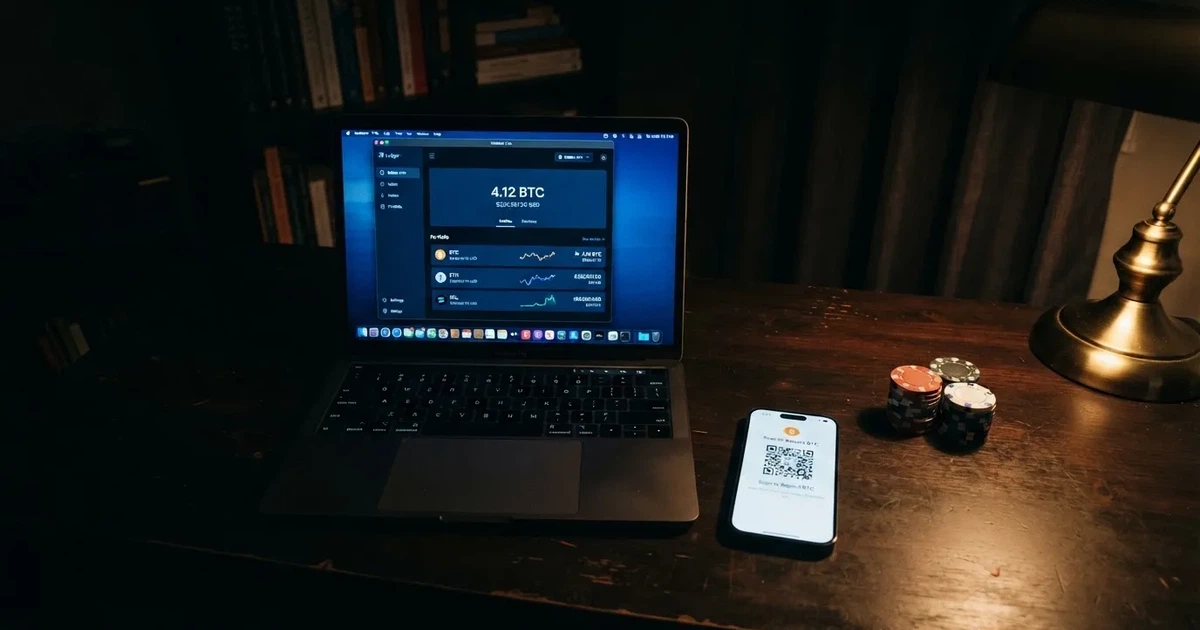
Bitcoin and USDT transfers settle in minutes regardless of jurisdiction; that is the single feature of crypto that the marketing copy leans on. The “no ID verification” wording extends the rail’s speed benefit to a claim about identity, and the implied promise is that a punter can move money in and out without leaving an audit trail. The promise is half-true.
Half-true because the on-chain transfer is fast and the on-chain record is permanent. The on-chain record is enough to reconstruct the punter’s wallet history; given a wallet address, the full transaction graph back to the origin exchange is openly available. What the half-truth obscures is the moment the punter converts crypto back to fiat: an Australian exchange will require KYC at that point, and the exchange’s records are subject to AUSTRAC’s AML/CTF regime with a seven-year retention rule. A punter who thinks they have moved the audit trail off the page has only moved it from one institution to another.
Osko and PayID, the Australian retail-payment counterparts, carry a different kind of identification. With Osko, a bank transfer between participating Australian banks arrives in under a minute, 24/7 including weekends, whether it is addressed to a BSB and account number or to a PayID. Paying to a PayID shows the name of the account holder before the transfer is sent — so the act of paying itself confirms the recipient’s identity, in the punter’s own bank session. AP+ warns that being asked to transfer money to a PayID on an illegal gambling site almost certainly means a scam site; the warning is published because the scammers have been caught doing exactly this.
The contrast is the point. A bank transfer arrives identified; a crypto transfer arrives unidentified at the rail and identified at the exchange. The marketing copy writes the contrast as speed-versus-anonymity; the regulatory picture writes it as licensed-versus-unlicensed, with the licensed side keeping the punters’ identities in their own banks and the unlicensed side exporting them to a wallet history that nothing on this page can erase.
A Note on the “No Verification” Promise and the Operator’s Own Fine Print
The promise and the operator’s terms almost always tell a different story. Three patterns recur across the eleven brands above; the punter looking at any of them should check which one is in force before they deposit.
Staged verification. The site requires no documents at sign-up and deposit; full KYC is demanded before the first withdrawal. The marketing language describes the deposit phase; the operator’s terms describe the withdrawal phase. The punter who loses the moment is the one who has built a session around the deposit-only language and is asked for documents at withdrawal.
Threshold-triggered KYC. Most operators publish a withdrawal threshold (commonly in the low thousands of dollars equivalent) under which no KYC is requested. Above the threshold the same operator demands full KYC. The punter who plans a small withdrawal under the threshold and a larger one over it sees two transactions with two verification regimes.
Crypto-as-exception clauses. Some operators extend the no-KYC promise to specific crypto rails up to a per-transaction cap, then KYC at the cap. The cap is set by the operator, the cap is below the size of any meaningful winning session, and the cap is not a feature the marketing copy leads with.
Across all three patterns, the “no ID verification withdrawal” claim is described in marketing language and bounded by operator terms in legal language, and the operator’s terms are what is enforced. The punter paying the cost of the gap between the two is the punter who believed the marketing language and met the operator terms.
What the punter Pays
Putting the marketing language to one side and reading the law and the published action back at it, the punter considering any of these eleven brands faces a small number of costs. They are not always the same kind of cost; some are financial, some are procedural, some are loss-of-control. All are real, and all are absent from the marketing copy.
The first cost is access. The site can be geo-blocked within weeks of a fresh ACMA action. The blocking-order mechanism operates by asking Australian ISPs to refuse resolution, so once a brand is on the list, every Australian IP address the operator tried to serve is gone. The punter’s account balance, if any, is gone with it. The historical blocking pace — averaging somewhere in the range of fifteen to twenty sites per month across recent rounds — tells a punter with a balance on the books how long they have to withdraw before the domain disappears from under them.
The second cost is process. The punter who does withdraw successfully pays the operator’s processing fees, the blockchain’s network fees, and the FX spread between any non-AUD denomination and the bank account that ultimately receives the funds. The same punter does not pay an Australian consumer-protection body, because there is no Australian consumer-protection body connected to the operator. There is no ombudsman, no AFCA pathway, no regulator the punter can complain to if the operator refuses the withdrawal. The “no ID verification” promise is the reason for that gap, and the gap is what the promise costs.
The third cost is exclusion. BetStop, the National Self-Exclusion Register, binds Australian-licensed services only. The punter who has registered with BetStop can still open an offshore account using a fresh email address, because no offshore operator checks against BetStop and “no ID verification” makes a checks-against-anything model structurally incompatible with the offer. The punter who has registered is paying the cost of an exclusion mechanism that does not reach the operator in front of them.
The fourth cost is currency. Crypto-to-fiat conversion at an Australian exchange requires KYC, and the exchange is the institution that holds the punter’s identity. The cost of a USDT payout that “needs no verification” at the casino end is the KYC the exchange performs at the other end — same identification, different institution, with the operator’s commission and the blockchain’s network fee between them.
The fifth cost is recourse. An operator that refuses a withdrawal, blocks the account or voids winnings leaves the punter with the operator’s internal dispute process as the only working option. The operator’s internal dispute process is run by the operator. That is the entire cost the marketing word does not mention.
How the Rate Has Moved — and Where the Curve Is Heading
The blocking-rate calculation on this page uses the ACMA’s own June 2026 figure: 1,751 websites blocked since November 2019. Worked against the roughly 79-month window, the long-run rate comes out near 22 blocked sites per month, with a band that runs from a low of about four per month in the early rounds to a high of more than twenty per month in the most recent reporting quarters. The rate is not flat; it has been rising.
The move in the rate is consistent with two regulatory shifts. The first is the 2023 amendment to the Interactive Gambling Act, which gave the ACMA the powers that the rapid blocking rounds have used since. The second is the payment-method ban that came into force on 11 June 2024, which tightened the legal distinction between licensed and offshore operators and gave the ACMA more published reasons to act. Future rate shifts depend on whether the 2026 reform (the Interactive Gambling Amendment (Gambling Reform) Bill 2026, passed on 19 August 2026, with advertising and inducement measures commencing on 1 January 2027) translates into more enforcement muscle; the rate the page records today is the rate the new measures will operate against.
For a punter reading the rate today, the practical read is that an offshore brand’s runway shrinks as the rate rises. A site that took twelve months from first warning to first blocking in 2020 might take three to six months on the current curve. A site that has been on the regulator’s list twice (Dama N.V.’s pattern, recorded above) is on the regulator’s list twice already; the third warning is unlikely to be slower than the second.
What a Punter Actually Has — Australian Payment Rails That Work
For punters looking for the speed and minimal-paperwork experience that the offshore “no verification” pitch implies, the licensed Australian side of the market already delivers it, without the legal frame’s gap. Debit card, bank transfer, PayID/Osko and BPAY are the legal deposit routes for licensed wagering. PayID-based instant transfers are available at over 100 Australian financial institutions, with the recipient name shown before the transfer is sent. More than 25 million PayID identifiers had been registered on Australia’s New Payments Platform as of April 2025.
Osko settles in under a minute, 24/7, including weekends — a settlement speed the marketing claim on the offshore side never quite delivers on, because offshore payout timing depends on the operator’s manual processing rather than the rail. BPAY is available in the online banking of over 140 banks and financial institutions and is offered by over 95,000 businesses; it is a bill-payment service that runs to the Biller Code and Customer Reference Number printed on the bill.
The licensed side also connects the punter to BetStop and to the regulator’s complaints pathway through AFCA when a dispute arises. The marketing proposition on the offshore side is verification-light payout at the cost of the regulator’s complaints pathway; the licensed side has the regulator and the verification. The punter’s cost-benefit on this trade-off is theirs to make, but the marketing word does not mention the trade, and the page is.
What a Punter Should Take Away
The marketing proposition is the proposition the page has been reading back at. The proposition is: payout without paperwork, fast, anonymous. The terms of the proposition: an offshore operator, an unlicensed Australian casino offering, an ACMA formal-warning register entry, a domain the ACMA can ask ISPs to block, no Australian complaints body, no BetStop coverage, and a crypto rail that identifies the punter at the next fiat off-ramp. The cost of the marketing proposition, in those terms, is the cost of leaving the Australian side’s protection system for an offer the regulator has repeatedly warned the operator to stop making.
For punters who have already registered and are looking for next steps, BetStop, the National Gambling Helpline on 1800 858 858, and the financial counsellors at the National Debt Helpline on 1800 007 007 are the working starting points. The ACMA’s enforcement is a regulator-side action; the punter’s side of the response is to lean on the support services the licensed side of the market provides.
The 11 brands above are the ACMA’s published record. The blocking-rate is the ACMA’s published record turned into a rate. The legal frame is the Interactive Gambling Act. The cost, worked through, is the proposition’s terms against its marketing language — and the marketing language is where the punter pays first.
Section Recap
What the ACMA has published, what the Interactive Gambling Act says, and what the payment rails show is the body of facts this page is built on. The eleven brands above sit on the ACMA’s formal-warning register for offering prohibited interactive gambling services to Australians; each brand sits under the same legal prohibition, regardless of the licence it advertises or the payment rail it uses. The blocking-rate calculation is the regulator’s published numbers turned into a rate of enforcement. The crypto section is the payment rail most often associated with the “no verification withdrawal” marketing claim. The card-level gambling block, the BetStop register and the licensed Australian payment rails are the alternatives the marketing claim is competing against.
Frequently Asked Questions
Why would an offshore casino advertise a withdrawal with no ID verification at all?
Because the marketing proposition is built on speed and minimal paperwork, and the proposition competes most directly against licensed Australian wagering, which does carry KYC at deposit. The proposition only attaches to offshore operators, because no licensed Australian online casino exists. The same proposition — payout without paperwork — exists in licensed Australian wagering on smaller balances, where the regulator’s identity rules are lighter; the offshore operator’s version of the proposition is offered with no Australian licence, no BetStop coverage, and no dispute body.
Does skipping identity checks on a withdrawal make an offshore pokies site any more legitimate?
No. The legitimacy of an Australian-facing casino is set by whether the operator is licensed under Australian law for the service it is offering. Online casino games and pokies cannot be licensed anywhere in Australia; no operator can skip identity checks and become licensed. Skipping the checks does not add legitimacy; it removes the documents a regulator would otherwise have to check the operator against.
How does a blockchain-based payout differ from a bank withdrawal in terms of who can trace it?
A blockchain payout is settled on a public, permanent ledger that anyone holding the wallet address can read in full, all the way back to the originating exchange. A bank withdrawal is settled against a closed ledger the participating banks can access. The “anonymity” of the blockchain is at the settlement-rail layer; the “identification” of the bank transfer is at the account-number layer. Both end up identified once the punter converts back to fiat through a regulated institution.
Is it legal for an Australian to withdraw funds from an offshore casino that skips verification?
The Interactive Gambling Act targets the provider, not the customer. Withdrawing funds from an offshore casino is not, in itself, an offence against Australian law for the player. The legal frame the punter is operating in is the consumer-protection gap: no Australian regulator connects to the operator, no BetStop registration covers the site, and there is no Australian complaints body an unpaid withdrawal can be referred to.
What risk does a player take on by using a site that never verifies identity before paying out?
The site is operating outside Australian law for the service it offers, and the player has no Australian complaints pathway if the site refuses to pay. The site can be geo-blocked with funds still on it. The payment rail that delivers the payout identifies the player elsewhere — at the bank for fiat, at the exchange for crypto. The verification step the operator is skipping is the step that would otherwise give a regulator a complaint to look at.
Why do “no verification withdrawal” claims so often appear alongside crypto casino advertising?
Because the marketing claim conflates the payment rail (which is genuinely fast and pseudonymous) with the operator’s verification policy (which is set by the operator, not by the rail). The rail is fast; the policy is operator-side. Operators who lean on crypto advertising tend to be the same operators on the ACMA’s formal-warning register; the marketing equation is built around the speed of the rail and away from the operator’s licence status, which is the speed not on offer.