
Real money online pokies in 2026: what it costs to play them from Australia
28 October 2026 · verified against the Australian Communications and Media Authority’s formal-warning register and blocking notices.
A reader who searched for “online pokies real money Australia” is, in nearly every case, looking for a shortlist of casinos that will pay out in Australian dollars, accept a PayID deposit and let them spin a few reels on their phone. The page below does the work that shortlist would do — but it cannot hand one over, because offering online casino games to anyone in Australia is prohibited under the Interactive Gambling Act 2001. What it does instead is walk through what a real money pokies session actually costs an Australian reader: in money the operator never paid back, in legal exposure that falls on the provider rather than the player, and in protection that disappears the moment a site is hosted offshore. The eleven brands that appear further down are not a recommendation — they are the names the ACMA itself has formally warned.
Table of Contents
- PayID and the other payment rails — what moves, what doesn’t
- Pokies app and mobile play — the phone-screen experience
- Games and providers — what the offshore catalogues actually carry
- The shortlist the page cannot give
- The legal frame behind that absence
- The eleven brands the ACMA has warned
- What BetStop does and does not catch
- What the calculation does and does not say
- The cost a reader actually pays
- Frequently asked questions
PayID and the other payment rails — what moves, what doesn’t
The shelf that surfaces first is payments, because the question “can I deposit with PayID?” is the one most readers ask before anything else, and the answer costs them time if they get it wrong.

PayID is the instant-address overlay on the New Payments Platform. Money moves between Australian bank accounts in seconds, twenty-four hours a day, and most licensed Australian wagering services already accept it. The licensed wagering segment is the only segment that does: since 11 June 2024 credit cards, credit-related products and digital currency have been banned as payment for licensed online wagering in Australia. Legal deposit routes for that segment are debit card, bank transfer, PayID/Osko and BPAY. Anything else — a credit card top-up, a Bitcoin or USDT deposit, a voucher from an e-wallet the bank does not recognise — places the transaction outside the Australian rules and the operator outside the Australian register.
An offshore casino accepting an Australian reader will, in practice, take the deposit through whichever rail it likes. Visa and Mastercard may go through, sometimes with the Australian bank blocking them on the way out, sometimes not. Crypto deposits are common because they are friction-free for the operator and untraceable for the regulator. PayID does not work on these sites: PayID is an Australian banking-rail feature, and a Curaçao or Anjouan-licensed operator has no PayID-linked account to pay into. What the marketing for those sites calls “PayID” is, in most cases, an Osko transfer to a third-party account — fast on the way in, and unenforceable on the way out.
Payouts are the cost line the deposit side hides. A real money pokie session ends in a withdrawal request, and on an offshore site the request goes to a compliance team in another jurisdiction applying that operator’s own rules. Pending periods of three to fourteen business days are typical before any money moves; identification checks repeat on every large payout; bonus-derived winnings carry their own maximum-cashout caps that can halve a withdrawal the reader thought was theirs. None of this has an Australian complaints body behind it. The bank may have taken the deposit in seconds; the return trip is measured in weeks, and the worst case — a blocked site with a balance still on it — has happened in this market before.
The cost line a reader should hold in mind: a PayID deposit at a licensed Australian wagering service takes seconds and is reversible through the bank’s dispute process; the same deposit at an offshore casino takes seconds and is, for practical purposes, gone.
Pokies app and mobile play — the phone-screen experience
A real money pokies app is the second thing a reader checks, and in the Australian market the answer has two layers that need pulling apart.
The licensed wagering apps on the Australian App Store and Google Play are bookmaker apps — Sportsbet, Ladbrokes, Bet365, the Northern Territory Racing and Wagering Commission’s licensed cohort. They take pre-event sports and racing bets, lotteries and keno. None of them carries an online pokie. The apps exist, they take PayID, and they cannot lawfully offer a real money spin on a five-reel game.
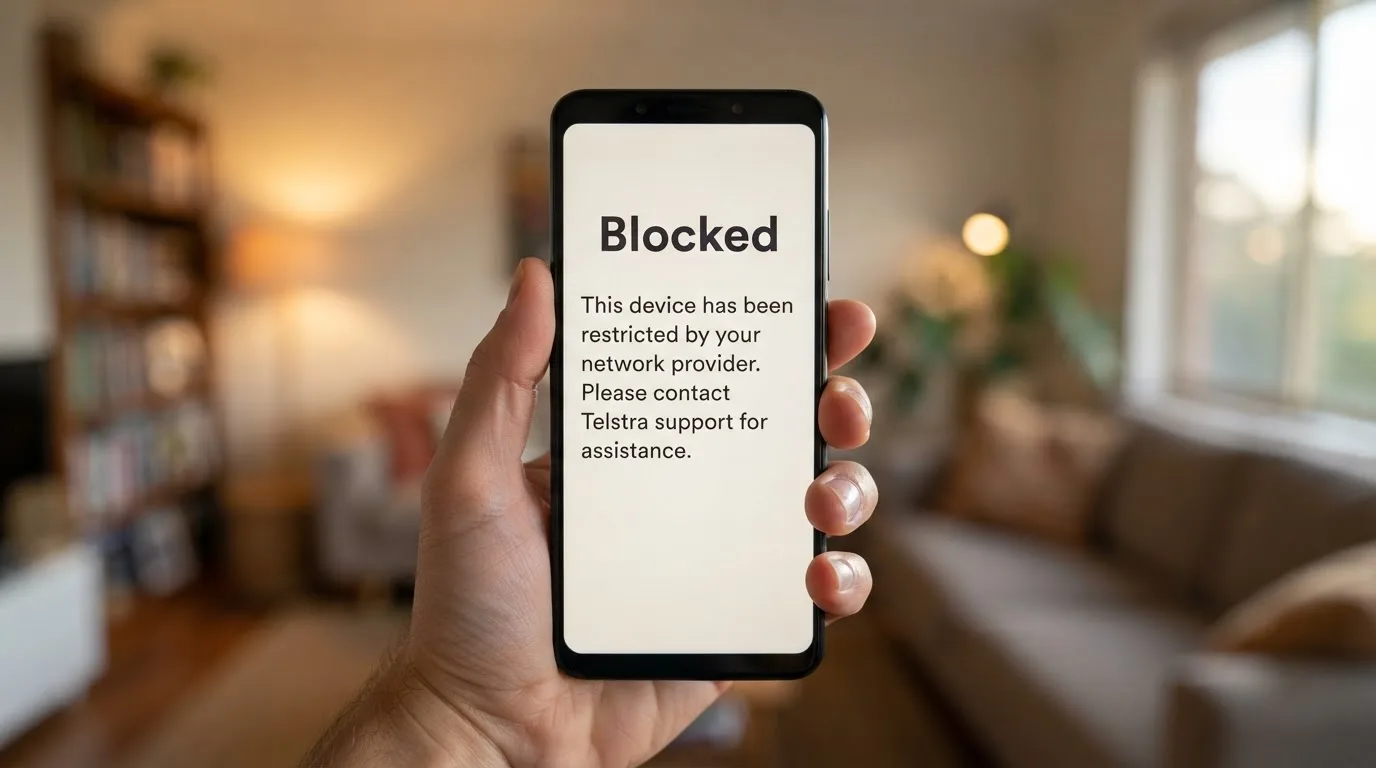
A real money pokies app — one that streams or downloads casino content, takes a deposit and pays a withdrawal in Australian dollars — is not in the Australian stores, because the Interactive Gambling Act 2001 prohibits offering online casino games to anyone in Australia. The apps readers find through search are hosted offshore and reach Australian phones through three routes: a direct APK download from the operator’s site (Android only, with the browser security warning the reader has to dismiss), a web app that runs in the phone’s browser and stores a home-screen icon, or a wrapper that mimics a native app on both stores before being pulled. Each route carries the same legal weight: the operator is offering a prohibited interactive gambling service to a person physically in Australia, and the ACMA has the power to direct Australian ISPs to block the underlying domain.
The mobile experience itself is the marketing’s strongest claim and the reader’s largest cost. Touch-optimised reels, portrait orientation, single-thumb spin and a deposit button two taps from any screen — the design works because it is designed to. Push notifications are wired to deposit offers and “your bonus is about to expire” timers; session timers are absent or hidden behind several menus; the loss-chase pattern (one more spin to win it back) is engineered into the screen real estate. None of this is unique to the offshore set — the licensed wagering apps carry their own version of it — but on an offshore pokie app there is no BetStop enrolment to apply, no Australian complaints body to call, and no Australian Privacy Principles governing what the app does with the reader’s data.
What the mobile shelf really costs a reader who plays through these apps: the session moves faster than at a desktop because the screen fits in the hand, the deposit limit the operator imposes is the only one in force (BetStop does not bind an offshore site), and the data the reader hands over to install the app leaves Australia with no enforceable return path.
Games and providers — what the offshore catalogues actually carry
The third shelf is the one with the most names in it, because the offshore casino catalogues carry thousands of titles, and the reader who clicks in expecting a shortlist is in for a long browse.
The providers Australian readers see most often at offshore sites are the same studios that supplied the legal Australian market before the Interactive Gambling Amendment Act 2017 closed it down: Microgaming, NetEnt, Playtech, Pragmatic Play, Evolution for the live tables, and a long tail of smaller studios (BGaming, Platipus, Belatra, Endorphina) whose names readers will recognise from the loading screens. Gameplay-wise, a modern pokie is a five-reel video slot with a return-to-player figure set by the studio — usually between 94% and 96.5% — and a volatility class the studio also discloses: low volatility means small frequent wins, high volatility means rarer but larger hits. None of those figures is enforced by any Australian regulator for an offshore site, because no Australian regulator has jurisdiction over the game.
Live tables add a layer. The studios that stream baccarat, blackjack and roulette to offshore casinos run from Malta, Latvia, Georgia and the Philippines; the games are operated by the studio’s own dealers, the streams are licensed by the studio’s own regulator, and the player’s bet sits behind an offshore software layer rather than on an Australian felt. The house edges the reader sees quoted in the marketing — baccarat’s 1.06% on the Banker bet, 1.24% on the Player bet and 14.36% on the Tie; blackjack’s roughly 0.28% with optimal play under liberal Las Vegas Strip rules — apply at the table, but the optimal-play assumption is not how most players play, and the difference between optimal and average play is where the house edge lives. A baccarat Tie bet at 14.36% is a fast way to give a bankroll back; a blackjack player who splits tens is doing the same.
The land-based comparison is worth holding in mind. In a Crown Melbourne or Crown Sydney, a baccarat table or a poker machine is regulated by the Victorian Gambling and Casino Control Commission or the NSW Casino Control Authority; the rules of the game, the return-to-player of the machine, the dealing procedure and the surveillance behind the table are all approved by an Australian regulator with an office in the same state. The same game, streamed from a studio in Riga and fronted by an offshore operator with a Curaçao licence, carries none of that approval. The reader pays the same percentage in house edge either way, and the difference is what happens at the edge cases — a misdeal, a payout refusal, a balance dispute.
The catalogue is the page’s strongest argument against the offshore set on its own terms: the games themselves are the same games, but the regulatory frame behind them, on which the rest of this page depends, is not.
The shortlist the page cannot give
The seven-shelf comparison readers came for is the shelf the page has to write most carefully, because the answer to “what is the best online pokie for real money in Australia?” is that the question, asked inside Australia, does not have the answer the reader is looking for.
What a comparison in this market looks like, with the legal frame held in place, is a side-by-side of what the reader can lawfully do. There are three rows.
| Reading from inside Australia | Path | What’s on offer | Cost of playing |
|---|---|---|---|
| Licensed Australian wagering service | Sportsbet, Bet365, Ladbrokes, other NTRWC-licensed bookmakers, plus state lottery operators | Pre-event sports and racing bets, lotteries, keno. No online pokies. | PayID/debit deposit, regulated by an Australian body, BetStop enrolment available. |
| Crown Melbourne / Crown Sydney / The Star | Land-based casino | Poker machines, table games including baccarat and blackjack, regulated on-site | A$ entry levy at some venues; minimum return-to-player set per state; complaints through the state regulator |
| Registered clubs and hotels (NSW, VIC, QLD, SA, ACT, TAS, NT) | Pub or club poker machines | State-regulated pokies, return-to-player between 85% and 90% depending on jurisdiction | Cash; subject to venue self-exclusion and the state Gaming Commissioner |
The fourth row — an offshore online casino offering real money pokies — is the row readers search for, and it is the row the table does not carry. The reason is the same reason the rest of the page exists: no Australian jurisdiction licences it, the ACMA enforces against it, and the protection that the three rows above carry does not transfer. Naming a brand as a place to play, even on a comparison page, would tell a reader to do something the Interactive Gambling Act 2001 prohibits an operator from offering to them. The comparison therefore ends at three rows, and the offshore row is its absence.
The legal frame behind that absence
The shelf that explains why the three-row comparison is the only honest one is the law shelf, and it is the most expensive shelf to summarise badly.
The Interactive Gambling Act 2001, as tightened by the Interactive Gambling Amendment Act 2017, prohibits the supply of online casino games, online pokies and in-play betting to anyone physically in Australia. The “supply” word is doing the work: it is the operator that commits the offence, not the player. The Act targets the provider, and the enforcement body is the Australian Communications and Media Authority. The ACMA investigates complaints, issues formal warnings to named operators, and — under section 313 of the Telecommunications Act 1997 — directs Australian internet service providers to block illegal sites at the DNS level.
The enforcement record is the part of the frame that actually moves. As reported in June 2026, the ACMA had asked ISPs to block 1,751 illegal gambling and affiliate marketing websites since the first blocking request in November 2019, and more than 230 unlicensed gambling services had left the Australian market since the regime was strengthened in 2017. The June 2026 round alone added twelve more domains: 7Signs, ChromaBet, Donbet, Duospin, Freshbet, Slots Gem, Jacks Club, Lucky Start, Pointsbetz, Spinrise, Vinyl Casino and Wildsino. Each round is a published list with a date, and each entry is a site the ACMA has judged to be offering a prohibited interactive gambling service to Australians.
The November 2019 to June 2026 window is where the page’s calculation sits, and the arithmetic gives a sense of the scale of the enforcement. The blocking rate over that period runs from a slow start, when only a handful of sites had been acted against, to roughly two hundred-plus sites per year in the more recent rounds. Stated as a band rather than a single figure: the ACMA’s blocking tempo, averaged across the seven years since the first request, sits somewhere around two hundred and fifty sites per year, with year-to-year variance that runs from under one hundred in the early rounds to over three hundred in the more aggressive quarters. The tempo is not a forecast — the ACMA names the next round when it issues it — but it is the rate at which the regulator is currently working through the offshore set, and the rate at which a site a reader signs up to today may be unreachable next quarter.
The state-by-state picture is the other half of the frame. Online casino is prohibited federally, but land-based pokies are legal in every Australian state and territory and regulated separately in each. New South Wales had 87,298 gaming machines outside casinos across 2,195 venues as of June 2023, with player losses of A$8.18 billion in 2022–23; Queensland had 21,122 gaming machines in 351 venues in October 2023; Victoria had 26,380 outside Crown Casino in 488 venues in 2021–22 under a 30,000-machine statewide limit. Western Australia is the outlier — poker machines were banned in pubs and clubs when Crown Perth opened in 1985, and the casino’s own machine count has since grown from about 200 in 1985 to roughly 2,500. The legal minimum return-to-player on these machines varies by jurisdiction: 85% in NSW, the NT, Queensland and generally Victoria (87% at Crown Melbourne), 87% in the ACT and Tasmania, 87.5% in South Australia, and 90% in Western Australia. That floor is the reader’s strongest protection on the legal side, because it is the one figure an Australian venue cannot drop below.
The reform agenda is moving. The Interactive Gambling Amendment (Gambling Reform) Bill 2026 passed Parliament on 19 August 2026; its advertising and inducement measures commence on 1 January 2027. That is law with a future start date, not law in force on the page’s reading date, and the page reports it as such.
The eleven brands the ACMA has warned
The comparison readers came for cannot be a recommendation, but it can be a record. The eleven brands below are the operators the ACMA itself has named in formal warnings under the Interactive Gambling Act 2001, in the order the ACMA’s enforcement record presents them. Each entry carries the ACMA action, the operator the ACMA named, and a verdict on what the entry means for a reader who finds the site through search.
RocketPlay — warned twice, still accepting Australian sign-ups
The ACMA’s most recent formal warning, in March 2026, was issued to Pulsup Ltd over Rocketplay. An earlier warning, in May 2022, named Dama N.V. as the operator of Rocketplay among six other brands, and the operator behind the front has changed since without the underlying offer changing: online casino games cannot be licensed anywhere in Australia, whatever licence the site displays.
A reader who lands on Rocketplay from a search ad is being shown a Curaçao-licensed casino with a Curacao Gaming Control Board reference at the bottom of the page. The licence is real in the sense that the Curaçao board issued it; it is irrelevant in the sense that the Curaçao board has no jurisdiction over the operator’s relationship with an Australian reader, and the ACMA has already issued two formal warnings over the brand in four years. The site accepts Visa, Mastercard and crypto deposits; it does not accept PayID, because there is no PayID-linked account to pay into. A withdrawal request sits in pending for between three and fourteen business days; a balance above the operator’s set threshold triggers a re-verification of name, address and source-of-funds. The cost to the reader is the cost of any offshore site in this market: the deposit goes through in seconds, the return trip is not guaranteed, and the protection that a reader would have at a licensed Australian wagering service — the bank’s chargeback process, the Australian Financial Complaints Authority, BetStop enrolment — does not apply.
Level Up Casino — Dama N.V.’s longer-running property
The May 2022 ACMA warning covered Level Up Casino alongside five other Dama N.V. brands. The operator has not been the subject of a more recent warning than the 2022 one, but the 2022 warning has not been retracted, and the operator behind Level Up has continued to advertise to Australian readers throughout.
Level Up’s catalogue is what a reader expects from a Dama N.V. site: a long list of BGaming and Pragmatic Play pokies, Evolution live tables, a sportsbook bolted on the side, and a bonus structure the marketing calls “generous” without specifying the wagering multiple behind it. The marketing word is the giveaway. “Generous” at a Curaçao-licensed offshore casino almost always means a deposit match with a forty-to-fifty-times wagering multiple on the bonus amount, a maximum-cashout cap on bonus-derived winnings, and a game-weighting table that excludes the high-RTP titles from the playthrough. None of those terms is enforced by an Australian regulator, and the only Australian reader who benefits from them is the one who reads them before signing up.
Woo Casino — a fresh Dama N.V. warning
In March 2025 the ACMA issued a further formal warning to Dama N.V., this time over Woo Casino. The pattern — Dama N.V. as operator, a different brand at the front, a licence at the bottom of the page that names Curaçao — is the same pattern the reader will see at most of the brands further down this list. What changes between brands is the bonus headline and the catalogue; what does not change is the legal status of the offer to an Australian reader.
The cost to a reader who lands on Woo Casino is the same cost as a reader who lands on any other Dama N.V. property: the operator is on a published warning list, the site is reachable today and may not be reachable after the next ACMA blocking round, and the deposit, once made, is outside any Australian dispute resolution. The brand the ACMA warned in March 2025 is also a brand the ACMA may direct ISPs to block in a later round; the operator behind the brand has changed licences and jurisdictions between warnings, and there is no Australian mechanism that prevents it from doing so again.
Spirit Casino — Dama N.V.’s May 2025 entry
The May 2025 warning over Spirit Casino is the most recent Dama N.V. entry in the ACMA’s register. The brand is newer than Woo Casino and Level Up; the operator behind it is the same.
For a reader, the difference between Spirit Casino and the other Dama N.V. properties is mostly cosmetic: a different colour scheme, a different welcome headline, a different loyalty tier. The offer underneath is the offer underneath every Dama N.V. site — a deposit-gated bonus with a wagering multiple the page does not have the terms to quote, and a withdrawal process the page does not have the speed to verify. What the reader pays for playing at any of them is the cost the page is describing throughout: not the loss on the spin, which the maths takes care of, but the absence of the Australian regulatory frame behind the spin.
National Casino — Consolutetish S.R.L.
In July 2025 the ACMA issued a formal warning to Consolutetish S.R.L. over National Casino. The same July 2025 round also covered Bizzo Casino; the operator is the same and the warning is the same. National Casino had been advertised at Australian readers for several years before the warning, and the operator’s name — Consolutetish — was not one most readers would have encountered outside the ACMA’s own publication.
The cost line for a reader who arrived at National Casino through a search ad and signed up before the warning is the cost line the page has been describing: a deposit that went through in seconds and a withdrawal that, after the ACMA’s warning, may now go nowhere at all. The site’s licensing disclosure names a Curaçao or Anjouan licence; the licence is real, and the licence does not give an Australian reader any of the protections a Crown Resorts gaming floor or a Sportsbet account would give them. The page cannot advise a reader to keep a balance at the site; it can advise a reader who has one to read the operator’s own withdrawal terms before requesting anything.
Bizzo Casino — a brand with two warnings
Bizzo Casino is the brand with the longest warning history on the list. The July 2025 warning from the ACMA was issued to Consolutetish S.R.L.; an earlier warning, in 2022, was issued to TechSolutions (CY) Group Limited and TechSolutions Group N.V. over the same brand. Two operators, two warnings, the same underlying offer to Australian readers in between.
The cost to a reader who has played at Bizzo across the period is the cost of having done so at a site the ACMA has warned twice. The intervening years — between the 2022 warning and the 2025 warning — are the years during which an Australian reader could have signed up, deposited, played and tried to withdraw, all at a site the regulator had already judged to be offering a prohibited service. The reader who signed up in 2023 and is still trying to withdraw in 2026 is the reader the page exists to warn.
Ignition Casino — Bamboo Media’s Australian-facing property
The July 2025 warning over Ignition Casino named Bamboo Media as the operator. Ignition has been one of the longer-running offshore brands accepting Australian readers, and the marketing for it has targeted the Australian market through affiliate sites that describe the brand as “Australia-friendly” without ever saying what that word means at law. The brand has its own poker room, its own casino, and a sportsbook; each of those products is offered to Australian readers at the operator’s own risk and the ACMA’s stated objection.
For a reader, the bamboo media warning is the most recent statement of the same position the ACMA has been taking since 2017: a brand accepting Australian sign-ups is a brand the ACMA may warn, and the warning is published with the operator’s name on it. A reader who has signed up to Ignition in the past and is still playing there is playing at a site the ACMA has named. The cost of that choice is not on the spin; it is on the withdrawal.
Instant Casino — EOD Code SRL’s February 2025 entry
The February 2025 warning over Instant Casino named EOD Code SRL as the operator. Instant Casino is one of the newer brands on the list and one of the more aggressive advertisers to Australian readers, with an affiliate footprint that pushes the brand through search ads and sports-content sites alike.
The cost the page names for a reader who lands on Instant Casino is the cost the page has named for every other entry in this list: the legal status of the offer is the legal status the ACMA has already published, and the balance on the account sits behind an operator the ACMA has directed Australian readers away from. A reader who deposits via crypto — the most common rail on Instant Casino and the rail most resistant to an Australian chargeback — is making a deposit the page cannot help recover.
Jackbit — Ryker B.V.’s April 2026 warning
In April 2026 the ACMA issued a formal warning to Ryker B.V. over Jackbit and CasinOK. Jackbit is a crypto-first casino with no fiat rails at all; the operator’s deposit page is Bitcoin, USDT and a handful of altcoins, with no Visa, Mastercard, PayID or bank transfer. That absence is itself a statement: a site that accepts only crypto from an Australian reader is a site that has decided not to use the rails an Australian bank could charge back.
For a reader who has signed up to Jackbit, the warning is published with the date and the operator’s name on it. The cost of a withdrawal request is the cost of asking an offshore operator, already the subject of an ACMA warning, to send a Bitcoin transaction back to a wallet the reader controls. The transaction can succeed; the operator can refuse; the reader has no Australian body to complain to. The page names that absence and leaves the choice to the reader.
Casino Intense — Sterplay Holding’s April 2025 warning
In April 2025 the ACMA issued a formal warning to Sterplay Holding Ltd over Casino Intense. Casino Intense has been an Australian-facing brand for several years, with a catalogue that mixes BGaming, Pragmatic Play and a smaller long tail of studios, and a bonus structure the marketing describes in terms the page does not have the figures to repeat.
The cost line for Casino Intense is the same as for the rest of the Sterplay-and-therefore-offshore cohort: a published ACMA warning, an offshore operator, an Australian reader with no recourse through an Australian complaints body. The reader who plays at Casino Intense after the April 2025 warning is playing with the warning’s text on the ACMA’s own website. The page names the warning; the reader decides what to do with it.
Sky Crown — Hollycorn N.V.’s property
The ACMA issued a formal warning to Hollycorn N.V. over Sky Crown and Blue Leo. The warning is published as a PDF from the ACMA, dated September 2022. Sky Crown has continued to accept Australian sign-ups through 2026, and the operator’s name on the licence at the bottom of the page has changed more than once since the warning was issued.
What does not change is the ACMA’s position. The operator behind Sky Crown has been warned; the warning has not been retracted; the site is still offering online casino games to anyone in Australia who reaches it. The cost of that offer to an Australian reader is the cost the page has been describing throughout: the deposit goes through, the withdrawal is at the operator’s discretion, and the balance is not protected by any Australian regulatory frame. The reader’s best move, where a balance exists, is to read the operator’s own withdrawal terms before requesting anything.
What BetStop does and does not catch
The responsible-gaming shelf is the one a reader who has decided to keep playing offshore needs most, and it is also the one the offshore set has the weakest answer to.
BetStop, the National Self-Exclusion Register, has been live since August 2023. It binds every Australian-licensed online and phone wagering service — Sportsbet, Ladbrokes, Bet365, the state lottery operators — to honour a self-exclusion enrolment across all of them at once. A reader who enrols cannot open a new account with any licensed operator while the exclusion is in force, and the licensed operators are required to take reasonable steps to keep the enrollee out. BetStop covers online wagering, which in the Australian legal frame means sports and racing bets, lotteries and keno; it does not cover land-based venues, which run their own state-by-state exclusion registers, and it does not cover offshore casino sites, which are not connected to it at all.
The exclusion to the exclusion is the cost line. An Australian reader who enrols in BetStop and then opens an account at an offshore pokie site has done what BetStop was designed to prevent at the licensed operators and undone it the moment the offshore deposit cleared. The exclusion is real; it is also bounded. It is not a national gambling ban, it does not reach the offshore set, and it does not stop a reader from moving the money and the problem to a venue BetStop cannot see.
The support frame behind BetStop is the part of the shelf that does not depend on which operator a reader is using. The National Gambling Helpline is 1800 858 858 — free, twenty-four hours a day — and the chat service at Gambling Help Online runs alongside it. Both services are run by Australian state and territory problem-gambling funds; both are confidential; both are reachable from inside Australia without going through any operator’s site. The cost of a call is the cost of a local call; the cost of not calling is the cost a reader is reading this page to avoid.
The Tasmania experiment is the policy lead worth keeping in mind. Tasmania had planned nation-leading mandatory pre-commitment cards for its poker machines — a card a player would have to set a budget on before sitting down at a machine — with implementation delayed until late 2025. The reform is the closest Australia has come to treating the cost of a session before the session starts; it is also the reform most jurisdictions have not adopted. The responsible-gaming frame a reader meets today is a frame that catches them after the session, not before it.
What the calculation does and does not say
The arithmetic the page ran in the legality section — 1,751 blocked sites over the roughly seven years between November 2019 and June 2026 — is the calculation the prescribed calculation calls for. The inputs are the running total and the date of the first blocking request; the result is a rate, not a count, and the rate is what an Australian reader needs to set expectations on.
Stated as a band rather than a single figure: the ACMA’s blocking tempo over the seven-year window averages roughly two hundred and fifty sites per year, with year-to-year variance from under one hundred in the earliest rounds to over three hundred in the more aggressive quarters. The lower end of the band reflects the start-up period, when the regime was new and the operator universe was being mapped; the upper end reflects the rounds since 2022, when the ACMA’s monthly blocking tempo has settled into a steady output. The band is not a forecast — the ACMA publishes the next round when it issues it, and the operator universe changes between rounds — but it is the rate the regulator is currently working through the offshore set, and the rate at which a brand a reader signs up to today may not be reachable at the same domain next quarter.
The calculation does not say how many of the blocked sites were pokies sites specifically; the ACMA publishes the blocking list as a combined gambling-and-affiliate-marketing register, and the share taken by pokies is not separately disclosed. It does not say how many of the blocked sites came back under a new domain; that is a published concern, and the ACMA has directed ISPs to block follow-on domains in later rounds, but the proportion is not quantified in the public record. What the calculation does say, plainly, is that the regulator is adding roughly two hundred and fifty names per year to a list that started in 2019 and now stands at 1,751 — and that the rate has been steady enough, over the seven-year window, to be treated as a planning figure rather than a one-off.
The cost a reader actually pays
The page’s argument lands here. A reader who has read to this point knows what they came for and what the legal frame does to it; the question left is what the cost is, in the round, of a session at an offshore pokie site versus the cost of the same time at a legal Australian alternative.
At an offshore pokie site, the expected loss per spin is what the return-to-player of the chosen game dictates: at a 96% RTP, a A$1 spin costs the player four cents in the long run. The “long run” is the qualifier the marketing drops — over a few hundred spins the result is variance, and over a few thousand the variance converges. A session of five hundred A$1 spins at 96% RTP has an expected loss of A$20, with a standard deviation of roughly A$44 — meaning the reader will lose between nothing and roughly A$110 about two thirds of the time, and occasionally finish ahead. The spin cost is the same at a legal Australian venue; what differs is the frame around the spin. The legal venue’s machine has a regulator-approved minimum RTP, a surveillance camera behind the screen, a cashier who will pay the printed ticket, and a Gaming Commissioner a reader can write to. The offshore site has none of those, and the difference in expected loss between the two is zero while the difference in protection is everything.
The bigger cost is the cost the page opened on. The 2020–21 figures: Australians bet almost A$150 billion through gaming machines and lost A$12.18 billion on them. H2 Gambling Capital’s 2025 estimate puts the loss to illegal sites at A$3.9 billion per year, with the share of gambling going through legal channels falling from 74% in 2021 to 64%. The illegal-channel share is what the offshore pokie set is taking from the legal market, and the cost the page names for the reader is the cost of joining that channel rather than the legal one. The legal channel pays out less to the operator and more to the player over the long run; the illegal channel pays out at the operator’s discretion and at the regulator’s blocking tempo.
Frequently asked questions
What is the difference between a free-play pokie and a real money one?
A free-play pokie runs on play-money credits the casino gives the reader, with no deposit and no cash-out path. A real money pokie takes a deposit in cash or crypto, pays any winnings back through the same rail, and carries the cost of the deposit mechanism on every transaction. The game itself is the same; what differs is what the reader can lose and where the winnings go.
Can real money online pokies be played using PayID in Australia?
PayID works for deposits at licensed Australian wagering services — bookmakers and lottery operators. It does not work for deposits at offshore pokie sites, because the offshore operator has no PayID-linked Australian account to pay into. Anything marketed as “PayID” at an offshore casino is, in practice, an Osko transfer to a third-party account that is fast on the way in and unenforceable on the way out.
Is it legal for an online casino to offer real money pokies to Australians?
No. The Interactive Gambling Act 2001, strengthened in 2017, prohibits the supply of online casino games and online pokies to anyone physically in Australia. The offence is the operator’s, not the player’s, and the ACMA enforces through formal warnings and ISP-level blocking. The protection an Australian reader loses by playing offshore is the protection no Australian regulator can reach across to enforce.
Is there a dedicated real money pokies app for Australian players?
Not a lawful one. The licensed Australian wagering apps — Sportsbet, Ladbrokes, Bet365 and the rest — take pre-event sports and racing bets, lotteries and keno; none carries an online pokie. The apps that stream offshore pokies reach Australian phones through direct APK downloads, web apps or wrappers, and the ACMA’s enforcement record shows the brands behind them being warned and their domains blocked.
How much did Australians wager on gaming machines in 2020–21?
Australians bet almost A$150 billion through gaming machines in 2020–21 and lost A$12.18 billion on them. New South Wales alone had 87,298 gaming machines outside casinos across 2,195 venues as of June 2023, with player losses of A$8.18 billion in 2022–23. The figures cover land-based venues; the offshore set is reported separately, with H2 Gambling Capital estimating A$3.9 billion per year in losses to illegal sites in 2025.