
The real cost of playing House of Pokies from Australia in 2026
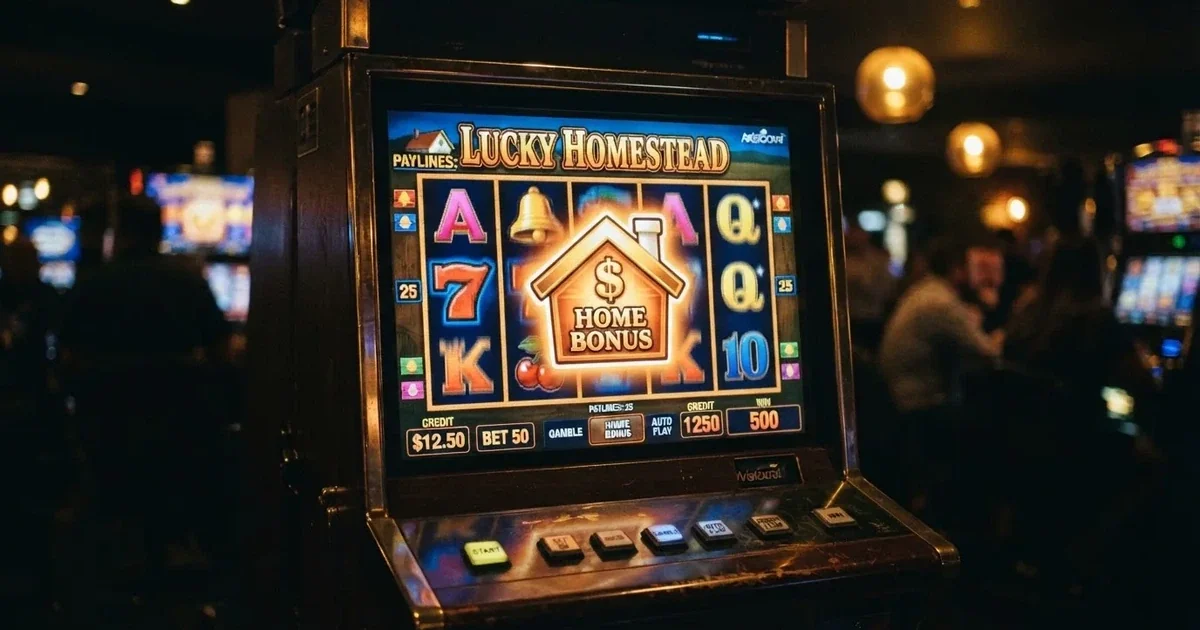
The marketing for House of Pokies talks about welcome bonuses, free spins codes and a mobile app download. The page below talks about something different: what playing this offshore brand from Australia actually costs the punter who funds it. Online casino games, including pokies, are prohibited outright under the Interactive Gambling Act 2001, and House of Pokies is one of more than 1,750 sites the ACMA has had blocked since November 2019. The rest of this piece works through what that prohibition means for a withdrawal, a no-deposit bonus code, an “app” and a free-spins offer, then ranks eleven ACMA-named brands against each other so a reader can see the full landscape rather than one operator’s pitch.
Currency stamp: 28 October 2026 · verified against the ACMA Register of blocked and warned services and against the Interactive Gambling Act 2001 (Cth) as published on the Federal Register of Legislation.
Table of Contents
- Bonuses and free spins: the price tag behind the headline number
- The mobile app and the browser site: the same product in a different wrapper
- Games, providers and live tables: what is actually on the site
- Eleven ACMA-warned offshore brands compared
- What the offshore casino landscape actually is
- Legality and regulation: what the IGA actually says
- Responsible gambling and what an unlicensed site cannot offer
- Payments and payout speed: what the reader pays for in time and friction
- The choice the page is really making
- Frequently asked questions
Bonuses and free spins: the price tag behind the headline number
A sign-up bonus, a free spins bundle and a no-deposit code look like value for nothing. They are not. Each one is a marketing wrapper around three things the reader pays for regardless of whether the bonus clears: turnover the bonus must run through, a time limit on doing it, and a ceiling on what can actually be taken out.
Sign-up bonus. House of Pokies and its offshore peers run the same structure. The “bonus amount” is matched against a deposit, then a wagering multiple — commonly between 35× and 50× the bonus — must be turned over before any withdrawal unlocks. Free money does not arrive free. The wagering multiple is the real number to read, and offshore brands sit toward the heavier end of the market without an Australian complaints body to appeal to.
Free spins codes. “50 free spins on signup” reads cleanly and conceals the same machinery. Each spin has a stake, the winnings are converted to a bonus balance, and that balance then carries its own wagering multiple. The cap on what the spins can ever pay out — often a low figure, sometimes as little as A$100 across the whole bundle — is set in the same terms page the welcome banner does not link to.
No-deposit bonus code. The smallest deposit a reader can make is zero, but the wagering is not. A no-deposit code unlocks a small bonus balance (A$10 to A$25 is the band that recurs across offshore listings) that must be turned over before withdrawal, with a maximum cashout ceiling of around A$50 to A$100. Read in isolation, that sounds modest. Read against what the reader does not get — an Australian licence, an Australian complaints path, a guarantee the site is reachable next week — it costs more than it looks.
The editorial point is this: the bonus figure on the landing page is what the operator wants the reader to see. The wagering multiple, the game-weighting table, the max-cashout and the expiry clock are what the reader actually pays in time and turnover. House of Pokies sits inside that pattern. The same applies whether the offer is the headline welcome package, a free spins code dropped into an inbox or a no-deposit code promoted on an affiliate page.
The mobile app and the browser site: the same product in a different wrapper
House of Pokies mobile, House of Pokies app and House of Pokies app download are three names for one thing. The mobile site is the browser product reflowed for a phone screen. The “app” is the same product wrapped for installation, distributed outside the Australian App Store because Google and Apple do not carry real-money casino apps aimed at Australian residents. The underlying activity — online casino games, including pokies, served to a person in Australia — is identical across all three.
That carries two practical consequences for the punter using it.
First, the licensing status does not change. The Interactive Gambling Act 2001 prohibits providing online casino games to a person physically in Australia, whether the access point is a desktop browser, a mobile browser, a downloaded Android package or an iOS webview. Switching devices does not switch jurisdiction.
Second, the payment surface does not change. Australian banks apply gambling blocks at merchant-category-code level. Westpac’s gambling block refuses authorisation on transactions tagged “Betting/Casino Gambling” on eligible personal credit and debit cards. ANZ’s block, set in the ANZ app, blocks gambling transactions on a digital wallet such as Apple Pay when the underlying card is eligible, with a 48-hour cooling-off before the block can be removed. CommBank offers the same lock from its app, with the same caveat that it cannot guarantee every gambling purchase is caught. None of these blocks care whether the transaction originated in a mobile browser, a webview or a packaged app.
By the end of 2025, Apple Pay, Google Pay and Samsung Pay transactions accounted for around 45% of all card payments in Australia by number. The Australian-licensed wagering ban on credit cards and credit-related products, in force since the 2023 amendments to the Interactive Gambling Act, also constrains gambling use of a linked digital wallet. The mobile-app pitch and the underlying law therefore meet at a hard edge: a wallet the punter assumes is private is filtered at the card level by the punter’s own bank, if the punter has opted into that filter, and the operator cannot reach what the bank refuses to send.
Games, providers and live tables: what is actually on the site
House of Pokies is positioned as a pokies-and-casino brand. The catalogue across its main domain and its mirror sites lists slots under its own branding, with each title carrying a paytable that does not change between the main site and any mirror. A small number of providers recur across offshore listings — Pragmatic Play, BGaming, Evolution for live tables — but the operator’s own brand wraps the catalogue rather than letting the studio name carry the trust.
Two reading points matter here. The first is that the game does not move the legality. A slot’s RTP and volatility are properties of the math model, and that math runs regardless of whether the punter is in Sydney or Stockholm. Australian law sits on the provider, not on the game. The second is that “live dealer” tables — roulette, blackjack, game-show formats — are the same legal product as a slot machine under the IGA. Evolution’s studio licences do not transfer to an Australian resident; the studio licence covers the supplier, not the destination of the stream.
The mirror-domain point is worth naming in its own right. Offshore operators frequently maintain more than one web address for the same product, partly to keep one step ahead of ACMA blocking orders and partly to route around Australian internet service provider filters. A reader who lands on a House of Pokies URL that is not the operator’s primary domain is on the same product, the same terms, the same withdrawal process. There is no second, safer House of Pokies.
Eleven ACMA-warned offshore brands compared
The comparison below is not a ranking. It is the ACMA’s own publication record, set beside what each brand lists publicly. Every brand in it is prohibited from serving an Australian resident. None of them is recommended.
| Brand | ACMA action and date | Operator named by the ACMA | What the subject covers |
|---|---|---|---|
| RocketPlay | Formal warning, March 2026; earlier May 2022 | Pulsup Ltd (2026); Dama N.V. (2022) | Payment-method listings only — no Australian-licence claim made |
| Level Up Casino | Formal warning, May 2022 | Dama N.V. | Payment-method listings only — no Australian-licence claim made |
| Woo Casino | Formal warning, March 2025 | Dama N.V. | No data — brand attached to its ACMA record only |
| Spirit Casino | Formal warning, May 2025 | Dama N.V. | No data — brand attached to its ACMA record only |
| National Casino | Formal warning, July 2025 | Consolutetish S.R.L. | AUSTRAC and BetStop reference listings only — no Australian-licence claim made |
| Bizzo Casino | Formal warning, July 2025; earlier 2022 | Consolutetish S.R.L. (2025); TechSolutions (2022) | Payment-method listings only — no Australian-licence claim made |
| Ignition Casino | Formal warning, July 2025 | Bamboo Media | No data — brand attached to its ACMA record only |
| Instant Casino | Formal warning, February 2025 | EOD Code SRL | EcoPayz and PayID listings only — no Australian-licence claim made |
| Jackbit | Formal warning, April 2026 | Ryker B.V. | No data — brand attached to its ACMA record only |
| Casino Intense | Formal warning, April 2025 | Sterplay Holding Ltd | AUSTRAC, BetStop and payment-method listings only — no Australian-licence claim made |
| Sky Crown | Formal warning, September 2022 | Hollycorn N.V. | No data — brand attached to its ACMA record only |
The column the reader should weight most heavily is the second. Every brand in the table has had the ACMA’s formal-warning instrument used against it under the Interactive Gambling Act 2001. A second warning, on Bizzo Casino and RocketPlay, is not a duplicate notice — it is the regulator returning to the same operator under a different corporate vehicle. The third column names the corporate entity the ACMA addressed. The fourth tells the reader whether any of the public listings for the brand carries an Australian-licence claim — none does, because none can.
Two patterns stand out across the eleven. Dama N.V. appears against four brands (RocketPlay, Level Up, Woo Casino, Spirit Casino) and Hollycorn N.V., Consolutetish S.R.L., EOD Code SRL, Ryker B.V., Bamboo Media and Sterplay Holding Ltd each carry at least one. Corporate shells are reusable. The brand on the front of the site is the marketing name; the entity named in the ACMA warning is the legal address the regulator wrote to. A punter who only reads the first column is reading the wrapper, not the company.
What the offshore casino landscape actually is
House of Pokies is one address. It is not a category. The category is offshore online casino gambling targeting Australian residents, and the ACMA has been publishing its response to that category since the Interactive Gambling Amendment Act 2017 strengthened the original 2001 framework. Two figures anchor the landscape.
The first is the blocking figure. As reported in June 2026, a cumulative 1,751 illegal gambling and affiliate marketing websites had been referred for blocking since the first blocking request in November 2019, with more than 230 unlicensed services having left the Australian market since enforcement was strengthened in 2017. The 26 June 2026 round alone added twelve: 7Signs, ChromaBet, Donbet, Duospin, Freshbet, Slots Gem, Jacks Club, Lucky Start, Pointsbetz, Spinrise, Vinyl Casino and Wildsino.
The blocking rate is not a single number but a band, because the cadence of rounds has varied. The cumulative blocking rate from the first blocking request in November 2019 to the June 2026 reporting point is roughly 1,751 sites over about 79 months — an average in the low-twenties of sites per month across the full window, with the actual monthly figure ranging from a handful in the early years to several dozen in some recent rounds. The rate is a useful editorial framing: the ACMA is not catching up, it is running a continuous programme, and a site the reader can reach today is one the next round may not return.
The second is the losses figure. H2 Gambling Capital’s 2025 estimate puts Australian losses to illegal gambling sites at around A$3.9 billion per year, with the share of gambling going through legal channels falling from 74% in 2021 to 64%. The reader paying into House of Pokies is, in aggregate, paying into the 36% that does not flow through a licensed channel — a channel that, on the Australian side, exists for wagering on sport and races but not for casino games and pokies.
What is licensable in Australia is narrower than what is licensable in most other markets. The Northern Territory Racing and Wagering Commission (NTRWC) regulates 52 of Australia’s online bookmakers — including Sportsbet, Bet365 and Ladbrokes — which are licensed in the Territory for tax reasons. The commission has no full-time staff and meets once a month in Darwin. A reader who treats the Northern Territory licence as a substitute for an Australian casino licence is reading the wrong document: the NTRWC licence covers pre-event wagering, not online casino games.
Legality and regulation: what the IGA actually says
The Interactive Gambling Act 2001 (IGA), as amended by the Interactive Gambling Amendment Act 2017, makes it an offence to provide online casino games, online pokies or in-play betting to a person physically in Australia. No state or territory issues a licence for online casino games. The provision that carries the prohibition is the supply-side offence: the operator is the target. The individual player is not prosecuted for placing a bet, but the reader who plays from Australia on an offshore site gets none of the consumer protections that come with an Australian licence.
Enforcement runs through the Australian Communications and Media Authority (ACMA). The ACMA investigates complaints, issues formal warnings (the warnings published in 2022, 2025 and 2026 in the table above are public records of that instrument) and directs Australian internet service providers to block illegal sites. The blocking instrument is the one the punter notices most directly: a site that was reachable on Monday is not reachable on Wednesday, and the punter’s balance, if any, sits on a site that has just been made inaccessible from inside Australia.
The Interactive Gambling Amendment (Gambling Reform) Bill 2026 passed Parliament on 19 August 2026; its advertising and inducement measures commence 1 January 2027. For a reader in the current year, that reform is law with a start date, not yet in force. It is the direction the regulatory frame is moving in, and it is the frame a House of Pokies-style affiliate pitch will be measured against once those provisions take effect.
The payment restrictions tighten the same frame from another angle. Since 11 June 2024, Australian-licensed online wagering services cannot accept payment by credit card or other credit-related products, with penalties for non-compliance up to A$247,500. The legal deposit routes for licensed wagering are debit card, bank transfer, PayID/Osko and BPAY. A site asking an Australian for a credit card number or a crypto deposit is operating outside that frame, and the bank side of the transaction is the side that catches most of those attempts first.
Responsible gambling and what an unlicensed site cannot offer
A reader searching for whether House of Pokies is safe is asking a sharper question than the phrase suggests. The safety question splits into three: is the money safe, is the punter’s data safe, and is the punter safe from their own behaviour. An unlicensed offshore casino cannot answer any of the three with an Australian instrument.
Money. A withdrawal refusal on an offshore site has no Australian complaints path. The site’s own terms — and the bonus terms in particular — are the only terms that apply. There is no Australian ombudsman to escalate to, no regulator to notify. The punter’s recourse is to a disputes process the operator runs.
Data. Offshore sites are outside the Australian Privacy Principles regime. Identity documents uploaded for KYC sit on servers outside Australia, and the punter has no equivalent of an Australian Privacy Commissioner complaint if those documents are misused.
Behaviour. BetStop, the National Self-Exclusion Register, has been live since August 2023 and binds Australian-licensed online and phone wagering services. An offshore casino is not connected to it. A punter who registers with BetStop has excluded themselves from every Australian-licensed wagering operator; they have not excluded themselves from House of Pokies, from any of the eleven ACMA-warned brands in the table above, or from any other offshore site.
The National Gambling Helpline is 1800 858 858, free and 24/7, with chat available through Gambling Help Online. Both services are Australian-run and are the right first call for a punter who finds the offshore site harder to step away from than they expected. The frame is the same as for any gambling harm: the help is Australian, the protection BetStop offers is Australian-only, and the offshore site sits in neither.
Payments and payout speed: what the reader pays for in time and friction
The withdrawal side of an offshore casino is where the marketing language meets the punter’s bank account. Three layers sit between a withdrawal request and the money arriving: the operator’s internal review, the payment rail the operator uses, and the receiving bank’s own processing.
Operator review. “Withdrawal review” is the term House of Pokies and its peers use for the period between requesting a withdrawal and the money being released to the payment rail. The length varies — same-day for small amounts at well-capitalised operators, several business days for first withdrawals or for amounts that trigger enhanced due diligence. The review exists because the operator needs to check identity documents, check bonus-clearing status and check that the request is not part of a bonus-abuse pattern. It is also where the operator decides whether to pay out at all. A reader who has not cleared the bonus wagering, or who is withdrawing against a max-cashout ceiling set by a free-spins bundle, will meet that ceiling at the review stage rather than at the rail.
Payment rails. The rails an Australian punter can use to send money offshore are narrower than the rails an Australian punter can use at home. Debit cards, bank transfers and a handful of e-wallets are the realistic surface. The Australian payments infrastructure itself — PayID and Osko for instant transfers, BPAY for bill payment — runs between Australian banks and is not directly usable to fund an offshore casino in real time. Over 25 million PayID identifiers had been registered on Australia’s New Payments Platform by April 2025, and transfers to a PayID show the name of the account holder before the transfer is sent. AP+, the operator of PayID and Osko, warns that being asked to transfer to a PayID on an illegal gambling site almost certainly means a scam site — because illegal sites do not hold Australian bank accounts in the way a licensed wagering operator does. The 48-hour Osko transfer window is a feature of paying an Australian biller; it is not a funding mechanism for an offshore casino.
Receiving bank. AUSTRAC’s threshold-transaction-report rule requires reporting of transfers of A$10,000 or more in physical cash. Ordinary electronic bank transfers are not subject to that per-transaction reporting requirement, regardless of the amount sent, but the receiving bank still applies its own transaction-monitoring regime. A large withdrawal landing in a personal account, from an entity the receiving bank has no prior relationship with, will attract scrutiny. A punter who needs the money quickly is, in practice, the punter who has chosen the rail the operator defaults to — and that rail is rarely the fastest one available.
The combined effect is straightforward. The headline withdrawal time on the operator’s FAQ is the rail-side number, not the door-to-door number.
| Rail | Licensed Wagering | Offshore Casino |
|---|---|---|
| Debit Card | Allowed | Blocked by many banks |
| Bank Transfer | Allowed | Blocked by many banks |
| PayID/Osko | Allowed | Often blocked/scam risk |
| Credit Card | Prohibited (IGA) | Prohibited/Blocked |
Door-to-door, the punter pays the operator’s review, the rail’s transit, and the receiving bank’s processing — and a balance the punter cannot reach from Australia because the ACMA has just blocked the site sits somewhere in the middle of that.
The choice the page is really making
House of Pokies and the eleven ACMA-warned brands above sit on the same side of a line drawn by the Interactive Gambling Act 2001. The page has not recommended one of them as a place to play. It has set out what each one costs an Australian punter who funds it: a withdrawal process with no Australian complaints path, a bonus with terms the operator alone enforces, a payment surface that runs through bank-level gambling blocks where the punter has opted in, and a regulatory status the ACMA has published a formal warning against.
The arithmetic underneath that line is simple. A$3.9 billion a year leaves Australia through illegal gambling sites, by H2 Gambling Capital’s 2025 estimate. Around 1,751 of those sites have been blocked since November 2019. The legal channels absorb 64% of Australian gambling spend, down from 74% in 2021. The remaining 36% is the offshore space House of Pokies and its peers operate in, and it is the space that, on the evidence the ACMA has published, costs the punter who funds it the protections they would have on a licensed wagering site and a balance they cannot reach once the next blocking round lands.
Frequently asked questions
Is House of Pokies legal for someone in Australia to use for real-money play?
No. The Interactive Gambling Act 2001 prohibits providing online casino games and online pokies to a person physically in Australia, and no state or territory issues a licence for those products. House of Pokies has not been issued an Australian licence because none can be issued. The legal target of the Act is the provider, not the individual punter, but the punter gets no Australian consumer protection in return.
How long does a typical House of Pokies withdrawal review take?
It varies, and the marketing answer is not the whole answer. Same-day processing is possible at some offshore operators for small, repeat withdrawals. First withdrawals, large withdrawals and any withdrawal against an uncleared bonus balance typically take several business days. The “review” period is the operator’s own internal check, and there is no Australian complaints body to escalate to if the review stalls.
What does a House of Pokies no-deposit bonus code actually unlock?
A small bonus balance — typically in the A$10 to A$25 band across offshore listings — that must be turned over under a wagering multiple before any withdrawal unlocks. The bonus carries a maximum cashout ceiling of around A$50 to A$100. The “no deposit” wording describes the deposit requirement, not the wagering requirement; the punter still pays the wagering in time and turnover before any money can leave the site.
Is the House of Pokies app a different product from its browser-based site?
No. The mobile site, the downloadable Android package and the iOS webview are the same product on a different screen. The licensing status does not change between them — online casino games are prohibited for a person in Australia on every access point — and neither does the payment surface. Australian bank gambling blocks operate at merchant-category-code level and apply to all three.
What conditions usually apply before House of Pokies free spins can be withdrawn?
Free-spins winnings convert to a bonus balance, and that balance carries a wagering multiple before withdrawal unlocks. The terms also set a maximum cashout ceiling on the bundle — often a low figure, sometimes as little as A$100 across all fifty spins. An expiry clock, commonly seven to fourteen days, runs against both the wagering and the cashout ceiling. Missing the clock forfeits the bonus balance.