
The $5 minimum deposit casino pitch in Australia, and what it actually buys
A $5 minimum deposit at an Australian online casino sounds like the cheapest possible entry to real-money pokies. It is also, in 2026, a marketing line that almost never leads where it claims to. No state or territory in Australia issues a licence for online casino games or online pokies, so the only sites advertising a $5 minimum to an Australian address are offshore operators of the kind the Australian Communications and Media Authority warns about. The amount of the deposit is the least interesting thing about that offer.
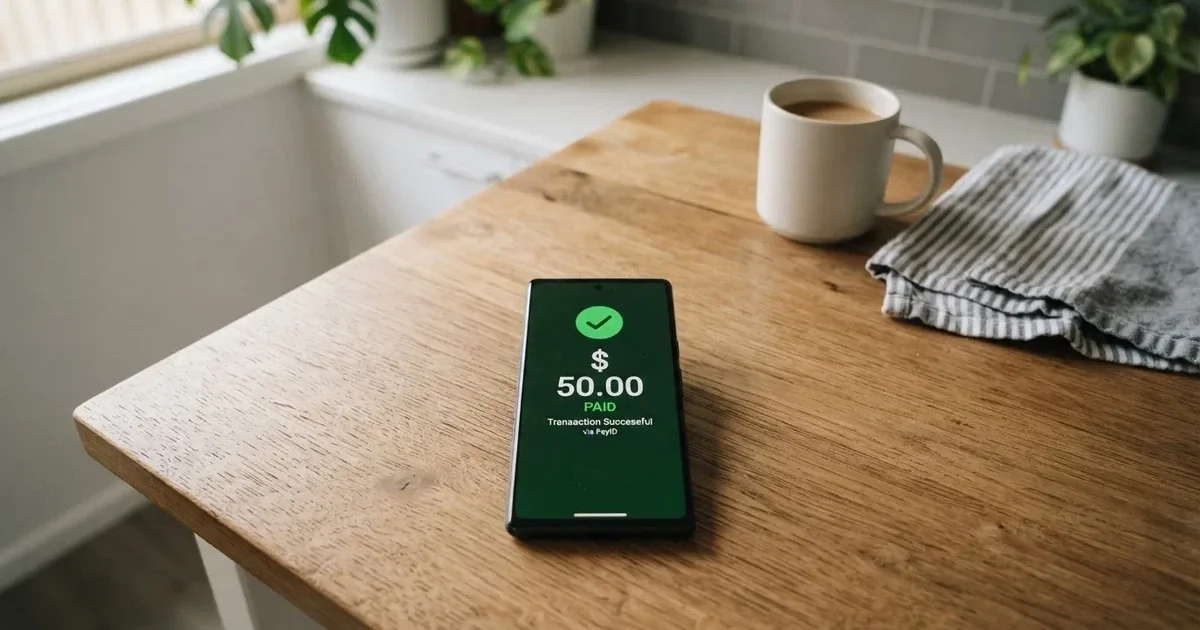
Current as of 18 October 2026 and checked against the ACMA’s register of formal warnings, the BetStop register and Australian Payments Plus.
Table of Contents
- Where the $5 pitch actually sits in the market
- The legality shelf: what the IGA actually says
- Responsible gaming: the shelf that matters most when the price is low
- Payments and payout speed: what a $5 deposit actually has to clear
- The eleven operators behind the $5 pitch
- The arithmetic the page is built around
- What an Australian punter actually has to weigh
- How to read this page against the rest of the market
- Frequently asked questions
Where the $5 pitch actually sits in the market
Eleven operators currently court Australian sign-ups with a $5 minimum deposit headline. They span Dama N.V., Consolutetish S.R.L., Bamboo Media, EOD Code SRL, Ryker B.V., Sterplay Holding Ltd, Pulsup Ltd and Hollycorn N.V. — eight corporate groups behind eleven brand fronts, all of them on the ACMA’s own formal-warning list. Every one of them is offshore. None of them is licensed in Australia to provide casino games.

That overlap is not a coincidence. The Interactive Gambling Act 2001 makes it an offence to provide online casino games or online pokies to a person physically in Australia, and the 2017 amendments gave the ACMA real enforcement teeth. So the set of brands an Australian can actually register with and the set of brands the ACMA has formally warned are, in practice, the same set of brands, approached from two directions.
Why a $5 minimum is the headline, not the substance
A $5 figure does three jobs for the marketing. It lowers the perceived cost of saying yes, it puts a real bank transfer well within Osko’s instant-transfer window without triggering any AUSTRAC threshold, and it dodges the obvious question a punter might ask about why a casino needs $5 at all. The first two are real conveniences. The third is where the comparison stalls, because the question that follows is whether the casino itself is one a punter should be sending money to.

The figure tells you nothing about the house edge on the games, the withdrawal speed, whether a balance can be cashed out at all, or which jurisdiction’s complaints body will listen if it cannot. Those are the four things that decide what a deposit actually costs, and they sit behind the headline.
What the licensed alternative looks like, and why it does not have a $5 floor
Australia’s licensed gambling footprint is real, and it is also not what the $5 ads are selling. Land-based pokies sit in pubs and clubs in every state and territory, with minimum bets set by the venue and the relevant gaming-machine determination rather than by a deposit page. Casino games — table games, electronic table games, traditional pokies — sit inside licensed casino floors in Sydney, Melbourne, the Gold Coast, Perth, Adelaide, Darwin, Hobart and Canberra, with their own minimums and their own responsible-gambling obligations. Online, the only product the IGA permits a licensed provider to offer an Australian is pre-event wagering on racing and sport, plus lotteries and keno. Sportsbet, Bet365 and Ladbrokes hold Northern Territory licences through the NTRWC for tax reasons, and the regulator meets once a month in Darwin and runs without full-time staff. None of those products takes a $5 minimum at the deposit page, because they were not built to.
So a punter typing “5 dollar deposit casino australia” into a search bar is not navigating a tier of the legal market; they are being invited across the IGA’s line.
The legality shelf: what the IGA actually says
The Interactive Gambling Act 2001, as tightened by the Interactive Gambling Amendment Act 2017, prohibits the supply of online casino games, online pokies and in-play betting to anyone in Australia. It targets the provider, not the individual player. That distinction matters for how the page reads, and it matters more for what an offshore casino can actually do when an Australian account is on it.
No state or territory licences online casino games
No Australian state or territory issues a licence for online casino games. The Northern Territory Racing and Wagering Commission regulates 52 of Australia’s online bookmakers through a tax-driven arrangement. Those licences cover pre-event wagering on racing and sport. They do not extend to casino games, slots or live dealer tables. A licence displayed in a casino’s footer that says “Curaçao” or “Anjouan” is not an Australian licence, and it does not put the operator inside the IGA’s safe harbour.
What the ACMA can do, and what it cannot
The ACMA investigates complaints, issues formal warnings to named providers, and can direct Australian internet service providers to block sites. As of June 2026, a cumulative 1,751 illegal gambling and affiliate marketing websites had been blocked since the first blocking request in November 2019, and more than 230 unlicensed gambling services had left the Australian market since enforcement was strengthened in 2017. In a single round reported on 26 June 2026, the ACMA asked ISPs to block 12 more sites, including 7Signs, ChromaBet, Donbet, Duospin, Freshbet, Slots Gem, Jacks Club, Lucky Start, Pointsbetz.com, Spinrise, Vinyl Casino and Wildsino. The blocking request is the ACMA’s strongest tool, and the cumulative count is the most public measure of how much supply sits outside the law.
What the ACMA cannot do for an individual punter
The ACMA does not arbitrate disputes between an Australian player and an offshore operator. It does not order a refund. It does not compel a withdrawal. If an offshore site refuses to pay out, blocks a player’s account or simply stops answering email, the Australian consumer has no domestic complaints body to take it to. That gap is what the ACMA warnings are pointing at, and it is what a $5 minimum deposit paper over.
The 2026 reform that is law but not yet in force
The Interactive Gambling Amendment (Gambling Reform) Bill passed Parliament on 19 August 2026. Its advertising and inducement measures commence 1 January 2027. As of 2026 the bill is law with a start date, not a regime that is currently operating. Anything described in the bill’s terms is forward-looking, and a page dated to 2026 should mark it as such.
Responsible gaming: the shelf that matters most when the price is low
A low entry price lowers a punter’s perception of risk. That is the marketing job it is doing. Responsible-gaming infrastructure is the answer to that, and it looks different in Australia than it does for an offshore casino.
BetStop, and why it does not bind offshore sites
BetStop, the National Self-Exclusion Register, has been live since August 2023. It binds Australian-licensed online and phone wagering services. An offshore casino is not a participant. A punter who has self-excluded through BetStop can still open an account at any of the eleven operators in the comparison below, because those operators do not check the register. Self-exclusion as a tool only does the work its name suggests when the operator the punter wants to use is the operator it covers.
Gambling Help Online and the 24/7 helpline
The National Gambling Helpline — 1800 858 858 — is free, confidential and open around the clock. Chat support runs through Gambling Help Online. The service is for anyone whose gambling has started to feel compulsive or stressful, and it is the one piece of the responsible-gaming shelf that works the same way whether the gambling in question happens at a licensed venue, on a licensed wagering app or on an offshore site the ACMA has warned about. The number is worth keeping beside any $5 deposit pitch.
What an offshore casino’s own responsible-gaming page usually looks like
Self-exclusion, deposit limits, time-outs and reality checks are features almost every offshore casino displays. They tend to be enforced at the account level, with no central register behind them, and the operator can lift them on request. The honest framing is that the responsible-gaming page on an offshore site is a tool the punter uses alone, with no Australian backstop if the site itself decides the tool no longer applies.
Payments and payout speed: what a $5 deposit actually has to clear
A $5 deposit has to ride on a real rail. The IGA does not stop an Australian from sending money offshore; it stops the offshore site from offering casino games to the Australian. The mechanics on the bank side still apply, and a punter choosing how to fund an offshore casino is choosing between rails that were built for something else.
Payment rail characteristics
| Payment method | Settlement speed | Gambling eligibility (licensed) |
|---|---|---|
| Osko / PayID | Instant (24/7) | Permitted |
| Credit cards | Instant | Prohibited |
| BPAY | Next business day | Permitted |
| Digital wallets | Instant | Permitted (on eligible cards) |
Osko and PayID — the rails a $5 normally travels on
Osko, run by Australian Payments Plus, settles a bank transfer between participating Australian banks in under a minute, 24/7 including weekends, addressed to either a BSB and account number or a PayID. More than 100 Australian financial institutions offer PayID-based instant transfers. Over 25 million PayID identifiers sat on the New Payments Platform as of April 2025, and the platform has been publicly accessible since 13 February 2018. Participants are required to keep monthly outages under two minutes. A $5 Osko transfer arrives faster than the casino’s deposit page can refresh.
The catch is on the receiving end. Paying to a PayID shows the name of the account holder before the transfer is sent. If a casino asks an Australian punter to send $5 to a PayID, AP+ itself warns that being asked to transfer money to a PayID on an illegal gambling site almost certainly means a scam site. The rail is fast; the destination is the part that matters.
Credit cards, credit-related products and crypto — banned for licensed wagering
Since 11 June 2024, Australian-licensed online wagering services cannot accept payment by credit card or other credit-related products. The same restriction constrains gambling use of linked digital wallets like Apple Pay. The ban is on the licensed side, but a casino asking an Australian for a credit card or a crypto deposit is operating outside the Australian rules, regardless of which side of the IGA the casino thinks it sits on. Penalties under the credit-card ban reach $247,500 per operator.
Apple Pay, Google Pay, Samsung Pay and the gambling block question
By the end of 2025, Apple Pay, Google Pay and Samsung Pay collectively accounted for around 45% of all card payments in Australia by number. None of them charges the consumer a fee for using the wallet itself; any surcharge comes from the merchant’s card-processing fees, not from the wallet provider. Transaction limits and PIN requirements are set by the card issuer or merchant, not by the wallet. The question for an Australian punter is what the underlying card will let through.
ANZ’s gambling transaction block, once activated in the ANZ app, blocks gambling transactions made through a digital wallet such as Apple Pay on an eligible card, not only the physical card. Removing the block requires a 48-hour waiting period, and the bank warns that not all gambling transactions will be blocked and that some non-gambling transactions might be blocked in error. Commonwealth Bank’s CommBank app lets customers apply a gambling lock to eligible cards; the bank states it cannot guarantee all gambling-related purchases will be stopped. Westpac’s gambling block works at the card level, refusing authorisation of transactions registered under the merchant category code “Betting/Casino Gambling” on eligible personal credit and debit cards.
American Express and the surcharge question
American Express was established in 1850 as a freight-forwarding company and issued its first charge card on 1 October 1958. It runs as a three-party scheme — issuer, processor and network in one — rather than Visa or Mastercard’s four-party arrangement. The Reserve Bank of Australia’s July 2025 review proposes removing surcharges only on eftpos, Mastercard and Visa transactions, explicitly leaving American Express outside the scope of the proposed surcharge ban. For a punter, the practical point is that Amex is the rail the regulator has chosen not to touch, and that has consequences for both the casino’s willingness to accept it and the bank’s willingness to let the payment through a gambling block.
AUSTRAC and the threshold that does not bite on a $5 transfer
AUSTRAC’s threshold-transaction-report rule requires reporting of transfers of A$10,000 or more, and applies only to physical cash. Ordinary electronic bank transfers are not subject to that per-transaction reporting requirement, regardless of the amount sent. A $5 Osko transfer is not a reportable transaction. The reason that matters is that it removes one of the friction points a punter might assume exists. There is no automatic reporting to AUSTRAC because of the size of the deposit.
BPAY, the rail that does not really fit
BPAY has operated in Australia since 1997, is available in the online banking of over 140 banks and financial institutions, and is offered by over 95,000 businesses. It is a bill-payment service: the payer enters the Biller Code and Customer Reference Number printed on a bill. It is run by Australian Payments Plus, alongside PayID and Osko. It does not, in any normal flow, accept arbitrary transfers to a casino account. The reason it appears on this page at all is so a punter can see the rail it is not.
The eleven operators behind the $5 pitch
What follows is not a ranking. Each of the eleven operators is on this page because the ACMA itself issued a formal warning over it for offering prohibited services to Australians. The product they offer an Australian address is the product the IGA prohibits, and the licence each displays in its footer is not an Australian licence. The page treats them as a set, in the order research sets out, with the ACMA record each carries.
Landscape at a glance
| Brand | ACMA action and date | Operator named by the ACMA | Subject support |
|---|---|---|---|
| RocketPlay | Formal warning, March 2026 | Pulsup Ltd (Rocketplay.com.au) | listings-only |
| Level Up Casino | Formal warning, May 2022 | Dama N.V. | listings-only |
| Woo Casino | Formal warning, March 2025 | Dama N.V. | — |
| Spirit Casino | Formal warning, May 2025 | Dama N.V. | — |
| National Casino | Formal warning, July 2025 | Consolutetish S.R.L. | listings-only |
| Bizzo Casino | Formal warning, July 2025; earlier 2022 | Consolutetish S.R.L.; earlier TechSolutions | listings-only |
| Ignition Casino | Formal warning, July 2025 | Bamboo Media | — |
| Instant Casino | Formal warning, February 2025 | EOD Code SRL | listings-only |
| Jackbit | Formal warning, April 2026 | Ryker B.V. | — |
| Casino Intense | Formal warning, April 2025 | Sterplay Holding Ltd | listings-only |
| Sky Crown | Formal warning, September 2022 | Hollycorn N.V. | — |
The table’s “Subject support” column reflects what the public listings an Australian punter can actually check say about each brand. A dash means there is no such listing the research could point to; a “listings-only” entry means an outside directory or register carries the name, but the operator itself has not published the figure or term an Australian punter might want to check.
RocketPlay — the most recent ACMA action
The ACMA issued a formal warning to Pulsup Ltd over Rocketplay.com.au in March 2026. The brand had already been caught up in the ACMA’s earlier enforcement — Dama N.V. was warned over it in May 2022 — so the March warning is the second time an Australian punter could have met the same brand under a different operator name. For an Australian punter, the standout is the operator-name change: the licence in the footer is not the same corporate group the ACMA warned, and the ACMA’s record does not follow the brand name the way a regulator’s record follows a licence holder.
Level Up Casino — the oldest active warning
The ACMA’s May 2022 warning to Dama N.V. covered six casino brands, including Level Up. Three of the others on this page — Woo Casino and Spirit Casino, plus the original Rocketplay — sit under the same Dama N.V. banner. The 2022 warning is the oldest formal warning still attached to a brand actively courting Australian sign-ups in 2026, which makes Level Up the test case for how the ACMA’s record ages.
Woo Casino — Dama N.V. again, three years on
The ACMA issued a further formal warning to Dama N.V. over Woo Casino in March 2025. The brand is one of the two follow-on warnings to Dama N.V. after the 2022 batch, and the gap between the original warning and the Woo Casino warning is the gap a single corporate group can run a brand through before the regulator acts again.
Spirit Casino — the second 2025 Dama N.V. warning
Spirit Casino received its own ACMA formal warning in May 2025, again under Dama N.V. The pattern is the same as Woo Casino: a brand the ACMA had reason to warn over again, and a corporate name on the warning that is the same one as two years earlier.
National Casino — Consolutetish S.R.L. and a wider portfolio
The ACMA issued a formal warning to Consolutetish S.R.L. over National Casino in July 2025. The warning was issued in the same round that named Bizzo Casino and Ignition Casino, and Consolutetish sits behind both. For an Australian punter comparing National Casino against the next entry, the takeaway is that the ACMA treats Consolutetish S.R.L. as one operator with two brand fronts, not as two unrelated operators.
Bizzo Casino — a 2022 warning that the 2025 warning followed
Bizzo Casino received a formal warning in July 2025, with Consolutetish S.R.L. named as the operator. The brand had already been the subject of a 2022 formal warning to TechSolutions (CY) Group Limited and TechSolutions Group N.V., so the 2025 entry is a second bite at the same brand. The gap between the two warnings is the gap the ACMA’s enforcement cycle left open.
Ignition Casino — Bamboo Media, a less familiar name on the warning
The July 2025 warning to Bamboo Media over Ignition Casino is the only ACMA action on this page that names an Australian-relevant brand under an operator name that is otherwise less prominent in the offshore-casino space. For an Australian punter, the unfamiliar operator name on the warning is the point that makes a footnote check worthwhile: a brand whose licence-holder reads as obscure is also a brand whose Australian-facing complaints path is hard to find.
Instant Casino — the early-2025 warning
The ACMA issued a formal warning to EOD Code SRL over Instant Casino in February 2025. The brand was warned in the same wave as Casino Intense, four months later. The two warnings taken together show a regulator acting across several corporate fronts at once, rather than working through a list one operator at a time.
Jackbit — the second 2026 warning, alongside CasinOK
The ACMA issued a formal warning to Ryker B.V. over Jackbit and CasinOK in April 2026. Jackbit is on this page; CasinOK is not, because the focus is the set of brands an Australian punter actually meets with a $5 deposit pitch, and CasinOK does not currently sit on that pitch. The Ryker B.V. warning is worth flagging because the same operator was warned over two brands in the same round, and the ACMA treated them as one action.
Casino Intense — Sterplay Holding Ltd
The ACMA issued a formal warning to Sterplay Holding Ltd over Casino Intense in April 2025. Casino Intense is one of three brands on this page that sits under an operator name that does not recur across the rest of the list, which is itself a piece of information: the ACMA’s enforcement has reached operators that have not been warned before.
Sky Crown — Hollycorn N.V., the warning the ACMA publishes as a PDF
Hollycorn N.V. received a formal warning from the ACMA over Sky Crown and Blue Leo, with the ACMA publishing the formal warning as a PDF in September 2022. Sky Crown is the brand most likely to surface in older Australian-facing comparisons, and the September 2022 date is the date the ACMA’s published PDF carries. The warning sits in a different format from the rest of the list, and the format itself is the signal: a regulator that publishes a warning as a PDF is signalling that it expects the document to be cited.
The arithmetic the page is built around
The number the ACMA’s record produces is a rate, not a count. As of June 2026, 1,751 illegal gambling and affiliate marketing websites had been blocked since the first blocking request in November 2019. Over a window of just under six and a half years, that works out to a running average of roughly 270 blocked sites a year, or about 22 a month, with the rate sitting closer to one a day by the round reported on 26 June 2026 alone, which asked ISPs to block 12 more sites in a single decision.
That number should be read as a band, not a single figure. The block count is cumulative across enforcement rounds; it is not a monthly clock. The cumulative number tells an Australian punter that the supply of sites offering prohibited services to Australians is not a fixed backlog the regulator is working through, but a flow of new sites replacing the ones the previous round blocked. A reasonable band to carry from the ACMA record is between roughly 200 and 300 blocks a year across the period the 1,751 covers, with the most recent single round adding 12 more in one decision.
The same arithmetic suggests the cost the ACMA’s record imposes on the eleven operators on this page. Of those eleven, every one is the subject of a formal warning that the ACMA has published. The ACMA’s first formal warning on this list is the September 2022 Hollycorn N.V. warning; the most recent is the March 2026 warning to Pulsup Ltd. Across that window, every brand on this page has been through the ACMA’s formal-warning process, and the most active operator name on it — Dama N.V. — has been warned in three separate rounds: 2022, 2025 and 2025.
What an Australian punter actually has to weigh
A $5 minimum deposit is real money, sent on a real rail, to a real account the ACMA has formally warned the public about. The arithmetic the page builds is the cost the ACMA’s record has accumulated on the supply side. The cost on the demand side is harder to write down, and is worth setting out plainly.
What a punter gives up by going offshore
An offshore casino sits outside every Australian consumer protection. There is no Australian complaints body to escalate a dispute to. There is no Australian regulator who can compel a withdrawal. There is no Australian court with a straightforward path to a refund. BetStop does not bind the operator. A gambling block on an Australian card may stop the deposit; it does not help the punter recover a balance that the offshore site decides not to return.
What an offshore casino’s marketing page will not say
The $5 figure is the headline. The house edge, the withdrawal time, the maximum cashout and the maximum-bet rule while a bonus is active are the figures that decide what the deposit costs, and they are not on the headline. The research on this page does not carry any of those figures, because the only sources for them were affiliate marketing pages — sources that exist to send traffic to the casinos, not to report on what they cost. The page deliberately does not pass on figures it cannot stand behind.
What the ACMA’s record says in plain language
The ACMA’s formal-warning register is a public document. Each entry names an operator and a brand, gives a date, and cites the Interactive Gambling Act 2001. The eleven brands on this page are the brands the ACMA has chosen to publish formal warnings against. The ACMA does not publish the warning record to be ignored, and the IGA is the statute the warnings sit under.
How to read this page against the rest of the market
The eleven operators here are not the whole market. The 1,751 blocked sites the ACMA has accumulated since November 2019 are not the whole illegal supply. The 230 unlicensed gambling services that have left the Australian market since 2017 are not the whole exodus. The point of the ACMA’s record is the rate at which the regulator has had to act, and the point of a page that lists eleven formal warnings is to make the rate legible.
A punter typing “5 dollar deposit casino australia” is being invited into a market the ACMA has spent the last seven years trying to push back. The $5 minimum is the bait. The rest of the page is the arithmetic the bait does not include.
Frequently asked questions
Can I actually deposit $5 at a licensed Australian online casino?
No. No state or territory in Australia issues a licence for online casino games or online pokies. The only Australian-licensed online gambling products are pre-event wagering on racing and sport, lotteries and keno, and none of those takes a $5 minimum at the deposit page. A $5 deposit pitch targeting an Australian address is by definition an offshore casino operating outside the IGA.
Why do so many sites advertise a $5 minimum deposit for Australian players?
A low minimum lowers the perceived cost of saying yes to an account. It also keeps a deposit well below any AUSTRAC threshold-transaction-report ceiling and fits inside Osko’s instant-transfer window, so the deposit appears to clear in under a minute. The marketing logic is sound; the regulatory position of the operator doing the marketing is the part the headline does not cover.
How would a $5 bank transfer normally clear if it were sent through Osko?
Osko settles a bank transfer between participating Australian banks in under a minute, 24/7 including weekends, addressed to either a BSB and account number or a PayID. A $5 Osko transfer clears faster than the casino’s deposit page can refresh. The destination of the transfer is the part that matters — AP+ warns that being asked to transfer money to a PayID on an illegal gambling site almost certainly means a scam site.
Is a $5 deposit at an offshore casino covered by any Australian consumer protection?
No. The Australian Communications and Media Authority does not arbitrate disputes between an Australian punter and an offshore operator, and there is no Australian complaints body to escalate a dispute to. BetStop does not bind offshore sites, and an offshore casino’s own responsible-gaming tools are enforced at the account level with no Australian backstop. A blocked ACMA site can leave a balance stranded, with no domestic path to a refund.
What is the legal, land-based alternative to a $5 deposit online casino in Australia?
Land-based pokies sit in pubs and clubs in every state and territory, with minimum bets set by the venue and the relevant gaming-machine determination. Licensed casino floors in Sydney, Melbourne, the Gold Coast, Perth, Adelaide, Darwin, Hobart and Canberra offer table games, electronic table games and traditional pokies under state and territory casino control. Both routes sit inside Australian consumer protection, both are subject to BetStop, and both are reachable in person without sending money offshore.
Does the ACMA’s ban on online casino sites apply no matter how small the first deposit is?
Yes. The Interactive Gambling Act 2001 prohibits the supply of online casino games and online pokies to anyone physically in Australia, regardless of the deposit size. The IGA targets the provider, not the size of the punter’s first payment. The ACMA’s enforcement record — 1,751 blocked sites since November 2019, 12 more in a single round reported on 26 June 2026 — applies to the whole product, not to any deposit threshold.
The $5 minimum deposit casino pitch in Australia, and what it actually… — More on this topic at casino slots au.