
Pokies tips and tricks in 2026: what a spin actually does, and what the law does about it
Current as of 28 October 2026 and checked against the Australian Communications and Media Authority’s register of formal warnings and site-blocking actions.
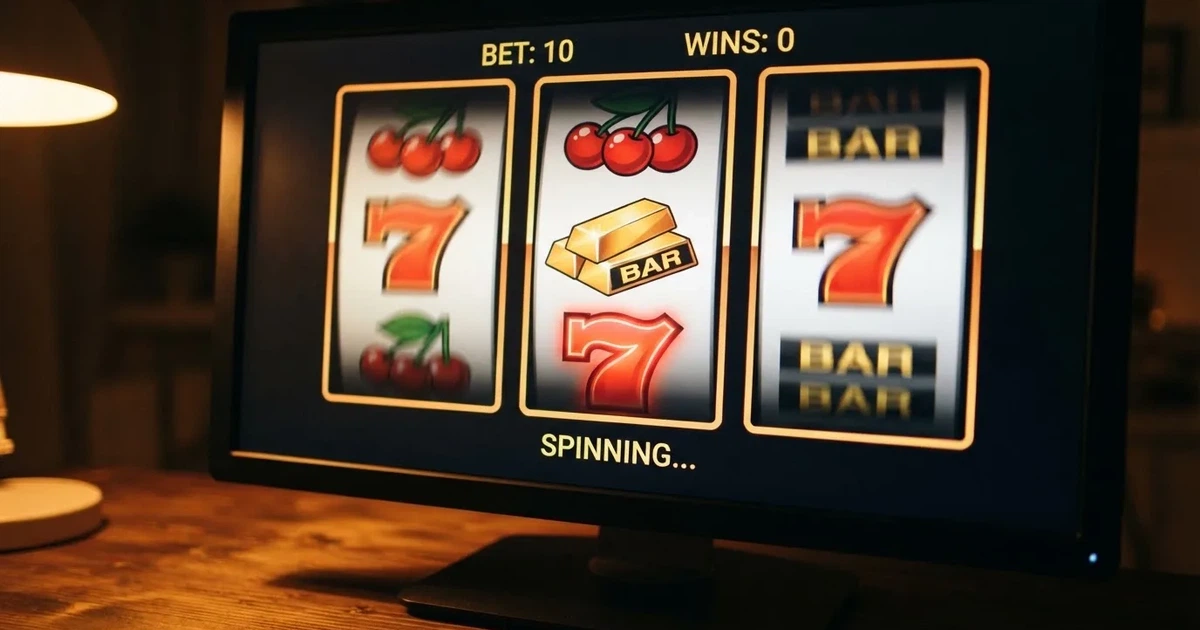
Pokies tips and tricks is a search term shaped less by what works than by what people wish worked. The bulk of the pages behind it are affiliate marketing dressed up as strategy, the kind that promises “foolproof systems” or “ways to beat the reels” and never mentions the mathematics of a random number generator. Some of those pages do land inside a real question — does bet size matter, does timing matter, does the title matter — but the answers they give are built around a destination, not an honest look at how the games produce their outcomes. This page is built the other way around. It starts with what a pokies spin actually does, sets that against what the searcher is being sold, and ends with what the Australian regulator has done about the offshore sites that most of those pages funnel readers toward.
The angle throughout is cost. A pokies session has a price tag that is fixed before the player sits down, and the marketing around tips and tricks spends a lot of energy hiding that tag. The work here is to surface it: the house edge, the bonus-cost arithmetic, the legal prohibitions on the offshore product, and the support services that exist for the moments the maths becomes uncomfortable.
Table of Contents
- How a pokies spin is actually decided
- The paytable: what the numbers actually say
- Why so much of the advice online is built for an offshore destination
- What Australian law actually says about online pokies
- What the ACMA has been doing about offshore pokies in 2026
- What the ACMA’s enforcement record looks like in plain numbers
- The land-based alternative the prohibition does not touch
- Why “Dragon Link” comes up so often in pokies tips content
- What the offshore product actually costs
- How the ACMA’s blocking arithmetic works out
- What responsible gambling support looks like in Australia
- What a player who wants to play legally in Australia actually has
- What the ACMA’s blocking record actually tells the reader
- The bottom line on pokies tips and tricks in 2026
- Frequently asked questions about pokies tips and tricks in Australia
How a pokies spin is actually decided
The result of a single spin is generated before the reels stop moving. Every modern electronic gaming machine — every online “pokie” too, where the format exists offshore — runs on a random number generator, or RNG. The RNG is producing numbers continuously, dozens per second, the moment the machine is switched on. The instant a player presses the button or pulls the lever, the RNG freezes on whatever number it had on at that microsecond, and that number is then translated into a combination of symbols across the reels. The visible animation — the spinning, the bounce, the slow stop — is cosmetics. The outcome was already decided when the button was pressed.

Three things follow from this. First, past spins do not change future spins. A machine that hasn’t paid out in an hour is not “due”; a machine that just paid out is not “cooling off”. Each spin is independent of every other spin, which is why a tracking system, a streak-reading app or a service that promises to spot “hot” machines cannot outperform the maths. They are reading patterns in noise. Second, the bet size on a single line does not change the probability of any individual symbol landing where it needs to land. A one-cent bet and a ten-dollar bet on the same line hit the same symbols at the same rate. What changes is the paytable — bigger bets unlock bigger prizes on the lines that pay proportionally — not the chance of any one combination coming up. Third, the title matters only in the way it pays. A high-volatility title produces rare, large wins and a long series of small losses in between; a low-volatility title does the opposite. Both have a built-in house edge. Neither has a player edge.
This is the bedrock underneath every other claim made on a pokies tips page. The list of “strategies” circulated online — stop at a win, switch machines after a loss, time your session to a quieter hour, look for machines near the door — is a list of behaviours with no statistical relationship to the outcome. The reason those behaviours get written up as strategies at all is that they survive in the wild: people win on pokies every day, on machines that have no memory of having won before, and the winners attribute the win to whatever they did differently that session. Survivorship bias does the rest. Hundreds of thousands of losing sessions per day leave no blog post.
The paytable: what the numbers actually say
The paytable on a modern pokies machine is the only piece of paper worth reading, because the only numbers on it that matter are the return-to-player figure (RTP) and the volatility class. Everything else — the theme, the soundtrack, the bonus round animation — is product design. The maths is in the RTP and the volatility.
RTP is the share of every dollar wagered that the machine returns to players in the long run. The rest is the house edge. State-by-state minimums in Australia range from 85% in New South Wales, the Northern Territory, Queensland and most of Victoria — to 87% in the ACT and Tasmania, 87.5% in South Australia, and 90% in Western Australia. Those are the floors; individual machines sit above them. A 90% RTP is a 10% house edge over enough spins to be statistically meaningful. A 95% RTP is a 5% house edge. Either way the house keeps a cut of every dollar wagered, and no behaviour by the player changes that cut.
Volatility describes how the RTP gets distributed across time. A low-volatility title returns most of its RTP through frequent small wins, so a session ends close to the statistical mean and rarely produces a memorable payout. A high-volatility title returns most of its RTP through rare, large wins, so a session mostly consists of small losses punctuated by the occasional large win that may or may not arrive during the player’s time at the machine. Neither volatility class is “better” than the other — they produce different shapes of session, not different expected returns — but they sit at opposite ends of a bankroll question. A player with A$100 in their pocket and an hour to spend needs a different volatility profile than a player with A$1,000 and four hours, because the long dry spells of a high-volatility title can wipe a small bankroll before the large win that mathematically exists ever arrives.
The detail commonly advertised alongside pokies tips — the symbols, the paylines, the bonus features — sits above the maths, not inside it. A “hold and respin” feature and a “free games” feature are different entertainment designs on top of the same underlying RNG. The free games give the player more spins at the machine’s own cost; the hold and respin mechanic concentrates payouts into a single feature round. Both are packaging. The house edge underneath them is the same.
Why so much of the advice online is built for an offshore destination
A meaningful share of the pages that rank for “pokies tips and tricks” are written by affiliate marketers. The business model is uncomplicated: the page ranks, the reader clicks through, and the reader’s first deposit earns the affiliate a commission. The “tips” exist to keep the reader reading long enough to follow the link. The most useful signal that a pokies tips page is built this way is the destination — does the page take the reader to an Australian-licensed venue (clubs, pubs and casinos under state regulation) or to an offshore casino the ACMA has already acted against? In Australia’s case the answer is almost always the second.
This matters because the offshore product is not a stylistic choice. It is the product the Interactive Gambling Act 2001 prohibits from being supplied to a person in Australia, and no state or territory licenses online casino games or online pokies. The offshore site is a prohibited supply whether or not it accepts Australian dollars, and the warnings the ACMA has issued over specific brands are warnings about a prohibited supply, not about a defective one.
The recommendation embedded in this kind of tips page is therefore a recommendation to use a product that Australian law treats as unlawful to supply. The reader who clicks through is not making a small detour from what the regulator would prefer — they are being routed around the regulatory frame entirely. Any honest read of the page has to surface that.
What Australian law actually says about online pokies
The Interactive Gambling Act 2001, as tightened by the Interactive Gambling Amendment Act 2017, makes it an offence to provide online casino games, online pokies or in-play betting to a person physically in Australia. No state or territory licenses those products. What can be licensed, and is — almost entirely from the Northern Territory for tax reasons — is wagering on racing and sport placed before the event, lotteries and keno. The Northern Territory Racing and Wagering Commission oversees 52 of Australia’s online bookmakers, including Sportsbet, Bet365 and Ladbrokes. It runs on a part-time board that meets once a month in Darwin.
The minimum age for any Australian-licensed gambling product is 18. Credit cards and credit-related products have been banned as a means of payment for licensed online wagering since 11 June 2024, with penalties for operators up to A$247,500. Digital currency is also banned for the same purpose. The lawful deposit routes for a licensed wagering account are debit card, bank transfer, PayID/Osko and BPAY. An offshore site asking an Australian customer for a credit card or a crypto deposit is operating outside those rules before a single bet is placed.
The player themselves is not prosecuted under the IGA — the Act targets the supplier — but the protections the player loses by going offshore are not small. There is no Australian complaints body with jurisdiction over an offshore operator. There is no Australian regulator to compel a withdrawal. The site can be added to the ACMA’s blocking list with a balance still sitting on it. The licensed product, by contrast, runs under state-level gambling commissions that audit payout rates, vet game design and require segregation of player funds. Those safeguards do not follow the player offshore.
What the ACMA has been doing about offshore pokies in 2026
The ACMA enforces the Interactive Gambling Act by issuing formal warnings, accepting court-enforceable undertakings from operators and directing Australian internet service providers to block prohibited sites. The numbers behind that programme are larger than a single round of enforcement suggests.
According to a June 2026 report, the ACMA had asked Australian ISPs to block 1,751 illegal gambling and affiliate marketing websites since the first blocking request in November 2019. The same report puts the count of unlicensed gambling services that have left the Australian market since 2017 at more than 230. In the round reported on 26 June 2026 alone, twelve more sites were referred for blocking: 7Signs, ChromaBet, Donbet, Duospin, Freshbet, Slots Gem, Jacks Club, Lucky Start, Pointsbetz, Spinrise, Vinyl Casino and Wildsino.
The blocking rate is the cumulative count of sites referred to ISPs for blocking, divided by the period since the first blocking request in November 2019. Expressed per month across roughly 79 months from November 2019 to June 2026, that runs at an average in the band of 22 sites blocked per month — a figure that sits comfortably above any plausible organic churn and well below the rate at which new prohibited sites appear. The arithmetic shows what the regulator is doing: it is catching up, not closing the gap, and the gap is what affiliate-marketing pokies tips pages rely on.
The blocking list is not the only tool. The ACMA also issues formal warnings — published notices that name the operator behind a brand, the date, and the prohibited conduct. The list of warned operators is long enough to make a pattern visible. Dama N.V., the operator behind Bambet, Dazard, Level Up, Rocketplay, Wild Tornado and Cobra Casinos, was the subject of a formal warning in May 2022. Dama N.V. was warned again over Woo Casino in March 2025 and Spirit Casino in May 2025. TechSolutions (CY) Group Limited and TechSolutions Group N.V. were warned over Bizzo Casino in 2022. In July 2025 Consolutetish S.R.L. was warned over National Casino and Bizzo Casino — the second warning for Bizzo in three years. In February 2025 EOD Code SRL was warned over Instant Casino. In April 2025 Sterplay Holding Ltd was warned over Casino Intense. In July 2025 Bamboo Media was warned over Ignition Casino. In April 2026 Ryker B.V. was warned over Jackbit and CasinOK, and in March 2026 Pulsup Ltd was warned over Rocketplay. Hollycorn N.V. was warned over Sky Crown and Blue Leo in September 2022.
Two things stand out. First, the same operator turns up more than once under different brand names — Dama N.V. alone has appeared under at least eight brand labels. Second, the warning is not always the end of the matter. Rocketplay was warned under Dama N.V. in May 2022 and again under Pulsup Ltd in March 2026, with a different corporate vehicle and a different Australian-facing domain in between. The pattern is consistent with operators cycling through new entities when an Australian-facing site gets blocked or warned, and the regulator playing catch-up through that cycle.
What the ACMA’s enforcement record looks like in plain numbers
| Brand | ACMA action and date | Operator named by the ACMA | Subject support |
|---|---|---|---|
| RocketPlay | Formal warning, March 2026 (earlier Dama N.V., May 2022) | Pulsup Ltd | — |
| Level Up Casino | Formal warning, May 2022 | Dama N.V. | listed by BGaming as a partner venue |
| Woo Casino | Formal warning, March 2025 | Dama N.V. | — |
| Spirit Casino | Formal warning, May 2025 | Dama N.V. | — |
| National Casino | Formal warning, July 2025 | Consolutetish S.R.L. | listed in public reference material |
| Bizzo Casino | Formal warning, July 2025 (earlier TechSolutions, 2022) | Consolutetish S.R.L. | — |
| Ignition Casino | Formal warning, July 2025 | Bamboo Media | — |
| Instant Casino | Formal warning, February 2025 | EOD Code SRL | — |
| Jackbit | Formal warning, April 2026 | Ryker B.V. | — |
| Casino Intense | Formal warning, April 2025 | Sterplay Holding Ltd | listed in public reference material |
| Sky Crown | Formal warning, September 2022 | Hollycorn N.V. | — |
The table is a picture of the ACMA’s own register, not a ranking and not a recommendation. The cells with an em dash are there because the research inputs carry no public listing of that brand as a partner venue for any Australian-facing service — and a brand’s absence from a partner listing tells the reader nothing about whether the brand’s product is otherwise available, only that no Australian-facing partner listing was found in the consulted material. Every brand in the table has had a formal warning issued over it for offering prohibited interactive gambling services to Australians, which is the only thing the table is for.
The land-based alternative the prohibition does not touch
The prohibition is on online pokies supplied to people in Australia. The land-based pokies in Australian clubs, pubs and casinos are a different product under a different regulatory frame, and they exist in every state and territory. NSW alone had 87,298 gaming machines outside casinos across 2,195 venues in June 2023, with player losses of A$8.18 billion in 2022–23. Queensland had 21,122 machines across 351 venues in October 2023. Victoria had 26,380 machines outside Crown Casino across 488 venues in 2021–22, against a statewide cap of 30,000. Western Australia banned poker machines in pubs and clubs in 1985 when Crown Perth opened, and the casino’s own machine count has since grown from roughly 200 to about 2,500.
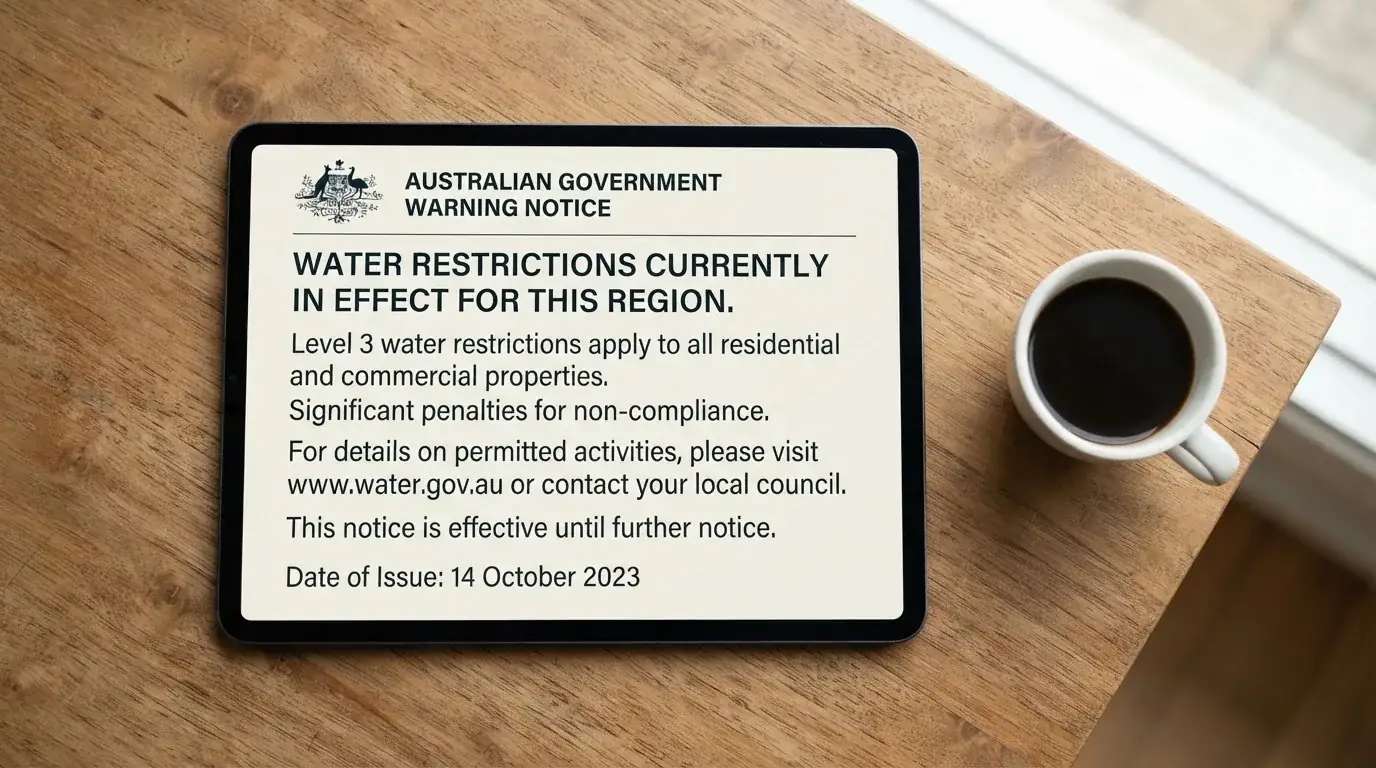
The design and operation of every one of those machines is regulated state by state. The minimum return-to-player floors sit between 85% and 90% depending on the jurisdiction. Tasmania, which held a single-operator monopoly on its machines from 1968 until November 2021, planned nation-leading mandatory pre-commitment cards — a system that would require a player to set a loss limit before sitting down at a machine — with implementation delayed until late 2025.
The point for the searcher looking for pokies tips is straightforward. A pokies session in a licensed Australian venue sits inside the regulatory frame: state-level oversight, audited payout rates, segregation of player funds, access to the state complaints body if a payout is disputed, and access to the venue’s own responsible-gambling measures. None of those safeguards follow the player to an offshore site. A tips page that points the reader toward an offshore destination is removing the player from every one of those safeguards in exchange for a product that, mathematically, behaves the same way as the licensed alternative.
Why “Dragon Link” comes up so often in pokies tips content
Dragon Link is one of a small number of Aristocrat titles that Australian pokies players recognise on sight. It is a “hold and respin” mechanic with a denomination range that lets a player stretch from a small-stakes session to a high-roller one on the same machine. The reason it dominates pokies tips content is not that the title has a different mathematical profile from other Aristocrat products — Aristocrat’s published figures and the venue’s posted RTP sit on the same house-edge logic as every other machine. Dragon Link dominates the tips content because it is a high-volatility title with a large top-end payout, and large top-end payouts are the cases players remember and write about. Survivorship bias, again: the player who hit a major jackpot on Dragon Link writes a post about the system that got them there; the thousands who played the same machine the same way and lost do not.
There is nothing wrong with preferring Dragon Link as a title. The mechanics are well-designed, the bonus round is engaging, and the denomination range lets a player with any bankroll sit down. There is something wrong with the framing that turns preference into strategy. The game’s outcomes are produced by the same RNG as every other machine on the floor, and the title’s volatility means the bankroll question is sharper, not easier.
The same critique applies to baccarat and blackjack, the two table games most often named alongside pokies on affiliate-marketing tips pages. Baccarat’s house edge is 1.06% on the Banker bet, 1.24% on the Player bet, and 14.36% on the Tie. Blackjack’s house edge with optimal strategy is about 0.28% under liberal Las Vegas Strip rules and 0.43% under Atlantic City rules. Both are beatable in the sense that the house edge is small, neither is beatable in the sense that the player has an edge. Crown Melbourne’s three baccarat variants — Traditional Baccarat, Crown Baccarat and 2 to 1 Baccarat — are approved table games under the Victorian Gambling and Casino Control Commission, which replaced the VCGLR as Victoria’s casino regulator on 1 July 2022. Under section 66 of the NSW Casino Control Act 1992, a casino operator must not permit a game to be played unless the game and its rules are approved by the regulator, and a copy of the approved rules must be available to patrons on request. The rules frame the games. The mathematics still has the house edge.
What the offshore product actually costs
The H2 Gambling Capital 2025 report estimates Australians lose about A$3.9 billion a year to illegal gambling sites, with the share of gambling going through legal channels falling from 74% in 2021 to 64%. That figure is an estimate, not a measured total, and the methodology behind it is opaque — but the direction of the change is the part that matters. Australians are not moving away from legal channels because they prefer offshore; they are moving because the affiliate-marketing tips pages and the offshore operators they link to are reaching them first.
The loss number itself is best read against the licensed market. Australians wagered almost A$150 billion through gaming machines in 2020–21 and lost A$12.18 billion on them. Australia has about 3% of the world’s pub and club poker machines with 0.3% of the global population. Per machine, per punter, the spend is among the highest in the world. Adding an estimated A$3.9 billion of offshore losses on top of that is the case for why pokies tips content needs to lead with what the maths costs, not with where the affiliate link points.
A bonus offer on an offshore site makes that cost harder to see. The marketing says “100% match up to A$500 + 200 free spins”. The arithmetic underneath the offer is what determines whether the player comes out ahead. Bonus cost on a typical matched deposit comes down to the wagering multiple — how many times the bonus must be played through before it can be withdrawn. A A$500 bonus with a 40x wagering multiple requires A$20,000 of turnover before the bonus and any winnings from it are withdrawable. At a 95% RTP, that turnover carries an expected loss of A$1,000. The bonus is, on average, a A$500 bonus costing a player A$1,000 in expected loss, which is not a bonus. Maximum-cashout caps shrink the picture further by capping what can be withdrawn from bonus-derived winnings, so a player who runs hot during the wagering requirement may still leave with less than the headline number suggests.
These are the numbers a pokies tips page should be putting in front of the reader. The marketing rarely does.
How the ACMA’s blocking arithmetic works out
The blocking total of 1,751 sites since November 2019 divides into roughly 79 months of activity, for an average of around 22 sites blocked per month. That is the band the regulator has been working at — not the headline total, not the most recent round, but the long-run rate of referral.
The blocking rate is also a moving target. New prohibited sites come online faster than the existing ones get referred, which is why the same operator names appear repeatedly under different brand labels and the same brands are warned under fresh corporate vehicles after a domain is blocked. The maths behind the blocking rate shows what the ACMA’s enforcement does, what it does not, and where the gap sits that affiliate tips pages continue to fill.
The point is not that the ACMA’s work is failing — 1,751 blocked sites and 230-plus services that have left the market is a meaningful enforcement record. The point is that the record is consistent with an ongoing contest, not a closed one. A reader who clicks through from a tips page to an offshore site is part of the demand side of that contest, and the offshore operator is part of the supply side. The arithmetic says both are still big enough to keep the contest running.
What responsible gambling support looks like in Australia
The responsible gambling frame in Australia runs on a few instruments. BetStop, the National Self-Exclusion Register, has been live since August 2023 and binds every Australian-licensed online and phone wagering service. A player who registers with BetStop is excluded from every participating licensed operator, and the registered exclusion cannot be reversed during the registered period. BetStop does not bind offshore operators — the offshore product sits outside the Australian regulatory frame by definition — so a player who needs an exclusion that holds across the whole market has to recognise that the offshore product is the part of the market the register cannot reach.
The National Gambling Helpline, 1800 858 858, is free, available 24/7 and provides counselling, information and referrals. Chat is available through Gambling Help Online. State and territory gambling help services run alongside the national line, with their own phone numbers and websites. The services are free, confidential and not connected to any operator.
The pokies tips pages that affiliate to offshore casinos do not link to these services. The pages that discuss the cost of a session in plain arithmetic should.
What a player who wants to play legally in Australia actually has
The legal product in Australia is the licensed product. State and territory regulators approve the games, audit payout rates, vet game design and require segregation of player funds. The licensed venues are clubs, pubs and casinos, and the games on offer are electronic gaming machines, table games including baccarat and blackjack, lotteries, keno and pre-event wagering on racing and sport.
A pokies session at a licensed club in NSW, a Crown table in Melbourne, or a Treasury Brisbane machine sits inside a regulatory frame that an offshore site does not match. The RTP floor is set by the state. The volatility profile is posted. The payouts are audited. The responsible-gambling measures are connected to state services. The marketing around the games is constrained by the 2026 Interactive Gambling Amendment (Gambling Reform) Bill, which passed Parliament on 19 August 2026 and whose advertising and inducement measures commence on 1 January 2027 — a date that means the law is on the books but not yet in force.
The legal product is also the product the prohibition keeps the offshore alternatives from competing with on its own terms. The offshore product competes on accessibility — deposits in crypto, no Australian identity verification, no BetStop binding — which is exactly the accessibility that puts the player outside the frame. The maths underneath is the same on both sides of the regulatory border. The protective frame is what changes.
What the ACMA’s blocking record actually tells the reader
The ACMA’s enforcement record is a record of what the regulator has caught, not of what is available. The 1,751 blocked sites are the sites Australian ISPs were directed to block. The 230-plus services that have left the Australian market are the services that chose to withdraw. The 11 brands warned by name are the brands where the ACMA has published a formal warning. None of those numbers describe the offshore market that affiliate-marketing tips pages continue to link to.
That is the practical reading of the table earlier in this page. The brands named there are brands the ACMA has acted against. They are not the only brands the ACMA could act against, and they are not the only brands the reader could be routed to from an affiliate tips page. The table is a sample, not a market.
The arithmetic behind the blocking rate — an average of around 22 sites blocked per month from November 2019 to June 2026 — describes a regulator catching up, not one closing the gap. The gap is where the offshore market lives, and the affiliate-marketing tips pages are the route into the gap.
The bottom line on pokies tips and tricks in 2026
No strategy on a page can change the maths of a pokies spin. The RNG decides the outcome before the reels stop moving, and the house edge sits underneath every title on every floor. A high-volatility title produces rare large wins and frequent small losses; a low-volatility title produces the opposite shape; neither is “better” than the other in expected return. The titles with the largest top-end payouts — Dragon Link is the obvious example — are the titles the marketing writes the most tips about, for the same reason a casino writes the most marketing about its biggest jackpot.
The legal product in Australia is the licensed product. The offshore product the tips pages route readers toward is a prohibited supply under the Interactive Gambling Act 2001, and the ACMA’s enforcement record shows both how much of that supply has been caught and how much of it is still moving. The two sides of the regulatory border run the same maths; what differs is the protective frame around the player.
The pokies tips page that earns its keep is the one that puts the arithmetic in front of the reader and the regulatory frame beside it. The reader who already knows what they want to play can use that information. The reader who is still working out whether to play at all has a basis for working it out.
Frequently asked questions about pokies tips and tricks in Australia
Do any genuine tips or tricks change the odds on a pokies machine, or is the outcome always random?
The outcome is always random. A modern pokies machine runs on a random number generator that decides the result the moment the button is pressed, and past spins do not change future spins. No betting pattern, timing system or machine-selection method changes the probability of any individual symbol combination. What does change between machines is the title’s return-to-player floor and its volatility class, both of which are set by the game designer and posted on the paytable or in the venue’s information.
What’s different about tips for a specific title like Dragon Link compared with pokies generally?
Dragon Link is a high-volatility title with a hold-and-respin bonus round and a denomination range that lets a player scale the bet size widely. The mathematics that drives the title — the RNG, the house edge, the independence of every spin — is the same mathematics that drives every other electronic gaming machine. The differences are the volatility class and the size of the largest payouts, both of which are visible on the paytable. A player who prefers Dragon Link is choosing a session shape, not buying an edge.
Is there a legal way for an Australian to try out pokies strategies using licensed land-based venues?
Yes. Pokies are legal in every Australian state and territory except in Western Australian pubs and clubs, and Crown Perth is the licensed casino venue in WA. The machines sit inside state-level regulatory frames that audit payout rates, vet game design and require segregation of player funds. The licensed product is not an offshore substitute, and a session at a licensed venue is the only Australian-context way to play pokies inside the regulatory frame. The Interactive Gambling Act 2001 prohibits online pokies from being supplied to people in Australia, so an online version of the same game accessed through an offshore site sits outside that frame.
How does bet size actually affect the odds on a typical pokies machine, if at all?
Bet size on a single payline does not change the probability of any individual combination of symbols landing. A one-cent bet and a ten-dollar bet on the same line hit the same combinations at the same rate. What changes is the paytable — bigger bets unlock proportionally bigger payouts on the lines that scale with the wager — not the chance of any combination coming up. The exception is fixed-prize lines that only pay above a minimum bet, usually visible on the paytable itself.
What do ‘tips to win pokies’ articles usually get wrong about how random number generators work?
The common errors fall into three categories. The first is the suggestion that past spins influence future spins — that a machine is “due” after a dry spell or “cooling off” after a win. The second is the suggestion that bet size, timing or machine choice shifts the probability of any individual symbol combination. The third is the suggestion that a particular title or bonus mechanic produces a player edge. None of those claims survives contact with how an RNG actually produces its numbers, and most of the pages making those claims are affiliate pages built around a destination offshore casino rather than around an honest reading of the mathematics.
Why do so many pokies tips pages specifically mention Dragon Link rather than other titles?
Dragon Link has a recognisable bonus round, a denomination range that fits any bankroll, and a top-end payout large enough to produce the kind of session that players write about. The volume of tips content about the title reflects the volume of players who play it and the bias toward writing about wins rather than losses. The tips themselves do not move the mathematics of the game any further than tips about any other title.