
First Deposit Bonus Casinos in Australia: What the Market Actually Looks Like in 2026
A “first deposit bonus casino” usually means the operator matches a slice of your first deposit with bonus funds, sometimes adds free spins, and locks everything behind wagering requirements before any of it can be withdrawn. The page below treats that product head-on for an Australian reader in 2026. The uncomfortable starting point is that the Australian market does not actually allow it.
Under the Interactive Gambling Act 2001, online casino games and online pokies cannot be provided to a person physically in Australia, no matter which jurisdiction the operator’s licence was issued in. A real shortlist of Australian-licensed online casinos cannot exist for the simple reason that no licence is issued. The brands the search results show an Australian reader are almost always offshore, and several have already attracted a formal ACMA warning for offering prohibited services. The practical job of this page is to set the marketing language beside the legal frame, line up the ACMA’s published action against the brands the reader will actually meet, walk through the payment friction that follows from the prohibition, and put the responsible-gambling tools in plain view.
Current as of 18 October 2026 · verified against ACMA formal warnings register, the Interactive Gambling Act 2001 as amended in 2023, and the Northern Territory Racing and Wagering Commission’s published list of licensees.
The Top Operators the ACMA Has Warned
For an Australian reader the meaningful comparison is not “which bonus is biggest” — the Interactive Gambling Act closes that door — but which brands the Australian regulator has already moved against, and through which operator entity. Each row below is taken from the ACMA’s formal warnings register. The four columns cover the brand, the regulator action and its date, the operating company named in that warning, and the payment-method coverage that listings actually report for that brand.

| Brand | ACMA action and date | Operator named by the ACMA | Subject support |
|---|---|---|---|
| RocketPlay | Formal warning, March 2026 (Pulsup Ltd); earlier under Dama N.V., May 2022 | Pulsup Ltd | listings-only |
| Level Up Casino | Formal warning, May 2022 | Dama N.V. | listings-only |
| Woo Casino | Formal warning, March 2025 | Dama N.V. | — |
| Spirit Casino | Formal warning, May 2025 | Dama N.V. | — |
| National Casino | Formal warning, July 2025 | Consolutetish S.R.L. | listings-only |
| Bizzo Casino | Formal warning, July 2025 (earlier warning to TechSolutions, 2022) | Consolutetish S.R.L. | listings-only |
| Ignition Casino | Formal warning, July 2025 | Bamboo Media | — |
| Instant Casino | Formal warning, February 2025 | EOD Code SRL | listings-only |
| Jackbit | Formal warning, April 2026 | Ryker B.V. | — |
| Casino Intense | Formal warning, April 2025 | Sterplay Holding Ltd | listings-only |
| Sky Crown | Formal warning, September 2022 | Hollycorn N.V. | — |
Three things this table shows at a glance. The brand column repeats across rows that the ACMA treats as separate — Dama N.V. alone covers RocketPlay, Level Up Casino, Woo Casino and Spirit Casino, and Consolutetish S.R.L. covers both National Casino and Bizzo Casino. The dates are not clustered: warnings were issued across 2022, 2025 and 2026, which tells the reader that the regulator has kept acting, not paused. The Subject support column is the emptiest on the page, because this product is prohibited and most affiliate-driven listings only gesture at payment coverage that no Australian bank will actually clear.
A “listings-only” tag means the entry reflects what affiliate aggregators and review sites report about the operator; it is not the operator’s own statement and is not verified against a regulator. These rows are still useful — the reader who keeps seeing one of these names mentioned can now place it inside the ACMA record instead of treating it as a neutral option.
Where Online Casino Sits in Australian Law
The Interactive Gambling Act 2001 (the IGA) is the federal law that defines the prohibition. As strengthened by the Interactive Gambling Amendment Act 2017, the statute makes it an offence for a provider to offer online casino games, online pokies or in-play betting to a person physically in Australia. The prohibition targets the provider, not the player — an Australian resident is not personally prosecuted for placing a bet with an offshore site — but the absence of prosecution is the only reassurance the law offers, and it is a thin one.

What Australia does license is narrower than the search results suggest. Racing and sports wagering placed before the event, lotteries and keno are licensable products; in practice most online bookmakers — including Sportsbet, Bet365 and Ladbrokes — are licensed in the Northern Territory through the Northern Territory Racing and Wagering Commission, and that commission oversees 52 active online bookmakers with no full-time staff and one monthly meeting in Darwin. Online casino games do not fall under any of these licences. A site displaying a Curaçao or Anjouan licence and welcoming Australian sign-ups is offering a product no Australian regulator authorises.
The enforcement picture has been steady rather than dramatic. According to the ACMA, as reported in June 2026, 1,751 illegal gambling and affiliate marketing websites had been blocked since the first blocking request in November 2019, and more than 230 unlicensed gambling services had left the Australian market since enforcement was strengthened in 2017. In a single round reported on 26 June 2026 the ACMA asked Australian ISPs to block another twelve sites: 7Signs, ChromaBet, Donbet, Duospin, Freshbet, Slots Gem, Jacks Club, Lucky Start, Pointsbetz, Spinrise, Vinyl Casino and Wildsino. Blocking a site does not pull it off the internet — it makes it harder to reach from an Australian residential IP address — and a determined player can still reach it. The legal status of the offer does not change either way.
A practical read of these numbers is that the prohibition is enforced consistently enough that most serious operators either withdraw or block Australian traffic on their own. The market presence that remains is the bit the ACMA has not yet caught up with. The risk for a reader sits in that gap: an offshore casino that takes deposits, sets bonus terms, and refuses to pay out a withdrawal has no Australian complaints body the player can turn to.
The 2026 Reform and What It Did Not Change
Parliament passed the Interactive Gambling Amendment (Gambling Reform) Bill 2026 on 19 August 2026. The reform’s advertising and inducement measures — the parts that most directly bear on “best first deposit bonus” marketing — commence on 1 January 2027. On a 2026 page the bill is a law with a start date, not an active enforcement regime: it gives operators notice to strip bonus-advertising language before that date, and gives the ACMA a fresh toolset once it commences, but during 2026 the prohibition in the IGA remains the operative rule. A reader comparing offers in the back half of 2026 is still operating under the 2001 statute, not the 2026 amendments.
What the 2026 bill does emphasise, through its drafting history, is that inducements — the “best”, “100% match”, “free spins on signup” layer of the offer — were heading for closer treatment. For an Australian player the practical meaning is that the marketing language around offshore casino bonuses is the part most likely to fall into sharper regulation first. The product itself remains prohibited either way.
What an Offshore Site Cannot Offer You
Three things an Australian-licensed wagering service has to provide that an offshore casino does not. First, an Australian complaints body: if a withdrawal is refused, the player has nowhere to escalate to and no regulator who can compel the operator. Second, real consumer protection: terms are drafted by the operator, dispute outcomes are decided by the operator, and the operator’s licence is in a jurisdiction the player cannot reach easily. Third, connection to the responsible-gambling tools a player in Australia can actually use. BetStop, the National Self-Exclusion Register, binds only services licensed in Australia. An offshore casino is not connected to BetStop, and self-excluding from one offshore site does not stop the next.
The deposit-and-friction pattern that follows from those absences is the subject of the payments section below. Before that, the responsible-gambling layer deserves its own treatment, because it is the part of the law that does reach the player even when the product does not.
Responsible Gambling in the Australian Frame
The responsible-gambling tools the Australian reader can use do not require the reader to be using an Australian-licensed product. They work whether the player is using a licensed bookmaker, an offshore casino, or not gambling at all. Knowing what is available matters more than the choice of operator, because the tools are the only layer of the frame that touches the player directly.
BetStop — the National Self-Exclusion Register — has been live since August 2023. Registering for BetStop excludes the player from every Australian-licensed online and phone wagering service simultaneously, for a chosen period or indefinitely. What BetStop does not do is stop an offshore casino from accepting the same player’s deposits: that operator is not connected to the register, and a BetStop exclusion has no effect on it. For an Australian reading this page the practical reading is twofold — BetStop is the strongest single lever against licensed wagering, and it is by construction the wrong tool for the offshore offers this page describes.
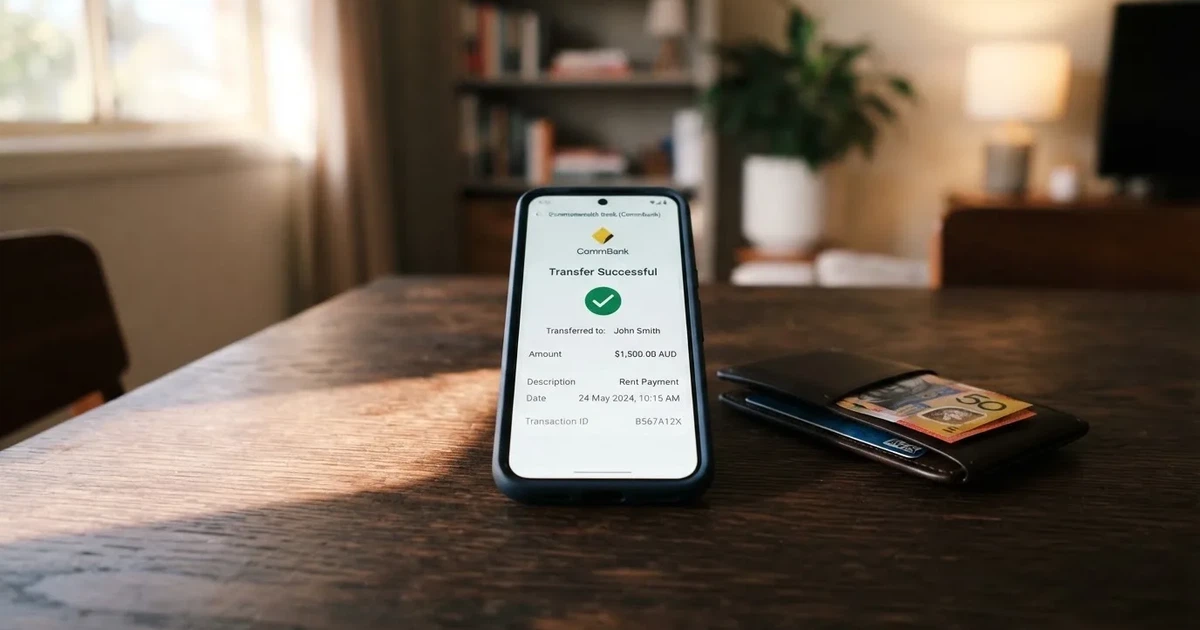
The statutory payment controls layered onto the IGA in 2023 add a different lever. Australian-licensed wagering services cannot accept payment by credit card or other credit-related products, with operator penalties of up to A$247,500. The credit-card ban does not just stop the physical card — it covers linked digital wallets used for gambling on the same underlying credit account. Major Australian banks have built their own card-level blocks on top of that ban. Westpac’s gambling block refuses authorisation of transactions registered under the merchant category code “Betting/Casino Gambling” on eligible personal credit and debit cards. ANZ’s equivalent block, toggled in the ANZ app, blocks gambling transactions made through a digital wallet such as Apple Pay on an eligible card, not just the plastic — and once turned on, removing it requires a 48-hour waiting period. Commonwealth Bank lets customers apply a gambling lock to eligible cards through the CommBank app, with the same kind of caveat that not every gambling-related transaction will be caught.
A reader who has read this far is probably weighing the offer as much as the law. The frame is uncompromising on the marketing language. None of the controls above changes the legal status of the product for the reader; they change the surface area on which a careless click can spend money.
Two further anchors a reader should keep handy. The National Gambling Helpline is 1800 858 858, free and 24/7, with web chat at Gambling Help Online. AUSTRAC’s threshold-transaction reporting rule, which requires reporting of transfers of A$10,000 or more, applies only to physical cash — ordinary electronic bank transfers are not subject to that per-transaction reporting requirement, regardless of the amount sent. The practical consequence is that a player funding an offshore casino from an Australian bank account is generally moving the funds in routine-looking NPP transfers, not flagging any automatic AUSTRAC report by the act of transferring alone.
What “Self-Exclusion” Means Offshore
The phrase appears on most offshore casino “responsible gambling” pages, often with a contact form that emails the operator within twenty-four hours. The substance is thinner than it sounds: the operator has no incentive to enforce against itself across multiple brands, the exclusion does not bind any other operator the same player might use, and there is no Australian body that can be told if it is not honoured. For an Australian reader self-excluding from BetStop plus blocking transactions through the bank is a tighter set of constraints than any combination of offshore site tools can provide.
How Money Actually Moves in 2026
The product is prohibited, but the money still has to land somewhere. The friction sits at exactly that point. For an Australian reader holding an Australian bank card and trying to fund an offshore casino, every step in the chain from card-present purchase to settlement in an AUD account has a built-in friction layer the law has added since 2017, and that the major Australian banks have reinforced on top.
Card-Level Blocking
The single most important fact for the reader to anchor on is that Westpac, ANZ and Commonwealth Bank now operate merchant-category gambling blocks at the card-issuer level. The block keys on the merchant category code “Betting/Casino Gambling”: if the casino is registered under that MCC and the transaction is on a participating card, the authorisation is refused before it reaches the operator. Apple Pay, Google Pay and Samsung Pay transactions collectively accounted for around 45% of all card payments in Australia by number by the end of 2025, and the same blocks apply to a card added to a digital wallet — ANZ’s own page is explicit that the block covers gambling transactions made through a digital wallet such as Apple Pay on an eligible card, not just the physical card. The bank’s caveat is consistent across all three: not every gambling-related transaction will be blocked, and some non-gambling transactions may be blocked in error. The direction of error is favourable to the player.
What this means in practice is that an Australian-issued debit card on Westpac, ANZ or Commonwealth Bank is likely to fail when presented to a casino whose acquirer is reporting an MCC that the bank’s gambling-block service has been trained on. Offshore casinos that take Australian traffic are aware of this, which is part of the reason so many steer the player toward an alternative: a bank transfer to a PayID or a BSB-and-account-number, sometimes into a name that does not obviously say “casino”. The next two subsections explain what the bank on the receiving end is actually doing.
PayID and Osko: The Bank Transfer Round-Trip
PayID and Osko sit on Australia’s New Payments Platform, accessible to the public since 13 February 2018, owned by New Payments Platform Australia Ltd and now operated by Australian Payments Plus. A bank transfer between participating Australian banks on this rail arrives in under a minute, 24/7 — including weekends — whether it is addressed to a BSB and account number or to a PayID. More than 25 million PayID identifiers were registered on the platform as of April 2025, and PayID-based instant transfers are available at more than 100 Australian financial institutions. Participants in the New Payments Platform have to keep the platform’s monthly outages to no more than two minutes; the technical bar that sits underneath a casual-looking “instant deposit” button on a casino cashier page is set by the same infrastructure that handles Australian salaries and supplier payments.
The reader-facing detail that matters most: when a transfer is sent to a PayID, the name of the account holder is shown before the transfer is sent. AP+ warns that being asked to transfer money to a PayID on an illegal gambling site almost certainly means a scam site. Two things follow. The first is that PayID names the destination, which makes an opaque transfer harder to mistake for a benign one. The second is that this is exactly the scenario the warning was written about — the reader considering a transfer is the audience the warning is reaching for. The combined signal — ACMA enforcement on the operator side, platform name-display on the payment side — points in the same direction, but neither is a per-transaction block the way a card MCC block is.
The flow back from casino to player runs on the same rails. The acquisition of funds from the casino side is the harder leg, and the delays the player actually experiences in a “withdrawal” feel are usually attached to the operator’s own processing queue rather than to the transfer rail itself. Once the operator releases funds, Osko arrival times apply on the way in as well as on the way out.
BPAY, Credit Cards, and Apple Pay
BPAY is a bill-payment service inside Australian online banking. The payer enters the Biller Code and the Customer Reference Number printed on the bill. It has operated since 18 November 1997, sits inside the online banking of more than 140 Australian financial institutions, and is offered by more than 95,000 businesses; it is run by Australian Payments Plus, alongside PayID and Osko, and is owned equally via parent company Cardlink Services Limited by ANZ, Commonwealth Bank, National Australia Bank and Westpac. For a reader this is the foreground fact: BPAY is bill-payment, not person-to-person transfer. A casino would not normally show up as a BPAY biller; its appearance on the Australian rails is therefore as a transfer to a BSB-and-account-number or PayID, not as a BPAY payment.
The credit-card half of the picture deserves its own note because the marketing language still uses the word. American Express, which is itself a three-party scheme that issues and processes on its own network rather than running through Visa or Mastercard, was established in 1850 as a freight-forwarding company and became a card issuer later, launching its first charge card on 1 October 1958. The Reserve Bank of Australia’s July 2025 review proposes removing surcharges only on eftpos, Mastercard and Visa transactions, leaving American Express explicitly outside the proposed ban. None of that history changes the IGA rule: credit cards and credit-related products cannot be used for licensed online wagering in Australia, a prohibition that does not depend on which network is on the front of the card. For an Australian reader the question is not which brand is on the card but whether the underlying facility is credit; if it is, the bank is meant to refuse the transaction.
Apple Pay has been raised several times in this section because of how commonly it is asked about. Apple does not charge consumers a fee for using Apple Pay in stores, online or in apps, and any surcharge on an Apple Pay purchase comes from the merchant’s own card-processing fees rather than from Apple. Transaction limits and PIN requirements for Apple Pay purchases are set by the card issuer or the merchant, not by Apple itself — which is why the block turns on what the issuer does to the underlying card, not on the wallet layer. A gambling block toggled at the card level keeps working through Apple Pay for the same reason an unblocked card would: the wallet is a transport, the decision is made by the issuer on the underlying transaction.
What a First Deposit Bonus Actually Is, Mechanically
A first deposit bonus is a marketing offer: deposit a specified amount, and the operator credits bonus funds (and sometimes free spins) on top. The crucial detail the marketing language tends to bury is that the bonus does not become withdrawable cash on the same transaction. It comes with a wagering requirement — a multiple, often in the 30× to 50× range of the bonus, occasionally more — that has to be worked through before any of the bonus balance converts to cash the player can withdraw. Free-spin winnings usually run a separate and usually lower wagering multiple, and almost every bonus carries a max-cashout cap, an expiry window, a list of excluded games, and a stake-per-spin ceiling during the wagering period. Each of these is a way in which the bonus costs the player more than the headline match figure implies. A reader who accepts a “100% up to A$500” without reading the fine print is taking the marketing photograph rather than the contract.
A no-deposit bonus removes the deposit step but keeps the wagering and the max-cashout cap. The trade is straightforward: the player gives up the deposit match in exchange for not funding the wagering themselves. For most players the deposit-match is more generous in raw terms; the no-deposit route can look attractive to a player who wants to test an operator, but it is more compressed, more rules-bound, and usually capped lower on the eventual withdrawal. The two products should be read as the same marketing mechanism with different funding points, not as unrelated offers.
Two features of the offer apply regardless of the brand on the table. First, the size of the match is not the same as the size of the value. A 200% match up to A$100 with a 50× wagering requirement and a 5× max cashout can be worth less to a player than a 100% match up to A$200 with a 30× requirement and no cap. The headline number measures promotional weight, not expected return. Second, the wagering requirement sits on top of the bonus itself in most current offers — the player has to bet the bonus multiplied by the multiple, not the deposit and bonus combined. A handful of legacy offers still calculate on deposit plus bonus; the difference changes the cost of clearing by almost a factor of two.
The Shape of Bonus Cost in Expected Terms
The arithmetic behind a bonus is straightforward to set up, and the inputs the player can usually read are also straightforward: the wagering multiple, the house edge of the games wagering applies to, the stake cap and the bonus size. The cost of a bonus does not depend on whether the player wins any individual spin; it depends on how much turnover the wagering forces the player to run, multiplied by the house edge embedded in the games the wagering is played on. A player who has to turnover A$15,000 on a game with a 4% house edge has, on average, transferred A$600 of value to the operator over the wagering period — before the bonus is even credited to the cash balance.
Three other costs sit on top of the turnover number. The first is the max-cashout cap, which can turn a bonus that has been successfully cleared into a smaller withdrawal than the running balance suggests. The second is the time cost: a bonus that takes thirty or forty hours of wagering to clear ties the player to the casino on terms the operator has chosen, not the player. The third is the game-restriction list, which is the section of the bonus terms that quietly excludes the games with the lowest house edge and forces the wagering onto slots with a worse margin. Each of these is a separate lever; together they are the bulk of what a “first deposit bonus” actually costs a player who claims it.
Reading the Frame as a Whole
The Australian frame is unusually consistent in this respect: the prohibition on the product, the card-level blocks on the funding, the ACMA record on the operator side, and the self-exclusion register on the player side all point the same way. None of them makes the offer illegal for the player; all of them make the offer harder to take up and harder to recover from if something goes wrong. The marketing language the reader started with — “best first deposit bonus casino Australia 2026” — is a phrase written for a market that does not exist, and the operators it surfaces are operators the ACMA has already moved against.
The honest conclusion is not that the offers have no value. Some of them, in their markets, do. For an Australian reader the conclusion is that the offers are not available through a route with the protections the Australian law attaches to gambling. A player who chooses to fund an offshore casino is choosing to step outside that frame, and the friction described above is what stepping outside looks like in practice: failed card transactions, opaque PayIDs, winnings that depend on the operator’s own decision, and no complaints body to escalate to.
A Short Note on Licensing Claims
A site displaying a Curaçao or Anjouan licence is not making a statement about its legal status in Australia. The statement that matters is the one the ACMA has already published about the operator — and the table at the top of this page lines up the brands the ACMA has named with the dates and the operating companies under which they appear in the register. A reader who treats the licence badge on a casino’s homepage as a substitute for an Australian licence is reading the wrong part of the document.
Frequently Asked Questions
What is a first deposit bonus, as distinct from a no-deposit bonus?
A first deposit bonus is offer credit added on top of the player’s first deposit, usually a percentage match up to a ceiling, almost always with wagering requirements and a max-cashout cap. A no-deposit bonus credits a smaller bonus amount without a deposit, in exchange for tighter terms and a lower eventual withdrawal ceiling. Both lock the bonus behind wagering; the deposit route is generally the larger total value, the no-deposit route the cheaper test of the operator.
Do first deposit bonuses usually carry wagering requirements?
Yes. Wagering requirements are the standard mechanism through which a bonus converts to withdrawable cash, and they sit on top of the bonus in most current offers — typically a multiple of 30× to 50× the bonus, sometimes higher. A small share of legacy or VIP offers calculate on deposit plus bonus, which roughly doubles the cost of clearing for the same bonus size. The wagering multiple is the single most important number on the offer, ahead of the percentage match.
Is it legal for an online casino to offer Australians a first deposit bonus?
No. The Interactive Gambling Act 2001, as strengthened by the 2017 amendments, prohibits the provision of online casino games — pokies, table games, live-dealer titles — to a person physically in Australia, no matter which jurisdiction the operator’s licence was issued from. The IGA targets the provider rather than the player, which is why an Australian resident is not personally prosecuted; the prohibition still applies to the offer. The ACMA’s enforcement record, including the 12-site blocking round reported on 26 June 2026, is the running answer to what “applying the prohibition” looks like.
Can a first deposit bonus be withdrawn immediately after it is credited?
No. The bonus funds and any winnings generated from them stay non-withdrawable until the wagering requirement has been worked through on the eligible games, within any stake-per-spin ceiling and inside the bonus’s expiry window. After clearance the bonus converts to a cash balance subject to the offer’s max-cashout cap, which can be stricter than the headline number implies. The clearance process is the operator’s way of putting the marketing photograph onto a contract a player has signed.
What should someone read before accepting a first deposit bonus offer?
The five things that decide whether the offer is the contract or the marketing: the wagering multiple, the games the wagering applies to (and the ones it excludes), the stake-per-spin ceiling during the wagering period, the max-cashout cap on bonus-derived winnings, and the expiry window. Reading those five before the first deposit turns the offer from a photograph into an agreement; skipping them turns the offer into the surprise.
First Deposit Bonus Casinos in Australia — More on this topic at casino slots au.