
best pokies in tasmania in 2026 — what the licensed venues look like, what offshore pokies sites actually are, and what they cost a player
Current as of 28 October 2026 · licence claims verified against the ACMA register of formal warnings and the Tasmanian Liquor and Gaming Commission
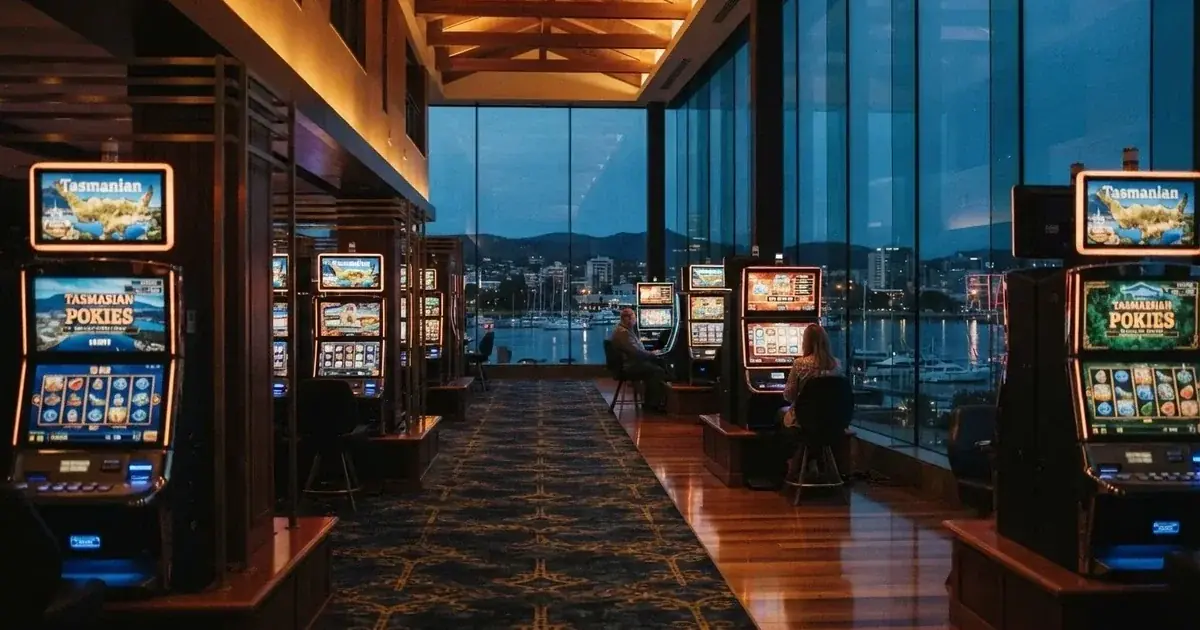
A punter searching for the best pokies in Tasmania is usually looking for two quite different things at once. One is a real venue — a pub, a club or one of the two licensed casinos on the island — where a person can sit at an electronic gaming machine, order a meal, and walk out having spent what the law and the venue allow. The other is an offshore website that uses the word “pokies” in its marketing but cannot lawfully offer casino games to anyone in Australia under the Interactive Gambling Act 2001. Those two things do not compete on the same footing, and writing about them as if they did is the mistake most comparison pages make.
This page works through both, in the order that makes the second legible. The first three shelves look at what is actually licensed in Tasmania and what the cashless card and loss-limit regime means in practice. The fourth looks at how a serious shortlist of offshore brands gets put together — using the ACMA’s own record of formal warnings rather than affiliate rankings. The fifth explains why a Tasmanian player comparing licensed venues against offshore “pokies” sites is comparing two products that the law treats differently. The sixth closes with the responsible-gambling supports that exist in Tasmania specifically.
The honest position the material supports is this: the best pokies in Tasmania in 2026 are the licensed venues, and the offshore sites that market themselves under the same word are not the same product even when their slot libraries look identical.
Table of Contents
- How deposits and withdrawals actually work at Tasmanian pokies venues — the cashless card, the loss limits, and what changes at the casino
- Paytables, machine mechanics, and the games Tasmanian venues actually run
- The shortlist: how it is built, what each entry actually is, and what it costs a player
- What a Tasmanian punter is actually choosing between
- The legal frame: what the IGA does, what the ACMA has done about it, and what changes at the start of 2026
- Responsible gambling in Tasmania — the supports that exist, and what they cover
- What “pokies” actually means in Tasmania — the licensed venues, and what a serious shortlist looks like
- How the comparison actually plays out — what a player choosing between venues and offshore sites is choosing between
- Frequently asked questions
How deposits and withdrawals actually work at Tasmanian pokies venues — the cashless card, the loss limits, and what changes at the casino
The single biggest change to how money moves through a poker machine in Tasmania took effect in December 2025. From that month, every hotel and club poker machine in the state moved to mandatory carded play under the Tasmanian cashless gaming card reform, overseen by the Tasmanian Liquor and Gaming Commission. Players no longer feed notes into a machine. They tap a card, the machine reads the account, and the spend is logged against the player’s identity.

The default loss limits that come with the card are the numbers a reader actually needs. A player starts at A$100 per day, A$500 per month and A$5,000 per year. Each of those ceilings can be raised, but not on the spot — there is a minimum 24-hour cooling-off period before any increase takes effect, and the request has to go through the card system rather than being granted at the venue. The structure is deliberately asymmetric: lowering a limit is immediate, raising one is delayed. For a player who finds the default ceiling comfortable, the reform is invisible. For a player who wants to lift it the same night, the reform is a wall.
The cardless loophole at the casino floor is the wrinkle. As of September 2024, no rollout date had been set for the same carded-play regime inside Tasmania’s two casinos — Wrest Point in Hobart and the Country Club Casino in Launceston. A player sitting at a machine inside either casino can still transact in a way the pub and club regime no longer permits. That asymmetry is worth knowing before a punter assumes the two products are governed by the same rules.
Settlement at a Tasmanian venue is not a withdrawal process in the online-wallet sense. A player taps out, the machine prints a ticket or pays to the card, and the cash leaves with the player. There is no payout speed to wait for, no pending period, and no bonus balance to clear. The settlement question that matters at a Tasmanian pokies venue is not how fast a withdrawal arrives — it is how much can be lost in a sitting, and that is what the loss limits on the card now cap.
For a player comparing this against an offshore site that advertises “instant payouts” and “PayID deposits”, the comparison is misleading on both sides. PayID and Osko are real-time bank-transfer rails in Australia, but they are legal deposit methods only for licensed wagering — sports and race betting — under the credit-card and digital-currency ban that took effect on 11 June 2024. An offshore casino site accepting PayID from a Tasmanian player is operating outside the Australian regime, and the consumer protections that come with a licensed Australian wagering account do not travel with the deposit.
Paytables, machine mechanics, and the games Tasmanian venues actually run
The term “pokies” in Australia refers to electronic gaming machines, and the games that sit on the floor of a Tasmanian pub, club or casino are governed by the same technical standards as machines anywhere else in the country — return-to-player (RTP) percentages published in line with national standards, volatility ratings, and machine categories from the Tasmanian Liquor and Gaming Commission. A punter walking into Wrest Point or the Country Club Casino is sitting at machines whose RTP and category are on a printed card beside the machine or in the venue’s game information. The same is true at any club or hotel pokies floor in the state.
The first thing to know about Tasmanian paytables is that they are not a single number. A pub machine in Hobart and a casino machine at the Country Club can carry different RTPs under the same broad regulatory regime, because the venues operate under different licence categories and the machines they host are licensed to different game profiles. A player who treats RTP as a property of “pokies in Tasmania” rather than of an individual machine is reading the wrong unit.
The second is the Spirit of Tasmania ferry question. The Spirit of Tasmania sails between Melbourne and Devonport, and the question of whether pokies are available on board comes up regularly in Tasmanian pokies searches. The vessel is a passenger ferry, not a licensed gaming venue under Tasmanian law, and it does not carry operating gaming machines in the sense the question implies. Anyone looking for 24-hour pokies access in Tasmania needs to look at licensed venues, not transport.
The third is the “open now” question — whether 24-hour pokies venues in Tasmania exist. Tasmania does not have a 24-hour pokies floor in the way some mainland casinos run. Wrest Point and the Country Club Casino operate extended hours, but the state does not license a continuous gaming floor. A punter who needs late-night machine access is comparing against mainland cities — Adelaide Casino’s machine floor runs 24 hours under South Australia’s regime, and Star Brisbane at Queen’s Wharf runs a continuous gaming floor since its August 2024 opening — not against anything Tasmanian.
For cashless gaming card purposes, every machine in a Tasmanian pub or club is now carded. The mechanism that matters to a player is the loss-limit ceiling on the card, not the machine’s theoretical RTP, because the card cuts off play before the long-run return figure becomes the binding constraint. A machine with a 90 per cent RTP played to a A$5,000 annual cap and a A$500 monthly cap is a different proposition from the same machine played with no ceiling at all.
The shortlist: how it is built, what each entry actually is, and what it costs a player
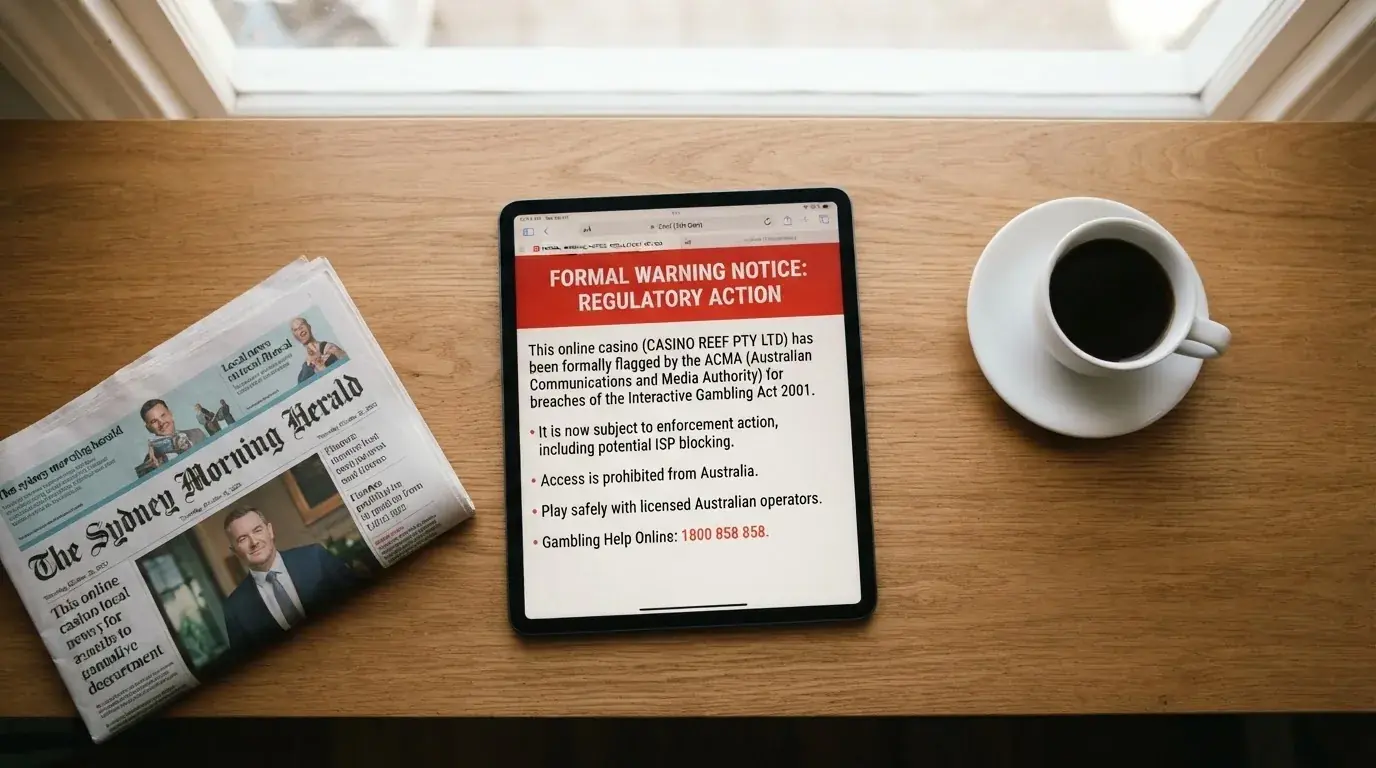
There is no honest way to rank the best offshore pokies sites accepting Tasmanian players. The reason is in the Interactive Gambling Act 2001: online casino games, including online pokies, cannot be licensed for supply to a person in Australia. No state or territory issues such a licence. The ACMA enforces that position, and the brands below are not on this page because they are the best of a category — they are on it because the ACMA itself issued a formal warning over each one for offering prohibited services to Australians. The ranking is alphabetical, not a recommendation. The verdict on each one is the same: a Tasmanian player using any of these sites is using a site that the regulator has told to stop, and there is no Australian consumer-protection body to complain to if a withdrawal is refused.
RocketPlay
The ACMA issued a formal warning to Pulsup Ltd over RocketPlay in March 2026. An earlier formal warning covered the Rocketplay brand under Dama N.V. in May 2022. The operator behind the site has changed between those two warnings; the legal status under the Interactive Gambling Act has not. A Tasmanian player opening an account at RocketPlay is using a site that has been told twice by the regulator to stop offering casino games to Australians, and any balance held on the site when the next blocking round lands sits behind that block. The site carries no Australian consumer-protection registration, no connection to BetStop, and no complaints route a player can use. A punter who understands that picture is a punter who has read the warning letter; a punter who has not is one whose deposit carries the full risk of the offshore operator’s discretion.
Level Up Casino
The ACMA issued a formal warning to Dama N.V. over Level Up in May 2022, as part of a six-brand warning covering Bambet, Dazard, Level Up, Rocketplay, Wild Tornado and Cobra Casinos. Level Up sits on that list. The brand is named in industry listings and on third-party monitoring pages, which is what the listings-only marker in the research file refers to — the listings exist because the brand was named by the regulator, not because the regulator endorsed it. A Tasmanian player who arrives at Level Up via an affiliate page is being routed to a site the regulator has formally asked to leave the Australian market. The site’s own licence is offshore; the player has no Australian recourse. Worth knowing before a deposit, and worth acting on by not making one.
Woo Casino
The ACMA issued a further formal warning to Dama N.V. over Woo Casino in March 2025. This is a separate warning from the May 2022 round — it tracks the same operator but a different brand under that operator’s umbrella, and the regulator treats each brand as its own service. A Tasmanian player using Woo Casino is therefore dealing with an operator that has now received two formal warnings about its Australian-facing brands, and the second one specifies the brand the player is on. The pattern — same operator, different brand, fresh warning — is what offshore enforcement looks like in practice: the regulator names the brand, the operator rebrands, and the cycle continues. A punter who treats the Woo Casino warning as historical is misreading what the regulator has done.
Spirit Casino
The ACMA issued a formal warning to Dama N.V. over Spirit Casino in May 2025. Spirit Casino is one of the post-2022 rebrands inside the Dama N.V. stable, which is why a new formal warning was needed rather than the existing 2022 letter being treated as sufficient. The site’s marketing positions it as a pokies-and-table product; the Interactive Gambling Act positions it as a prohibited service to anyone in Australia. A Tasmanian player looking at Spirit Casino for the game library rather than the regulatory position is reading the wrong column.
National Casino
The ACMA issued a formal warning to Consolutetish S.R.L. over National Casino in July 2025, alongside a parallel warning over Bizzo Casino. National Casino’s presence in Australian-facing affiliate coverage has grown over the period since 2022, which is part of why the ACMA named it specifically rather than relying on the earlier operator-level warnings that did not cover it. A punter arriving at National Casino through an Australian affiliate is being routed to a service the regulator has formally notified, and the site’s continued availability at the affiliate end is not an endorsement of legality — it is a marketing decision by the affiliate. The brand is named in mainstream reporting on Australian gambling regulation, and that naming is what the listings-only tag captures: the brand surfaces in coverage, not in any register of approved operators.
Bizzo Casino
The ACMA issued a formal warning to Consolutetish S.R.L. over Bizzo Casino in July 2025. Bizzo had already been the subject of an earlier formal warning issued to TechSolutions (CY) Group Limited and TechSolutions Group N.V. in 2022. Two warnings, two different operators behind the same brand — the same rebrand pattern as Woo Casino, applied to a different label. A Tasmanian player on Bizzo is on a site whose operator history includes two regulatory letters from the ACMA about Australian-facing service. The site has no Australian licence, no connection to BetStop, and no complaints body. The brand does not appear in any Australian register as an approved service; the listings-only tag in the research reflects that the brand surfaces in industry reporting rather than in any approval register.
Ignition Casino
The ACMA issued a formal warning to Bamboo Media over Ignition Casino in July 2025. Ignition Casino’s Australian-facing marketing targets poker and casino game players, and the formal warning specifies the brand and the operator behind it. A Tasmanian player who arrives at Ignition Casino via a paid affiliate link is being routed to a service the regulator has formally notified, and the affiliate payment that funded the routing is not a regulatory clearance. The site carries no Australian consumer protection, and the warning letter is a public record.
Instant Casino
The ACMA issued a formal warning to EOD Code SRL over Instant Casino in February 2025. Instant Casino’s brand proposition is fast access and a casino-style game library, and the formal warning specifies the operator behind it. A Tasmanian punter who treats Instant Casino as an alternative to a local pub or club because the marketing language says “instant” is reading the marketing rather than the regulatory position. The Interactive Gambling Act does not recognise “instant” as a category that exempts a casino game service from the prohibition, and the ACMA’s letter says exactly that.
Jackbit
The ACMA issued a formal warning to Ryker B.V. over Jackbit and CasinOK in April 2026. Jackbit sits alongside CasinOK on the same letter, which means a single regulatory action covers two brand fronts from the same operator. A Tasmanian player using Jackbit is therefore on a site whose operator has been told to stop offering casino games to Australians in the same month, alongside a sister brand. The site is named on a regulator’s warning list and carries no Australian consumer-protection registration. The dual-brand warning is the regulator’s way of saying the operator runs more than one front and each one is named.
Casino Intense
The ACMA issued a formal warning to Sterplay Holding Ltd over Casino Intense in April 2025. Casino Intense appears in Australian-facing reporting on offshore operators and in monitoring coverage of the ACMA’s enforcement list. The brand surfaces in industry listings rather than in any Australian register of approved services, which is what the listings-only tag tracks. A Tasmanian player on Casino Intense is on a service the regulator has formally asked to stop offering to Australians, with the same set of consequences as every other brand on this page — no Australian complaints body, no BetStop coverage, and the next blocking round as a hard ceiling on access.
Sky Crown
The ACMA issued a formal warning to Hollycorn N.V. over Sky Crown and Blue Leo in September 2022. The letter is older than the other entries on this page, and the Sky Crown brand has continued to surface in affiliate marketing to Australian players over the period since. The brand appears in industry listings and on third-party monitoring pages, which the listings-only tag reflects. A Tasmanian player who treats the 2022 warning as outdated is misreading what a formal warning does — it does not expire, and the operator’s continued presence in Australian-facing marketing is the reason the regulator’s letter is still on the public record.
What a Tasmanian punter is actually choosing between
The honest framing of the choice a Tasmanian punter makes is between two products that the law treats differently. On one side are the licensed venues — Wrest Point, the Country Club Casino, and the network of pubs and clubs that hold their own electronic gaming machine licences since Federal Group relinquished its monopoly in August 2017. On the other side are the offshore sites that market themselves as “pokies” websites, none of which can lawfully offer casino games to anyone in Australia and all of which have been the subject of ACMA formal warnings as listed above.
The two products are not the same in any meaningful sense beyond the slot game on the screen. A licensed Tasmanian venue pays out at the cashier, prints a ticket, and operates under the Tasmanian Liquor and Gaming Commission’s supervision with the cashless card and the A$100/A$500/A$5,000 loss limits now in force at every pub and club machine. A Tasmanian player sitting at a Wrest Point machine or a Hobart club machine can walk to the cashier and walk out. A punter sitting at an offshore site can wait days for a withdrawal to clear, can have the site blocked mid-session with a balance on it, has no Australian complaints body if the withdrawal is refused, and has no protection under BetStop because the site is not connected to the National Self-Exclusion Register.
The marketing language on the offshore side flattens this gap deliberately. “Real money pokies”, “instant payouts”, “Play pokies online Tasmania” — every phrase is constructed to make the offshore product look like a substitute for the licensed venue, when the regulatory position is that it is not. The Interactive Gambling Act 2001, strengthened by the Interactive Gambling Amendment Act 2017, makes the offering of online casino games to a person in Australia an offence, and the ACMA’s enforcement record is the visible part of how that offence is pursued. The player is not the target of prosecution — the IGA targets the provider — but the player is the one holding the balance when the site is blocked.
For a punter who wants to play pokies in Tasmania in 2026, the licensed venues are the only lawful route. The offshore sites on this page are not the same product dressed up; they are a different product with different risk attached, and the ACMA’s formal warning record is the most reliable public evidence of that risk.
The legal frame: what the IGA does, what the ACMA has done about it, and what changes at the start of 2026
The Interactive Gambling Act 2001, as amended by the Interactive Gambling Amendment Act 2017, is the central piece of legislation. It prohibits the supply of online casino games — which includes online pokies — to a person in Australia. It does not prohibit the individual player from accessing such a site; it prohibits the provider from offering the service. What is licensable in Australia is wagering on racing and sport placed before the event, lotteries, and keno. The bulk of online bookmakers serving Australian customers — Sportsbet, Bet365, Ladbrokes — are licensed in the Northern Territory through the Northern Territory Racing and Wagering Commission, which has no full-time staff and meets once a month in Darwin. The state of Tasmania does not license online casino games at all.
The ACMA is the enforcement body. It investigates complaints, issues formal warnings to operators, and directs Australian internet service providers to block illegal services. As of June 2026, the ACMA’s blocking requests since November 2019 had taken out 1,751 illegal gambling and affiliate websites, and more than 230 unlicensed services had left the Australian market since enforcement was strengthened in 2017. In the round reported on 26 June 2026 alone, the ACMA asked ISPs to block twelve more sites — 7Signs, ChromaBet, Donbet, Duospin, Freshbet, Slots Gem, Jacks Club, Lucky Start, Pointsbetz, Spinrise, Vinyl Casino and Wildsino. The blocking cadence is the regulator’s main visible tool, and the list of blocked sites is the public record of what the regulator has done.
The arithmetic the page is built around — the blocking rate — is the rate at which the ACMA has been clearing the offshore market. The 1,751 sites blocked since November 2019, divided across the years of enforcement, gives an annual cadence that sits well above the rate at which new offshore brands come online. The result is best stated as a band rather than a single figure, because the cadence is uneven — some years see a few blocking rounds, others see many — and the rate of new operators entering the Australian-facing market is itself not stable. The honest summary is that the ACMA is clearing more sites per year than it was at the start of the regime, and that the cumulative count is the relevant number for a player assessing how durable any particular offshore site is likely to be.
H2 Gambling Capital’s 2025 report estimates that Australians lose about A$3.9 billion a year to illegal gambling sites, and that the share of gambling going through legal channels fell from 74 per cent in 2021 to 64 per cent. That drop is the macro picture the offshore sites are operating inside, and the licensed-venue share falling is the gap the offshore operators are filling.
The 2026 reform context sits on top of all this. The Interactive Gambling Amendment (Gambling Reform) Bill 2026 passed Parliament on 19 August 2026, and its advertising and inducement measures commence on 1 January 2027. On a page written in 2026, that is law with a future start date rather than law in force — the advertising restrictions are not yet binding, but they are enacted. A player reading this page in the back half of 2026 is reading it during a transition period in which the offshore marketing that routes Australian players to the sites on this page is about to be subject to new restrictions, even though those restrictions have not yet commenced.
On payments: credit cards, credit-related products and digital currency are banned as payment for licensed online wagering since 11 June 2024, with penalties up to A$247,500 for operators that breach the rule. Legal deposit routes for licensed wagering are debit card, bank transfer, PayID and Osko, and BPAY. An offshore casino accepting credit cards or crypto from a Tasmanian player is not just operating outside the Australian licence regime — it is also operating against the payment rules that bind licensed Australian operators.
Responsible gambling in Tasmania — the supports that exist, and what they cover
Gambling Help Online and the Gambling Helpline Tasmania are the entry points. The helpline — 1800 858 858 — is run by Anglicare Tasmania’s Gamblers Help Service, is free, operates 24 hours, and takes calls from anyone affected by gambling in Tasmania. In-person counsellors are based in Hobart, Launceston, Devonport and Burnie. The service can also help arrange venue self-exclusion at a specific pub, club or casino. The national Gambling Help Online service adds web chat and email counselling for anyone who prefers not to phone.
BetStop — the National Self-Exclusion Register — has been live since August 2023. It binds Australian-licensed online and phone wagering services, which means it covers licensed sports and race bookmakers but does not cover offshore casino sites. A Tasmanian player who has self-excluded through BetStop has closed off their access to the licensed wagering market, but the offshore sites listed above are not connected to BetStop, and a self-exclusion does not reach them. The asymmetry is the one a self-excluding player needs to know up front: BetStop closes the lawful doors, not the unlawful ones.
The Tasmanian cashless gaming card adds a structural layer underneath the support services. The card’s loss limits — A$100 per day, A$500 per month, A$5,000 per year as defaults, raiseable only after a 24-hour wait — sit on every pub and club machine in the state. For a player who has contacted Gambling Helpline Tasmania and is working through a self-exclusion or a reduction plan, the card’s defaults are aligned with what the support service will recommend. A player who raises the ceiling without a plan is acting against the structure the system is built to provide.
The casino floor is the gap in the cashless regime. Wrest Point and the Country Club Casino are not yet operating under the same mandatory carded play and loss-limit regime as the pubs and clubs, and a player who wants the card regime’s protection on the casino floor does not yet have it as of September 2024. The responsible-gambling framework inside the casinos is the venue’s own self-exclusion and the support services the venues direct players to, not the card system that applies at every other machine in the state.
The interactive gambling reform that takes effect on 1 January 2027 adds advertising and inducement restrictions on top of the existing framework, but as a 2026 page those are law passed, not law in force. A player reading this page who is weighing up the offshore sites above is weighing them up under the current rules, and the responsible-gambling supports named in this section are the supports that exist under those current rules.
What “pokies” actually means in Tasmania — the licensed venues, and what a serious shortlist looks like
Tasmania licenses two casinos and a network of pubs and clubs. The two casinos are Wrest Point in Hobart, which opened on 10 February 1973 as Australia’s first legal casino, and the Country Club Casino and Resort in Launceston, opened by Federal Group in 1982. Wrest Point is the historic anchor of Tasmanian casino gambling; the Country Club’s design was modelled on the stately homes of the American South, in a Georgian style chosen for the rural landscape around Launceston. Both venues are operated under licence by Federal Group, which originated as the Federal Coffee Palace Company Limited, founded in Melbourne in June 1885, with the Farrell family acquiring majority ownership of its holding company by 1989 and privatising the group in 1990. Federal Group remains Tasmanian family-owned.
Federal Group’s monopoly position is the part of the structure that has changed. Under the Gaming Control Act 1993, Federal Group held the exclusive licence to operate electronic gaming machines outside its casinos in Tasmania. In August 2017 it relinquished this monopoly, allowing individual pubs and clubs to hold their own machine licences. The pub and club network that now exists is therefore a function of post-2017 licensing, not a relic of the Federal Group monopoly. A punter walking into a Hobart pub or a Launceston club is sitting at a machine under a venue-specific licence that did not exist before the 2017 change.
The economic scale of the original monopoly gives a sense of what the licensed machine market looks like. Mulawa Holdings, part of Federal Group’s Tasmanian gambling licence structure, reported profit nearly doubling from A$13.9 million to A$24.4 million in the year to 30 June 2018, on revenue of A$543 million, while paying about A$75 million in gaming taxes and licence fees to the Tasmanian government. Those numbers describe the monopoly-era operation. The post-2017 pub and club network operates at smaller scale per venue, but the cashless card regime applies uniformly across the whole pub and club floor.
For comparison against other Australian casino markets: Adelaide Casino, known commercially as SkyCity Adelaide, sits in the heritage-listed Adelaide railway station building on North Terrace, has 90 gaming tables and 950 gaming machines, and is the sole licensed casino in South Australia under the Casino Act 1997. South Australia had 11,672 gaming machines outside Adelaide Casino in 471 venues in September 2023. South Australia sets a minimum gaming-machine RTP of 87.5 per cent and a general maximum bet of A$5.00 outside the casino, while Adelaide Casino itself has no maximum-bet limit. South Australian gaming-machine losses outside Adelaide Casino totalled about A$0.92 billion in 2022-23, equivalent to about A$497 per adult. Brisbane’s Treasury Casino, operated by Star Entertainment Group, closed on 25 August 2024 to make way for the new Star casino at Queen’s Wharf, which began a staged opening at the A$3.6 billion Queen’s Wharf Brisbane precinct on 29 August 2024 with the main casino floor opening first. Queensland had 21,122 gaming machines operating in 351 venues in October 2023. Star Entertainment’s licence position in Queensland has been under active scrutiny since late 2022, when the Queensland Government, acting on an independent review by former Court of Appeal judge Robert Gotterson, found the group unsuitable to hold its Queensland casino licences after concluding it had misled regulators and failed its anti-money-laundering duties; Star was fined A$100 million on 9 December 2022, with a 90-day suspension of the Treasury Brisbane and Star Gold Coast licences deferred to 1 December 2023 to allow remediation. The contrast with Tasmania is structural: Tasmania’s two casinos are not under the same licence-suitability scrutiny that the Star Brisbane operation has been under, and the comparison point that matters for a player is the venue’s current licence status, not its history.
A serious shortlist of “best pokies in Tasmania” therefore looks like this: Wrest Point and the Country Club Casino on the casino side, the network of pubs and clubs licensed since 2017 on the pub and club side, with the cashless card regime as the binding rule on the pub and club floor. The offshore sites that appear in affiliate marketing as “pokies Tasmania” are a different category and are not on the same shortlist. The reason this page lists them at all is so that a reader searching under that phrase knows what they actually are.
How the comparison actually plays out — what a player choosing between venues and offshore sites is choosing between
A Tasmanian player who wants to play pokies in 2026 has three routes to choose between, and the choice is not symmetric.
The first route is a licensed pub or club, under the cashless card regime with the A$100/A$500/A$5,000 loss limits in force. The machine’s RTP is on a printed card beside it; the venue’s licence is on the wall; the loss limit is enforced by the card; the support services — Gambling Helpline Tasmania, Gambling Help Online, BetStop for wagering — are reachable. The settlement is cash on the way out, and the venue is supervised by the Tasmanian Liquor and Gaming Commission. A player who hits their daily limit cannot play past it without raising the ceiling, and raising the ceiling requires the 24-hour wait.
The second route is one of the two casinos — Wrest Point or the Country Club Casino — under the existing casino regime with the cashless card not yet rolled out to the casino floor as of September 2024. The machine library is broader, the hours are longer, and the loss-limit structure is the casino’s own. A player who wants the cashless card’s loss-limit protection on the casino floor does not have it yet.
The third route is one of the offshore sites named above, each the subject of an ACMA formal warning, none of which can lawfully offer casino games to a person in Australia. The settlement is a withdrawal request through an offshore payment processor; the consumer protection is the site’s own terms; the regulator is the ACMA, whose position is that the site should stop. A player who has set a deposit limit at an Australian-licensed wagering site has no equivalent limit on the offshore site. A player who has self-excluded through BetStop has no BetStop coverage on the offshore site.
The three routes are not three entries in a ranking. They are three products with different legal statuses, different consumer protections, and different loss-limit structures. The honest framing of “best pokies in Tasmania” is that the licensed venues are the product, the offshore sites are a different product, and the player’s choice between them is a choice between two regimes rather than between two brands.
Frequently asked questions
Which venues in Tasmania are licensed to operate pokies?
Tasmania’s two licensed casinos are Wrest Point in Hobart, which opened on 10 February 1973 as Australia’s first legal casino, and the Country Club Casino and Resort in Launceston, opened by Federal Group in 1982. Both are operated by Federal Group under state licence. Since August 2017, when Federal Group relinquished its monopoly, individual pubs and clubs have also been able to hold their own electronic gaming machine licences, and the licensed pub and club network is the larger part of where Tasmanians play pokies.
Are pokies in Tasmania available around the clock?
Tasmania does not license a 24-hour pokies floor. Wrest Point and the Country Club Casino operate extended hours but do not run continuous gaming, and the pub and club network operates under standard venue hours. Mainland comparison points are different — Adelaide Casino runs a 24-hour machine floor under South Australia’s regime, and Star Brisbane at Queen’s Wharf has run continuous gaming since its August 2024 opening — but a Tasmanian punter looking for late-night machine access is not finding it in Tasmania.
What identification do venues in Tasmania require before letting someone play pokies?
Identification requirements are set by each venue’s licence conditions and by the cashless gaming card regime that took effect for pubs and clubs in December 2025. The card links play to a player’s identity, and the A$100 daily, A$500 monthly and A$5,000 yearly loss limits are enforced against the cardholder. The minimum age to enter a gaming area in Tasmania is 18, and venues are required to enforce that.
Can visitors to Tasmania use self-exclusion schemes at local pokies venues?
Venue-level self-exclusion is available at individual pubs, clubs and casinos, and Gambling Helpline Tasmania (1800 858 858) can help arrange it. BetStop, the National Self-Exclusion Register, has been live since August 2023, but it binds Australian-licensed online and phone wagering services only — an offshore casino site is not connected to BetStop. A visitor who has self-excluded through BetStop has closed off licensed wagering access but not access to offshore sites.
How does the payout percentage on Tasmania pokies compare with other Australian cities?
Tasmania does not publish a single state-wide RTP figure for pokies; the return-to-player percentage is a property of the individual machine, not of the state, and the printed game information card beside the machine carries the figure. For comparison, South Australia sets a minimum gaming-machine RTP of 87.5 per cent outside the casino, while Adelaide Casino itself is not bound by that floor. Queensland and other mainland states operate under their own regimes. A player comparing payout percentages across states is comparing machine-by-machine figures, not a single Tasmania-versus-Sydney number.
Is it legal for an online casino to advertise ‘pokies’ in Tasmania the same way a pub or club does?
No. The Interactive Gambling Act 2001, as amended in 2017, prohibits the supply of online casino games — including online pokies — to a person in Australia. The ACMA is the enforcement body and has issued formal warnings over each of the offshore brands covered in the shortlist section of this page. An online casino advertising “pokies” to a Tasmanian player is offering a prohibited service, regardless of how the marketing is worded. The Interactive Gambling Amendment (Gambling Reform) Bill 2026 passed Parliament on 19 August 2026 and adds advertising and inducement restrictions that commence on 1 January 2027; on a page read in 2026, that is law passed but not yet in force.