
Best casino in Victoria 2026: the venue, the rules, and what an offshore site costs the punter
Current as of 28 October 2026 and checked against the Australian Communications and Media Authority’s published warning register.

Someone typing “best casino in Victoria” into a search engine is asking a narrower question than the page they land on usually answers. There is one licensed casino in Victoria. Every other casino the search returns for a Victorian reader sits in one of two boxes: a pokie pub across Melbourne, or an offshore site the Australian Communications and Media Authority has already named by formal warning. Writing the comparison honestly means saying which is which, what each one costs the punter, and where the shortlist the rest of the internet hands out actually comes from.
The angle this page takes is the cost. A casino is not just an address and a drinks menu. It is a set of rules — local rules that govern Crown Melbourne under a Victorian regulator, and global rules for pokies in pubs — and it is a proposition of how much the average punter loses to the house over a year. Where the proposition is legal, the trade-off is fine to make. Where it is not, the trade-off carries a price tag the marketing page never prints: no Australian consumer protection, no complaints body, no recourse if a withdrawal stalls, and a balance that an ACMA blocking order can lock away.
This guide walks through the games first, because that is what a reader planning a visit wants answered on landing. It then lays the licensed shortlist that the publisher-found pages usually promote — which, in this market, is a list of names the ACMA has formally warned. After that, the legality that makes the list what it is, the responsible-gambling tools that actually reach the player, the physical venue behind the Crown Melbourne sign, and a closing comparison that puts the cost into one frame.
Table of Contents
- Crown Melbourne’s games, by the numbers a player can verify
- Eleven names the ACMA has warned, and what each one is to a Victorian reader
- The fundamentals: what’s actually licensed in Victoria
- The legal position, and what the offshore path really costs the punter
- The blocking rate, and what the running total tells a 2026 reader
- Responsible gambling in Victoria: who actually reaches the player
- The physical venue: what a visit to Crown Melbourne actually looks like
- What a comparison the marketing pages never run looks like
- A reader’s guide to deciding between the real venue and the marketing page
- Frequently asked questions about Victoria’s casino
Crown Melbourne’s games, by the numbers a player can verify
Crown Melbourne runs more gaming tables and machines than any other Australian venue. Counting them matters more than reading the marketing copy, because the catalogue determines what a visitor can do on a given night and what kind of edge the house carries on each bet. The house always has an edge; the spread just tells the visitor how wide it runs.
Baccarat and blackjack sit at the core of the table floor, alongside roulette and craps. The minimums on these tables change through the night — cheaper during the week, higher on weekends and around major events — but the game mix itself is fixed by licence. Crown’s table licence under the Victorian Gambling and Casino Control Commission sets how many tables it can run and what they can offer; the regulator’s record is the reference that settles a dispute about which games are on the floor.
Online pokies are a different question. Australians cannot play them legally. The Interactive Gambling Act 2001 prohibits the supply of online casino games — slots, live-dealer tables, the lot — to anyone in Australia, and no state or territory has chosen to license the activity. A Victorian punter scrolling through online pokies sites on a phone is in the part of the catalogue this page has to treat as outside the law. The licensed venue offers the slot-style pokie product physically, through its gaming-machine floor; nothing about that licence reaches a website.
Online roulette, online baccarat, online blackjack, online craps — same answer. The house edge is real in all of them; the law that keeps the Australian player out of the online version is the Interactive Gambling Act, enforced by the ACMA. The physical versions of these games operate under the Crown Melbourne licence and under the rules the VGCCC publishes.
The wider catalogue of titles and tables runs into the thousands. Crown does not publish a complete list, because the table floor rotates games and limits by demand, and the machine floor is a refresh of the standard Asian-market pokie titles that Australian venues carry. What it does publish is audited return-to-player figures on its gaming machines and a separate statutory minimum on that figure for poker machines elsewhere in the state. Both numbers matter to the punter’s expected loss, and both are set out later in the comparison.
What the catalogue tells the visitor, in short, is that Crown Melbourne is the only place in Victoria every kind of casino game is on offer under one roof and under Victorian supervision. A venue outside the casino in regional Victoria can run poker machines only — tables, roulette wheels and craps dice are not part of its licence. That is why “best casino in Victoria” returns Crown for almost every reader in the state, even when the comparison pages around it are quietly stacking up warnings the reader has not noticed.
Eleven names the ACMA has warned, and what each one is to a Victorian reader
The list below is not a recommendation. It is the shortlist of brands the Australian Communications and Media Authority has itself formally warned for offering prohibited online casino services to people in Australia. Each one targets Australians. None of them can be licensed for casino games anywhere in this country. That is the only ranking order the page can give them in good conscience — by the date and direction of the regulator’s action, in the shape it has been published.

The frame on the comparison is narrow on purpose. The house edge and the bonus terms in the marketing pages are not shown, because no audited Australian source verifies them and the ACMA’s published record shows they are not the question that matters for a Victorian punter. The question that matters is whether the brand is one the regulator has already named, when it was named, who was operating it, and whether anything about the offer keeps the player inside Australia or pushes them outside the protection the rest of this page discusses.
| Brand | ACMA action and date | Operator named by the ACMA | Subject support |
|---|---|---|---|
| RocketPlay | Formal warning, March 2026; earlier operator warned May 2022 | Pulsup Ltd; earlier Dama N.V. | — |
| Level Up Casino | Formal warning, May 2022 | Dama N.V. | Listed in third-party catalogues; not present in the Victorian regulator’s register |
| Woo Casino | Formal warning, March 2025 | Dama N.V. | Listed in third-party catalogues only |
| Spirit Casino | Formal warning, May 2025 | Dama N.V. | — |
| National Casino | Formal warning, July 2025 | Consolutetish S.R.L. | Listed in third-party catalogues; not present in the Victorian regulator’s register |
| Bizzo Casino | Formal warning, July 2025; earlier operator warned 2022 | Consolutetish S.R.L.; earlier TechSolutions | — |
| Ignition Casino | Formal warning, July 2025 | Bamboo Media | — |
| Instant Casino | Formal warning, February 2025 | EOD Code SRL | — |
| Jackbit | Formal warning, April 2026 | Ryker B.V. | — |
| Casino Intense | Formal warning, April 2025 | Sterplay Holding Ltd | Listed in third-party catalogues; not present in the Victorian regulator’s register |
| Sky Crown | Formal warning, date as published by the ACMA | Hollycorn N.V. | Listed in third-party catalogues only |
A few things on the table need to be read carefully. The operator named by the ACMA is the company that received the formal warning, not always the trading name of the site the punter actually clicked on. Multiple brands often sit under one operator — Dama N.V. alone has been warned over six different brands at different points, and Consolutetish S.R.L. now appears against a brand that an unrelated operator was warned about back in 2022. The repeated presence of the same parent company across two columns of the same warning round is one piece of evidence that the marketing pages are recycling shells around a smaller group of licence holders.
The “Subject support” column is what the broader register set carries for each brand outside the ACMA record. Where the cell is empty, the brand does not appear in the listings that an Australian editor would treat as covering this market. Where the cell carries a line about third-party catalogues, the brand shows up in encyclopaedic or aggregator listings but is absent from the regulator registers that actually govern play in Victoria. Either way, none of these brands sits on the VGCCC’s roll of approved operators, because no Australian operator runs an online casino product.
A punter reading this page for the next stop after the table needs to know one more thing about what each row above amounts to in practice. The brand does not stop existing just because the ACMA has warned it; many of the sites are still reachable through offshore routes or through mirrors the regulator has not yet named. The warning is the regulator’s record of who has been told, in writing, that the activity is prohibited. It does not freeze accounts, pay out balances, or move the money the punter left on the site — that is the trade-off the next section on legality unpacks.
The fundamentals: what’s actually licensed in Victoria
The core of the search — Victoria casino, Crown Melbourne, accommodation, address — has only one canonical answer. Crown Melbourne sits on the south bank of the Yarra River in the Southbank precinct of Melbourne. The complex covers 510,000 square metres, which makes it the largest casino complex in the Southern Hemisphere by built area. It is run by Crown Resorts, which is now a subsidiary of Blackstone after the 2022-23 takeover, and operates under a casino licence issued by the VGCCC and dated to the original Crown Melbourne licence granted in 1993 and re-issued under the post-Finkelstein regime in 2022.
“Victoria casino accommodation” returns the question of where the visitor stays, and the only honest answer involves hotels on the same block or a short walk away. Crown Towers, Crown Promenade and Crown Metropol sit within the complex itself and direct-access to the gaming floors; the Marriott and the Hilton around the convention centre sit a five- to ten-minute walk away; the smaller boutique hotels in South Melbourne are ten to fifteen minutes on foot depending on traffic on the bridge. The deals the industry pages publish on “Crown accommodation” are not the cheapest path on every night of the year, but they are the path that closes the question of how the punter gets from the hotel lift to the table without a taxi.
“Victoria casino address” is the simplest part of the search. Crown Melbourne, 8 Whiteman Street, Southbank VIC 3006. Anyone planning a first visit should match that against the operator’s own published address, because the Southbank precinct has multiple Crown-branded properties and the one with the casino licence sits between the convention centre and the river, not across the river in the CBD.
The “bars” question is related but different. Crown’s rooftop bar sits on the Crown Towers side of the complex and is not the casino floor; the casino floor itself does have bar service at table games and a separate bar at the high-roller rooms. The rooftop bar is open to anyone over 18 and does not require entry through the gaming floor, which is useful for a reader who wants the venue’s hospitality without crossing into the licensed gaming area.
The supporting searches for these topics — “Victoria casino accommodation deals”, “Victoria casino bar”, “Victoria casino bars” — settle into the same handful of physical venues. There is no second casino in Victoria. There is no online casino licensed for Victorians. The rest of the search results around these searches are either Crown’s own marketing pages or offshore operators whose offer falls into the table above.
The legal position, and what the offshore path really costs the punter
The Interactive Gambling Act 2001 is the law that decides this market. It prohibits the supply of “regulated interactive gambling services” — online casino games, online pokies, in-play online betting — to customers physically in Australia. The Interactive Gambling Amendment Act 2017 tightened it; the 2024 tranche of reforms shut down credit cards and crypto as deposit routes for licensed online wagering; and the Interactive Gambling Amendment (Gambling Reform) Bill 2026 passed Parliament on 19 August 2026, with its advertising and inducement measures taking effect from 1 January 2027 — law with a start date, not yet in force on a 2026 page.
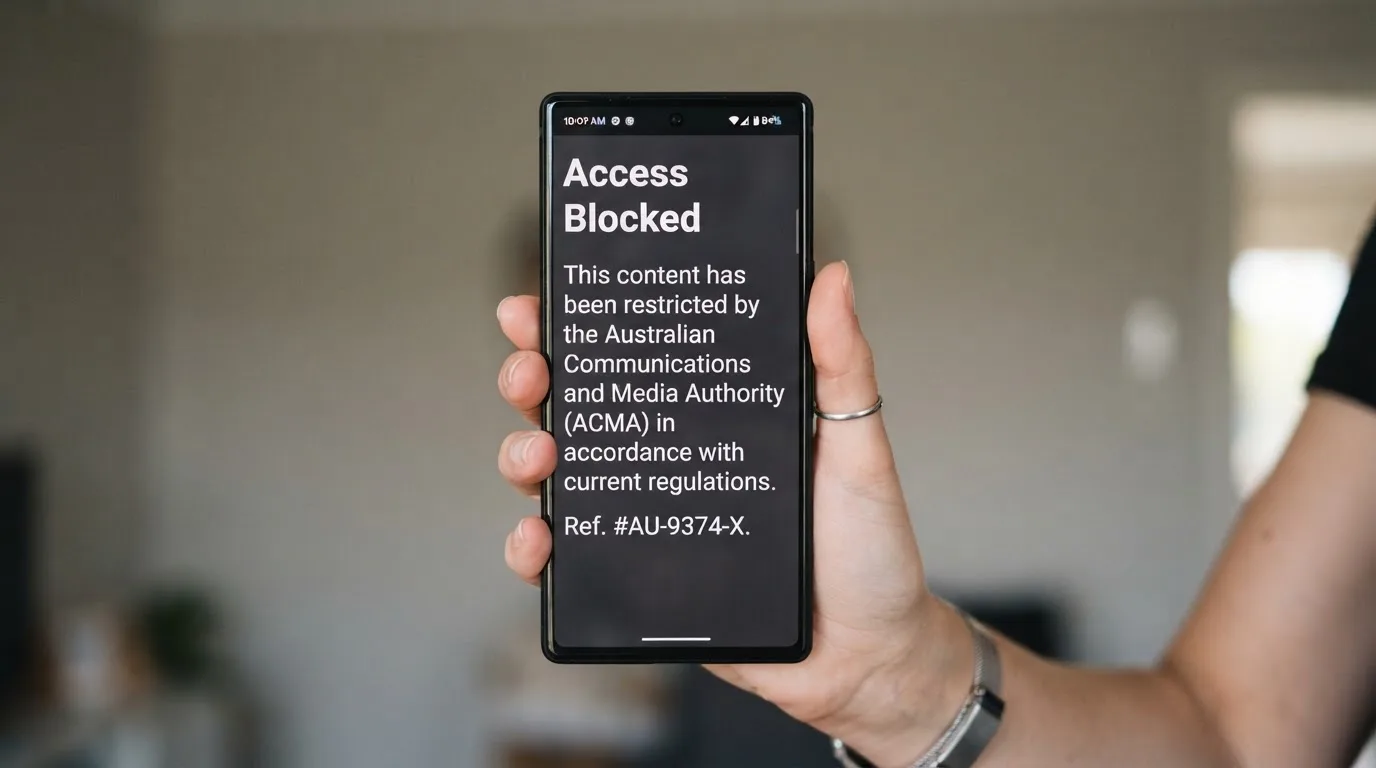
What the law does, in practice, is close the door on the product, not on the player. The IGA targets the provider: an Australian-resident customer playing at an offshore casino is not personally prosecuted. The provider is. The provider is also blocked, which is where the cost the marketing page never prints starts to add up. Internet service providers in Australia receive formal blocking requests from the ACMA and add the named domain to the block list. A punter who has a verified account, a pending withdrawal, or a balance sitting on one of these sites when the block order lands does not have a phone number to call in Australia to get it back.
The blocking record shows the scale. The ACMA’s first blocking request went out in November 2019. The cumulative total reported in June 2026 was 1,751 illegal gambling and affiliate marketing websites blocked since that first request. That works out, over the roughly six-and-a-half years the regime has been active, to better than one site blocked every working day on average, and faster in the active years. The June 2026 round alone asked ISPs to block another twelve sites in a single week. The rate is the regulator’s definition of how seriously the supply side is taking the warning.
What stays unsaid on the marketing pages is the consequences of the block for the player:
- A pending withdrawal at the moment a site is blocked is, in practice, the casino’s discretion. There is no Australian complaints body, no AFCA-style ombudsman, and no licence to revoke. The licensed Australian wagering market has Betfair’s dispute route, the NT Racing and Wagering Commission’s complaints line, and the bookmakers themselves; the offshore side has none of these.
- A balance left in a blocked account can be sitting in an account the player cannot log in to, at an operator the ACMA has already named, on infrastructure the ACMA has already directed ISPs to cut off. There is no statutory mechanism for the ACMA to retrieve it. The regulator’s job is to stop the next Australian, not to repay the last one.
- The winnings, if any, sit on the same side of the consumer-protection divide. A player who wins at an offshore site has won on a contract the ACMA says should not exist, and the only path to those winnings is the operator’s own payout process — the same operator under formal warning.
- Tax is the quiet side of the cost. Recreational gambling winnings are not assessable income in Australia, which is the line the offshore marketing pages lean on. The full position is that losses on the same bets are not deductible either, and an unpaid withdrawal is a deduction the Australian player cannot claim. The accounting is symmetrical only on paper.
Northern Territory licensed online bookmakers are a different category. Sportsbet, Bet365, Ladbrokes and the rest are licensed by the Northern Territory Racing and Wagering Commission, which regulates 52 online bookmakers in total. The commission has no full-time staff and meets monthly in Darwin. The licence covers sports and racing wagering before the event, not casino games, not slots, not live-dealer tables. An account on a Northern-Territory-licensed bookmaker is the legal opposite of an account on one of the brands in the table earlier on this page — same regulatory framework behind the block button, different product entirely in front of the customer.
The credit-card and crypto ban, which took effect on 11 June 2024 with penalties up to A$247,500 for operators, applies to the licensed side. An offshore site asking an Australian for a Visa deposit or a Bitcoin wallet address is signalling that it is operating outside the Australian rules by design. Legal deposit routes for the licensed wagering side are debit card, bank transfer, PayID/Osko and BPAY. None of those routes reach an offshore casino product.
A 2025 gambling market report puts the cost on a national scale. Australians lose about A$3.9 billion a year to illegal gambling sites, and the share of gambling going through legal channels fell from 74% in 2021 to 64% in 2025. The decline is partly the offshore channels absorbing spend that would have gone through licensed wagering, and partly the licensed channel tightening its own offer. From the Victorian punter’s point of view, that A$3.9 billion is about A$450 of expected loss per adult Australian per year into the illegal side alone — on top of whatever flows through the legal Crown and pub channels — and almost none of that loss is recoverable through Australian complaints procedures.
The blocking rate, and what the running total tells a 2026 reader
The single piece of arithmetic this page owns is the speed at which the regulator has been adding sites to the block list. The ACMA’s first blocking request was issued in November 2019. By the June 2026 round, the cumulative total of blocked illegal gambling and affiliate marketing websites stood at 1,751. That gives a running rate of around 270 sites blocked per calendar year on average, or roughly one site per 1.3 days, over a span of roughly six and a half years.
The arithmetic matters because it puts a number on what “offshore casino” actually means in a Victorian reader’s phone. A brand that landed in a marketing comparison six months ago might already be unreachable through an Australian ISP by the time the reader follows the link. The blocking rate does not tell the reader which brand will be next, and it does not tell the reader that the brand on the phone at the moment of reading is still on the list of reachable domains. What it tells the reader is that the surface area is shrinking, that the regulator is naming new operators faster than the marketing pages are updating, and that the cost of being on the wrong side of a block when it lands is concentrated on the punter’s balance, not the operator’s licence.
A 2025 industry estimate of A$3.9 billion a year in illegal gambling losses is what the blocking rate is up against. Roughly one site per 1.3 days is the regulator’s counterweight; A$3.9 billion per year is the other side of the same scale. Both numbers are running averages, not promises for the next quarter. The point is that the regulator’s pace and the industry’s growth are both large, both ongoing, and both happening to a market the licensed Australian side does not cover.
Responsible gambling in Victoria: who actually reaches the player
The search for “best casino in Victoria” tends to finish before the question of who protects the player even comes up. That ordering is wrong, and it is worth correcting on the page.
Crown Melbourne is the venue that takes responsible-gambling compliance most seriously because it has had to: the Finkelstein Royal Commission in 2021 found that Crown’s Melbourne operation had ignored its own harm-minimisation duties on multiple fronts, and the Victorian Commission for Gambling and Liquor Regulation was replaced on 1 July 2022 by the Victorian Gambling and Casino Control Commission — the VGCCC, which now supervises the casino. Outside Crown, the state caps gaming machines at 30,000 statewide, with the venue-level limit set at the pokie-pub level. Pokie-pub play is the larger source of harm in dollars: in financial year 2025-26 Victorians lost a record A$3.318 billion on pokies across the state, a number that dwarfs the Crown complex’s table revenue on the gaming-machine side.
The per-capita number puts scale on it. In financial year 2022-23, Victorians lost about A$3.02 billion on poker machines — roughly A$446 per head. The 2026 figure is the all-time record. Where that loss is concentrated in a single pokie pub with a population of regulars, the local harm is visible; where it is spread across hundreds of venues, the cumulative harm is invisible until the registered self-exclusion marks reach the database.
The harm-minimisation register that a Victorian reader can actually use is BetStop, the National Self-Exclusion Register. It went live in August 2023 and binds Australian-licensed online and phone wagering services. It does not bind offshore casinos — an offshore operator is not connected to it, has no reporting obligation under it, and cannot be relied on to honour the registration. A Victorian player who has registered on BetStop and then opens an offshore casino account is operating outside the protection the register was set up to provide.
The numbers on the pokies side come with a state-by-state rule that matters to the visit. Victoria mandates a minimum return-to-player of 85% for general gaming-machine venues, with a maximum bet of A$5.00 per spin and a machine spin rate capped at 2.14 seconds. At Crown Melbourne, the corresponding numbers are 87% RTP and no maximum bet. The lower RTP, lower bet cap and slower spin rate outside Crown are deliberate harm-minimisation measures designed to slow the rate at which a punter can lose; inside Crown, the regulator accepts a higher RTP floor but lifts the bet cap, which is itself a calibrated trade-off the Victorian government believes the casino’s higher-roller clientele justifies. A Victorian reader should know which set of rules applies to the venue they are about to walk into.
The Victorian Responsible Gambling Foundation ceased operating on 1 July 2024. Its public-facing role in education and treatment referral now sits with the VGCCC. The 24/7 help line is the National Gambling Helpline on 1800 858 858, free from anywhere in Australia, with chat and online counselling at Gambling Help Online. That is the route that reaches a punter in trouble, regardless of whether the venue was Crown, a pokie pub, or an offshore site. It is also the route that an offshore site has no interest in promoting.
The physical venue: what a visit to Crown Melbourne actually looks like
The Crown complex sits between the Melbourne Convention and Exhibition Centre and the Yarra River. The casino licence covers the gaming floors within the complex; the rest of the buildings — hotels, restaurants, retail, the convention centre, the rooftop bar — operate under standard hospitality licences and do not require the casino’s entry threshold to access. The gaming floors themselves are open to anyone 18 or older who can satisfy the entry requirements, which are a Victorian licence for the casino area and proof of age and identity at the door.
The games available on the floor are what §1 of this page set out: baccarat, blackjack, roulette, craps, and a wide range of poker machines. The house edge on each is set by the game rules, not by the venue — the house edge on American roulette at Crown is the same as on American roulette anywhere else in the world — but the table minimums and the side-bet menus are local choices. Crown publishes the payout percentage on its gaming machines in its annual responsible-gambling disclosures, audited by the VGCCC, and that number is the one to compare against the 87% statutory floor.
Crown Melbourne is the only venue in Victoria with the full casino licence. The Crown complex has the rooftop bar, the riverside promenade, and the on-site hotels; the Southbank arts precinct sits across the river a short walk away; the Melbourne Convention and Exhibition Centre runs conferences that drive weekend demand for rooms. For a Victorian reader who has not been before, the practical shape of a first visit is the lobby of Crown Towers or Crown Metropol, a short walk into the gaming floor, and an honest read of the table minimums before sitting down. There is no second licensed casino to compare it to within the state.
What a comparison the marketing pages never run looks like
Putting Crown Melbourne next to an offshore site from the table earlier in this article is the comparison the reader actually needs, but it is not the comparison most casino-review pages publish. The honest frame has four lines, each of which the reader can verify from a published source:
- Where the licence sits. Crown Melbourne is licensed by the VGCCC, with the regulatory obligation, the compliance audit, the responsible-gambling disclosures, and the consumer-protection duties that flow from being inside the Victorian regulatory perimeter. The eleven brands in the table above are licensed by no Australian jurisdiction for casino games — the ACMA has formally said so, in writing, in a dated warning.
- Where the consumer protection sits. At Crown, the regulator hears disputes, the licence is at stake on each material finding, and the player’s winnings are in a regulated cash environment. At an offshore site, the regulator is a foreign licensing body the ACMA has no relationship with, the consumer-protection regime is the marketing copy, and the player’s only recourse is the operator’s payout desk.
- Where the games sit. Crown is one venue, one floor, one catalogue, one set of audited payout percentages. The offshore side is a catalogue refreshed weekly, an RTP figure set by the operator’s own jurisdiction’s regulator and not audited against Australian rules, and a bonus structure that recycles shell brands around the same parent company.
- Where the money sits. A punter playing at Crown spends their bankroll in a venue the law supervises. A punter playing at an offshore site spends their bankroll on a domain the ACMA is actively adding to the block list — at a current rate, on average, of better than one new site per business day, with any frozen balance sitting in a place the player cannot reach to withdraw it.
The closer the comparison sits to the punter’s actual decision, the more stark the gap becomes. Crown Melbourne is not the cheapest night out, the highest-paying machine floor, or the friendliest bonus structure. It is the venue where the search “best casino in Victoria” lands, in a market where “online casino” is the phrase the rest of the internet answers and the ACMA says should not exist.
A reader’s guide to deciding between the real venue and the marketing page
A reader who has read this far is not the same reader who landed on the page. The reader who landed is scanning for a brand name and a verdict. The reader who has read this far is deciding between two paths.
The first path is the Crown Melbourne path. Crown Melbourne is the licensed venue for table games and gaming machines in Victoria, sits on the south bank of the Yarra, runs on the regulator’s published minimum RTP and maximum-bet rules, and connects to the responsible-gambling infrastructure — BetStop, the National Gambling Helpline, the VGCCC’s complaint routes — that the offshore side does not. The cost of this path is the cost the venue tells the visitor in advance: table minimums, machine hold percentage, the hotel rate, and the day’s entertainment spend.
The second path is the path the offshore marketing pages promote. The cost of this path is the marketing structure’s hidden fees: a balance the regulator’s block button can lock, a withdrawal the operator decides, a complaint body that does not exist in Australia, an RTP not audited against Australian rules, and a tax position the punter cannot claim against. The visible bonus structure is what the marketing page leads with. The invisible cost structure is what the ACMA warning register tells the punter to read.
The decision belongs to the reader. The state of the market, the regulator’s published record, and the consumer-protection rules around the player are the same on every page of this comparison, and they are what the comparison is built on. The verdict this page can carry is simple, and it is the same for every reader: the licensed venue is the only place an Australian player gets the protections the law provides, and the offshore side is the only place the regulator has formally warned the operator by name. Both statements come from published sources, both are true on 28 October 2026, and both hold regardless of the marketing pages around them.
Frequently asked questions about Victoria’s casino
Is there more than one casino in Victoria?
No. Crown Melbourne is the only venue in Victoria with a full casino licence, and it sits on the south bank of the Yarra River in Southbank. Other gambling venues in the state are hotels and clubs running poker machines under separate state rules and are licensed for gaming machines only, not table games. Any online casino that targets Australians is offering a product the Interactive Gambling Act 2001 prohibits and no Australian jurisdiction licenses.
Where is the casino in Victoria located?
Crown Melbourne, 8 Whiteman Street, Southbank VIC 3006, on the south bank of the Yarra River between the Melbourne Convention and Exhibition Centre and the river itself. The complex covers 510,000 square metres and is the largest casino complex in the Southern Hemisphere by built area. Crown Towers, Crown Promenade and Crown Metropol all sit within the same complex.
What is the minimum age to enter the casino in Victoria?
Eighteen. The age limit applies to anyone entering the gaming floors of Crown Melbourne and to the rest of the gambling products available in the state, including online wagering, pub pokies, lottery and keno. The minimum age is set out in the Casino Control Act 1991 and the Interactive Gambling Act 2001.
Does Crown Melbourne offer table games such as blackjack and baccarat?
Yes. The table floor runs baccarat, blackjack, roulette and craps, among others, with minimums changing by day of week and event calendar. The casino licence is held through the Victorian Gambling and Casino Control Commission, which is the successor to the Victorian Commission for Gambling and Liquor Regulation from 1 July 2022 and inherited responsibility after the Finkelstein Royal Commission.
Are there hotels within walking distance of Crown Melbourne?
Yes. Crown Towers, Crown Promenade and Crown Metropol sit within the complex itself with direct access to the gaming floors. The Marriott and the Hilton next to the convention centre are a short walk across the bridge. The South Melbourne boutique hotels are ten to fifteen minutes on foot. None of these are licensed for casino-style table games; Crown’s complex is the only path from hotel lift to gaming floor on foot in Victoria.
Can Australians legally play at an online casino instead of visiting Crown Melbourne?
No. The Interactive Gambling Act 2001, as tightened by the Interactive Gambling Amendment Act 2017, prohibits the supply of online casino games to anyone in Australia, and no state or territory licenses the activity. Bookmakers licensed by the Northern Territory Racing and Wagering Commission can offer sports and racing wagering before the event, but not casino games. The ACMA’s blocking record shows that the regulator takes the prohibition seriously: 1,751 illegal gambling and affiliate sites had been blocked by the regulator since November 2019, and offshore operators continue to receive formal warnings from the ACMA.