
Best Playson online casinos in Australia: a regulator-led read of 2026
Every brand that appears on this page is here for one reason. The Australian Communications and Media Authority has, at some point in the last few years, issued a formal warning to the company behind it for offering prohibited interactive gambling services to people in Australia. They are not a ranking. They are not recommended. They are a record — the operators the ACMA itself has named, set against the wider picture of offshore Playson marketing, the legal frame that makes that marketing unlawful, and the player who ends up on the wrong end of an inducement the law was written to prevent.
Data current as of 28 October 2026, checked against the ACMA’s formal warnings register and the June 2026 blocking round.
Table of Contents
- How the offers actually work: bonuses, free spins and what the small print usually asks for
- Playson on a phone: load times, app-versus-browser, and what the experience actually feels like
- Playson titles specifically: what the studio makes and how the maths is published
- The eleven brands the ACMA has warned over Playson-style marketing
- The legal frame, plain: why none of this is licensed
- Responsible gambling: what still works for an Australian player
- Payments, payout speed and what the credit-card ban actually changed
- How to read a “best Playson casino” list without reading it
- The blocking rate: how fast the ACMA is moving
- Operators, ranked by what the regulator has actually said
- What an Australian player should take from this page
- Frequently asked questions
How the offers actually work: bonuses, free spins and what the small print usually asks for
Bonuses attached to Playson-branded slot titles come in a handful of shapes. The offshore sites that market them typically lead with a matched-deposit package — the brand matches a percentage of the first deposit, sometimes stretched across the second and third deposits too, and credits the bonus as either withdrawable cash or as bonus funds that can only be played with. Free-spin bundles ride alongside, attached to specific Playson games, with any winnings paid back as bonus money rather than cash.
The catch lives in the wagering requirement. A typical figure in this market runs from around thirty-five times the bonus up to fifty times, sometimes higher when the bonus is bundled with free spins. A A$100 bonus at forty times turnover is A$4,000 of play before any part of the bonus converts to cash. Most sites also impose a maximum bet per spin during the clearing period — A$5 is a common ceiling — and an expiry of seven to fourteen days in which to clear it. Free-spin winnings carry their own cap, often A$100 or so, beyond which anything won disappears back into the bonus balance.
There is no Australian-licensed online casino market to set a benchmark against, so the comparison that matters is against the same site’s ordinary house edge rather than against a regulated equivalent. At a published Playson return-to-player in the mid-90s, expected loss across A$4,000 of cleared wagering lands in the low hundreds of dollars before any single spin lands. The promised upside is the headline number; the cost is the turnover requirement underneath it. No-deposit bonuses and free-spin offers look free in the marketing and cost the same in practice, because the wagering multiple applies to the bonus the house credits, not the player.
The honest framing: every bonus on this market is a discount on a product that cannot legally be sold to the buyer in the first place. The wagering condition is real, the cap is real, and the site accepting an Australian customer is one the ACMA has already looked at.
Playson on a phone: load times, app-versus-browser, and what the experience actually feels like
Playson builds its catalogue in HTML5, which means the same game file runs in a mobile browser that runs on desktop. There is no separate Playson mobile app — the studio sells to operators, and operators either wrap their own app around the games or send players to a mobile site. The browser experience is the experience.
Load times depend almost entirely on the host site. A lean offshore casino on a recent phone over 4G or 5G will open a Playson title in three to five seconds. A bloated brand running on older infrastructure can take fifteen seconds and stall on the second spin, which is the kind of detail that turns a ten-minute session into a thirty-minute one and eats into a deposit limit that was meant to last the week. Touchscreen controls are well-handled — most Playson layouts reflow cleanly between portrait and landscape — but the spin button is often small and placed low on the reel frame, which matters more on a phone than on desktop where the mouse is precise.
App-versus-browser is a marketing question rather than a quality one. The major offshore brands push a downloadable app because app stores give them a direct channel to the customer. The browser version of the same site offers the same games, the same login, the same balance. Where the sites diverge is in push notifications and the speed of the login flow, both of which favour the app for the player who treats the site as a habit. Neither route changes the legal position of the customer, which is the same in both: offshore, unregulated, and not protected by Australian consumer law.
Playson titles specifically: what the studio makes and how the maths is published
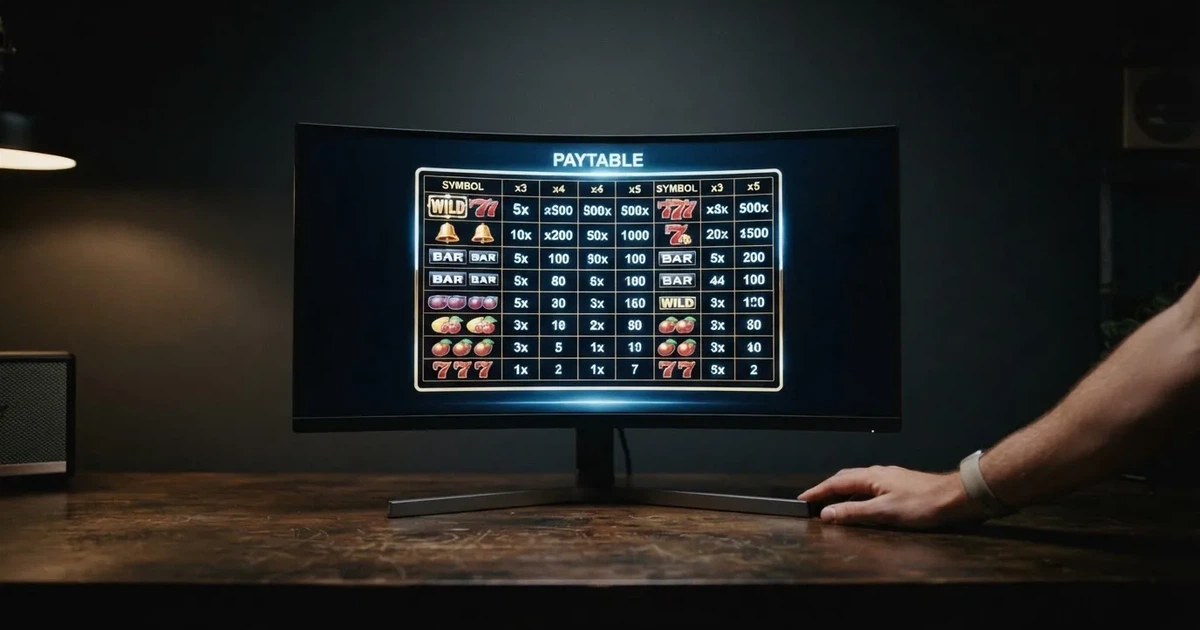
Playson is a slot studio, not a live-dealer or table-game house. The catalogue runs into the dozens, weighted toward classic five-reel video slots with free-spin rounds, multipliers and the occasional hold-and-respin mechanic. Themes span fruit machines, mythology, wildlife and adventure; the look is glossy, the animations tight, and the typical configuration is high volatility — long dry stretches broken by larger payouts — at a published return-to-player in the mid-90s.
A handful of titles carry names Australian players will recognise. Playson is best known in this market for the Buffalo, Solar, Viking and Hit the Bonus series, alongside individual games such as Book of Gold, Legend of Cleopatra and the 3 Fruits series. The studio does not publish a single house-wide RTP figure; each title carries its own paytable, and the published RTP ranges from the mid-90s upward depending on the game. Volatility is stated per title and varies more than RTP does — some Playson releases are medium variance, others are at the high end of the spectrum, and a player choosing between them on the basis of “best paying Playson slots” needs to read the individual paytable rather than rely on a studio-wide reputation.
Playson Limited itself is licensed by the UK Gambling Commission for remote gambling software (account 041337-R-321523-016, in force since 1 July 2015) and for remote casino operation (the same account, in force since 14 April 2016). The studio’s registered office sits at 12 Tigne Place, Office M4, Tigne Street, Sliema, Malta. None of this means a Playson title is licensed for an Australian player. The UK licence covers the studio’s commercial relationship with UK-licensed operators; it does not extend to anyone the IGA says cannot be served.
For comparison, a few neighbouring studios illustrate what “slot provider” looks like in this corner of the market. 1spin4win, founded in 2021 and headquartered in Curaçao, runs a portfolio of more than 190 slots built for low-bandwidth connections. Aristocrat Leisure Limited, the largest gambling-machine manufacturer in Australia and the second-largest slot manufacturer worldwide, is an ASX-listed Australian company with 2025 revenue of A$6.30 billion, but its online real-money business sits inside Aristocrat Interactive, the unit formed in April 2024 from the Anaxi division and the NeoGames acquisition — and Aristocrat Interactive is not licensed to offer online casino games to Australians either. Betsoft, founded in 2006 and operating under Italian ADM oversight with RNG certification from Quinel and GLI, publishes a portfolio of more than 200 RNG games. BGaming, the brand that debuted in 2018 out of a team that had worked on games since 2012, runs 250+ certified titles and holds a Malta Gaming Authority Critical Gaming Supply Licence issued on 18 March 2021. The contrast is not editorial — it is structural. The offshore sites marketing Playson titles are the same kind of operator that markets titles from each of these studios, and the legal position is the same for all of them.
The eleven brands the ACMA has warned over Playson-style marketing
The ACMA’s enforcement record is the only source a player can trust for the question of which offshore operators have been told, in writing, that what they are doing is unlawful. The list below takes each named brand from the regulator’s own formal-warning register and pairs it with the operator behind the warning and the date the warning was published. Where research could verify the brand’s subject coverage from a non-affiliate source, that source is named in the table; where it could not, the brand appears on the page without an assertion either way. The order is the order of the ACMA register, not a ranking.
| Brand | ACMA action and date | Operator named by the ACMA | Subject support |
|---|---|---|---|
| RocketPlay | Formal warning, March 2026 (operator: Pulsup Ltd, over Rocketplay.com.au); earlier Dama N.V. warning, May 2022 | Pulsup Ltd / Dama N.V. | — |
| Level Up Casino | Formal warning, May 2022 | Dama N.V. | listings-only (Wazdan.com) |
| Woo Casino | Formal warning, March 2025 | Dama N.V. | — |
| Spirit Casino | Formal warning, May 2025 | Dama N.V. | — |
| National Casino | Formal warning, July 2025 | Consolutetish S.R.L. | listings-only (Betsoft.com, en.wikipedia.org, Pragmaticplay.com) |
| Bizzo Casino | Formal warning, July 2025 (operator: Consolutetish S.R.L.); earlier TechSolutions warning, 2022 | Consolutetish S.R.L. / TechSolutions | — |
| Ignition Casino | Formal warning, July 2025 | Bamboo Media | — |
| Instant Casino | Formal warning, February 2025 | EOD Code SRL | — |
| Jackbit | Formal warning, April 2026 | Ryker B.V. | — |
| Casino Intense | Formal warning, April 2025 | Sterplay Holding Ltd | listings-only (1spin4win, en.wikipedia.org, gamblingcommission.gov.uk) |
| Sky Crown | Formal warning, September 2022 (over Sky Crown and Blue Leo) | Hollycorn N.V. | — |
A reader looking down the right-hand column is looking at what the rest of this page refuses to do: pretend the offshore marketing pages know what they are talking about. Where a non-affiliate source names one of these brands as carrying a particular game or provider, the brand gets a “listings-only” tag and the page does no more than that. Where no such source exists, the column carries an em dash and the brand stays in the analysis on the strength of the ACMA’s action alone.
RocketPlay
Pulsup Ltd was warned in March 2026 over Rocketplay.com.au, on top of a separate Dama N.V. warning covering RocketPlay alongside five sister brands back in May 2022. The brand is the clearest case on this list of a name that has been told twice to stop doing what it is still doing, which is the only way to read a second warning three years after the first. No evidence from a non-affiliate source links it to the studio.
Level Up Casino
Level Up was one of six Dama N.V. brands warned in May 2022, in the same enforcement round that covered Bambet, Dazard, RocketPlay, Wild Tornado and Cobra Casinos. Wazdan’s own provider pages list Level Up among the operators carrying its games, which is the only independent confirmation of what the brand actually runs. The page makes no wider claim.
Woo Casino
Dama N.V. was warned over Woo Casino in March 2025, a separate round from the May 2025 warning over Spirit Casino and the May 2022 warning covering the original Dama cluster. Three formal warnings against one corporate group, addressed to three different brands, is a pattern rather than a coincidence. No independent verification of Playson game provision exists for this brand.
Spirit Casino
Spirit Casino drew its own Dama N.V. warning in May 2025. The Dama group now accounts for four of the eleven entries on this page if RocketPlay, Level Up, Woo and Spirit are counted together. Data on the studio’s presence here remains unverified by any neutral party.
National Casino
Consolutetish S.R.L. was warned over National Casino in July 2025. Independent sources — Betsoft’s own operator pages, the broader iGaming press and Pragmatic Play’s distribution lists — name National Casino as a host for several studios’ titles. None of those sources is an Australian regulator, and the assertion on this page is limited to the listings themselves.
Bizzo Casino
Consolutetish S.R.L. was warned over Bizzo in July 2025, on top of an earlier 2022 warning to TechSolutions (CY) Group Limited and TechSolutions Group N.V. for the same brand. Two formal warnings to two different corporate vehicles for one site is the same pattern as RocketPlay, and it does not suggest a misunderstanding that has been put right. The studio’s involvement here lacks any independent substantiation.
Ignition Casino
Bamboo Media was warned over Ignition Casino in July 2025. Ignition is one of the better-known names on this list internationally — it markets aggressively to Australian-facing traffic — but Australian-facing marketing is precisely what the ACMA’s July 2025 letter told Bamboo Media to stop. Reliable third-party data on its game catalogue is unavailable.
Instant Casino
EOD Code SRL was warned over Instant Casino in February 2025. The name markets itself on speed — “instant” deposits, “instant” play — which is the inducement the Interactive Gambling Amendment Act 2017 was tightened to police. Independent confirmation of Playson coverage could not be established.
Jackbit
Ryker B.V. was warned over both Jackbit and CasinOK in April 2026, the most recent action on this list. Jackbit is one of the more transparently crypto-led brands in the offshore space, and crypto is one of the payment methods the ACMA has been explicit about since the June 2024 ban on digital currency as a funding route for licensed Australian wagering. Independent confirmation of Playson coverage could not be established.
Casino Intense
Sterplay Holding Ltd was warned over Casino Intense in April 2025. Casino Intense is one of three brands on this list where independent sources — 1spin4win’s operator pages, general iGaming coverage and the UK Gambling Commission’s own register entries — name the brand as carrying named game studios. The page makes no claim beyond those listings.
Sky Crown
Hollycorn N.V. was warned over Sky Crown and Blue Leo together, in a formal warning published in September 2022. Hollycorn operates a stable of brands under shared corporate infrastructure, which is why a single warning can name two sites. Independent confirmation of Playson coverage could not be established.
The legal frame, plain: why none of this is licensed
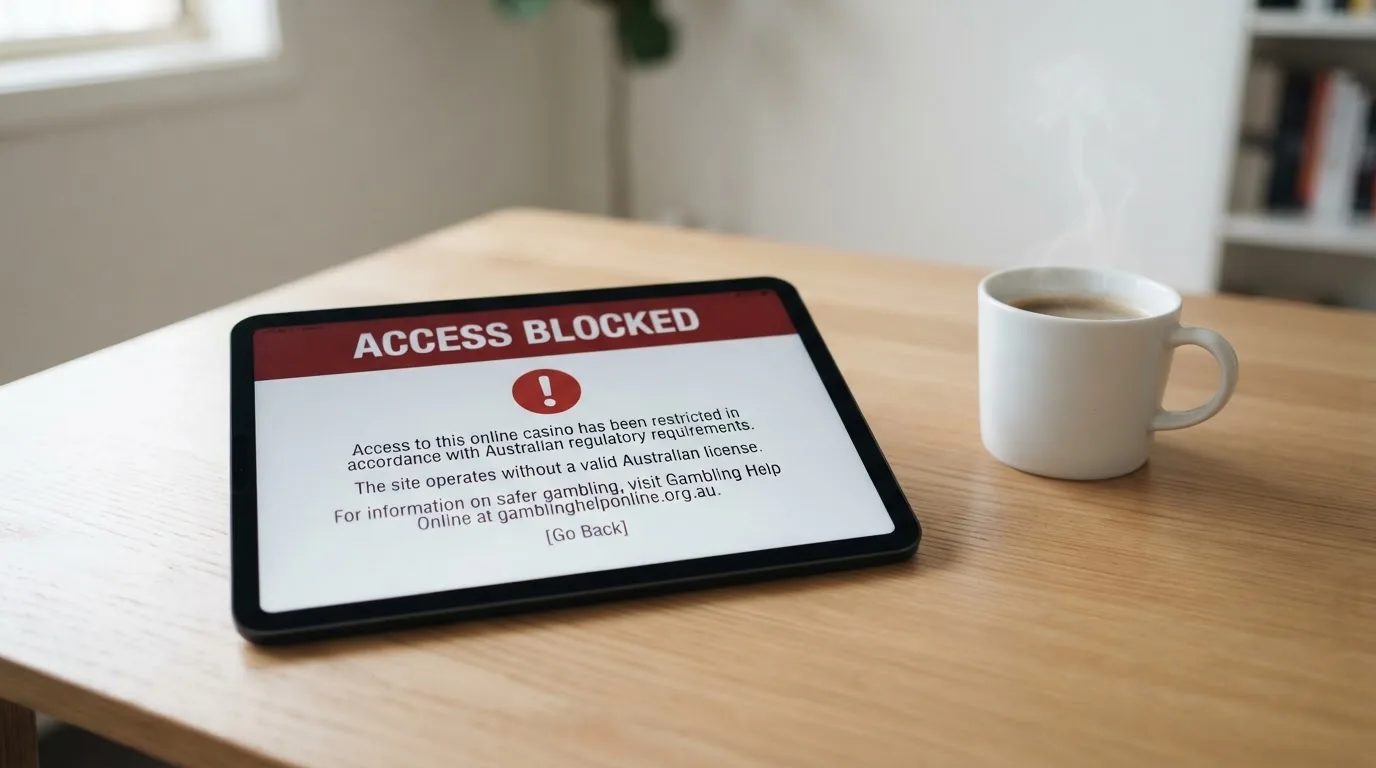
Online casino games and online pokies cannot be licensed anywhere in Australia. The Interactive Gambling Act 2001, as strengthened by the Interactive Gambling Amendment Act 2017, makes it an offence to provide those products to a person physically in Australia. No state or territory will issue the licence, and the offshore brands that carry Curacao, Malta or Kahnawake seals are carrying licences that have no jurisdiction over the customer side of the transaction. The ACMA’s formal warnings are the operational consequence: an investigation, a letter telling the operator to stop, and — if the operator does not — a request to Australian internet service providers to block the site at the network level.
What is licensable is wagering on races and sport placed before the event, lotteries and keno. In practice, the bulk of Australia’s licensed online wagering sits with the Northern Territory, where the Northern Territory Racing and Wagering Commission regulates 52 online bookmakers — Sportsbet, Bet365 and Ladbrokes among them — out of an office that has no full-time staff and meets once a month in Darwin. The IGA’s prohibitions do not extend to those operators; they extend to the offshore casino products this page is about.
The enforcement record is the visible edge of that prohibition. By June 2026 the ACMA had asked Australian ISPs to block 1,751 illegal gambling and affiliate marketing websites since the first blocking request in November 2019, and more than 230 unlicensed gambling services had left the Australian market since enforcement was strengthened in 2017. The June 2026 blocking round alone added twelve more: 7Signs, ChromaBet, Donbet, Duospin, Freshbet, Slots Gem, Jacks Club, Lucky Start, Pointsbetz.com, Spinrise, Vinyl Casino and Wildsino. Each request is the regulator catching up to a marketing campaign; the operator has already moved on to a new domain by the time the block lands.
What this means for the player is narrower than the marketing makes it sound. The individual player is not prosecuted under the IGA — the law targets the provider, not the customer. The customer loses in a different way: no Australian consumer protection, no complaints body, no local regulator to escalate to, and a real possibility the site is blocked mid-session with a balance still on it.
The 2026 reform wave
The Interactive Gambling Amendment (Gambling Reform) Bill 2026 passed Parliament on 19 August 2026. Its advertising and inducement measures commence on 1 January 2027, which means the law is enacted but the parts that change what an offshore site can put in front of an Australian are not yet in force on a 2026 page. The reform’s effect, when it lands, will be to widen the ACMA’s enforcement tools against inducements and bonus-led acquisition — which is exactly the marketing shape of every brand on the eleven-name list above.
Responsible gambling: what still works for an Australian player
The supports available to an Australian player are designed for the Australian-licensed market, and an offshore casino is not connected to any of them. Knowing what is and is not in scope is the practical difference.
BetStop, the National Self-Exclusion Register, has been live since August 2023 and binds every Australian-licensed online and phone wagering service. A player who registers with BetStop is refused account opening, deposits and marketing from every operator bound by the register. An offshore casino is not bound, and a BetStop registration will not stop an offshore site from accepting a deposit or sending a bonus email. The Gambling Help Online service and the 24/7 National Gambling Helpline on 1800 858 858 are free, confidential, and cover the full range of gambling harm — including harm arising from offshore play.
State and territory self-exclusion schemes sit alongside BetStop. A pub or club that holds a state gaming machine licence is bound by the relevant state scheme, and a venue exclusion from a Crown or a Star property runs through the venue’s own process. None of this protects an offshore session. The corollary is the practical one: a player who has self-excluded and is still being solicited by an offshore site should treat that as a sign the site is not operating inside any framework that recognises the exclusion.
The gambling-harm picture in Australia is the wider reason the regulator acts. H2 Gambling Capital’s 2025 report estimates Australians lose about A$3.9 billion a year to illegal gambling sites, with the share of gambling going through legal channels falling from 74% in 2021 to 64%. The fall is the size of the inducement-led offshore market this page is describing.
Payments, payout speed and what the credit-card ban actually changed
The credit-card ban is the cleanest piece of the Australian frame for an offshore site. From 11 June 2024, credit cards, credit-related products and digital currency have been banned as payment for licensed online wagering, with penalties up to A$247,500 for the operator on the licensed side. Legal deposit routes for a licensed Australian wagering account are debit card, bank transfer, PayID/Osko and BPAY.
What that ban does not do is stop an offshore site from asking for a credit card or a crypto deposit. The licence that the offshore site operates under does not bind it to the Australian prohibition, and the practical effect is that an Australian funding an offshore Playson session is being asked to pay through a channel the licensed Australian market has been told is unsafe. The site’s processing then becomes a question of the bank’s discretion — Visa and Mastercard’s policies on processing gambling transactions vary by issuing bank, and a deposit that fails on Tuesday may succeed on Wednesday for reasons that have nothing to do with the player.
Payout speed on the offshore side runs from a few hours for a crypto withdrawal to several business days for a bank wire. KYC holds are the variable that decides whether a withdrawal actually moves on the day the player requests it. A first withdrawal on a previously deposit-only account is the most common place the timeline blows out: the site asks for source-of-funds documentation, the player sends what they have, and the review takes anywhere from 24 hours to two weeks. None of this is recourse through any Australian body if the operator decides to withhold. The practical takeaway is that the first withdrawal is the test, and the terms page is the document that says whether the test will be passed.
How to read a “best Playson casino” list without reading it
A shortlist claiming to compare Playson casinos is usually built from affiliate data. The criteria that matter and the criteria that are easy to measure are not the same list. Deposit match size, free-spin count and the headline wagering multiple are easy to lift from a marketing page and easy to compare across operators; the harder questions — whether the operator is licensed anywhere that matters for an Australian, whether the licence is current, whether the operator has been warned by the ACMA before — are the ones the affiliate page is least likely to surface.
A reader who wants to use a list rather than ignore one can filter on three things. First, an Australian-facing casino that accepts AUD and offers PayID is operating inside the licensed-wagering frame or it is operating outside it; if it accepts AUD it is almost certainly the second, and that is the test, not a feature. Second, the ACMA’s formal warnings register is a public document; any brand on it has been told in writing what the law says, and a brand told once is a brand that knew. Third, payout terms in the small print are a closer match to the experience than payout times in the marketing; a site promising “instant withdrawals” without naming a verification step is making a marketing promise, not an operational one.
The list on this page is not that kind of list. It is the ACMA’s register, set out in the order the regulator set it, with no claim beyond the regulator’s own claim. A reader looking for a ranking has been looking in the wrong place; a reader looking for a record has the right document.
The blocking rate: how fast the ACMA is moving
The blocking-rate calculation sits behind the enforcement picture, and the inputs come from the ACMA’s own published record. By June 2026 the regulator had directed Australian ISPs to block 1,751 illegal gambling and affiliate marketing websites since the first blocking request in November 2019. That spans roughly 78 months from first request to the June 2026 snapshot, and works out to an average blocking rate in the low twenties per month across the full window — with the actual rate heavily weighted to the second half of the period as the ACMA’s referral pipeline matured and enforcement was strengthened.
The condition that makes the average misleading is the variance. The early blocking rounds covered tens of sites at a time; later rounds covered hundreds as the ACMA worked through the affiliate-marketing layer that points Australians at the offshore casino product. A reader who needs a single number should treat the long-run average as a floor rather than a measure of present pace. The June 2026 round alone added twelve sites in a single enforcement action, and the same week’s blocking instruction carried the ACMA’s stated total past 1,750 for the first time. The pace is not slowing; if anything, the visible record is that the ACMA’s enforcement tool has moved from novel to routine.
The complementary figure is the exit count: more than 230 unlicensed gambling services had left the Australian market entirely since enforcement was strengthened in 2017. Exit is the cleaner outcome, because a withdrawn operator does not return under a new domain; a blocked site routinely does. The blocking register is therefore best read as a measure of the marketing pressure on operators, and the exit count as the measure of how often that pressure converts into a permanent withdrawal.
Operators, ranked by what the regulator has actually said
The eleven brands sit in the order set by the ACMA’s formal-warning register, not by any ranking logic this page applies. The closer for each brand is the regulator’s own action, set against the practical effect on a player who lands on the site today.
RocketPlay is the case for a reader who has heard the same operator warned twice and assumes the second warning is the more serious one. Both warnings were issued under the IGA; the second was issued to a different corporate vehicle than the first, which is the structural shape of the offshore market and not a sign the first warning worked. Playson coverage could not be independently confirmed and the page makes no claim.
Level Up Casino sits inside the original Dama N.V. May 2022 warning that named six brands in one enforcement letter. Wazdan’s own listings place Level Up among its operators, which is the only non-affiliate confirmation of what the site actually runs.
Woo Casino and Spirit Casino share a parent operator (Dama N.V.) and draw separate formal warnings in March and May 2025. Two warnings inside three months to one corporate group is a pattern, not a coincidence, and the close on either brand is the same close as on the other.
National Casino and Bizzo Casino were both warned in the July 2025 Consolutetish S.R.L. round; Bizzo carries an additional 2022 warning to TechSolutions for the same brand, which makes it the clearest case on this list of one brand, two operators, two warnings.
Ignition Casino and Instant Casino share an enforcement window in 2025 and nothing else. Bamboo Media’s warning over Ignition came in July; EOD Code SRL’s over Instant Casino came in February. The closer on both is the same: an inducement-led brand being told that what it is doing is unlawful.
Jackbit is the most recent ACMA action on this list, dated April 2026, alongside CasinOK under the same Ryker B.V. corporate vehicle. The brand is one of the more explicitly crypto-led names on the offshore market, and the credit-card and digital-currency bans do not bind it — which is the practical close, not an endorsement.
Casino Intense carries independent listings — 1spin4win, the wider iGaming press and the UK Gambling Commission’s own register entries — naming it as a host for named studios. The page makes no claim beyond those listings, and the regulatory close is the same as for every other brand here.
Sky Crown closes the list as the oldest ACMA action on it, a September 2022 warning to Hollycorn N.V. covering Sky Crown and Blue Leo jointly. A reader who sees the 2022 date and assumes the warning is stale is reading the wrong way around: the licence is still being advertised, the warnings register is the live document, and a warning four years old is a warning still in force until the regulator updates it.
What an Australian player should take from this page
The honest summary is short. Online Playson titles are not licensed for Australian players. The offshore sites that market them have been told, in writing, that what they are doing is unlawful; many of them have been told more than once. The bonuses are real, the wagering requirements are real, and the inducement is the reason the regulator acted. The player who ends up on one of these sites has no Australian consumer protection, no local complaints body, and a real chance the site is blocked mid-session.
The supports that exist — BetStop, Gambling Help Online, the National Gambling Helpline on 1800 858 858 — are designed for the licensed Australian market and do not bind an offshore casino. The licensed alternative, for a player who wants to wager online in Australia, is the small set of pre-event sports and racing bookmakers licensed by the Northern Territory. The Playson slot product is not part of that licensed set and is not on a path to becoming part of it.
Frequently asked questions
Is Playson legally available to players in Australia?
No. Playson slots are not licensed for Australian players. The Interactive Gambling Act 2001, as amended in 2017, makes it an offence to provide online casino games and online pokies to a person in Australia, and no state or territory will license the product. The offshore sites that carry Playson titles are operating outside the Australian regime.
What kinds of games does Playson make?
Playson is a slot studio. Its catalogue runs into the dozens of video slots, weighted toward five-reel layouts with free-spin rounds, multipliers and occasional hold-and-respin mechanics. The studio does not publish live-dealer or table games. Each Playson title carries its own published RTP and volatility in its paytable.
Are Playson games offered at land-based venues in Australia?
Playson itself is an online slot studio with a UK Gambling Commission remote licence, not a land-based gaming-machine manufacturer. Land-based pokies in Australian pubs and clubs are made by Aristocrat, IGT and a handful of other manufacturers regulated by state and territory authorities. The Playson and the land-based Aristocrat products are separate lines and a player should not assume one is the other.
How can Australians check whether a Playson title is fair before ever considering play?
The UK Gambling Commission’s public register carries Playson Limited’s software and remote-casino licences and is the cleanest independent confirmation that the studio’s RNG and game math have been audited to a regulated standard. The catch is the licence covers the studio’s relationship with UK operators, not the player side of an offshore transaction. A player looking for an Australian framework should know that no such framework exists for the offshore product.
Why do offshore sites keep advertising Playson games to Australian visitors?
Because the inducement is the product. The matched-deposit bonus, the free-spin bundle and the headline wagering multiple are the acquisition mechanism, and they work on enough players to make the marketing spend worthwhile. The ACMA’s enforcement record — eleven formal warnings on this page alone, 1,751 blocked sites since November 2019, more than 230 operators withdrawing from the Australian market since 2017 — is the regulator’s response to that same economics.
What should an Australian do if they see a Playson game promoted by an unlicensed site?
The first move is to treat the site as outside any Australian framework, which means no recourse to an Australian regulator if a withdrawal is refused. The second is to recognise the marketing as the inducement the IGA was tightened to police. The third, for anyone whose gambling has begun to feel out of control, is to contact Gambling Help Online or call the National Gambling Helpline on 1800 858 858; both are free, confidential and available 24/7. BetStop self-exclusion binds Australian-licensed operators only and will not stop an offshore site from accepting a deposit.