
Best Platipus online casinos Australia in 2026: what the law and the ACMA record allow
Online casino play in Australia is built on a single prohibition. The Interactive Gambling Act 2001, tightened by the Interactive Gambling Amendment Act 2017, makes it an offence to provide online casino games, online pokies or in-play betting to a person physically in Australia; no state or territory issues a licence for them. Anything that calls itself an online casino and accepts a real-money deposit from an Australian IP is doing so outside the Australian regulatory frame. Platipus Gaming is a B2B slot studio whose games appear on those offshore sites, not at a licensed Australian operator. That is the entire frame this page sits inside, and every shelf that follows reads back to it.
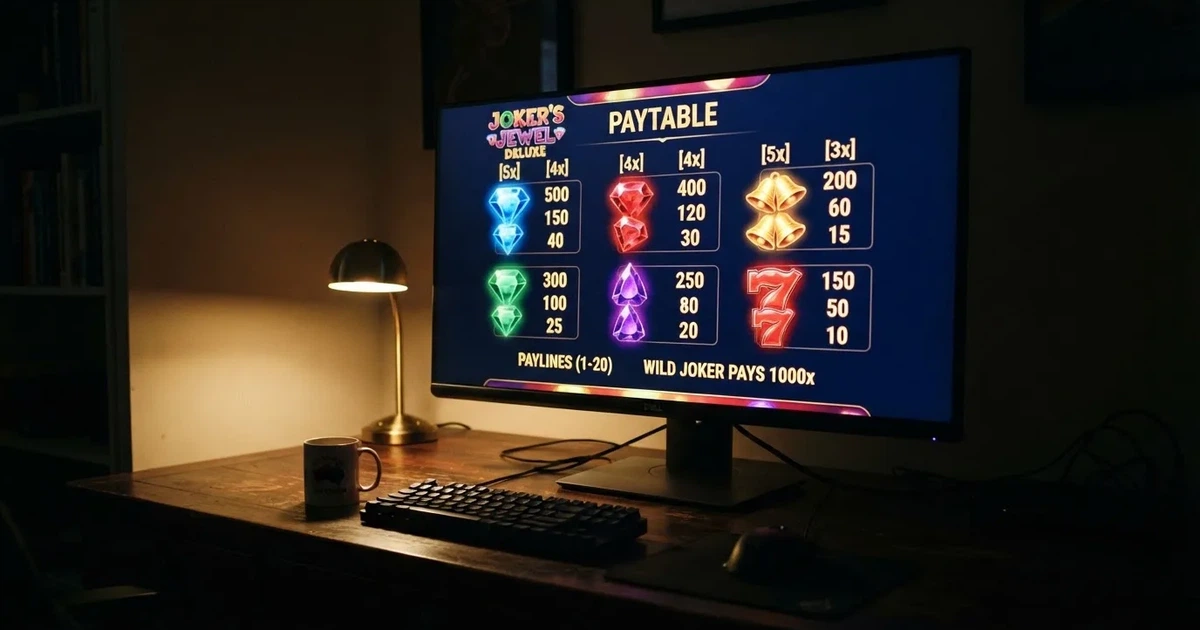
Currency and date note: data is current as of 28 October 2026 and was checked against the Australian Communications and Media Authority (ACMA) formal-warning register and the ACMA blocking-round reports.
Table of Contents
- What Platipus actually is, and why that matters for an Australian reader
- Why no Australian-licensed site offers Platipus slots
- How the legal frame and the technical product meet
- Bonuses, free spins and the cost of an offer that cannot be claimed
- Mobile and the Platipus catalogue on a phone
- Paytables, mechanics and how to read a Platipus-style title
- Player protection: what is connected and what is not
- Landscape of offshore brands
- The arithmetic the page can run: how many sites have been blocked, and at what rate
- What each warning covers, and what it does not change
- The licensed Australian alternative, in the few places it exists
- The Interactive Gambling Amendment (Gambling Reform) Bill 2026
- Tax and the recreational player
- The honest reading
- Frequently asked questions
What Platipus actually is, and why that matters for an Australian reader
Platipus Gaming presents itself as a European-Union-based studio founded in 2014, with more than 174 HTML5 slots and table games distributed across 20 languages and accepted in major fiat and crypto currencies. The studio describes a customer base of more than 500 operator integrations and 24/7 technical support. The same self-description places its recent development focus on Asian-oriented titles. The portfolio is RNG-certified by iTech Labs for regulated markets — the UK, Italy, the AGCC, Denmark, the Isle of Man, Malta, Gibraltar, Sweden and Romania — none of which is Australia. The certification list is the gap that matters: Australia is not on it, and a slot that has been audited for those jurisdictions has not been audited against Australian standards because there are no Australian standards for this product category — there is no licensing regime for it.

The closest a reader in Australia gets to a Platipus-style product through a lawful channel is a land-based electronic gaming machine in a state- or territory-licensed venue. The Australian maker in that space is Aristocrat Leisure Limited, founded in 1953 and ASX-listed since 1996 under the ticker ALL, with its administrative and research headquarters in North Ryde and overseas offices in South Africa, Russia and the United States. Aristocrat reports 2025 revenue of A$6.30 billion, normalised net profit after tax and amortisation of A$1.55 billion, and 7,400 employees. It is described as the largest gambling-machine manufacturer in Australia and the second-largest slot-machine manufacturer worldwide. Its regulated online real-money arm, Aristocrat Interactive, was formed in April 2024 from the Anaxi unit and the NeoGames acquisition (roughly US$1 billion, completed April 2024, after a 2023 announcement). Aristocrat Interactive is a wagering and lottery business; it does not run an Australian online casino. The point is not that Aristocrat replaces Platipus — they are different studios with different games — the point is that the Australian-regulated path for slot play is a machine in a licensed room, not a browser tab.
Why no Australian-licensed site offers Platipus slots
A reader who lands on this page from a search for “platipus casino australia” or “platipus australian casino” is going to be steered to offshore sites that market the studio’s titles to Australians. That steer is the very activity the Interactive Gambling Act targets. The ACMA is the regulator that issues formal warnings to operators it identifies as providing prohibited interactive gambling services to Australians, and that asks Australian internet service providers to block specific URLs. Two facts set the scale of that enforcement, and they are facts the regulator itself supplies through the ACMA blocking-round reporting:
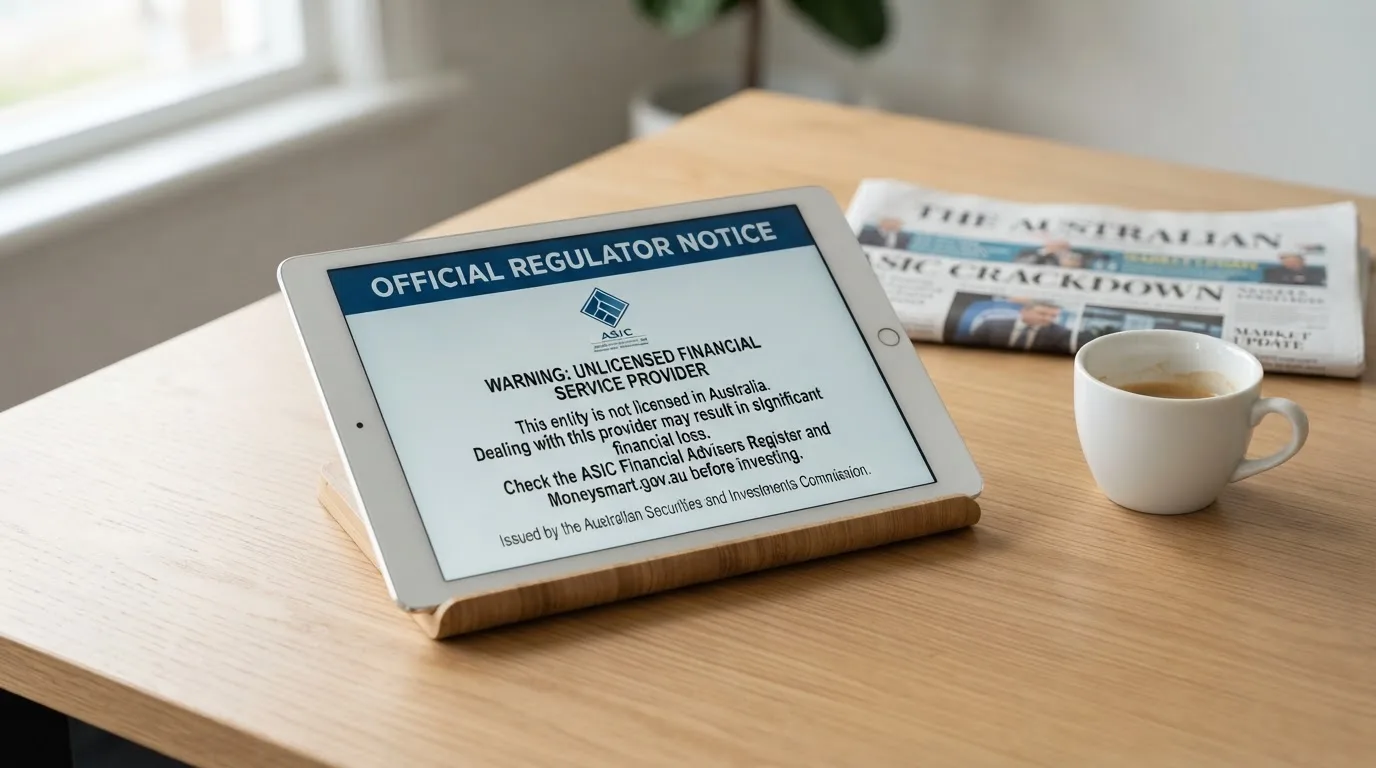
- As reported in June 2026, a cumulative 1,751 illegal gambling and affiliate marketing websites had been blocked since the first blocking request in November 2019. More than 230 unlicensed gambling services had left the Australian market since enforcement was strengthened in 2017.
- In the round reported on 26 June 2026, the ACMA asked ISPs to block a further 12 sites: 7Signs, ChromaBet, Donbet, Duospin, Freshbet, Slots Gem, Jacks Club, Lucky Start, Pointsbetz, Spinrise, Vinyl Casino and Wildsino.
H2 Gambling Capital’s 2025 estimate places Australian losses to illegal gambling sites at about A$3.9 billion a year, and reports the share of gambling going through legal channels falling from 74% in 2021 to 64%. That is the cost the offshore channel imposes, on a population basis, before any one player’s losses are counted. The provider is the target, not the player — the IGA does not prosecute individuals — but a balance held at an offshore site that gets blocked is a balance the player has no Australian body to recover.
How the legal frame and the technical product meet
The licensable wagering services in Australia are betting on racing and sport placed before the event, lotteries and keno. Bookmakers taking those bets are commonly licensed in the Northern Territory: the Northern Territory Racing and Wagering Commission regulates 52 of Australia’s online bookmakers, including Sportsbet, Bet365 and Ladbrokes. The commission has no full-time staff and meets once a month in Darwin — a structural feature the ABC has covered in detail in April 2026. Online casino games and online pokies sit outside that licensing perimeter; the only licensable online wagering product is pre-event sports and race betting, plus lotteries and keno.
Two payment rules sharpen the picture. Since 11 June 2024, credit cards, credit-related products and digital currency are banned as payment for licensed online wagering in Australia, with operator penalties of up to A$247,500. The lawful deposit routes for licensed wagering are summarised in the table below.
| Payment Method | Status for Licensed Wagering |
|---|---|
| Debit card | Lawful |
| Bank transfer | Lawful |
| PayID / Osko | Lawful |
| BPAY | Lawful |
| Credit cards | Prohibited |
| Crypto currency | Prohibited |
A site asking an Australian customer for a credit card or a crypto deposit is operating outside the Australian framework, regardless of the licence it displays in its footer. The crypto angle is the one Platipus’s own materials emphasise — “available in all major fiat and crypto currencies” — and it is the one Australian-licensed wagering cannot accept. The match-up is exact: the payment method the offshore Platipus-marketing site is most likely to push is the one a licensed Australian operator cannot lawfully take.
Bonuses, free spins and the cost of an offer that cannot be claimed
The shelves the search around Platipus brings a reader to — “platipus casino bonus”, “platipus casino free spins”, “platipus casino no deposit bonus” — are inducements. They exist to move a player from reading to depositing. They do not exist, on the Australian-licensed side, because there is no Australian-licensed online casino for them to attach to. What an inducement is worth on an offshore site is a different calculation, and it is a calculation the audit cannot run for the reader because the audit has no terms from the operator — no wagering multiple, no max-cashout, no game weighting, no deposit-to-bonus ratio. The terms live on the affiliate marketing page that links to the site, not on the site itself, and that is precisely the channel the ACMA’s 1,751 blocked URLs cuts into.
Where a reader is comparing two offshore offers, the working arithmetic is the standard one: required turnover is the bonus multiplied by the wagering factor; spins is turnover divided by stake-per-spin; play time is spins times a five-second spin interval divided by 3,600 to convert to hours. Expected loss is turnover multiplied by one minus the RTP of the game being played. The figure the formula produces is a statistical average over many spins, not a forecast for the player in front of the screen. It is also worth flagging: a free-spin offer that names the spin value but does not name the wagering attached to winnings is a different offer from one that does, and the audit cannot tell them apart from the marketing page alone. A reader who needs a number to weigh offers against each other is reading the wrong page — there is no number to extract because the offer itself sits on the wrong side of the IGA.
Mobile and the Platipus catalogue on a phone
Platipus titles are built in HTML5, which means a modern mobile browser is the delivery channel rather than a downloadable client. The practical implication for an Australian reader is not which app to install — there is no Australian-licensed casino app delivering Platipus content — it is whether the offshore site the reader is considering has a mobile experience that does not collapse under load. Two operational tells matter: time-to-first-spin on a 4G connection, and whether the cashier survives a mobile browser session without dropping back to a desktop redirect. Neither can be measured here without the operator’s own metrics, and the audit cannot supply them. The honest read on mobile for an Australian is that the channel works in the sense that the game loads, but the channel is one the ACMA has been asking ISPs to block since 2019.
For comparison, a slot provider oriented toward low-bandwidth mobile play is 1spin4win, founded in 2021 by a team with 15 years of iGaming experience, headquartered at Scharlooweg 39, Willemstad, Curaçao, with a Curaçao gaming licence. Its catalogue spans more than 190 online slots, all HTML5, and it reports more than 1,000 partnerships with online casinos and aggregators. Its first-half 2025 total bet sum grew 46% over the same period of 2024. The studio is licensed in Curaçao, not Australia, and that licence does not authorise it to take Australian customers.
Paytables, mechanics and how to read a Platipus-style title
The Platipus catalogue is voluminous — more than 174 titles — but the studio does not publish a paytable page-by-page summary the way some providers do. Where a comparable studio does, the specifics become auditable. Betsoft, founded in 2006, publishes per-title data: Good Girl Bad Girl 2 carries a published RTP of 96.22%, “Very High” volatility, a 15.59% hit rate, played across 5 reels and 20 paylines; The Slotfather, live since 13 December 2012, carries an RTP of 95.69%, “Medium” volatility, an 8.17% hit rate, played on 5 reels and 30 paylines. BGaming’s team has worked on games since 2012 and the brand debuted in 2018; its catalogue now exceeds 250 certified titles across video slots, video poker, lottery, card, scratch, crash and casual games. Betsoft describes itself as RNG-certified by Quinel and Gaming Labs International and operating in compliance with Italy’s ADM — the same observation that applies to Platipus applies here: a regulator’s certification abroad is not an Australian certification because there is no Australian certification to give for an online casino product.
A reader trying to compare one Platipus title against another on paytable data will find less to work with than they would for a studio with a transparent per-game page. The figure the reader actually needs is the house edge of the specific title they would be playing, expressed as 1 minus RTP. A 96% title has a 4% house edge; a 95.69% title has a 4.31% house edge. The difference looks small in percentage points and is meaningful over thousands of spins: a player running 10,000 spins at A$1 per spin loses A$400 on the first title and A$431 on the second, before any bonus terms are layered on. Bonus terms, where they exist, sit on top of that base edge, and the page cannot reconstruct them from marketing material.
Player protection: what is connected and what is not
The Australian player-protection frame that does exist is built for the products Australia actually licenses — pre-event wagering on racing and sport, lotteries and keno — not for online casino games. Two anchors are worth knowing:
- BetStop, the National Self-Exclusion Register, has been live since August 2023. It binds Australian-licensed online and phone wagering services. An offshore casino is not connected to it. A player who has registered with BetStop is protected against opening new accounts with Australian-licensed wagering operators; they are not protected against logging into an offshore site that has no idea BetStop exists.
- Gambling Help Online, reached on 1800 858 858, is the national 24/7 helpline, free, with chat support. It is the right number regardless of which channel the gambling runs through.
State and territory self-exclusion registers — the venue-based schemes run by state regulators — apply to land-based venues in their jurisdiction and are the mechanism by which a player who wants out of pokies can opt out of pubs and clubs. They are not connected to an offshore online casino either. The unifying point is that the Australian player-protection infrastructure exists where the law has reach, and the offshore online casino is precisely where it does not.
Landscape of offshore brands
The ACMA’s enforcement output over the last few years gives a clear picture of which operators have been actively marketing online casino and pokies content to Australians. The table below covers the brands the regulator has issued formal warnings to under the Interactive Gambling Act 2001. The list is not exhaustive of the offshore market; it is the set the regulator has acted on. The “operator named by the ACMA” column carries the corporate entity the warning was issued to, which is the name on the regulator’s notice, not the consumer-facing brand. The subject-support column records whether research located the brand as a known carrier of Platipus-style content in independent listings; a no-data cell means research did not find the brand indexed that way and the page does not assert it.
| Brand | ACMA action and date | Operator named by the ACMA | Subject support |
|---|---|---|---|
| RocketPlay | Formal warning, March 2026 (and earlier to Dama N.V., May 2022) | Pulsup Ltd (Rocketplay, March 2026); Dama N.V. (May 2022) | — |
| Level Up Casino | Formal warning, May 2022 | Dama N.V. | Listings only (Wazdan) |
| Woo Casino | Formal warning, March 2025 | Dama N.V. | — |
| Spirit Casino | Formal warning, May 2025 | Dama N.V. | — |
| National Casino | Formal warning, July 2025 | Consolutetish S.R.L. | Listings only (Betsoft, Wikipedia, Pragmatic Play) |
| Bizzo Casino | Formal warning, July 2025 (and earlier to TechSolutions, 2022) | Consolutetish S.R.L. (July 2025); TechSolutions (CY) Group Limited and TechSolutions Group N.V. (2022) | — |
| Ignition Casino | Formal warning, July 2025 | Bamboo Media | — |
| Instant Casino | Formal warning, February 2025 | EOD Code SRL | — |
| Jackbit | Formal warning, April 2026 | Ryker B.V. (over Jackbit and CasinOK) | — |
| Casino Intense | Formal warning, April 2025 | Sterplay Holding Ltd | Listings only (1spin4win, Wikipedia, UK Gambling Commission) |
| Sky Crown | Formal warning, September 2022 | Hollycorn N.V. (over Sky Crown and Blue Leo) | — |
The pattern this table sets out is the operational answer to the question the page opens on. Dama N.V. alone has been the subject of four separate ACMA formal warnings since 2022, covering Bambet, Dazard, Level Up, Rocketplay, Wild Tornado, Cobra Casinos, Woo Casino and Spirit Casino. Consolutetish S.R.L. sits behind both National Casino and Bizzo Casino; Bizzo had been warned once already in 2022, before the 2025 warning. Two operator groups recur across multiple brand surfaces and multiple years. The ACMA is not naming individual sites so much as it is naming the corporate vehicles that keep launching them.
The arithmetic the page can run: how many sites have been blocked, and at what rate
Research hands the page two numbers that combine into a single useful figure: the cumulative 1,751 websites blocked since November 2019, and the date the first blocking request was issued. The arithmetic is straightforward: from November 2019 to June 2026 is roughly 79 months. 1,751 ÷ 79 = 22.2 sites per month, on average, across the period. That is a band, not a precise monthly rate — the ACMA’s blocking rounds are irregular, and a single round can list a dozen sites or none. The useful framing is that the regulator has been blocking offshore online-gambling infrastructure at a sustained pace since 2019, and a reader thinking about whether an offshore brand they have seen advertised will be reachable from an Australian ISP next month is reading the wrong question. The right question is whether it is reachable today, and the answer the table above gives is that the regulator has already named the brand.
The calculation’s real value is that it converts a cumulative headline — “more than 230 unlicensed gambling services have left the Australian market since 2017” — into a monthly rate a reader can hold in their head. About 22 sites per month, on average. Some months a dozen go in one round; some months none. The brand a reader is considering is not a fresh entity the regulator has not yet seen. The corporate vehicles behind the marketing pages recur across warnings issued years apart, and the sites the regulator acts on are the sites that have been visible to Australian players long enough to draw a formal warning.
What each warning covers, and what it does not change
A formal ACMA warning is not a prosecution. It is a regulator-to-operator communication under the Interactive Gambling Act that puts the operator on notice that the ACMA considers the service a prohibited interactive gambling service. After a warning, the ACMA can move to a blocking request directed at Australian ISPs. The blocking request is what actually removes the site from Australian reach. The warning is what precedes it. For the player, the practical translation is: a warning does not close the site; a blocking request closes Australian access to it. The 1,751 cumulative figure is the count of blocking requests honoured, and the 12-site round from June 2026 is one of those rounds, not a special case.
A formal warning also does not touch the operator’s balance of player funds. A player who has deposited at an offshore site and then sees the site blocked has no Australian body to apply to for recovery. The Australian Competition and Consumer Commission covers Australian consumer law; it is not a dispute-resolution service for offshore gambling balances. eCOGRA and similar testing houses audit game fairness; they do not arbitrate player-operator disputes the way a UK Gambling Commission licence requires its operators to use an approved Alternative Dispute Resolution provider. A player reading this page from inside Australia has fewer protections on an offshore site than they would have at a UK-licensed operator, and the offshore site is itself the subject of regulator action for the way it has marketed to Australians.
The licensed Australian alternative, in the few places it exists
There is no licensed Australian online casino. There is no licensed Australian online pokies site. The closest licensable products are wagering on racing and sport placed before the event, lotteries and keno, and those are the products the Northern Territory Racing and Wagering Commission licenses 52 online bookmakers to take — Sportsbet, Bet365 and Ladbrokes among them. A player who wants Australian-licensed wagering has the licensed bookmaker channel, with the credit-card and crypto prohibition on payment that has been in force since 11 June 2024. A player who wants slot-machine play has the land-based electronic gaming machine in a state- or territory-licensed pub, club or casino, with the state-based self-exclusion register as the opt-out mechanism.
For an Australian reader, the comparison that actually makes sense is between two Australian-licensed products: wagering and venue-based EGMs. An offshore online casino is not the third option in that comparison; it is an option outside the comparison. The framing that places an offshore site alongside the licensed bookmakers as if it were a third licensed category is the framing the affiliate marketing pages use, and it is the framing the ACMA’s enforcement record is built to correct.
The Interactive Gambling Amendment (Gambling Reform) Bill 2026
A reform package passed Parliament on 19 August 2026 and is in a transitional state on a 2026 page. The Interactive Gambling Amendment (Gambling Reform) Bill 2026 carries advertising and inducement measures that commence on 1 January 2027. The bill is law with a start date, not yet in force. A reader consulting this page in 2026 should know that the rules are about to tighten on the advertising side — what an inducement offer can look like and where it can appear — but that the underlying prohibition on providing online casino games to Australians is unchanged. The prohibition is older than the bill; the bill adjusts the inducement layer around it. For a Platipus-style title, the picture in 2026 is the same as the picture in any year since 2017: it cannot be lawfully offered as an online casino product to a person in Australia, and the operator offering it is the regulatory target.
Tax and the recreational player
Gambling winnings of a recreational player in Australia are not assessable income under section 6-5 of the Income Tax Assessment Act 1997, and losses are not deductible. A player whose gambling is a business is in a different position, and the ATO is the right body for that conversation — this page does not cover business-of-gambling tax treatment, and “check with the ATO” is the right placeholder. For the reader this page is written for, the tax point is that an offshore win and a land-based EGM win sit in the same tax posture. The tax posture is not what makes an offshore site illegal; the IGA does.
The honest reading
Platipus is a B2B studio whose slots are integrated into offshore casino platforms. Those platforms are marketed to Australian players in violation of the Interactive Gambling Act 2001. The Australian regulator has acted on the corporate vehicles behind those platforms with formal warnings across 2022, 2025 and 2026, and has been blocking Australian access to offshore gambling and affiliate sites at an average rate of about 22 per month since November 2019. A reader in Australia looking for an Australian-licensed Platipus experience is looking for something that does not exist; a reader looking at an offshore site marketing Platipus titles is looking at a site the regulator has been systematically working through. The cost of the offer the offshore site makes is what an unregulated inducement costs: whatever the bonus terms say, applied to whatever the published RTP of the title is, with no Australian body to appeal to if a withdrawal stalls. The picture in 2026 is the picture the regulator has been painting since 2017, with one more reform layer coming on 1 January 2027.
Frequently asked questions
Is Platipus legally available to players in Australia?
No. Platipus is a slot studio whose titles are integrated into offshore casino platforms. Online casino games and online pokies cannot be lawfully provided to a person in Australia under the Interactive Gambling Act 2001, and no state or territory licenses them. The ACMA has been blocking offshore gambling sites since 2019 and has issued formal warnings to multiple operators carrying this kind of content.
What kinds of games does Platipus make?
Platipus describes itself as offering more than 174 HTML5 slots and table games, available in major fiat and crypto currencies and 20 languages, with RNG certification from iTech Labs for jurisdictions including the UK, Italy, Malta, Sweden and Romania. Australia is not on that certification list because there is no Australian licensing regime for online casino products.
Are Platipus games offered at land-based venues in Australia?
No. Platipus is an online B2B studio. The Australian-made slot-machine manufacturer with national reach is Aristocrat Leisure, which designs electronic gaming machines for pubs, clubs and casinos under state and territory regulation. Those are venue-based machines, not online products, and the state-based self-exclusion registers cover them.
How can Australians check whether a Platipus title is fair before ever considering play?
iTech Labs has RNG-certified Platipus titles for non-Australian regulators including the UK, Italy, Malta, Sweden and Romania. That certification does not authorise the title to be offered to Australians. From inside Australia, the only audit a player can rely on is the ACMA’s record: a brand the regulator has formally warned is a brand whose offering is, by the regulator’s assessment, a prohibited interactive gambling service.
Why do offshore sites keep advertising Platipus games to Australian visitors?
Because the Australian market is large and the channel is profitable. H2 Gambling Capital estimates Australian losses to illegal gambling sites at about A$3.9 billion a year, with the share of gambling going through legal channels falling from 74% in 2021 to 64%. The ACMA has been blocking offshore sites since November 2019, and the 12-site round from June 2026 is one of many, not a one-off.
What should an Australian do if they see a Platipus game promoted by an unlicensed site?
Report it to the ACMA. The 1800 858 858 helpline and Gambling Help Online are the right supports if the promotion has prompted play the reader wants to stop. BetStop, the National Self-Exclusion Register, binds Australian-licensed wagering services; it does not bind an offshore casino. State and territory self-exclusion registers cover land-based venues. The full protection stack only applies where the regulator has reach.