
best novomatic online casinos australia 2026: what the law actually permits
Anyone typing best novomatic online casinos australia 2026 into a search bar is, in plain terms, looking for a working shortlist — a place to log in, deposit and play Book of Ra or Lucky Lady’s Charm from a phone or laptop inside Australia. The honest answer to that search has to start somewhere uncomfortable: there is no such shortlist, and there cannot be, because the activity it asks about is prohibited under the Interactive Gambling Act 2001. The page below walks through what is actually lawful (licensed wagering, land-based pokies, the BetStop register), what the regulator has been doing about the offshore sites that ignore the prohibition, and what the eleven brands the ACMA has formally warned look like once you read past the bonus banner. Read it as a working map, not a menu.

Currency as of 28 October 2026: operator claims, ACMA enforcement figures and licence register checks were verified against the Australian Communications and Media Authority’s published formal warnings and blocking orders, and against the Northern Territory Racing and Wagering Commission’s licence list.
Table of Contents
- Novomatic bonuses and the wagering that comes attached
- Mobile and app access to Novomatic casinos
- The Novomatic catalogue and the providers behind it
- The landscape of brands the ACMA has acted against
- How Australian online gambling is actually framed
- Responsible play and the tools that exist for Australians
- Deposits, withdrawals and the speed of settlement into Australia
- What the ACMA has done, brand by brand
- The casino games Australians can actually access
- What to check before trusting a site that claims Novomatic
- Frequently Asked Questions
Novomatic bonuses and the wagering that comes attached
The “free spins” pitch attached to a Novomatic-themed welcome package sounds, on first reading, like the casino paying you to try the catalogue. It is, in fact, the opposite arrangement: the casino lends you a stake on the condition that you run it through a multiple of your own money before any of it can be withdrawn. The deposit-gated welcome package, the no-deposit free-spin bundle and the reload bonus all carry the same mechanic in different clothing — and the mechanic is where the cost lives, not in the headline number.
A bonus of A$200 advertised against a 40x wagering requirement is, on the operator’s own arithmetic, A$8,000 of qualifying turnover before the bonus and any winnings from it become withdrawable. On a Novomatic slot running at 96% RTP that A$8,000 of turnover has an expected loss of roughly A$320, so the A$200 bonus carries an expected cost about one-and-a-half times its face value before the player has even looked at the paytable. The free-spin bundle, often pitched as “100 spins on Book of Dead” with each spin valued at A$0.20, looks cheaper at A$20 of nominal stake but the wagering attached is typically applied to the winnings, not to the bundle’s face value, which means a A$20 bundle that pays out A$80 in free spins can produce a A$200 turnover demand the player never agreed to.

The clauses that bite hardest are not the wagering multiple. They are the game weighting — where the small print says “slots contribute 100%, table games 10%” — and the max-bet rule, which caps a single spin at A$5 or A$10 while the bonus is active. A player who lands a decent hit at A$20 a spin forfeits the win to the bonus terms, even if the wagering requirement has been met. On top of that, most no-deposit offers carry a max-cashout cap — A$100 is the common figure — so the bonus may pay out more than that during play and still settle at the cap on withdrawal. None of these clauses are unusual; they are standard on the offshore market. The unusual part is treating them as if they were not.
For Australian readers the bonus question has a sharper edge. The same offshore sites that carry Novomatic content and publish aggressive welcome packages are the brands the ACMA has formally warned for offering prohibited interactive gambling services to Australians. The bonus is the inducement; the prohibition is the wall it leans against.
Mobile and app access to Novomatic casinos
The mobile pitch for Novomatic casinos is, on its face, the most straightforward of the four screens: an HTML5 build of Book of Ra, Sizzling Hot and Lucky Lady’s Charm, sized for a phone and reachable through a browser tab or a downloadable app. The catalogue runs identically to the desktop version, the touch interface replaces the mouse, and a deposit made through Google Pay or Apple Pay at the cashier settles in seconds. None of that requires a separate engineering project — modern Novomatic titles are built responsively, and Greentube’s platform renders them on screen widths down to a five-inch handset without losing paylines.
The part that does not survive a closer look is the “downloadable app” line on the offshore sites. A native iOS or Android app distributed through Apple’s App Store or Google Play is the only path that passes the platform-holder review process; offshore operators that distribute an APK file directly, or through a link on the site itself, are asking the player to side-load an unsigned binary. Side-loading is not, in itself, a crime under Australian law, but it removes the only independent review the binary would otherwise pass, and it places the device’s data inside an application the operating system has not vetted. The mobile browser route avoids that risk and produces the same game; the app route trades a small convenience for a meaningful loss of platform-level oversight.
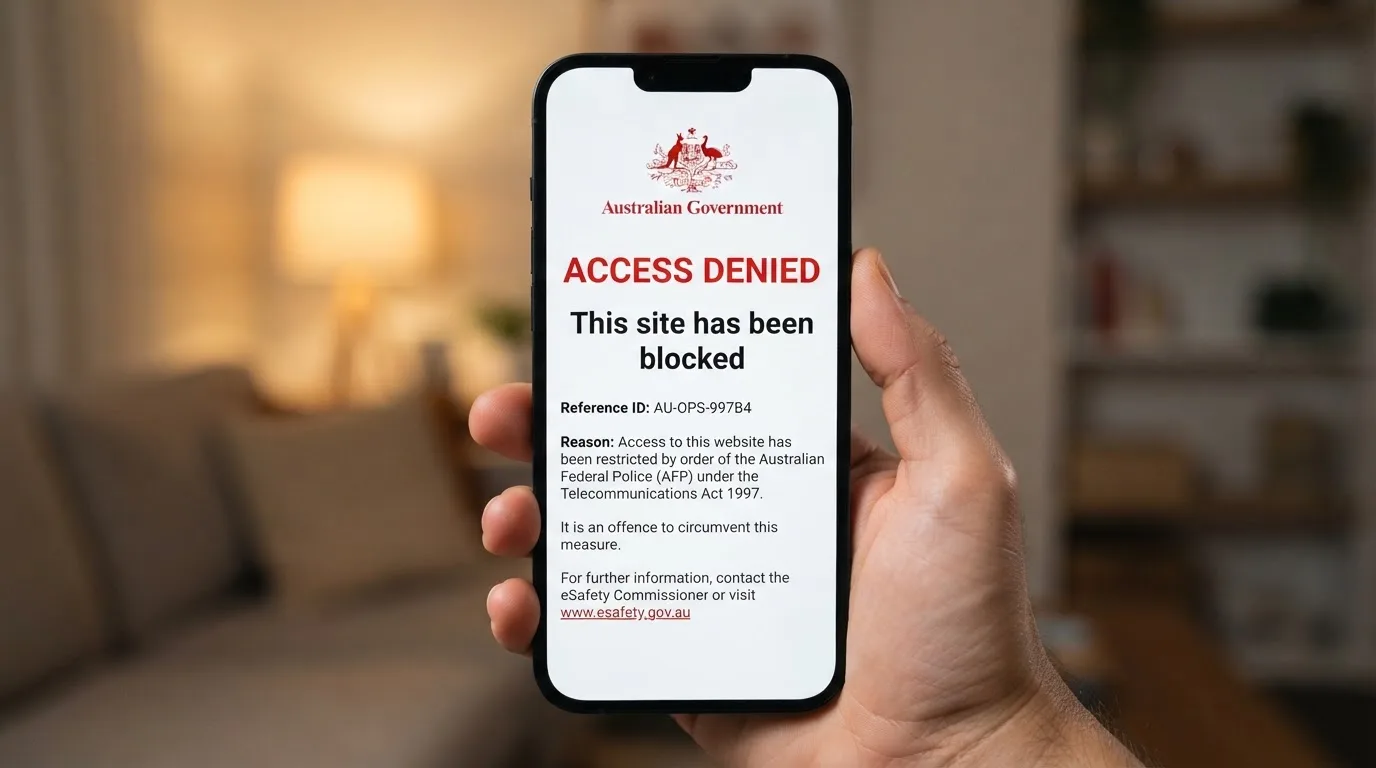
For an Australian reader the practical shape of the problem is unchanged by the screen size. The browser tab or the side-loaded app both load content the ACMA has, in repeated rounds, directed Australian ISPs to block. The mobile experience does not escape the Interactive Gambling Act 2001; it just moves the same prohibition onto a smaller screen.
The Novomatic catalogue and the providers behind it
Novomatic is an Austrian gambling company founded in 1980 by Johann Graf, and it is one of the larger integrated gambling manufacturers in Europe. Its 2021 published figures put group revenue at €1.84 billion, operating income at €588 million and headcount at 21,173, with gaming operations contributing 56% of the group total and roughly 2,000 gaming facilities spread across the reported 43 to 50 countries of operation. The online arm sits inside Greentube, in which Novomatic took a controlling stake in 2010. Greentube holds a Malta Gaming Authority Critical Supply Licence (MGA/CRP/120/2006) and a B2C Gaming Service Licence (MGA/B2C/823/2020), and is licensed by the UK Gambling Commission — these are European real-money licences, not Australian ones, and they cover supply into the jurisdictions that recognise them.
The acquisition trail tells the same story from a different angle. Novomatic bought 52% of ASX-listed Ainsworth Game Technology in 2018 for about €300 million, took the Italian HBG Group in 2022, and acquired eleven French casinos from Vikings Casinos in 2025. On the land-based side, the German subsidiary Löwen Entertainment runs roughly 520 Admiral Spielhalle arcades, and the UK subsidiary Luxury Leisure, bought in 2014, runs more than 270 gaming venues. None of this footprint converts into an Australian online licence. The Interactive Gambling Act 2001 names online casino games as a prohibited interactive gambling service; the offering does not become lawful because the manufacturer is large, or because the licence is Maltese, or because the operator publishes it inside an Australian-facing wrapper.
The slot catalogue itself is built around a handful of long-running titles. Book of Ra and its deluxe variant, Lucky Lady’s Charm, Sizzling Hot, Dolphin Pearl, Columbus and Lord of the Ocean are the recurring titles; the Greentube platform carries them across desktop, mobile and tablet with shared RTP settings. Volatility is generally classed as medium to high across the line, and the bonus mechanic is the free-spins-with-expanding-symbol that the Book of Ra series made standard. The maths on any individual title is published by Greentube; the maths is the same on every site that hosts the game, which is the one thing offshore casinos cannot alter about the experience even when they alter everything else.
Providers adjacent to Novomatic in the offshore catalogue are worth noting for the reader who treats provider identity as a check on legitimacy. Betsoft, founded in 2006, publishes a catalogue of more than 200 RNG games and lists a specific RTP and volatility profile on each title — Good Girl Bad Girl 2, for instance, is published at 96.22% RTP, “Very High” volatility and a 15.59% hit rate on a 5-reel, 20-payline layout. Aristocrat Leisure, an ASX-listed Australian manufacturer (ticker ALL, listed 1996), is the largest gambling-machine manufacturer in Australia and the second-largest slot-maker worldwide behind International Game Technology; its 2025 group revenue was A$6.30 billion, with A$1.55 billion in normalised net profit after tax and amortisation and 7,400 employees. Neither of those names turns an offshore casino into an Australian-licensed one. What they do is give the reader a way to look up a published RTP and a registered provider — both real and both documented — rather than accepting whatever the cashier page prints.
1spin4win, a Curaçao-licensed slot provider founded in 2021, sits further down the catalogue and describes a portfolio of more than 190 online slots and more than 1,000 casino and aggregator partnerships, with reported bet sum up 46% in the first half of 2025 against the same period in 2024. It is a presence on the offshore sites that host Novomatic content; it is not, itself, a Novomatic label.
Novomatic corporate profile
| Matter | Detail |
|---|---|
| Company | Novomatic AG |
| Founded | 1980 |
| Revenue (2021) | €1.84 billion |
| Employees | 21,173 |
| Headquarters | Austria |
The landscape of brands the ACMA has acted against
The table below lines up the eleven brands the ACMA has formally warned for offering prohibited interactive gambling services to Australians. None of the brands are licensed by an Australian regulator for online casino games; the formal warning is the ACMA’s recorded response to that prohibition being breached. The order follows the ACMA record, the table reads as a regulator’s enforcement log rather than a shortlist of where to play.
| Brand | ACMA action and date | Operator named by the ACMA | Subject support |
|---|---|---|---|
| RocketPlay | Formal warning — March 2026 | Pulsup Ltd | — |
| Level Up Casino | Formal warning — May 2022 | Dama N.V. | Wazdan listings only |
| Woo Casino | Formal warning — March 2025 | Dama N.V. | — |
| Spirit Casino | Formal warning — May 2025 | Dama N.V. | — |
| National Casino | Formal warning — July 2025 | Consolutetish S.R.L. | Betsoft, Pragmatic Play, Wikipedia listings only |
| Bizzo Casino | Formal warning — July 2025; earlier 2022 | Consolutetish S.R.L.; TechSolutions (earlier) | — |
| Ignition Casino | Formal warning — July 2025 | Bamboo Media | — |
| Instant Casino | Formal warning — February 2025 | EOD Code SRL | — |
| Jackbit | Formal warning — April 2026 | Ryker B.V. | — |
| Casino Intense | Formal warning — April 2025 | Sterplay Holding Ltd | 1spin4win, UKGC, Wikipedia listings only |
| Sky Crown | Formal warning — September 2022 | Hollycorn N.V. | — |
The “Subject support” column is the one to read with care. A brand listed as carrying Novomatic content by a third-party provider directory (Wazdan, Betsoft, Pragmatic Play, 1spin4win, Wikipedia, the UK Gambling Commission’s public register) is not, by virtue of being listed, carrying the games lawfully into Australia. The third-party listing confirms that the brand exists on the offshore market and that the provider’s catalogue reaches it; the prohibition under the Interactive Gambling Act 2001 is unaffected. Brands with no data in the column are the same in substance; they appear here because the ACMA warned them, not because a provider directory has confirmed their catalogue.
For readers who came to this page looking for a single brand to try, the table is not the answer they wanted, and that is by design. The answer the ACMA’s enforcement record gives is that none of these eleven brands carries an Australian licence for online casino games, that several of them have been warned more than once (Dama N.V. alone accounts for four brands on this list), and that the operator entities behind them move between jurisdictions while the brand names stay on the search results.
How Australian online gambling is actually framed
The framing of online gambling in Australia runs through a single statute: the Interactive Gambling Act 2001, strengthened by the Interactive Gambling Amendment Act 2017. The IGA names online casino games, online pokies and in-play betting as prohibited interactive gambling services. Providing those services to a person physically in Australia is the offence. The minimum age is 18. No state or territory issues a licence for online casino games, and none of them can: the prohibition sits at the federal level. What is licensable is wagering on racing and sporting events placed before the event, lotteries and keno — in practice licensed by the Northern Territory, where the Northern Territory Racing and Wagering Commission oversees 52 of Australia’s online bookmakers (Sportsbet, Bet365, Ladbrokes among them) for tax reasons. The commission has no full-time staff and meets once a month in Darwin.
Enforcement sits with the Australian Communications and Media Authority. The ACMA investigates complaints, issues formal warnings to the operators behind prohibited services, and can direct Australian internet service providers to block sites at the network level. The June 2026 blocking round asked ISPs to block 12 further sites — 7Signs, ChromaBet, Donbet, Duospin, Freshbet, Slots Gem, Jacks Club, Lucky Start, Pointsbetz, Spinrise, Vinyl Casino and Wildsino — bringing the running total of blocked illegal gambling and affiliate marketing websites to 1,751 since the first blocking request in November 2019. H2 Gambling Capital’s 2025 estimate put Australians’ annual losses to illegal sites at about A$3.9 billion, with the share of gambling going through legal channels falling from 74% in 2021 to 64%.
The Interactive Gambling Amendment (Gambling Reform) Bill 2026 passed Parliament on 19 August 2026. Its advertising and inducement measures commence on 1 January 2027 — law on the books with a start date, not yet in force on a 2026 page. For an Australian reader the practical shape of the prohibition has not moved: it is the same wall under the same statute, with the same enforcement tools applied to it.
On the payments side, the rules are equally specific. Credit cards, credit-related products and digital currency are banned as a means of payment for licensed online wagering in Australia from 11 June 2024, with penalties for operators of up to A$247,500. Legal deposit routes for the licensed wagering market are debit card, bank transfer, PayID/Osko and BPAY. A site asking an Australian customer for a credit card or a crypto deposit is, by definition, operating outside the Australian rules — which, for an online casino, means outside the law. That single check at the cashier page separates licensed wagering from the offshore market more cleanly than any licence badge in a footer.
What offshore play actually costs the Australian player
The individual player is not prosecuted under the Interactive Gambling Act 2001 — the IGA targets the provider, not the customer. What the player does lose, on an offshore site, is every Australian consumer protection the law would otherwise put behind a deposit. There is no Australian complaints body with jurisdiction, no Australian regulator to escalate a refused withdrawal to, and no guarantee that a blocked site will release a balance still sitting on it. The block is a network-level instruction; the wallet is on the operator’s servers. The offshore licence — Curaçao, Malta, the Comoros — is real in its own jurisdiction and offers nothing in the way of Australian recourse.
The H2 estimate of A$3.9 billion a year lost to illegal sites is the macro version of that gap: deposits made, balances accumulated, withdrawals refused or delayed, and no Australian body to complain to. The arithmetic of expected loss on a single bonus session is small by comparison; the structural absence of protection is the larger cost.
The scale of ACMA enforcement since 2019
The 1,751 blocked sites figure comes from a running total published by the ACMA in June 2026, starting from the first blocking request in November 2019. That is roughly six and a half years of enforcement, against a market that does not stop opening new domains when an old one is blocked. The blocking rate, taken over the full window from November 2019 to the most recent round, sits in a band of roughly 240 to 270 new sites blocked per year on average — calculated by spreading 1,751 sites over about 80 months and rounding to the nearest ten. That band is the regulator’s working pace: not a campaign, not a one-off, but a sustained enforcement tempo that has continued across each of the seven calendar years the regime has been in operation. It is the rate at which new prohibited services have been added to the block list, not the rate at which prohibited services have been removed; sites stay blocked once added, and the 230-odd unlicensed services that have left the Australian market since 2017 are a separate count.
The pace is informative for one reason above all others: it shows that the prohibition under the Interactive Gambling Act 2001 is enforced, not merely declared. A reader weighing the difference between depositing at a licensed bookmaker and an offshore casino is not weighing a theoretical risk; the block list is the published record of how that theoretical risk has actually played out.
Responsible play and the tools that exist for Australians
Player protection in Australia is built around three named instruments. The first is BetStop, the National Self-Exclusion Register, live since August 2023. BetStop binds Australian-licensed online and phone wagering services: a player who registers is excluded from every licensed wagering operator for the period they nominate (the minimum is three months, the maximum is permanent). Offshore casinos are not connected to BetStop — self-exclusion under BetStop does not propagate to a Curaçao-licensed operator — but the licensed wagering market is covered in full.
The second is the National Gambling Helpline at 1800 858 858, free of charge and open 24 hours a day, with a chat option at Gambling Help Online. The helpline is the practical entry point for someone whose own gambling, or a family member’s, has moved past the level they want to sustain.
The third is the network-level block itself. A player who cannot reach an offshore casino from an Australian ISP is, in practical terms, self-excluded from it without needing to register anywhere; the obstacle is upstream of the wallet. The block does not cover a mobile data connection outside the Australian ISPs, a VPN, or a site the ACMA has not yet added to the list — those are the limits of the instrument, and they are real. But for the bulk of access attempts from a fixed-line Australian connection, the block is the most consequential single consumer protection in the framework.
The cost of the prohibition to the player who wants to play is the absence of the offshore catalogue. The benefit is the presence of a regulator with jurisdiction, a self-exclusion register that holds, a helpline that answers, and a payments framework that does not allow credit-funded gambling losses to compound. Whether that exchange comes out in the player’s favour depends on the player — but it is the only exchange the law permits.
Deposits, withdrawals and the speed of settlement into Australia
For the offshore sites that carry Novomatic content, the deposit and withdrawal rails are the section where the gap with Australian regulation is widest. A licensed Australian wagering operator takes debit card, bank transfer, PayID/Osko and BPAY; the offshore sites in this space take credit cards, e-wallets (Neteller, Skrill, MiFinity, Jeton), prepaid vouchers, and increasingly, cryptocurrency. The 11 June 2024 ban on credit and crypto as a payment method for licensed online wagering does not extend to offshore sites, and the offshore sites know it — the deposit page is where the regulator’s absence first becomes visible to the customer.
Settlement into an Australian bank account is the slowest part of the offshore transaction. The deposit clears in minutes because it never leaves the operator’s payment processor; the withdrawal is where the operator’s compliance team reviews the play history, the bonus terms and the identity documents before releasing funds. Published withdrawal times on these brands typically run 24 to 72 hours for the internal review, then 1 to 5 business days for the bank transfer, then a further 1 to 3 days for the receiving bank to credit an Australian account. A player who requests a withdrawal on a Friday afternoon may not see the funds until the following Wednesday or Thursday — and that is the case where the operator approves the withdrawal at all.
The bonuses attached to the first deposit are the most common reason an offshore withdrawal stalls. The standard “wagering requirement” line on a welcome package is the operator’s standing instruction not to release the deposit until the bonus has been played through; an A$200 deposit with a 40x bonus attached is A$8,000 of qualifying turnover before the deposit itself becomes withdrawable. A player who wins early, requests a withdrawal before the wagering is met, has the request refused — and is told, usually in the live chat, that the bonus terms take precedence. None of this is unusual on the offshore market; it is the standard mechanic. The Australian-licensed wagering market, by contrast, does not run deposit bonuses of this kind on casino games, because it does not run online casino games at all.
What the ACMA has done, brand by brand
The eleven brands in the enforcement table carry their own short histories, and the histories are where the pattern sits. Dama N.V. is the operator behind four of them — Level Up, Woo Casino, Spirit Casino, and an earlier RocketPlay that the ACMA warned in May 2022. The May 2022 warning named six brands in one round (Bambet, Dazard, Level Up, Rocketplay, Wild Tornado and Cobra Casinos). The March 2025 and May 2025 warnings, over Woo Casino and Spirit Casino respectively, came two and three years later. The pattern is the operator moving between brand names while the regulator continues to track the corporate entity. A reader who recognises Dama N.V. in the operator column can read that history at a glance: this is one operator under four names, not four separate operators.
Consolutetish S.R.L. is behind two of the brands on the list — National Casino and Bizzo Casino, both warned in July 2025. Bizzo Casino had already been the subject of a 2022 formal warning, that round directed at TechSolutions (CY) Group Limited and TechSolutions Group N.V., which is the operator entity that ran the brand at that point. The brand has been warned twice under two different operator names in three years. Bamboo Media was warned in July 2025 over Ignition Casino; EOD Code SRL in February 2025 over Instant Casino; Ryker B.V. in April 2026 over Jackbit and CasinOK; Sterplay Holding Ltd in April 2025 over Casino Intense; Pulsup Ltd in March 2026 over Rocketplay. Hollycorn N.V. was warned in September 2022 over Sky Crown and Blue Leo.
A reader who wants to follow the enforcement record up to date will find it on the ACMA’s formal warnings page, which lists each warning with the operator entity named, the date and the relevant provisions of the Interactive Gambling Act 2001 cited. The list is the public record; it is not a static list, and new rounds of warnings are added as investigations close.
The licences these brands actually hold
Every brand on the enforcement table holds a licence somewhere. The licences are real, in the sense that a regulator in another jurisdiction has issued them: Curaçao is the most common, the Malta Gaming Authority covers a smaller set, and a few of the brands list Anjouan or the Comoros. None of those licences authorises the operator to offer online casino games to a person in Australia — the Australian prohibition is not waived by an offshore licence, and the offshore regulator has no jurisdiction over an Australian customer. A footer that prints “Licensed and regulated by the Government of Curaçao” describes a relationship between the operator and the Curaçao regulator; it says nothing about the relationship between the operator and the Australian player.
This is the part of the page where the language of offshore casinos is at its most slippery. A “Curacao licence” is a real document issued to a real company. It is also, in this market, a piece of marketing copy that has no bearing on the question an Australian reader is asking — which is whether the site is lawful to play at from inside Australia. The answer to that question is no, for every brand on the table.
The casino games Australians can actually access
What is licensable in Australia, in the gambling space, splits across three distinct products. The first is wagering on racing and sporting events, placed before the event, licensed by the Northern Territory (and by other state regulators for their respective TAB products). The second is lotteries and keno, run by the state and territory lotteries commissions. The third is land-based gaming — pokies in clubs and pubs, table games in casinos — licensed by state and territory gaming regulators. Crown Melbourne, Crown Perth, The Star Sydney, The Star Gold Coast, Treasury Brisbane and the Adelaide Casino operate under state licences; the pokie machines inside those venues, and inside Australian clubs and pubs, are subject to state-level harm-minimisation measures that the offshore market does not replicate.
Novomatic’s Australian footprint is on the land-based side through Ainsworth Game Technology, in which Novomatic took a 52% stake in 2018 for about €300 million. Ainsworth is an ASX-listed Australian gaming machine manufacturer; its products appear in Australian venues under state-level approvals. The Ainsworth arrangement is a corporate one, not an online-licensing one, and the games that Ainsworth develops for Australian venues are released into the venues under Australian state approvals, not onto offshore casinos as Australian offerings. The reader who wants to play a Novomatic-engineered game inside Australia goes to a venue — not to a search result.
The gap between what is licensable and what the offshore market offers is the gap this page is built around. The reader who reaches this page from a search for “Novomatic casino Australia” is, in most cases, asking for something the Australian framework does not provide. The honest answer is to name the gap and to point to what is actually available: the licensed wagering market for sports and racing, the state lotteries for keno and draws, the land-based casinos and clubs for pokie play, and the BetStop register for self-exclusion from the licensed wagering space.
What to check before trusting a site that claims Novomatic
The five-point check below is the working filter for any site an Australian reader meets through a search result for Novomatic content.
The first check is the operator entity. The footer of the site should name a company, a registration number and a registered address. Cross-check that company against the ACMA’s list of formal warnings — if it appears, the warning is the ACMA’s own published record that the brand has offered prohibited services to Australians. Dama N.V., Consolutetish S.R.L., Bamboo Media, EOD Code SRL, Ryker B.V., Sterplay Holding Ltd, Hollycorn N.V. and Pulsup Ltd are all on that record.
The second check is the licence badge. “Curacao”, “Malta”, “Anjouan” — each of those licences exists, and each of them is irrelevant to the question of whether the site is lawful for an Australian customer. The Interactive Gambling Act 2001 prohibits the offering; an offshore licence does not waive it. A footer that prints “Licensed by the Government of Curaçao” is reporting a fact about the operator’s relationship with the Curaçao regulator; it is not certifying the site’s standing under Australian law.
The third check is the payment page. Credit card, crypto and most e-wallets are not available at licensed Australian wagering operators; their presence on a casino cashier page is the clearest single signal that the site is operating outside the Australian framework. The exception is the deposit-only credit card use that some operators process through offshore processors — same effect, different mechanism.
The fourth check is the bonus. Welcome packages with no-deposit free spins, deposit-gated bonuses with high wagering multiples, max-bet rules during bonus play and max-cashout caps are all standard on the offshore market. Read the small print before depositing. The cost of the bonus is in the wagering requirement, the game weighting and the max-cashout cap, not in the headline number.
The fifth check is the withdrawal page. A site that takes deposits in minutes and takes days to release withdrawals is running the standard offshore mechanic. A withdrawal pending review for 72 hours before a 1-to-5-day bank transfer on top is the published norm; a withdrawal that simply does not arrive is the failure mode that the offshore market does not protect the player against.
Frequently Asked Questions
What kind of games does Novomatic make?
Novomatic is best known for its land-based slot machines — Book of Ra, Lucky Lady’s Charm, Sizzling Hot, Dolphin Pearl, Columbus and Lord of the Ocean among the recurring titles — and for the Greentube platform that ports those titles to online play. The group also runs roughly 2,000 gaming facilities across its operating territories, with the German Admiral Spielhalle arcades and the UK’s Luxury Leisure venues as the largest land-based networks. Slot design, casino management systems and table-game software all sit inside the group; the popular image is the slot catalogue, but the corporate footprint is wider.
Is Novomatic used by any casino licensed to operate in Australia?
No Australian jurisdiction issues a licence for online casino games. The Interactive Gambling Act 2001 prohibits the offering of online casino games to a person in Australia, and no state or territory regulator licenses them. Novomatic’s Australian presence on the land-based side sits through Ainsworth Game Technology, in which the group took a 52% stake in 2018, and Ainsworth products appear in Australian venues under state-level approvals. That is a corporate and a venue relationship, not an online casino licence, and it does not produce an Australian-licensed online casino.
Can Australians legally play Novomatic slots at an online casino?
No. The Interactive Gambling Act 2001, strengthened by the Interactive Gambling Amendment Act 2017, makes it an offence to provide online casino games to a person in Australia; the individual player is not prosecuted, but the provider is. Offshore casinos that carry Novomatic content are offering prohibited services; the ACMA’s enforcement record — 1,751 sites blocked since November 2019 — is the published evidence of how the prohibition is applied. The lawful routes to Novomatic-engineered games in Australia are the land-based venues where the relevant state approvals cover the machines on the floor.
Are Novomatic games available at land-based Australian casinos?
Yes, through Ainsworth Game Technology. Novomatic’s 2018 acquisition of a 52% stake in Ainsworth gave the group exposure to the Australian pokie market, and Ainsworth-developed games sit inside the gaming floors of licensed Australian venues under the relevant state approvals. The catalogue in a venue is not the same as the catalogue on an offshore casino site, because Australian state regulators approve specific titles and configurations for their venues. A player who wants to play a Novomatic-engineered game in Australia goes to a licensed venue, not to an offshore site.
What should someone check before trusting a site that claims to offer Novomatic games?
Five working checks: the operator entity in the footer (cross-reference against the ACMA’s formal warnings page); the licence badge (a Curaçao or Malta licence is not an Australian authorisation); the payment page (credit cards and crypto as deposit methods signal an offshore operator outside the Australian rules); the bonus terms (wagering multiple, max-bet rule, game weighting and max-cashout cap, all in the small print); and the withdrawal history (a site that takes days to release funds after a long pending review is running the standard offshore mechanic, and a site that refuses a withdrawal altogether is the failure mode the offshore market does not protect against). The single clearest signal that a site is outside the Australian framework is a payment page that accepts credit cards or crypto.