
Best NetEnt online casinos in Australia: what the page is, and is not
A search for “NetEnt casino Australia” usually expects a tidy shortlist of operators to sign up with. This page is built on a different premise. The Interactive Gambling Act 2001 makes it an offence to offer online casino games to a person physically in Australia, and no state or territory body will license one. The list a reader actually wants is therefore shorter than most search results suggest, and most of its entries are brands the Australian Communications and Media Authority has formally warned. The page below treats that as the headline rather than burying it — and then works outward to the questions readers tend to ask next: which operator the ACMA has warned most recently, what BetStop covers, what the credit-card ban since 11 June 2024 changes, and where the law leaves a punter who still wants to play NetEnt slots.
Current as of 28 October 2026 and verified against ACMA formal-warning publications, the IGA 2001 as amended in 2017, and the BetStop register.
Table of Contents
- What a NetEnt casino actually is, and where the brand sits in the market
- Bonuses and free spins: what the marketing word hides
- Mobile and the app question
- NetEnt-powered games: provider detail for the reader who cares
- The comparison: brands the ACMA has formally warned
- The Australian legal frame
- Player protection: BetStop and the limits of self-exclusion
- Payments and payout speed
- Tax reality for the Australian punter
- What this page is, in summary
- Frequently asked questions
What a NetEnt casino actually is, and where the brand sits in the market
NetEnt AB is a Stockholm-founded studio that released one of the most-played online slot formats of the last fifteen years and was absorbed into Evolution on 1 December 2020 in a deal worth about €1.9 billion. The studio’s identity as the maker of Starburst — released 23 January 2012 on a 5×3 reel layout with 10 paylines, a published RTP of 96.08% and an 800x max win — has outlasted most of its rivals. Starburst XXXtreme sits beside it in most catalogues with a published RTP of 96.45% and a maximum win of 16,800x bet. Gonzo’s Quest, released 15 March 2010 on a 5×3 grid with 20 paylines and a published RTP of 95.97%, still does the rounds.

These three titles are the shorthand. Most readers who type “NetEnt casino” mean one of two things: a casino whose slot lobby prominently features Starburst, or a casino whose provider list carries the NetEnt badge. After the Evolution deal the badge now often sits next to Red Tiger and the live-dealer studios — the game engine is the same parent group. That detail matters once a reader starts comparing operators, because the question “is NetEnt on the lobby” tells them less than it did a decade ago. The publisher is no longer independent; the catalogue is.
Gameplay shape: low-edge classics, not bonus-driven video slots
The NetEnt catalogue leans on straightforward maths rather than feature cascades. The two Starburst variants publish RTPs in the 96% range and run on a tight 10-payline structure. Gonzo’s Quest adds an avalanche reel and a Free Fall bonus that pays up to 2,200x bet. None of these titles are the highest-volatility video slots on the market, and the published figures put the house edge in a narrow band of roughly 3.5–4%. That matters in two directions: the bonus rounds do less work than the marketing implies, and the base game is closer to a steady drip than a jackpot lottery.
A reader who has only ever seen NetEnt from a casino’s front page may not realise how few of its slots are the heavy-feature type. The studio’s identity is the low-edge, high-frequency design — the kind of maths that suits long sessions rather than short, high-volatility bets.
Bonuses and free spins: what the marketing word hides
Every NetEnt casino the ACMA has warned — and every offshore casino the ACMA has not yet reached — markets a welcome package. The package almost always contains free spins on Starburst or Starburst XXXtreme, because those titles are the brand’s anchor product and the studio hands operators a fixed-terms promotional tool around them. The promotional term is “free”. The operator’s terms page attaches a turnover requirement to anything that comes out of it.
The shape of the requirement is the same across most of the brands this page names: a wagering multiple on the bonus amount, a maximum cashout ceiling on free-spin winnings, and a per-spin stake cap. None of these terms are unusual for the offshore market. The unusual thing is the way they read against the Australian context, where the underlying product is itself unlawful to offer.
A reader scanning a free-spin offer on a brand the ACMA has formally warned should be reading two questions in parallel. First: what does the bonus actually cost to clear, and what does the cost look like in time spent at the reels? Second: what recourse do they have if the operator refuses the withdrawal? On the first question the maths is uniform enough to compare. On the second, the answer is fixed: an offshore operator is not bound by Australian consumer law, and the ACMA’s enforcement record shows how often these brands fall outside the rules a player would normally expect.
Turnover in plain terms
A wagering multiple of 40x on a A$100 bonus means A$4,000 of bets before any winnings become withdrawable. At a 10-cent stake on Starburst’s 10 paylines, that is 40,000 individual spins. At five seconds a spin — a rough rhythm for a low-feature slot — the math runs to roughly 56 hours of continuous play. That figure sits inside the same band across most of the offshore brands the ACMA has warned: wagering multiples in the 35–50x range, stake caps in the A$0.10–A$5 bracket, time limits in the 7–30 day window.
The promotional copy calls the bonus “extra” or “free”. The arithmetic calls it a discount on time, not a gift on top. The conversion ratio — A$4,000 in wagers to clear A$100 in bonus — is a 2.5% return on the wagering activity, before the house edge is even counted. After the 96.08% Starburst RTP, the expected loss on A$4,000 of spins at A$0.10 per spin is about A$156. The bonus is worth A$100. The clearing costs the player roughly A$56 in expectation, plus the 56 hours of session time that the wagering clock eats up.
Mobile and the app question
The offshore brands the ACMA names in its enforcement record are almost universally browser-first. A punter on a phone in Sydney opens the casino in Chrome or Safari, signs in, and gets the same lobby as a desktop user. There is rarely a native app. The catalogue is HTML5, which NetEnt and most of its studio peers standardised on by the late 2010s, so the slot runs in a phone browser without a download step.
The mobile experience is not the differentiator it once was. The published game pages read the same on a 6.7-inch screen as on a 27-inch monitor, and the touch interface is built around swipes rather than the desktop’s click-and-drag. Where the brands used to separate “mobile casino” from “casino” in their marketing, they now treat the question as settled.
What mobile does change is where a player is when the offer arrives. Push notifications are rare on the browser-first offshore brands; SMS promos are not. A punter who has opted in to marketing gets the offer in their pocket. The marketing budget follows the same path, and the inducement ends up landing on the device a reader is using to read this page.
NetEnt-powered games: provider detail for the reader who cares
The slot catalogue beyond Starburst and Gonzo’s Quest includes the heavier-volatility variants, the branded deals, and the live-dealer tables that came with the Evolution acquisition. The provider list at most offshore brands reads as a roll-up of the Evolution group: NetEnt for slots, Red Tiger for jackpot mechanics, Evolution for live tables. A reader who has only ever looked at the slot lobby may not have realised that the live-dealer room sits in the same supplier tree.
That detail matters when a reader compares two operators on game count. Most of the brands the ACMA has warned run more than 1,000 slots in their lobby. The count looks competitive against a European-licensed site until a reader checks the providers behind it. The catalogue is mostly the same handful of studios under different parent companies, with the same handful of anchor titles. The breadth is marketing. The depth is the same ten providers.
Aristocrat and the Australian land-based alternative
The Australian gambling-machine manufacturer most readers will have heard of is Aristocrat Leisure, founded in 1953, listed on the ASX in 1996 under the ticker ALL, and now the second-largest slot-machine manufacturer worldwide. Aristocrat’s online real-money arm, Aristocrat Interactive, was formed in April 2024 out of Anaxi and the NeoGames group acquired in the same month for about US$1 billion — NeoGames brought Aspire Global, BtoBet and Pariplay with it.
Aristocrat is the closest thing the Australian market has to a domestic slot supplier for the offshore brands — and Aristocrat Interactive is the arm through which Aristocrat attempts to operate inside regulated markets. NetEnt and Aristocrat are not in the same group, and they do not licence games to each other. A reader who wants Aristocrat’s pokies in Australia is reading a different page from this one: pub pokies, club pokies, and the casino floors at Crown Melbourne, The Star Sydney and the smaller state-based venues.
The wider provider field
Beyond NetEnt and Aristocrat, the offshore brands the ACMA has named lean on a handful of recurring studios. Betsoft, founded in 2006, publishes a catalogue of more than 200 RNG games including The Slotfather (released 13 December 2012, published 95.69% RTP, medium volatility, 8.17% hit rate) and Good Girl Bad Girl 2 (published 96.22% RTP, very high volatility, 15.59% hit rate). BGaming’s team has been building games since 2012 and now lists 250+ certified titles. 1spin4win, founded in 2021 by a group with fifteen years of iGaming experience, ships more than 190 online slots built in HTML5 for low-bandwidth connections.
None of these studios is licensed to supply Australian-facing casino games. They are licensed in Curaçao, in Malta, in the Isle of Man — and they appear on offshore brands that have crossed the ACMA’s radar precisely because the ACMA’s job is to police that supply into Australia.
The comparison: brands the ACMA has formally warned
The page does not recommend a brand. It lines up the brands the ACMA has acted against, with the date and the operator the warning named, so a reader can see what enforcement has actually happened and how recently. The comparison that follows is descriptive, not advisory.
| Brand | ACMA action and date | Operator named by the ACMA | Subject support |
|---|---|---|---|
| RocketPlay | Formal warning, March 2026; earlier Dama N.V. action, May 2022 | Pulsup Ltd | — |
| Level Up Casino | Formal warning, May 2022 | Dama N.V. | Wazdan-listed partner only |
| Woo Casino | Formal warning, March 2025 | Dama N.V. | — |
| Spirit Casino | Formal warning, May 2025 | Dama N.V. | — |
| National Casino | Formal warning, July 2025 | Consolutetish S.R.L. | Betsoft, Pragmatic Play, Wikipedia-listed supplier partners |
| Bizzo Casino | Formal warning, July 2025; earlier 2022 warning to TechSolutions | Consolutetish S.R.L. | — |
| Ignition Casino | Formal warning, July 2025 | Bamboo Media | — |
| Instant Casino | Formal warning, February 2025 | EOD Code SRL | — |
| Jackbit | Formal warning, April 2026 | Ryker B.V. | — |
| Casino Intense | Formal warning, April 2025 | Sterplay Holding Ltd | 1spin4win, Gambling Commission UK-listed partners in supply chain |
| Sky Crown | Formal warning, September 2022 | Hollycorn N.V. | — |
The “Subject support” column reflects what the public supplier listings state about that brand — not what the brand itself advertises, and not an assertion that any supplier has endorsed the brand. Where the supplier pages and reference pages name the brand, the row carries the names. Where they do not, the row carries a dash.
The most common reading of the table above is the wrong one. The table looks like a competitive comparison — eleven brands, eleven slots in a ranking. It is not. It is an enforcement ledger. The brand at the top of the table is the brand whose warning was the most recent at the time of writing; the brand at the bottom is the brand whose warning is the oldest. The order does not speak to game quality, bonus generosity, or player experience, because the ACMA’s role is to police supply into Australia, not to grade it.
The repeated operator names are the more useful pattern. Dama N.V. has been warned four times in this list alone — May 2022, March 2025, May 2025, and the earlier 2022 action. Consolutetish S.R.L. has been named twice — once for National Casino and once for Bizzo Casino in July 2025. The 2022 entry for Bizzo Casino was a separate action against TechSolutions. Offshore operators move brands around faster than the ACMA can name them, which is part of why the same legal entity appears in more than one row.
The Australian legal frame
The Interactive Gambling Act 2001, strengthened by the Interactive Gambling Amendment Act 2017, makes the provision of online casino games, online pokies and in-play betting to a person in Australia an offence. No state or territory licensing body will issue a licence for any of those products. What is licensable is wagering on races and sporting events placed before the event, lotteries, and keno.
The licensing layer that does exist sits in the Northern Territory. The Northern Territory Racing and Wagering Commission regulates 52 of Australia’s online bookmakers — Sportsbet, Bet365 and Ladbrokes among them — licensed in the Territory for tax reasons. The commission has no full-time staff and meets once a month in Darwin. The same body that licenses Australia’s largest legal online wagering operators does not license any online casino.
The credit-card and crypto ban
Since 11 June 2024, licensed Australian wagering operators cannot accept credit cards, credit-related products or digital currency as payment. The penalty for an operator that does is up to A$247,500. Legal deposit routes for licensed wagering are debit card, bank transfer, PayID/Osko and BPAY. A site asking an Australian for a credit card or a crypto deposit is therefore operating outside the Australian rules — which is consistent with the rest of what those sites are doing.
A reader who sees a NetEnt-branded casino accepting Bitcoin, Ethereum or USDT is being shown a deposit method that the licensed Australian wagering market is forbidden to use. The branding on the cashier page and the marketing on the front page are pointing in opposite directions.
The 2026 reform bill
The Interactive Gambling Amendment (Gambling Reform) Bill 2026 passed Parliament on 19 August 2026. Its advertising and inducement measures commence on 1 January 2027. The bill is law with a start date, not yet in force on this page. The shape of the reform — tighter advertising restrictions and inducement curbs — does not change what is currently prohibited, only how that prohibition will be marketed against.
Player protection: BetStop and the limits of self-exclusion
BetStop, the National Self-Exclusion Register, has been live since August 2023. It is the only self-exclusion mechanism in Australia that operates across licensed wagering services. The register binds Australian-licensed online and phone wagering services — the Northern Territory bookmakers, the state lotteries, the licensed sports operators. It does not bind an offshore casino. A punter who has self-excluded through BetStop can still open an account at any of the eleven brands in the table above, because those brands are not connected to the register and are not required to honour it.
For readers in distress, the National Gambling Helpline is 1800 858 858, free, 24/7, with chat available through Gambling Help Online. The helpline is the part of the system that an offshore operator cannot deflect — and the part a reader who has hit a wall with an offshore withdrawal is most likely to need.
What offshore operators cannot offer
The legal protections a reader takes for granted at a licensed Australian bookmaker — dispute resolution, complaints handling, anti-money-laundering checks, identity verification at the level of the Commonwealth Bank — do not exist on the offshore brands. The site’s terms page is the entire dispute mechanism, and the operator’s licence is from Curaçao or a similar jurisdiction that will not entertain an Australian player complaint. If a withdrawal stalls, the reader’s recourse is the payment processor and nothing else.
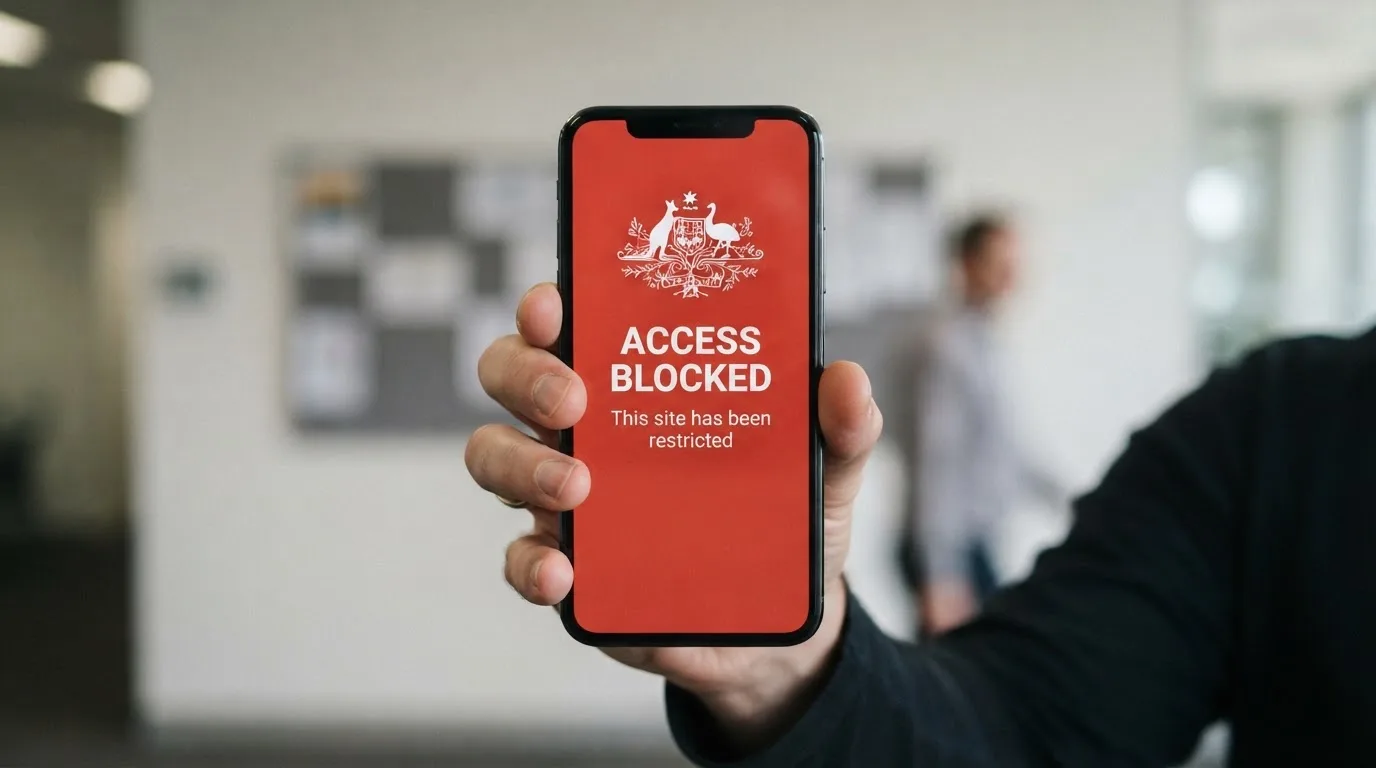
The 1,751 websites blocked since November 2019 in the ACMA’s rolling enforcement record is the visible cost. The balance a reader leaves on a blocked site is the hidden one. The IGA’s individual-player enforcement is essentially nil — the Act targets the provider, not the punter — but a balance that disappears into a blocked site does not come back.
Payments and payout speed
The offshore NetEnt casinos the ACMA has named accept deposits in fiat (Visa, Mastercard in most cases, though the credit-card ban does not bind them as it binds licensed Australian wagering) and in crypto (Bitcoin, Ethereum, USDT, occasionally Litecoin). Withdrawals are typically the same channel as deposits, with bank transfer as the fiat fallback.
The published payout speed on these brands sits in a wide range. Crypto withdrawals are quoted at “instant” or “within an hour” because the on-chain settlement is the limiting step, not the casino. Fiat withdrawals are quoted at 1–5 business days for the casino’s processing, plus the bank’s settlement time. The processing time is the variable that decides whether a withdrawal is honoured at all — and the ACMA’s enforcement record does not measure it.
The blocking rate for offshore casino sites, calculated against the running total of 1,751 blocked domains and the November 2019 start date, comes out to roughly 260 sites per year on average across the period, with material variation year-on-year. The rate is an average across a changing enforcement environment, not a steady cadence — and a reader comparing it to the most recent blocking round (12 sites in the June 2026 round, including 7Signs, ChromaBet, Donbet, Duospin, Freshbet, Slots Gem, Jacks Club, Lucky Start, Pointsbetz, Spinrise, Vinyl Casino and Wildsino) should note that the pace has shifted. A reader thinking of opening an account at any of the brands in the table above should treat the blocking rate as the speed at which their chosen brand might become inaccessible — and the balance on it, inaccessible with it.
Tax reality for the Australian punter
Gambling winnings of a recreational Australian player are not assessable income under section 6-5 of the Income Tax Assessment Act 1997, and losses are not deductible. The exception is a person who carries on a business of gambling — a professional punter, in the ATO’s framing — and the test is a serious one. For most readers of this page, the ATO position is: no tax owed on winnings, no tax relief on losses, and no obligation to declare either. The ATO publishes guidance and the position is a model answer, not legal advice — a reader with an unusual pattern of gambling income should check with a registered tax agent.
What this page is, in summary
A reader who has read this far should leave with three things.
First, the offshore NetEnt casino market in Australia is not a normal market — it is a market whose supply is unlawful under the IGA, and whose operators are subject to formal warnings and ISP-level blocking by the ACMA. The eleven brands in the table above are not the only offshore NetEnt casinos; they are the ones the ACMA has named in formal warnings.
Second, the inducements at those casinos look generous against a backdrop where the supply itself is illegal. A 40x wagering multiple on a A$100 bonus, clearing at A$0.10 per spin on Starburst, costs about 56 hours of play and roughly A$56 in expected house edge. The bonus is a discount on time, and the time is the part the marketing copy does not count.
Third, the legal alternatives are different products. Aristocrat pokies in a licensed club, sports and race wagering through a Northern Territory-licensed bookmaker, and self-exclusion through BetStop are the three pathways the IGA leaves open. None of them is an online casino. A reader who lands on this page looking for a shortlist of ten operators to play NetEnt slots with will not find one, because the law will not let one be written honestly.
The pages below, in the section on frequently asked questions, take the same premise and answer the specific reader questions that the ACMA’s enforcement record tends to generate.
Frequently asked questions
What kind of games does NetEnt make?
NetEnt is best known for online slots — Starburst, Starburst XXXtreme and Gonzo’s Quest are the titles most readers will have seen on a casino’s front page. The studio also publishes table games and (after the Evolution acquisition in December 2020) live-dealer product through Evolution. The slots lean on low-edge, high-frequency maths rather than heavy feature cascades, with published RTPs in the 95–96.5% band across the anchor titles.
Is NetEnt used by any casino licensed to operate in Australia?
Online casino games cannot be licensed anywhere in Australia under the Interactive Gambling Act 2001, so no Australian licensee can host NetEnt slots. The brands that publish NetEnt in their lobbies are offshore operators — the eleven listed on this page are the ones the ACMA has issued formal warnings against for offering prohibited services to Australians.
Can Australians legally play NetEnt slots at an online casino?
The IGA targets the provider, not the individual player, so a punter in Australia is not personally prosecuted for opening an account at an offshore casino. The product the offshore casino is offering is, however, unlawful for it to supply. That means no Australian consumer protection, no complaints body, no recourse if a withdrawal stalls, and a real chance the site is blocked by an ISP while a balance is still on it.
Are NetEnt games available at land-based Australian casinos?
NetEnt’s catalogue is online-only. The Australian land-based casino floor is dominated by Aristocrat Leisure’s electronic gaming machines, with the largest venues at Crown Melbourne, The Star Sydney, and the state-based casinos. Aristocrat was founded in 1953, listed on the ASX in 1996 under the ticker ALL, and reported A$6.30 billion of 2025 revenue and A$1.55 billion of normalised net profit after tax and amortisation across 7,400 employees.
What should someone check before trusting a site that claims to offer NetEnt games?
Check the ACMA’s list of formal warnings to see whether the brand has been named for offering prohibited services to Australians. Check whether the site accepts credit cards or cryptocurrency, which is what an Australian-licensed wagering service is forbidden to accept since 11 June 2024. Check whether the operating company is named in any of the eleven warnings listed above. None of these checks confirms safety — the underlying product is still prohibited under the IGA — but they show how exposed a player is when something goes wrong.
Does NetEnt software run on mobile browsers?
Yes. NetEnt and most of its studio peers standardised on HTML5 in the late 2010s, so the slots run in a phone browser without a download. The offshore brands the ACMA has named are almost universally browser-first; there is rarely a native app, and the slot lobby looks the same on a phone as on a desktop.