
Microgaming online casinos in Australia: legal reality for players
Data current as of 28 October 2026, checked against the Australian Communications and Media Authority’s published register of formal warnings and blocking actions.
A search for Microgaming-powered casinos and an Australian postcode ends in the same place, and that place is not a comparison table. The Interactive Gambling Act 2001 prohibits offering online casino games to anyone in Australia, and no state or territory issues the licence a Microgaming casino would need to take an Australian deposit lawfully. What an Australian reader can use is smaller, narrower and much better enforced than the offshore marketing suggests — licensed wagering on races and sport, land-based pokies at a club or casino, and BetStop for self-exclusion. The eleven brands named below sit on the other side of that line. They are written up here because the ACMA has formally warned each of them, not because they are a recommendation.
Table of Contents
- Bonuses, free spins and what a Microgaming bonus really costs
- Mobile browsers and apps: what the phone-screen experience actually is
- The catalogue: Microgaming slots, Aristocrat and the wider field
- The eleven brands the ACMA has acted against
- What the Australian market actually looks like
- How the ACMA’s blocking record has built up
- What the law says about playing from Australia
- What player protection actually reaches
- How money moves on an offshore Microgaming casino
- Where the lawful Australian gambling happens
- How the page was put together
- The arithmetic that gives a reader a sense of the cost
- What to do if the search has already begun
- What the page does not cover
- Frequently asked questions
Bonuses, free spins and what a Microgaming bonus really costs
The marketing word on every Microgaming casino bonus or Microgaming casino free spins offer is “free”. It is the least free thing in the room. A welcome bonus or a Microgaming casino no deposit bonus usually arrives with a wagering requirement, a stake ceiling during the playthrough, a maximum cashout on a no-deposit win and a list of games that do not count toward the turnover at all. None of those conditions are unusual; they are ordinary for the offshore market. What is unusual is the cost they impose once the arithmetic is done, and that cost is what a player is paying for what the ad called “free”.

The shape of a Microgaming casino with free spins offer is a small number of spins on a named Microgaming slot — a few dozen at a low denomination — credited on registration, on a first deposit or as a reload. Spins carry their own wagering requirement on the winnings and almost always a cap on what those winnings can be converted to. A Microgaming free spins casino that credits fifty spins at A$0.20 and applies a 40x multiplier on winnings with a A$100 cap is handing the player an expected value that depends on the slot’s return-to-player. A 96% slot gives the player back roughly A$0.96 per A$1.00 spun; fifty spins at A$0.20 staked is A$10 of turnover, and 96% of that is A$9.60 in returns before the wagering multiplier takes its share. The 40x playthrough then demands A$400 of additional betting on a separate requirement before any of it can be withdrawn. That is the “free” part: a small expected return against a large turnover target, and a ceiling on the upside.
A Microgaming casino welcome bonus takes the same shape at a larger scale. A 100% match up to a few hundred dollars with a 40x wagering factor on the bonus means a A$200 bonus requires A$8,000 of turnover before withdrawal. Slot play typically contributes 100% to that requirement; table games often contribute 10% or nothing at all, which is why operators steer players toward the slots the bonus actually clears on. A Microgaming casino deposit bonus built around a free-spin bundle, a reload ladder and a loyalty tier is not a single price — it is three or four nested requirements, each with its own cap, each measuring compliance on its own clock.
What the player is paying for is time and concentration. The promotional inducement is the carrot; the requirement is the cost; the time is what the cost actually buys. None of this is unique to Microgaming — it is the standard offshore welcome package — but it sits at the centre of every Microgaming casino bonus search an Australian reader is making, and it is the one part of the offer the headline never explains.
Mobile browsers and apps: what the phone-screen experience actually is
The phone-screen question for Microgaming-powered play is narrower than the desktop one. Microgaming’s catalogue was built and rebuilt in HTML5 between the mid-2010s and now, and the current generation of Microgaming mobile slots runs straight in a mobile browser without an install. A best mobile Microgaming casino search lands on a URL, a deposit page and the same library the desktop client carries, scaled to a portrait viewport. There is no separate Microgaming casino download for most titles; the download era — the .exe client the brand was known for in the 2000s — is closed.
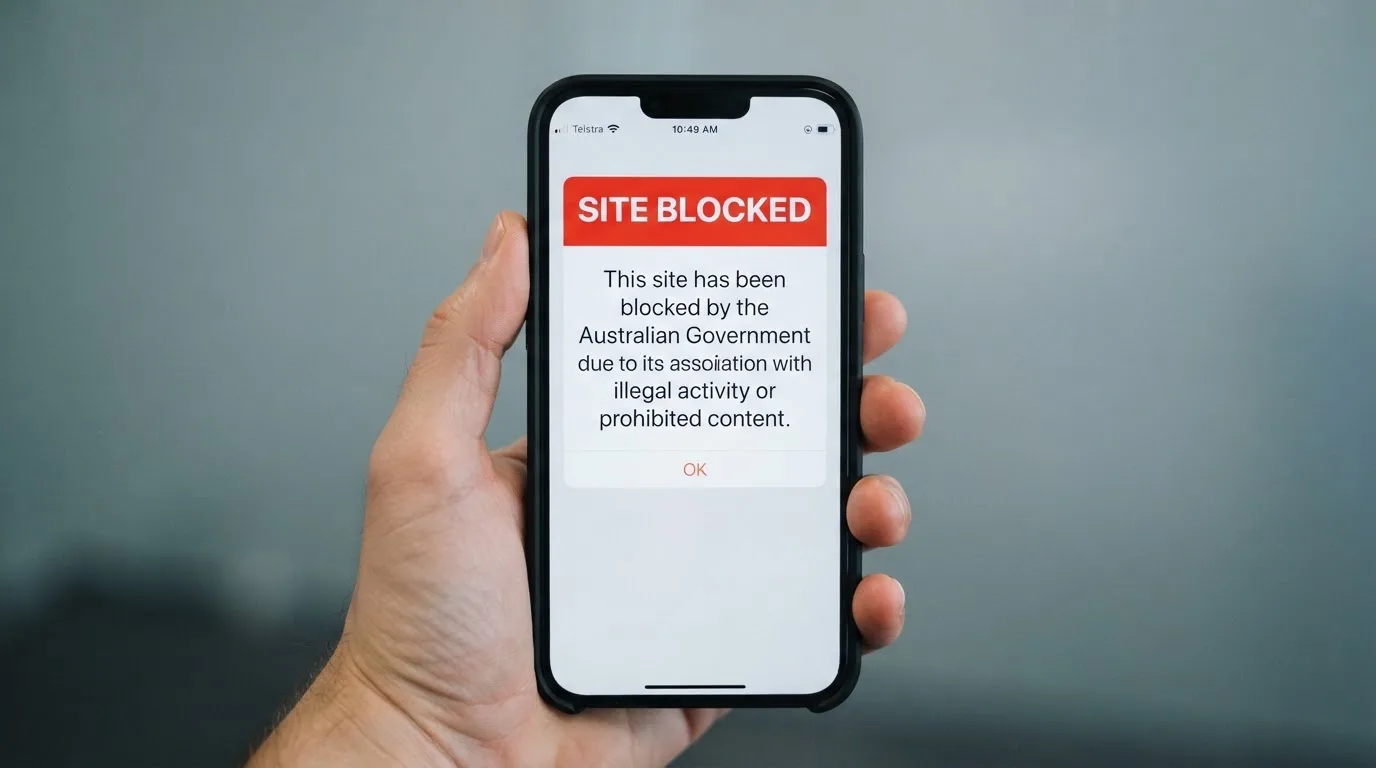
A native Microgaming casino app exists for some operators but is rarely required. iOS rules around real-money gambling apps vary by jurisdiction, and Android installs on a phone that has not toggled the relevant setting are blocked at the OS level. The honest version of a top mobile Microgaming casino claim is therefore: browser-first, HTML5, no install, no APK. Where an app is offered it is usually a thin wrapper around the same browser experience with a payments layer bolted on, and it is the operator, not Microgaming, deciding which platform gets the app.
The thing that does matter on mobile is what the phone is doing with the connection. An Australian playing through a domestic ISP at a Wi-Fi hotspot is reachable; the same player on a hotel network abroad, or on a VPN into a non-Australian exit, is harder to trace but not invisible. The Microgaming mobile casino page does not need to add a “play safely on Wi-Fi” line to be useful; the law already says whether the play is lawful, and the network does not change that.
The catalogue: Microgaming slots, Aristocrat and the wider field
Microgaming itself is one studio inside a much larger field. The Isle of Man-based company, founded by Martin Moshal in 1994 after he graduated from university, is widely credited with developing the first fully functional online gambling software; Cash Splash, released in 1998, is described as the world’s first online progressive-jackpot slot game. The catalogue that grew out of those early releases now spans more than a thousand titles across slots, table games and live-dealer studios, and the brand has been through a decade of studio turnover — studios launched, studios sold, studios closed — while the core engine has stayed in continuous production.
Alongside Microgaming sit the studios the offshore Microgaming casino typically distributes through an aggregator. Aristocrat Leisure, founded in 1953 and ASX-listed since 1996, is an Australian manufacturer whose pokies sit in clubs and casinos across the country; the online arm, Aristocrat Interactive, was formed in April 2024 from the Anaxi unit and the NeoGames acquisition, and it operates in real-money markets outside Australia. Betsoft, founded in 2006, publishes a catalogue of more than 200 RNG games and discloses RTPs and volatility ratings on its game pages — Good Girl Bad Girl 2 at 96.22% RTP and Very High volatility, The Slotfather at 95.69% RTP and Medium volatility are two examples, each carrying a specific hit rate and a specific reel/line configuration. BGaming, operated by Stable Games Ltd in Valletta, holds a Malta Gaming Authority B2B supply licence (MGA/B2B/785/2020) issued 18 March 2021 and offers more than 250 certified titles across slots, video poker, lottery, card, scratch and crash games. 1spin4win, founded in 2021 and Curaçao-licensed, ships a portfolio of more than 190 HTML5 slots and reports more than a thousand casino partnerships.
The Microgaming casino games a reader meets in any one lobby therefore come from a dozen or more studios at once, and the studio credit on the paytable is what tells the player who actually wrote the game. A Microgaming slot title on an offshore site is not always a Microgaming-built game; the brand has licensed and relicensed content over the years, and some titles now carry a different studio stamp. The Microgaming casino for real money claim is a library claim, not a single-studio claim, and the difference matters when a player is choosing on the basis of volatility, RTP or game mechanics rather than the brand on the homepage.
Microgaming 3D slots, Microgaming best slots and the wider Microgaming slots with bitcoin framing all sit inside that same catalogue. The titles a reader hears named most often — the Mega Moolah progressive network being the loudest — run on the same engine as the rest of the library. The catalogue is what a Microgaming Australian casino search is really after, and the catalogue is what an offshore Microgaming casino for real money page is really selling.
The eleven brands the ACMA has acted against
The eleven brands below are not a recommendation and not a shortlist in any normal sense. Each one is named because the Australian Communications and Media Authority issued a formal warning against the operator behind it, under the Interactive Gambling Act 2001, for offering prohibited interactive gambling services to people in Australia. The table lays out the warning as published; the verdict at the end of each write-up is the page’s own judgement of what that warning means for a reader.
| Brand | ACMA action and date | Operator named by the ACMA | Subject support |
|---|---|---|---|
| RocketPlay | Formal warning, March 2026 | Pulsup Ltd | — |
| Level Up Casino | Formal warning, May 2022 | Dama N.V. | listings-only (Wazdan) |
| Woo Casino | Formal warning, March 2025 | Dama N.V. | — |
| Spirit Casino | Formal warning, May 2025 | Dama N.V. | — |
| National Casino | Formal warning, July 2025 | Consolutetish S.R.L. | listings-only (Betsoft, Pragmatic Play) |
| Bizzo Casino | Formal warning, July 2025 | Consolutetish S.R.L. | — |
| Ignition Casino | Formal warning, July 2025 | Bamboo Media | — |
| Instant Casino | Formal warning, February 2025 | EOD Code SRL | — |
| Jackbit | Formal warning, April 2026 | Ryker B.V. | — |
| Casino Intense | Formal warning, April 2025 | Sterplay Holding Ltd | listings-only (1spin4win, Gambling Commission register) |
| Sky Crown | Formal warning (September 2022) | Hollycorn N.V. | — |
Three of those rows carry a Subject support entry drawn from the listings on studio and aggregator pages, and three carry none. A row with no Subject support entry means the brand has not been independently confirmed as distributing Microgaming content through any source outside the brand’s own marketing.
The pattern across the table is the more useful read. Dama N.V. alone accounts for four of the eleven warnings — May 2022 over six brands including Level Up and Rocketplay, March 2025 over Woo Casino, May 2025 over Spirit Casino — and the operator has cycled through brand after brand without changing the legal position. Consolutetish S.R.L. accounts for two — National Casino and Bizzo Casino in July 2025, with Bizzo already the subject of a 2022 warning to TechSolutions. The enforcement pattern is not a single bad actor; it is a category of operator running the same playbook under a fresh wrapper, and the ACMA’s record shows how slowly that cycle moves from first warning to blocking request.
The write-ups that follow treat each brand on its own terms. None of them can be lawfully offered to a person in Australia.
RocketPlay
Rocketplay.com.au was the subject of a formal warning to Pulsup Ltd in March 2026. The same brand had earlier been caught up in a May 2022 warning to Dama N.V., which named six casino brands including Rocketplay alongside Bambet, Dazard, Level Up, Wild Tornado and Cobra Casinos. The brand has therefore been on the ACMA’s record twice in four years, in different corporate hands, under the same marketing offer. The studio content distributed under the Rocketplay label is not independently confirmed. For a reader in Australia, the position is clear: an offshore site that the regulator has now warned twice, with a deposit page that does not exist in lawful Australian terms.
Level Up Casino
Level Up was named in the May 2022 warning to Dama N.V. The studio listings Wazdan publishes place Level Up among the brands carrying Wazdan content; that is a single-studio data point and does not establish what else the lobby carries. The warning is now four years old, which is long by ACMA standards but not by offshore-corporate standards — Level Up’s operator has cycled through brands in the same period. For a reader comparing options on the basis of who actually offers Microgaming content, Level Up sits in the same position as every other Dama N.V. brand in this list: the regulator has acted, and the studio claim has only a single source.
Woo Casino
Woo Casino drew a fresh warning to Dama N.V. in March 2025. The operator named is the same corporate entity behind the 2022 batch of warnings, and the brand’s appearance here is the second Dama N.V. brand on this page that has been warned within the last two years. The brand is not independently confirmed as carrying Microgaming content outside its own pages. This offshore brand has a warning date that makes it a recent entry in the ACMA’s 2025 records.
Spirit Casino
Spirit Casino was warned in May 2025, again over Dama N.V. The pattern of one corporate entity behind a sequence of brands is now the dominant feature of the table — Spirit is the third Dama N.V. brand on this page, after Level Up (2022) and Woo Casino (March 2025), and the ACMA’s cadence against the operator is steady. No third-party source confirms Microgaming distribution under the Spirit label. The operator’s history speaks for itself.
National Casino
National Casino was warned in July 2025 over Consolutetish S.R.L. Studio listings place National Casino among the brands carrying Betsoft and Pragmatic Play content — that is two independent studio-side data points. That does not establish Microgaming distribution; the listings cover Betsoft and Pragmatic Play, not Microgaming. The brand sits on this page because the ACMA acted against it, not because it has been confirmed as a Microgaming casino. It remains an operator to view with extreme caution.
Bizzo Casino
Bizzo was warned in July 2025 over Consolutetish S.R.L. — the same operator behind National Casino, in the same month, under a different brand wrapper. Bizzo had already been the subject of a 2022 warning to TechSolutions (CY) Group Limited and TechSolutions Group N.V., so the brand has now been warned twice, in two different corporate hands, in three years. No third-party source confirms Microgaming distribution under the Bizzo label. A brand that the ACMA has now caught twice is one an Australian player should approach with significant wariness.
Ignition Casino
Ignition Casino was warned in July 2025 over Bamboo Media. The operator named is not the same corporate entity behind the rest of the table — Bamboo Media appears once across the eleven warnings, against one brand. The warning is recent; the studio content distributed under the Ignition label is not independently confirmed. For a reader, this brand presents the same risks as any other offshore site: no Australian licence, no local protection.
Instant Casino
Instant Casino was warned in February 2025 over EOD Code SRL. The brand sits among the older names in the ACMA’s 2025 enforcement batch and is the only entry on this page tied to EOD Code SRL. No third-party source confirms Microgaming distribution under the Instant Casino label. It carries a 2025 warning date that places it earlier than most of the 2026 entries.
Jackbit
Jackbit was warned in April 2026 over Ryker B.V. The brand sits in the same enforcement batch as RocketPlay and Casino Intense’s neighbour — a different operator, a different brand, the same warning template. Like other brands on this list, it lacks independent verification for Microgaming content. It is an offshore brand named by the regulator within the past year, with the operator behind it relatively new to the warning record.
Casino Intense
Casino Intense was warned in April 2025 over Sterplay Holding Ltd. The studio-side listings for Casino Intense include 1spin4win, the Wikipedia entry on online gambling and the UK Gambling Commission’s public register — three independent sources, two of them regulator-side. That is the strongest evidence on the page, and it places Casino Intense among the brands a reader can cross-check against studio catalogues rather than the brand’s own marketing alone. It remains unlawful under the IGA.
Sky Crown
Sky Crown was the subject of a formal warning to Hollycorn N.V. published in September 2022. The same operator was warned over Blue Leo at the same time, which means Sky Crown is one half of a paired warning against a single corporate entity. As with other brands here, there is no independent confirmation of Microgaming games. This is the oldest warning on the page, from an operator that has been on the ACMA’s record for the longest stretch without resolving.
What the Australian market actually looks like
The online casino side of the Australian gambling market is, on the lawful side, small and specific. What is licensable under the Interactive Gambling Act 2001 is wagering on races and sport placed before the event, lotteries and keno. In practice, online wagering is licensed at the territory level — 52 of Australia’s online bookmakers, including Sportsbet, Bet365 and Ladbrokes, hold Northern Territory Racing and Wagering Commission licences for tax reasons, and the commission itself has no full-time staff and meets once a month in Darwin. Online casino games, online pokies and in-play betting are not licensable, and the operator carrying a Curaçao or Malta stamp and accepting an Australian deposit is operating on a licence that does not extend to Australia.
The illegal side is the larger one. H2 Gambling Capital’s 2025 estimate is that Australians lose about A$3.9 billion a year to illegal gambling sites, and that the share of gambling going through legal channels fell from 74% in 2021 to 64%. The direction of travel is the headline: the legal share is shrinking, not growing, and the offshore market is absorbing the difference. The Interactive Gambling Amendment (Gambling Reform) Bill 2026, which passed Parliament on 19 August 2026, addresses advertising and inducements from 1 January 2027 — law with a start date, not yet in force at the time this page is published.
The thing that makes the Australian position different from most regulated markets is the enforcement record. The ACMA does not prosecute individual players; the IGA targets the provider. But the ACMA does investigate, issue formal warnings and direct Australian internet service providers to block illegal sites. A site that has been warned twice in three years is a site that has had two chances to leave the Australian market; the second warning is the regulator signalling that the next step is a blocking request, and a blocking request can come with a balance still on it.
How the ACMA’s blocking record has built up
The ACMA’s blocking record is the most measurable shape of enforcement in the Australian market. The first blocking request went out in November 2019. By June 2026, the running total was 1,751 illegal gambling and affiliate marketing websites blocked, with more than 230 unlicensed gambling services having left the Australian market since enforcement was strengthened in 2017. The most recent published round, reported on 26 June 2026, asked Australian ISPs to block a further 12 sites: 7Signs, ChromaBet, Donbet, Duospin, Freshbet, Slots Gem, Jacks Club, Lucky Start, Pointsbetz.com, Spinrise, Vinyl Casino and Wildsino.
Set against the first blocking request in November 2019, the 1,751-figure at June 2026 covers roughly six and a half years. That works out to an average blocking rate somewhere in the region of 260 to 270 sites a year — which is the band a reader can quote without misstating either end of the series. The early years ran hotter as the regulator worked through the long backlog of pre-2017 sites; the recent rounds are smaller and more targeted. The shape of the series is what a reader comparing options actually needs: a steady drumbeat of enforcement, with the cadence telling a reader in Australia that the regulator’s posture has not softened in the seven years since the first blocking request went out.
What that rate does not tell a reader is which site will be the next to be blocked. The ACMA does not publish a queue, and the warnings do not run on a fixed timeline — a 2022 warning to Hollycorn N.V. is still standing without a blocking request, while a 2025 warning to EOD Code SRL is part of a series that has already produced blocks. The page’s insights on the blocking question are the band and the direction, not a forecast.
What the law says about playing from Australia
The law is the part of this page that does not move. The Interactive Gambling Act 2001, strengthened by the Interactive Gambling Amendment Act 2017, makes it an offence to provide online casino games, online pokies or in-play betting to a person physically in Australia. No state or territory licenses those products. The minimum age is 18. The provider is the side of the transaction the IGA targets; the player is not prosecuted, but an offshore site gives no Australian consumer protection, no complaints body and no recourse if a withdrawal is refused.
The credit card ban that came into force on 11 June 2024 applies to licensed Australian wagering: credit cards, credit-related products and digital currency are banned as payment for licensed online wagering, with penalties up to A$247,500 for operators. The lawful deposit routes for licensed wagering are debit card, bank transfer, PayID/Osko and BPAY. An offshore site asking an Australian for a credit card or a crypto deposit is not operating under the Australian rules — it is operating outside them, which is the legal shape the rest of this page is built around.
The tax position is the one part of the law a recreational player can act on. Gambling winnings of a recreational player are not assessable income under section 6-5 of the ITAA 1997, and losses are not deductible, unless the person is carrying on a business of gambling. That is the model; the ATO is the source a reader should check before treating a single year as a precedent.
What player protection actually reaches
BetStop, the National Self-Exclusion Register, has been live since August 2023. It binds Australian-licensed online and phone wagering services — an offshore casino is not connected to it, and registering on BetStop does not stop a deposit landing at one of the brands on this page. The National Gambling Helpline is 1800 858 858, free and 24/7, with chat available through Gambling Help Online. Those are the tools that exist; the gap between them and an offshore Microgaming casino is the gap the rest of this page is about.
For an Australian who has decided to play, the tools available are: BetStop for the licensed wagering channels, the helpline for a conversation, and the gambling block settings on the major Australian banks. A self-exclusion at an offshore site is a private contract with that site, not a register entry; it can be reversed with an email and it does not bind any other brand the same operator runs. That asymmetry — register-based exclusion on the lawful side, contractual exclusion on the unlawful side — is what an Australian player choosing between the two paths is actually choosing between.
How money moves on an offshore Microgaming casino
The deposit side on an offshore Microgaming casino is, in practice, what the Australian law above does not permit. Cards issued by Australian banks are blocked by some operators; crypto deposits are the path most often advertised, and they are the path that places the transaction outside the Australian banking system entirely. The credit card ban on the licensed side does not apply to an offshore site; the offshore site simply declines the card and asks for an alternative, which is most often a coin transfer or a voucher from a third party.
The withdrawal side is where the offshore model shows its cost. A withdrawal to an Australian bank account typically goes through an intermediary — a wire, a card refund, an e-wallet — and the time it takes depends on the intermediary and on the operator’s own processing window. None of the eleven brands on this page publish a withdrawal timeframe that can be verified against a regulator, because none of them answer to a regulator that covers Australian consumers. A withdrawal that is “pending” for weeks is the shape the offshore model takes when a player tries to move a balance home, and the recourse the player has against it is the operator’s own complaints email.
The lawful side, for contrast, runs on the rails the ACMA and the Australian banks already police. PayID and Osko settle in seconds; BPAY settles overnight; a debit card withdrawal to an Australian account takes one to three business days on the licensed wagering platforms. The price of that speed is the product range — there are no Microgaming slots on a licensed Australian wagering site, because the IGA does not allow them. The insight this page offers on payments is the speed/cost trade-off, not a comparison between two Microgaming casinos.
Where the lawful Australian gambling happens
The lawful Australian gambling options for someone who has decided to play fall into three categories. Land-based pokies at clubs and casinos are regulated at the state and territory level — Victoria, New South Wales, Queensland and the others each run their own pokies regime, with venue caps, machine caps and self-exclusion registers that bind the physical venue. Crown Melbourne, Crown Perth, The Star Sydney and The Star Gold Coast are the largest land-based casino operators; smaller casinos and club pokies rooms operate in every state and territory.
Licensed online wagering — sports and races — is the second category. 52 operators hold NTRWC licences in the Northern Territory alone, and the largest three (Sportsbet, Bet365 and Ladbrokes) hold significant market share between them. The product range on those sites is pre-event sports betting, racing and the limited lottery and keno products the IGA allows; the casino and pokies products are not on the menu.
Lotteries and keno are the third. Tatts, Tabcorp and the state-level lottery operators run online lotteries and keno products that the IGA does allow. The product range there is narrow by definition — lottery draws, keno draws, the occasional scratch product — but it is lawful and the consumer protections are full.
For a reader whose search began with “microgaming casino australia” and ends on this page, the three categories above are the destination. None of them carries the Microgaming catalogue. The page’s job is to make that gap visible without softening it.
How the page was put together
The list of eleven brands above is not a ranking. It is the eleven brands the ACMA has issued a formal warning against under the Interactive Gambling Act 2001 for offering prohibited interactive gambling services to people in Australia. The dates and operators in each row come from the ACMA’s published register of formal warnings. The Subject support column reflects what third-party listings — studio pages, aggregator pages, regulator registers — say about which studios’ content sits in each brand’s lobby, and an em dash means no such source has been found outside the brand’s own marketing. A reader comparing options on the basis of who actually offers Microgaming content can use the column to discount the rows with no third-party confirmation, and to weight Casino Intense and National Casino more heavily on that specific question.
The verdict at the end of each write-up is the page’s own judgement of what the ACMA’s record means for a reader in Australia. It is not a recommendation to play. None of the eleven can be lawfully offered to a person in Australia, and the page’s job is to make that clear without softening it into a “but if you do” frame.
The arithmetic that gives a reader a sense of the cost
A 100% match welcome bonus of A$200 with a 40x wagering factor on the bonus requires A$8,000 of turnover before withdrawal. Slot play typically contributes 100% to the requirement; at an average slot stake of A$1.00 per spin, that is 8,000 spins. A five-second interval between spins puts that playthrough at 40,000 seconds, or roughly eleven hours of continuous play. That is the order of magnitude a player is committing to for what the marketing called “free”, and it is the figure a reader can hold against any Microgaming casino bonus headline before clicking through.
The expected loss on that playthrough depends on the slot’s RTP. A 96% slot returns A$0.96 per A$1.00 staked over the long run, and 4% of A$8,000 is A$320. That is the cost the house edge imposes across the wagering requirement, before any consideration of what the bonus itself adds. The bonus itself, valued at A$200 with no further edge, is the upper bound on what the player is trying to recover; the expected loss is the lower bound on what they will give up if the bonus clears cleanly. The two figures together — A$200 in bonus value, A$320 in expected loss across the playthrough — are the arithmetic the welcome page does not show.
The same shape applies to a Microgaming free spins offer. A bundle of fifty free spins at A$0.20 staked is A$10 of turnover; on a 96% slot that is A$9.60 in expected returns; with a 40x wagering multiplier on the winnings and a A$100 cashout cap, the upside is bounded by the cap, not by what the slot actually pays. The reader paying attention to those numbers before claiming is doing what the marketing page does not do for them.
The cost of those numbers is not unique to Microgaming. It is the standard offshore welcome package, and the standard offshore welcome package is the standard offer on every Microgaming casino search an Australian reader is making. The arithmetic is what this page contributes; the conclusion it supports is that the marketing word “free” describes the carrot, not the meal.
What to do if the search has already begun
For a reader who has reached this page after typing variations of “microgaming casino australia” into a search bar, the next move is shaped by what the search was actually for. If the search was for a working shortlist of Microgaming-powered casinos accepting Australian players, the page has shown why that shortlist does not exist lawfully, and the lawful alternatives are the ones the page has named. If the search was for a sense of how the offshore market treats Australian players, the ACMA’s published record is the source and the eleven brands above are the data points. If the search was for a single recommended brand, the page cannot honestly hand one over — the law does not allow it, and a recommendation in defiance of the law would be the one piece of advice on this page worth deleting.
For a reader who has already opened an account with one of the brands above, the next move is to withdraw the balance before the next ACMA round adds it to the blocking list, and to consider BetStop if the pattern of play has become a problem. The register binds licensed wagering services, not offshore casinos, but the conversation at the National Gambling Helpline (1800 858 858) is the same conversation either way.
What the page does not cover
The page does not cover Microgaming casino promo codes, because no working code has been verified against a source outside affiliate marketing. It does not compare the eleven brands on bonus size or wagering factor, because the bonus terms come from affiliate pages and not from any source that can be verified against an operator. It does not recommend a payment method, because the credit card ban on the licensed side and the crypto-everywhere shape of the offshore side are the only data the page carries and they describe two different legal regimes rather than two routes to the same product. It does not name a winner, because the law does not allow a winner under the product the search was actually about.
Frequently asked questions
What kind of games does Microgaming make?
Microgaming’s catalogue covers online slots, table games, video poker and live-dealer titles, with more than a thousand games across the wider network of studios that distribute through the brand. The catalogue is built and rebuilt in HTML5, and most current titles run in a mobile browser without an install. Microgaming also operates the Mega Moolah progressive-jackpot network, the most prominent product the brand is associated with outside the wider library.
Is Microgaming used by any casino licensed to operate in Australia?
No. No state or territory in Australia issues a licence for online casino games, which is the only product category Microgaming powers. The Interactive Gambling Act 2001 prohibits offering online casino games to anyone in Australia, and no Australian operator carries a Microgaming casino licence. What is licensable is wagering on races and sport placed before the event, lotteries and keno — none of which use Microgaming software.
Can Australians legally play Microgaming slots at an online casino?
No. Online casino games cannot be licensed in Australia, and an offshore site offering Microgaming slots to an Australian deposit is operating outside the IGA. The ACMA can direct Australian ISPs to block such sites, and the player’s only consumer protection is the operator’s own complaints process. A balance on a blocked site is a balance the player has no Australian recourse to recover.
Are Microgaming games available at land-based Australian casinos?
The Microgaming product is an online one. Land-based Australian casinos and clubs use electronic gaming machines from manufacturers such as Aristocrat Leisure, which is an Australian company founded in 1953 and ASX-listed since 1996. Aristocrat’s online arm, Aristocrat Interactive, was formed in April 2024 and operates in real-money markets outside Australia; its products are not licensed for the Australian online casino market.
What should someone check before trusting a site that claims to offer Microgaming games?
The first check is whether the site accepts Australian players at all under Australian law — and the answer is no, for any online casino. The second is whether the ACMA has published a formal warning against the operator, which is on the ACMA’s website and searchable. The third is whether the studio content the site claims to carry is confirmed in the studio’s own listings — the Subject support column on this page is a working version of that check. None of these checks turn a prohibited service into a lawful one; they narrow the field of warnings and unverifiable studio claims.
Does Microgaming software run on mobile browsers?
Yes. The current generation of Microgaming mobile slots runs in HTML5 on a mobile browser without a download, and the Microgaming casino download era of the 2000s is closed. A native app exists for some operators but is rarely required; the browser experience is the one the catalogue is built for, and an Australian playing on a phone is using the same library a desktop player is using, scaled to a portrait viewport.