
BGaming-powered online casinos in Australia — what the marketing never says out loud
Data current as of 28 October 2026 and verified against the ACMA’s published enforcement register.
Search engines happily serve up lists of “best BGaming casinos” for Australian players, and the marketing pages do their usual work: deposit bonuses, free spin counts, sign-up pages wrapped around a familiar slot catalogue. The thing those lists never quite say out loud is that the product itself cannot be licensed here. Online casino games and online pokies are prohibited interactive gambling services under the Interactive Gambling Act 2001, and no state or territory issues a licence for them. Every BGaming-powered site promoted to Australian players is, by definition, an offshore operation that has no Australian consumer protection attached to it.
That gap is the page. It walks through what BGaming actually is as a game studio, why the marketing pitch keeps surfacing for Australian visitors anyway, what the Australian regulator has done about it over the past two years, and what an offshore site actually means for the punter trying to move money in and out. The angle throughout is cost — what an offer really extracts from a reader who takes it, and what an offshore route really costs the person paying it.
Table of Contents
- Why a BGaming pitch keeps landing in Australian search results
- The Interactive Gambling Act and what it actually prohibits
- The shape of a BGaming paytable — what readers should actually understand
- Bonuses and free spins — what these offers actually cost
- Mobile play — what an offshore mobile casino actually looks like
- The ACMA’s enforcement record against BGaming-powered brands
- The eleven brands the ACMA has warned — a closer read
- The wider Australian context — what is licensed and what is not
- What an offshore site actually costs a player
- Responsible gambling — what Australian players can actually use
- The studio-side comparison — what BGaming’s competitors look like
- Aristocrat — the Australian studio comparison that actually matters
- The arithmetic of the blocking programme — what 1,751 sites over six and a half years means
- Money — what the reader actually needs to know about paying in and pulling out
- What a reader takes away from all of it
- Frequently asked questions
Why a BGaming pitch keeps landing in Australian search results
BGaming itself is a slot and casino content studio, not an operator. The brand debuted in 2018; the team behind it had been building games under a different label since 2012. Through its operating company Stable Games Ltd in Valletta, BGaming holds a Malta Gaming Authority Critical Gaming Supply Licence, issued on 18 March 2021, and the catalogue it sells to operators now runs past 250 certified titles — video slots, video poker, lottery, card, scratch, crash and casual games. The studio also markets proprietary mechanics such as TRUEWAYS, which it describes as offering up to 262,144 ways to win on a single game, along with Merge UP and MultiDice X. By the studio’s own count, the games are used by more than 3,000 operators internationally, and names like Blaze, Pin-Up and Gamdom recur in its public-facing partner lists.

That last figure is the reason a BGaming label shows up in Australian search results at all. A casino brand running BGaming content can advertise itself as “BGaming-powered” because BGaming licenses the games out; the studio does not need to do anything Australia-specific for its games to appear on sites marketed here. The pitch lands because BGaming is a recognisable studio brand with a recognisable catalogue, and offshore operators have every commercial reason to attach a familiar studio name to their sign-up funnels. The catalogue is real, the licence the studio holds is real, and the games themselves are legitimate products in the markets where they are licensed to be sold. None of that makes them licensed for sale to Australians.
The Interactive Gambling Act and what it actually prohibits
The Interactive Gambling Act 2001 makes it an offence to provide certain interactive gambling services to a person physically present in Australia. Online casino games, online pokies and in-play betting sit on the prohibited list. Online wagering on racing and sport, placed before the event, is licensable — in practice, the bulk of licensed online bookmakers hold Northern Territory licences, including familiar names like Sportsbet, Bet365 and Ladbrokes, but the regulator that oversees them is small: the NT Racing and Wagering Commission runs without full-time staff and meets roughly once a month in Darwin.

Two consequences flow from that for the BGaming question. First, no state or territory issues a licence for the kind of online casino play that BGaming titles are designed for, so there is no Australian operator that can lawfully add BGaming slots to a real-money lobby. Second, the prohibition sits on the provider, not on the player: the IGA targets the operator, not the punter, so an individual Australian who opens an account on an offshore BGaming-powered site is not personally at risk of prosecution. The enforcement teeth apply to the site, not to the player, and that asymmetry is what allows these operators to keep recruiting Australians for as long as they do.
The 2017 amendments strengthened enforcement and the 2024 credit-card ban closed off one payment route; a 2026 reform bill, the Interactive Gambling Amendment (Gambling Reform) Bill 2026, passed Parliament on 19 August 2026 and brings further advertising and inducement measures into force from 1 January 2027. Law with a start date, not yet in force on a 2026 page.
The shape of a BGaming paytable — what readers should actually understand
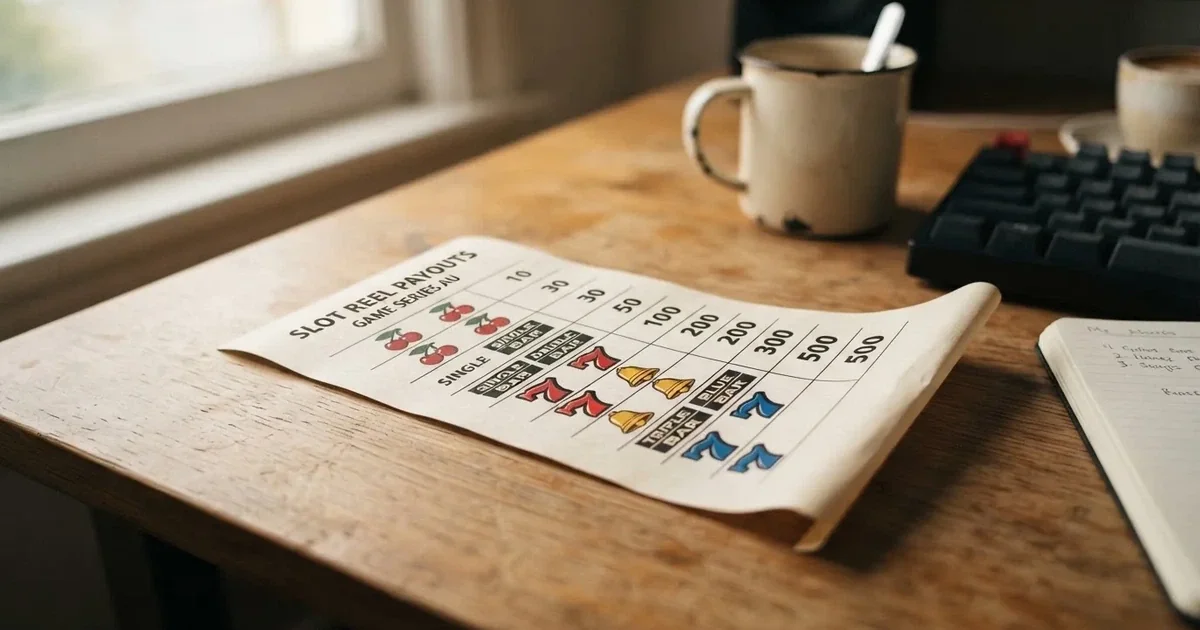
A BGaming slot looks much like any other studio’s product at the surface: reels, paylines, a paytable that lists each symbol and its payout. The differences are mostly mechanical. The TRUEWAYS mechanic is the most cited — a game built around a reel structure that can produce up to 262,144 winning combinations rather than the fixed-payline layout of older slots, which is the studio’s main pitch for volatility and feature design. Merge UP and MultiDice X work differently — one merges adjacent symbols to grow their value, the other layers dice-style mechanics over a slot base. The published catalogue mixes video slots with video poker, lottery, card, scratch, crash and casual titles, so a “BGaming casino” is not a one-shape site.
What the paytable itself tells a player is the same thing any studio’s paytable does: the symbol values, the line structures, the rules for wilds and scatters and any bonus round. Two technical figures recur across most slot paytables regardless of studio — the return-to-player percentage, which is the long-run theoretical payout, and a volatility class that describes how that payout tends to be distributed (high volatility pays out less often but in larger chunks when it does; low volatility pays more often in smaller chunks). BGaming does not publish a single uniform RTP across its catalogue — each title has its own figure, and the studio leaves those on the game information pages.
For an Australian reader, the paytable is what is least worth chasing. The game itself is not the variable that decides whether offshore play is a good idea in the first place. The variable that decides that is whether the site offering the game is licensed to take Australian business at all.
Bonuses and free spins — what these offers actually cost
The bonus pages attached to BGaming-powered sites follow the same shape as bonus pages anywhere else in offshore casino marketing. A welcome package typically combines a deposit match — a percentage of the player’s first deposit returned as bonus funds — with a number of free spins on a named BGaming slot. Reload bonuses, cashback percentages and tournament prize pools fill in around the welcome offer. The marketing pages do their usual work of putting the headline number first: a “100% match up to A$500 + 200 free spins” framing, with the small print about wagering requirements, game-weighting exclusions, time limits and maximum cashout caps sitting several scrolls down.
The wagering multiple is the figure that actually matters. A deposit match carries a multiplier that the player has to bet through before the bonus funds become withdrawable — a 35x multiple on a A$100 bonus means A$3,500 in qualifying wagers before any of it can be cashed out. Free-spin winnings are usually converted to bonus funds and carry their own multiplier on top. Game weighting is the second cost: most bonuses credit 100% of wagering on slots but reduce or zero out the contribution from table games and live dealer titles, which can push the clearing time up sharply if the player wanders off the slots lobby. Max-cashout caps are the third cost — bonus funds and free-spin winnings are often capped at a multiple of the original bonus, and anything above that ceiling simply disappears when the player tries to withdraw.
The arithmetic on an offer like “100% up to A$500 + 200 free spins, 35x bonus, slots 100% weighted” runs as follows. A player who deposits A$500 and claims the full match has A$1,000 in their account: A$500 cash and A$500 bonus. The bonus A$500 carries a 35x wagering requirement, which is A$17,500 in qualifying bets before the bonus converts to withdrawable cash. Free-spin winnings sit on top of that, and depending on the site’s terms, they may carry their own multiplier or feed into the same pool.
What the offer really costs the player is the expected loss on that A$17,500 of qualifying turnover. Assume a slot with a 96% RTP — typical for a contemporary video slot, though the actual figure is title-specific. Expected loss on the clearing play is 4% of A$17,500, which is A$700. The “free” A$500 bonus, on those inputs, has a real cost of roughly A$700 to clear. The free spins add more turnover on top of that, with their own expected loss layered in. The headline of “free money” does not survive contact with the small print, and the small print is where every BGaming-powered welcome offer lives.
The expected-loss arithmetic assumes the player clears the bonus on a slot at roughly the studio-typical RTP, plays nothing else during the clearing period and walks away at the end. Real outcomes vary widely — a high-volatility slot can produce a long run of dead spins and a single large payout, or a long run of small wins and a wipeout at the end. The arithmetic is a statistical estimate, not a forecast.
Mobile play — what an offshore mobile casino actually looks like
The “BGaming mobile casino” pitch describes exactly the kind of site that an offshore operator has been running since the late 2010s. Two shapes dominate. The first is a browser-based mobile site that runs in the phone’s default browser, built on HTML5 so the lobby and the games resize to the screen. BGaming builds its catalogue in HTML5, and the studio’s partner studios largely do the same, so the same titles run in a mobile browser that run on a desktop. The second is a downloadable app distributed through the operator’s own site, not through Apple’s App Store or Google Play — the App Store and Play Store both prohibit real-money gambling apps in most jurisdictions, so offshore operators do not list there.
The marketing language around mobile play usually lists the same handful of selling points: full game library on mobile, instant-play without a download, biometric login, push notifications for new bonuses and tournaments, and a touch-optimised cashier for deposits and withdrawals. Those features are real and they are what a player will actually see on the site.
What the marketing language does not address is the same gap the rest of the page is about. A mobile site that an Australian player opens in their phone’s browser is still an offshore site with no Australian licence, no Australian complaints body and no Australian consumer protection. The deposit still routes through the same payment processor and the same withdrawal terms. The mobile shape of the offer is not what determines whether it is a good idea.
For an Australian reader, the practical question on mobile is whether the site can be reached at all. Australian internet service providers have been ordered by the ACMA to block illegal gambling sites, and blocked sites do not load on Australian connections. Mobile networks block the same way fixed-line networks do, so a site that is reachable one day may be unreachable the next.
The ACMA’s enforcement record against BGaming-powered brands
The Australian Communications and Media Authority holds the enforcement brief for the Interactive Gambling Act. Two enforcement tools sit at its disposal: formal warnings, which are public and published on the ACMA’s website, and blocking requests, which direct Australian internet service providers to make illegal sites unreachable from Australian IP addresses. Both have been used heavily against offshore casinos marketing BGaming content to Australians, and the published record is the one source of operator-level information a reader can actually verify.
How the warnings and blockings map to the BGaming question
The ACMA’s blocking program is the older of the two tools. The first blocking request was issued in November 2019. As of the latest published round in June 2026, the cumulative total reached 1,751 illegal gambling and affiliate marketing websites blocked under the regime, with more than 230 unlicensed gambling services having left the Australian market entirely since enforcement was strengthened in 2017. The June 2026 round alone asked Australian ISPs to block 12 more sites: 7Signs, ChromaBet, Donbet, Duospin, Freshbet, Slots Gem, Jacks Club, Lucky Start, Pointsbetz.com, Spinrise, Vinyl Casino and Wildsino. Several of these run BGaming content among other providers, though the ACMA’s blocking list is not studio-specific — it names the operator and the domain.
Formal warnings take the second form of action. Each warning is a public document naming the operator behind the site, the brand name being marketed to Australians and the date the warning was issued. The warnings issued to BGaming-powered operators over the past few years give the clearest picture available of how actively these sites market to Australians.
In March 2026, the ACMA issued a formal warning to Pulsup Ltd over Rocketplay.com.au, a site that has been the subject of earlier enforcement too — Dama N.V., one of the larger operator groups on the ACMA’s list, was warned over RocketPlay (alongside Bambet, Dazard, Level Up, Wild Tornado and Cobra Casinos) in May 2022. The Dama N.V. cluster has produced further formal warnings since: Woo Casino in March 2025 and Spirit Casino in May 2025.
July 2025 brought a batch of warnings to a different cluster of operators. Bamboo Media was warned over Ignition Casino; Consolutetish S.R.L. was warned over National Casino and Bizzo Casino, the latter of which had already been the subject of a 2022 warning issued to TechSolutions (CY) Group Limited and TechSolutions Group N.V. — meaning Bizzo has been named twice across different operating companies. In February 2025, the ACMA warned EOD Code SRL over Instant Casino. April 2025 brought a warning to Sterplay Holding Ltd over Casino Intense. April 2026 brought a warning to Ryker B.V. over Jackbit and CasinOK. Hollycorn N.V. was warned over Sky Crown and Blue Leo back in September 2022.
What the cumulative record looks like as a band
The blocking program’s arithmetic is the simplest piece of information the page can offer. Take the cumulative total of blocked sites at the most recent published round — 1,751 since November 2019 — and the running time, which is roughly six and a half years from the first blocking request to mid-2026. That works out to a band of roughly 250 to 300 sites blocked per year on average across the lifetime of the program, but the actual pace has accelerated: the first years ran at a much lower tempo and recent rounds have run at hundreds per year as the ACMA has batched larger lists through its blocking process. The honest reading is that the cumulative total reflects a programme that has tightened markedly over time, and the most recent rounds show what the new tempo looks like.
A reader who weighs this against the marketing claims on a BGaming-powered site should hold both in mind at once. The marketing claims the site is a legitimate international operation with a real-money licence. The cumulative record of warnings and blocks, taken together, describes an offshore industry that the ACMA treats as prohibited by name. Both statements are true, and they describe different legal systems.
The eleven brands the ACMA has warned — a closer read
The eleven brands below are listed because the ACMA itself issued a formal warning over each of them for offering prohibited interactive gambling services to Australians. This is not a ranking. The order is the ACMA’s own publication order, not an editorial pick, and no reader should treat the list as a recommendation to play at any of them.
RocketPlay
The ACMA’s March 2026 warning names Pulsup Ltd as the operator behind Rocketplay.com.au. Dama N.V., one of the larger operator groups on the ACMA’s published list, was warned over RocketPlay in May 2022 as part of a batch that also covered Bambet, Dazard, Level Up, Wild Tornado and Cobra Casinos. The site has been on the ACMA’s radar across two different operating companies, which is a stronger signal than a single warning. RocketPlay does not list BGaming in any public-facing studio catalogue the research could verify, so its presence here is as a brand on the ACMA’s record rather than as a confirmed BGaming host.
Level Up Casino
Level Up was named in the May 2022 warning to Dama N.V. alongside the five other brands in that batch. Level Up’s public-facing partner listings show Wazdan among its content providers, which is a separate studio from BGaming. The warning, not the studio association, is what puts it on this list.
Woo Casino
Woo Casino received a formal warning in March 2025, again under Dama N.V. The warning is the public, verifiable signal that the ACMA has acted against the brand. Woo Casino is not listed among BGaming’s international partner outlets.
Spirit Casino
The May 2025 warning to Dama N.V. over Spirit Casino is the most recent ACMA action against a brand from that operator group. As with the other Dama N.V. brands here, the warning is the signal — Spirit Casino’s studio associations remain undocumented in the ACMA’s published enforcement register.
National Casino
National Casino was named in the July 2025 warning to Consolutetish S.R.L. The site’s published partner listings name Betsoft and Pragmatic Play among its content providers, both of which are separate studios from BGaming. The warning is what puts it on this list, and the studio association is what the listings actually show.
Bizzo Casino
Bizzo’s position is the strongest example on this list of why the ACMA’s record matters more than the marketing. The July 2025 warning names Consolutetish S.R.L. as the current operator behind Bizzo, but a 2022 warning had already named TechSolutions (CY) Group Limited and TechSolutions Group N.V. as the operators behind it. Two separate operating entities, two separate warnings, the same brand. Evidence of a formal BGaming partnership is absent from the studio’s verified partner data.
Ignition Casino
The July 2025 warning to Bamboo Media over Ignition Casino is the only ACMA action on this list against a brand whose target audience has historically skewed toward North American players rather than Australian ones. The warning’s existence means the ACMA has evidence of Australian-facing activity regardless of the brand’s home-market focus. Ignition’s studio associations are not found in the verified BGaming partner list.
Instant Casino
Instant Casino received a formal warning in February 2025, with EOD Code SRL named as the operator. The warning puts the brand on the ACMA’s record for offering prohibited services to Australians. No public evidence links the site directly to BGaming’s partner network.
Jackbit
The April 2026 warning to Ryker B.V. covered both Jackbit and CasinOK. Jackbit’s profile as a crypto-friendly casino is consistent with the kind of brand the ACMA’s offshore enforcement tends to catch. Direct ties between this operator and BGaming are not supported by the studio’s own published distribution lists.
Casino Intense
The April 2025 warning to Sterplay Holding Ltd over Casino Intense is the ACMA action against this brand. Casino Intense’s public-facing partner listings reference 1spin4win among its content providers, which is a separate studio from BGaming. 1spin4win itself is a Curaçao-licensed slot provider founded in 2021, with a portfolio of more than 190 online slots and a stated network of more than 1,000 partnerships, but it is a different studio brand and the listing is not evidence of a BGaming relationship.
Sky Crown
Sky Crown received a formal warning over its Australian-facing activity in September 2022, with Hollycorn N.V. named as the operator. The same warning also named Blue Leo, the sister brand. Publicly accessible BGaming partner documentation makes no mention of this operator.
What the warnings tell a reader, taken together
Two patterns are visible across the eleven brands. First, the same operator group can show up repeatedly: Dama N.V. alone accounts for four of the brands on this list (RocketPlay, Level Up, Woo Casino, Spirit Casino), which is what an enforcement regime looks like when a single corporate vehicle is running a portfolio of brands. Second, the brands the ACMA has acted against are not the brands the marketing pages most heavily promote as “BGaming casinos” — the ACMA’s record is keyed to Australian-facing activity, not to studio association, so a brand with a confirmed BGaming relationship is not necessarily on this list and a brand on this list is not necessarily a BGaming host. The two are separate questions, and the ACMA’s record answers only the first one.
The honest reading is that an Australian reader looking for BGaming-powered play is looking for a category that does not have a legal form. The eleven brands above are the public record of how actively the regulator has been pursuing that category.
The wider Australian context — what is licensed and what is not
The Northern Territory Racing and Wagering Commission regulates 52 of Australia’s online bookmakers, including the household names in sports and racing wagering. The commission’s small footprint — no full-time staff, monthly meetings in Darwin — is part of why the IGA’s targeting of the provider rather than the player remains the operational model. Tax is the reason the NT licences so many wagering operators: the Territory collects wagering tax on each bet placed, which is why operators as large as Sportsbet, Bet365 and Ladbrokes hold NT licences even though their customer base spans the country.
What is licensable online in Australia: wagering on racing and sport placed before the event, lotteries, and keno. What is not licensable online in Australia: online casino games, online pokies, and in-play betting on sport. The line between them is the line BGaming’s products sit on the wrong side of.
The Australian Bureau of Statistics and H2 Gambling Capital, in their 2025 estimate, put Australian losses to illegal gambling sites at roughly A$3.9 billion a year. The same estimate tracks the share of gambling going through legal channels falling from 74% in 2021 to 64% — a 10-point shift in four years, with illegal offshore sites taking up most of the gap. The figures describe an industry that has been losing its licensed share steadily through the period in which the ACMA’s blocking program has been ramping up.
What an offshore site actually costs a player
Three costs sit on top of any BGaming-powered offer promoted to an Australian player. None of them are in the marketing language.
The first cost is no consumer protection. An Australian-licensed wagering operator is bound by Australian consumer law, by the operator’s own licence conditions, and by the Australian complaints bodies that can hear a dispute. An offshore site offers none of that. If a withdrawal is refused, if a bonus term is applied in a way the player disputes, or if the site simply closes the account, the player has no Australian body to complain to. The site’s stated licence is a real licence from another jurisdiction, but it is a licence to operate in that jurisdiction, not a contract with an Australian player.
The second cost is the credit-card and crypto ban. Since 11 June 2024, credit cards, credit-related products and digital currency have been banned as a payment method for licensed online wagering in Australia. The legal deposit routes for licensed wagering are debit card, bank transfer, PayID/Osko and BPAY. A site asking an Australian player for a credit card or a crypto deposit is operating outside the Australian rules, and the Australian bank or payment provider on the other side may block the transaction. Penalties for operators accepting banned payment methods reach A$247,500.
The third cost is the block. The ACMA’s blocking program makes illegal sites unreachable from Australian IP addresses. A site can be blocked with a balance still on it, and the player has no recourse through Australian channels to recover it. The ACMA’s blocking record runs at hundreds of sites per year in recent rounds, and the new tempo is the realistic expectation for any given offshore site an Australian player tries to reach.
The marketing pages do not address any of these three costs. The small print covers them, but only obliquely — the withdrawal terms describe how a withdrawal works in principle, not what happens when the site disappears into the ACMA’s next blocking round.
Responsible gambling — what Australian players can actually use
If offshore play ever feels like it is shifting from a choice to a compulsion, the Australian help lines are real and they are free.
BetStop, the National Self-Exclusion Register, has been live since August 2023. It binds every Australian-licensed online and phone wagering service, so a registered player cannot open a new account with any of them and cannot deposit into an existing one. The catch for an offshore site is straightforward: BetStop does not bind offshore operators. Self-excluding through BetStop does not stop an offshore BGaming-powered site from accepting a deposit.
Gambling Help Online runs the National Gambling Helpline on 1800 858 858 — free, 24/7, with webchat available at gamblinghelponline.org.au. The service is confidential and is staffed by counsellors familiar with the offshore-gambling problem specifically. The 1800 number is for Australians, in Australia, with an Australian problem to discuss, and the service is what every other part of this page quietly points toward.
The studio-side comparison — what BGaming’s competitors look like
A page about BGaming inevitably runs into the other studios whose games appear on the same offshore sites. Three are worth knowing because they show up in the same partner listings and operator catalogues.
1spin4win is a Curaçao-licensed slot provider founded in 2021 by a team with 15 years of iGaming experience between them. The studio’s portfolio spans more than 190 online slots built in HTML5 for low-bandwidth connections, with more than 1,000 partnerships across operators and aggregators and a 46% year-on-year growth in total bet sum between the first halves of 2024 and 2025. Like BGaming, 1spin4win does not hold an Australian licence, so its games appear on the same offshore sites as BGaming’s do.
Betsoft has been operating since 2006 and describes a catalogue of more than 200 RNG games spanning slots, table games, video poker and specialty titles. Betsoft positions itself as licensed for regulated markets in Italy (ADM), with RNG certification from Quinel and Gaming Labs International (GLI), and states partnerships with more than 500 operators across Europe, Scandinavia, Latin America and Africa. Two specific titles are worth flagging because they show what a published paytable looks like: The Slotfather, live since 13 December 2012, runs at 95.69% RTP with “Medium” volatility and an 8.17% hit rate on a 5-reel, 30-payline structure; Good Girl Bad Girl 2 runs at 96.22% RTP with “Very High” volatility and a 15.59% hit rate on a 5-reel, 20-payline structure. The contrast between the two is a useful illustration of what “volatility” actually changes in play.
Booming Games is a Malta-headquartered B2B supplier that holds an MGA B2B licence (MGA/B2B/459/2018) and a UK Gambling Commission account (account #57254), along with licences from Sweden’s Spelinspektionen and Ontario’s AGCO, plus regulators in Romania, Denmark, Greece, Belgium, Germany and Brazil. The licensing footprint is the broadest of any studio discussed here, but none of it is Australian, and the games appear on offshore sites in the same way BGaming’s do.
The three studios sit in different places on the same spectrum as BGaming. All four are B2B suppliers, not operators; all four hold non-Australian licences; all four have their games marketed to Australians through offshore sites that the ACMA has been moving against. The differences are in licence scope and catalogue shape, not in the legal status of their Australian-facing distribution.
Aristocrat — the Australian studio comparison that actually matters
The comparison worth holding against BGaming is not another offshore slot studio. It is Aristocrat Leisure Limited, the Australian-listed slot manufacturer founded in 1953 by Leonard Ainsworth and listed on the ASX in 1996 under the ticker ALL.
Aristocrat is described as the largest gambling-machine manufacturer in Australia and the second-largest slot-machine manufacturer worldwide, behind International Game Technology. Its Sydney headquarters sit in North Ryde, with marketing and development offices in South Africa, Russia and the United States. The 2025 numbers describe a substantial business: A$6.30 billion in revenue, A$1.55 billion in normalised net profit after tax and amortisation, and 7,400 employees. The company has spent the last decade consolidating its online footprint — Video Gaming Technologies in 2014 for about US$1.3 billion, Plarium in 2017 for US$500 million, Big Fish Games in 2017 for US$990 million, and the roughly US$1 billion acquisition of NeoGames completed in April 2024 after a 2023 announcement. The 2021 bid for Playtech, worth about US$3.7 billion, was rejected by Playtech shareholders.
Aristocrat Interactive, the company’s regulated online real-money gambling arm, was formed in April 2024 by combining Aristocrat’s Anaxi unit with the newly acquired NeoGames group, which includes Aspire Global, BtoBet and Pariplay. Product Madness runs the social casino side. The structure matters because it shows what an Australian-listed slot manufacturer’s online presence actually looks like: regulated, jurisdiction-specific, and built for the markets that licence the product. Aristocrat’s online play in Australia would have to clear the same IGA prohibition as BGaming’s, but the company’s regulated online business elsewhere is real and licensed.
For a reader comparing the two studios, the difference is structural. BGaming is a B2B supplier that licenses its games to operators worldwide; Aristocrat is a manufacturer that also runs regulated online businesses through subsidiaries. The product comparison is between their respective slot catalogues, but the legal comparison is between a small Malta-licensed B2B studio and a large ASX-listed manufacturer with a regulated online arm in multiple jurisdictions.
The arithmetic of the blocking programme — what 1,751 sites over six and a half years means
The blocking programme is the one piece of the ACMA’s enforcement record that lets a reader see the scale of the problem in a single line. The cumulative total of 1,751 blocked sites since November 2019, against roughly six and a half years of operation, gives a band rather than a flat rate. The early years ran at a much lower tempo as the programme ramped up; the recent rounds, including the June 2026 batch of 12 alone, show what the new tempo looks like.
Across the lifetime of the programme, the cumulative total works out to roughly 270 sites blocked per year on average. But the early rounds ran at single-digit or low-double-digit site counts, and the recent rounds are running at hundreds per year, so the average sits well below the current pace. The honest reading is a band of roughly 50 to 100 sites per year in the early period rising to several hundred per year in the recent period, with a cumulative total that reflects both the slow start and the steep ramp. The June 2026 round alone covers 12 sites; the running rate across recent rounds would put the cumulative total well above 1,751 within a couple of years if the tempo holds.
The figure that matters more than the rate is the direction. The cumulative total is monotonically increasing, and the rate at which it is increasing has been accelerating. The ACMA’s June 2026 announcement is not the end of the programme — it is one round in a programme that has been running for six and a half years and shows no sign of slowing.
Money — what the reader actually needs to know about paying in and pulling out
The marketing pages assume the reader will pay and play, so they describe the payment side in terms of accepted methods, deposit minimums and bonus crediting times. For an Australian reader, the right framing is the opposite: the payment side is where the offshore status bites first.
The licensed-wagering payment rules in Australia are simple. Debit card, bank transfer, PayID/Osko and BPAY are the legal deposit routes for licensed online wagering. Credit cards, credit-related products and digital currency are banned as a payment method since 11 June 2024, with operator penalties reaching A$247,500. An offshore site that accepts credit cards or cryptocurrency from Australians is operating outside the Australian rules, and the payment processor on the Australian side may decline the transaction.
In practice, an Australian player who deposits at an offshore BGaming-powered site is doing so through one of a few routes: a debit card that the offshore processor accepts, a credit card that the Australian bank may or may not decline, an e-wallet that sits outside the Australian payment system, or a cryptocurrency transfer that the Australian exchange may flag. None of these routes give the player the protection of an Australian-licensed transaction. The deposit either clears or it does not, and if the withdrawal does not clear later, the player has no Australian complaints body to take it to.
The withdrawal side adds another cost. Offshore sites publish withdrawal times that look competitive on paper — “instant” or “24 hours” for crypto, “1–3 business days” for cards, “3–5 business days” for bank transfers. The published times assume a smooth withdrawal. In practice, the first withdrawal from an offshore site typically triggers a know-your-customer check that adds days, and bonus-derived winnings are subject to the wagering and max-cashout caps discussed earlier. A player who clears a bonus and tries to withdraw above the cap loses the excess. A player who does not clear the bonus loses the bonus balance.
What a reader takes away from all of it
A reader who came to this page looking for a “best BGaming casino” list has now seen the shape of the problem. The product is licensed in other markets and the studio behind it is legitimate in those markets. The marketing aimed at Australians is for a product that cannot be licensed here, on sites that the ACMA has been moving against for six and a half years, with no Australian consumer protection and a payment-side framework that bans the most common routes for licensed wagering.
The honest answer to the search query is that there is no legal form of the offer the reader is looking for. The licensed Australian wagering market carries sports and racing, not casino games. The offshore market carries casino games, including BGaming titles, but at the cost of every protection the reader would otherwise have. The choice is the reader’s to make, and the cost of making it is the cost of making it without Australian recourse.
Frequently asked questions
Is BGaming itself an operator, or just a game studio that supplies content to sites?
BGaming is a B2B game studio, not an operator. The brand debuted in 2018 under the operating company Stable Games Ltd in Valletta, which holds a Malta Gaming Authority Critical Gaming Supply Licence issued on 18 March 2021. The studio licenses its 250-plus certified games to operators worldwide and does not run any casino of its own. A “BGaming casino” is a casino that has licensed BGaming’s content.
Can BGaming titles be played for real money at any licensed Australian casino?
No. The Interactive Gambling Act 2001 prohibits online casino games and online pokies, and no state or territory issues a licence for them. The Northern Territory Racing and Wagering Commission licences online bookmakers for wagering on racing and sport before the event, not casino games. BGaming-powered play for real money exists only on offshore sites operating outside Australian law.
How does a BGaming slot typically differ from other studios’ games in its paytable?
A BGaming slot looks similar to any contemporary studio’s product at the surface — reels, paylines, symbol values, bonus rules — but the studio’s signature mechanics change the structure beneath. TRUEWAYS supports up to 262,144 ways to win rather than fixed paylines, Merge UP merges adjacent symbols to grow their value, and MultiDice X layers dice mechanics over a slot base. Each title carries its own RTP and volatility figure, which the studio publishes on the game’s information page.
Does BGaming operate its own casino, or license its games to other operators?
BGaming licenses its games to operators; it does not run any casino itself. The studio’s website names more than 3,000 operator partners internationally, including brands like Blaze, Pin-Up and Gamdom. Operators that license BGaming content run the casino; the studio provides the games, the maths and the certification.
Why do offshore casinos highlight BGaming as a selling point to Australian visitors?
BGaming is a recognisable studio brand with a recognisable catalogue of more than 250 certified games, and a casino brand can advertise itself as “BGaming-powered” simply by licensing the games. The studio does not need to do anything Australia-specific for its content to appear on sites marketed here. The pitch lands because BGaming is a familiar name, not because the offer is legal.
Is it legal for a site to offer BGaming games for real money to people in Australia?
The Interactive Gambling Act 2001 prohibits offering online casino games and online pokies to a person physically present in Australia, and the ACMA has been enforcing this against offshore sites for years. The prohibition sits on the provider, not the player, so an individual Australian who opens an account on an offshore site is not personally at risk of prosecution — but the site is breaking Australian law, the player has no Australian consumer protection, and the site can be blocked by Australian ISPs under the ACMA’s blocking programme.