
Real cash online pokies in Australia: what sits behind the marketing word
A pokies page that opens with “real cash” usually opens with a question the page does not answer. Is the offer what it sounds like, what does the law say about it, and what happens to the bankroll when the bonus clears? This page works through all three, in the order they actually cost a player anything, and names every offshore brand the Australian Communications and Media Authority has warned for offering the product. The angle throughout is the one the marketing prefers to leave out: what the offer takes from the punter, not what it gives.
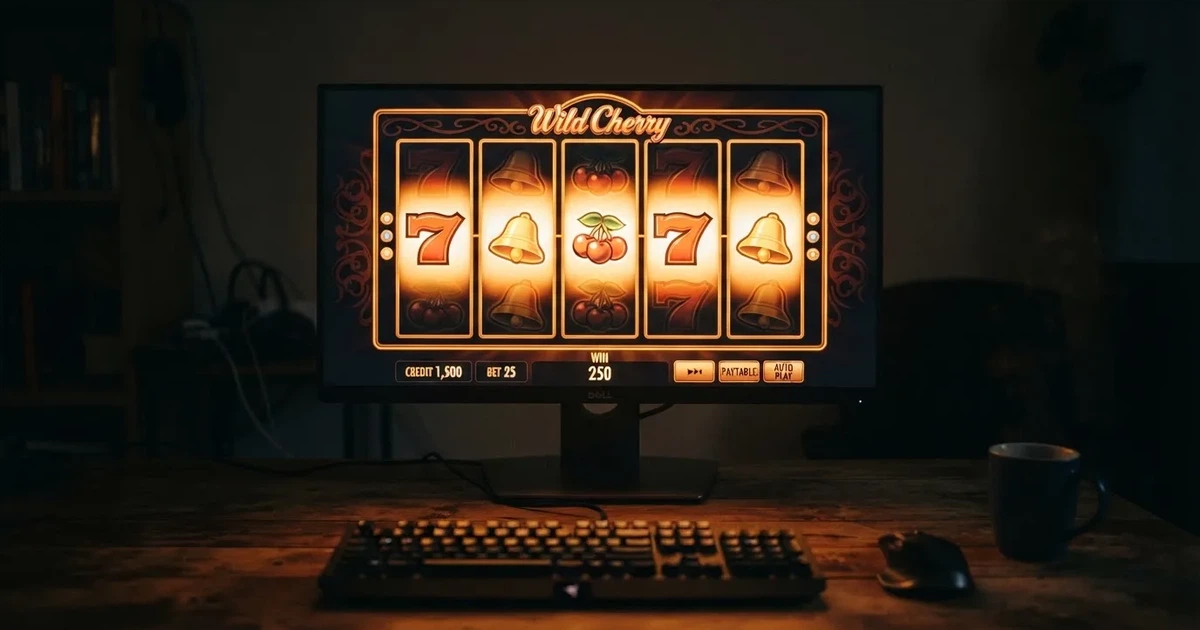
Current as of 28 October 2026. Licence claims verified against ACMA enforcement listings.
Table of Contents
- Bonus mechanics behind every “real cash” pokies claim
- How real cash pokies bonuses look on a phone
- The paytable detail the offshore ads leave out
- Comparing the offshore real cash pokies brands the ACMA has warned
- What “real cash online pokies” actually means in Australia
- How the ACMA has been shutting the offshore market down
- Why responsible play looks different offshore
- The payment and payout picture for an Australian punter
- What the 2026 reform package actually changes
- RocketPlay — the brand the ACMA has warned twice
- Level Up Casino — Dama N.V.’s 2022 entry on the warning list
- Woo Casino — the second Dama N.V. warning, three years on
- Spirit Casino — Dama N.V.’s third appearance, May 2025
- National Casino — warned in July 2025 under a new corporate parent
- Bizzo Casino — two warnings, two operators, one domain
- Ignition Casino — Bamboo Media’s July 2025 warning
- Instant Casino — EOD Code SRL, February 2025
- Jackbit — Ryker B.V., April 2026
- Casino Intense — Sterplay Holding Ltd, April 2025
- Sky Crown — Hollycorn N.V., the September 2022 warning
- What the blocking rate tells a reader
- The legal frame the reader needs in one place
- Final read on the page’s subject
- Frequently asked questions
Bonus mechanics behind every “real cash” pokies claim
Every “real cash” pokies bonus is a short sentence on a landing page sitting on top of a much longer contract. The short sentence says what you get. The contract says what you have to do before any of it is yours. This section is about that contract, because it is where the offer’s real cost lives and the part the landing page would rather you skim.
A welcome package typically combines three things: a matched deposit, free spins on a named title, and sometimes a small no-deposit credit to start the account. Each carries its own turnover requirement — the wagering multiple the operator attaches before any winnings convert to withdrawable cash. The matched deposit is the largest figure and the one with the heaviest multiple. A $200 bonus with a 40× wagering factor means $8,000 in qualifying bets before the bonus is “cleared”; if the slot attached to the bonus returns 96% on average, the expected loss across that turnover is about $320, which is more than the bonus itself. The bonus pays you $200, and the requirement takes back roughly $320 to do it. Free spins carry the same structure at a smaller scale: 100 spins at $0.20 with 35× wagering on spin winnings and a 96% return-to-player leaves about $6.40 of expected loss on roughly $70 of wagering.

Three rules decide what an offer actually costs the player who claims it:
- Wagering multiple on bonus, deposit, or both. “Bonus only” is the cheapest version of the requirement, because the multiple applies to the smaller number. “Deposit + bonus” doubles the base and roughly doubles the time and the loss it takes to clear it. The landing page almost never states which one applies; the terms page does.
- Game weighting. Most real cash pokies count 100% toward the requirement. A handful of high-RTP titles count at 50% or 0%, which means the same turnover buys less progress. The bonus page rarely lists the excluded titles; the terms page usually does.
- Maximum cashout, max bet per spin, and time to clear. A free-spin win is sometimes capped at $100 or $200 regardless of how the spins land. A “max bet $5 while wagering” rule voids progress if exceeded. A seven-day window on a 40× multiple is tight; thirty days is workable.
The marketing word on these pages is “free”. The contract says otherwise. What the punter pays to claim a “free” bonus is the expected loss across the turnover, which on a typical matched-deposit offer runs higher than the bonus being given away. The bonus is not a gift. It is a sales discount with conditions attached, and the conditions are written so the house keeps its edge.
How real cash pokies bonuses look on a phone
The mobile experience is where most Australian punters meet these offers now. The way an offshore “real cash” app or mobile site handles a bonus on a phone is structurally identical to its desktop version — same wagering multiple, same game weighting, same max cashout — but the delivery is different, and the differences are worth naming because they shape what the punter actually does.
A real cash casino app, in the sense offshore marketing uses the phrase, is one of three things. It is a downloadable Android package from the operator’s own site, since Google Play blocks real-money casino apps in Australia. It is a downloadable iOS package through a TestFlight or enterprise certificate, since the App Store does the same. Or it is a mobile browser site built to load fast and behave like an app when added to the home screen. None of these are Australian-licensed applications. None of them are distributed through the stores an Australian phone already trusts. The download itself, on Android, requires allowing installs from unknown sources, which is a phone-security setting most users leave off.
A free-to-play pokies app with the same name is a different product entirely. Free-to-play is what the app stores stock: it is built on the same game engine, with the same art and the same bonus rounds, but the credits are house money and cannot be withdrawn. The marketing pages that advertise “win real cash” or “real money pokies” on a download button are pointing at the offshore version, not the free-to-play one. The two share a name and split a payout.
What changes on mobile is the friction. Game weighting, max-bet rules and time-to-clear windows are all harder to track on a small screen, and most mobile bonus pages show only the headline. The punter who taps “claim” without opening the terms on a bigger screen is the punter who discovers the rule by breaking it.
The paytable detail the offshore ads leave out
The product on the other side of the bonus button is a digital pokies machine, and the figures a paytable page actually shows differ from the figures a landing page cites. The landing page quotes the return-to-player — usually 95% to 97% — because it is the most flattering single number on the sheet. The paytable and the game’s information page show the rest.
A real cash pokie’s house edge is whatever 100% minus its RTP amounts to, and it applies on every spin. A 96% RTP means the machine keeps 4% of every dollar that crosses it, averaged across a very large number of spins. A 91% RTP — which sits inside the range some offshore sites still list — keeps 9%, more than double the loss rate per spin. Volatility is a separate axis: a high-volatility game pays less often in smaller amounts and concentrates the big payouts in rare hits. The landing page does not state volatility. A punter who reads only the RTP and not the volatility reads a flatter picture than the game actually delivers.
Australia’s land-based pokies market is the benchmark the offshore sites do not want the comparison drawn against. State-set minimum returns for the machines that are legal here run from 85% in New South Wales, Queensland, the Northern Territory and most of Victoria, up to 87% at Crown Melbourne, 87.5% in South Australia, and 90% in Western Australia, where the only legal machines sit inside Crown Perth. The maximum caps in the legal market — 30,000 machines in Victoria, for example — exist precisely because the product is engineered to take a predictable slice of turnover over time, and that slice is hard on the people who keep feeding the machine.
The offshore version removes both the cap and the regulator. The RTP is whatever the offshore operator publishes, and there is no Australian body checking that the published figure matches the certified figure. A few of the more reputable offshore labs test the games; many do not. The payout speed claims that show up alongside the RTP — “instant withdrawals”, “paid in minutes” — apply to whatever the operator decides to pay, on whatever schedule it chooses, with no Australian complaints body if the payment does not arrive.
Comparing the offshore real cash pokies brands the ACMA has warned
Eleven offshore brands appear below in the order the ACMA itself moved against them. The order is not a quality ranking and the comparison is not a recommendation; it is a side-by-side of what each operator was warned for, when, and under which corporate parent, so an Australian reader can see at a glance how much of the offshore “real cash” market the regulator has already touched.
| Brand | ACMA action and date | Operator named by the ACMA | Subject support |
|---|---|---|---|
| RocketPlay | Formal warning, March 2026 (earlier May 2022) | Pulsup Ltd (2026); Dama N.V. (2022) | — |
| Level Up Casino | Formal warning, May 2022 | Dama N.V. | — |
| Woo Casino | Formal warning, March 2025 | Dama N.V. | — |
| Spirit Casino | Formal warning, May 2025 | Dama N.V. | — |
| National Casino | Formal warning, July 2025 | Consolutetish S.R.L. | — |
| Bizzo Casino | Formal warning, July 2025 (earlier 2022) | Consolutetish S.R.L. (2025); TechSolutions (2022) | — |
| Ignition Casino | Formal warning, July 2025 | Bamboo Media | — |
| Instant Casino | Formal warning, February 2025 | EOD Code SRL | — |
| Jackbit | Formal warning, April 2026 | Ryker B.V. | — |
| Casino Intense | Formal warning, April 2025 | Sterplay Holding Ltd | — |
| Sky Crown | Formal warning, September 2022 | Hollycorn N.V. | — |
Dama N.V. alone accounts for four of the eleven, including two warnings issued more than three years apart, which tells a reader what a single corporate parent can carry when enforcement catches up with it brand by brand. Consolutetish S.R.L. accounts for two of the eleven, with Bizzo Casino warned twice under two different parent companies. The rest sit one apiece. None of the eleven is licensed to offer online casino games to a person in Australia; the warnings themselves are the evidence that the regulator has tested and confirmed that.
What “real cash online pokies” actually means in Australia
The phrase on the landing page is doing two jobs at once. It is selling a product, and it is borrowing a word — “real” — that the Australian legal frame reserves for transactions conducted through a licensed operator. Every licensed wagering service in Australia runs through the Interactive Gambling Act 2001 and its 2017 amendments, and what the Act licenses is wagering on sport and racing before the event, lotteries and keno. Online casino games, online pokies and in-play betting are prohibited interactive gambling services. No state or territory issues a licence for them. The phrase “real cash” on an offshore site is therefore borrowing a word the law does not extend to the product being sold.
The way to read the phrase, on any page that uses it, is as a description of the operator’s payment flow, not as a legal category. Real cash means a deposit can be made in fiat currency, real cash means a withdrawal can be requested, real cash means there is a balance in the account denominated in something other than house credits. None of those claims require an Australian licence, and none of them are backed by one.
What the phrase does not say, anywhere on a typical landing page, is that an offshore operator is under no obligation to honour a withdrawal request, that no Australian complaints body will hear a dispute, and that the site can be blocked by an Australian internet service provider at the regulator’s request with whatever balance is still in the account. Three of those risks are administrative. The fourth — the block — is the one that converts an account balance into a question only the operator can answer.
The broader context sharpens the stakes. In 2020–21 Australians bet almost A$150 billion through gaming machines and lost A$12.18 billion on them, against roughly 3% of the world’s pub and club machines sitting in a country that holds about 0.3% of the world’s population. That is the land-based market, where every machine is licensed and every venue is regulated. The offshore market exists alongside it, takes a slice the regulator cannot measure, and offers none of the harm-minimisation settings that the land-based machines are required to carry.
How the ACMA has been shutting the offshore market down
The Australian Communications and Media Authority investigates complaints, issues formal warnings to operators, and directs Australian internet service providers to block illegal sites at the domain level. As of the round reported in June 2026, 1,751 illegal gambling and affiliate marketing websites had been blocked since the first blocking request in November 2019, and more than 230 unlicensed gambling services had left the Australian market since enforcement was strengthened in 2017.
The blocking rate works out to roughly 270 sites per year on average across the seven years since the first request, but the early years ran slower than the later ones. The June 2026 round alone directed ISPs to block 12 more domains: 7Signs, ChromaBet, Donbet, Duospin, Freshbet, Slots Gem, Jacks Club, Lucky Start, Pointsbetz, Spinrise, Vinyl Casino and Wildsino. Round sizes have grown as the ACMA’s enforcement pipeline has matured, and the cumulative figure now represents the largest publicly audited blocking programme of its kind in the country.
The blocking is one of three enforcement tools. Formal warnings, like those catalogued in the table above, come first and require the operator to demonstrate compliance within a stated period. The second round of action against the same operator — RocketPlay in March 2026 after Dama N.V. was warned in May 2022, or Bizzo Casino in July 2025 after TechSolutions was warned in 2022 — is the regulator’s way of saying the warning was not enough. Blocking is the third tool and the one that converts the warning into an outcome the punter actually sees.
H2 Gambling Capital’s 2025 estimate puts Australian losses to illegal gambling sites at about A$3.9 billion a year, with the share of gambling going through legal channels falling from 74% in 2021 to 64% by 2025. The estimate is a model output rather than a measured figure, but the direction is consistent with what the blocking programme is trying to reverse. Each blocked site is a domain the regulator has assessed and acted on; each is also one fewer route through which that A$3.9 billion can move.
Why responsible play looks different offshore
The Australian responsible-gambling infrastructure is built for the licensed market. BetStop, the National Self-Exclusion Register, went live in August 2023 and binds every Australian-licensed online and phone wagering service, which means a punter who registers with BetStop is excluded from every legal wagering account they hold and from opening new ones. The system works because the licensed operators are required to connect to it. An offshore casino is not connected. A punter who self-excludes through BetStop can still deposit at an offshore site, still play, and still lose. The exclusion tool does what it was designed to do and stops where the licensing stops.
The other half of the responsible-gambling frame is harm minimisation on the machines themselves. New South Wales had 87,298 gaming machines outside casinos across 2,195 venues in June 2023, with player losses of A$8.18 billion in 2022–23. Queensland had 21,122 machines in 351 venues in October 2023. Victoria had 26,380 machines outside Crown Casino in 488 venues under a 30,000-machine statewide cap in 2021–22. Every one of those machines sits inside a venue that is required to display a problem-gambling message, offer a pre-commitment or break-of-session tool in some states, and provide a route to support. Tasmania planned nation-leading mandatory pre-commitment cards for its poker machines, with implementation delayed until late 2025, which is the most ambitious reform in the country and a useful benchmark for what the offshore market simply does not provide.
The support line itself is free, 24/7, and reachable on 1800 858 858 or through Gambling Help Online. Both work for an Australian regardless of whether the gambling that produced the call was legal or not. The cost of calling is zero, and the conversation is confidential. The National Gambling Helpline is the one piece of the responsible-gambling frame that is genuinely accessible from any direction a punter is approaching it.
The payment and payout picture for an Australian punter
The payment rules for licensed Australian wagering are specific. Credit cards, credit-related products and digital currency have been banned as payment for licensed online wagering since 11 June 2024, with penalties up to $247,500 for operators who accept them. The legal deposit routes are debit card, bank transfer, PayID/Osko and BPAY. The rule is a ban on the method, not a ban on the punter, and it is enforced against the licensed operator rather than the customer.
A site asking an Australian for a credit card or for a crypto deposit is, by definition, not operating under the Australian rules. The deposit will go through, the bonus will be credited, and the game will spin, and the entire transaction will sit outside the framework the regulator can reach. When the punter asks for a withdrawal, the offshore operator’s own terms decide what happens. “Instant payouts” on the landing page is a marketing phrase, not a regulated timeline, and the few offshore sites that publish processing windows typically quote 24 to 72 hours for approval before any transfer is initiated.
PayID is worth naming separately because it appears on landing pages aimed at Australian players. PayID is the real-time payment rail that runs through Osko, both operated by BPAY Group and connected to every Australian bank. A PayID deposit at an offshore site moves money out of an Australian bank account into the operator’s account within seconds, which is the reason PayID is marketed as a feature on these pages. The withdrawal half of the cycle is where the same convenience dissolves: a PayID withdrawal requires the operator to push the funds back, and there is no Australian-side rail that forces it to. Payout speed at an offshore site is a function of the operator’s policy and queue, not of the rail.
The offshore-versus-licensed contrast is sharpest at this exact point. A licensed Australian wagering operator must process a withdrawal back to the original deposit method within a stated window, must not charge a fee, and is answerable to a regulator if it does not. An offshore operator processes withdrawals on its own schedule, can decline a payout on a clause buried in the terms page, and answers to no Australian body. The bonus cleared, the requirement was met, and the balance still does not move; that is the sequence an offshore punter faces alone.
What the 2026 reform package actually changes
The Interactive Gambling Amendment (Gambling Reform) Bill 2026 passed Federal Parliament on 19 August 2026. Its advertising and inducement measures commence on 1 January 2026, which makes it law with a start date, not law in force on this page. A punter reading this in the months between passing and commencement sits in the same legal position the page describes; a punter reading it after commencement will see affiliate marketing pages start to fall quiet on the kind of bonus headlines catalogued above.
The reform does not legalise online casino games or online pokies. It tightens the rules around how licensed wagering services advertise, and it gives the ACMA a sharper set of tools against the offshore operators that have so far weathered the warnings and the blocking rounds. The bigger structural change — moving more of the offshore flow back into the licensed channels — is the goal the reforms share with the blocking programme, and the metric both are working against is the H2 estimate that 36% of Australian gambling spend now runs outside the law.
RocketPlay — the brand the ACMA has warned twice
RocketPlay is the only brand in the table the ACMA has formally warned under two different corporate owners. The first warning, in May 2022, named Dama N.V. as the operator; the second, in March 2026, named Pulsup Ltd over the RocketPlay domain. The four-year gap is itself a finding: a brand has been live in the Australian market long enough to be rebranded under a new parent and to attract a second formal action from the regulator. Dama N.V. is also named in the warnings over Level Up Casino, Woo Casino and Spirit Casino, which means the same corporate parent has been the named operator on four of the eleven formal warnings in the table.
The RocketPlay bonus terms are not published on a page the ACMA has assessed, and the operator’s own marketing pages change frequently enough that any specific number quoted on one will not match the page a reader sees two weeks later. What is stable across the warnings is the legal structure: online casino games cannot be licensed anywhere in Australia, whatever licence the site displays, and a second formal warning under a new corporate parent is a stronger version of that finding than the first.
Level Up Casino — Dama N.V.’s 2022 entry on the warning list
Level Up Casino is one of four Dama N.V. brands in the table, and the one the ACMA named in its May 2022 warning that also covered Bambet, Dazard, RocketPlay, Wild Tornado and Cobra Casinos. The warning was a single action against a single corporate parent over six domains, which is the reason those brands share a row of the table — they were warned together. The 2022 date is now four years old, and the ACMA’s later warnings against Dama N.V. — over Woo Casino in March 2025 and Spirit Casino in May 2025 — show that the parent has continued to operate across Australian-facing domains despite the earlier action.
A punter comparing Level Up Casino against RocketPlay is comparing two domains from the same parent, warned in the same round, and both of them outside any Australian licensing regime. The differences between the two brand pages sit at the marketing layer: the bonus headline, the game library, the loyalty programme. The legal status is identical, the ACMA’s assessment of that status is identical, and the absence of an Australian complaints route is identical.
Woo Casino — the second Dama N.V. warning, three years on
Woo Casino received its formal warning in March 2025, almost three years after the May 2022 round that named Dama N.V. over six other domains. The gap matters because it shows the regulator returning to the same parent on a different brand, which is the longer version of the RocketPlay sequence at one operator instead of two. Three years is also long enough for the Woo Casino bonus structure to have been rebuilt several times over, each rebuild producing a fresh landing page and a fresh set of terms.
The terms themselves are published on the operator’s site and change without notice. The wagering multiple attached to the welcome package, the game weighting, the maximum cashout on free-spin winnings — all of these are policy choices the operator can rewrite between the moment a punter reads this and the moment the punter deposits. The legal position is the part that does not change. Woo Casino is named by the ACMA as an operator that has offered a prohibited interactive gambling service to Australians, and no marketing page on the Woo Casino domain overrides that finding.
Spirit Casino — Dama N.V.’s third appearance, May 2025
Spirit Casino’s warning in May 2025 makes Dama N.V. the most frequently named operator in the table. Three of the eleven warnings — Woo Casino in March 2025, Spirit Casino in May 2025, and the original May 2022 round that named six Dama N.V. brands — sit under the same corporate parent. The pattern is the page’s clearest piece of evidence that a single offshore corporate group can carry multiple brand warnings over multiple years without losing the ability to open new ones.
A punter evaluating Spirit Casino on its own terms page is evaluating a brand owned by the parent with the longest warning history in the Australian market. The bonus structure is its own; the wagering requirements, withdrawal rules and max-cashout clauses are written specifically for this domain. The legal exposure — no Australian licence, no Australian complaints route, withdrawal at the operator’s discretion — is shared with the rest of the Dama N.V. brands and with every other row in the table.
National Casino — warned in July 2025 under a new corporate parent
National Casino was named in the ACMA’s July 2025 warning round, alongside Bizzo Casino, with Consolutetish S.R.L. as the named operator. The same round also covered Ignition Casino under Bamboo Media. National Casino is the easier of the two Consolutetish S.R.L. warnings to place because it is the first time the ACMA has acted against the brand; Bizzo Casino carries a prior 2022 warning under TechSolutions.
The implication for a reader is that the brand has changed corporate parent since the first time it was warned, and the new parent has been formally named by the regulator. A punter looking at the National Casino domain today is looking at a brand the ACMA has assessed and acted against under its current operator, which is a stronger finding than a 2022 action under a parent that no longer runs the site. The bonus headline on the landing page is a marketing claim; the warning on the ACMA register is a regulatory finding.
Bizzo Casino — two warnings, two operators, one domain
Bizzo Casino is the brand with the longest enforcement history in the table. The first formal warning, in 2022, named TechSolutions (CY) Group Limited and TechSolutions Group N.V. as the operator. The second, in July 2025, named Consolutetish S.R.L. as the operator, in the same round as National Casino. Two warnings, two different corporate parents, one domain — the sequence shows the brand surviving a corporate change and continuing to operate into the Australian market under a new parent before the regulator caught up with the new name.
A punter comparing Bizzo Casino to the rest of the table is looking at the row with the strongest argument for caution, not because the bonus structure is worse than its peers but because the brand has been formally warned twice under two different operators. The wagering requirements and the withdrawal clauses are operator decisions; the warning history is a regulatory record that does not depend on either.
Ignition Casino — Bamboo Media’s July 2025 warning
Ignition Casino was named in the same July 2025 round as National Casino and Bizzo Casino, with Bamboo Media as the named operator. It is the only brand in the table whose ACMA action sits under Bamboo Media, which means the corporate parent is a less obvious target for further warnings than Dama N.V. or Consolutetish S.R.L. That makes Ignition Casino a single data point on Bamboo Media rather than one of several, and the brand’s position in the table reflects that.
The bonus structure is published on the operator’s site and changes with the marketing calendar. The legal position does not change with the calendar. Ignition Casino has been formally warned by the ACMA for offering a prohibited interactive gambling service to Australians, and no bonus headline on the landing page overrides that finding.
Instant Casino — EOD Code SRL, February 2025
Instant Casino’s formal warning, in February 2025, named EOD Code SRL as the operator. It is the only brand in the table whose named operator is EOD Code SRL, and the February date makes it the earliest warning of 2025 in the table — a year in which five of the eleven brands were warned. The pace of 2025 is itself part of the picture: five formal warnings across twelve months is a faster tempo than the four-year average across the earlier part of the decade.
The bonus terms on the Instant Casino landing page are operator policy, written and rewritten by EOD Code SRL. The withdrawal clauses, the max-cashout rules, the game weighting — all of these are decisions the operator can revise. The warning is the regulator’s finding, and it sits on the ACMA’s register regardless of what the operator’s marketing page says this week.
Jackbit — Ryker B.V., April 2026
Jackbit received its formal warning in April 2026, alongside CasinOK, with Ryker B.V. named as the operator. April 2026 is the most recent of the table’s dates, and the warning is one of two 2026 entries — the other is the RocketPlay warning in March 2026 under Pulsup Ltd. Two warnings in two consecutive months in 2026 is consistent with the enforcement tempo the blocking round reported in June 2026 implies.
A punter comparing Jackbit to the rest of the table is looking at a brand the ACMA has formally warned in the current calendar year, under a named operator, with a current formal warning on the register. The marketing page is recent; the warning is recent; the legal position is the same as every other row.
Casino Intense — Sterplay Holding Ltd, April 2025
Casino Intense was named in an April 2025 warning with Sterplay Holding Ltd as the operator. It is the only brand in the table whose named operator is Sterplay Holding Ltd, which makes it a single data point on a less-frequently-named parent. The April 2025 date sits in the middle of a year in which five of the eleven brands received formal warnings.
The bonus structure on the Casino Intense domain is the operator’s own, written and revised by Sterplay Holding Ltd. The withdrawal clauses, the game weighting, the maximum cashout on bonus winnings — these are the variables that move with the marketing calendar. The warning sits on the ACMA register and does not move with the calendar.
Sky Crown — Hollycorn N.V., the September 2022 warning
Sky Crown’s warning was issued in September 2022, naming Hollycorn N.V. as the operator, and the same warning also covered the Blue Leo casino service. It is the earliest date in the table and the only Hollycorn N.V. entry. Hollycorn N.V. sits alongside Dama N.V., Consolutetish S.R.L., TechSolutions, Bamboo Media, EOD Code SRL, Ryker B.V., Sterplay Holding Ltd and Pulsup Ltd as one of nine corporate parents named across the eleven warnings.
The September 2022 date is now more than three years old. The fact that the Sky Crown domain is still live and still reachable from Australia — unless an ISP has independently blocked it under a separate order — is the kind of survival that drives the blocking programme’s expansion. The ACMA’s 1,751 blocked-sites figure is partly the result of warnings that did not, on their own, take a brand off the Australian market.
What the blocking rate tells a reader
The arithmetic the page is built around works from two figures: the running total of 1,751 blocked sites as reported in June 2026, and the date of the first blocking request in November 2019. Between November 2019 and June 2026, the ACMA moved from zero to 1,751 blocked domains across roughly 80 months, an average pace of around 22 blocked domains per month, or about one every 36 hours over the full period. The rate is uneven: the early years ran slower as the enforcement pipeline was being built, and the June 2026 round alone directed ISPs to block 12 more. The pace has clearly accelerated; the blocking rate at the high end of the range runs higher than the multi-year average and lower at the low end, depending on how the next round is counted.
The key takeaway is that the blocking rate is rising while the cumulative figure grows. The blocking programme is not a one-time action; it is an ongoing pipeline, and the pipeline is producing more blocked sites per month now than it did in 2019 or 2020. A punter looking at an offshore brand today is looking at a brand that has to clear a higher bar to stay reachable in six months than it did when it was first warned.
The legal frame the reader needs in one place
A summary the rest of the page keeps referring back to:
- Online casino games, online pokies and in-play betting are prohibited interactive gambling services under the Interactive Gambling Act 2001, as amended in 2017.
- The ACMA investigates complaints, issues formal warnings, and directs Australian ISPs to block illegal sites.
- No state or territory licenses an online casino to offer online pokies for real cash; the licensed Australian market is wagering on racing and sport before the event, lotteries and keno.
- The minimum age for any legal gambling in Australia is 18.
- The licensed online wagering market accepts debit card, bank transfer, PayID/Osko and BPAY; credit cards, credit-related products and crypto have been banned since 11 June 2024.
- BetStop binds Australian-licensed operators only; offshore casinos are not connected.
- The National Gambling Helpline is 1800 858 858, free, 24/7, with chat at Gambling Help Online.
- Gambling winnings are not assessable income for a recreational player under section 6-5 of the ITAA 1997, and losses are not deductible.
- The Interactive Gambling Amendment (Gambling Reform) Bill 2026 passed Parliament on 19 August 2026; its advertising and inducement measures commence on 1 January 2026.
Final read on the page’s subject
The phrase “real cash online pokies” is doing one job on a landing page: it is borrowing a word the Australian legal frame reserves for transactions the offshore market cannot conduct. The bonus underneath the phrase is a contract that gives back less than it takes, in expected value, on every standard matched-deposit structure. The paytable underneath the bonus quotes a return-to-player that is whatever the offshore operator decides to publish, with no Australian body checking the figure. The app is distributed outside the stores an Australian phone trusts. The withdrawal is processed on whatever timeline the operator chooses, with no Australian complaints route if it does not arrive. The brand has been formally warned by the ACMA, often more than once, often under more than one corporate parent. And the regulator is blocking roughly 22 domains a month on a multi-year average, with the pace accelerating into 2026.
What an Australian punter comparing options actually has is a choice the page has tried to make plainer: the legal market, which runs on licensed rails and pays out on regulated timelines, or the offshore market, which does none of that and may not be reachable from an Australian IP at all in a few months’ time. The arithmetic of the bonus, the structure of the paytable, and the regulator’s enforcement record all point in the same direction.
Frequently asked questions
Does “real cash” mean the same thing as “real money” when a pokies site advertises it?
On a licensed Australian wagering site, yes — both phrases describe money you can deposit and withdraw through a regulated payment rail. On an offshore casino, the words describe the operator’s payment flow rather than a legal status. Online casino games cannot be licensed in Australia, so an offshore “real cash” pokies offer is a real-money transaction sitting outside the Australian regulatory frame.
How does a $10-deposit real-cash pokies claim compare with a no-deposit real-cash offer?
A $10-deposit offer gives the operator a funded account to which it can attach a matched bonus and a turnover requirement. A no-deposit offer skips the funding step but caps the maximum cashout (often at $50–$200), restricts the eligible games, and usually carries a higher wagering multiple on any winnings. The deposit offer returns more in nominal terms; the no-deposit offer returns less but at no upfront cost.
Is playing online pokies for real cash from an offshore site something an Australian can legally do?
The player is not the target of the Interactive Gambling Act 2001 — the Act targets the provider, not the customer. But the offshore site is offering a prohibited interactive gambling service, the ACMA can direct Australian ISPs to block it, and the player has no Australian consumer protection, no complaints body and no recourse if a withdrawal is refused or a balance is locked when the site is blocked.
What’s the difference between a real-cash pokies app and a free-to-play pokies app with the same name?
A free-to-play app is built on the same engine and art, but the credits are house money and cannot be withdrawn. A “real cash” version sits on the operator’s own site as an Android package, an iOS TestFlight or enterprise build, or a mobile browser site, because Google Play and the App Store block real-money casino apps in Australia. The two share a name and a payout structure; one pays real money, the other does not.
Why would a site advertise “free slots” that can win real cash, when the two seem contradictory?
Because the marketing word “free” attaches to the entry cost (no deposit required to spin) while “real cash” attaches to the withdrawal. The win is real cash only after the wagering requirement is met, the eligible games are played, and the maximum cashout (if any) is respected. The two words are reconciled by the terms page, which is why the terms page is the one the bonus page would rather the punter skim.
How fast does a real-cash pokies withdrawal typically move compared with the original deposit?
On a licensed Australian wagering site, deposits via PayID or Osko settle in seconds and withdrawals are processed back to the original method within stated windows. On an offshore site, deposits move just as fast — because the operator wants them — while withdrawals sit in the operator’s approval queue, often 24 to 72 hours, sometimes longer. The asymmetry is built into the business model: the operator earns its margin between the deposit landing and the payout leaving.