
Gambling casino sites in Australia and the slots that run on them — 2026 field guide
Data current as of 28 October 2026 and checked against the Australian Communications and Media Authority’s published enforcement record.
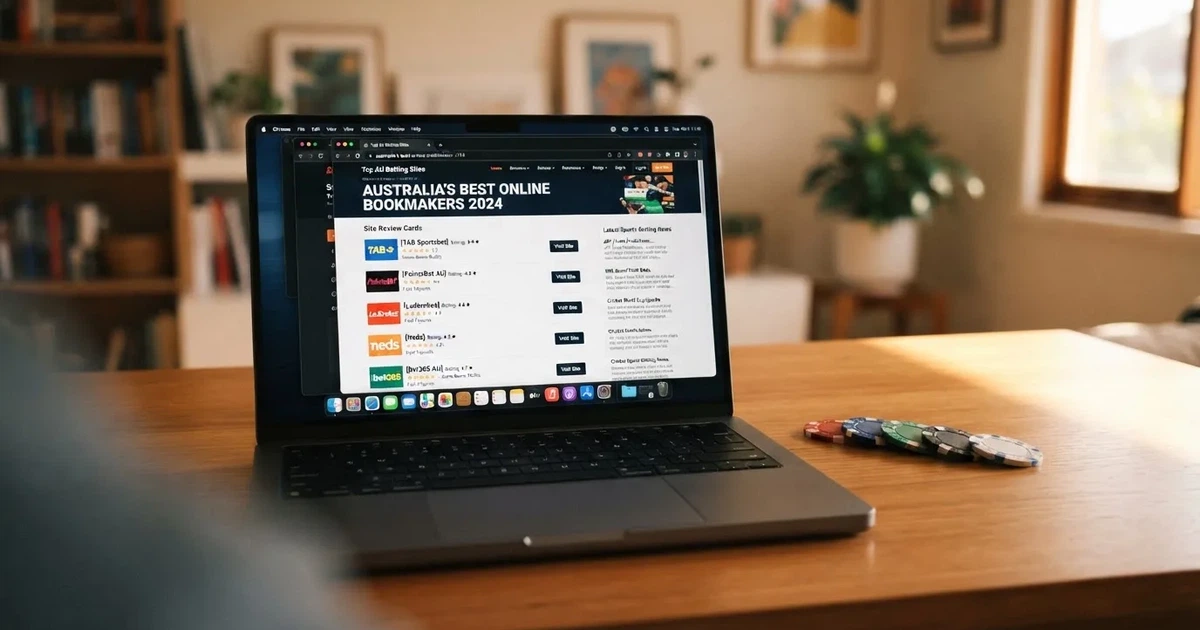
A punter typing “online casino Australia” into a search bar in 2026 will land on a page that promises big bonuses and a licence badge within thirty seconds. What the page will not lead with is the line from the Interactive Gambling Act 2001 that makes the entire offer unlawful for anyone inside Australian borders. This guide is built the other way around: it starts with the rules, then works outwards into the slots, the operators and the payment routes — because the cheapest spin a reader will ever place is the one they decide not to make after seeing what the arithmetic looks like.
Table of Contents
- The shape of an Australian online slot lobby in 2026
- The eleven brands the ACMA has acted against
- What an Australian online casino actually offers — and what it costs
- What the IGA actually permits
- Responsible play and the limits an offshore site will not enforce
- Crypto-funded play and what it does and does not do
- What the reader takes from this page
- Frequently asked questions about Australian online slots and casinos
The shape of an Australian online slot lobby in 2026
The “pokies” label in Australia covers two distinct things, and conflating them is the single biggest mistake a new player makes. The pub and club machines are physical: a button press, a screen, coins or tickets, a paytable printed on the glass. The online products sold by the offshore sites this page discusses are software: a random number generator producing outcomes every few milliseconds, wrapped in a theme, licensed from a studio, and delivered through a browser tab.
What the online lobby actually stocks
The same studios supply both the offshore-facing sites and, in licensed form, social casino platforms and demo modes. The reel count and payline structure is what changes between titles — not the underlying fairness mechanism. A modern video slot runs five reels with fifty or more symbols per reel, putting the odds of a top combination as high as 300 million to one against. A classic three-reel machine with around ten symbols per reel offers closer to 1,000 possible combinations. Neither is “due” a payout after a losing streak; each spin is independently drawn.
Baccarat, blackjack and the live-dealer shelf
Most offshore-facing lobbies sit a live-dealer section beside the slots. The table games on that shelf carry very different house edges from the slots, and the spread is worth knowing before staking anything:
- Baccarat: 1.06% on the Banker bet, 1.24% on the Player bet, 14.36% on the Tie.
- Blackjack: roughly 0.28% under liberal Las Vegas Strip rules with optimal play, around 0.43% under Atlantic City rules.
- Craps: 1.41% on Pass/Come, 1.36% on Don’t Pass/Don’t Come, 11.11% on Any Craps.
That craps “Any Craps” figure is the kind of bet a marketing page would not lead with. Most slots, by contrast, return somewhere between 92% and 96% to the player over a long run — which sounds generous until you remember that over a long run means millions of spins, not the half-hour session a punter actually plays.
The pokie machines in the clubs
The physical side of the market is the legal one in Australia. New South Wales alone counted 87,298 pokies-style machines outside casinos in June 2023, with Victoria running 26,380, Queensland 21,122, South Australia 11,672 and the ACT 3,587. New South Wales legalised slot machines in 1956; by 2010 Australia operated an estimated 97,103 gaming machines outside casinos, a per-capita rate about five times that of the United States. These figures do not justify offshore play — they explain why the offshore market exists.
The history that sits behind a spin
Charles Fey of San Francisco developed the first automatic slot machine mechanism in the late 19th century: a three-reel machine with five symbols (horseshoes, diamonds, spades, hearts and the Liberty Bell) where three bells in a row paid the top prize of ten nickels. Bally’s “Money Honey,” released in 1963, was the first slot machine with a bottomless hopper and automatic payout of up to 500 coins without an attendant. The first video slot machine was developed in 1976 by Fortune Coin Co. in Kearny Mesa, California. None of this is decorative background — it is the reason a modern slot’s payout percentage is software-set and state-regulated where the state has jurisdiction, and unregulated where it does not.
The eleven brands the ACMA has acted against
What follows is not a ranking. Each brand is listed because the Australian Communications and Media Authority itself issued a formal warning to the operator behind it for offering prohibited interactive gambling services to Australians. The order is the order the ACMA’s published actions set, not any editorial judgment about the brand. The list is also incomplete — the ACMA has blocked more than 1,750 illegal and affiliate marketing websites since November 2019, and what is named below is the subset this page reviews.
| Brand | ACMA action and date | Operator named by the ACMA | Provider coverage |
|---|---|---|---|
| RocketPlay | Formal warning, March 2026 | Pulsup Ltd (RocketPlay); earlier Dama N.V., May 2022 | — |
| Level Up Casino | Formal warning, May 2022 | Dama N.V. | BGaming listings |
| Woo Casino | Formal warning, March 2025 | Dama N.V. | — |
| Spirit Casino | Formal warning, May 2025 | Dama N.V. | — |
| National Casino | Formal warning, July 2025 | Consolutetish S.R.L. | Wikipedia listing |
| Bizzo Casino | Formal warning, July 2025; earlier 2022 | Consolutetish S.R.L.; earlier TechSolutions | — |
| Ignition Casino | Formal warning, July 2025 | Bamboo Media | — |
| Instant Casino | Formal warning, February 2025 | EOD Code SRL | — |
| Jackbit | Formal warning, April 2026 | Ryker B.V. | — |
| Casino Intense | Formal warning, April 2025 | Sterplay Holding Ltd | ABC, ACMA, Crown Melbourne listings |
| Sky Crown | Formal warning, September 2022 | Hollycorn N.V. | — |
Every row in this table carries the same legal point underneath: online casino games and online pokies cannot be licensed anywhere in Australia, whatever licence the site displays on its footer. A Curaçao or Anjouan registration is what most of these brands carry; none of those regimes is recognised under the Interactive Gambling Act 2001 as authority to take Australian customers. Reading the licence badge as a green light is the precise error the ACMA’s enforcement record is built to correct.
RocketPlay
Pulsup Ltd picked up the formal warning in March 2026 over RocketPlay; Dama N.V. had already been warned over the brand in May 2022. The site moved operator shells in the years between. The shape of the offer — a deposit match and free-spin bundle tied to a wagering multiple — was the same both times. For a reader who has already decided to play offshore, the RocketPlay trajectory is a useful case study in operator churn: the brand name persists, the corporate vehicle behind it does not, and the ACMA’s enforcement follows the vehicle. That makes the licence badge on the homepage near-meaningless for compliance purposes.
Level Up Casino
Dama N.V. is the operator the ACMA named in May 2022, and Level Up was one of six casino brands covered in that single warning. BGaming is among the studios whose product appears in the listings of BGaming titles carried by the brand. The honest reading: Dama N.V. is one of the more prolific offenders on the ACMA’s published list — Woo, Spirit and Cobra all sit in the same corporate family — which means the operator has chosen to keep accepting Australian sign-ups despite the formal warning. That is the brand’s signal to the reader, not its marketing copy.
Woo Casino
The Dama N.V. warning covering Woo Casino arrived in March 2025. Woo was the second brand the ACMA formally warned Dama N.V. over after a quiet stretch, and it landed ahead of the Spirit Casino action two months later. The cadence — two warnings inside three months — is the ACMA signalling that the earlier 2022 notice had not changed Dama N.V.’s behaviour. For a punter, the read is that the operator treats the warning as a cost of doing business rather than a stop sign.
Spirit Casino
Dama N.V. again, this time in May 2025, the third brand on the ACMA’s 2022-plus-2025 list for the operator. Spirit Casino runs the same promotional architecture as Woo and RocketPlay: matched deposit, free-spin tranche, a multiplier on the bonus. The verdict on the brand’s commercial direction follows from the wider pattern: Dama N.V. continues to source new skins after each warning cycle, and the cycle has now run for four years. The player who chooses Spirit Casino is choosing an operator that the regulator has identified by name, twice, and that has continued regardless.
National Casino
Consolutetish S.R.L. is the operator the ACMA named in July 2025. National Casino sits in a small cluster with Bizzo, also named the same month under the same operator. Wikipedia carries a listing for the brand, which is the closest thing to an independent footprint the brand has — there is no Australian consumer register to consult, no local complaints body to write to, and the ACMA’s warning is the only Australian record of the brand’s conduct.
Bizzo Casino
Consolutetish S.R.L. again, July 2025; an earlier 2022 formal warning had gone to TechSolutions (CY) Group Limited and TechSolutions Group N.V. Two separate operators warned over the same brand across a three-year gap is the most legible case on the ACMA’s record of a brand moving between vehicles to outrun enforcement. The player cost in that pattern is simple: any balance held under the older operator may not survive the vehicle change. There is no statutory recourse for the Australian player.
Ignition Casino
Bamboo Media is the operator named in the July 2025 warning. Ignition Casino is one of the longer-running brands on this list outside the Dama N.V. cluster, and the ACMA’s July 2025 action is its first published formal warning in the current cycle. The brand’s mid-tier standing on this page follows from where its regulatory footprint sits: one warning, one operator, no earlier history with the ACMA — yet still operating without an Australian licence.
Instant Casino
EOD Code SRL was named in the February 2025 warning. Instant Casino is a relatively new entrant on this page and the ACMA’s enforcement record against it is correspondingly thin. That thinness is not comfort — the IGA’s prohibition runs against the provider, not against repeat offenders specifically, and the February 2025 warning is the ACMA’s first interaction with this operator.
Jackbit
Ryker B.V. was warned in April 2026 over both Jackbit and CasinOK. Jackbit is the only brand on this list where the ACMA named a sibling site in the same warning, which is the cleanest read of how the operator structures its portfolio. For a reader comparing sites, two brands on one warning means the ACMA has treated them as one operation. The player cost of that structure is the same as for any other brand on this list — no Australian licence, no local protection, no recourse on a stuck withdrawal.
Casino Intense
Sterplay Holding Ltd is the operator named in the April 2025 warning. Casino Intense is the only brand on this page that surfaces in independent Australian reporting outside the ACMA’s own record — ABC News, the ACMA’s published register and Crown Melbourne’s public site all carry some form of mention. That independent footprint is not endorsement; it is a marker of how visible the brand is on the Australian search landscape.
Sky Crown
Hollycorn N.V. was warned in September 2022 over Sky Crown and its sibling Blue Leo. The 2022 vintage makes Sky Crown the earliest formal warning on this list outside the Dama N.V. 2022 cluster. Hollycorn N.V. continues to operate the brand, which is consistent with the pattern across this table: the ACMA warns, the operator continues, the player bears the risk.
What an Australian online casino actually offers — and what it costs
A reader weighing an offshore site against a pub pokie is not weighing two equal products. The pub pokie has a regulated payout percentage, a venue staff, a printed paytable and a complaints body in the relevant state regulator. The offshore slot has none of these. What it has is a marketing budget. That budget is what funds the bonus structures the offshore sites run, and the bonus is where the real cost of an offshore session hides.
The bonus that is not a bonus
A matched-deposit bonus returns a percentage of what the player deposits in bonus funds, on the condition that the player wagers the bonus — and often the deposit — a fixed number of times before withdrawing. A 100% match at a 40x multiplier on a A$200 deposit means A$8,000 in wagering before any withdrawal is permitted. The slot’s edge runs against the player across every spin of those A$8,000, and the bonus funds themselves are typically forfeit if the wagering requirement is not met within a stated window.
The blocking rate: how fast the ACMA has been closing sites
The ACMA’s enforcement programme began in November 2019 with its first blocking request. By the figures reported in June 2026, a total of 1,751 illegal gambling and affiliate marketing websites had been blocked since that first request, and more than 230 unlicensed gambling services had left the Australian market since enforcement was strengthened in 2017. That works out to roughly 263 blocking actions per year across the seven-year span, or just over five per week on average. Some weeks are heavier — the round reported on 26 June 2026 alone asked Australian ISPs to block 12 more sites in a single batch.
The 12-site round is what sets the cadence the reader should expect: blocking is not a single dramatic takedown, it is a continuous cycle of new warnings followed by new blocks. A site that was accessible on Monday can be on an ISP block list by Friday, with any balance the player had on the site trapped behind it. The arithmetic is the cheap part of this page — the cost it points to is what happens when a balance sits on a site the ACMA has just blocked.
The crypto version of the same offer
Crypto gambling casinos run the same slot titles as card-funded sites, just with a blockchain wallet swapped in for a bank card. The same random number generator sits behind the reels, the same studios licence it, and the same bonus architecture wraps around the deposit. What crypto changes is the payment route, not the game — and in Australia that payment route is itself a marker: under the rules that took effect on 11 June 2024, digital currency is banned as a payment method for licensed online wagering. A site asking for a Bitcoin or USDT deposit is therefore not only offering a prohibited product, it is also taking a prohibited payment for it. The penalties for the operator side run up to A$247,500 per breach.
What the IGA actually permits
The Interactive Gambling Act 2001, strengthened by the Interactive Gambling Amendment Act 2017, makes it an offence to provide online casino games, online pokies or in-play betting to a person in Australia. No state or territory licences those products. What is licensable is wagering on races and sport placed before the event, lotteries and keno — in practice licensed by the Northern Territory, which regulates 52 of Australia’s online bookmakers through the Northern Territory Racing and Wagering Commission. The commission has no full-time staff and meets once a month in Darwin, a structural detail that has prompted reform discussion but has not changed the licensing reality.
Who the NTRWC regulates and why
The Northern Territory Racing and Wagering Commission (NTRWC) regulates 52 online bookmakers, including Sportsbet, Bet365 and Ladbrokes. The Territory’s tax arrangements make it the jurisdiction of choice for corporate bookmakers that want an Australian point of regulation — even when their customer base sits in Sydney or Melbourne. The April 2026 ABC report on a bill to reform the commission flagged the staffing gap; the substantive licensing regime has not changed. The minimum age for any licensed wagering customer in Australia is 18.
The credit card and crypto ban
Since 11 June 2024, credit cards, credit-related products and digital currency have been banned as payment for licensed online wagering. The legal deposit routes that remain are debit card, bank transfer, PayID/Osko and BPAY. Penalties for operators that breach the payment ban run up to A$247,500. The rule applies to licensed wagering services — which is the part of the Australian market that runs sports and race betting, not casino games. An offshore casino sidesteps the rule by sitting outside the Australian regime entirely, which is why the page reads it as a marker rather than a constraint.
Tax treatment of winnings
For a recreational player, gambling winnings are not assessable income under section 6-5 of the Income Tax Assessment Act 1997, and losses are not deductible. The exception is a player carrying on a business of gambling — a category the Australian Taxation Office treats case by case. The model is: check with the ATO if the gambling has become a regular income source, otherwise keep records and assume the winnings are tax-free and the losses are the player’s own.
The 2026 reform and its start date
The Interactive Gambling Amendment (Gambling Reform) Bill 2026 passed Parliament on 19 August 2026. Its advertising and inducement measures commence 1 January 2027. The Bill is law with a start date, not yet in force on a 2026 page — which means the marketing rules a reader sees on offshore sites today are not yet the rules they will see under the reformed regime. For an operator, that is a deadline. For a reader, it is a marker of where the next round of enforcement will land.
Responsible play and the limits an offshore site will not enforce
The sites on this page market themselves as trusted and safe, and that language is doing work the reader should not let it do for free. A site calling itself safe is making that claim about itself. The independent tools that actually keep a player within a budget sit outside the site, and the Australian framework ties most of those tools only to Australian-licensed services.
BetStop and the self-exclusion register
BetStop, the National Self-Exclusion Register, has been live since August 2023. It binds Australian-licensed online and phone wagering services — every licensed bookmaker is required to honour a BetStop registration. An offshore casino is not connected to the register. A punter who self-excludes through BetStop is excluding themselves from licensed wagering, not from the offshore casino they have been using. That asymmetry is the structural limit on what BetStop can do for a player who has been playing offshore, and it is the reason the register is one tool rather than a complete answer.
The 24/7 helpline and online chat
The National Gambling Helpline on 1800 858 858 is free, runs 24/7, and is reachable by chat through Gambling Help Online. The line is for Australian residents, including the players using offshore sites, and it is the route to financial counselling, self-exclusion support and referral to face-to-face services. The helpline is the piece of Australian infrastructure that meets a player wherever they have been playing.
Why an offshore site gives the player no protection
The Interactive Gambling Act 2001 targets the provider, not the individual player — an Australian punter is not prosecuted for using an offshore casino. What the player loses in return is the entire consumer protection stack: no Australian complaints body, no recourse if the operator refuses a withdrawal, no guarantee that a balance held on the site survives a blocking round. The ACMA’s enforcement is on the supply side, which leaves the demand side holding the full risk of the interaction.
Crypto-funded play and what it does and does not do
A crypto gambling casino is an offshore casino with a different deposit rail. The random number generator that decides the slot spin is the same software, often running on the same studios’ servers, and the bonus architecture wrapping the deposit is the same shape. What crypto changes is the route the money takes to reach the site — and that route is itself a marker.
Same slots, different wallet
The slot titles are the same as the card-funded equivalent. BGaming’s catalogue sits across both payment rails; the same goes for Pragmatic Play, Betsoft and the rest of the studios that license to the offshore-facing market. The crypto version does not give the player access to a different game; it gives them a different way to fund the same game. The distinction matters because the marketing often obscures it, presenting the crypto route as a separate, more “premium” product.
The payment-rule angle
Under the rules that commenced 11 June 2024, digital currency is banned as a payment for licensed online wagering. That rule is addressed to the licensed side of the market — the same regime the offshore casino is not part of. But the rule signals where the regulator’s priorities sit: the payment rail is a known lever for harm reduction, and the offshore site has stepped off the lever entirely by sitting outside the regime. From the regulator’s perspective, a crypto deposit on an offshore site is two breaches in one transaction.
The exchange-rate cost the player pays
Crypto deposits carry an exchange-rate cost the punter does not see on the deposit screen. The site names a Bitcoin or USDT figure, the player’s wallet converts from Australian dollars at one rate, and the operator’s treasury converts back at another. The spread between those two rates is a few percent on a quiet day and substantially more when crypto is volatile. That cost sits on top of the house edge and the bonus wagering, and it is the cleanest case on this page of a cost the marketing does not name.
What the reader takes from this page
The starting point of the Australian market in 2026 is a prohibited online casino sector and a legal wagering sector. The eleven brands reviewed above sit in the prohibited half, each the subject of a formal ACMA warning naming the corporate operator. The slots they offer are real products, the studios behind them are real businesses, and the cost of playing is the cost of every spin at the slot’s edge plus whatever the bonus architecture takes on top. None of that cost is refundable through an Australian channel, and the ACMA’s enforcement cycle — 1,751 sites blocked since November 2019 — is the rate at which the operator side is being closed.
For a reader who has been using one of these sites, the practical decision is not whether to find another offshore casino — the ACMA’s record shows that route leads to the same outcome. The decision is whether to use the licensed wagering channels the IGA actually permits, or to step back through BetStop and the National Gambling Helpline on 1800 858 858. Both are free, both are Australian, and both are designed for the situation.
Frequently asked questions about Australian online slots and casinos
Is real-money online casino gambling legal for someone based in Australia?
No. The Interactive Gambling Act 2001, strengthened by the Interactive Gambling Amendment Act 2017, makes it an offence to provide online casino games, online pokies or in-play betting to a person in Australia, and no state or territory licences those products. The individual player is not prosecuted — the IGA targets the provider — but the player gives up every Australian consumer protection in return, and a balance held on an offshore site can be stranded when the ACMA orders a block.
How does a slot machine’s random number generator decide the result of a spin?
A modern slot uses software to draw an outcome for each spin from a uniform distribution over the possible symbol combinations, typically hundreds of times per second regardless of whether a player is watching. Each spin is independent of the last: a losing streak does not make the next spin “due.” A modern five-reel video slot with fifty or more symbols per reel can put the odds of a top combination as high as 300 million to one against, against roughly 1,000 combinations on a classic three-reel machine.
Do crypto gambling casinos use the same slot software as card-funded sites?
Yes. The same studios — BGaming, Pragmatic Play, Betsoft and others — licence the same titles across both payment rails. Crypto changes the deposit route, not the game; the random number generator, the bonus architecture and the payout rules are identical. In Australia, the crypto route is itself a marker, because digital currency has been a banned payment method for licensed online wagering since 11 June 2024.
What is the difference between an online slot and a pub or club pokies machine?
The pub and club machine is a physical device with a state-regulated payout percentage, a printed paytable, venue staff and a complaints route in the relevant state regulator. The online product is software served through a browser, with no Australian regulator and no Australian complaints body. The reel count, paylines and bonus features differ between titles; the underlying fairness mechanism is the same in principle and very different in practice once the regulator drops out.
Does a site calling itself trusted or safe mean it has been independently checked?
No. The “trusted” and “safe” labels on offshore casino sites are marketing copy the site has written about itself. There is no Australian certification that backs them up. Independent checks exist on the Australian side through state regulators for licensed venues and through the ACMA’s enforcement record for the offshore side — that record is the closest thing to an independent read of how the site has behaved toward Australian players.
What tools can help someone track and limit time spent playing online slots?
On the licensed Australian side, BetStop — the National Self-Exclusion Register, live since August 2023 — binds every licensed online and phone wagering service. The National Gambling Helpline on 1800 858 858 is free, runs 24/7 and connects callers to financial counselling and self-exclusion support, with chat available through Gambling Help Online. The honest limit on both: an offshore casino is not connected to either tool, so the first step is to stop using the offshore site before the local protections can do their work.