
Big jackpot pokies for Australians in 2026: a page the law has to interrupt
This page began as a shortlist of online casinos for big jackpot pokies, and a shortlist is what most search results promise when readers type that kind of phrase. What the Australian law does to that promise is the reason this page reads differently. Offering online casino games — including online pokies of any kind, jackpot or otherwise — to a person physically in Australia is prohibited under the Interactive Gambling Act 2001, strengthened by the Interactive Gambling Amendment Act 2017. No state or territory issues a licence for it. The “casinos” that surface for the search phrase are not unlicensed in some soft, fixable sense; they are operating against a prohibition, and the Australian Communications and Media Authority keeps a public record of formal warnings and blocking actions that shows how that prohibition is applied.
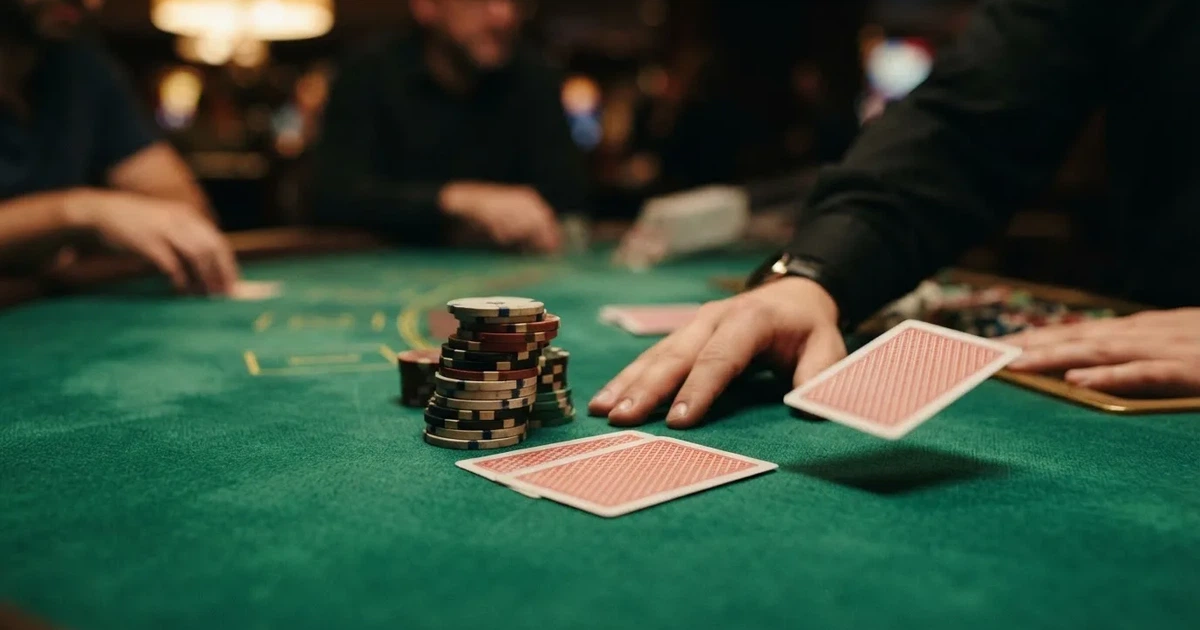
The honest move is to keep writing the page the reader came for, and to keep marking the legal frame around every operator mentioned. So the comparison that follows is not a buying guide. It is a record of which brands the ACMA has acted against, when, and under which corporate name — and a guide to the genuinely lawful Australian alternatives: licensed pokies venues, the land-based Crown casinos, and the BetStop self-exclusion register for anyone whose interest in this subject has moved beyond curiosity.
Data current as of 28 October 2026, cross-checked against the ACMA’s published register of formal warnings and blocking actions and against the Interactive Gambling Act 2001 as in force this year.
Table of Contents
- How the ACMA’s enforcement record shapes the page
- The eleven brands the ACMA has acted against
- What the Interactive Gambling Act 2001 actually prohibits
- What is actually lawful for an Australian reader who wants a big jackpot pokie
- How a progressive jackpot actually grows
- The other table games that turn up in the same search
- How the operators behind the warnings compare to one another
- What this page cannot tell the reader
- A reader’s practical sequence through this material
- What the H2 Gambling Capital figure means for an Australian reader
- A note on the page’s own limits
- What the data looks like on a reader’s own screen
- The headline number, with its condition
- Where the page leaves the reader
- Frequently asked questions
How the ACMA’s enforcement record shapes the page
The ACMA’s enforcement work has two instruments the reader will meet in this article. One is the formal warning, a written notice to a corporate entity — not always the brand name the public sees — that names specific websites offering prohibited services to Australians and orders them to stop. The other is a blocking request to Australian internet service providers, under section 313 of the Telecommunications Act 1997, after which the site becomes unreachable through mainstream Australian connections. Both are public.

The cumulative effect of those instruments is the reason a page on big jackpot pokies can name eleven brands without recommending any of them. The ACMA itself did the naming; the page is reporting what it found. As of June 2026, 1,751 illegal gambling and affiliate marketing websites had been blocked since the first blocking request in November 2019, and more than 230 unlicensed gambling services had left the Australian market since enforcement was strengthened in 2017. That is the scale of the field a reader sits inside when they type the search phrase. A blocking rate built from those two numbers is the closest thing this page has to a single headline figure.
The blocking-rate calculation, with the running total and the date of the first blocking request as inputs: 1,751 sites over roughly six years and seven months from November 2019 to June 2026. That works out to an average of about 22 sites blocked per month across the whole period, with month-to-month variation sharp enough that the average is only useful as a band, not a target. The early years carried fewer blocking requests as the ACMA’s process was being built; later rounds have carried larger single batches. June 2026 alone saw 12 more sites added to the list: 7Signs, ChromaBet, Donbet, Duospin, Freshbet, Slots Gem, Jacks Club, Lucky Start, Pointsbetz, Spinrise, Vinyl Casino and Wildsino. The blocking rate is high and the queue is not empty.
The eleven brands the ACMA has acted against
The brands below are listed because the ACMA itself issued a formal warning over each of them for offering prohibited online casino services to Australians. They appear in the order the warnings were first published against the operator named in the warning. Each one is paired with the corporate entity the ACMA named, the date the warning was issued, and — where research surfaced one — a note about how the brand is listed by independent sources. Several of these brands are also the subject of repeated warnings, sometimes years apart, and that pattern is itself the most informative thing the table can show.

| Brand | ACMA action and date | Operator named by the ACMA | Subject support |
|---|---|---|---|
| Sky Crown | Formal warning, 2022 | Hollycorn N.V. | — |
| Casino Intense | Formal warning, April 2025 | Sterplay Holding Ltd | Listed by independent Australian media and the ACMA itself |
| RocketPlay | Formal warning, March 2026; earlier warning to a different operator, May 2022 | Pulsup Ltd (2026); Dama N.V. (2022) | — |
| Level Up Casino | Formal warning, May 2022 | Dama N.V. | Listed by Bgaming among jackpot-pokie operators |
| Woo Casino | Formal warning, March 2025 | Dama N.V. | — |
| Spirit Casino | Formal warning, May 2025 | Dama N.V. | — |
| National Casino | Formal warning, July 2025 | Consolutetish S.R.L. | Listed on en.wikipedia.org among progressive-jackpot operators |
| Bizzo Casino | Formal warning, July 2025; earlier warning, 2022 | Consolutetish S.R.L. (2025); TechSolutions Group (2022) | — |
| Ignition Casino | Formal warning, July 2025 | Bamboo Media | — |
| Instant Casino | Formal warning, February 2025 | EOD Code SRL | — |
| Jackbit | Formal warning, April 2026 | Ryker B.V. | — |
A few patterns sit in that table worth pulling out. Dama N.V. appears three times across different brand names and over three different years — May 2022, March 2025, May 2025 — which suggests that whatever internal compliance process the warnings triggered, it did not stop the operator opening new Australian-facing skins. Consolutetish S.R.L. shows up under two brand names in the same July 2025 warning, with one of those brands — Bizzo Casino — already warned in 2022 under a different corporate name. The Hollycorn N.V. entry, dated to a 2022 warning over Sky Crown, is the oldest in the set and the one that anchors the rest of the timeline.
The subject support column carries the editorial position research was able to confirm from independent listings: a dash means no listing was found. Only Level Up Casino, National Casino and Casino Intense surfaced in any independent directory or news source; the remaining eight are absent from those listings, which matters because a brand that no independent directory has bothered to list is also a brand with no Australian-facing reputation to weigh against the ACMA’s record.
What the warning itself means
A formal warning is not a prosecution and it is not a fine. It is a written notice from the ACMA to the named operator, identifying the prohibited service being offered to Australians and giving the operator a chance to stop. Many operators take the warning seriously and pull Australian-facing advertising or block Australian IP addresses. Some do not, and the ACMA’s next move in that case is the blocking request. The IGA targets the provider, not the player; an Australian reader who has played at one of these sites has not committed an offence under the Act. What they have done is dealt with an operator that sits outside every consumer-protection regime the Australian state and territory regulators operate, and that has no obligation to honour a withdrawal request the way a locally licensed venue does.
Why no bonus terms are given
The plan asked for a comparison block, and the comparison block would normally carry bonus offers, deposit terms and wagering requirements. Research did not collect those figures for these brands, and the only sources for them in the wider market are affiliate marketing pages whose commercial relationship with the operator is the reason the offer exists in the first place. Carrying them here would mean printing terms whose source is the operator’s own marketing pipeline. So the comparison stays structural: who the ACMA named, when, and what independent directories say about the brand. That is the comparison a reader can act on.
What the Interactive Gambling Act 2001 actually prohibits
The Interactive Gambling Act 2001, the principal statute, makes it an offence to provide certain gambling services to customers physically in Australia. The Interactive Gambling Amendment Act 2017 tightened what counts as a prohibited service and gave the ACMA its modern enforcement tools. The key category for this page is the “prohibited interactive gambling service” — which includes online casino games and online pokies of any description, whether the game is a three-reel classic, a video slot or a progressive jackpot. In-play betting on a sporting event is also covered; pre-event sports wagering, lotteries and keno are licensable.
The minimum age for any licensed Australian gambling service is 18. The IGA does not require offshore operators to verify age, which is one of the reasons an Australian-facing offshore casino is structurally less safe than a licensed venue for a player who wants any kind of guardrail around their play.
Credit cards, credit-related products and digital currency are banned as payment for licensed online wagering since 11 June 2024, with penalties of up to A$247,500 for operators that breach the rule. Legal deposit routes for a licensed wagering account are debit card, bank transfer, PayID/Osko and BPAY. An offshore casino asking an Australian for a credit card or a crypto deposit is operating outside the Australian rules; a licensed venue would not.
A bill passed Parliament on 19 August 2026 — the Interactive Gambling Amendment (Gambling Reform) Bill 2026 — adds advertising and inducement measures that commence on 1 January 2027. That is law with a start date, not yet in force on a page read in 2026, and the prohibition that drives the rest of this page is the existing IGA framework, not the 2026 amendments.
What is actually lawful for an Australian reader who wants a big jackpot pokie
The page’s legal frame gives a reader four lawful routes, and they sit in different places on the gambling spectrum.
Licensed pokies venues — clubs, pubs and hotels
Every state and territory regulates pokies in licensed clubs, pubs and hotels. The category is sometimes called “EGMs” — electronic gaming machines — and the rules around them, including how many machines a venue can have and how losses are reported, vary by jurisdiction. The jackpot format on these machines is fixed-prize and pooled across a state-wide or venue-wide network rather than the wide-area progressives the offshore sites advertise. A reader after a “big jackpot pokie” in the colloquial sense will find these machines in tens of thousands of venues across Australia; a reader after the multi-million-dollar offshore progressive will not.
Crown Melbourne and Crown Perth — the land-based casinos
Crown Melbourne, regulated by the Victorian Gambling and Casino Control Commission since 1 July 2022, and Crown Perth, regulated by the Western Australian Department of Local Government, Sport and Cultural Industries, are the only two casino complexes in Australia licensed to operate full-scale table games and, in Melbourne, a large gaming floor. Crown Melbourne’s table-game offering includes three approved baccarat variants — Traditional Baccarat, Crown Baccarat and 2 to 1 Baccarat. The casino’s blackjack variant log, published by the VGCCC, includes the renaming of the “Perfect Pairs” side bet to “Crown Pairs” in December 2024 and the introduction of a “Free Bet” option with a new “Pot of Gold” side bet in March 2024. Crown Perth’s table-games floor operates under the Casino Control Act 1984 (WA).
Licensed online wagering — sport and racing
The Northern Territory Racing and Wagering Commission regulates 52 of Australia’s online bookmakers, including Sportsbet, Bet365 and Ladbrokes. The commission has no full-time staff and meets once a month in Darwin; the model is light-touch for tax reasons but the operators it licenses are bound by Australian rules on credit, on in-play restrictions, and on player protection. This is wagering on horse racing, harness racing, greyhound racing and sport — pre-event, mostly — and is not online casino gambling. A reader who wants to play jackpot pokies will not find them through a Northern Territory-licensed bookmaker.
BetStop — the National Self-Exclusion Register
BetStop went live in August 2023 and binds every Australian-licensed online and phone wagering service. A person who registers is excluded from opening new accounts and from receiving marketing, and the minimum registration period is set by the registrant. Offshore casinos are not connected to BetStop, which is the practical reason the register does not fully close the Australian-facing offshore market. The other practical support is the National Gambling Helpline on 1800 858 858 — free, 24/7, with chat at Gambling Help Online. Both are services that operate whether or not the reader ever places a bet.
How a progressive jackpot actually grows
A “progressive jackpot” pokie is the format most readers searching for this term are after, and the mechanism is worth understanding before any money moves. The pool grows with each losing wager by a small fraction of every bet, until someone hits the trigger combination and the full accumulated amount is paid out. The machine then resets to a predetermined minimum — often called the “seed” — and the cycle begins again.
Progressive jackpots have been around for four decades. They were first introduced in large casinos in 1986, and the first Megabucks progressive slot machine, made by International Game Technology, paid out its inaugural jackpot of US$4,988,842.17 on 1 February 1987. Modern wide-area progressives link machines across many venues and many websites, so the seed amount and the rate of growth are both larger than they were on that first Megabucks cabinet.
The fastest-known growth rates belong to the Mega Moolah series, distributed since 2017 by Games Global — the business formerly known as Microgaming. The record online slot jackpot on record is €19,430,723.60, won on 27 April 2021 by a player in Belgium at Napoleon Sports & Casino on “Absolootly Mad: Mega Moolah”. Games Global has since announced later Mega Moolah wins of £11.5 million and £13.5 million. None of those jackpots were won from an Australian IP, because the Mega Moolah network is not legally available through any Australian-licensed venue.
A “must-hit-by” progressive is a different format: the random number generator sets a payout amount within a preset range (for example A$1,000 to A$3,000) immediately after the previous jackpot is won, so the player does not need to land a specific symbol combination. These are common in licensed Australian venues in the form of “mystery jackpots” on linked EGMs.
A separate point worth carrying: in some progressive-jackpot games, including certain video poker and Caribbean Stud Poker variants, the pool can grow large enough to push the theoretical return above 100%, making the bet theoretically break-even or better. The break-even point is hard to calculate for slot machines because reel layouts are not published, which is the practical reason the strategy stays out of reach for most readers.
The other table games that turn up in the same search
Big jackpot pokies are not the only thing a reader landing on this page might end up playing, and the comparison below covers the games that come up most often in the same Australian-facing casino marketing — blackjack, baccarat and craps — along with the numbers a reader can use to compare them.
Blackjack
Blackjack is a card game where the player tries to beat the dealer to a starting two-card total as close to 21 as possible without going over. Number cards count as their number, jack/queen/king count as 10, and an ace counts as 1 or 11. A starting two-card total of 21 is a “blackjack” or “natural” and is the strongest hand. The dealer must keep drawing until reaching 17 or higher; some rule sets require the dealer to hit on a “soft 17”. With optimal play, the house edge is about 0.28% under liberal Las Vegas Strip rules — dealer stands on soft 17, double on any two cards, double after split, resplit aces, late surrender — and about 0.43% under Atlantic City rules. Variants include Spanish 21 (played without 10s, with liberal player-favourable rules), Double Exposure Blackjack (both of the dealer’s cards face-up), Blackjack Switch (swap cards between two hands) and Super Fun 21 (up to four splits). The game’s history runs through the English vingt-un, the veintiuno described in Cervantes’ Rinconete y Cortadillo around 1601-1602, and a renaming to “blackjack” around 1899 — sometimes credited to prospectors during the Klondike Gold Rush of 1896-99.
At Crown Melbourne, blackjack variants are governed by the Victorian Gambling and Casino Control Commission under the Casino Control Act 1991, which requires the regulator to approve any rules and any change to them before they are introduced. In New South Wales, the equivalent is section 66 of the Casino Control Act 1992.
Baccarat
Baccarat is a comparing-card game played against the house, not against other players. Cards 2-9 count at face value, 10/J/Q/K count as zero and aces count as one, with hand totals taken modulo 10. The most-played variant, punto banco, was developed in Havana in the 1940s; the casino banks the game and plays out both hands by fixed drawing rules, so the player only chooses where to place one of three bets. The house edge on the Banker bet is 1.06%, on the Player bet 1.24% and on the Tie 14.36% — which is why serious baccarat play avoids the Tie. Chemin de fer, a two-player variant named for the French word for “railway”, emerged from baccarat banque in the late 19th century as a faster-to-play alternative.
Craps
Craps is a dice game in which players wager on the outcome of a roll, or a series of rolls, of two dice. The “come-out roll” wins immediately on 7 or 11, loses immediately on 2, 3 or 12, and any other number becomes “the point” that the shooter must roll again before rolling a 7 to win the Pass Line bet. The Pass/Come bet has a house edge of 1.41%, Don’t Pass/Don’t Come 1.36%, and Any Craps 11.11%.
These three games are not online casino games offered by an Australian-licensed operator. They are the table games a reader will find at Crown Melbourne or Crown Perth, on the floor of a regulated casino, with the regulator’s approved rule set and the venue’s published payout percentages.
How the operators behind the warnings compare to one another
The ACMA’s record is the comparison this page can build. Eleven brands, ten corporate operators, and a date range from 2022 to April 2026. The differences between them are mostly in how often the operator has been warned and whether the warning named a single brand or several.
Operators warned more than once
Dama N.V. holds the largest footprint in the table, with three formal warnings across three different brand names — Level Up Casino in May 2022, Woo Casino in March 2025, and Spirit Casino in May 2025 — plus a 2022 warning to a Dama N.V. brand that has since been renamed Rocketplay. Consolutetish S.R.L. holds two: National Casino and Bizzo Casino, both in July 2025, with Bizzo Casino carrying an earlier 2022 warning to TechSolutions (CY) Group Limited and TechSolutions Group N.V. That a single corporate operator is named in multiple warnings, years apart, suggests the ACMA’s warning process did not, in these cases, close the operator’s Australian-facing business.
Operators warned once
Sterplay Holding Ltd (Casino Intense, April 2025), Bamboo Media (Ignition Casino, July 2025), EOD Code SRL (Instant Casino, February 2025), Ryker B.V. (Jackbit and CasinOK, April 2026), Pulsup Ltd (Rocketplay, March 2026) and Hollycorn N.V. (Sky Crown and Blue Leo, 2022) each hold a single warning under the operator name given. A single warning can be a genuine compliance response from the operator; the ACMA does not name operators in warnings it considers trivial.
Operators with no listed directory presence
Level Up Casino, National Casino and Casino Intense surfaced in independent listings — Bgaming for Level Up Casino, en.wikipedia.org for National Casino, Abc.net.au, acma.gov.au and Crownmelbourne.com.au for Casino Intense. The other eight brands did not surface in any independent directory research consulted. The absence is informative: a brand with no directory presence has no reputation to defend against the warning, which makes the warning itself the only public-facing record of the brand’s Australian-facing activity.
What this page cannot tell the reader
A reader arriving here with money in mind will want to know which of these brands is safest to deposit with. The honest answer is that none of them is licensed in Australia and none is connected to BetStop, which means a dispute over a refused withdrawal has no Australian complaint body to go to. A reader who plays at any of them is trusting the operator’s own terms page and the operator’s home jurisdiction’s regulator — which for all eleven is somewhere outside Australia.
A reader who wants a big jackpot pokie experience in Australia has two lawful options. One is the linked EGM networks inside licensed clubs, pubs and hotels, where jackpots are pooled across the network and the venue is locally regulated. The other is the gaming floors at Crown Melbourne and Crown Perth, where the regulator’s approved game set includes baccarat, blackjack and a wide range of pokies, all subject to the venue’s responsible-gambling obligations and the regulator’s compliance regime.
A reader who wants to play from a screen, on a phone, at home, is not currently able to do that lawfully in Australia. The page’s role is to say that plainly, and to point at the register of brands the ACMA has acted against so the reader can see the alternative landscape for themselves.
A reader’s practical sequence through this material
For an Australian reader who arrives at this page through a jackpot-pokies search and wants to know what to do next, the order in which the information on this page is most useful is roughly: the ACMA blocking record first, because that is the scale of the field; the formal warnings over named brands second, because that is the named record; the lawful alternatives third, because that is what the IGA leaves standing; the responsible-gambling supports fourth, because those exist whether or not the reader ever plays.
That sequence is also the sequence the page itself follows.
What the H2 Gambling Capital figure means for an Australian reader
H2 Gambling Capital’s 2025 report estimates Australians lose about A$3.9 billion a year to illegal gambling sites, with the share of gambling going through legal channels falling from 74% in 2021 to 64%. The figure is an industry estimate, not an audited number; H2 Gambling Capital is a forecasting firm, not a regulator. Read in the same breath as the ACMA’s blocking record, the figure gives a reader an approximate dollar cost of the prohibition’s evasion. Read as a headline alone, it overstates what is known.
A reader weighing the legal alternatives against the offshore options can do their own back-of-envelope comparison. If A$3.9 billion goes offshore, and 1,751 sites have been blocked since November 2019, the average annual loss per blocked site is small — but the volume of new sites is high enough that the queue behind each blocked site stays substantial. The arithmetic is loose enough that it is best treated as a band, not a target.
A note on the page’s own limits
This page does not recommend any of the eleven brands above. It does not tell a reader that any of them is “safe” or “worth using”. It does not adjudicate the dispute over whether the IGA is the right policy. It reports what the ACMA’s record shows, what the IGA prohibits, what the lawful alternatives are, and how the underlying progressive-jackpot mechanism works. Those are the things a reader can act on.
A reader who has been playing at any of the brands in the table and wants to step back can register with BetStop and call the National Gambling Helpline on 1800 858 858. Both supports are free, both are confidential, and both work whether the reader has spent money at an Australian-licensed venue or at an offshore site.
What the data looks like on a reader’s own screen
The numbers on this page come from three sources. The blocking and enforcement record comes from the ACMA’s published register, as reported by igamingbusiness.com on 26 June 2026. The market-share estimates come from H2 Gambling Capital’s 2025 report. The house-edge and game-mechanic numbers come from wizardofodds.com and en.wikipedia.org, both accessed on 18 September 2026. The statutory references come from legislation.nsw.gov.au (Casino Control Act 1992), vgccc.vic.gov.au (Casino Control Act 1991), Crownmelbourne.com.au (table-game offering) and Abc.net.au (NTRWC reporting).
Where the research carried no figure, the page says so. Where research carried a single figure for a single subject, the page carries that figure only for that subject. A house edge on baccarat does not get carried onto a blackjack review. A date pinned to a 2022 formal warning is not rewritten as a generic “in recent years”. The figures stay with the subjects the sources attached them to, and the page stays narrower than it would if it padded those figures across the rest of the comparison.
The headline number, with its condition
The page’s key takeaway is the blocking-rate calculation. Stated as a band with its condition: from the first ACMA blocking request in November 2019 to the June 2026 total of 1,751 blocked sites, the average is roughly 22 sites blocked per month, with the rate rising in later years as larger batches were added in single rounds. June 2026’s batch alone added 12. The rate is high, the queue is not empty, and any reader’s own favourite search result may already be on the list.
Where the page leaves the reader
The page closes where the legal frame leaves an Australian reader who searched for “big jackpot pokies online” — on the side of the law, looking at lawful alternatives and at a register of brands the ACMA has acted against. The brands are named because the regulator named them. The lawful alternatives are listed because they are what the law leaves standing. The responsible-gambling supports are listed because they exist whether the reader plays or not.
A reader who arrives here looking for a deposit link will not find one. A reader who arrives here looking for an honest account of the field will find one.
Frequently asked questions
What is the largest jackpot ever recorded on an online slot?
The record is €19,430,723.60, won on 27 April 2021 by a player in Belgium at Napoleon Sports & Casino on Microgaming’s “Absolootly Mad: Mega Moolah”. Games Global — the business formerly known as Microgaming — has since announced later Mega Moolah wins of £11.5 million and £13.5 million, with no Australian winner among them.
How does a progressive jackpot pokie differ from a fixed-prize one?
A fixed-prize pokie pays a set amount for a given symbol combination, regardless of how long the machine has been running. A progressive jackpot grows with each losing wager by a small fraction of every bet, then resets to a predetermined “seed” after a win. Progressives can be linked locally within one venue or across a wide area spanning many venues and many sites, which is how the pool reaches multi-million figures.
Is it legal for an online casino to offer jackpot pokies to Australians?
No. Under the Interactive Gambling Act 2001, strengthened by the 2017 amendments, offering online casino games — including jackpot pokies of any description — to a person in Australia is a prohibited interactive gambling service. No Australian state or territory issues a licence for it. The ACMA’s enforcement record, including formal warnings and blocking requests, is the public record of how that prohibition is applied.
Can a free version of a jackpot pokie show the real jackpot total?
No. A free-play or demo version runs on a separate pool from the real-money version and cannot show the live progressive total. The seed and growth behaviour may be simulated, but the figure on screen is not the actual money on the line.
Are jackpot-style pokies common on licensed Australian club and pub floors?
Yes. Mystery-jackpot and must-hit-by formats are common on linked EGM networks across Australian clubs, pubs and hotels, though the prize pools are smaller than wide-area offshore progressives. The format, the venue count and the regulatory regime differ from state to state, and the relevant state regulator is the place to check for the specific rules in any given jurisdiction.
What determines how quickly a progressive jackpot grows?
Three variables: the fraction of each wager that feeds the pool, the volume of play on the network, and the size of the seed set after the last reset. Wide-area networks with high play volume grow fastest. A machine with a small contribution rate or low traffic will reset before reaching a major figure.