
Low volatility slots in Australia: the law, the ACMA record, and what is actually open to play
28 October 2026 · verified against the Australian Communications and Media Authority register of formal warnings and blocking actions
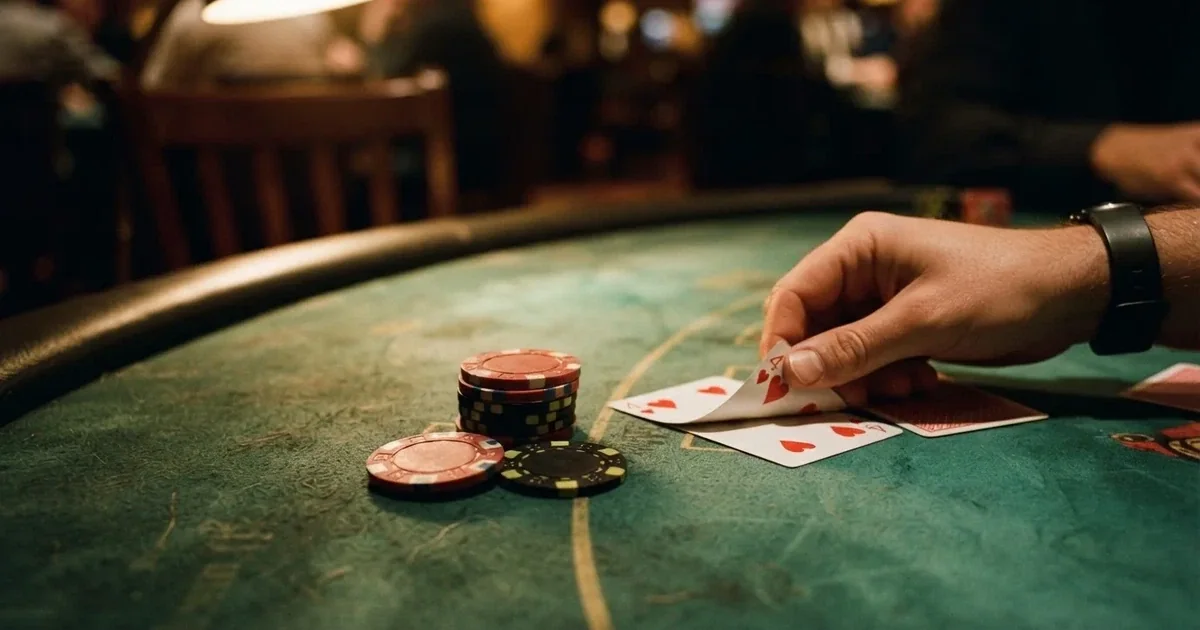
A page about “low volatility slots” is one most readers in Australia should treat as an overview rather than a shopping list. The Interactive Gambling Act 2001 prohibits the supply of online casino games and online pokies to anyone in Australia, no state or territory issues a licence for it, and the Australian Communications and Media Authority’s (ACMA) enforcement record over the past four years is essentially a list of offshore operators it has warned or blocked for offering exactly that. The promise of such a list invites a comparison; the law dictates what that comparison actually contains. What follows is the cost of taking that promise at face value, the cost of ignoring it, and the small set of things a reader can do with certainty.
Table of Contents
- The ranking: eleven operators the ACMA has acted against
- The legal landscape: what is prohibited, what is licensed, and what is enforceable
- Responsible play: the tools that actually apply
- The gameplay shelf: what a low volatility slot is, and where the catalogue actually lives
- Frequently asked questions
The ranking: eleven operators the ACMA has acted against
The eleven brands below are not a top eleven and not a recommendation. Each sits on this page because the ACMA itself issued a formal warning over it for offering prohibited interactive gambling services to people in Australia. They are an enforcement record, ordered by the most recent action, with the licence they display and the regulator’s named operator shown side by side. Whatever licence a footer banner prints, the IGA position is the same: no Australian licence covers online casino games or online pokies for an Australian resident.

| Brand | ACMA action and date | Operator named by the ACMA | Subject support |
|---|---|---|---|
| RocketPlay | Formal warning, March 2026 (earlier action May 2022) | Pulsup Ltd (RocketPlay); Dama N.V. in 2022 | — |
| Jackbit | Formal warning, April 2026 | Ryker B.V. | — |
| Casino Intense | Formal warning, April 2025 | Sterplay Holding Ltd | listed on ABC News, ACMA, and Crown Melbourne material as an offshore casino without Australian cover |
| Woo Casino | Formal warning, March 2025 | Dama N.V. | — |
| Spirit Casino | Formal warning, May 2025 | Dama N.V. | — |
| National Casino | Formal warning, July 2025 | Consolutetish S.R.L. | listed on Wikipedia’s Australian gambling overview as an offshore operator |
| Bizzo Casino | Formal warning, July 2025 (earlier warning 2022) | Consolutetish S.R.L.; TechSolutions in 2022 | — |
| Ignition Casino | Formal warning, July 2025 | Bamboo Media | — |
| Instant Casino | Formal warning, February 2025 | EOD Code SRL | — |
| Level Up Casino | Formal warning, May 2022 | Dama N.V. | listed on BGaming’s published partner page as a carrying casino |
| Sky Crown | Formal warning, September 2022 | Hollycorn N.V. | — |
The dates line up with what the ACMA has published, and they move in one direction. The earliest warnings on this list sit in 2022; the most recent are in 2026. The operator names cluster: Dama N.V. appears four times across the table for different brands and in different months, Consolutetish S.R.L. appears twice, and the rest are one-offs. The point is not that the ACMA is chasing one bad apple; it is that one corporate group can carry a warning and keep launching under new banners, and the register of formal warnings is the only public ledger of that pattern.
A reader who came to this page looking for a casino to sign up with has already lost the wager the promise of such a list asked them to make. There is no sign-up to recommend. The rest of the page is what surrounds that absence.
Reading the ACMA register of formal warnings
A formal warning under the Interactive Gambling Act 2001 is a step the ACMA takes before court action. It puts the named operator on notice that the ACMA considers the service to be a prohibited interactive gambling service supplied to Australians, and it is published on the ACMA website as a dated document tied to a corporate entity. A second formal warning to the same corporate entity — Dama N.V.’s 2022 warning followed by 2025 warnings over Woo Casino and Spirit Casino — is how the register reads repeated non-compliance. None of the warnings carry a fine; they are notices. The compliance lever that follows is the blocking request, which the ACMA directs to Australian internet service providers under section 313 of the Telecommunications Act 1997, and which is what has now removed 1,751 illegal gambling and affiliate sites from Australian reach since November 2019.
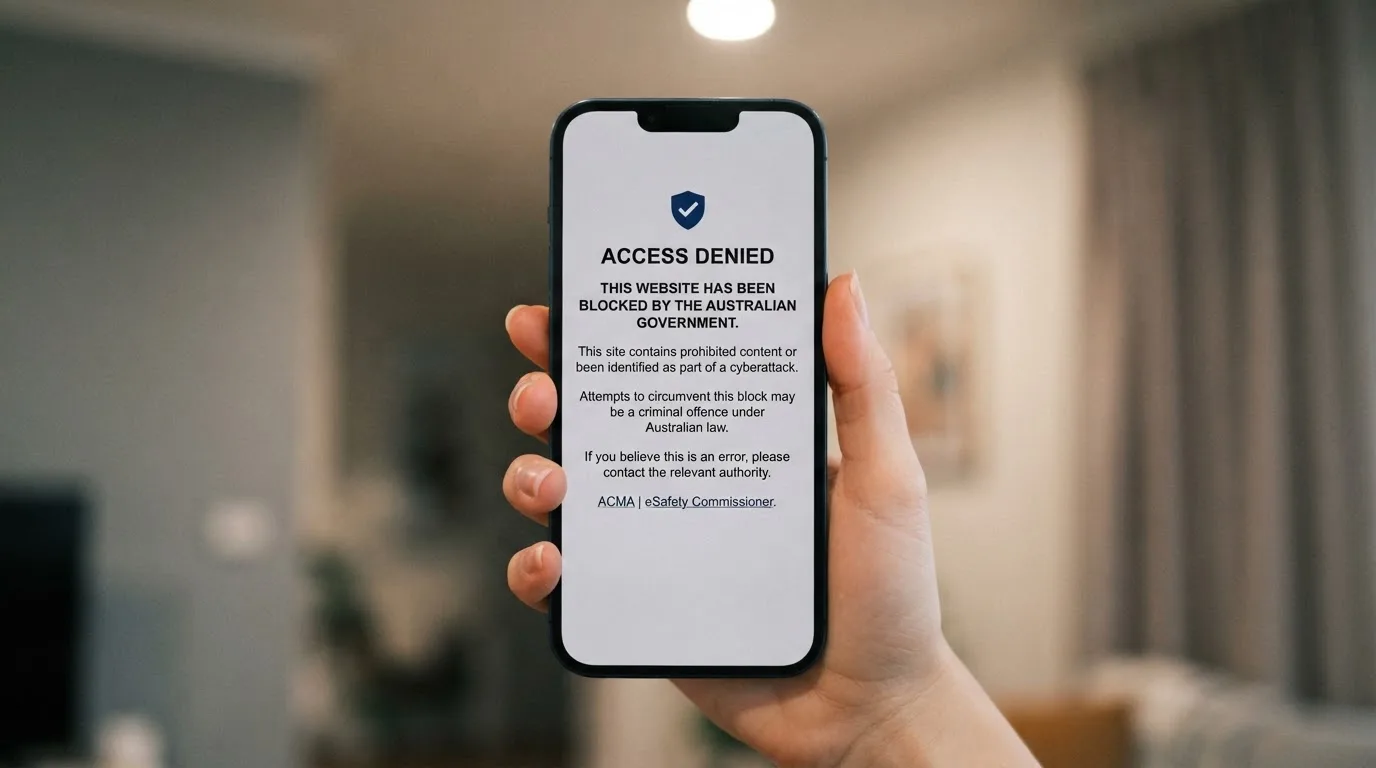
That register is the public version of the question “who is offering this to me right now.” A reader who wants to check a brand before depositing can find the ACMA’s formal-warning list at acma.gov.au, match the corporate entity printed in the footer against the operator name in the warning, and treat any match as the answer.
What the licensing banners on these sites actually mean
Every brand in the table above prints a licence in its footer — Curaçao, Anjouan, the Kahnawake Gaming Commission — and several print a regulator’s name in a way that suggests local cover. They have none. The Interactive Gambling Act 2001 prohibits the supply of online casino games and online pokies to a person physically in Australia, and no state or territory issues a licence that authorises it. A Curaçao sub-licence is permission to operate from Curaçao to players the Curaçao regulator authorises; it is not permission to take an Australian deposit. A footer banner is a piece of marketing copy about the operator’s home jurisdiction, and the ACMA’s enforcement record is the Australian jurisdiction’s reply to it.
The same applies to the “subject support” column in the table. Where a third-party listing places a brand — BGaming’s partner page, a Wikipedia article, a regulator’s name in a news piece — that is what the listing says about the brand’s reach. It is not an Australian licence, and it does not change the row above it.
The legal landscape: what is prohibited, what is licensed, and what is enforceable
Australia’s online gambling regime rests on one statute. The Interactive Gambling Act 2001, as tightened by the Interactive Gambling Amendment Act 2017, makes it an offence to provide online casino games, online pokies or in-play betting to a person in Australia. The IGA targets the provider, not the individual player: an Australian punter depositing at an offshore casino is not committing an offence under the IGA, but the casino is. The enforcement tools sit with the ACMA — investigations, formal warnings, infringement notices, and directions to Australian internet service providers to block offending services.
What is licensed sits in a different corner. The Northern Territory Racing and Wagering Commission regulates 52 of Australia’s online bookmakers, including Sportsbet, Bet365 and Ladbrokes, on a tax-driven licensing model that produces about A$7 million a year in territory revenue. The commission has no full-time staff and meets once a month in Darwin. The licensable products are wagering on races and sport placed before the event, lotteries and keno; the IGA’s carve-out for wagering is the reason a Sportsbet or a Ladbrokes can lawfully accept an Australian customer while an online casino cannot.
The minimum age for any licensable Australian gambling product is 18, and the prohibitions on payment methods apply to those licensable products, not to an offshore casino’s deposit screen. Since 11 June 2024, credit cards, credit-related products and digital currency are banned as payment for licensed online wagering; legal deposit routes are debit card, bank transfer, PayID/Osko and BPAY. Penalties for licensed operators accepting a banned method reach A$247,500. An offshore casino asking for a credit card or a Bitcoin deposit is not bound by that rule, because it is not bound by any Australian rule — but neither is its customer covered by any Australian consumer protection.
The 2026 reform sits one step ahead. The Interactive Gambling Amendment (Gambling Reform) Bill 2026 passed Parliament on 19 August 2026 and brings in new advertising and inducement measures that commence on 1 January 2027. It is law with a future start date; on a page read in 2026 it is not yet in force. The shape of what comes next is set, the shape of what is enforceable today is what it has been since 2017.
The legal framework: licensed vs prohibited
| Service Category | Regulatory Status | Enforcement |
|---|---|---|
| Online sports wagering | Licensed (NT model) | Regulated by NTRWC |
| Online casino games | Prohibited by IGA | ACMA warning / ISP block |
| Online pokies | Prohibited by IGA | ACMA warning / ISP block |
| In-play betting | Prohibited by IGA | ACMA warning / ISP block |
A page about a prohibited product has one arithmetic task worth doing: how fast has the ACMA been removing the supply it can reach, and where on that curve are we now. The inputs are the running total of blocked sites reported on 26 June 2026 and the date of the first blocking request.
The running total is 1,751 illegal gambling and affiliate marketing websites blocked since the first blocking request in November 2019, with more than 230 unlicensed gambling services having left the Australian market since 2017 enforcement was strengthened. The first blocking request dates to November 2019, so the window from first request to the reported total runs roughly 6.6 years, or about 80 months.
That is a band, not a single figure: somewhere between 21 and 22 sites blocked per month on average across the full window, with the per-month figure clearly higher in the most recent reporting rounds than it was in 2020 and 2021. The June 2026 round alone directed ISPs to block another 12 websites — 7Signs, ChromaBet, Donbet, Duospin, Freshbet, Slots Gem, Jacks Club, Lucky Start, Pointsbetz, Spinrise, Vinyl Casino and Wildsino. The point of stating the band rather than a single figure is that the monthly average smooths over the stepped pattern the ACMA itself reports — long quiet months and a dozen-or-more blocks concentrated in a single round. The trend is clearly upward; the exact monthly number is not.
Tax and winnings for an Australian player
The IGA addresses the provider. The Income Tax Assessment Act 1997 addresses the punter. Gambling winnings of a recreational player are not assessable income, and gambling losses are not deductible. The carve-out is a person who carries on a business of gambling — a professional gambler — whose treatment falls under ordinary income rules. For a reader of this page, the default position holds: winnings from a session at a pokie, at a casino table, or at an offshore site that was nevertheless accessible from Australia are not taxable income, and the losses against them are not deductible. The Tax Office website carries the full statement and is the source to check before acting on either side of the line.
Responsible play: the tools that actually apply
The responsible-gaming shelf for an Australian reader does not live at the offshore casino. Two instruments do most of the work, and a third gives the helpline number that sits behind both.
BetStop, the National Self-Exclusion Register, has been live since August 2023. It binds every Australian-licensed online and phone wagering service — the same 52 Northern Territory-licensed bookmakers and their interstate counterparts — so a self-excluded punter cannot open a new account at any of them for the period they nominate. BetStop does not bind an offshore casino, because the offshore casino has no integration with the register and no obligation to honour it. Self-excluding from a Curaçao-licensed operator is a setting on that operator’s own platform; the operator can honour it, change it, or ignore it.
The National Gambling Helpline is 1800 858 858, free and 24/7, with web chat at Gambling Help Online. It is the line that picks up regardless of whether the gambling is legal or illegal, and the entry point for financial counselling, peer support and referral to face-to-face services in each state and territory.
State-based self-exclusion schemes sit underneath BetStop and cover the venues a reader can physically walk into. New South Wales, Victoria, Queensland, South Australia and the ACT each run a register of their own that excludes a person from clubs, hotels and casinos in that jurisdiction, with mutual recognition agreements that extend the exclusion across state borders. A reader who wants the broader cover signs up to BetStop and to their state’s register; one without the other leaves a gap the readymade comparison will not flag.
What an offshore casino does not provide
The marketing copy at every brand in the ranking table above claims responsible-gaming tooling: deposit limits, cool-off periods, reality checks, self-exclusion buttons inside the account. None of those buttons are connected to BetStop, none of them is enforced by an Australian regulator, and none of them survives the operator changing its terms or simply closing the account. The Australian Consumer Law does not reach a Curaçao or Anjouan-licensed operator’s terms of service, and there is no Australian complaints body — the Australian Financial Complaints Authority, the Telecommunications Industry Ombudsman, the state and territory gambling regulators — that will take a complaint against one of them. A dispute over a refused withdrawal at an offshore casino sits in the courts of the operator’s home jurisdiction, with the cost and complexity that implies.
The gameplay shelf: what a low volatility slot is, and where the catalogue actually lives
The term “low volatility slots” is a technical one from the design side of slot machines. Volatility, also called variance, describes the spread of outcomes across a session: low volatility slots pay out more often and at smaller amounts, high volatility slots pay out less often and at larger amounts. The paytable and the symbol distribution drive both ends, and modern video slots — five reels or more with fifty or more symbols per reel — can produce odds as long as 300 million to one against a top combination, against a classic mechanical three-reel’s roughly 1,000 possible combinations.
The catalogue a reader in Australia can actually play sits in two places. The first is licensed pokie venues — pubs, clubs and casinos — regulated by state and territory gambling regulators. Pokies-style slot machines outside casinos numbered 87,298 in New South Wales at June 2023, 26,380 in Victoria across 2021–22, 21,122 in Queensland at October 2023, 11,672 in South Australia at September 2023 and 3,587 in the ACT at November 2023. By 2010 Australia operated an estimated 97,103 gaming machines outside casinos, a per-capita rate about five times that of the United States. The vast majority of those machines are low-volatility by design — clubs want longer sessions, and a low-volatility machine produces the steady drip of small wins that lengthens a session.
The second place is the licensed casino floor. Crown Melbourne, regulated by the Victorian Gambling and Casino Control Commission, operates three baccarat variants and a blackjack suite whose rule changes the regulator publishes on a public log. New South Wales requires the same kind of pre-approval under section 66 of the Casino Control Act 1992. State and territory regulators list the approved games and rule variations on their websites, which is the closest thing an Australian reader has to a verifiable game catalogue.
What an offshore catalogue looks like from this side
The offshore catalogue is what the eleven brands in the ranking table carry. The providers are recognisable — BGaming, Pragmatic Play, NetEnt, Evolution for live tables — and many of those providers publish their partner lists publicly. Where a brand appears on a provider’s partner page, the BGaming listing for Level Up Casino or the Wikipedia entry for National Casino, that is what those listings report. It is not an Australian licence, and a slot available there is not available to a reader in Australia without the offshore site the provider is partnered with.
The “subject support” column in the ranking table reads that listing line for what it is. Most rows carry an em dash because no listing was found that places the brand; a few rows cite a listing source by name. None of those listings are a licence to deal with Australians; they are the brand’s footprint in third-party catalogues.
Table games on a regulated floor: what the house edge actually looks like
A reader who treats volatility as the only design variable is missing half of the picture. On a regulated Australian casino floor, the table games carry their own house-edge figures, set by the rule book and approved by the regulator before a hand is dealt. The Pass/Come bet on a craps table carries a house edge of 1.41%; Don’t Pass/Don’t Come sits at 1.36%; Any Craps runs to 11.11%. Baccarat’s Banker bet is 1.06%, the Player bet 1.24%, the Tie bet 14.36%. Blackjack with optimal strategy under liberal Las Vegas Strip rules — dealer stands on soft 17, double on any two cards, double after split, resplit aces, late surrender — has a house edge of about 0.28%; Atlantic City rules move it to about 0.43%.
The numbers matter for the same reason volatility matters: they are the cost of a session, in the long run, against a stated set of rules. A player who knows the rule book and plays the strategy the book was built for is paying 28 cents on the hundred at a liberal-rules blackjack; a player who picks a Tie at baccarat is paying A$14.36 on the hundred and not getting the entertainment back. None of these figures are negotiable at the table. They are what the game costs.
Baccarat’s regulatory record on a Victorian floor
Crown Melbourne offers Traditional Baccarat, Crown Baccarat and 2 to 1 Baccarat as approved table games, with the Victorian Gambling and Casino Control Commission replacing the VCGLR as the casino regulator on 1 July 2022. The baccarat shoe runs six or eight decks in punto banco, the most-played variant, developed in Havana during the 1940s; cards two through nine count at face value, ten and the face cards count as zero, and aces count as one, with hand totals taken modulo 10. The regulator’s approval of each variant is a public document, and a player on the floor can ask for the approved rules under section 66 of the equivalent New South Wales legislation or under the Casino Control Act 1991 in Victoria. The right sits in the statute, and it is what makes a regulated table game auditable in a way an offshore slot catalogue is not.
Blackjack on a regulated floor: what the rule book does
Blackjack’s house edge varies with the rule set because the rule set is what the dealer plays to. The most common Australian casino floor configurations sit close to the liberal Las Vegas Strip variant — dealer stands on soft 17, double after split, resplit aces — which puts the optimal-strategy house edge near the 0.28% line. Less liberal configurations move it up; a dealer who hits soft 17 adds about 0.2%, and a single-deck game that pays 6:5 on blackjack rather than 3:2 adds about 1.4% on its own. The Victorian regulator’s public log records rule changes as they happen: a “Free Bet” option with a new “Pot of Gold” side bet on 25 March 2024, and the renaming of the “Perfect Pairs” side bet to “Crown Pairs” on 23 December 2024. A punter who reads the log before sitting down knows what the table is offering; one who does not is paying for what the marketing copy describes.
A short history of the slot machine itself
Charles Fey of San Francisco developed the first automatic slot mechanism in the late 19th century: a three-reel machine with five symbols — horseshoes, diamonds, spades, hearts and the Liberty Bell — where three bells in a row paid the top prize of ten nickels. Bally’s “Money Honey” in 1963 added the bottomless hopper and automatic payout of up to 500 coins without an attendant. The first video slot machine followed in 1976 from Fortune Coin Co. in Kearny Mesa, California. New South Wales legalised slot machines in 1956, and the proliferation since — to 97,103 gaming machines outside casinos by 2010 — is the Australian footprint of that lineage. The volatility that defines the modern low-volatility slot is a design variable that sits on top of this hardware and software lineage, not a replacement for it.
State-by-state pokie counts as a reader’s working number
The state-by-state pokie counts are the working numbers a reader can take to a state regulator’s website and check. NSW at 87,298 (June 2023), Victoria at 26,380 (2021–22), Queensland at 21,122 (October 2023), South Australia at 11,672 (September 2023), ACT at 3,587 (November 2023). Each is published by the state regulator with its own methodology and date stamp, which means a reader who wants a current number goes to the regulator, not to a cached page. The Victorian Commission for Gambling and Liquor Regulation publishes an annual pokie data report; the NSW Liquor and Gaming authority publishes quarterly summaries; the Queensland Office of Liquor and Gaming Regulation maintains a public pokie register. Each is a different document, with a different shape, and a reader who treats the numbers above as a snapshot is reading them correctly.
Frequently asked questions
What does low volatility mean for a slot machine?
Low volatility describes a slot machine whose paytable produces frequent small wins rather than infrequent large ones. A typical low-volatility slot pays out on a high proportion of spins, with most of those pays below the stake or close to it, and the bulk of the return concentrated in feature rounds or stacked wilds rather than the rare top combination. A player’s session bankroll moves slowly, and the session lasts longer for a given stake than it would on a high-volatility design.
How does low volatility differ from high volatility in slot design?
A high-volatility slot produces the same overall return to player across a long run, but parcels it out in fewer, larger wins. The cost of that design is more losing spins between wins, and a faster depletion of a session bankroll on a cold streak. Low-volatility designs reverse the trade: more winning spins, smaller amounts, less peak excitement and a flatter session curve. Neither is “better” — the difference is in how a session feels and how long a given bankroll lasts under each design.
Is it legal to play low volatility slots at an online casino from Australia?
No Australian jurisdiction licences online casino games or online pokies for Australian residents, and the Interactive Gambling Act 2001 prohibits the supply of those games to anyone in Australia. The individual player is not prosecuted under the IGA, but the offshore casino accepting the deposit is, and the ACMA has issued formal warnings and directed blocking actions against a long list of offshore operators doing exactly that. A balance held at an offshore casino is not protected by Australian consumer law, the Australian Financial Complaints Authority or any state and territory gambling regulator, and can be lost if the site is blocked or its terms are changed.
Are low volatility pokies-style machines common in Australian pubs and clubs?
Yes, and they dominate the licensed floor. Most of the 87,298 pokies-style machines outside casinos in NSW at June 2023, the 26,380 in Victoria across 2021–22, and the 21,122 in Queensland at October 2023 are low-volatility by design. Clubs and pubs want longer sessions; a low-volatility machine produces the small, steady wins that hold a punter at the machine. High-volatility machines exist on casino floors but are a smaller share of the licensed fleet.
Where can someone see how many pokies machines operate in their state?
Each state and territory regulator publishes its own pokie data. NSW Liquor and Gaming publishes quarterly summaries; the Victorian Commission for Gambling and Liquor Regulation publishes an annual report; the Queensland Office of Liquor and Gaming Regulation maintains a public register; the South Australian Consumer and Business Services and the ACT Gambling and Racing Commission publish their own counts. The most recent published figures are 87,298 in NSW (June 2023), 26,380 in Victoria (2021–22), 21,122 in Queensland (October 2023), 11,672 in South Australia (September 2023) and 3,587 in the ACT (November 2023), each with its own methodology and date stamp.
Does volatility affect how often a slot machine pays out, not just how much?
Yes — frequency and size move together on a slot machine, because both come out of the same paytable. A low-volatility paytable produces more winning combinations of smaller amounts, so a session sees more “wins” of less than the stake, and the bankroll walks down slowly. A high-volatility paytable produces fewer winning combinations of larger amounts, so a session sees longer dry patches and larger pops when the paytable fires. The two outcomes are not independent choices for the designer; they are two sides of one paytable.