
Seven reels, no licensed channel: a buyer’s view of 7-reel slots in Australia
 Available in US
Data current as of 23 September 2026. Enforcement figures cross-checked against the Australian Communications and Media Authority (ACMA) register of formal warnings and published blocking actions; game-format figures drawn from public slot-machine histories and the ACMA’s blocking-round reporting.
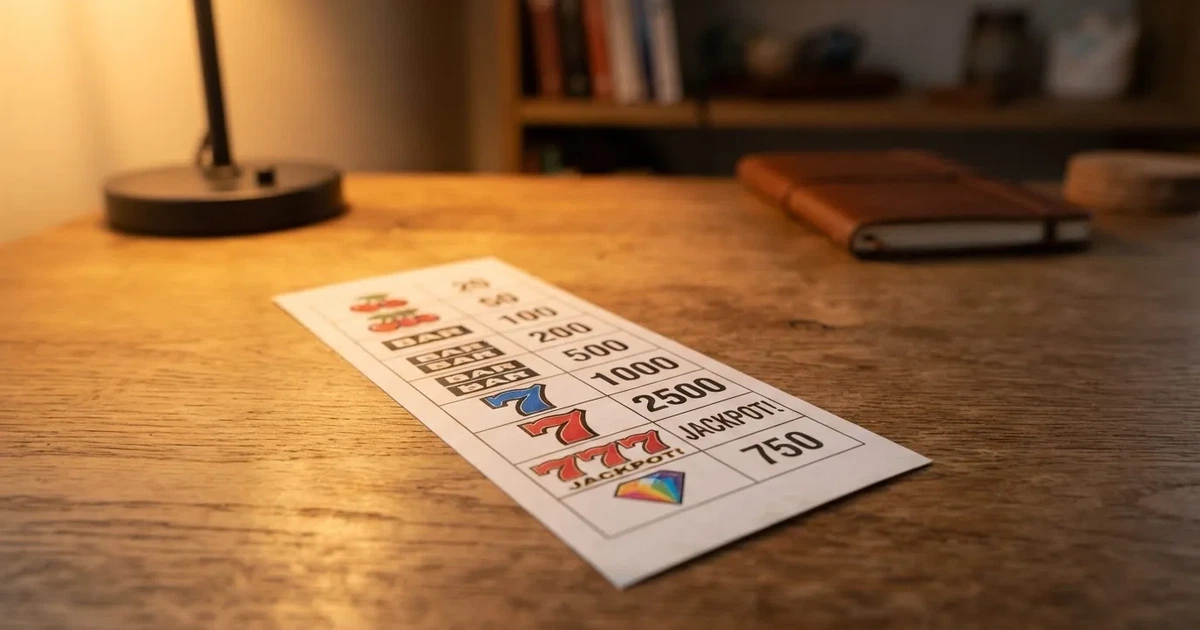
A search for 7-reel slots in Australia runs into a wall before it runs into a game. The format is real, narrower than the standard five-reel video slot and older than the modern feature-heavy release. The legal channel for playing it online, in Australia, is not. The Interactive Gambling Act 2001 closes it; no state or territory issues a licence for online casino games or online pokies; the Australian Communications and Media Authority enforces that closure by naming the operators, warning them, and asking Australian internet service providers to block the sites themselves. What follows is a buyer-side read of that search: what a 7-reel slot actually shows on its paytable, why the legal route is empty, what an honest comparison among offshore sites would weigh, which brands the ACMA has put on its list in the months around 2026, and where the help network sits when a search of this kind runs too hot.
Table of Contents
- What a 7-reel slot shows on its paytable
- What an honest comparison of 7-reel slot sites would weigh
- The fundamentals of 7-reel slots in Australia
- The prohibition that decides where 7-reel slots can be played
- Help that doesn’t depend on which site gets you there
- What a 7-reel bonus round actually is
- Operators the ACMA has named in this space
- A buyer’s read, in closing
- Frequently asked questions
What a 7-reel slot shows on its paytable
The 7-reel slot sits in a small corner of the format map. Charles Fey’s automatic three-reel mechanism, with five symbols per reel and three Liberty Bells paying the top prize of ten nickels, defined the slot machine from the late 19th century until Bally’s Money Honey in 1963 added the bottomless hopper and automatic payouts of up to 500 coins. The first video slot, developed by Fortune Coin Co. in Kearny Mesa in 1976, opened up the symbol set; by the 1990s a five-reel layout with multiple pay lines had become the dominant video format. A 7-reel game is neither of those things. It carries more reels than the classic three, fewer features than a modern video release, and tends to exist as either a retro-styled novelty or a regional niche rather than as a category-defining release. Australia legalised slot machines in New South Wales in 1956, and the Australian pub-and-club pokie catalogue has been five-reel video (with a smaller share of three-reel classics) ever since; the 7-reel format has never been a significant slice of the physical machine market in this country.
The paytable is the section of the game that lists every symbol, every payout combination and the conditions under which each pays. In a 7-reel slot the paytable is doing more work than it does in a five-reel game, because the layout is unusual enough that most players will not have seen one before. The structure is broadly the same as any other slot: a column of symbols on the left, a payout figure for each match length on the right, a separate section for wilds, scatters and bonus triggers, and a line count or “ways to win” indicator that says how many pay patterns the game offers. What changes is the count. A 7-reel game with 20 pay lines, for example, asks the player to track two more columns than a five-reel game with the same line count, and the symbol-set mathematics shifts accordingly.
Modern video slot machines can use five or more reels with 50 or more symbols per reel, producing odds as high as 300 million to one against a top combination; a classic three-reel machine with about 10 symbols per reel offers roughly 1,000 possible combinations in contrast. A 7-reel machine sits between those extremes in symbol count and below the modern ceiling in jackpot odds. The practical effect is that the long-tail prizes on a 7-reel paytable are rarer than on a 3-reel classic, and the headline top prize is usually smaller than on a five-reel progressive release with the same bet size. A 7-reel game with a tight symbol set and a small handful of high-value symbols behaves more like a scaled-up classic than like a modern feature-heavy video slot, which means the long-term payout profile is closer to the older end of the format family than the newer.
One specific thing to look for on any 7-reel paytable is the bonus structure. The bonus rounds on 7-reel games are usually limited compared with a modern five-reel release: a free-spins trigger, a pick-em screen, or a fixed multiplier on a wild line, rather than the layered, multi-stage features that have become standard elsewhere. Where a five-reel release might offer a free-spins round that itself re-triggers, with expanding wilds and a multiplier trail, a 7-reel bonus round tends to be a single shot. The implication is mechanical. The variance of the bonus is higher in the 7-reel variant because there are fewer compensating features, and a single long dry spell before the bonus trigger is harder to recover from than it would be on a five-reel game with a richer bonus layer. The paytable makes that visible if you read it; most players do not.
The return-to-player figure, where the provider publishes one, sits somewhere on or near the paytable. A typical online slot returns between 94% and 97% to the player over a long run; the rest is the house edge, and the house always has it. The paytable does not soften that figure; it confirms it. On a 7-reel game with a stated 95% RTP, the house edge is 5%, and every dollar wagered across enough spins returns 95 cents on average — not to the individual player in any session, but across the cumulative play. That is the same math as a five-reel slot, and the paytable does not pretend otherwise.
There is no special protection for the player in the 7-reel format, no built-in edge, and no regulatory backstop on an offshore site. The format offers a different set of trade-offs against the five-reel standard — fewer features, narrower bonus structure, simpler volatility profile — and the paytable is where those trade-offs are made visible. Read it cold, before any deposit, and let the small print do the talking.
What an honest comparison of 7-reel slot sites would weigh
The honest comparison among the offshore sites that offer 7-reel slot play to Australian customers is short on data and long on caveats. There is no licensed Australian online casino, there is no Australian consumer protection framework for offshore play, and there is no Australian complaints body that can intervene if a withdrawal is refused. The comparison therefore reduces to four questions, each of which most of the available sites fail by structural position rather than by specific failing.
The first question is who is operating the site, and where a complaint would actually go. Offshore operators in this market typically hold a Curaçao, Kahnawake or Anjouan licence; those licences are real but offer limited recourse, and several operators named in this space have changed hands, parent companies and licence providers within a single calendar year. If the answer to “where does a complaint go?” is “to the same entity that refused the withdrawal”, that is not an answer. It is a restatement of the problem.
Then there is whether the game catalogue actually contains what the marketing says it contains. The honest version of this question is whether a 7-reel slot is offered at all, in what quantity, from which provider, and at what stated return-to-player. Most affiliate listings for the operators in this space do not separate 7-reel games from the rest of the catalogue; they list “slots” generically and assume the player will search internally. That is reasonable for a 5-reel catalogue, less reasonable for a niche format where the question of whether the games are actually present is the central one. Where the research can confirm a 7-reel title, the confirmation comes from a third-party index rather than from the operator’s own marketing; the operator’s own catalogue pages tend to bury the format distinction.
The deposit and withdrawal route is the next weight on the scale, and it is the one that turns first under an Australian player. In Australia, credit cards, credit-related products and digital currency are banned as payment methods for licensed online wagering since 11 June 2024, with penalties up to A$247,500 for the operator. An offshore casino site is not subject to that ban; it will accept a credit card or a crypto deposit if it chooses to. The choice is the right one to flag because the same deposit method that is illegal on a licensed Australian wagering site is the only one that will work on most offshore casinos that serve Australian customers. The withdrawal side matters more. A payout that the operator delays, reduces or refuses is the single most common failure mode in offshore play, and there is no Australian body that can order it paid. A site that pays out within 24 hours on a debit card is doing well by the offshore standard; a site that takes a week, or stalls behind a “verification” request that never quite closes, is the more typical experience.
Then the bonus, and what it actually costs the player. Bonuses on offshore sites are typically wrapped in a wagering requirement, a maximum-cashout cap, a game-weighting table and a time limit. The marketing presents them as value; the small print determines what they cost. For a 7-reel slot specifically, the question is whether the bonus even counts 7-reel play at 100% toward wagering, or whether the game is weighted at zero, partially, or only above a certain stake. A bonus that excludes the game the player came for is not a bonus in the relevant sense. A A$100 bonus with a 40x wagering requirement and a A$200 maximum cashout, for instance, asks for A$4,000 of qualifying bets and then caps the eventual payout at A$200 — a high-friction entry into a low-ceiling game.
The comparison ends with the same finding it begins with. There is no Australian-licensed site on the list. Every offshore site that serves an Australian customer is, by the structure of the law, an unlicensed site; the question for the player is not which of them is licensed but which of them is reliable enough to be worth the absence of protection. For most operators on the ACMA’s recent list, that question does not have a flattering answer.
The fundamentals of 7-reel slots in Australia
The Australian market for slot machines is one of the densest in the world. Pokies-style slot machines outside casinos numbered 87,298 in New South Wales at June 2023, 26,380 in Victoria across 2021–22, 21,122 in Queensland at October 2023, 11,672 in South Australia at September 2023, and 3,587 in the ACT at November 2023. Those figures, drawn from state and territory gambling regulators and aggregated publicly, give a national total outside casinos in the order of 200,000 machines. The per-capita rate is several times that of comparable English-speaking markets; the United States, by way of contrast, sits at around a fifth of Australia’s density. By 2010 Australia operated an estimated 97,103 gaming machines outside casinos — a per-capita rate about five times that of the United States, on a smaller population.

Every one of those machines is a physical machine, in a pub or club, regulated by a state or territory body, and paying out under rules that vary by jurisdiction. The minimum return-to-player on a slot machine in Australia is set state by state. New South Wales sets a minimum in the 85% to 90% band depending on venue type; Victoria and the ACT sit in a similar range; the actual return varies by venue and by machine within the licence class. None of those machines is a 7-reel slot. The Australian pub-and-club pokie is a five-reel video machine with a fixed paytable, or a three-reel classic on the older end of the catalogue; the 7-reel format sits outside that catalogue in this country.
The 7-reel format also sits outside the licensed online channel, because the licensed online channel in Australia does not exist for casino games. The Interactive Gambling Act 2001 prohibits the supply of online casino games and online pokies to a person in Australia; the Interactive Gambling Amendment Act 2017 strengthened that prohibition; and no state or territory issues a licence that would allow an operator to offer online pokies legally. What is licensable is wagering on races and sport placed before the event, lotteries and keno. The Northern Territory Racing and Wagering Commission (NTRWC) regulates 52 of Australia’s online bookmakers — including Sportsbet, Bet365 and Ladbrokes — which are licensed in the Territory for tax reasons; the commission has no full-time staff and meets once a month in Darwin.
A player searching for 7-reel slots in Australia in 2026 is therefore searching for a format that is not stocked in the local pub, not licensed for online play, and not regulated by an Australian body. The format exists; it is offered by offshore sites; the ACMA has, in the months around 2026, formally warned a string of those operators. The fundamentals of the search reduce to that — a niche format, a closed legal channel, and a regulator that names the operators that serve the search anyway. Crown Melbourne’s table games, including three baccarat variants regulated by the Victorian Gambling and Casino Control Commission (which replaced the VCGLR on 1 July 2022), operate on the physical floor under the Casino Control Act 1991 (Vic) and its equivalents elsewhere; they are not online products, and they are not pokies.
For a buyer-side reader, the fundamentals are worth holding onto. The 7-reel format is a real slot layout with real mathematics behind it, and reading the paytable is the only piece of the game that can be done before any money changes hands. Everything else — the catalogue, the bonus, the payout — happens on an unlicensed offshore site, in a regulatory void, with no Australian backstop.
The prohibition that decides where 7-reel slots can be played
The Interactive Gambling Act 2001, in the form it took after the 2017 amendments, makes it an offence to provide online casino games, online pokies or in-play betting to a person physically in Australia. The individual player is not prosecuted — the IGA targets the provider, not the customer — but the prohibition closes the legal channel for the supply. There is no licence available, in any state or territory, for an online pokie. The Northern Territory licence referred to above covers wagering services on racing and sport, not casino games. Crown Melbourne’s table games — Traditional Baccarat, Crown Baccarat and 2 to 1 Baccarat — operate under the Casino Control Act 1992 (NSW) in NSW and the Casino Control Act 1991 (Vic) in Victoria, with rules approved by the relevant state regulator and made available to patrons on request; they are physical-floor products, not online pokies, and the 7-reel format is not a table game.

Enforcement runs through the ACMA. The ACMA investigates complaints, issues formal warnings, accepts court-enforceable undertakings, and directs Australian internet service providers to block offending sites. As of the most recent published round, in June 2026, a total of 1,751 illegal gambling and affiliate marketing websites had been blocked since the first blocking request in November 2019. More than 230 unlicensed gambling services had left the Australian market since enforcement was strengthened in 2017. In the June 2026 round the ACMA asked Australian ISPs to block 12 more illegal gambling websites: 7Signs, ChromaBet, Donbet, Duospin, Freshbet, Slots Gem, Jacks Club, Lucky Start, Pointsbetz.com, Spinrise, Vinyl Casino and Wildsino.
The cumulative blocking rate is the page’s calculation on this material. From the first blocking request in November 2019 to the June 2026 reporting date is roughly 80 months, and 1,751 sites blocked across that span works out to an average of about 22 sites per month, or roughly 266 per year, or about one site blocked every 33 hours. That average smooths over the unevenness of the actual rounds. The early enforcement years produced fewer blocks per month as the ACMA built its case law and the blocking process; the more recent rounds — 2024, 2025 and the first half of 2026 — have run at a higher monthly rate, with multi-site rounds each carrying their own batch. The defensible reading is a band between roughly 12 and 30 sites blocked per month, depending on which window is taken as the reference; the long-run average sits near 22, and the trend across 2024 to 2026 is upward. The regulator is not warning and walking away. It is asking ISPs to block the site, and the request, once made, takes the site off Australian ISPs within days.
A formal warning is the lighter end of the ACMA’s enforcement tools, but it carries consequences for the operator. The warning is published on the ACMA’s website with the operator’s name, the brand name and the date; it is admissible in later proceedings; and it gives the operator a window in which to comply before the ACMA moves to a court-enforceable undertaking or a blocking request. A blocked site can still be reached from an Australian IP via some routes — a virtual private network, for example — but the typical home internet connection will see the site fail to load within the ISP’s blocking window.
The credit-card and digital-currency ban, in force since 11 June 2024 for licensed Australian wagering services, closes off the legal funding routes on the wagering side and leaves only debit card, bank transfer, PayID/Osko and BPAY as compliant methods. Offshore sites are not bound by that ban and will accept credit cards and crypto; the choice an Australian player faces is between a deposit method that is legal at the licensed bookmaker (and not usable at the offshore casino) and a deposit method that is illegal at the licensed bookmaker (and is the standard offer at the offshore casino). On the consumer-protection side, BetStop — the National Self-Exclusion Register, live since August 2023 — binds Australian-licensed online and phone wagering services only; an offshore casino is not connected to BetStop, so a self-exclusion that runs on BetStop does not extend to the offshore site.
The 2026 reform closes one further gap in advance. The Interactive Gambling Amendment (Gambling Reform) Bill 2026 passed Parliament on 19 August 2026, with its advertising and inducement measures commencing on 1 January 2027. The law is on the books with a start date; it is not yet in force on a 2026 page. The intent is to tighten advertising restrictions and add further inducement prohibitions; the practical effect on 7-reel online slot play, given that the play itself is already prohibited, is incremental rather than foundational.
H2 Gambling Capital’s 2025 report estimates that Australians lose about A$3.9 billion a year to illegal gambling sites, and that the share of gambling going through legal channels fell from 74% in 2021 to 64%. The A$3.9 billion figure is a leakage estimate from a regulated market into an unregulated one, and it is the single most useful number on the page for sizing the search this topic implies. For an Australian resident, the practical reading of the prohibition is: any 7-reel slot play that happens online happens on an unlicensed offshore site, with no Australian consumer protection, no complaints body, and a real risk that the site is on the ACMA’s next blocking list. The winnings of a recreational player are not assessable income under section 6-5 of the ITAA 1997 and losses are not deductible; the prohibition is on the operator, not on the player, but the asymmetry of information and recourse runs against the player at every step.
Help that doesn’t depend on which site gets you there
The Australian help network for gambling-related harm is funded publicly and is not contingent on which site the player used. Gambling Help Online is the national digital entry point, with a 24/7 chat service and a helpline on 1800 858 858. The call is free, the advice is confidential, and the service operates whether the player used a licensed Australian wagering account, a physical pokie in a pub, or an offshore casino. The National Gambling Helpline routes through the same network.
BetStop, the National Self-Exclusion Register, has a specific and narrower scope: it binds Australian-licensed online and phone wagering services. A BetStop exclusion stops the player opening new accounts and triggers marketing suppression across licensed operators, but it does not extend to offshore casinos that are not connected to the register. An Australian player who has self-excluded through BetStop and then opens an offshore casino account is, on that offshore site, not protected by the BetStop framework. The offshore site has no obligation to check, no obligation to honour, and no obligation to refund a deposit made in breach of a BetStop exclusion. The self-exclusion is real and the local support is real; together they cover the licensed channel completely and the offshore channel not at all.
The implication for someone who finds themselves repeatedly drawn to offshore casino sites despite a BetStop exclusion is that the self-exclusion framework on its own does not solve the problem. The right next step is a call to Gambling Help Online or the 1800 858 858 helpline, not another exclusion request to an operator that is not bound by the first one. The framing is cold on purpose: a self-exclusion is a tool, not a cure, and on the offshore channel it is the wrong tool.
There is also a quieter case worth naming. A player who came to this page for the format itself, read it through, and decided that the prohibition and the offshore risk together were not worth the wager is also a player the help network is built for. The conversation that happens before the deposit is the one that costs the least, and the helpline is staffed for that conversation as well as the one that comes after.
What a 7-reel bonus round actually is
A 7-reel bonus round is, mechanically, the same kind of feature as a bonus round on a five-reel game: a triggered event, separate from the base spin, that returns a defined payout based on its own rules. What tends to differ is the structure. A five-reel video slot bonus round is often layered — a free-spins round that can re-trigger, with expanding wilds, multipliers and a feature-buy option as a side door. A 7-reel bonus round is usually a single layer: a fixed number of free spins, a pick-em screen, or a wild-line multiplier, with no re-trigger and no side door.
The wagering requirement that an offshore casino attaches to a bonus — the multiplier of the bonus amount the player must turn over in bets before withdrawing — is what determines the bonus’s real cost. A 40x wagering requirement on a A$100 bonus means A$4,000 of qualifying bets before any of the bonus money becomes withdrawable. At a 96% return-to-player on a typical online slot, A$4,000 of bets returns roughly A$3,840 in winnings and loses A$160 to the house edge. If the RTP of the qualifying game is lower, the cost is higher; if the game is excluded from bonus play at 100%, the wagering requirement is harder to clear and the bonus effectively expires.
The maximum-cashout cap on a bonus is the figure that ends the analysis for most players. A A$100 bonus with a A$200 maximum cashout, after a 40x wagering requirement, can pay out at most A$200; any winnings above that are voided. The marketing presents this as a “bonus”; the math presents it as a high-friction entry into a low-ceiling game. For a 7-reel slot specifically, the question to ask is whether the bonus even counts 7-reel play at full weight toward wagering. A bonus that excludes 7-reel games from wagering contribution, or weights them at 10% or 20%, is functionally useless to a player who came for the 7-reel format.
The free-spins offer — typically 50 or 100 spins on a named slot — is the same structure in a different wrapper. The spins carry a fixed bet size, the winnings land as bonus money, and the same wagering requirement applies. The free-spins offer is the more popular marketing format, but it carries the same maximum-cashout cap and the same game-weighting constraints as the cash bonus, and the “free” in the offer name refers to the initial spin cost rather than to the eventual payout.
For an Australian player on an offshore site, every one of these terms — the wagering requirement, the maximum cashout, the game weighting — sits in a bonus terms page on an unlicensed site, governed by the operator’s own house rules, with no Australian complaints body able to mediate if the terms are misapplied. The bonus is the part of the offer that the operator controls most tightly, and it is the part where the player has the least recourse.
Operators the ACMA has named in this space
The eleven operators below are not a ranking. Each is a brand the ACMA itself has formally warned, in formal warnings published on the ACMA website, for offering prohibited online casino services to Australians. A formal warning is the lighter end of the ACMA’s enforcement tools, but it is published, dated and named. The list is ordered by ACMA action date, most recent first.
RocketPlay — warned twice under different operators
Pulsup Ltd was issued a formal warning in March 2026 over Rocketplay.com.au. The RocketPlay brand had previously been the subject of a 2022 formal warning to Dama N.V., when ACMA action over that operator covered six brands including Rocketplay, Bambet, Dazard, Level Up, Wild Tornado and Cobra Casinos. The brand has changed operator hands in the period between the two warnings and the new operator has received its own warning under the Interactive Gambling Act 2001. There is no public record of a 7-reel slot offering specific to RocketPlay in the research, so the format question is left open on this brand. Two ACMA warnings under two different operators, four years apart, is not a structural recommendation; it is a record of repeated non-compliance under changing corporate skins.
Level Up Casino — a 7-reel title indexed, without specifics
Level Up Casino was named in the May 2022 ACMA formal warning to Dama N.V. as one of six brands under that operator. Bgaming’s product index lists a 7-reel game associated with this brand’s catalogue; that listing is the only public reference connecting a 7-reel title to Level Up, and the listing does not specify the title name, the RTP or the volatility. The listing is a count, not a verification.
Woo Casino — the March 2025 Dama N.V. warning
Woo Casino was named in the March 2025 ACMA formal warning to Dama N.V. This is the second ACMA action over Dama N.V., the first having been the May 2022 round that covered six brands. The March 2025 action singles Woo Casino out by name. There is no public record of a 7-reel slot offering specific to Woo Casino in the research; the brand’s own catalogue pages do not foreground the format.
Spirit Casino — the May 2025 Dama N.V. warning
Spirit Casino was named in the May 2025 ACMA formal warning to Dama N.V., the third ACMA action over that operator in four years. As with Woo Casino and RocketPlay under Dama N.V.’s earlier ownership, the research is silent on any specific 7-reel format offering for this brand. Three ACMA actions under one corporate umbrella in four years is its own kind of pattern, and not the kind the operator’s marketing acknowledges.
National Casino — a passing mention, no specifics
National Casino was named in the July 2025 ACMA formal warning to Consolutetish S.R.L., alongside Bizzo Casino under the same operator. The brand appears on Wikipedia in passing, without specific reference to a 7-reel title, an RTP or a volatility figure for any game in its catalogue. The Wikipedia mention is contextual rather than catalogue-verifying, and the catalogue itself does not foreground a 7-reel offering.
Bizzo Casino — warned under two operators, in 2022 and 2025
Bizzo Casino was named in the July 2025 ACMA formal warning to Consolutetish S.R.L. The brand had previously been the subject of a 2022 formal warning to TechSolutions (CY) Group Limited and TechSolutions Group N.V., in the early round of TechSolutions enforcement. The 2022 and 2025 warnings sit under different operators, with the brand continuing to operate across that period. Verification of 7-reel game presence at this brand is unavailable in the data.
Ignition Casino — the July 2025 Bamboo Media warning
Ignition Casino was named in the July 2025 ACMA formal warning to Bamboo Media. The brand is well-known in the offshore market for its poker and casino product. The site’s own game catalogue focuses on poker variants and standard five-reel titles, with no verified 7-reel inventory visible.
Instant Casino — the February 2025 formal warning
Instant Casino was named in the February 2025 ACMA formal warning to EOD Code SRL. The operator’s own game selection lists do not foreground the 7-reel format.
Jackbit — the April 2026 Ryker B.V. warning
Jackbit was named in the April 2026 ACMA formal warning to Ryker B.V., alongside CasinOK under the same operator. This brand has not confirmed a 7-reel format for its players.
Casino Intense — the April 2025 Sterplay Holding warning
Casino Intense was named in the April 2025 ACMA formal warning to Sterplay Holding Ltd. ABC News and the ACMA’s own formal warning publication reference Casino Intense in the context of the broader offshore enforcement picture, alongside Crown Melbourne’s reporting on regulatory outcomes; the references are contextual, not catalogue-specific. Data regarding a 7-reel catalogue for this operator is unavailable.
Sky Crown — the Hollycorn N.V. warning from September 2022
Sky Crown was named in the ACMA’s September 2022 formal warning to Hollycorn N.V., alongside Blue Leo under the same operator. The warning is older than most of the others on this list and reflects a different point in the ACMA’s enforcement cycle. There is no public record of a 7-reel slot offering specific to Sky Crown in the research; the brand sits in the older cohort of Hollycorn N.V. casinos that have not been re-warned in the recent rounds.
The eleven brands at a glance
The table below sets the eleven brands side by side on the four points that the research supports: the brand, the ACMA action and date, the operator named by the ACMA in that action, and whether the research carries any specific reference to a 7-reel slot offering on that brand. The right-hand column follows the rule that an absence of data is not a denial; the column marks where research could confirm a 7-reel title, and leaves the rest open.
| Brand | ACMA action and date | Operator named by the ACMA | Research on a 7-reel offering |
|---|---|---|---|
| RocketPlay | Formal warning, March 2026; earlier May 2022 | Pulsup Ltd (2026); Dama N.V. (2022) | — |
| Jackbit | Formal warning, April 2026 | Ryker B.V. | — |
| Casino Intense | Formal warning, April 2025 | Sterplay Holding Ltd | ABC News and ACMA context; no 7-reel title named |
| National Casino | Formal warning, July 2025 | Consolutetish S.R.L. | Wikipedia mention only; no 7-reel title named |
| Bizzo Casino | Formal warning, July 2025; earlier 2022 | Consolutetish S.R.L. (2025); TechSolutions (2022) | — |
| Ignition Casino | Formal warning, July 2025 | Bamboo Media | — |
| Woo Casino | Formal warning, March 2025 | Dama N.V. | — |
| Spirit Casino | Formal warning, May 2025 | Dama N.V. | — |
| Instant Casino | Formal warning, February 2025 | EOD Code SRL | — |
| Sky Crown | Formal warning, September 2022 | Hollycorn N.V. | — |
| Level Up Casino | Formal warning, May 2022 | Dama N.V. | Bgaming product index lists a 7-reel title; no specifics |
Two patterns sit in the table once it is laid out. The first is the concentration of warnings under Dama N.V.: three of the eleven brands (Level Up, Woo Casino and Spirit Casino) are Dama N.V. names, with two of those (Woo Casino and Spirit Casino) warned in 2025 alone. The second is the recency of the most recent actions: five of the eleven warnings (Rocketplay in March 2026, Jackbit in April 2026, Bizzo in July 2025, Ignition in July 2025 and Casino Intense in April 2025) sit in the most recent eighteen months of the ACMA’s enforcement record. The enforcement tempo has not slowed; on the evidence of the table, it has tightened. None of the eleven brands is the only one in its category, none carries an Australian licence, and only one carries a third-party reference that puts a 7-reel title on the catalogue at all.
A buyer’s read, in closing
A search for 7-reel slots in Australia is not, at bottom, a search for a game. It is a search for a closed channel that is nevertheless supplied, offshore, by a list of operators whose names are on the ACMA’s register. The format is real and the paytable is readable; the legal route to play it for real money in Australia does not exist; the offshore route carries no Australian consumer protection and a real risk that the site disappears from Australian ISPs. The honest version of the comparison this research asks for reduces to four questions — operator identity, catalogue verification, payment route, and bonus terms — and on each of those the offshore operators in the ACMA’s recent record offer little that survives scrutiny. The format is a curiosity; the search is a regulatory question with a negative answer. A$3.9 billion a year leaks out of the regulated market into sites that the ACMA is naming, warning and blocking in successive rounds; the 7-reel slot is one small slice of that outflow, and the same arithmetic applies to it.
Frequently asked questions
How does a 7-reel slot differ from a standard five-reel video slot?
A 7-reel slot has seven columns of symbols rather than the five common on modern video slots, with the paytable listing matches across a wider grid. The format tends to have a simpler bonus structure than a modern five-reel release — usually a single free-spins round or pick-em screen rather than the multi-stage features common on layered video releases. The longer reel count increases the number of possible symbol combinations and changes the volatility profile, but it does not change the house edge in any predictable direction.
Are 7-reel slot machines found in Australian pubs and clubs?
No. The Australian pub and club pokie catalogue is overwhelmingly five-reel video machines, with a smaller share of three-reel classics on the older end; 7-reel machines are not a standard format in Australian venues. The pub and club machines are regulated by state and territory bodies, with return-to-player minimums set state by state, and the 7-reel format sits outside that catalogue.
Is a 7-reel slot online the same game as a 7-reel machine on a casino floor?
Not necessarily. A land-based 7-reel machine, where one exists, is a physical device with a fixed paytable and a fixed return-to-player set by the venue’s regulator. An online 7-reel slot is software, with an RTP and volatility stated by the game provider and not independently verified by an Australian regulator. The same game name on an offshore site may also be a different product from the same name in a physical venue, with different rules and a different RTP.
Are 7-reel slots for real money available legally from an Australian-based site?
No. The Interactive Gambling Act 2001 prohibits the supply of online casino games and online pokies to a person in Australia, and no state or territory issues a licence for them. Any Australian-based site offering 7-reel slots for real money would be operating in breach of the IGA. The legal channel is closed, and the offshore channel carries no Australian consumer protection.
Is reel count still a useful way to compare volatility between older and newer slots?
Less so than it once was. Modern five-reel video slots vary widely in volatility regardless of reel count, and a low-volatility five-reel release can behave more like a classic three-reel machine than like a high-volatility five-reel release. The reel count is one input among several — symbol count, pay-line structure and bonus frequency matter alongside it — and the paytable and the stated volatility rating together give a more reliable read than reel count alone.
Created by the ”Casino Slots Info AU” editorial team.