
Offshore casinos that accept MiFinity and what an Australian punter faces in 2026
Anyone who has typed “casinos that accept MiFinity Australia” into a search box has already been pushed, gently or otherwise, toward a stack of offshore sites. The listings are not hard to find. They share a payment-method page that lists MiFinity alongside Visa, Mastercard and a handful of crypto coins; they share a casino-style bonus structure; and they share the one line of fine print that no page about this subject is allowed to skip: online casino games cannot lawfully be supplied to a person in Australia under the Interactive Gambling Act 2001, however the site frames itself or whatever licence it puts in the footer. The job below is to lay that out, plain.
The data is current as of 28 October 2026 and was checked against the ACMA’s published list of formal warnings and the Interactive Gambling Act 2001.
The reason this matters is the gap between what an offshore site says it offers and what an Australian resident can actually claim if something goes wrong. A MiFinity deposit takes seconds. A MiFinity withdrawal at the same site waits for the operator’s own manual checks, which can run to several business days and which have no Australian complaints body behind them. The Australian-licensed option — debit card, bank transfer, PayID, BPAY — sits one column over, in wagering, and it does not cover casino games or pokies at all.
Table of Contents
- What the MiFinity casino landscape actually looks like in 2026
- The legal frame every MiFinity-friendly offshore casino sits inside
- What the ACMA has actually done about it
- Responsible gambling under a product the law prohibits
- Payments and payout speed at MiFinity-accepting sites
- The ACMA enforcement record against MiFinity-friendly brands
- The ACMA blocking rate as a band
- The eleven brands the ACMA has acted against
- What the broader market context says about this page
- Frequently asked questions
What the MiFinity casino landscape actually looks like in 2026
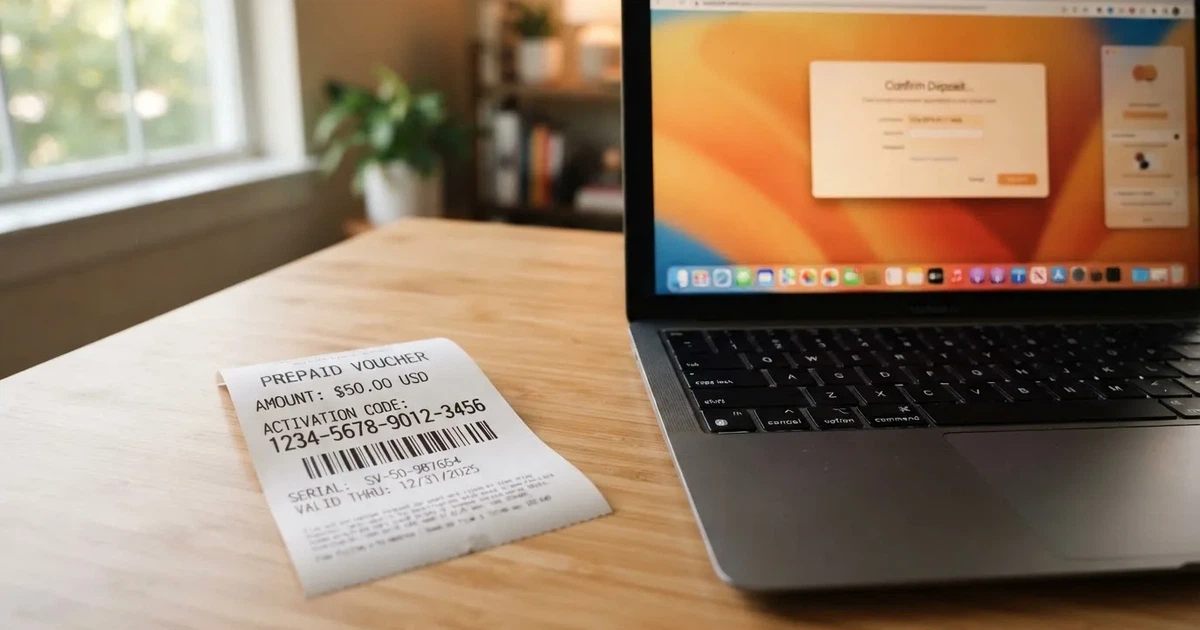
MiFinity is a regulated eWallet with two licensed entities behind it: MiFinity UK Limited, authorised by the UK Financial Conduct Authority under the Electronic Money Regulations 2011, and MiFinity Malta Limited, authorised by the Malta Financial Services Authority as a financial institution. The wallet can be topped up by card, by a local payment method that varies by country, by crypto, or by the MiFinity eVoucher — a printed prepaid voucher sold in fixed denominations by partner resellers, available in 18 currencies. That breadth is why offshore casinos list MiFinity at all: it gives the casino a payment option for players who cannot or will not use a card on a gambling merchant code.
| Fee Type | Charge |
|---|---|
| Inactivity Fee | 1 EUR / month (after 12 months) |
| Card Deposit (EEA) | 1.8% |
| Crypto Deposit | 1.8% |
| Crypto Withdrawal | 1.8% |
| Currency Markup | Up to 2.99% (standard) / 3.99% (exotic) |
The same wallet carries fees a player should know about before relying on it. Receiving money is free. Sending to friends or family costs 1% capped at 10 EUR. A personal account left untouched for 12 months starts losing 1 EUR a month to an inactivity fee. Card deposits inside the EEA carry 1.8%. Crypto deposits and crypto withdrawals both carry 1.8%. Currency conversion adds up to 2.99% over wholesale for standard pairs, and up to 3.99% for exotic ones. These are MiFinity’s own charges, before any fee the casino adds on its side.
Verification has a real cost in time. MiFinity asks for documents before a user can move to higher spending limits, which is the standard eWallet pattern but it does mean the first MiFinity withdrawal of any size will stall until the upload clears. A punter depositing with the eVoucher in fixed denominations has a different problem: the wallet takes the voucher face value whole, and a player who wants to deposit A$15 buys a A$20 voucher and lives with the leftover.
The legal frame every MiFinity-friendly offshore casino sits inside
Australia’s online gambling law is short and it is absolute. The Interactive Gambling Act 2001, as tightened by the Interactive Gambling Amendment Act 2017, makes it an offence to provide online casino games, online pokies or in-play betting to a person physically in Australia. No state or territory licenses those products. What is licensed is wagering on races and sport placed before the event, lotteries and keno, and in practice the bulk of online bookmaker licences sit with the Northern Territory Racing and Wagering Commission — 52 online bookmakers including Sportsbet, Bet365 and Ladbrokes, regulated by a commission with no full-time staff that meets once a month in Darwin.
The individual player is not the target of prosecution. The IGA targets the provider. The player who loses to an offshore site loses an Australian consumer law as well — no Australian complaints body, no local recourse if a withdrawal is refused, no BetStop coverage (BetStop binds only Australian-licensed services), and a real chance the site is blocked while a balance sits on it.
H2 Gambling Capital’s 2025 estimate puts Australians’ annual losses to illegal gambling sites at roughly A$3.9 billion, and the share of gambling going through legal channels fell from 74% in 2021 to 64%. The dollar figure is a 2025 estimate, but the direction it points is the same direction the ACMA’s enforcement record shows.
What the ACMA has actually done about it
The ACMA’s enforcement tools are formal warnings, blocking requests to Australian ISPs, and investigation referrals. The published record reads as a long list of offshore operators, and a single operator can come back several times.
The first blocking request went out in November 2019. By the ACMA’s own count as reported in June 2026, 1,751 illegal gambling and affiliate marketing websites have been blocked since, and more than 230 unlicensed services have left the Australian market since enforcement was strengthened in 2017. A single round, reported on 26 June 2026, asked Australian ISPs to block twelve more: 7Signs, ChromaBet, Donbet, Duospin, Freshbet, Slots Gem, Jacks Club, Lucky Start, Pointsbetz, Spinrise, Vinyl Casino and Wildsino.
Formal warnings tend to come in clusters. Dama N.V. took a warning in May 2022 covering six brands — Bambet, Dazard, Level Up, Rocketplay, Wild Tornado and Cobra Casinos — and then two more warnings two and three years later, in March 2025 over Woo Casino and in May 2025 over Spirit Casino. Consolutetish S.R.L. drew a warning in July 2025 over National Casino and Bizzo Casino; Bizzo had already been the subject of a 2022 warning to TechSolutions (CY) Group Limited. Bamboo Media drew a warning the same month over Ignition Casino. EOD Code SRL drew one in February 2025 over Instant Casino. Sterplay Holding Ltd drew one in April 2025 over Casino Intense. Hollycorn N.V. drew one in September 2022 over Sky Crown and Blue Leo. Ryker B.V. drew one in April 2026 over Jackbit and CasinOK. Pulsup Ltd drew one in March 2026 over Rocketplay.
The point of putting those names together is not to build a leaderboard. The point is that the same operator name keeps turning up under a new skin, and a punter who reads the brand name without checking the corporate entity behind it can believe a “new” site is a clean slate.
Responsible gambling under a product the law prohibits
A page about MiFinity-accepting casinos cannot carry a responsible-gambling section the way a page about a licensed Australian bookmaker can. BetStop, the National Self-Exclusion Register, has been live since August 2023, but it binds only Australian-licensed online and phone wagering services — none of the offshore sites in this comparison is on it, by definition. The block an Australian bank will sometimes put on gambling merchant codes works differently: Westpac refuses authorisation on transactions coded Betting/Casino Gambling at the card level on eligible personal credit and debit cards. ANZ’s gambling block, activated in the ANZ app, blocks transactions made through a digital wallet such as Apple Pay on an eligible card, not only the card itself — and once turned on, removing the block requires a 48-hour waiting period. ANZ warns, plainly, that not all gambling transactions will be blocked and that some non-gambling transactions may be blocked in error.
A reader who wants help should use the National Gambling Helpline on 1800 858 858, free and 24/7, with web chat at Gambling Help Online. Neither line asks the caller to have played at a licensed operator; the cost is the same whether the gambling that caused the call was legal or not.
Payments and payout speed at MiFinity-accepting sites
The mechanics of paying and getting paid at an offshore site are not what an Australian-resident reader is used to at a domestic bookmaker. A MiFinity deposit at a casino site typically takes seconds to confirm, because MiFinity is a wallet-to-wallet push and the casino credits it on receipt. The minimum deposit, where the casino publishes one, sits at around A$10 — small enough to make a “first try” painless, which is itself part of the marketing logic.
The withdrawal is where the gap opens. A withdrawal request sits in the casino’s own pending queue first, and only after the operator’s manual checks complete does MiFinity receive the instruction and push it back to the player’s wallet. Several business days for that queue is normal, not exceptional. The casino does not advertise this as a wait; it presents it as a security step. Either way, the punter bears it.
MiFinity’s own fees then apply on top. A crypto deposit carries 1.8%, a crypto withdrawal 1.8%, currency conversion up to 2.99% (or 3.99% on exotic pairs), and the inactivity fee on a dormant account is 1 EUR a month after a year of no login. A player who converts A$ to EUR to fund the wallet and then back again is paying the FX markup twice in one round trip. None of this is hidden, but it is easy to miss when the casino’s payment-method page lists MiFinity without naming any of the wallet-side costs.
Card and bank rails on the licensed side tell a different story. Under amendments to the IGA that took effect on 11 June 2024, Australian-licensed online wagering services cannot accept credit cards or credit-related products, and penalties reach A$247,500 for the operator. What is permitted is debit card, bank transfer, PayID/Osko and BPAY. With Osko, a transfer between participating Australian banks arrives in under a minute, 24/7 including weekends, addressed to a BSB and account number or to a PayID. Paying to a PayID shows the name of the account holder before the transfer is sent — AP+ warns that being asked to transfer money to a PayID on an illegal gambling site almost certainly means a scam site.
PayID-based instant transfers are available at over 100 Australian financial institutions. The New Payments Platform went live to the public on 13 February 2018 and is owned by New Payments Platform Australia Ltd, a non-profit whose 13 shareholders include the Reserve Bank of Australia and the country’s major banks. By April 2025 more than 25 million PayID identifiers had been registered on the platform. Participants must keep monthly outages under two minutes; in 2021 the ACCC authorised merging NPP Australia with BPAY and eftpos into Australian Payments Plus.
Apple Pay, Google Pay and Samsung Pay together accounted for around 45% of Australian card payments by number at the end of 2025. Apple does not charge consumers a fee for using Apple Pay — any surcharge is the merchant’s. Apple states that transaction limits and PIN requirements are set by the card issuer or merchant. The Reserve Bank’s July 2025 review proposes removing surcharges on eftpos, Mastercard and Visa, and explicitly leaves American Express outside that scope. None of this changes the IGA’s ban on credit-funded gambling at licensed operators; what it changes is which debit-funded path is fastest.
The ACMA enforcement record against MiFinity-friendly brands
The table below pulls together the formal warnings published by the ACMA against offshore casino brands that marketing pages list as MiFinity-accepting. None of the operators in this table is licensed to supply online casino games to a person in Australia, however they describe themselves on their own site. Where research confirms MiFinity is listed by the operator itself, that is recorded as confirmed. Where MiFinity appears only on third-party listings or affiliate pages, that is recorded as listings-only and the listings are named.
| Brand | ACMA action and date | Operator named by the ACMA | MiFinity subject support |
|---|---|---|---|
| RocketPlay | Formal warning, March 2026; earlier warning May 2022 | Pulsup Ltd; earlier Dama N.V. | — |
| Level Up Casino | Formal warning, May 2022 | Dama N.V. | listings-only (Westpac) |
| Woo Casino | Formal warning, March 2025 | Dama N.V. | — |
| Spirit Casino | Formal warning, May 2025 | Dama N.V. | — |
| National Casino | Formal warning, July 2025 | Consolutetish S.R.L. | listings-only (AUSTRAC, Wikipedia) |
| Bizzo Casino | Formal warning, July 2025; earlier 2022 | Consolutetish S.R.L.; earlier TechSolutions | — |
| Ignition Casino | Formal warning, July 2025 | Bamboo Media | — |
| Instant Casino | Formal warning, February 2025 | EOD Code SRL | listings-only (ecoPayz, PayID) |
| Jackbit | Formal warning, April 2026 | Ryker B.V. | — |
| Casino Intense | Formal warning, April 2025 | Sterplay Holding Ltd | listings-only (AUSTRAC, iTnews, NAB) |
| Sky Crown | Formal warning, September 2022 | Hollycorn N.V. | — |
The pattern is what the table cannot say: Dama N.V. and Consolutetish S.R.L. each received more than one formal warning, and the warning follows the corporate entity, not the brand. A punter who treats a brand name as the operator is missing the layer the ACMA names.
The ACMA blocking rate as a band
The ACMA’s first blocking request went out in November 2019. By its own count as reported in June 2026, 1,751 illegal gambling and affiliate marketing websites have been blocked since. That is a running total over about six and a half years, which works out to roughly 270 blocked sites a year as an average, or roughly 22 a month as another way of expressing the same number.
The honest way to read it is as a band, not a single figure. A single round in 2026 added twelve. Other rounds have been smaller; some have been larger. The June 2026 figure is a cumulative count, not a pace, so the band it sits inside is wide. A reader who wants a single number should use the cumulative one and treat the pace as illustrative rather than as a forecast.
The point is not arithmetic for its own sake. The blocking record tells a punter how often the same kind of site they are about to visit appears on the ACMA’s list. A site that lists MiFinity is not protected from a blocking request just because the payment method is convenient or because the operator is named on a regulator’s roll elsewhere.
The eleven brands the ACMA has acted against
What follows is not a ranking. The plan fixed the order and the order is the ACMA’s own publication order, grouped by warning date. Each entry covers who the ACMA named, when, and what a punter who lands on the brand should know. None of these brands is licensed to supply online casino games to a person in Australia, however the footer reads.
RocketPlay
The ACMA issued a formal warning to Pulsup Ltd over Rocketplay in March 2026. The same brand had earlier drawn a warning in May 2022, when the operator was named as Dama N.V. Two warnings, four years apart, on the same brand, two different corporate entities: the ACMA is following the operator behind the brand. The site lists MiFinity among its payment options, and research carries no independent confirmation of that listing beyond the operator’s own payment-methods page. The verdict: a brand that the regulator has had to warn twice is a brand whose corporate identity changes, and a punter who reads only the brand name is one corporate change away from a site they did not sign up for.
Level Up Casino
The ACMA’s May 2022 warning to Dama N.V. covered Level Up alongside five other brands — Bambet, Dazard, Rocketplay, Wild Tornado and Cobra Casinos. Research’s source for MiFinity at Level Up is Westpac’s gambling block page, which lists the merchant under transactions blocked at card level, not the operator’s own payment-methods page. The verdict: a brand with no fresh ACMA action since 2022 is the least bad outcome in this table, but “least bad” is still not licensed, and a brand that only shows up on a third-party blocked-merchant list is one whose own payment page the punter should still read.
Woo Casino
Dama N.V. drew a second formal warning in March 2025, this time over Woo Casino. The warning sits inside the same Dama N.V. cluster that produced the 2022 warning, and the fact that a single operator has drawn more than one warning is itself the data point. Research carries no independent confirmation of MiFinity at Woo Casino. The verdict: Woo Casino demonstrates that operator clusters draw repeated regulator action. The repetitive nature of the enforcement here serves as a persistent warning that the brand is part of a wider compliance failure rather than an isolated oversight.
Spirit Casino
Dama N.V. drew a third formal warning in May 2025, this time over Spirit Casino. Three warnings across three years against the same operator, each covering a different brand, is the clearest picture the ACMA’s published record offers of how a corporate umbrella can rebrand faster than enforcement can keep up. Research carries no independent confirmation of MiFinity at Spirit Casino. The verdict: the strongest single-actor pattern in the table, and the reason a punter who treats the brand name as the operator is reading a different layer from the one the regulator reads.
National Casino
Consolutetish S.R.L. drew a formal warning in July 2025 over National Casino. The research sources for MiFinity at National Casino are AUSTRAC and a Wikipedia entry — third-party listings, not the operator’s own payment-methods page. The verdict: National Casino represents a recurring risk in the ACMA’s enforcement reports, with third-party sources often cited where the operator’s own transparency is lacking. This history of anti-money-laundering citations makes it a brand that requires scrutiny far beyond the usual due diligence.
Bizzo Casino
Consolutetish S.R.L. drew a July 2025 warning over Bizzo Casino. Bizzo had already drawn a 2022 warning when it sat under TechSolutions (CY) Group Limited and TechSolutions Group N.V., so this is a second warning under a second corporate home. Two warnings on the same brand, five years apart, two different operators. Research carries no independent confirmation of MiFinity at Bizzo. The verdict: the second of the two “same brand, two operators” cases on this page, and a reason to treat any claim of “under new management” on a MiFinity-accepting site as the regulator-relevant fact, not a sales line.
Ignition Casino
Bamboo Media drew a formal warning in July 2025 over Ignition Casino. Research carries no independent confirmation of MiFinity at Ignition. The verdict: a brand that has been warned once, under a single named operator, is the lowest-warning-density cell in the table, but a single ACMA formal warning is still the regulator’s finding that the brand has been offering prohibited services to Australians.
Instant Casino
EOD Code SRL drew a formal warning in February 2025 over Instant Casino. The research sources for MiFinity at Instant Casino are the ecoPayz and PayID sites, not the operator’s own payment-methods page — listings-only. The verdict: a brand whose payment-method footprint on third-party sites includes ecoPayz alongside PayID is one whose payment-method pages on the operator’s own site are worth reading carefully before depositing, because what the listings say and what the cashier says are not always the same list.
Jackbit
Ryker B.V. drew a formal warning in April 2026 over Jackbit and CasinOK. Research carries no independent confirmation of MiFinity at Jackbit. The verdict: the freshest formal warning on the table, and a useful marker for how recent the ACMA’s enforcement against crypto-heavy operators has been — Jackbit is one of the brands the regulator reached in the last published round.
Casino Intense
Sterplay Holding Ltd drew a formal warning in April 2025 over Casino Intense. The research sources for MiFinity at Casino Intense are AUSTRAC, iTnews and NAB — three third-party listings. The verdict: a brand whose payment-method footprint is documented across regulator-side and bank-side references but not on the operator’s own payment page is one whose MiFinity support is reported from the outside, and that is a different shape of evidence from the operator confirming it on its own site.
Sky Crown
Hollycorn N.V. drew a formal warning in September 2022 over Sky Crown and Blue Leo. The warning is the oldest still-current entry on this table. Research carries no independent confirmation of MiFinity at Sky Crown. The verdict: the longest gap between warning and present on this page, and the one where the absence of a follow-up warning is the best available news — but a formal warning never expires for the purpose of deciding whether the brand was licensed to serve Australians.
What the broader market context says about this page
The ACMA’s blocking record and its formal-warning record do not always overlap. A brand can be named in a warning without being on a current blocking round, and a site on the current blocking round can have no formal warning on the public register. The two lists together are the regulator’s working picture, and they read as a long-running game of catch-up with offshore operators who rebrand, re-incorporate and re-list their payment methods faster than enforcement can name them again.
The marketing language around MiFinity-accepting casinos reads as though it has no regulator attached. It doesn’t: the ACMA has been publishing formal warnings against exactly this set of brands, and an Australian-licensed bookmaker has been on the same payment rails (PayID, Osko, BPAY) for years without drawing one. The difference between the two is the legal frame around them, and the legal frame is what makes the speed of the payment and the cleanliness of the cashier irrelevant if the operator is one blocking round away from disappearing.
A reader who has already deposited and finds the balance locked should treat the page on what to do next as the National Gambling Helpline at 1800 858 858, free and 24/7, and web chat at Gambling Help Online. The helpline does not require a licensed operator; the loss is the same either way.
Frequently asked questions
Is it legal for an online casino to accept MiFinity from a player in Australia?
No online casino may lawfully accept a deposit from a person physically in Australia under the Interactive Gambling Act 2001, regardless of the payment method. MiFinity is not the issue; the offer of casino games to an Australian resident is. A licensed Australian wagering service can take a debit card or a PayID transfer but not a casino deposit at all.
What is the smallest deposit a MiFinity casino site usually asks for?
Where the site publishes a minimum, it sits at around A$10. The eVoucher path sets a different minimum: vouchers are sold in fixed denominations, so the practical minimum is the lowest denomination the reseller stocks in the punter’s currency.
Does a MiFinity withdrawal clear any faster than a card withdrawal at these sites?
The casino’s manual-check queue applies to both, so on the operator side there is no difference. MiFinity’s own wallet-to-wallet push is fast once it starts, but it does not start until the operator releases the funds. A debit card refund or a PayID refund at a licensed Australian bookmaker, by contrast, arrives in under a minute on Osko.
Can MiFinity be used at every offshore pokies-style site, or only some of them?
MiFinity is listed at a large share of offshore casino sites, but not all. The brands the ACMA has acted against vary in how the wallet appears on their own payment page versus on third-party listings, and the audit reads those differences as part of the operator’s transparency, not as a payment-method preference.
Does depositing with MiFinity add an extra fee at these casino sites?
MiFinity’s own fees apply on top of anything the casino charges. Card deposits in the EEA carry 1.8%, crypto in and crypto out each carry 1.8%, currency conversion up to 2.99% for standard pairs and up to 3.99% for exotic ones. The casino may add its own deposit fee, and the eVoucher face value is taken whole, with the leftover sitting in the wallet until it is used or withdrawn.
What should a player do if a MiFinity deposit does not appear in a casino account?
The first step is the casino’s own support, because the credit is operator-side. The MiFinity wallet will show the debit regardless. If the casino does not respond, the player has no Australian complaints body to escalate to, and the ACMA’s role is enforcement, not dispute resolution. The practical steps then are to keep every transaction record, contact the bank about a card-funded top-up if that was the funding path, and call the National Gambling Helpline on 1800 858 858 for support with the underlying gambling.