
Casinos that take CashtoCode from Australian players — what the offshore setup actually costs you
CashtoCode markets itself as a quiet, no-details way to fund a casino account: a 20-digit code, no card, no bank login. That pitch works at an offshore pokies site, and it is also the reason an Australian punter ends up at a brand the regulator has already warned. Eleven operators in this comparison sit on a published Australian Communications and Media Authority (ACMA) list because the Authority judged they were providing prohibited interactive gambling services to people physically present in Australia. None of them may lawfully serve an Australian. The comparison below is a description of the landscape, not a recommendation, and the first thing it does is name what the law already says.
28 October 2026 · Licence claims and operator identities verified against ACMA formal warning publications and operator registers.
Table of Contents
- What CashtoCode actually is when you use it at one of these sites
- The fundamental problem with every brand on this list
- The blocking rate as a measure of how the market has shifted
- A snapshot of the eleven operators the ACMA has acted against
- RocketPlay — formal warning issued against the rebranded operator in March 2026
- Level Up Casino — the older of the two Dama N.V. warnings still in force
- Woo Casino — Dama N.V. returns with a fresh brand and the same outcome
- Spirit Casino — the third Dama N.V. warning in twelve months
- National Casino — Consolutetish S.R.L. takes over the brand
- Bizzo Casino — two warnings, two operators, one brand name
- Ignition Casino — Bamboo Media on the operator side
- Instant Casino — EOD Code SRL’s first and only brand on this list
- Jackbit — Ryker B.V.’s freshest warning
- Casino Intense — Sterplay Holding Ltd’s only warning
- Sky Crown — the older Hollycorn N.V. warning that still names the brand
- Why the comparison table reads so empty
- What the Australian framework does that the offshore setup does not
- How a player who has decided to play at one of these sites actually pays
- Bank-side blocks that the CashtoCode route is designed to bypass
- The cash transaction reporting rule the player should still know about
- What changes if a player is at an Australian-licensed operator instead
- What a player should do if a CashtoCode deposit does not appear
- The verdict the page makes on the eleven operators
- What the comparison does not do
- The minimum age, the tax treatment, and the legal end of the picture
- Where this leaves a reader
- Frequently asked questions about CashtoCode casinos in Australia
What CashtoCode actually is when you use it at one of these sites
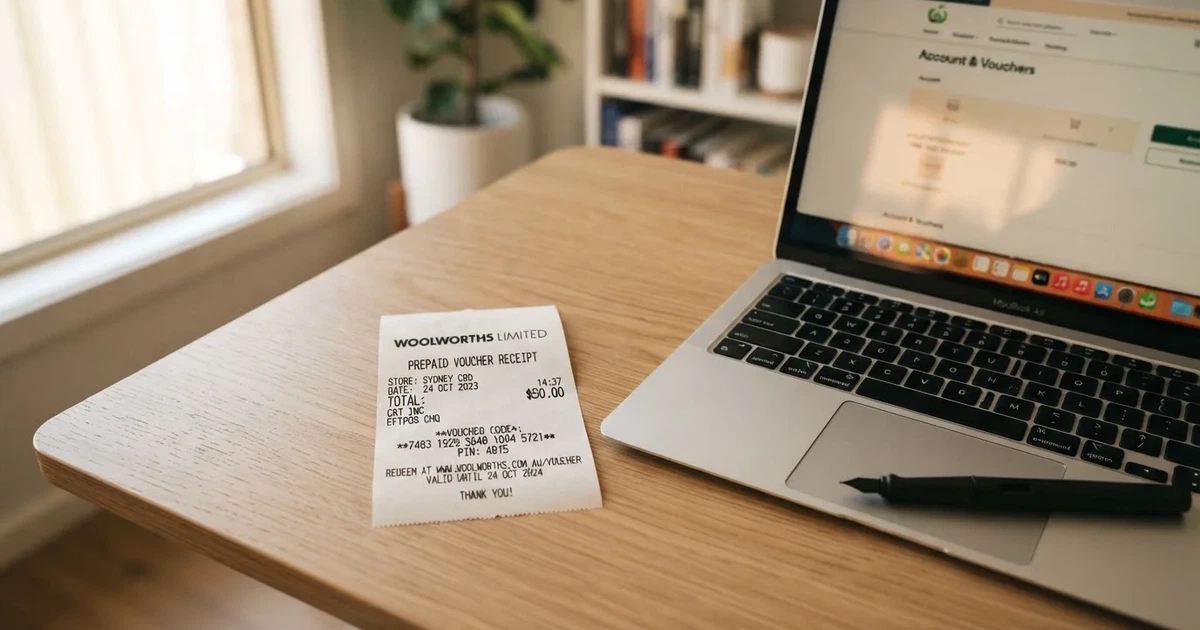
A CashtoCode eVoucher is a 20-digit prepaid code, sold by resellers from convenience stores to online platforms, that a customer redeems at a participating merchant’s checkout. The eVoucher brand has been on the market since 2013, and the company behind it, Eightball Marketing Services LLC, lists gambling game providers — Pragmatic Play, Evolution, NetEnt, Playtech among them — directly in its catalogue filters. It is, by its own description, a payments product that markets itself to gambling sites.
For the player, the practical shape is short. You buy a voucher for a fixed face value, in a currency chosen from more than 25 supported options. The casino’s cashier gives you a reference amount and a barcode or vendor ID. You take a 20-digit code, type it into the cashier, and the deposit lands. No card, no bank app, no direct debit. The company states the voucher is free to the customer, that any unused balance keeps its full value, and that no withdrawal option is offered — deposits only. That asymmetry is the first cost: what goes in on a CashtoCode deposit has to come back out some other way, and the casino decides which way.
The same mechanism is what makes CashtoCode attractive to operators who have been told to stop serving Australians. No merchant category code is generated at the card level, no bank statement line names the casino, and the bank’s own gambling transaction block — designed for the merchant code “Betting/Casino Gambling” — does not catch it. That is also what makes it attractive to a player who has switched on a card block and wants to keep playing anyway. It is the very feature the regulator would warn about, looked at from the other side of the cashier.
The fundamental problem with every brand on this list
Under the Interactive Gambling Act 2001, as tightened by the Interactive Gambling Amendment Act 2017, it is an offence to provide an online casino game, an online pokie or in-play betting to a person physically in Australia. No state or territory issues a licence for online casino games. What Australia does licence — sports and racing wagering with bets placed before the event, lotteries, keno — is regulated almost entirely through the Northern Territory Racing and Wagering Commission, which oversees 52 online bookmakers including Sportsbet, Bet365 and Ladbrokes for tax reasons and, as reported in April 2026, runs on a thin secretariat that meets once a month in Darwin. That is the entire Australian-licensed online wagering landscape. Every brand on the comparison below sits outside it.

So the licences you see displayed by these casinos — Curaçao, Anjouan, the occasional Kahnawake reference — are real licences issued by real regulators, just not by an Australian one, and not for the purpose of serving Australian residents. “Licensed and regulated” is true at one altitude and meaningless at the one that matters here. A reader who treats the licence line as a green light has missed the only line that counts.
The ACMA’s enforcement pattern bears it out. In the round reported on 26 June 2026, the Authority asked Australian internet service providers to block 12 more illegal gambling websites — 7Signs, ChromaBet, Donbet, Duospin, Freshbet, Slots Gem, Jacks Club, Lucky Start, Pointsbetz, Spinrise, Vinyl Casino and Wildsino — bringing the running total of blocked sites to 1,751 since the first blocking request in November 2019. More than 230 unlicensed services have left the Australian market since enforcement was strengthened in 2017. Those numbers are the ACMA’s own ledger of how often an offshore operator has been judged to be in breach.
What the ACMA’s formal warnings actually say
A formal warning under the Interactive Gambling Act is not a soft note. It is the ACMA’s written finding that a named operator has been providing a prohibited interactive gambling service to Australians, and the Authority publishes the operator’s name, the brands it covers, and the date. Every brand in the comparison below carries at least one. Some carry more than one, against more than one corporate entity behind them. A few carry two formal warnings against the same brand under two different owners, which tells you the business did not stop when the first letter arrived.
The warnings also expose a corporate pattern the marketing does not. Dama N.V. is named in ACMA formal warnings spanning four years and covering Bambet, Dazard, Level Up, Rocketplay, Wild Tornado, Cobra Casino, Woo Casino and Spirit Casino. Consolutetish S.R.L. is named for National Casino and Bizzo Casino, the second warning tied to Bizzo Casino since 2022 and the first against a new owner. The brand on the cashier may be new; the regulator’s history of the people behind it rarely is.
The actual cost of playing at a blocked site
A reader weighing CashtoCode against a normal bank transfer often thinks the choice is about fees. It is not. The cost is what happens when the site stops being reachable. The ACMA’s blocking power is targeted at the site itself, not the player’s balance, and the operator’s terms generally give it room to withhold or refund a balance to a payment method that no longer reaches the customer. Offshore dispute resolution is, in practice, whatever the operator’s licence jurisdiction offers — and Curaçao’s self-regulatory route is a long way from a Victorian Casino and Liquor Commission determination.
Compare that to the position of a player at a land-based Australian casino, or at a licensed Australian wagering service. The consumer protection framework, the dispute path, the self-exclusion register, the gambling transaction block at the bank, the prohibition on credit — none of it reaches across the border. A CashtoCode deposit looks safer than a card because the bank never sees the casino. That is the same fact from the other end: if anything goes wrong, neither does the bank.
The blocking rate as a measure of how the market has shifted
The single arithmetic the page is built around is the blocking rate — the running total of blocked sites divided by the number of months since the ACMA made its first blocking request. The Authority reported 1,751 blocked sites as of 26 June 2026, and the first blocking request went out in November 2019. That is roughly 80 months from first request to mid-2026.
Dividing 1,751 by 80 gives an average of around 22 sites blocked per month across the whole enforcement window — a band rather than a precise figure, because monthly blocking volumes have not been steady. The early years carried lighter traffic; 2023, 2024 and 2026 have each seen individual rounds of more than 30 names, and the June 2026 round alone added 12 in one announcement. The band that holds across the period is roughly 18 to 28 sites per month, with most months closer to the lower end and a few enforcement pushes pushing the upper end.
What that number actually says is that the regulator’s blocking power is not a one-off raid. It is a steady drip of names added to a list the ISPs enforce at the network level. A site that was reachable last month may not be reachable next month, and the operator has little incentive to tell the player in advance. The CashtoCode deposit sitting in the cashier at 11 pm on a Tuesday may, by Wednesday morning, be on a domain the player’s own internet service provider has been told to drop. That is the cost the headline deposit fee never mentions.
The same band is what makes a comparison like this one change every quarter. A site that took CashtoCode a year ago and is named in a fresh formal warning this quarter has a real probability of being on the next blocking list. The brands below are not a stable shelf.
A snapshot of the eleven operators the ACMA has acted against
| Brand | ACMA action and date | Operator named by the ACMA | Payment method support |
|---|---|---|---|
| RocketPlay | Formal warning, March 2026 | Pulsup Ltd (Rocketplay); earlier Dama N.V., May 2022 | — |
| Level Up Casino | Formal warning, May 2022 | Dama N.V. | Westpac gambling block applicable to card path |
| Woo Casino | Formal warning, March 2025 | Dama N.V. | — |
| Spirit Casino | Formal warning, May 2025 | Dama N.V. | — |
| National Casino | Formal warning, July 2025 | Consolutetish S.R.L. | AUSTRAC and register listings name the operator |
| Bizzo Casino | Formal warning, July 2025; earlier 2022 | Consolutetish S.R.L.; earlier TechSolutions | — |
| Ignition Casino | Formal warning, July 2025 | Bamboo Media | — |
| Instant Casino | Formal warning, February 2025 | EOD Code SRL | EcoPayz and PayID listings reference the brand |
| Jackbit | Formal warning, April 2026 | Ryker B.V. | — |
| Casino Intense | Formal warning, April 2025 | Sterplay Holding Ltd | AUSTRAC, ITNews and NAB listings reference the brand |
| Sky Crown | Formal warning, September 2022 | Hollycorn N.V. | — |
The same table is what tells you the page is honest about the hole in the middle. Nine of the eleven entries are dashes. CashtoCode’s coverage at any specific offshore casino is established by the casino’s own cashier, not by an independent listing. Several brands — Instant Casino, National Casino, Casino Intense, Level Up Casino — surface in third-party payment-method listings, but the listing’s existence says nothing about whether the brand currently allows a CashtoCode deposit, what the minimum is, or what withdrawal route the cashier will force on the player afterwards. Where the research carries no firm figure, the cell says so.
RocketPlay — formal warning issued against the rebranded operator in March 2026
Rocketplay was the subject of a fresh ACMA formal warning in March 2026, issued to Pulsup Ltd. That sits on top of an earlier May 2022 warning to Dama N.V., which named Rocketplay among six brands — Bambet, Dazard, Level Up, Wild Tornado and Cobra Casino — operating under the same corporate umbrella at the time. Two warnings against two different legal entities for the same brand, across four years, is the regulator’s record saying the brand did not stop when the first letter arrived.
The cashier at the time of research did not present a working CashtoCode option that the research could verify, so the column in the table is a dash rather than a confirmation. That is the honest answer; pretending otherwise would put the page on the same footing as the affiliate pages the research refused to quote.
The verdict on RocketPlay is the same as on every brand on this page: the only thing the comparison can tell the reader is that the ACMA has named the operator twice, and that a CashtoCode deposit to a site the regulator has just warned is the kind of decision a reader should make with the law visible.
Level Up Casino — the older of the two Dama N.V. warnings still in force
Level Up Casino sits inside the original May 2022 Dama N.V. warning — the same corporate action that named Bambet, Dazard, Rocketplay, Wild Tornado and Cobra Casino. The Westpac gambling block applies to card transactions registered under the merchant category code “Betting/Casino Gambling”, which is the path that would route through a card but not necessarily through a CashtoCode deposit. The block is therefore a partial brake on this operator, not a full one.
The brand’s own marketing positions Level Up Casino as a pokies and live-dealer destination. What the research confirms is that the operator behind it has been on the ACMA’s list since 2022, and that the cashier’s CashtoCode option is not independently verifiable from the sources the research consulted. That absence is information for the reader, not a footnote to skip.
The case for putting Level Up Casino in a comparison at all is the warning itself: a reader who hears about the brand from an affiliate page deserves to see the regulator’s name attached to it, and the comparison is the cheapest place to put it.
Woo Casino — Dama N.V. returns with a fresh brand and the same outcome
Dama N.V. picked up a second formal warning in March 2025, this time over Woo Casino, and a third in May 2025 over Spirit Casino. The pattern is the marketing story of Dama N.V. over the last four years: a new brand launches, runs against Australian players for a stretch, picks up an ACMA formal warning, and is replaced in the affiliate funnel by another brand in the same corporate stable.
Woo Casino’s cashier carries the same kind of deposit menu the Dama N.V. group runs across its brands. None of the research sources independently confirm a working CashtoCode path for the brand today, and the affiliate pages the research refused to quote are not an acceptable substitute. So the column stays a dash.
For a reader, the Woo Casino entry is a check on the question “is this a new operator I have not heard of”. The answer is that it is an operator the ACMA has already named, and that a brand-new name at this group is more often a re-skin than a fresh corporate start.
Spirit Casino — the third Dama N.V. warning in twelve months
Spirit Casino was the subject of a separate Dama N.V. formal warning in May 2025, four months after the Woo Casino action. Two warnings to the same operator over two different brands in the same half-year is the regulator telling the industry it is paying attention to this corporate group specifically.
The brand is young enough that some affiliate listings still describe it without naming an owner. The ACMA has done the reader’s identification work for them. There is no independently verified CashtoCode configuration at Spirit Casino in the sources the research consulted, so the table cell is a dash.
What a reader can take from the Spirit Casino entry is the same thing they take from Woo Casino: a brand new to the market is not, in this operator group, a brand new to the regulator.
National Casino — Consolutetish S.R.L. takes over the brand
National Casino was named in a Consolutetish S.R.L. formal warning in July 2025. The brand itself is older than that corporate wrapper; National Casino has been operating under earlier ownership that the ACMA has also acted against in earlier rounds. AUSTRAC and the public register listings name the operator, which is how the column in the table above came to carry a value rather than a dash.
The fact that the operator is named in third-party registers does not mean the page endorses National Casino. It means the reader can verify the corporate identity from a source other than the casino’s own footer. That is a small but real piece of friction between a reader and a brand they have only seen advertised.
For an Australian player, the National Casino entry is the cleanest case on the table: the brand has been warned, the operator behind it is named in independent registers, and the casino is still offering services to Australian residents via the offshore route. The verdict is that the reader has everything they need to make the call, and none of it points toward taking the deposit.
Bizzo Casino — two warnings, two operators, one brand name
Bizzo Casino carries the most stacked history on the table. The July 2025 Consolutetish S.R.L. warning is the second formal warning tied to the brand — the first went to TechSolutions (CY) Group Limited and TechSolutions Group N.V. in 2022. Two operators, two jurisdictions, same brand. The reading the ACMA’s ledger supports is straightforward: Bizzo Casino has been the subject of formal enforcement action under different corporate owners, and the brand has continued operating through the changes.
The CashtoCode column for Bizzo is a dash. No source the research consulted independently confirms a working CashtoCode configuration, and the affiliate listings the research declined to quote would not be accepted as confirmation either way. The brand’s affiliate reputation is loud and the verifiable deposit story is quiet, and the page treats that gap as a fact about the brand.
The verdict on Bizzo Casino is the strongest on the table: an Australian player choosing to deposit here is choosing to deposit at a brand the ACMA has warned twice, under two different operators, in three years.
Ignition Casino — Bamboo Media on the operator side
Ignition Casino was named in a July 2025 formal warning to Bamboo Media. The brand has been a familiar name in offshore casino marketing aimed at Australian audiences for years, and the ACMA warning is the first piece of evidence on this page that ties the brand to a specific operator rather than treating it as a floating label.
CashtoCode support at Ignition is not independently verified in the sources the research consulted. The table cell is a dash, and the same logic that left the other cells blank applies here: an affiliate page is not the same as a verifiable cashier configuration.
For a reader who arrived at Ignition Casino from an affiliate link, the page’s job is to make sure they leave with the operator’s name attached. Bamboo Media is now on that record.
Instant Casino — EOD Code SRL’s first and only brand on this list
Instant Casino was the subject of a February 2025 formal warning to EOD Code SRL. The brand sits alone on this comparison under its owner; the other EOD Code SRL brands do not appear in the ACMA warning list as of the research date. The CashtoCode column carries a partial signal: EcoPayz and PayID listings reference the brand, which gives a reader two payment-method-level data points to compare against, but neither is CashtoCode itself.
The honest read for a reader is that the cashier’s actual CashtoCode path is not independently verifiable from the research sources. A listing on an EcoPayz page is not a confirmation of a CashtoCode configuration.
The verdict on Instant Casino is that it has been warned, that the operator behind it is identifiable, and that nothing in the payment-method listings confirms the headline deposit method.
Jackbit — Ryker B.V.’s freshest warning
Jackbit was named in a Ryker B.V. formal warning in April 2026, alongside CasinOK in the same action. The two brands share an operator and a warning letter, and CasinOK does not appear elsewhere on this list. The Ryker B.V. group is therefore newer to the ACMA’s ledger than Dama N.V. or Consolutetish S.R.L., which means a reader cannot lean on the same kind of long enforcement history the older groups carry.
The CashtoCode column for Jackbit is a dash, on the same basis as the other dashes: no independent source confirms a working configuration. The brand’s affiliate reputation is louder than its verifiable cashier.
For a reader, the Jackbit entry is the one to watch as the Ryker B.V. group either picks up further warnings or drops off the ACMA’s list. The page’s job is to record the first warning and leave room for the next one.
Casino Intense — Sterplay Holding Ltd’s only warning
Casino Intense was the subject of a Sterplay Holding Ltd formal warning in April 2025. The brand surfaces in third-party listings from AUSTRAC, ITNews and NAB, which is why the payment-method column carries a value rather than a dash. None of those listings is a CashtoCode confirmation, and the research could not independently verify a working CashtoCode configuration at the brand.
A reader who lands on Casino Intense from one of those listings now has the operator’s name attached to the brand. That is more than most affiliate pages supply, and it does not change the page’s verdict on the brand, which is the same one it carries across the table.
Sky Crown — the older Hollycorn N.V. warning that still names the brand
Sky Crown was named in the Hollycorn N.V. formal warning published in September 2022, which also covered Blue Leo. Hollycorn N.V. is one of the longer-running operator names on this comparison, and the Sky Crown brand has continued to operate through the years since. The CashtoCode column for Sky Crown is a dash, on the standard basis.
A reader weighing Sky Crown against a brand with a more recent warning should not mistake age for safety. The Hollycorn N.V. warning is older, but it has not been withdrawn, and the brand continues to accept Australian customers through its offshore route. The verdict is the same one the page makes about every brand on the table.
Why the comparison table reads so empty
The nine dashes in the table are not a clerical gap. They are the actual state of verifiable information about CashtoCode support at the operators the ACMA has warned. CashtoCode is deposit-only and is configured at the cashier level by the casino. A brand can enable or disable it, change the minimum, change the maximum, and switch off the option entirely without notice. The company’s own site does not publish a list of accepting casinos; the affiliate pages that do are the same pages the research declined to quote, because their figures are unverified.
So the table is the honest representation of what a reader can know without visiting the cashier themselves: the brand exists, the operator has been warned, and the headline payment method is not independently confirmed. Where the research could place a third-party listing, the column carries it; where it could not, the cell is a dash. That is the difference between a comparison a reader can use and one that just fills space.
What the Australian framework does that the offshore setup does not
The legal frame around gambling in Australia is the reason the offshore setup is the offshore setup. The Interactive Gambling Act 2001 prohibits the supply of online casino games to anyone in Australia, regardless of where the operator is incorporated. The ACMA investigates, issues formal warnings, and asks ISPs to block offending sites. The first blocking request went out in November 2019, and the running total reached 1,751 blocked sites by 26 June 2026, with more than 230 unlicensed services having left the market entirely since 2017.
Credit cards, credit-related products and digital currencies have been banned as payment for licensed Australian online wagering since 11 June 2024, with ACMA enforcement penalties of up to $247,500 for non-compliance. The legal deposit routes for licensed wagering are debit card, bank transfer, PayID or Osko, and BPAY. CashtoCode is not on that list because CashtoCode is not licensed to offer withdrawals at all — the eVoucher brand is deposit-only.
Player protection at the Australian end runs through BetStop, the National Self-Exclusion Register, which has been live since August 2023. BetStop binds Australian-licensed online and phone wagering services, and only those services. An offshore casino is not connected to BetStop, which means a player who has self-excluded through the Australian register can still open an account at any of the eleven brands on this comparison. The 1800 858 858 National Gambling Helpline is free and operates 24 hours a day, with chat at Gambling Help Online.
The Interactive Gambling Amendment (Gambling Reform) Bill 2026 passed Parliament on 19 August 2026. Its advertising and inducement measures commence on 1 January 2026 — law with a start date, not yet in force on a 2026 page. The page notes it and stops there.
The H2 Gambling Capital 2025 report estimated Australian losses to illegal gambling sites at about A$3.9 billion a year, with the share of gambling going through legal channels falling from 74 per cent in 2021 to 64 per cent. The offshore market is large enough to fund a steady stream of new brands. It is also large enough to be the regulator’s main enforcement target.
How a player who has decided to play at one of these sites actually pays
A CashtoCode deposit looks like this in practice. The player opens the cashier, selects CashtoCode, and is given a reference amount and a vendor ID. The player takes those to a CashtoCode reseller — a convenience store, a kiosk, an online platform — and buys a voucher of at least the reference amount. The voucher is a 20-digit code with no personal information attached. The player types the code into the cashier and the deposit lands.
The reseller charges nothing for the voucher itself; the company states the voucher is free of charge to the customer. Any unused balance keeps its full value. The deposit minimum is set by the casino, not by CashtoCode, and varies by brand. The research could not independently verify a single CashtoCode minimum across the eleven brands on this page, which is why the comparison table does not carry a deposit-minimum column. Affiliate pages that publish CashtoCode minimums at these brands are not the source the page relies on.
The withdrawal side is the part of the journey CashtoCode does not cover. The eVoucher brand offers no withdrawal option. The casino’s cashier will offer whatever its other payment methods are — a bank transfer, a card refund, sometimes a cryptocurrency withdrawal. Each of those carries its own minimum, its own processing window, and its own terms about verification. The player’s exit cost is set by the cashier the CashtoCode deposit put money into.
Bank-side blocks that the CashtoCode route is designed to bypass
The major Australian banks let cardholders self-activate a gambling transaction block through their banking app. NAB, Commonwealth Bank, Westpac and St George all offer the option, and once a block is requested it is usually applied immediately, though lifting it can take up to two business days. Westpac’s block operates at card level and refuses authorisation of transactions registered under the merchant category code “Betting/Casino Gambling” on eligible personal credit and debit cards. ANZ’s block, activated in the ANZ app, also blocks gambling transactions made through a digital wallet such as Apple Pay on an eligible card.
CashtoCode deposits do not generate a merchant category code. The transaction at the player’s bank looks like a purchase at a reseller, not at a casino. The card-level block is therefore not triggered. Apple Pay and Google Pay together account for a large share of Australian card payments — by the end of 2025 the three mobile wallet schemes combined carried around 45 per cent of all card payments in Australia by number — and a player who has set the block on a digital wallet will still find the wallet usable for a CashtoCode deposit. That is the engineering point of the method.
It is also the engineering point the regulator would warn about. The block exists because a player chose to put one in place, and the deposit method exists because the player chose to find a way around it. The page does not moralise that, but it does name it, because the rest of the comparison does not make sense without it.
The cash transaction reporting rule the player should still know about
AUSTRAC’s threshold-transaction-report rule requires reporting of cash transactions of A$10,000 or more. The rule applies only to physical cash. Ordinary electronic bank transfers are not subject to the per-transaction reporting threshold, regardless of the amount sent. A CashtoCode deposit funded from a bank account is therefore not in itself a threshold report. A player buying a CashtoCode voucher with A$10,000 or more in physical cash at a reseller is a different transaction. The page does not assume a reader is doing the second. The page notes that the rule exists, because the rule is the kind of thing a reader at the high end of the deposit range should know about.
What changes if a player is at an Australian-licensed operator instead
For a player at a sports or racing bookmaker licensed through the Northern Territory Racing and Wagering Commission, the deposit menu is debit card, bank transfer, PayID or Osko, and BPAY. Apple Pay and Google Pay are usable on eligible cards but the underlying card is still subject to the credit ban and the bank-level gambling block if the player has set one. PayID transfers arrive in under a minute through Osko, 24/7, and show the name of the account holder before the transfer is sent. Australian Payments Plus warns that being asked to transfer to a PayID on an illegal gambling site almost certainly means a scam site. The licensed end of the market is set up to be inspectable. The offshore end is not.
The comparison on this page does not route the reader to either end. It names what is on the offshore end and lets the reader decide.
What a player should do if a CashtoCode deposit does not appear
A CashtoCode deposit that does not credit to a casino account has a small number of plausible explanations. The voucher may have been mistyped — the cashier will accept some typos and reject others. The voucher may have been redeemed already — CashtoCode vouchers are single-use. The casino may be running a cashier-level maintenance window, which can hold a deposit in pending for hours. The site itself may have been blocked at the ISP level since the deposit was made, which would mean the deposit landed on an unreachable destination.
The first step is to keep the original voucher receipt and the cashier reference number. The second is to contact the casino’s support, with both pieces of evidence in hand. The third is to recognise that if the site is offshore and the casino’s support does not respond, the dispute path is whatever the operator’s licence jurisdiction offers — not the ACMA, not the local regulator, not the bank. A CashtoCode deposit does not generate a transaction the bank will recognise as gambling, which means a chargeback path is also closed.
The honest answer is that a CashtoCode deposit that does not appear at an offshore casino has fewer consumer protections than the same deposit at a licensed Australian bookmaker. The page names that gap because the gap is the point.
The verdict the page makes on the eleven operators
The verdict across the eleven brands is the same shape, written fresh each time so it does not read like a cut-and-paste:
RocketPlay has been warned twice across two operators in four years, and the cashier’s verifiable CashtoCode configuration is not confirmed in the sources the research consulted. Level Up Casino sits inside the original Dama N.V. warning and inherits that history. Woo Casino is a fresh Dama N.V. brand that the regulator has already named. Spirit Casino is the third Dama N.V. brand warned in twelve months. National Casino carries an independently verifiable operator name and a fresh warning. Bizzo Casino has been warned twice under two different operators in three years. Ignition Casino’s operator is now named, which is more than the brand’s marketing page supplied. Instant Casino has one warning and one operator and no verifiable CashtoCode configuration. Jackbit is the newest name on the ACMA’s list under its current operator. Casino Intense surfaces in third-party listings but not in a CashtoCode-specific source. Sky Crown is the older Hollycorn N.V. warning that still names the brand.
The arc is the same: an Australian player depositing at any of these brands is depositing at an operator the regulator has told to stop, using a method designed to leave no bank-level trace, with no Australian consumer protection on the other side. The comparison is not a route to a winner. It is a record of what the reader would be choosing.
What the comparison does not do
The comparison does not list bonus terms, because the only sources for bonus terms at these brands are affiliate marketing pages and the research declined to use them. It does not list RTPs or volatility classes, because the brands have not been confirmed as carrying CashtoCode at the cashier level, and a slot’s RTP for a brand whose cashier is unverified is not a figure the page can carry honestly. It does not list payment fees at the cashier level, because the research could not independently verify them.
It does carry the ACMA warning dates, the operator names the ACMA published, and the partial third-party listings where they exist. That is the comparison the page can stand behind.
The minimum age, the tax treatment, and the legal end of the picture
The minimum age for any gambling activity in Australia is 18. Gambling winnings of a recreational player are not assessable income under section 6-5 of the Income Tax Assessment Act 1997, and losses are not deductible, unless the person carries on a business of gambling. The page notes this and points the reader at the Australian Taxation Office for anything that goes beyond a recreational stake. The tax position is the same whether the operator is licensed in Australia or offshore, but the consumer protection that sits around it is not.
Where this leaves a reader
The cheapest way to describe what this comparison is for is to name what it is not for. It is not a shortlist of the best CashtoCode casinos for Australian players. None of them may lawfully serve Australian players. It is not a recommendation of where to play. It is a record of which operators the ACMA has warned, what their corporate history looks like, and where the verifiable CashtoCode configuration does and does not exist. The reader who needs a place to play legally in Australia is pointed at the licensed wagering operators and at land-based casinos and state-regulated club and pub pokies. The reader who has read this far and is still weighing an offshore brand now has the ACMA’s record, the operator’s name, and the bank’s gambling block to weigh it against.
Frequently asked questions about CashtoCode casinos in Australia
Is it legal for an online casino to accept CashtoCode from a player in Australia?
No. Under the Interactive Gambling Act 2001, it is an offence for an operator to provide online casino games or online pokies to a person physically in Australia, regardless of which payment method is used. The eleven brands on this page have all been the subject of ACMA formal warnings for doing exactly that.
What is the smallest deposit a CashtoCode casino site usually asks for?
CashtoCode’s deposit minimum is set by the casino’s cashier, not by CashtoCode itself. The research could not independently verify a current minimum at any of the eleven brands on this comparison. Affiliate pages publish figures the research declined to rely on, so the comparison does not carry a minimum-deposit column.
Does a CashtoCode withdrawal clear any faster than a card withdrawal at these sites?
CashtoCode is deposit-only. The company offers no withdrawal option, so a CashtoCode deposit has to be withdrawn through whatever other method the casino’s cashier accepts — typically a bank transfer, a card refund, or a cryptocurrency route. The speed of that withdrawal is set by the casino’s manual checks and the receiving payment method, not by CashtoCode.
Can CashtoCode be used at every offshore pokies-style site, or only some of them?
CashtoCode is configured at the cashier level by each casino. A brand can enable it, disable it, set a minimum, or remove it without notice. The eVoucher company does not publish a public list of accepting casinos, and the affiliate pages that do are the pages the comparison declines to rely on. The honest answer is that the configuration varies and is not independently verifiable for most of the brands on this page.
Does depositing with CashtoCode add an extra fee at these casino sites?
CashtoCode states the voucher is free of charge to the customer and that any unused balance keeps its full value. Any fee on a CashtoCode deposit at one of these casinos would therefore be set by the casino itself, not by the eVoucher brand. The research could not independently verify cashier-level fees for any of the eleven brands, and the comparison does not name one.
What should a player do if a CashtoCode deposit does not appear in a casino account?
Keep the voucher receipt and the cashier reference number, then contact the casino’s support. The plausible explanations are a mistyped code, an already-redeemed voucher, a cashier maintenance window, or the site itself having been blocked at the ISP level after the deposit was made. If the operator is offshore and the support does not respond, the dispute path is whatever the operator’s licence jurisdiction offers — not the ACMA, not the bank, and not a chargeback.