
Live Blackjack at an Online Casino in Australia: What It Actually Costs an Australian Player in 2026
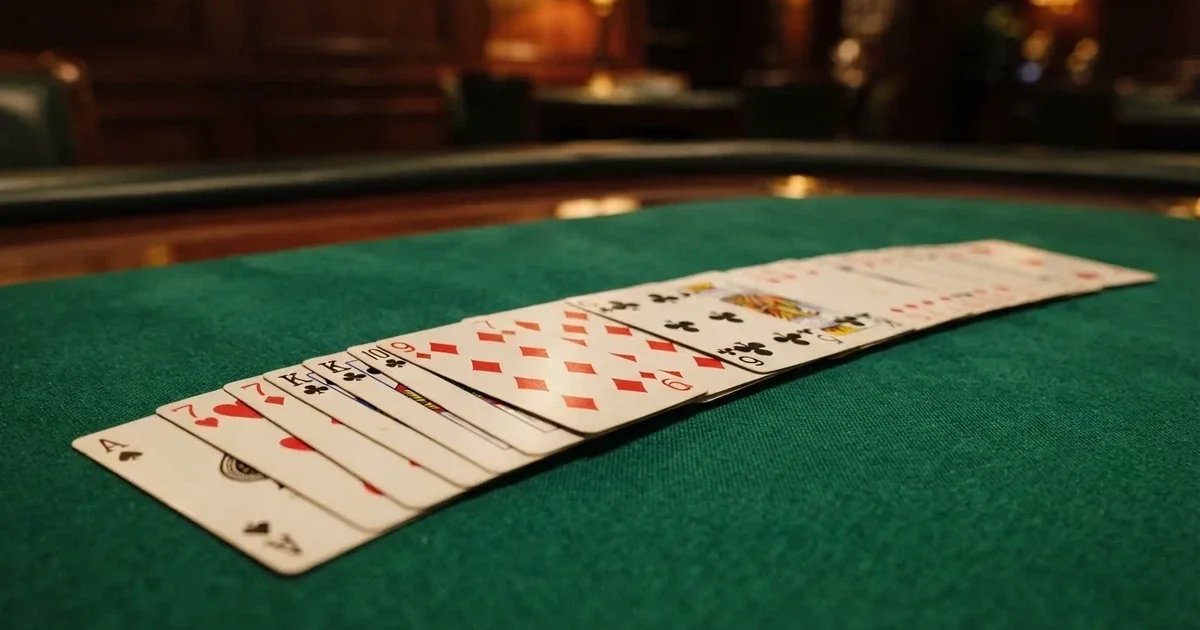
Live-dealer blackjack promises the part of the casino floor most players actually want: a real human dealing the cards, a felt-green table, decisions made in real time rather than by a random number generator. Streamed over a phone or laptop, the experience looks indistinguishable from a few seats down at Crown Melbourne. The part the marketing tends to leave off is what sits behind it for an Australian resident: a prohibited service, no local licence, no local complaints body and a regulator that has been naming and blocking offshore operators steadily since 2017.
Data current as of 28 October 2026, cross-checked against the Australian Communications and Media Authority’s (ACMA) public register of formal warnings and blocking requests.
Table of Contents
- Paying for a Live Blackjack Table: How Withdrawals Actually Move
- Blackjack Bonuses: Why Table Games Sit in a Different Bucket
- Live Blackjack Variants and the Providers Behind Them
- The Eleven Operators Named in the ACMA’s Own Warnings
- What Live Blackjack Actually Is, and How It Differs from the Software Version
- The Legal Status of Online Casino Gambling in Australia
- Responsible Play: Why the Live Format Changes the Bankroll Calculation
- Paying with Bitcoin and Crypto: What Changes and What Doesn’t
- The Page’s Calculation: What the ACMA’s Blocking Pace Actually Means
- Frequently Asked Questions
Paying for a Live Blackjack Table: How Withdrawals Actually Move
A live blackjack hand pays the same whether it is funded by a debit card, a PayID transfer or bitcoin — the cards do not know which one you used. The payment method shows up in the time the money takes to get to you, and in whether it gets there at all.

What a PayID Withdrawal Looks Like in Practice
PayID is the Australian instant-payment overlay that sits on top of the New Payments Platform (NPP) and Osko. A PayID payout is routed through the player’s own bank, identified by something more human-readable than a BSB and account number — usually a phone number or an email address. On paper it settles in seconds, because that is what NPP does. In practice, a casino withdrawal that comes back marked “PayID” has still passed through the operator’s internal review queue, and that queue is where the hours and days disappear. An operator’s stated payout window of “instant via PayID” almost always means instant once the operator has approved the withdrawal, not instant from the moment the player clicked.
That is the same gap that exists between any “instant” payment rail and a casino cashier: the rail is instant, the operator’s fraud and identity checks are not. A player who funds the deposit with PayID and then asks for the withdrawal the same way is paying for the same review process they would have paid for with a bank transfer. The advantage of PayID here is on the deposit side, where the money reaches the casino balance faster than an older BSB transfer would. On the payout side it is one of several faster rails, not a different queue.
No-Deposit Bonuses and How They Read Once Cashiered
A no-deposit bonus is the offer that looks closest to a free hand at the table. It credits a small bonus balance to a new account without the player having to make a deposit first. The reader-side picture is rarely the marketing picture. Two things almost always come with it: a maximum cashout cap that limits what a player can actually withdraw from bonus-derived winnings, and a wagering requirement that asks the player to turn the bonus over many times before any withdrawal is allowed.

The combination matters. A A$10 no-deposit bonus with a 40x wagering requirement asks for A$400 of turnover before any withdrawal is permitted, and a maximum cashout of 5x the bonus caps the winnings at A$50 even if the hand goes well. Read against the bonus’s headline, the offer is small. Read against what it costs the player in time at the table, it is the offer’s headline that flatters it.
Payout Speed: What the Operator Claims and What Actually Happens
Casino marketing pages state payout windows in hours. A player looking for a fast live blackjack payout should pay attention to which hours those are — the ones before the operator’s review, or the ones after it. Realistic bands for offshore operators running on the brands listed in this market’s enforcement record:
- E-wallets (Skrill, Neteller, MuchBetter): often quoted at 0–24 hours. Review time dominates.
- PayID / NPP: once approved, settles in seconds. Approval is the variable.
- Bank transfer: 1–5 business days after approval, sometimes longer.
- Crypto: typically 0–24 hours once sent, but “approved” is the gate and the operator controls it.
The fastest payout is the one where the operator’s review is short. The slowest is the one where the operator pauses a withdrawal for additional documents — a passport, a recent utility bill, a photo of the card used to deposit. That pause is the part of payout speed that no rail fixes.
Blackjack Bonuses: Why Table Games Sit in a Different Bucket
The bonus market around blackjack is smaller than the one around pokies, and the reason is in the maths. A pokies bonus is a high-margin product for the casino: the house edge on most online slots is 4–8%, so a wagering requirement earns the casino predictable revenue while the player chases a small bonus balance. A blackjack bonus carries a house edge under 0.5% with optimal play, so the same wagering requirement costs the casino much less per dollar turned over. That is why almost every online casino bonus — including the ones on the brands named in this guide’s table — lists blackjack as a “restricted game” or applies it at a reduced contribution rate toward the wagering requirement.
What a Reduced Contribution Means in Practice
A typical online casino bonus might credit 100% of slot wagering toward clearing the requirement, and 5–10% of table game wagering toward the same requirement. On a A$100 bonus with a 40x wagering requirement, the player needs A$4,000 of slot turnover or A$40,000–80,000 of blackjack turnover to clear it. The same bonus, played the way the player actually wants to play it, becomes a much longer task than its headline implies.
That is where most “best blackjack bonus” lists quietly mislead. The bonus amount is real. The wagering multiple is real. The contribution rate is the term that decides how long the bonus takes to clear at a blackjack table, and it is usually the term the comparison does not print. A player who reads only the headline will assume 40x means 40x; it usually means 400x once blackjack’s contribution is applied.
The Side Bet and the Bonus Don’t Mix
Side bets — Perfect Pairs, 21+3, Royal Match — sit outside the basic strategy line and outside most bonus contribution tables. A hand that pays 25:1 on a Perfect Pairs side bet does not earn that wagering contribution; in many cases the wagering requirement explicitly excludes side bet stakes. The player is then playing a hand the bonus does not count, with the bonus balance still being eroded by losses on hands that do not clear it. This is one of the sharper edges in the bonus-versus-table-game interaction, and it is rarely disclosed in the offer summary.
Live Blackjack Variants and the Providers Behind Them
A live-dealer blackjack table is not one product. It is a stack of them, each run by a studio that ships its tables to the operator’s site. The same studio typically deals several variants from the same room, with different rules and side bets.
Standard Live Blackjack
The standard table uses eight decks dealt from a continuous shuffling shoe, the dealer stands on all 17s, doubling is allowed on any first two cards and splitting is allowed once per hand. With basic strategy, this rule set gives a house edge of about 0.43% — the Atlantic City number, not the Las Vegas Strip number. A liberal Strip rule set (dealer stands on soft 17, double after split, resplit aces, late surrender) drops that to about 0.28%, but the more generous rules are not the default at most offshore live tables.
Blackjack Variants Worth Naming
The variants a live casino lobby will usually carry, beyond the standard table:
- Spanish 21: played without 10s. The missing 10s push the house edge up sharply, but the player-favourable rule adjustments (late surrender, double after split, bonus payouts on five-card 21s and beyond) partly offset that. The maths lands somewhere around the standard table depending on the rule set.
- Double Exposure Blackjack: both dealer cards dealt face-up. Sounds like an edge for the player; in practice the casino pays 1:1 on a natural blackjack rather than 3:2, which restores most of the lost edge.
- Blackjack Switch: two hands dealt, with the player allowed to swap the second card between them. The player-favourable swap is offset by dealer push on 22 — a rule most players do not notice until they have lost to it.
- Super Fun 21: allows up to four splits and a natural blackjack paying even money when the dealer also has a natural. Liberal rules; the natural payout is the trade-off.
None of these variants remove the house edge. Some shift it; most tilt it back toward the casino by adjusting a rule the player does not weight as heavily as the marketing does.
Side Bets: Where the House Edge Climbs
Side bets on a live blackjack table are a separate game from the main hand. The 21+3 side bet, which pays based on the player’s first two cards plus the dealer’s up card forming poker hands, runs at a house edge between 7% and 13% depending on the paytable. Perfect Pairs runs at around 4–10%. Royal Match and similar proposition bets sit in the same band. None of these is an alternative way to play blackjack — they are a separate wager the player is making against a much steeper house edge.
Providers Running the Studios
The studios most often behind the live blackjack tables at offshore brands include Pragmatic Play Live, Evolution, Ezugi, Vivo Gaming, Asia Gaming and Lucky Streak. The studio name matters less than the rule sheet at the table, because the house edge is set by the rules, not the dealer. What the studio does set is the betting limits, the side bet menu, the seat availability and the chat moderation. A live lobby that lists Evolution as the studio but offers only one seat at a given table is a different experience from one with the same provider and seven seats open.
The Eleven Operators Named in the ACMA’s Own Warnings
The table is not a ranking. Each row is an operator the ACMA has issued a formal warning against under the Interactive Gambling Act 2001, in the order the warnings were issued or the most recent action was taken. Online casino games cannot be licensed anywhere in Australia; the licence a brand displays at the footer of its homepage is an offshore one.
| Brand | ACMA action and date | Operator named by the ACMA | Subject support |
|---|---|---|---|
| RocketPlay | Formal warning, March 2026 (Pulsup Ltd); earlier May 2022 (Dama N.V.) | Pulsup Ltd | — |
| Level Up Casino | Formal warning, May 2022 | Dama N.V. | listings-only (Bgaming) |
| Woo Casino | Formal warning, March 2025 | Dama N.V. | — |
| Spirit Casino | Formal warning, May 2025 | Dama N.V. | — |
| National Casino | Formal warning, July 2025 | Consolutetish S.R.L. | listings-only (en.wikipedia.org) |
| Bizzo Casino | Formal warning, July 2025 (Consolutetish S.R.L.); earlier 2022 (TechSolutions) | Consolutetish S.R.L. | — |
| Ignition Casino | Formal warning, July 2025 | Bamboo Media | — |
| Instant Casino | Formal warning, February 2025 | EOD Code SRL | — |
| Jackbit | Formal warning, April 2026 | Ryker B.V. | — |
| Casino Intense | Formal warning, April 2025 | Sterplay Holding Ltd | listings-only (ABC, acma.gov.au, Crown Melbourne) |
| Sky Crown | Formal warning, September 2022 | Hollycorn N.V. | — |
What the Pattern in the Table Shows
The same operators recur in the ACMA’s enforcement record. Dama N.V. accounts for four of the eleven brands listed here, across two separate warnings — one in May 2022 covering six brands, one in March 2025 for Woo Casino alone, one in May 2025 for Spirit Casino alone. The June 2026 blocking round reported another 12 sites referred to ISPs for blocking. The pattern is not that any one brand is uniquely problematic; it is that offshore operators routinely rebrand and re-enter through new corporate shells, and the ACMA is playing whack-a-mole with the corporate entity while the underlying brand portfolio migrates between them.
For a player, the practical read of that pattern is that the offshore licence displayed on the site is, at best, a permit to operate from the regulator named at the footer, not a protection that follows the brand across its next corporate change. Hollycorn N.V.’s Sky Crown is not the same legal entity as Ryker B.V.’s Jackbit, but the consumer’s experience of either one is structured in much the same way: a Curaçao or Anjouan licence at the footer, a payment page that accepts cards and crypto, no live complaints body that takes a withdrawal dispute to a binding outcome.
RocketPlay: The Freshest Warning on the List
RocketPlay’s most recent ACMA action is March 2026, when the regulator named Pulsup Ltd as the operator and directed ISPs to block the Australian-facing domain. An earlier May 2022 warning had named Dama N.V. for the same brand. The current operator is a different entity; the brand is the same. A player considering the brand in 2026 is looking at the second time the ACMA has put RocketPlay on its enforcement record — and at a brand whose current operator appears to have only the one warning on file, having taken over from the previously-named entity.
Level Up Casino and Woo Casino: The Dama Cluster
Three of the eleven brands — Level Up Casino, Woo Casino and Spirit Casino — were named in ACMA warnings issued to Dama N.V. across 2022 and 2025. Dama N.V. has been the largest single cluster of warnings in the Australian enforcement record, and the regulator’s repeated engagement with the operator suggests a brand portfolio that has not adjusted its offering in response. A player approaching any Dama N.V. brand should assume the ACMA has named at least one of its sister brands in addition.
Bizzo Casino and National Casino: Same Operator, Same Year
National Casino and Bizzo Casino were named in the same July 2025 warning issued to Consolutetish S.R.L. Bizzo had already been the subject of an earlier 2022 warning issued to TechSolutions, and the brand has now been named under two different corporate operators — the rebrand cycle that defines this corner of the market. A player who recognises the Bizzo brand from a previous encounter is not necessarily encountering the same operator; the brand has migrated.
Ignition Casino: A Bamboo Media Brand
The July 2025 warning over Ignition Casino named Bamboo Media as the operator. Ignition has historically positioned itself toward the Australian market with AUD as a base currency and crypto as a payment option, and the warning signals the same enforcement posture the ACMA applies to the rest of this set. A player reading about Ignition’s poker product elsewhere will find the brand is more often discussed in that context; the casino product is what the ACMA action named.
Instant Casino and the EOD Code SRL Warning
The February 2025 warning over Instant Casino is one of the more recent in the ACMA’s enforcement record and named EOD Code SRL as the operator. Instant Casino has positioned itself as a no-account casino in some markets, with KYC deferred to withdrawal — a structure that compresses the registration flow at the cost of a longer review at the moment a player tries to cash out. For an Australian reader, the appeal is obvious; the legal posture is the same as every other brand on this list.
Jackbit: A Crypto-First Brand
Jackbit’s April 2026 warning named Ryker B.V., and the brand sits firmly in the crypto-first part of the market — bitcoin, ethereum and several altcoins as the primary payment rails, no fiat option. For a player evaluating payment speed, Jackbit’s claim is the speed of a crypto payout once approved; the offshore operating entity and the ACMA warning are the same facts that apply to the rest of this set. The crypto framing does not change the regulatory status.
Casino Intense: The Quietest Name on the List
Casino Intense was named in the April 2025 warning to Sterplay Holding Ltd and is otherwise a smaller brand by traffic. A player who finds the brand through a smaller affiliate channel is encountering the same operating model as the bigger names here; the regulatory posture is not a function of brand size.
Sky Crown: The Hollycorn N.V. Holdover
Sky Crown’s warning is the oldest on the table — September 2022, naming Hollycorn N.V. Hollycorn also operated Blue Leo at the time, and the same ACMA action named both. The brand has continued to operate offshore under Hollycorn’s licence; the ACMA warning has not been followed by a withdrawal of the underlying licence, because the licence is not Australian.
Reading the Brand Portfolio as a Whole
The pattern across these eleven brands is structural, not coincidental. The same handful of corporate operators — Dama N.V., Hollycorn N.V., Consolutetish S.R.L., TechSolutions, Bamboo Media — account for most of the warnings. The brands rotate underneath them. A player who treats one of these as a fresh discovery because the brand name is new has misread the market: the underlying operator, the licence at the footer and the consumer protection (or absence of it) are the ones the ACMA has already named.
What Live Blackjack Actually Is, and How It Differs from the Software Version
A live blackjack table is a real dealer in a real studio, dealing real cards from a real shoe, with the video streamed to the player’s browser or app. The player places chips by clicking on the table layout; the dealer sees the bet settle on the studio monitor and pays out by hand. A software blackjack table uses a random number generator to produce the cards, and the “dealer” is a graphical representation. The cards, the rules and the house edge are otherwise the same — what differs is the cadence and the theatre.
The Live Studio Setup
A typical studio operates several tables in parallel, each with its own dealer and shoe. Cameras cover the dealer’s hands and the table from multiple angles, and an interface overlays the betting layout on the player’s screen. The shoe holds six or eight decks and is reshuffled either by hand or by a continuous shuffler. Decisions — hit, stand, double, split, surrender — are sent by the player to a sensor in the table that the dealer monitors on a screen; the dealer plays out the hand according to the rule sheet without seeing the player’s decision until the hand is resolved.
Why the Cadence Differs from Software Blackjack
Software blackjack resolves a hand in seconds because there is no human dealing. Live blackjack resolves a hand in roughly 30–45 seconds with a single player, and longer as more players sit at the table. A continuous-shoe game handles the reshuffle invisibly. A hand-dealt shoe game stops every six or eight decks for a manual reshuffle, which slows the game further. Over an hour at the table, a live dealer game runs roughly half as many hands as a software game. That is the structural reason live blackjack feels slower even when nothing else is different.
Why the Rule Sheet Matters More Than the Dealer
The house edge in blackjack is set by the rule sheet, not by the studio or the dealer. A table that stands on soft 17, allows double after split and offers late surrender gives the player a better expected return than one that hits soft 17, restricts doubling to 9–11 and offers no surrender. The dealer does not change this — they are reading the same rule sheet either way. A player who picks a table by the studio’s reputation rather than the rule sheet is picking on the wrong axis.
RTP on a Live Blackjack Table
Blackjack’s RTP, with optimal basic strategy, is 99.72% under the liberal Las Vegas Strip rule set and 99.57% under Atlantic City rules. The “house edge” figures that go with these — 0.28% and 0.43% — are the casino’s expected take on each dollar wagered, averaged over a very large number of hands. Over a single session the variance is much wider; the house edge is a long-run average, not a session prediction.
The Legal Status of Online Casino Gambling in Australia
The Interactive Gambling Act 2001 (IGA), strengthened by the Interactive Gambling Amendment Act 2017, makes it an offence to provide online casino games — including craps — to a person in Australia. The penalty for an individual is up to A$220,000 per day; for a corporation, up to A$1.1 million per day. No state or territory licenses online casino games. The IGA does not target the individual player — it targets the provider — but an offshore site gives the player none of the protections an Australian-licensed service would.
What the IGA Actually Prohibits
The IGA prohibits the provision of online casino games, online pokies and in-play betting to Australian customers. It does not prohibit wagering on sports or races placed before the event, lotteries or keno. The licensed wagering market — Sportsbet, Bet365, Ladbrokes and 49 others — operates under Northern Territory Racing and Wagering Commission (NTRWC) licences, a regulator that meets once a month in Darwin and has no full-time staff. The licensed market and the prohibited market are deliberately drawn this way; the IGA’s intent is to channel Australian gambling spend into wagering and lotteries while closing the casino-style offering.
What That Means for a Live Blackjack Player
A live-dealer blackjack table streamed to an Australian resident is a prohibited interactive gambling service. The brand displaying an offshore licence at the footer of its site is not licensed to take Australian casino play, and the licence it does hold does not give it Australian consumer protection. If a withdrawal is refused, the only recourse is the offshore regulator named at the footer, and the practical record of those regulators resolving Australian player complaints is thin.
The ACMA’s Enforcement Record
The ACMA has issued formal warnings and directed ISPs to block illegal sites since 2017. As of June 2026, the cumulative total reported by the ACMA was 1,751 blocked websites and affiliate pages since the first blocking request in November 2019. More than 230 unlicensed services had left the Australian market since the 2017 strengthening. The June 2026 round alone referred another 12 sites to ISPs for blocking. The pattern is sustained, not intermittent.
The pace matters. A block does not require a fresh court action; the ACMA issues a direction to ISPs, who comply at the routing layer. A player whose preferred offshore brand is blocked today and unblocked tomorrow — through a mirror site, a new corporate entity, a different domain — is seeing the regulator’s daily work, not its annual headline.
What “Unlicensed” Looks Like at the Footer
A typical offshore brand lists a Curaçao or Anjouan gaming licence at the footer, sometimes alongside a Malta Gaming Authority reference. The Curaçao licence in particular has, since the late 2024 reform of the Curaçao Gaming Authority, become a lighter regulatory credential than it was previously marketed to be — the GCB (Gaming Control Board) replaced the older master-licence structure. Anjouan is a smaller jurisdiction with its own framework. None of these licences has standing as an Australian consumer-protection body. A player who reads “Licensed and Regulated” at the footer should treat the phrase as information about the jurisdiction of incorporation, not about recourse available to them.
Why the Reform Agenda Does Not Change Today’s Picture
The Interactive Gambling Amendment (Gambling Reform) Bill 2026 passed Parliament on 19 August 2026. Its advertising and inducement measures commence on 1 January 2027. The Bill tightens the rules around inducements — bonuses, “free” offers, referral rewards — but those measures are not in force on a 2026 page. The prohibited-services definition, which is what governs the offering of live blackjack to Australian residents, has not changed under this Bill. The current position is unchanged from the IGA’s 2017 strengthening.
Estimated Spend on Illegal Sites
H2 Gambling Capital’s 2025 report estimated that Australians lose about A$3.9 billion a year to illegal gambling sites, and that the share of gambling going through legal channels fell from 74% in 2021 to 64%. The number is the spend, not the population: it is concentrated in a much smaller group of players than the headline suggests, and that concentration is part of the policy reason for the ACMA’s enforcement posture. A player reading the figure should read it as the aggregate cost the regulator is trying to reduce, not as their personal share.
Responsible Play: Why the Live Format Changes the Bankroll Calculation
A live blackjack hand runs at roughly 50–70 hands per hour at an empty table, less as more players sit down. A software blackjack hand runs at 200+ hands per hour. The live format slows the rate of loss — but a player who sits at a live table for two hours has played more decisions than the time suggests, and the bankroll limit set “for the session” is being eroded faster than a software player would erode the same bankroll.
Setting a Bankroll Before Joining the Table
A bankroll limit set before joining a live table is the single most useful responsible-gaming behaviour a blackjack player can adopt, because the shoe does not pause for the player to reconsider. The house edge compounds gently with optimal play and sharply without it; a player chasing losses by raising the bet after a bad hand is not running a strategy, they are running a tilt. Setting the limit in advance — and leaving the table when the limit is hit — is the structure that supports basic strategy actually being basic.
Why Basic Strategy Is the Cheapest Way to Play
Basic strategy is the set of decisions a player makes on every hand to minimise the house edge. It is not card counting; it does not require memory beyond the player’s own hand and the dealer’s up card. The full chart is widely published and reduces the house edge to the rule sheet’s floor. A player who plays by feel — who “stands on 16 because the dealer looks weak” — is paying 2–4% more per hand than a basic-strategy player. Over a session of A$1,000 of wagering, that is A$20–40 of additional expected loss to decisions the chart would have made differently.
Where to Get Help
The National Gambling Helpline is 1800 858 858 — free, 24/7, with chat available at Gambling Help Online. BetStop, the National Self-Exclusion Register, has been live since August 2023 and binds Australian-licensed online and phone wagering services. An offshore casino is not connected to BetStop; a player self-excluding through BetStop has not excluded themselves from any of the brands on the table above. For a player who wants BetStop-style exclusion to extend to offshore brands, the only effective path is the bank-level and device-level blocking tools, plus the personal discipline of not opening new accounts.
The Player Protection That Is — and Is Not — Available
An Australian-licensed wagering service is bound by the IGA and its supporting rules: no credit, no crypto, mandatory harm-minimisation messaging, mandatory BetStop integration. An offshore casino has none of these obligations. A player moving from a licensed wagering service to an offshore casino is moving from a regulated environment to an unregulated one — and the difference matters most when something goes wrong. A withdrawal refused, a bonus voided, an account closed with a balance on it: each of these has a defined complaints path on the licensed side and essentially none on the offshore side.
Paying with Bitcoin and Crypto: What Changes and What Doesn’t
A bitcoin-funded live blackjack hand deals the same cards as a card-funded one. The only difference is the rail the deposit and the withdrawal travel through.
What Crypto Changes for the Player
A bitcoin deposit settles in roughly 10–60 minutes, depending on network congestion and the fee attached to the transaction. A bitcoin withdrawal, once the operator has approved it, is similarly fast on the network side. For a player who values payment speed and has accepted the volatility of holding bitcoin between deposit and withdrawal, crypto is the fastest rail at this layer.
A bitcoin bankroll also changes the unit of account. The player’s A$ balance becomes a BTC balance between deposit and withdrawal, and a 5% move in bitcoin during a session is a larger swing than any reasonable blackjack variance. A player who deposits A$1,000 worth of bitcoin and withdraws the same balance 24 hours later has earned their blackjack result plus or minus the bitcoin move during the session. That is the cost of using crypto for a session the player could have funded with fiat.
What Crypto Does Not Change
The crypto rail does not change the offshore licence at the footer, the ACMA’s enforcement posture, or the prohibited status of the live blackjack product under the IGA. It also does not change the fact that licensed Australian wagering services cannot accept crypto — the credit-and-crypto ban on the licensed side has been in force since 11 June 2024. A site that takes a bitcoin deposit from an Australian player is by definition not a licensed Australian wagering service.
The Privacy Question
Crypto is often described as “anonymous” in marketing material. The reality is closer to “pseudonymous”: bitcoin transactions are public on the blockchain, and the player’s wallet address is linked to a real-world identity the moment it interacts with a KYC-compliant exchange. The casino’s own KYC process, where it asks for documents at withdrawal, performs the same linkage. A player who chose crypto for the privacy and is then asked for a passport at cashout has used crypto as a payment rail, not as a privacy tool.
The Crypto Bonus Question
Some offshore brands offer a crypto-specific bonus: a higher percentage match, or a larger maximum, on deposits made in bitcoin or ethereum. The bonus terms that apply — wagering requirements, game contribution rates, maximum cashout — are the same shape as a fiat bonus, scaled up. A 200% crypto bonus up to 1 BTC sounds meaningfully larger than a 100% fiat bonus up to A$500; in practice the larger headline comes with a larger required turnover, and the same contribution-rate caveat applies to blackjack. The crypto framing is not a structural improvement to the bonus; it is a different unit attached to the same offer shape.
The Page’s Calculation: What the ACMA’s Blocking Pace Actually Means
The arithmetic on this page is the blocking rate — the pace at which the ACMA has been moving illegal sites off Australian-facing infrastructure. The inputs are the running total of blocked sites as of June 2026 (1,751) and the date of the first blocking request (November 2019).
From November 2019 to the June 2026 snapshot reported by iGaming Business is roughly 79 months. Dividing 1,751 blocked sites across 79 months gives an average of around 22 sites blocked per month — but the ACMA’s enforcement has not been uniform across that period, and the monthly average understates the pace in 2024–2026, when the blocking requests have run higher. The single round reported on 26 June 2026 alone referred another 12 sites, more than half the long-run monthly average. Read as a band, the ACMA is blocking illegal gambling sites at a pace that has averaged roughly 20–30 sites per month across the cumulative period, with individual rounds of 10–15 sites in any given month and clustering around the brands operated by a handful of corporate groups.
The condition on that band is the cumulative pace, which includes both gambling sites and affiliate marketing pages. The ACMA’s blocking list covers the operators themselves and the affiliate pages that funnel traffic to them. Read against the offshore brand portfolio — the same operators reappearing under new corporate names — the cumulative number is the count of distinct domains the regulator has had to remove, not the count of distinct underlying businesses.
Frequently Asked Questions
Is it legal to play live blackjack for real money at an online casino in Australia?
No. The Interactive Gambling Act 2001 prohibits the provision of online casino games, including live-dealer blackjack, to customers in Australia; no state or territory licenses them. The provider — not the player — is the target of enforcement, but an offshore site gives no Australian consumer protection and can be blocked with a balance still on it.
How does a live-dealer blackjack table differ from a computer-generated version?
A live table is dealt by a real dealer in a studio, streamed over video; the player places chips by clicking the layout and the dealer pays out by hand. A software table uses a random number generator. Live blackjack runs roughly 50–70 hands per hour at an empty table, half the pace of software blackjack; the rule sheet and house edge are otherwise the same.
What dealer rule most affects the house edge in blackjack?
Whether the dealer stands or hits on a soft 17 is the single biggest rule difference. Standing on soft 17 reduces the house edge by about 0.2%, which is larger than the effect of any other common rule variation. Liberal Strip rules — stand on soft 17, double after split, resplit aces, late surrender — give a house edge of about 0.28%; Atlantic City rules give about 0.43%.
Does a blackjack bonus offer usually count table game bets the same as slot bets?
No. Most online casino bonuses apply a reduced contribution percentage — typically 5–10% — to table game wagering. A A$100 bonus with a 40x wagering requirement needs A$4,000 of slot turnover or A$40,000–80,000 of blackjack turnover to clear, and side bet stakes often do not count at all. The headline multiple is not the multiple the player actually faces.
Is a live blackjack app a separate product from a site’s browser-based table?
Usually not. The same studio deals both; the app is a wrapper around the same video stream, optimised for mobile input. The rule sheet, the house edge and the seat availability are identical between the app and the browser version. What differs is the interface — the bet placement, the chat access, the multi-table handling — and that is a usability difference, not a game difference.
Can a live blackjack hand be joined partway through a dealer’s shoe?
On a continuous-shuffler table, yes — a player can join at any time because the shoe is effectively infinite and reshuffles between rounds. On a hand-dealt shoe, joining mid-shoe is usually permitted but the player sits out the remaining hands until the next shuffle, which can mean waiting 10–20 minutes. Bet Behind, where a player wagers on another seated player’s hand, is the other option for entering a full table.