
Casino dice games in Australia — what 2026’s law, the math, and the marketing actually say
Current as of 28 October 2026, with ACMA enforcement data and state regulator rules checked against the relevant registers.
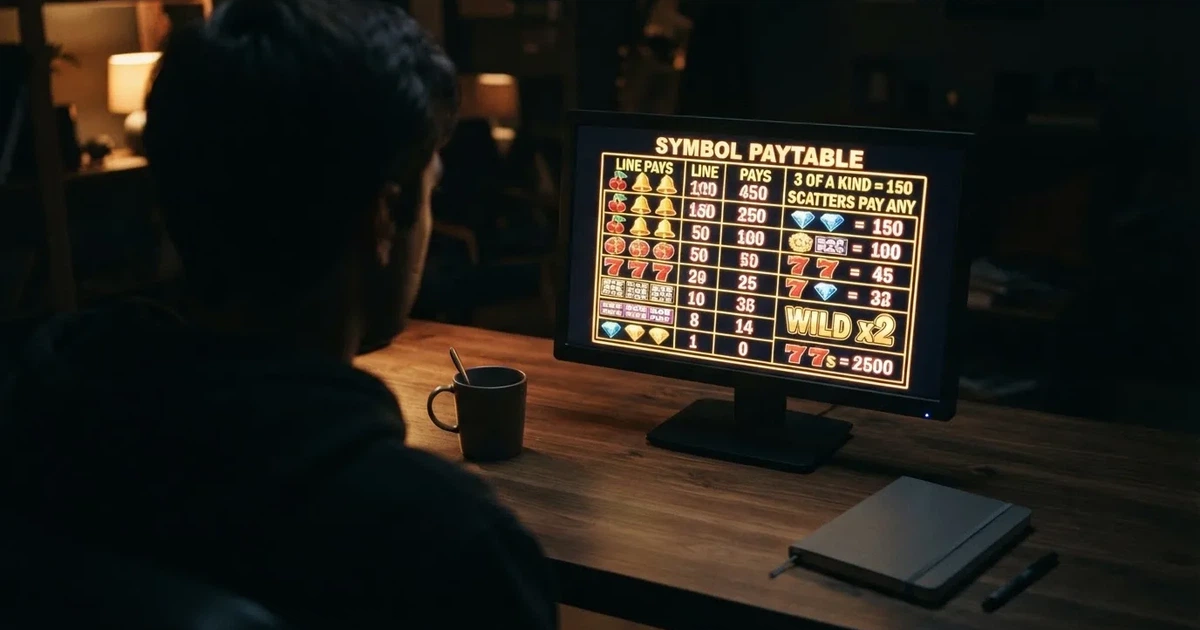
A pair of dice hits the felt, a stickman calls the point, and the table bets settle in a single second. The bet itself took longer to place than that. Casino dice games, above all craps, are the rare table game where the layout itself is dense with proposition bets that pay well but bleed money fast. The right way to read the table is the house edge, not the payout multiplier the marketing copy leans on, and this page is built around that distinction. Australia adds a second layer on top: what the Interactive Gambling Act 2001 prohibits offshore from offering, what Crown Melbourne and Crown Perth can legally run under their state casino licences, and which offshore brands the ACMA has actually named in formal warnings. The mix is unusual — a market with deep licensed casino floors and no online casino product at all — and the reader searching “casino dice game Australia” usually lands on it for one of two reasons: the house edge math, or the question of whether what they have open in a browser is even allowed.
Table of Contents
- How a list of Australian dice games gets put together
- The brands the ACMA has named, and what that action actually means
- What a casino dice game actually is, and why the bet choice decides the cost
- What Australian law actually allows, and what offshore brands do anyway
- Payment rules and what they tell a reader about the operator
- Responsible gambling supports that actually apply
- Casino dice games on Australian casino floors
- How to read the table, and how not to
- Frequently asked questions
How a list of Australian dice games gets put together
Any shortlist of casino dice games for an Australian reader rests on three filters, and the order matters. The first filter is jurisdiction: a casino dice game offered online to someone in Australia is a prohibited interactive gambling service, regardless of who runs it or where it is incorporated. The second filter is the bet, not the game: the spread of house edges inside craps runs from 1.36% on Don’t Pass to 11.11% on the one-roll Any Craps proposition, so any ranking that ignores the bet choice inside a game is misleading on its face. The third filter is the operator: an offshore casino may display a Curaçao or Anjouan licence, but the ACMA treats the offering as prohibited and has issued formal warnings and blocking requests against operators over the prohibited service. A shortlist that respects all three gives a reader a useful answer; one that collapses them gives them a marketing page.

The shelves that follow close in this order. First, the comparison of the eleven brands the ACMA has acted against, with each one named by its operator and the date of the formal warning. Then the overview of what casino dice games are and how they are priced. Then the legal frame — the Interactive Gambling Act 2001, what is and is not licensable, and what changes the 2026 reform introduces. Then responsible gambling supports available to an Australian player. Then the specific games themselves, with paytable math from Wizard of Odds and the craps, sic bo, baccarat, and blackjack details that bear on house edge.
The brands the ACMA has named, and what that action actually means
The eleven brands below share a single property that defines them as a group: the ACMA has issued a formal warning over each one under the Interactive Gambling Act 2001 for offering prohibited online casino services to Australians. The ACMA’s own register of formal warnings and blocking requests is the source, and each row below carries the operator entity, the date of the warning, and the regulator action in plain terms. The table is a regulator’s record, not a ranking; the column on the operator is the named party in the ACMA’s correspondence, and the column on ACMA action states what the regulator did and when. “Subject support” reads as the operator’s own publications and the listings directories that name it: where the figure for “subject support” is drawn only from listings sites that aggregate casino brands, the row is marked as listings-only — it is what those directories report, not an endorsement from the operator.
The single condition this table carries, and the one every row inherits, is that online casino games cannot be licensed anywhere in Australia, whatever offshore licence the site displays. A Curaçao sub-licence is a permit to operate from Curaçao, not a passport into the Australian market. The brands below do not differ on that point; they differ on when the ACMA first named them and whether the operator has been the subject of an earlier warning under a different corporate name.
| Brand | ACMA action and date | Operator named by the ACMA | Subject support |
|---|---|---|---|
| RocketPlay | Formal warning, March 2026 (also May 2022 under Dama N.V.) | Pulsup Ltd | — |
| Level Up Casino | Formal warning, May 2022 | Dama N.V. | listings-only (Bgaming) |
| Woo Casino | Formal warning, March 2025 | Dama N.V. | — |
| Spirit Casino | Formal warning, May 2025 | Dama N.V. | — |
| National Casino | Formal warning, July 2025 | Consolutetish S.R.L. | listings-only (en.wikipedia.org) |
| Bizzo Casino | Formal warning, July 2025 (also 2022 under TechSolutions) | Consolutetish S.R.L. | — |
| Ignition Casino | Formal warning, July 2025 | Bamboo Media | — |
| Instant Casino | Formal warning, February 2025 | EOD Code SRL | — |
| Jackbit | Formal warning, April 2026 | Ryker B.V. | — |
| Casino Intense | Formal warning, April 2025 | Sterplay Holding Ltd | listings-only (ABC News, the ACMA, and Crown Melbourne) |
| Sky Crown | Formal warning, September 2022 | Hollycorn N.V. | — |
The operators appear under more than one brand because offshore groups routinely rebrand. Dama N.V. alone has been the named party in warnings covering Bambet, Dazard, Level Up, Rocketplay, Wild Tornado, Cobra Casino, Woo Casino and Spirit Casino across 2022, 2025 and 2026. Consolutetish S.R.L. picked up National Casino and Bizzo Casino in July 2025, with Bizzo having previously been named under TechSolutions (CY) Group Limited and TechSolutions Group N.V. in 2022. The pattern matters more than the brand name: the ACMA warning goes to the operator entity, and the entity rebrands or moves, so the same brand can reappear under a new operator without changing the underlying product.
For a reader, the practical reading of every row is the same. None of these is a place to play under Australian law, the ACMA has already said so in writing, and several of them have been the subject of blocking requests to Australian ISPs alongside the formal warning. The brand name itself is the least useful field in the table. The relevant fields are the operator entity the ACMA corresponded with, the date of the warning, and the fact that Australian consumer protection does not apply to a balance held offshore.
The blocking-rate picture
The ACMA’s enforcement numbers, published in June 2026, are the only figure that turns the table above from a list into a rate. Since the first blocking request in November 2019, 1,751 illegal gambling and affiliate marketing websites have been blocked. Over 230 unlicensed gambling services have left the Australian market entirely since enforcement was strengthened in 2017. The June 2026 round alone named twelve new domains for blocking: 7Signs, ChromaBet, Donbet, Duospin, Freshbet, Slots Gem, Jacks Club, Lucky Start, Pointsbetz, Spinrise, Vinyl Casino and Wildsino.
The arithmetic the page is built around is what that 1,751-block figure works out to per year, with its condition stated plainly. From November 2019 to June 2026 is roughly six and a half years, so 1,751 divided across that span gives a band in the high two hundreds to the low three hundreds of sites blocked per year on average, depending on which end of the reporting period the reader anchors to. The block rate is not a fixed pace; it accelerates as new operators enter the market and the ACMA catches up, and rounds of twelve at a time are how it is measured. The single figure that matters is the cumulative count against a regulator that has been at this for seven years, and the cumulative count is what makes the question of “is this brand legal” answerable in seconds rather than in legal advice.
What a casino dice game actually is, and why the bet choice decides the cost
The term “casino dice game” covers more than craps, and the spread inside the category is large enough that the house edge differs by an order of magnitude between bets in the same game. Craps is the most-played casino dice game in Australian casinos, and its layout gives the clearest picture of why the choice of bet matters more than the choice of game. Sic bo is a Chinese-origin three-dice game whose Big/Small bet carries a much lower edge than its proposition bets. Two-up is the Australian coin-tossing game, technically not dice, and is governed by its own specific statute rather than the Interactive Gambling Act framework.
Craps is built around the come-out roll. On the first roll of a new game, a 7 or 11 wins for Pass Line bettors and a 2, 3 or 12 loses; any other number becomes “the point,” and the shooter keeps rolling until they repeat the point (Pass wins) or roll a 7 (Pass loses). The Don’t Pass and Don’t Come bets run the opposite way. The structure means a Pass Line bet is in action across multiple rolls, not resolved on the first one, and the house edge is calculated across that sequence. Wizard of Odds puts Pass/Come at 1.41%, Don’t Pass/Don’t Come at 1.24% and 1.36% respectively, and Any Craps — a one-roll proposition on 2, 3 or 12 — at 11.11%. The one-roll bets pay seven to one or thirty to one and look generous; the math says they are not. The right way bettor backs the Pass Line and the Come; the wrong way bettor backs Don’t Pass and Don’t Come. Both run close to 1.4%, and the difference between them is the player’s preference for betting with the table or against it. Neither side has a meaningful edge over the other in expectation; the meaningful edge is the casino’s.
Sic bo is a different geometry entirely. Three dice, 216 equally likely combinations of which 56 are distinguishable after removing permutations. The Big/Small bet — total of 11–17 or 4–10 excluding triples — pays one to one and carries a 2.78% house edge under the standard Macau ruleset. Specific Triple bets, where the player picks the exact three-of-a-kind they want to see, pay 180 to one but the ruleset-dependent house edge runs from 11.6% up to 30.09%. The proposition bets are the marketing surface of the layout, and they are also where the player loses fastest. Big/Small is the bet the house edge math defends; everything else is decoration.
Two-up is a coin game rather than a dice game, but it sits in the same shelf for an Australian reader because the regulatory frame is so specific. Two coins are tossed; both heads win, both tails lose, and one of each is a re-toss. The game is illegal in Australia outside specific exceptions. New South Wales permits it on Anzac Day under the Gambling (Two-Up) Act 1998, played in RSL clubs and hotels. Kalgoorlie in Western Australia hosts Australia’s only year-round legal two-up school, and the licensed casino floors that run it are Crown Perth and Crown Melbourne, after the Hobart casino legalised it in 1973. The “house edge” framing barely applies, because most two-up games are player-versus-player rather than player-versus-house, and the only cut the venue takes is the rake on a ring of side bets.
Baccarat is not a dice game either, but its house-edge structure parallels craps’ and it shows up on the same Australian casino floors. The Player bet carries a 1.24% edge, the Banker bet 1.06% (with the commission on Banker wins already counted), and the Tie bet 14.36%. Punto banco, the modern variant, was developed in Havana in the 1940s and is the game Crown Melbourne runs as three named variants: Traditional Baccarat, Crown Baccarat, and 2 to 1 Baccarat, all approved by the Victorian Gambling and Casino Control Commission under the Casino Control Act 1991. The Tie bet is the analogue of Any Craps in craps: a high payout, a punishing edge, and a place on the layout because the table looks livelier with it.
Blackjack completes the comparison set, and it is the game where strategy compresses the house edge below craps and baccarat. With optimal play under liberal Las Vegas Strip rules (dealer stands on soft 17, double on any two cards, double after split, resplit aces, late surrender), the house edge is about 0.28%. Atlantic City rules give about 0.43%. The game’s structure is what makes the difference: 21 on the first two cards is a “natural” or “blackjack” and pays three to two, the dealer must hit to seventeen, and the player decides every hand. Spanish 21, Double Exposure, Blackjack Switch and Super Fun 21 are the named variants; Spanish 21 strips the 10s from the deck and pays 2.78% edge at base strategy even with the liberal rules, while Double Exposure deals both dealer cards face-up at the cost of a 0.66% edge on the player-favourable side.
The through-line across the four games is not the game, it is the bet. Craps at 1.41% on Pass, sic bo at 2.78% on Big/Small, baccarat at 1.06% on Banker, blackjack at 0.28% under liberal rules — the bets on the bottom of the layout in each game are what a sharp player lives on. The bets at the centre of the layout, the ones with names in coloured boxes and payouts in three digits, are the ones the casino depends on.
What Australian law actually allows, and what offshore brands do anyway
The legal frame for online gambling in Australia is one statute and one regulator. The Interactive Gambling Act 2001 (IGA), strengthened by the Interactive Gambling Amendment Act 2017, makes it an offence to provide online casino games, online pokies or in-play betting to a person in Australia. No state or territory licenses online casino games, so the prohibition is uniform. What is licensable is wagering on races and sport placed before the event, lotteries and keno, and in practice that wagering is licensed by the Northern Territory — the Northern Territory Racing and Wagering Commission regulates 52 of Australia’s online bookmakers, including Sportsbet, Bet365 and Ladbrokes, licensed in the Territory for tax reasons. The commission runs without full-time staff and meets once a month in Darwin.
The regulator on the prohibited side is the Australian Communications and Media Authority, the ACMA. The ACMA investigates, issues formal warnings, and directs Australian internet service providers to block illegal sites. The individual player is not prosecuted — the IGA targets the provider, not the customer. But the player is unprotected. An offshore site gives no Australian consumer protection, no complaints body and no recourse if a withdrawal is refused. The site can be blocked while a balance is still on it, and there is no Australian body to ask for the money back.
The June 2026 enforcement round put a figure on the scale. According to the ACMA, 1,751 illegal gambling and affiliate marketing websites had been blocked since the first blocking request in November 2019, and more than 230 unlicensed gambling services had left the Australian market since enforcement was strengthened in 2017. H2 Gambling Capital’s 2025 report estimates Australians lose about A$3.9 billion a year to illegal gambling sites, and that the share of gambling going through legal channels fell from 74% in 2021 to 64%. The H2 figure is an estimate and the ACMA’s enforcement count is exact, and together they describe a market where most of the gambling is licensed but a meaningful slice, in the order of A$4 billion a year, leaves through offshore sites that the ACMA has been trying to shut down for the better part of a decade.
What the 2026 reform changes
The Interactive Gambling Amendment (Gambling Reform) Bill 2026 passed Parliament on 19 August 2026. Its advertising and inducement measures commence on 1 January 2027. The bill is law with a start date, not yet in force on a 2026 page. What it introduces, when it commences, is a tightened advertising and inducement regime aimed at licensed wagering providers and at the affiliate marketing sites that promote offshore operators. The reforms do not legalise online casino games in Australia, do not change the prohibition under section 5 of the IGA, and do not grant any state or territory authority to license online casino products. The frame stays the same; the inducements around the frame get tighter.
What this means for the brands in the table
Every row in the ACMA-action table inherits the same conclusion: the brand is offering a prohibited service to Australians, the ACMA has said so in writing, and the operator entity may or may not survive the next round of enforcement. The reader’s question is rarely “is brand X safe” — offshore brands are uniformly unsafe under Australian consumer law — and more often “which of these has the ACMA not yet named.” The table answers the second question by giving the date of the formal warning and the operator entity the ACMA corresponded with, and the answer to “which is safest” is the one that gets named last and is most likely to be the next blocking request.
Payment rules and what they tell a reader about the operator
The payment side of the Australian framework is more informative than the marketing side, because the rules on what an Australian can deposit with are specific and the sites that break them are easy to spot. Credit cards, credit-related products and digital currency have been banned as payment for licensed online wagering since 11 June 2024, with penalties up to A$247,500 for operators. Legal deposit routes for licensed wagering are debit card, bank transfer, PayID, Osko and BPAY. A site asking an Australian for a credit card or a crypto deposit is operating outside the Australian rules.
The payment rule works as a sniff test for the brands in the table. The licensed Australian wagering market — Sportsbet, Bet365, Ladbrokes — runs debit card and PayID and BPAY. The offshore brands in the table, by definition, accept whatever payment route the offshore operator prefers, and that is usually credit cards and a list of cryptocurrencies. The payment surface tells a reader, before any other check, which side of the IGA the operator is on. Crypto deposits to an offshore brand are not a workaround; they are the signal that the operator is built for the global market and not the Australian one.
Tax on winnings
Gambling winnings of a recreational player in Australia are not assessable income under section 6-5 of the ITAA 1997, and losses are not deductible unless the person carries on a business of gambling. This is the rule for the recreational player; a professional gambler is taxed under the trading stock framework and the deductions work differently. The model wording for a 2026 page is “check with the ATO,” because the line between recreational and professional gambling is a fact question the ATO makes on a case-by-case basis.
Responsible gambling supports that actually apply
The supports for an Australian player are divided into two groups, and the distinction between them is what makes the offshore problem visible. The first group is the licensed Australian framework: BetStop, the National Self-Exclusion Register, has been live since August 2023 and binds Australian-licensed online and phone wagering services; the National Gambling Helpline is 1800 858 858, free, 24/7, with Gambling Help Online providing chat. A player who has self-excluded through BetStop is barred from licensed wagering platforms for the period they nominate, and the bar is enforced by the operator at account creation.
The second group is everything outside the licensed framework, which is exactly the offshore brands in the ACMA-action table above. BetStop does not bind an offshore casino. Self-exclusion on the offshore site’s own responsible-gambling page is the only barrier the offshore site can offer, and an offshore site that ignores its own self-exclusion has no Australian complaints body to answer to. The National Gambling Helpline and Gambling Help Online still answer the phone and run the chat for an Australian player regardless of where they have been playing, and that is the right place to start if a reader’s play has moved past where they want it to be.
State-level self-exclusion registers add a third layer. Crown Melbourne and Crown Perth, as the two casinos that run dice games under state licences, are bound by the state self-exclusion regime of the state they operate in, and a state self-exclusion order reaches the casino floor rather than the offshore site. A player who wants a casino-floor-level bar in Victoria or Western Australia goes through the relevant state regulator’s exclusion process.
The practical order a reader follows is straightforward. If the play is on a licensed Australian platform, BetStop and the Gambling Helpline cover both the platform bar and the human support. If the play has moved offshore, the Helpline and Gambling Help Online still answer, and the offshore platform will not honour a BetStop registration because it is not connected to it. The supports are the same; what they can reach differs.
Casino dice games on Australian casino floors
The shelves above describe what is offered, what is legal, and what the math says. The licensed casino floors are where the dice games actually run under Australian law. Crown Melbourne, under the Victorian Gambling and Casino Control Commission, runs Traditional Baccarat, Crown Baccarat and 2 to 1 Baccarat as approved table games, with rules approved under the Casino Control Act 1991. The VGCCC replaced the VCGLR as Victoria’s casino regulator on 1 July 2022. Crown Perth runs two-up, the only Australian licensed casinos that do. Crown Sydney runs table games under the Liquor & Gaming NSW framework, though its game mix is weighted toward baccarat and punto banco for the Asian VIP segment the licence was built around. The Star Sydney rounds out the NSW casino market under the NSW Casino Control Act 1992, which under section 66 requires the regulator to approve any game and its rules before it is played and to make the approved rules available to patrons on request.
The craps offering on Australian casino floors is concentrated at Crown Melbourne and Crown Perth, both of which run craps tables in their main gaming floors. The Star Sydney runs craps in a smaller-scale form, and Crown Sydney’s table mix is heavier on baccarat than on craps. Two-up is the rare dice-adjacent game that has its own licensing framework, and Crown Perth and Crown Melbourne are the only licensed casinos that run it as a standing table offering outside the NSW Anzac Day exception.
Blackjack, baccarat, and the rules the regulator signs off on
The VGCCC’s public log of approved rule changes at Crown Melbourne is the most readable record of what actually plays on the floor. Renaming the “Perfect Pairs” side bet to “Crown Pairs” was approved on 23 December 2024; introducing a “Free Bet” option with a new “Pot of Gold” side bet was approved on 25 March 2024. Side bets in blackjack are where the house edge spikes above the base game, and the regulator’s role is to approve the wording and the math, not to endorse the bet. A player who reads the regulator’s log sees a casino floor where every named bet has been signed off on a specific date, and the question of which bet to play is a question of the bet’s edge, not the operator’s licence.
The NSW equivalent under the Casino Control Act 1992 is the requirement that a casino operator must not permit a game such as baccarat to be played unless the game and its rules are approved by the regulator, and the operator must make a copy of the approved rules available to patrons on request. Section 66 is the structural guarantee that the rules on the floor are the rules the regulator has signed off on, and the request right is the structural guarantee that a player can read them.
How to read the table, and how not to
The table of ACMA-action brands at the top of the page is a regulator’s record, and reading it as a ranking is the mistake that the table is built to prevent. RocketPlay, Level Up, Woo Casino, Spirit Casino, National Casino, Bizzo Casino, Ignition Casino, Instant Casino, Jackbit, Casino Intense and Sky Crown are not in any meaningful order of quality, payout speed, game fairness or player experience, because none of them is a place an Australian can lawfully play. The columns the table does rank on are date and operator entity, and those columns answer a different question: when did the ACMA first name this brand, and which operator entity was the warning sent to. The ACMA is the source, the formal warning is the action, and the date is the date.
A reader who arrives at the table looking for a casino to play at will leave with a list of operators they cannot lawfully use. That is the answer the table is built to give. The next question, what an Australian can lawfully play, is answered in the section on licensed casino floors above, and the answer there is the same as it has been since 1973: the casino floors at Crown Melbourne, Crown Perth, Crown Sydney and The Star Sydney, under the rules the relevant state regulator has approved.
Frequently asked questions
What is the house edge on a Pass Line bet in craps?
The Pass Line and Come bets in craps both carry a 1.41% house edge under standard rules, calculated across the multi-roll sequence of establishing and repeating the point. It’s the lowest-edge bet on the craps layout outside the Don’t side, which sits at 1.36% on Don’t Pass and 1.24% on Don’t Come under Wizard of Odds’ ruleset. Compared with the baccarat Banker bet at 1.06% or blackjack under liberal rules at 0.28%, craps is competitive with baccarat and roughly five times the edge of basic-strategy blackjack.
Why does the Any Craps one-roll bet carry a much higher house edge than Pass Line?
The Pass Line bet resolves across the full sequence of establishing and repeating the point, with multiple ways to win and lose spread over several rolls, and that sequencing is what compresses the house edge to 1.41%. Any Craps resolves on a single roll: 2, 3 or 12 wins, anything else loses. The payout is seven to one and the probability of winning is 8/36, which works out to an 11.11% house edge. The proposition bets in the centre of the craps layout follow the same shape: high payouts, low hit rates, edges that run from roughly 9% up to 13.9% on the worst bets.
Are dice games like craps offered on licensed Australian casino floors?
Yes — craps, baccarat, blackjack, sic bo and two-up are all offered on licensed Australian casino floors, with the specific offering varying by state and operator. Crown Melbourne runs three baccarat variants and a full craps floor; Crown Perth runs two-up and craps; Crown Sydney and The Star Sydney round out the NSW market under their respective state casino licences. The licensed offering sits on the casino floor, not online. The Interactive Gambling Act 2001 prohibits online casino games to Australians, and no state or territory licenses them.
What’s the difference between a ‘right’ bettor and a ‘wrong’ bettor in craps?
A right bettor backs the Pass Line and the Come bet, betting with the table and with the shooter. A wrong bettor backs Don’t Pass and Don’t Come, betting against the table and against the shooter. The two sides run at almost identical house edges — 1.41% right, 1.36% and 1.24% wrong depending on the specific bet — so the question of which side is mathematically better is essentially a tie. The choice between right and wrong is a question of table etiquette and personal preference rather than of expected value. Both sides face the same casino edge.
Can an online dice game legally be offered to someone based in Australia?
No. The Interactive Gambling Act 2001, strengthened by the 2017 amendments, makes it an offence to provide online casino games — including dice games like craps and sic bo — to a person in Australia. No state or territory licenses online casino games. What is licensed online is wagering on races and sport placed before the event, lotteries and keno, regulated by the Northern Territory Racing and Wagering Commission among others. The ACMA enforces the prohibition against online casino games through formal warnings and blocking requests to Australian ISPs, with 1,751 sites blocked since November 2019.
Do all casino dice games use the same house-edge structure as craps?
No. Sic bo uses three dice with 216 equally likely combinations, and its Big/Small bet carries a 2.78% house edge under the standard Macau ruleset, while Specific Triple bets range from 11.6% to 30.09% depending on the ruleset. Craps’ multi-roll structure compresses the edge on Pass Line to 1.41%, which sic bo’s single-roll Big/Small cannot match. Baccarat, which is not a dice game, has its own structure with Banker at 1.06%, Player at 1.24% and Tie at 14.36%. Across the four games the spread of house edges inside a single game is wider than the spread across games on the lowest-edge bet. The bet choice decides the cost; the game choice is secondary.