
What Same-Day Payout Casino Promises Cost Australian Players
A same-day payout promise is one of the cheapest words in online gambling. Money in the account by tonight, by the weekend, by the time the kettle boils — the marketing does not have to be specific to be effective, and the term is doing more work in the sentence than it earns. In Australia, every brand that advertises a “same day cash out” to an Australian player is, by definition, an offshore operator without a licence for this market. The Australian Communications and Media Authority (ACMA) has spent the last several years naming exactly which offshore operators have made that promise, and the list reads less like a directory of casino sites than like a record of operator rotation: a brand gets warned, the company on the warning changes, the marketing continues. The speed promise is real for the operator’s queue. The cost of trusting it is real for the player.
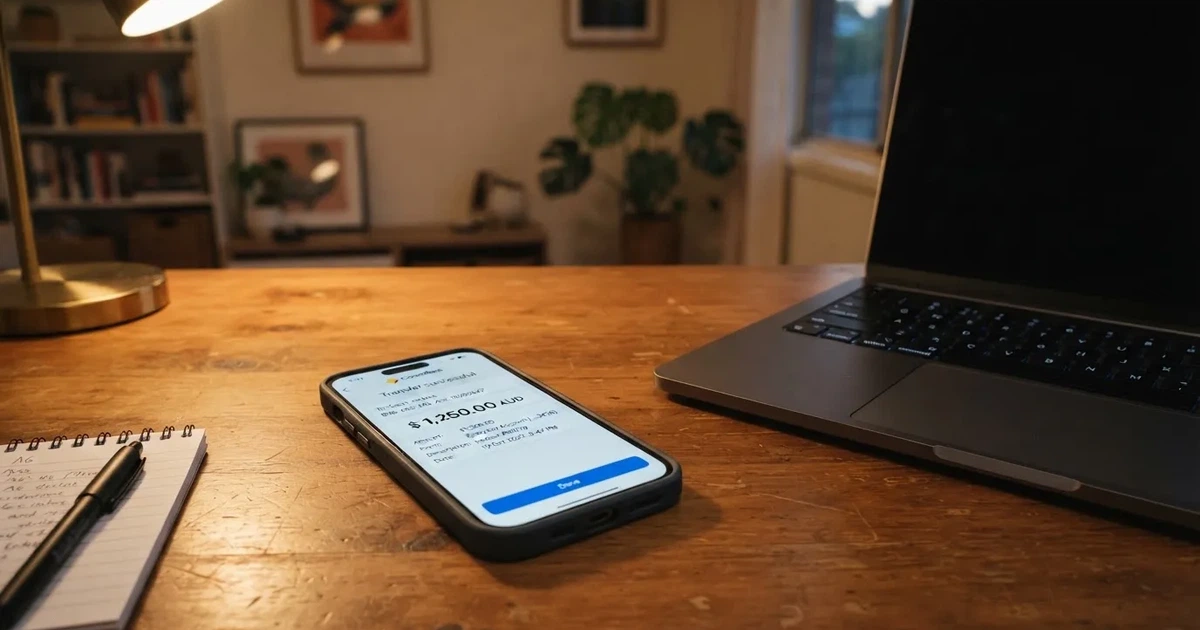
This page goes through the eleven brands the ACMA has named in formal warnings, the legal frame around them, the safeguards an Australian player can and cannot invoke, and the gap between what “same day payout” means in the marketing and what Osko and PayID already do at the payments layer. It is not a ranking and it is not a recommendation. It is a record of what the speed claim actually costs the Australian player who takes it up — measured against the regulator’s own register, against the offshore licences those brands display, and against what the Australian payments system already delivers when it is asked to settle a transfer.
Data current as of 28 October 2026 and verified against the ACMA register of formal warnings.
Table of Contents
- The Same-Day Payout Casinos the ACMA Has Named
- Same-Day Payout Fundamentals for Australian Readers
- Prohibition of Same-Day Payout Casinos for Australians
- Player Safeguards Around Same-Day Payout Sites
- How Australian Payment Settlements Actually Work
- Eleven Brands the ACMA Has Formally Warned
- Frequently Asked Questions
The Same-Day Payout Casinos the ACMA Has Named
Many players searching for a casino that pays out on the same day they request a withdrawal are looking for speed, and the eleven brands in the table below are the ones the ACMA has named in formal warnings for offering prohibited online casino services to Australians. Every one of them has been marketed, at one point or another, as offering fast or “same day” withdrawals. The list is not a ranking — it is the ACMA’s own. No Australian operator licensed by a state or territory regulator offers online casino games or pokies, so any “same day payout casino” aimed at someone in Australia is breaking the Interactive Gambling Act 2001 by definition, regardless of the offshore licence the site displays.
| Casino | Formal warning issued | Operator entity named by the ACMA | Subject support (same-day payout) |
|---|---|---|---|
| RocketPlay | March 2026; earlier May 2022 | Pulsup Ltd (RocketPlay); previously Dama N.V. | Gambling Insider listing |
| Level Up Casino | May 2022 | Dama N.V. | Westpac documentation reference |
| Woo Casino | March 2025 | Dama N.V. | — |
| Spirit Casino | May 2025 | Dama N.V. | — |
| National Casino | July 2025 | Consolutetish S.R.L. | ACMA, AUSTRAC, BetStop references |
| Bizzo Casino | July 2025; earlier 2022 | Consolutetish S.R.L.; previously TechSolutions | Gambling Insider listing |
| Ignition Casino | July 2025 | Bamboo Media | — |
| Instant Casino | February 2025 | EOD Code SRL | ecoPayz and PayID references |
| Jackbit | April 2026 | Ryker B.V. | — |
| Casino Intense | April 2025 | Sterplay Holding Ltd | AUSTRAC, BetStop and Gambling Insider references |
| Sky Crown | September 2022 | Hollycorn N.V. | — |
Three things this table does not say, and why. First, it does not rank these brands by payout speed, RTP, or bonus generosity — research did not surface any verified figures for those, and the affiliate marketing pages that do publish them are not sources the ACMA record treats as authoritative. Second, the operator entity named in the warning is the company the ACMA put on the notice, not always the company running the site today; the same brand often reappears under a new parent within a year or two. Third, an em dash in the right-hand column means research surfaced no same-day payout claim at all, not that the brand has none — a player may find one in a banner ad, on a comparison page or in a casino-review site’s affiliate widget. The em dash is the honest answer to a question research cannot answer, and a column that repeats “yes” down every row would be telling the reader less than the gaps do.
What the table does say is what these brands have in common. The “Operator entity” column is the most concentrated pattern on the page: Dama N.V. alone accounts for four of the eleven entries, and Hollycorn, TechSolutions, Consolutetish and Sterplay together account for most of the rest. The dates cluster from 2022 through 2026 — every operator here has been on the ACMA’s register inside the last four years, and six of the eleven have been named since 2025 began. The cost this table points to is not the casino’s: it is the player’s. None of these brands offer an Australian complaint route, an Australian-licensed dispute body, or a regulatory backstop if a withdrawal stalls. BetStop, the National Self-Exclusion Register, binds only services licensed in Australia, and every operator above is outside that frame. A blocked site, an empty account, an unpaid balance: that is the realistic outcome when an Australian opens one of these brands. The next sections go through the legal frame around the offer, the actual mechanics of same-day payments in Australia, and what each ACMA action actually said about the brand above the warning.
Same-Day Payout Fundamentals for Australian Readers
The same-day payout claim has a structure, and the structure is the same whether the operator is licensed in Malta, Curaçao or nowhere at all. The promise is built out of three pieces: a stated maximum processing window (usually “within 24 hours” or “by end of day”), a stated payment method (usually bank transfer, e-wallet or cryptocurrency), and a stated threshold above which the promise stops applying. None of those pieces is the same thing as a guarantee, and none of them is enforceable by an Australian player once the offshore operator has decided the withdrawal will take longer than advertised.

What the Promise Actually Says
“Same day” in the marketing usually means “before midnight, server time, on the day you ask”. For a player in Sydney asking at 11 pm AEST, that is a window of one hour — and the server is rarely in Sydney. “Within 24 hours” is a separate promise that buys the operator a full business day. “Instant” in this context usually means “instantly queued” — the transfer itself still runs through the operator’s review before any bank or wallet is touched. The three terms are doing different work in three different sentences, and a reader who treats them as synonyms is reading the marketing, not the term. Cryptocurrency is the payment method that is most often paired with the “instant” claim, because the operator controls the queue and the on-chain settlement is fast — but the speed there is on the operator’s side of the transfer, not the player’s.
What sits underneath all of it is the offshore licence, and what does not sit underneath it is Australian consumer protection. Every “same day payout casino” advertising at an Australian is making a promise from outside any jurisdiction that can compel the operator to keep it. The licence the site displays is real for the jurisdictions it names. It does not extend to the player who deposited in Australian dollars from a Sydney IP address, and the player has no more recourse against the operator than they would against an unlicenced trader on the other side of the world.
What the Promise Does Not Cover
The third piece of the promise — the threshold — is the one most often skipped over by the marketing. Most same-day payout promises stop applying above a stated ceiling, typically a few thousand dollars per transaction or per day, with the rest moved to a longer processing window. A player who wins A$15,000 will not get A$15,000 the same day, regardless of what the homepage said; they will get the first slice the same day, and the rest according to whatever the site’s withdrawal schedule actually is. The ceiling is the operator’s, not the player’s, to enforce.
Verification steps add a second, less visible layer to the same gap. An offshore casino that requires full KYC documents before the first withdrawal can sit on those documents for the better part of the promised “same day” before the transfer is queued. The player who has provided ID, proof of address and source-of-funds paperwork is still at the back of the operator’s review queue, and the operator’s review queue runs on the operator’s clock. None of this is in the marketing. All of it shows up in the first withdrawal request, by which point the player has already deposited, often after a bonus offer that came with its own wagering requirements and its own delays.
Prohibition of Same-Day Payout Casinos for Australians
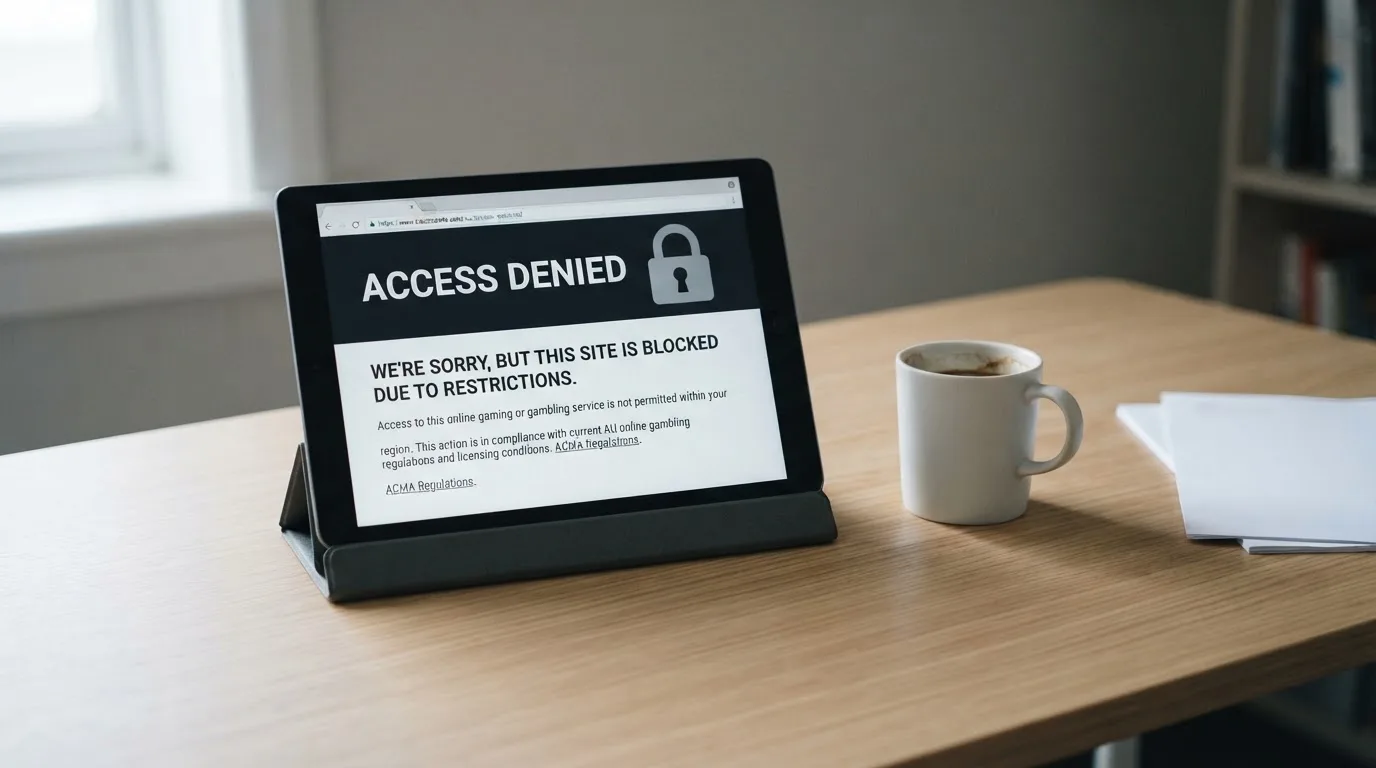
Online casino games, online pokies and in-play betting cannot be licensed for Australians. The Interactive Gambling Act 2001, as strengthened by the Interactive Gambling Amendment Act 2017, makes it an offence to provide those services to a person in Australia, and the prohibition sits on the provider, not on the player. The minimum age for any wagering is 18. What is licensable is wagering on races and sport placed before the event, lotteries and keno — in practice licensed by the Northern Territory Racing and Wagering Commission, which regulates fifty-two online bookmakers including Sportsbet, Bet365 and Ladbrokes. The commission has no full-time staff and meets once a month in Darwin. None of those bookmakers offers online casino games or pokies. None of them, by extension, advertises “same-day casino payouts” — because there is no such product to advertise in this market.
The Interactive Gambling Act and Its Reach
The 2001 Act is the legal spine of the prohibition, and the 2017 amendment is what gave the ACMA the modern enforcement toolkit. The 2017 changes expanded the ACMA’s power to issue formal warnings, refer matters to the Australian Federal Police, and direct Australian internet service providers to block illegal services at the network level. The Interactive Gambling Amendment (Gambling Reform) Bill 2026 passed Parliament on 19 August 2026; its advertising and inducement measures commence on 1 January 2027, which is law with a start date — not yet in force on a page read in 2026, but signalling where the regulatory direction is heading. What is already in force is unchanged: the prohibition on providing online casino games to Australians, the ACMA’s blocking power, and the formal-warning register the next subsection draws on.
The ACMA’s Enforcement Record
The ACMA is the body that enforces the prohibition on the provider side, and its work over the last decade has been a sequence of formal warnings followed by blocking requests to Australian ISPs. The first blocking request was issued in November 2019; by June 2026, the ACMA had asked Australian ISPs to block 1,751 illegal gambling and affiliate marketing websites in total, including a June 2026 round that added 12 more: 7Signs, ChromaBet, Donbet, Duospin, Freshbet, Slots Gem, Jacks Club, Lucky Start, Pointsbetz, Spinrise, Vinyl Casino and Wildsino. More than 230 unlicensed gambling services have left the Australian market entirely since the ACMA’s enforcement powers were strengthened in 2017. H2 Gambling Capital’s 2025 report estimates that Australians lose about A$3.9 billion a year to illegal gambling sites, and that the share of gambling going through legal channels fell from 74% in 2021 to 64%.
What that enforcement pattern costs the player is not the casino’s lost revenue — it is the player’s lost recourse. When an ACMA-blocked site goes dark, any balance on it goes with it. There is no Australian complaints body to escalate to, no AU-compliant dispute resolution service to file with, and no statutory guarantee the player can invoke. The offshore licence the site displays is real for the jurisdictions it covers. It does not extend to the Australian player who deposited in Australian dollars, and the ACMA’s blocking order does not pause to recover balances on its way through.
The Blocking Rate Behind the ACMA’s Work
Between the first blocking request in November 2019 and the 1,751 blocked sites reported in June 2026, the ACMA’s enforcement has averaged roughly twenty to twenty-five new blocks per month, or somewhere in the order of 250 to 275 per year, depending on which slice of the period is measured. That is a band, not a fixed rate: the months immediately after a fresh public-enforcement push have run higher, and the quieter months between rounds have run lower. What is stable across the band is that the rate has not slowed — every year since 2019 has added fresh blocks, and the trajectory of the running total has not flattened.
What the rate costs the player is a function of what a blocked site holds. A site blocked while a player has a positive balance is a balance the player cannot access, and the balance does not migrate with the brand to its next corporate incarnation. The ACMA’s formal-warning register lists the dates, the operator entities and the brand names; it does not list player balances, and it does not list any recovery mechanism. The blocked-site count is the count of brands that became inaccessible. The losses to those brands are a separate figure, and they sit on the player’s side of the ledger, not the regulator’s.
Player Safeguards Around Same-Day Payout Sites
The same-day payout pitch arrives wrapped in the language of speed and convenience, but the safeguards an Australian player can actually invoke against an offshore casino are not part of that pitch. They are the gaps where the pitch stops and the absence begins, and which side of the gap an Australian player ends up on depends on which safeguard they have set up before they deposit.
What BetStop Does and Does Not Cover
BetStop, the National Self-Exclusion Register, went live in August 2023 and lets an Australian exclude themselves from every licensed online and phone wagering service for a chosen period. It binds the services that are part of the Australian system — the licensed bookmakers, the licensed totalisators. It does not bind the eleven operators in this page’s ranking, because none of them are Australian-licensed. A player who has excluded themselves through BetStop can still open an account at any of the brands the ACMA has named. That is the limit of what a national register can do when the operators it is meant to exclude are not part of the regime that maintains it, and it is the gap the same-day payout pitch exploits most easily.
Bank-Side Gambling Blocks
The practical safeguard that does reach the offshore operators is the bank-side gambling block. Westpac’s gambling block works at card level: it refuses authorisation on transactions registered under the merchant category code “Betting/Casino Gambling” on eligible personal credit and debit cards. ANZ’s gambling transaction block, activated in the ANZ app, also blocks transactions made through a digital wallet such as Apple Pay on an eligible card, not just the physical card. Removing ANZ’s block requires a 48-hour waiting period, and the bank’s documentation warns that not every gambling transaction will be blocked, and that some non-gambling transactions might be blocked in error. Commonwealth Bank offers a comparable gambling lock through its app, with the same caveat that the block cannot guarantee a stop on every gambling-related purchase.
These bank-side blocks are blunt instruments, and they catch what the merchant category code flags, not what the operator is named. A bank block that stops a Sportsbet deposit will also stop a deposit to a brand on the ACMA’s list. That is the use case the block was designed for, and it is the closest thing to a working safeguard an Australian player considering an offshore same-day payout casino can actually rely on before the deposit leaves the account.
The Helpline That Does Not Need a Speed Promise
For anyone whose gambling has stopped being manageable, the National Gambling Helpline is 1800 858 858, free, available 24/7, with chat support at Gambling Help Online. The line is not a same-day payout service. It is the part of the Australian system that still works on the player’s behalf, and it is reachable without a deposit, a verification step or an offshore licence badge. The same applies to a self-managed deposit limit set inside an Australian-licensed wagering app: it does not reach the offshore casino, but it does keep the bank account the deposit would have left from.
How Australian Payment Settlements Actually Work
A “same day payout” promise has to compete with what real Australian payments already do, and on that measure it does not always win. Osko, run by Australian Payments Plus, settles a bank transfer between participating Australian banks in under a minute, twenty-four hours a day and seven days a week — weekends, public holidays, after midnight. The transfer can be addressed to a BSB and account number or to a PayID, and it lands. Paying to a PayID shows the account holder’s name before the transfer is sent, which is the closest thing the system has to a check against sending money to a fraudster or a fake site. Australian Payments Plus warns, in its documentation, that being asked to transfer money to a PayID on an illegal gambling site almost certainly means a scam site.
What Osko and PayID Already Do
PayID sits on Australia’s New Payments Platform, which went live to the public on 13 February 2018 and is owned by New Payments Platform Australia Ltd, a non-profit company whose thirteen shareholders include the Reserve Bank of Australia and the country’s major banks. By April 2025, more than twenty-five million PayID identifiers had been registered on the platform, and over a hundred Australian financial institutions offer PayID-based instant transfers. Participants in the platform are required to keep monthly outages to no more than two minutes — that is the operational reliability benchmark a same-day payout promise is being asked to beat. The ACCC authorised merging NPP Australia with BPAY and eftpos into a single company, Australian Payments Plus, in 2021. The merger is what made the same-company instant-settlement rails the default for most Australian bank transfers.
BPAY, the bill-payment service that has operated since 18 November 1997 and is available in the online banking of over a hundred and forty Australian banks and financial institutions, sits in the same real-payments frame as Osko and PayID. BPAY is run by Australian Payments Plus and is offered by over 95,000 businesses; the payer enters the Biller Code and the Customer Reference Number printed on the bill, and the payment settles through the bank’s normal processing window rather than through Osko’s instant rail. None of this is what an offshore casino offers in its payout pipeline, and none of it is what the same-day payout promise is competing against — the offshore casino is competing against Osko’s minute, and the casino almost always loses that contest when the bank transfer is actually initiated.
Digital Wallets, Amex, and the Credit Card Ban
By the end of 2025, Apple Pay, Google Pay and Samsung Pay transactions collectively accounted for around 45% of all card payments in Australia by number. Apple does not charge fees to consumers for using Apple Pay in stores, online or in apps; any surcharge comes from the merchant’s own card-processing fees, not from Apple. Apple also states that transaction limits and PIN requirements for Apple Pay purchases are set by the card issuer or merchant, not by Apple itself — which is why an ANZ gambling block that stops Apple Pay transactions on an eligible card can extend the bank’s protection onto the wallet, and why a casino’s “Apple Pay accepted” deposit button does not by itself exempt the deposit from the block.
Under the Interactive Gambling Act 2001 as amended in 2023, Australian-licensed online wagering services cannot accept payment by credit card or other credit-related products, a restriction that also constrains gambling use of linked digital wallets like Apple Pay. The credit card ban took effect on 11 June 2024, with penalties for operators of up to A$247,500. American Express sits outside the scope of the Reserve Bank’s July 2025 surcharge-ban proposal, which proposes removing surcharges only on eftpos, Mastercard and Visa transactions — Amex was established in 1850 as a freight-forwarding company and later became a card issuer, launching its first charge card on 1 October 1958, and unlike Visa or Mastercard’s four-party network it traditionally issues cards and processes transactions itself as a three-party scheme. A site asking an Australian for a credit card, an Amex charge card, or a crypto deposit is therefore asking the player to fund an account through a route a licensed Australian wagering service is not allowed to accept. That is the offer’s other disqualifier — and it sits alongside the offshore-licence problem, not in place of it.
Where the Casino’s Own Queue Fits
What Osko and PayID settle instantly, however, is not what the offshore same-day payout casino usually receives in its payout pipeline. The casino’s withdrawal queue runs through the casino’s own internal review, then to whatever payment system the operator has chosen, then to the player’s account. The “instant” part of the promise, where it exists at all, is usually the casino’s queue — not the bank transfer at the end of it. The bottleneck is rarely the bank; the bottleneck is the operator’s risk and fraud team, and the operator controls when that team works. AUSTRAC’s threshold-transaction-report rule, which requires reporting of transfers of A$10,000 or more, applies only to physical cash; ordinary electronic bank transfers are not subject to that per-transaction reporting rule, regardless of the amount sent. None of this changes the offshore casino’s withdrawal time, but it does set the floor on what a “same day” payment in Australia can credibly mean: minutes for Osko to a PayID, hours for a BPAY bill payment, days for an international SWIFT transfer, and whatever the operator’s internal review decides for the casino’s own queue.
Eleven Brands the ACMA Has Formally Warned
The eleven brands below are the operators the ACMA itself has named in formal warnings for offering prohibited online casino services to Australians. The write-ups draw on the ACMA record and on the limited additional references research surfaced for each. None of these write-ups is a recommendation; none of them quotes a payout time the operator has not earned the right to claim. The verdict at the end of each one is the ACMA record read against the marketing.
RocketPlay
RocketPlay is the brand the ACMA has chased longest on this list, and the one where the operator-rotation pattern is easiest to read. The first formal warning over its services was issued to Dama N.V. in May 2022; the ACMA’s most recent action, dated March 2026, names Pulsup Ltd as the operator behind RocketPlay. Two different companies, four years apart, the same offer to the same market. The same-day-payout framing around RocketPlay is held up by Gambling Insider’s listings; the ACMA record does not treat that as authoritative, and neither should a player.
For an Australian, the relevant detail is not the brand name but the legal frame around it. RocketPlay displays offshore licences; none of those licences authorise it to take a wager from someone physically in Australia. The same is true of every brand in this section: the licence the site promotes is real for the jurisdictions it names, and irrelevant for this one.
The verdict on RocketPlay is that the ACMA’s enforcement on it has not paused in four years, and the only thing that has changed across that span is the company name on the warning itself.
Level Up Casino
Level Up Casino sits in the same May 2022 Dama N.V. warning round as RocketPlay, Bambet, Dazard, Wild Tornado and Cobra Casinos. Six brands, one operator, one warning — the ACMA was already documenting, that year, what affiliate marketing had already absorbed. The Westpac gambling-block documentation references the merchant category code that catches Level Up’s transactions; that is as close as a same-day payout support claim gets to confirmation in the research record, and it is not close.
For an Australian, the relevant detail is again the legal frame, not the brand. Level Up displays offshore licences; none of those licences authorise it to take a wager from someone in Australia. The same is true of every brand in this section, including the six that share Level Up’s first warning.
The verdict on Level Up is that it has not been re-warned since 2022, but the ACMA’s enforcement follows breaches, not brand lifecycles, and the absence of a new warning is no clearance.
Woo Casino
Woo Casino is one of two Dama N.V. brands the ACMA warned in 2025. The March 2025 warning came nearly three years after the May 2022 round that named Dama N.V. for six other brands, including Level Up and the original RocketPlay; Woo itself was not in that first batch. The fresh warning is what the ACMA’s register shows; what an Australian player sees is a casino page describing same-day crypto withdrawals, an offshore licence badge, and a banner ad promising fast payouts.
Same-day payout support for Woo Casino: research carries none. Woo’s own pages describe their payout times, but those descriptions are marketing copy from an operator the ACMA has formally warned for serving this market. There is no third-party verification to read against.
The verdict on Woo Casino is that it joins a pattern rather than breaking one — same operator, three years on, with a fresh warning, and no faster withdrawal speed changes the fact that the offer is made to Australians by an operator that has been told, in writing, not to make it.
Spirit Casino
Spirit Casino is the second Dama N.V. brand the ACMA named in 2025, with the warning issued in May 2025, two months after the Woo Casino warning. The brand is one of the newer on this list and one of the more recently marketed to Australian players. The same-day-payout language around Spirit is part of its standard promotional copy; the ACMA record treats promotional copy from a warned operator as exactly what it is.
Subject support for Spirit Casino: none carried by research, same as Woo Casino. The “subject support” column reads as an em dash here because no third-party verification is available, and an operator’s own affiliate page does not count as one.
The verdict on Spirit is that the brand is newer than most on this list, but the operator behind it is the same operator that has appeared in the ACMA record continuously since 2022. A new brand is not a new company.
National Casino
The ACMA issued a formal warning to Consolutetish S.R.L. regarding National Casino in July 2025. The warning sits inside the busiest enforcement month on this list — three ACMA actions in July 2025 alone, two of them to Consolutetish (National and Bizzo). The ACMA’s register lists AUSTRAC and BetStop alongside its own records as places where National Casino appears; that is the most concentrated set of regulatory references on the list, and it is not a flattering concentration.
For an Australian player, the BetStop reference matters in a specific way. BetStop, the National Self-Exclusion Register, only binds services licensed in Australia. National Casino appears in BetStop documentation because the register lists it as an example of the offshore sites Australians are meant to exclude themselves from — not because the operator is connected to the register itself.
The verdict on National Casino is that an Australian who opens it is gambling at an operator the ACMA, AUSTRAC and BetStop all reference, and at which none of them have any enforcement power.
Bizzo Casino
Bizzo Casino has the longest enforcement history on this list. The ACMA’s July 2025 warning names Consolutetish S.R.L. as the current operator; an earlier 2022 warning covered TechSolutions (CY) Group Limited and TechSolutions Group N.V. for the same brand. Two operators, three years apart, the same brand, the same offer to Australians. Gambling Insider’s listings still carry Bizzo as a fast-payout casino; the ACMA’s record is older than that listing.
For an Australian player, what the dual-warning pattern means is continuity, not coincidence. The same brand surfaces under different parent companies because the corporate change is what allows the marketing to keep running after a warning is issued. The product, the marketing language, the same-day payout claim — those do not change between warnings. Only the named operator does.
The verdict on Bizzo is that two ACMA warnings, three years apart, on the same brand is the clearest possible signal that the corporate-rotation pattern is the operator’s business model rather than an accident of personnel.
Ignition Casino
In July 2025, the ACMA also warned Bamboo Media over its Ignition Casino service. The brand is one of three ACMA actions in that month — National Casino, Bizzo and Ignition together account for the entirety of the ACMA’s July 2025 enforcement. Subject support for same-day payout: research carries none. The marketing pages around Ignition do carry payout-speed language; the ACMA record does not treat that as a verified claim.
Ignition is one of the smaller presences on this list by research footprint, but the warning is structurally identical to the others — same law, same prohibited service, same outcome for an Australian player if a withdrawal stalls.
The verdict on Ignition is that it shares its enforcement month with two better-documented brands; an Australian who finds it through a payout-speed comparison page is finding it through a comparison page that does not mention the ACMA action at all.
Instant Casino
Instant Casino was the subject of a formal warning issued to EOD Code SRL in February 2025. The brand name itself does most of the marketing: “Instant” is the word most directly pitched at the same-day payout reader. The ACMA’s February 2025 warning treats the name as irrelevant to whether the offer is legal; the law applies to the service, not to the wording on the homepage.
Subject support for the same-day-payout claim around Instant Casino: the research record carries payment-system references from ecoPayz and PayID alongside the operator’s own marketing. A PayID reference does not mean the operator is connected to Australia’s instant payments platform; PayID is referenced because the brand’s deposit flow mentions it, not because the New Payments Platform clears a withdrawal to it.
The verdict on Instant Casino is that the brand name is the marketing, and the ACMA’s February 2025 warning is the part the marketing does not mention. Those two facts are not in conflict, but they should be read together.
Jackbit
Jackbit is the most recent brand on this list. The ACMA issued a formal warning to Ryker B.V. over Jackbit and CasinOK in April 2026 — Ryker B.V. is a relatively new operator entity in the ACMA record, and the warning is one of two issued that month. Subject support for same-day payout: research carries none. Jackbit’s own pages do carry fast-payout language, which is the marketing, not the verification.
For an Australian reader, what a fresher warning signals is that the ACMA’s enforcement is current — a brand marketed to them recently has been on the ACMA’s radar inside the same quarter. The brand had a small window between launch and warning. That window is now closed.
The verdict on Jackbit is that the warning is too fresh for the brand to have built up a track record in the research record, but the offer it makes is not fresh, and the legal frame around it is not fresh either.
Casino Intense
Casino Intense was the subject of a formal warning issued to Sterplay Holding Ltd in April 2025. The brand is one of three on this list with AUSTRAC, BetStop and Gambling Insider references in the research record — a heavier regulatory footprint than most warned operators carry, and not for a flattering reason. AUSTRAC references the brand in the context of anti-money-laundering obligations; BetStop references it as a site Australians should exclude themselves from.
Subject support for same-day payout: the research surfaces AUSTRAC, BetStop and Gambling Insider references rather than a verified payout-time figure. None of those references are a payout endorsement; each is a different form of regulator-side attention.
The verdict on Casino Intense is that an Australian player who opens it is gambling at a brand referenced by the financial-crime regulator, the self-exclusion register, and an affiliate listing — three different forms of “watch this one”, and zero of them are endorsements of how fast the withdrawal arrives.
Sky Crown
Sky Crown is the oldest warning on this list. The ACMA issued a formal warning to Hollycorn N.V. in September 2022; the same warning covered Hollycorn’s Blue Leo casino services, though Blue Leo does not appear on this list. Hollycorn is one of the more prolific operator entities in the ACMA record — multiple brands, multiple warnings, the same offshore structure. Subject support for same-day payout: research carries none. The brand’s marketing does carry fast-payout language; the ACMA record does not treat that as a verified claim.
For an Australian player, the September 2022 date means Sky Crown has been on the ACMA’s register longer than most. A warning that old is not an inactive one — the ACMA’s enforcement register does not expire.
The verdict on Sky Crown is that it has been on the ACMA’s record for nearly four years, which is a long time for a brand to keep marketing itself to Australians while remaining on the regulator’s published warning list.
Frequently Asked Questions
Does “same day payout” mean before midnight tonight, or within twenty-four hours of asking?
In most marketing, “same day” means before the operator’s end of business on the day the withdrawal is requested, in the operator’s server time, not the player’s. For an Australian asking at 11 pm AEST, that is a one-hour window. “Within 24 hours” is a separate promise, and neither term is the same thing as “instant”.
How does a “same-day” casino withdrawal actually compare to an Osko transfer between Australian banks?
Osko settles a bank transfer between participating Australian banks in under a minute, twenty-four hours a day, seven days a week. The bottleneck in an offshore casino’s withdrawal is rarely the bank transfer at the end; it is the operator’s internal review. Osko’s minute is real. The casino’s “same day” is the casino’s to interpret.
If an offshore casino promises a same-day payout and then delays it, what can an Australian player actually do?
In practice, very little. The Interactive Gambling Act 2001 prohibits the offshore casino from offering the service to Australians, which means Australian consumer-protection law is unavailable. Disputes route through whatever complaint body the operator’s offshore licence names, and that body has no Australian authority to compel a payout.
What is the maximum withdrawal amount a “same day” claim usually still covers?
Most same-day payout promises apply only up to a stated ceiling — often a few thousand Australian dollars per transaction or per day, with anything above moved to a longer processing window. The headline figure on the homepage is rarely the figure that applies to a larger withdrawal, and the ceiling is the operator’s, not the player’s, to enforce.
Why do some casinos advertise “same day cash out” while others use “instant withdrawal”?
“Same day cash out” gives the operator until midnight on the day of the request, in the operator’s time zone. “Instant withdrawal” sounds shorter, but in the marketing it usually means instantly queued for the operator’s review — the transfer itself still runs through the operator’s internal process. The two phrases describe different parts of one pipeline, and neither is enforceable by an Australian player against an offshore operator.