
What an Australian reader actually pays to play at a Tether casino
Tether is pitched as the steady cryptocurrency. The pitch is half true and half a sleight of hand: a token pegged to the US dollar does not swing with the market, which is genuinely useful when a deposit would otherwise lose a fifth of its value overnight. What the pitch leaves out is the second half of the transaction — the offshore casino the token is paid into. That part is prohibited under Australian law regardless of what coin is used to fund it, and the prohibition is enforced. As of June 2026, the ACMA had directed Australian ISPs to block 1,751 illegal gambling and affiliate marketing websites, with the first blocking request issued in November 2019. The work has been steady, not symbolic. A Tether casino is, in legal terms, the same product as any other offshore casino — only the rail is different.
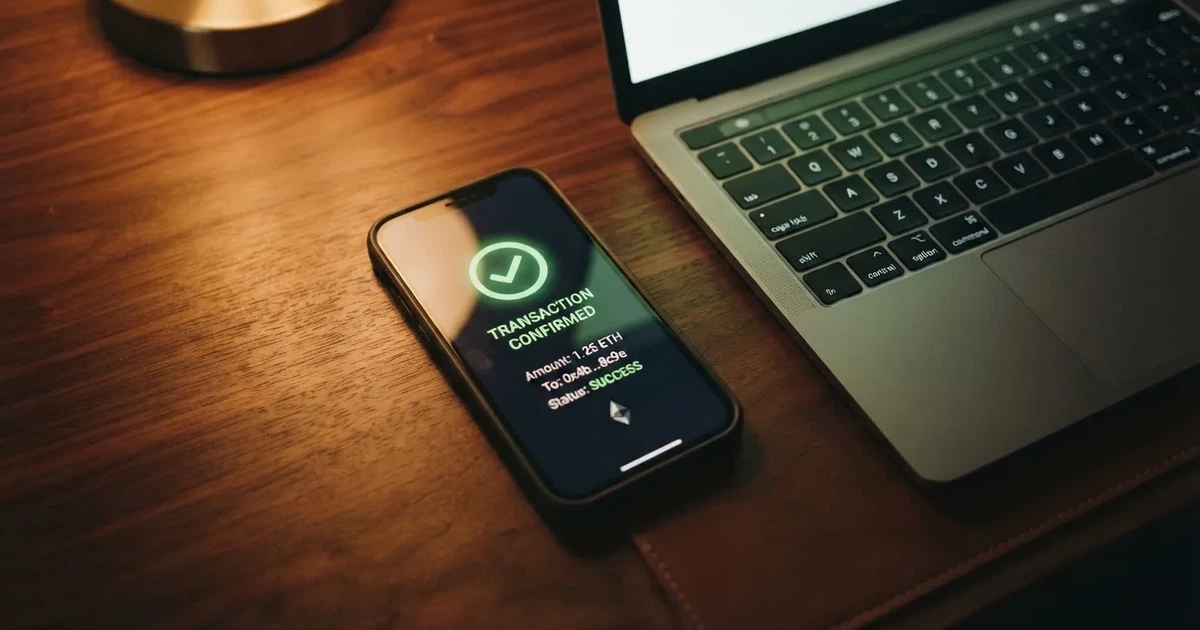
The page below works through eleven brands the ACMA itself has acted against, the licence claims each one prints, the deposit and withdrawal mechanics specific to USDT, and the protections — or absence of them — that an Australian player sits under once the deposit is on-chain.
Data current as of 18 October 2026. Licence claims verified against the ACMA’s published formal-warning register.
Table of Contents
- The eleven brands on the ACMA’s record
- RocketPlay: warned twice under two different operators
- Level Up Casino: one of the original Dama N.V. six
- Woo Casino: USDT confirmed only by listings
- Spirit Casino: a 2025 addition to the Dama N.V. portfolio
- National Casino: a Consolutetish S.R.L. property
- Bizzo Casino: warned twice across two operator shells
- Ignition Casino: a Bamboo Media warning
- Instant Casino: warned under EOD Code SRL
- Jackbit: warned in April 2026 under Ryker B.V.
- Casino Intense: warned under Sterplay Holding Ltd
- Sky Crown: a 2022 Hollycorn N.V. warning
- The Tether deposit, step by step
- What Australian law actually says
- What the ACMA has been doing, at the rate it has been doing it
- Responsible play, and the protections an offshore site does not give
- The crypto side: how a Tether deposit is processed, and what it leaves behind
- Frequently asked questions
The eleven brands on the ACMA’s record
The table below covers every operator in this guide. Each row is built from the ACMA’s own formal-warning register, so the licence line, the operator name and the date come straight from the regulator rather than the brand. The “USDT support” column says what independent listings report about whether the casino accepts Tether — none of these claims have been confirmed against the operator itself, and several rows carry no listing evidence at all. The table is descriptive of what the ACMA found and what the listings report. It is not a ranking of where to play.

| Brand | ACMA action | Operator named by ACMA | Date | USDT support per listings |
|---|---|---|---|---|
| RocketPlay | Formal warning under the IGA | Pulsup Ltd (Rocketplay); earlier Dama N.V. | March 2026 (current); May 2022 (earlier) | — |
| Level Up Casino | Formal warning under the IGA | Dama N.V. | May 2022 | — |
| Woo Casino | Formal warning under the IGA | Dama N.V. | March 2025 | Listings report USDT deposits supported |
| Spirit Casino | Formal warning under the IGA | Dama N.V. | May 2025 | — |
| National Casino | Formal warning under the IGA | Consolutetish S.R.L. | July 2025 | Listings report USDT deposits supported |
| Bizzo Casino | Formal warning under the IGA | Consolutetish S.R.L.; earlier TechSolutions | July 2025 (current); 2022 (earlier) | — |
| Ignition Casino | Formal warning under the IGA | Bamboo Media | July 2025 | — |
| Instant Casino | Formal warning under the IGA | EOD Code SRL | February 2025 | — |
| Jackbit | Formal warning under the IGA | Ryker B.V. | April 2026 | — |
| Casino Intense | Formal warning under the IGA | Sterplay Holding Ltd | April 2025 | — |
| Sky Crown | Formal warning under the IGA | Hollycorn N.V. | September 2022 | — |
Two patterns are worth noticing before any closer look. First, the operator named by the ACMA changes while the brand stays the same — RocketPlay was warned under Dama N.V. in 2022 and again under Pulsup Ltd in 2026; Bizzo under TechSolutions in 2022 and Consolutetish S.R.L. in 2025. The brand has been re-shelled, not re-licensed. Second, the dates themselves tell a story: a cluster of warnings issued in 2025 and early 2026, after years of one-off action. Enforcement has sped up, not slowed.
The rest of the page works through each brand at the level the material supports — what the ACMA found, what the licence the site displays actually covers, and where USDT fits in.
RocketPlay: warned twice under two different operators
RocketPlay is the most-rewarned brand on this list. The ACMA first named it in May 2022 as one of six Dama N.V. properties; it named it again in March 2026, this time under Pulsup Ltd trading as Rocketplay. The intervening four years bought the brand a fresh corporate wrapper, not a fresh licence: online casino games cannot be licensed anywhere in Australia, and a Curacao or Anjouan registration displayed on a footer does not change that. The site is on the ACMA’s record twice for the same conduct.
Data is unavailable in listings regarding USDT for this brand.
For a player, what the re-warning tells them is that the operator behind the brand has chosen to continue the activity rather than leave the market. The 2022 warning was the chance to stop; the 2026 warning is the proof they did not. The page records both, because a single warning date hides the half of the story that matters.
Level Up Casino: one of the original Dama N.V. six
Level Up was one of six casino brands the ACMA named in a single May 2022 warning to Dama N.V. — Bambet, Dazard, Level Up, Rocketplay, Wild Tornado and Cobra Casinos. Dama N.V. has appeared in this register more than any other operator on the page, including two further warnings in 2025 over Woo Casino and Spirit Casino. The fact that one operator runs multiple brands is the structural fact the ACMA register makes plain: a single registration can hold up a portfolio, and a warning over one brand is a warning over all of them.
Independent records do not show USDT support here.
For an Australian player, the relevant reading is that the company behind the site has been told, in writing, that the product it offers is prohibited. A 2022 warning is now several years old; whether the site has changed since then is a question the ACMA register does not answer, but the operator’s response to the first warning is on the record in the form of a second one.
Woo Casino: USDT confirmed only by listings
Woo Casino sits in the middle of the Dama N.V. cluster. The ACMA issued a formal warning in March 2025, less than three years after the same operator was warned over six other brands. The warning is the second the ACMA has issued to Dama N.V. over the Woo property specifically, and that is the entire observable record.
Independent listings report that Woo Casino accepts USDT deposits. That is what the listings say, and the page records it as such; the operator’s own terms page has not been checked for this guide.
For a player who arrives with USDT specifically in mind, Woo is one of two brands on this list whose listings page mentions Tether as a deposit option. That is a thin basis for a deposit. The ACMA position on the underlying activity — providing online casino games to Australians — is unchanged.
Spirit Casino: a 2025 addition to the Dama N.V. portfolio
Spirit Casino is the second Dama N.V. brand added to the ACMA register in 2025, warned in May 2025. The operator was warned over Woo Casino two months earlier, in March. Two warnings within a single calendar year, to the same operator, over two different brands, is the ACMA register’s own way of saying the earlier warning did not change the conduct.
No public listing corroborates USDT support for this casino.
The reading for a player is the same one Woo Casino implies, with the addition that the warning is fresher. A site warned within the last year has had less time to argue it has changed; the ACMA register is not a complaint about a historical event, it is a current record.
National Casino: a Consolutetish S.R.L. property
National Casino carries a July 2025 ACMA warning to Consolutetish S.R.L., the same operator named over Bizzo Casino in the same round. The two warnings issued together matter because the same corporate entity runs both brands — meaning the operator behind National Casino was told in writing, in 2025, that what it is doing is prohibited, and it has continued to do it.
Independent listings report that National Casino accepts USDT deposits. As with Woo Casino, that is what the listings say; the operator’s own terms have not been independently verified for this guide.
The freshness of the warning is the load-bearing fact here. A 2025 warning is current, and the activity is not licensed. The reader who arrived looking for a USDT option is making the deposit against that record.
Bizzo Casino: warned twice across two operator shells
Bizzo is the second brand on this list — alongside RocketPlay — that has been warned twice. The first warning, in 2022, named TechSolutions (CY) Group Limited and TechSolutions Group N.V. as the operators. The second, in July 2025, named Consolutetish S.R.L. Between those two events the brand has been moved from one operator to another, a structural change that does not change the underlying fact: the ACMA has now told two separate corporate entities, in two separate years, that this brand is offering prohibited services to Australians.
Listings do not confirm USDT support for this brand.
For a player, the re-shell is the thing to note. A brand changing its operator is not unusual in this market; a brand being warned, re-warning the new operator, and continuing is the picture this register draws. The page records both warnings because dropping the earlier one would mis-state what the register says.
Ignition Casino: a Bamboo Media warning
Ignition Casino was warned in July 2025 under Bamboo Media. The operator is not the same as the others on the list, which is the only structural feature the ACMA register gives: each named operator on this page is a separate corporate entity, and each one has received its own warning.
Evidence of USDT support for this brand is missing from independent listings.
For a reader, the relevant point is that the brand sits on the ACMA register at all. The regulator has acted; the brand has continued.
Instant Casino: warned under EOD Code SRL
Instant Casino carries a February 2025 warning to EOD Code SRL. The warning is the most recent in a list that, by 2025, had begun to accumulate faster than in earlier years.
Independent listings do not confirm USDT support for this specific brand.
For a reader, the February 2025 date means the activity the site offers has been the subject of a formal regulator finding within the last eighteen months. The site continues to operate, which is the player’s situation to weigh.
Jackbit: warned in April 2026 under Ryker B.V.
Jackbit carries an April 2026 warning to Ryker B.V., the freshest in the ACMA’s current round and one of two brands named in the same action — CasinOK was the other. The ACMA grouping two brands under one warning is the regulator’s own way of saying the operator behind both is one entity, and that entity has been told.
Information on USDT support for this casino is not found in independent listings.
For an Australian reader, the freshness of the action is the operative fact. A warning issued within the last quarter is current record. The page records the date because a reader who arrived at the page in the same month the warning was issued deserves to see that they have arrived at a brand the regulator acted against in real time.
Casino Intense: warned under Sterplay Holding Ltd
Casino Intense carries an April 2025 warning to Sterplay Holding Ltd, the operator behind the brand. No further warnings to the same operator appear in the ACMA register, and that is what the register shows: one warning, one brand, one operator.
No independent listing carries evidence of USDT support for this brand specifically.
The April 2025 date places the warning within the last eighteen months. For a reader, that means the conduct the regulator acted against is not historical; it is the brand’s current activity as the ACMA sees it.
Sky Crown: a 2022 Hollycorn N.V. warning
Sky Crown carries the oldest warning on this page — a September 2022 action against Hollycorn N.V. covering Sky Crown and Blue Leo together. The same operator runs both brands; the warning names both. A 2022 warning is the longest-standing record on the list, and the fact that no further warning to the same operator appears in the register is also on the record.
No independent listing carries evidence of USDT support for this brand specifically.
For a reader, a 2022 warning is older than the 2025 and 2026 warnings elsewhere on the page, but it is on the register and it has not been withdrawn. The activity the site offers is prohibited regardless of how long ago the warning was issued.
The Tether deposit, step by step
A USDT deposit at an offshore casino runs through a different rail from a card or bank transfer, and the mechanics are the part of the picture that gets least attention. The token itself sits on a public blockchain, and the casino credits the player’s account only after a set number of on-chain confirmations. How that works in practice is what the section below covers.
Tether tokens are digital tokens pegged to fiat currencies and issued across multiple blockchains, marketed as avoiding the volatility of other cryptocurrencies. The brand launched in 2014, was announced in July 2014 under the name Realcoin by co-founders Brock Pierce, Reeve Collins and Craig Sellars, and the first tokens were issued on 6 October 2014 on the Bitcoin blockchain via the Omni protocol. By January 2024, Tether tokens operated across fourteen blockchain protocols, including Bitcoin, Ethereum, Tron, Solana, Polygon, Avalanche, Algorand, EOS, Celo, Near, Liquid Network, Bitcoin Cash, Statemint and Tezos. The breadth of chains is why a casino asking for a USDT deposit will sometimes specify a network, and why a deposit sent on the wrong network can sit uncredited.
Why the coin choice matters to the casino
A casino that accepts USDT is making a marketing claim about payment rails, not a regulatory one. The underlying activity — providing online casino games to an Australian player — is prohibited regardless of the coin. The “no chargeback” property of a stablecoin is genuinely useful to an offshore operator because it removes one of the customer’s levers in a dispute; that same property is one of the costs of using Tether for the player. The pitch frames stability as a customer benefit; it is also a customer cost.
The “stable” claim, and its limits
The peg to the US dollar is the reason a player picks Tether over Bitcoin, and it is also the reason the regulator record above contains the brands that have marketed themselves as stable-coin-friendly. The peg has not been perfectly maintained. In October 2021 the US Commodity Futures Trading Commission fined Tether $41.6 million for falsely claiming that its USDT stablecoin was fully backed by fiat currency reserves at all times, when in fact only 74% was cash-backed. In February 2021, Tether and Bitfinex settled an investigation by the New York Attorney General for $18.5 million, without admitting wrongdoing. The settlement and the fine do not appear in casino marketing copy, but they are the regulatory record for the token the player is depositing with.
Confirmation times and what they cost a player
A casino’s deposit screen typically waits for a number of on-chain confirmations before crediting the account. The interval between blocks is not fixed: Bitcoin targets a ten-minute average but block discovery is probabilistic, and a confirmation can arrive much sooner or much later, with no guaranteed minimum or maximum delay. Bitcoin Cash uses SHA-256 proof-of-work like Bitcoin and targets a 10-minute average block time. The Bitcoin Cash project’s own site describes transaction fees “under a penny” and says confirmations take minutes.
For a player funding an account in USDT, the wait between sending the token and seeing a balance is the moment the casino and the blockchain meet. Tron and Solana are typically faster than Bitcoin or Ethereum; a deposit sent on the slowest chain the casino supports can take an hour or more. The deposit’s path is on a public ledger even though the wallet is not tied to a name, and that visibility is what makes the next section’s regulatory frame work.
What Australian law actually says
The framing the offshore casino industry uses — that a licence in Curacao or Anjouan covers an Australian player — is the framing that gets the operator through the front door of a regulator’s office. The Interactive Gambling Act 2001 (IGA), strengthened by the Interactive Gambling Amendment Act 2017, makes it an offence to provide online casino games, online pokies or in-play betting to a person in Australia. No state or territory licences them. The Interactive Gambling Act 2001 bans the activity itself, not any particular coin. A Tether casino is no more lawful for an Australian resident than any other offshore operator.
What is licensable is wagering on races and sport placed before the event, lotteries and keno. In practice, online bookmakers — including Sportsbet, Bet365 and Ladbrokes — are licensed in the Northern Territory through the Northern Territory Racing and Wagering Commission (NTRWC). The commission regulates 52 of Australia’s online bookmakers. The same commission has no full-time staff and meets once a month in Darwin.
Enforcement and what it looks like in practice
The ACMA investigates, issues formal warnings, and directs internet service providers to block illegal sites. As reported in June 2026, a total of 1,751 illegal gambling and affiliate marketing websites had been blocked since the first blocking request in November 2019, and more than 230 unlicensed gambling services had left the Australian market since enforcement was strengthened in 2017. In a round reported on 26 June 2026 the ACMA asked Australian internet service providers to block 12 more illegal gambling websites: 7Signs, ChromaBet, Donbet, Duospin, Freshbet, Slots Gem, Jacks Club, Lucky Start, Pointsbet, Spinrise, Vinyl Casino and Wildsino.
A player is not prosecuted — the IGA targets the provider, not the customer. The enforcement cost is paid by the player in other ways. An offshore site gives no Australian consumer protection, no complaints body and no recourse if a withdrawal is refused. It can be blocked while a balance still sits on the account.
The cost of being cut off mid-session
The blocking mechanism is what turns a regulator warning into a player outcome. When the ACMA lists a domain for blocking, Australian ISPs add it to their block lists and customers can no longer reach the site through the standard DNS resolution. The balance a player had on the site becomes inaccessible through the normal route. Some sites reappear at a new domain; many do not. The risk of being cut off mid-session is not a marketing point — it is the structure of the prohibition.
The payments ban and what it means for a crypto deposit
From 11 June 2024, Australian online wagering service providers have been banned by law from accepting cryptocurrency such as Tether, credit cards, or credit-linked digital wallets as payment, a requirement enforced by ACMA with penalties of up to A$247,500 for non-compliance. Legal deposit routes for licensed wagering are debit card, bank transfer, PayID/Osko and BPAY. A site asking an Australian for a credit card or a crypto deposit is operating outside the Australian rules. The payments ban applies to licensed operators; the offshore sites on this page sit outside the licensed regime, which is the part of the picture the casino does not draw for the player.
What the 2026 reform changes
The Interactive Gambling Amendment (Gambling Reform) Bill 2026 passed Parliament on 19 August 2026. Its advertising and inducement measures commence 1 January 2027 — law with a start date, not yet in force on a page written for 2026. The reform affects how licensed operators market to Australians; it does not change the underlying prohibition on providing online casino games.
The 2025 loss figure, for context
H2 Gambling Capital’s 2025 report estimates that Australians lose about A$3.9 billion a year to illegal gambling sites, and that the share of gambling going through legal channels fell from 74% in 2021 to 64%. The A$3.9 billion figure is the cost of an activity the regulator has been blocking at the rate the calculation below shows.
What the ACMA has been doing, at the rate it has been doing it
The block below draws on two figures from the ACMA’s published register: a running total of 1,751 blocked sites and the date of the first blocking request, November 2019. The arithmetic belongs to this page and is presented as a band with its condition rather than a single figure.
Between November 2019 and June 2026 — roughly 79 months — the ACMA directed Australian ISPs to block 1,751 illegal gambling and affiliate marketing websites. That works out to a long-run average of about 265 sites blocked per year, or about 22 sites per month, with the rate varying sharply from month to month depending on the size of each blocking round and how often the ACMA issued one. Some months carry a single round adding a dozen sites; other months carry none at all. The 12-site round reported on 26 June 2026 sits at the lower end of recent batches by count, but it sits inside a cumulative total that has been growing for six and a half years.
The band the reader should carry away: a pace of roughly 250–300 sites per year on a long average, with peaks when a single round targets a portfolio of brands under one operator and troughs between rounds. The pace has not slowed — the ACMA has added a steady stream of formal warnings over the same period, including the ones that produced the table above. What the figure does not show is what happens to the sites that are not blocked but are warned; those leave the market or change domains, and the ACMA’s count of more than 230 unlicensed services that have left Australia since 2017 is the separate, slower accumulation on that side of the ledger.
Responsible play, and the protections an offshore site does not give
The BetStop register — the National Self-Exclusion Register, live since August 2023 — binds only Australian-licensed online and phone wagering services. An offshore casino is not connected to it. A player who has self-excluded from a licensed bookmaker and then opens an account at an offshore USDT casino has self-excluded from a different set of sites. The two regimes do not overlap, and the offshore site has no way to know the player has self-excluded from anything.
The National Gambling Helpline — 1800 858 858, free, 24/7, with chat at Gambling Help Online — is the line to call whether the player is at a licensed bookmaker or an offshore casino. A stable-coin deposit does not change the underlying activity; the loss the player can run up is the same loss in either venue.
A player funding an account with Tether should still set a firm budget, since a stable value does not remove the risk of losing what is deposited. The peg means the token does not lose value while the player decides how much to deposit. It does not mean the deposit is recoverable if the casino is blocked, refuses a withdrawal, or re-shells under a new brand.
The crypto side: how a Tether deposit is processed, and what it leaves behind
Tether tokens are issued on multiple blockchains and a casino that accepts USDT will usually specify which network it expects the deposit to arrive on. The network the casino picks is not arbitrary — it is the cheapest and fastest for the operator to credit, and the one that produces the fewest support tickets. The same property that makes Tether attractive to the operator — a public, irreversible ledger — is the property that makes it costly to the player when the deposit goes wrong.
The blockchain the casino picks is the blockchain the player must use
If the casino’s deposit screen asks for USDT on Tron, the player sends USDT on Tron. Sending USDT on Ethereum to a Tron address is a deposit that does not arrive, and most casinos will not recover it. As of January 2024, Tether tokens operate across fourteen blockchain protocols; the breadth of chains is part of what makes “send to the wrong address” a recurring support problem. A player who wants a Tether deposit should check the network the casino specifies before sending, and should expect that a network mismatch is the player’s loss rather than the casino’s.
What a deposit leaves on the public ledger
A Tether transaction is on a public ledger, and the wallet that sends it can be traced. The wallet is not tied to a name by the blockchain itself, but the casino the wallet pays is. Once the player’s wallet address is recorded against a player account at an offshore casino, the address is on file with that operator. An offshore operator with no Australian regulatory obligation is not required to delete that record. The deposit’s path is visible even though the wallet is not tied to a name, and that visibility is the part of the picture that the “anonymous crypto deposit” marketing line tends to leave out.
The exchange layer between USDT and the casino
Under Australian law, any business providing digital currency exchange services, which includes exchanging cryptocurrencies such as Tether for fiat currency, must register with AUSTRAC as a Digital Currency Exchange provider; operating unregistered is a criminal offence, and AUSTRAC can refuse, suspend or cancel a registration over money-laundering or terrorism-financing risk. From 31 March 2026, AUSTRAC’s DCE registration requirement was expanded beyond crypto-to-fiat exchange to also cover crypto-to-crypto exchange platforms, digital asset transferors, digital asset custody providers, and stablecoin issuers and distributors. The exchange the player uses to convert AUD to USDT is one of the regulated layers the casino is not, and that asymmetry is part of the picture.
The bank-side block on some crypto transfers
From 18 July 2023, National Australia Bank began declining some card and digital payments, including PayID transfers, to accounts it assessed as high-risk cryptocurrency exchanges, citing rising cryptocurrency scam losses. The block does not apply to every bank or every transfer, but it is the kind of friction a player funding a USDT deposit has encountered at the AUD-to-USDT stage rather than at the casino stage. The bank declines the transfer before the exchange is even reached.
Tax: what a USDT deposit and withdrawal do to the player’s ATO position
The ATO classifies crypto assets such as bitcoin as property, not money or foreign currency, so most disposals — selling for AUD, swapping for another crypto, or spending it — are capital gains tax (CGT) events. A USDT disposal is a CGT event; the deposit to the casino is also a disposal if it is the first time the player has used those tokens. The ATO currently allows a 50% CGT discount on crypto assets held longer than 12 months; from 1 July 2027 that flat discount is replaced by CPI indexation of the cost base plus a 30% minimum tax rate on net capital gains. The gambling win itself is not assessable income for a recreational player (section 6-5 ITAA 1997), but the path into and out of the casino in USDT is a CGT-track activity. The two regimes do not cancel each other; they sit on different parts of the same flow.
Frequently asked questions
Is it legal for a casino site to accept Tether from a player in Australia?
No. The Interactive Gambling Act 2001 makes it an offence to provide online casino games to a person in Australia, regardless of the payment coin. A USDT deposit is no more lawful than a card deposit; the ACMA has blocked 1,751 gambling and affiliate sites since November 2019 and issued formal warnings over many of the brands on this page. The IGA targets the provider, not the player, but the offshore site gives no Australian consumer protection and can be blocked with a balance still on the account.
Why would someone deposit Tether instead of Bitcoin at an offshore casino?
The standard answer is stability. A USDT token is pegged to the US dollar, so a deposit does not lose value while it sits in the wallet waiting to be sent. A Bitcoin deposit can lose a meaningful share of its value overnight. The trade-off is that a USDT transaction is irreversible once confirmed, so a deposit sent to the wrong address or to the wrong network cannot be charged back. The casino prefers the same property for the opposite reason: a chargeback route is closed off.
Does Tether’s value change the way a casino calculates deposits and withdrawals?
The token is pegged to the US dollar, so the on-page balance stays roughly stable. What changes is the regulatory record: in October 2021 the CFTC fined Tether $41.6 million for falsely claiming its USDT was fully backed by fiat at all times, when only 74% was cash-backed, and in February 2021 Tether settled a New York Attorney General investigation for $18.5 million. The peg has held in practice, but the operator behind it has been fined for mis-stating the backing. A casino that prints a balance in USDT is publishing a number that reflects a regulated-token history a reader is entitled to know.
Which blockchain does a casino usually expect a Tether deposit to arrive on?
As of January 2024, Tether operates across fourteen blockchain protocols, including Bitcoin, Ethereum, Tron, Solana, Polygon, Avalanche, Algorand, EOS, Celo, Near, Liquid Network, Bitcoin Cash, Statemint and Tezos. Casinos typically pick one or two — Tron and Ethereum are common — and specify the network on the deposit screen. A deposit sent on a different network will not credit; the player is the one who bears that loss. Bitcoin and Bitcoin Cash transactions both target a 10-minute average block time, but block discovery is probabilistic, so the wait is not fixed.
Can a Tether deposit sent on the wrong network still be credited to a casino account?
Sometimes, but the casino is not obliged to recover it. The deposit sits on the wrong chain, the casino’s wallet is on the right chain, and the support team has to decide whether to act. Most do not. A player who sends USDT on Ethereum when the deposit screen asked for Tron should expect the funds to be unrecoverable through any normal route. The check before sending — match the network the casino specifies — is the cheapest insurance available.
What an Australian reader actually pays to play at a Tether casino — More on this topic at casino slots au.