Best international casinos for Australian players in 2026: the gap between the search and the law
 Available in US
The short version is this: there is no legitimate international online casino available to someone located in Australia. The Interactive Gambling Act 2001 prohibits the provision of games like online pokies and in-play betting to persons physically in the country, and no state or territory issues a license that would make such offerings lawful. Sites that appear in searches are operating outside the Australian regulatory frame, which explains why the ACMA has spent several years issuing formal warnings and blocking domains. The following page is not a recommendation, but a map of what exists beyond the search: licensed wagering, registered pokies venues, and local harm-reduction tools. Anyone reading this from inside the country is the audience for this information.
Current as of 23 September 2026; verified against the ACMA’s register of formal warnings and blocking requests, and the Reserve Bank of Australia’s public material on card surcharging.
Table of Contents
- What “international casino” actually means in an Australian context
- How Australia regulates online gambling, and why no licence exists for what the search asks for
- What an Australian reader can do, lawfully, about the urge the search picks up
- The brands on the ACMA’s record, side by side
- Reading each brand against the ACMA’s record
- The blocking rate, and what the ACMA’s enforcement has produced
- How an Australian reader should weigh the offshore offer
- Tax, winnings and the ATO position
- What changes in 2026 does, and does not, change on this page
- Frequently asked questions about international casinos and Australian players
What “international casino” actually means in an Australian context
The two things the phrase covers, and why they are not the same
“International casino” gets thrown around as if it were one thing. It is not. The phrase picks out two completely different markets, and the law treats them differently in every jurisdiction that touches them. One is the international online casino industry — Curaçao-licensed, Anjouan-licensed, occasionally Kahnawake-licensed sites run by holding companies registered in Cyprus or Estonia, marketing themselves in dozens of languages, processing deposits in Bitcoin or e-wallets, and offering slots, table games and live-dealer lobbies to anyone with an internet connection and a payment method that clears. The other is the international land-based casino resort industry — Crown in Melbourne and Perth, The Star in Sydney and the Gold Coast, Crown in Macau, Marina Bay Sands in Singapore, integrated resorts in the Philippines, the United States and elsewhere. The first is a website; the second is a building with a croupier. An Australian playing at a hotel-casino in Manila is in a different legal situation from an Australian loading a Curaçao-licensed site in a Sydney apartment, and any honest comparison has to keep them apart.

The reason the distinction matters is that the first category is the one the Interactive Gambling Act 2001 makes unlawful to offer, while the second category is plainly lawful to visit when a person travels to it. The Australian-resident reader who types “international casino” into a search bar almost always means the first one, because the second one does not need a search — they already know how to book a flight and a room. The page is built around what that reader actually finds and what the law says about it.
Why the offshore licence on a site’s footer does not move the question
A site operating from Curaçao or Anjouan will often display a licence number and a regulator’s badge in its footer. That licence is real, in the limited sense that the regulator exists and has issued the document. It is not an Australian licence, because no Australian regulator issues one for online casino games. It is not a licence that grants the holder any right to accept customers in Australia. The master licence of Curaçao’s regulator, for instance, was reformed in late 2023 and again through 2024 to require operators to satisfy themselves about the jurisdiction a player is in, and to refuse service where local law prohibits the offering — which is the position for online casino in Australia under the IGA. The operator that accepts a deposit from a player located in Australia is the party the IGA targets, and the IGA targets the provider, not the player.

This is the part the marketing tends to blur. A site advertising a Curaçao or Anjouan licence is advertising the fact that it is regulated somewhere. It is not advertising any relationship with Australia, because no such relationship exists in a form the law recognises. An Australian using the site gets none of the consumer protections an Australian licence would attach: no Australian dispute resolution body, no Australian requirement that the operator segregate player funds from operating funds, no Australian supervision of game fairness at the platform level, and no Australian recourse if a withdrawal is refused. The footer badge looks like a seal; it functions as a warning.
The shape of the gap the search opens
So the gap is this. The reader is in Australia, or intends to be. The thing they want — an online casino, accessible from Australia, licensed somewhere — does not exist as a lawful product. What does exist is a long list of offshore sites that accept Australian players anyway and ask the reader to take the risk on trust. The Australian regulator knows the list exists, has been acting against it since 2017, and publishes the names of the operators it has caught. The rest of this page is the picture those actions draw, the tools an Australian reader can use inside Australia, and the lawful alternatives that the law actually offers.
How Australia regulates online gambling, and why no licence exists for what the search asks for
The Interactive Gambling Act 2001, in plain English
The Interactive Gambling Act 2001 (IGA) governs online gambling supply into Australia. Substantively strengthened by the Interactive Gambling Amendment Act 2017, this federal law is the central reason an Australian-facing shortlist of international casinos does not exist. It makes the provision of prohibited services—casino games, pokies, and in-play betting—to a customer physically in Australia an offence. Licensable activities are limited to pre-event wagering on races and sport, lotteries, and keno—services offered by licensed Australian bookmakers and lottery operators.
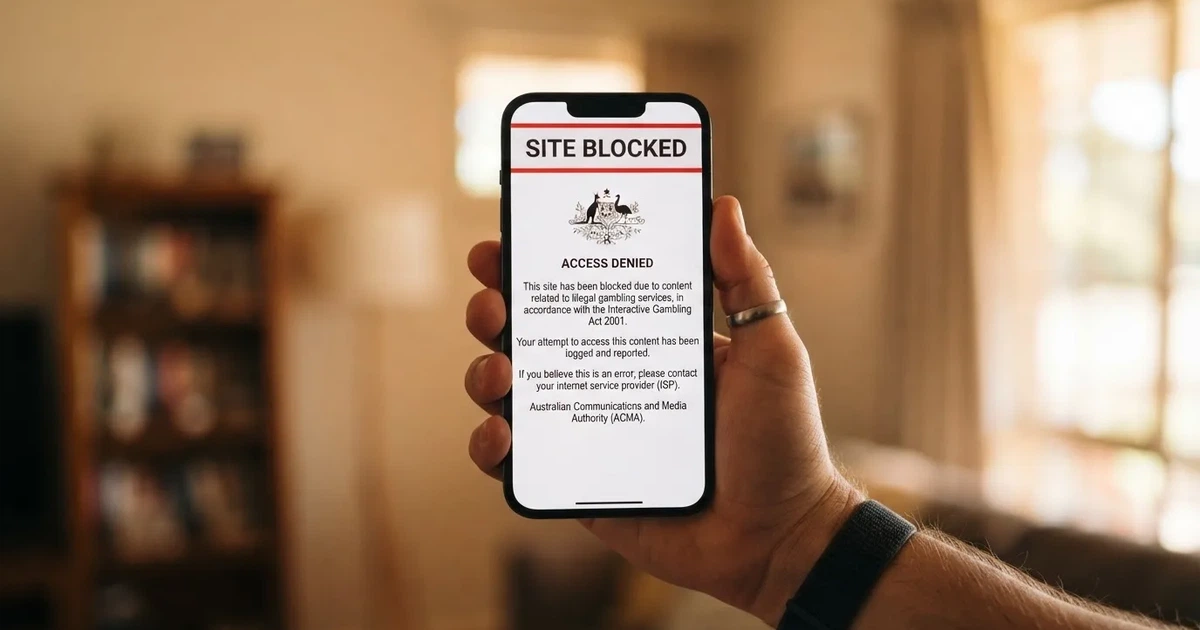
The Act is aimed at the provider. An individual Australian who opens an account with an offshore site is not personally prosecuted for doing so. The penalty structure targets the company offering the service, the platform hosting it, and the payment infrastructure that supports it. That is why the Australian Communications and Media Authority — the ACMA — spends its time writing to operators, naming them in published formal warnings, and asking Australian internet service providers to block domains, rather than chasing individual players.
The other relevant provision sits a layer down. Since 11 June 2024, an amendment to the IGA made it an offence for an Australian-licensed online wagering service to accept payment by credit card or other credit-related products, with penalties for operators of up to A$247,500. Digital currency is treated separately and is also not an acceptable payment for a licensed wagering service. The list of what an Australian-licensed site can lawfully accept is therefore short: debit card, bank transfer, PayID/Osko instant transfers, and BPAY. Any Australian-facing site asking for a credit card or a crypto deposit is, by the structure of the rules, not operating inside the Australian regime at all.
The Northern Territory’s odd role in wagering licensing
Australia does not have a single national gambling regulator. Racing, gaming and wagering are largely the responsibility of the states and territories. What looks, from the outside, like a national online bookmaking industry is in fact a set of corporate operations that have chosen to base their technical licences with one regulator — the Northern Territory Racing and Wagering Commission — because of the Territory’s tax treatment of bookmaking. The NTRWC regulates fifty-two of Australia’s online bookmakers, including Sportsbet, Bet365 and Ladbrokes. It meets once a month in Darwin, has no full-time staff, and exists as a regulator in name more than in practice; a reform bill before the Territory’s parliament in early 2026 was reported as a step towards giving it the structure its workload has long demanded.
The reason this matters on a page about international casinos is that the existence of licensed Australian bookmakers — which are international in the sense that several of them operate across multiple countries — does not contradict the prohibition on online casino games. The licensed bookmakers offer pre-event wagering on sport and racing. They do not offer online casino games, online pokies or live in-play betting on sport, because they are not licensed to do so. An Australian-facing shortlist that mixes licensed Australian bookmakers and offshore online casinos is mixing a regulated product with a prohibited one, and the page is written so the reader can see which is which.
What the ACMA actually does, and what its enforcement record shows
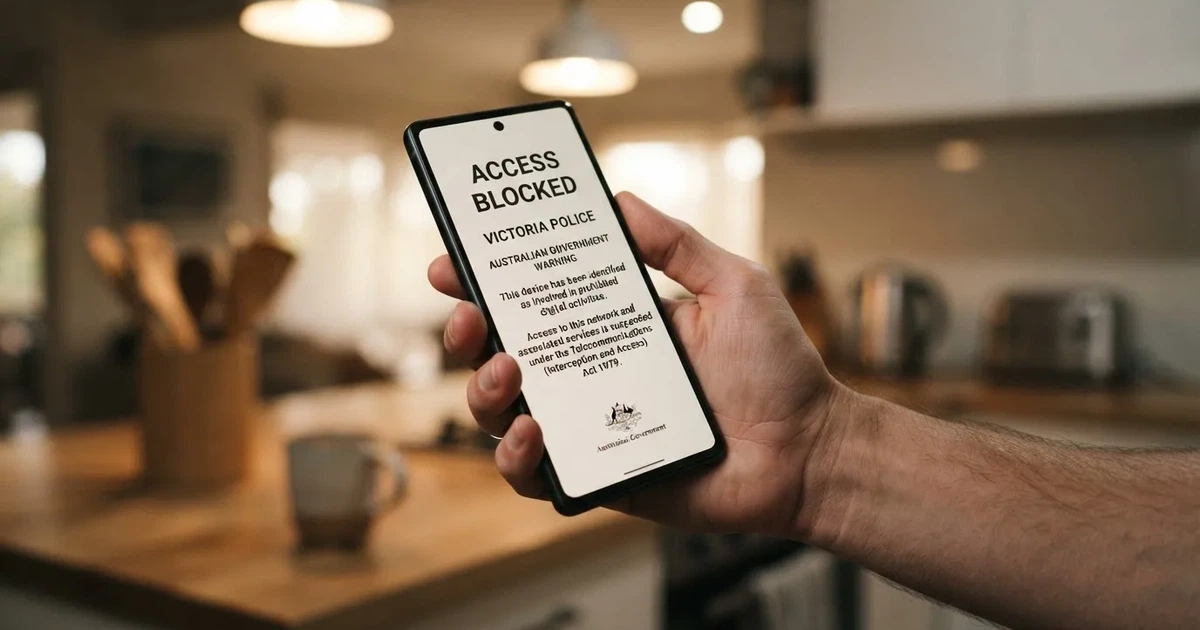
The ACMA is the federal regulator that investigates complaints about online gambling services, issues formal warnings to operators, and can direct Australian internet service providers to block illegal sites. Its enforcement posture has tightened steadily since 2017. By the ACMA’s own reporting, 1,751 illegal gambling and affiliate marketing websites had been blocked since the first blocking request went out in November 2019, and more than 230 unlicensed gambling services had voluntarily left the Australian market since the enforcement programme was strengthened. The single round reported on 26 June 2026 asked Australian ISPs to block a further twelve sites: 7Signs, ChromaBet, Donbet, Duospin, Freshbet, Slots Gem, Jacks Club, Lucky Start, Pointsbetz.com, Spinrise, Vinyl Casino and Wildsino. The list is not exhaustive; it is a sample of what was active and detected in that round.
The formal warnings the ACMA publishes are a separate stream of action. A formal warning is a written notice to an operator that the ACMA considers it to be providing a prohibited interactive gambling service to Australians. It is published on the ACMA’s website, naming the operator and the brand. Receiving a formal warning does not, on its own, force a site offline; what it does is put the operator on notice, establish a public record, and create the conditions under which further action — including a blocking request — becomes more likely. The pattern across the formal warnings since 2022 is consistent: most of the named operators are Curaçao- or Cyprus-registered companies operating multiple brands. A single holding company can be warned several times over several years, and the warnings cover new brands as they appear.
The reason this matters on a shortlist is that the brands themselves are not really brands in the consumer sense. They are skins — front-end websites — run by a smaller number of holding companies, with the same payment stack, the same game aggregator, and often the same responsible-gambling boilerplate at the bottom of the page. Dama N.V., a Curaçao-registered operator, has been the subject of multiple ACMA formal warnings covering separate brands: a May 2022 warning covering six of them (Bambet, Dazard, Level Up, Rocketplay, Wild Tornado and Cobra Casinos), a March 2025 warning over Woo Casino, and a May 2025 warning over Spirit Casino. The site’s name changes; the corporate envelope does not.
The 2026 reform sitting in the calendar
The Interactive Gambling Amendment (Gambling Reform) Bill 2026 passed the Australian Parliament on 19 August 2026. Its advertising and inducement measures commence on 1 January 2027, which puts the Bill in an awkward position for a page published in the year of its passage: it is law, but its main operational measures are not yet in force. The page does not need to dwell on the reform’s text because, for an Australian reader asking about international online casinos today, the answer is unchanged by the reform. What the reform does is tighten the rules around licensed Australian wagering services — the advertising and inducement regime around them — rather than open up anything new on the casino side. The prohibition on online casino games is not being relaxed. The page treats the reform as a future development, not as a present rule.
What the ACMA’s enforcement has cost the illegal market, in the only number anyone actually has
A 2025 industry report estimates that Australians lose about A$3.9 billion a year to illegal gambling sites, and that the share of gambling going through legal channels fell from 74 per cent in 2021 to 64 per cent. The figure is an estimate, not a measured total — the report combines reported figures from licensed operators with modelled figures for the offshore market — but it is the only number anyone has for the scale of what the prohibition is being asked to contain. Two things follow from it. One is that the prohibition has not eliminated demand; it has displaced it offshore. The other is that every Australian dollar flowing through an offshore site is a dollar that does not sit inside the Australian consumer-protection regime, the Australian advertising rules, the Australian dispute-resolution path, or the Australian harm-reduction framework. The rest of this page is the framework the prohibition leaves in place for the reader who wants to stay inside it.
What an Australian reader can do, lawfully, about the urge the search picks up
BetStop and the National Self-Exclusion Register
BetStop is the National Self-Exclusion Register, run by the ACMA and live since August 2023. It lets a person register once and have themselves excluded from every Australian-licensed online and phone wagering service simultaneously, for a chosen period of three months, six months, twelve months or permanently. Once a person is on the register, the licensed operators are required to take reasonable steps to keep that person out: closing existing accounts, refusing new ones, and not sending marketing material. The register covers licensed Australian wagering services. It does not cover offshore sites, because offshore sites have no obligation to check it.
The consequence of that gap is real. A person who registers with BetStop removes the licensed path; it does not remove the offshore path, and an offshore site that accepts the same deposit will not see the registration. For a reader whose goal is to stop gambling entirely, the only tool that closes both doors at once is the harder one: removing the means of payment. Banks in Australia offer gambling transaction blocks at the card level, and the next section is about those. BetStop, on its own, is the right tool for a person whose use has been confined to licensed Australian wagering services. For a person whose use has spread to offshore sites, BetStop is a necessary but not sufficient step.
The bank-side blocks that close the offshore door
Australian banks have spent the last several years building card-level gambling transaction blocks. The mechanism is straightforward: when a merchant processes a transaction, it sends a merchant category code that identifies the type of business. The MCC for betting and casino gambling is one such code. A bank that has activated a gambling block on a card refuses authorisation of any transaction carrying that code, regardless of whether the merchant is a licensed Australian bookmaker or an offshore casino. The block is set by the cardholder, in the bank’s app or by calling the bank, and it applies to the card, not to the person — so it travels with the card across devices and wallets.
Westpac’s gambling block refuses authorisation of transactions registered under the MCC for betting and casino gambling on eligible personal credit and debit cards. ANZ’s gambling block, set up in the ANZ app, does the same and additionally blocks gambling transactions routed through a digital wallet such as Apple Pay on an eligible card, not just the physical card swipe. Commonwealth Bank’s gambling lock, applied through the CommBank app, automatically blocks most gambling transactions, though the bank’s own terms state that it cannot guarantee every gambling-related purchase will be stopped and that some non-gambling transactions might be blocked in error.
The limits to keep in mind are practical. The blocks work at the merchant category code level, which means they catch anything routed through a payment processor that uses the gambling MCC. They do not catch a deposit to an e-wallet that is then spent at an offshore site, because the second leg is not a gambling transaction at the MCC level. They also do not catch a deposit made by bank transfer to an account the offshore operator controls, because a bank transfer is not a card transaction and carries no MCC. PayID is more useful here than the bank-side block: paying to a PayID shows the name of the account holder before the transfer is sent, and the operator of PayID — Australian Payments Plus — warns that being asked to transfer money to a PayID on an illegal gambling site almost certainly means a scam site. The page treats PayID as a check, not a block: it tells the reader the name on the account before the money leaves.
The payment routes that exist for legal wagering, and what their absence tells the reader
The legal deposit routes for an Australian-licensed wagering service are debit card, bank transfer, PayID/Osko and BPAY. The list is short on purpose; it is the list of payment methods a licensed wagering service can lawfully accept under the credit-card and credit-related-products ban that took effect on 11 June 2024. A site asking an Australian for a credit card or a crypto deposit is, on the face of it, not operating inside the Australian regime. Osko, which sits on Australia’s New Payments Platform, settles a bank transfer between participating Australian banks in under a minute, around the clock, whether addressed to a BSB and account number or to a PayID. More than 25 million PayID identifiers had been registered on the platform as of April 2025. The platform itself is owned by New Payments Platform Australia Ltd, whose thirteen shareholders include the Reserve Bank of Australia and the country’s major banks.
BPAY is the older of the two and still does the bulk of bill-payment work: launched on 18 November 1997, available through the online banking of more than 140 Australian banks and financial institutions, used by more than 95,000 businesses, and run today by Australian Payments Plus alongside PayID and Osko. The mechanism is straightforward — the payer enters a Biller Code and a Customer Reference Number from the bill, and the money is routed from the payer’s bank to the biller. For an Australian reader, the test on a payment page is simple. If the deposit methods offered are debit card, bank transfer, PayID/Osko or BPAY, the site is at least operating in the shape of an Australian-licensed wagering service. If the deposit methods are credit card, cryptocurrency, or an e-wallet that hides the destination, the reader should assume the site is not.
The harm-reduction framework behind all of it
Behind BetStop and the bank-side blocks sits the wider Australian harm-reduction framework. The National Gambling Helpline — 1800 858 858 — is free, twenty-four hours a day, and reaches Gambling Help Online, which adds a chat channel for people who do not want to talk on the phone. State and territory gambling-help services add face-to-face counselling and financial counselling, generally free of charge. For a reader whose use has reached the point where they are typing “international casino” into a search bar at three in the morning, the helpline is the first call to make. The rest of this page is information; the helpline is the part of the answer that does something.
The brands on the ACMA’s record, side by side
The page is not a shortlist of where to play. What it can be, honestly, is a shortlist of the brands the ACMA has named in its formal warnings and blocking rounds, so a reader who has already encountered one of them — in an advert, in a search result, on a comparison site — knows what the regulator has said about it. The table is built around four matters: the brand, the ACMA action and its date, the operator the ACMA named, and the subject support the operator’s own marketing carries. Where the operator’s site does not openly confirm a feature the page would otherwise list, the cell carries the article-language no-data marker — an em dash — and the row is left short. The point of the table is the regulator’s record, not the operator’s pitch.
The eleven brands the ACMA has acted against
The eleven brands in the table below are not a ranking. They are the brands the ACMA has named in formal warnings since 2022, in the order the ACMA itself first published each warning. The names matter because a reader who has met one of them in an inbox or a banner already has a search result to check against. The operators named in the warnings are mostly Curaçao-registered holding companies; the brand is the skin, the operator is the envelope.
| Brand | ACMA action and date | Operator named by the ACMA | Subject support |
|---|---|---|---|
| Bambet | Formal warning, May 2022 | Dama N.V. | — |
| Dazard | Formal warning, May 2022 | Dama N.V. | — |
| Level Up Casino | Formal warning, May 2022 | Dama N.V. | — |
| Rocketplay | Formal warning, March 2026 (current operator: Pulsup Ltd; earlier Dama N.V., May 2022) | Pulsup Ltd / Dama N.V. | — |
| Wild Tornado | Formal warning, May 2022 | Dama N.V. | — |
| Cobra Casinos | Formal warning, May 2022 | Dama N.V. | — |
| Sky Crown | Formal warning, September 2022 | Hollycorn N.V. | — |
| Blue Leo | Formal warning, September 2022 | Hollycorn N.V. | — |
| Woo Casino | Formal warning, March 2025 | Dama N.V. | — |
| Instant Casino | Formal warning, February 2025 | EOD Code SRL | — |
| Casino Intense | Formal warning, April 2025 | Sterplay Holding Ltd | — |
| Spirit Casino | Formal warning, May 2025 | Dama N.V. | — |
| Ignition Casino | Formal warning, July 2025 | Bamboo Media | — |
| National Casino | Formal warning, July 2025 | Consolutetish S.R.L. | — |
| Bizzo Casino | Formal warning, July 2025 (earlier TechSolutions, 2022) | Consolutetish S.R.L. / TechSolutions | — |
| Jackbit | Formal warning, April 2026 | Ryker B.V. | — |
| CasinOK | Formal warning, April 2026 | Ryker B.V. | — |
The subject support column is intentionally short. The research carries no operator-side confirmation for these brands on the payment, banking or verification matters that an Australian-facing comparison would otherwise list. Where a brand’s own marketing implies a feature, the implication is the operator’s claim, and the page does not transcribe it. The ACMA’s record is the column that matters; the others are deliberately sparse to keep that emphasis.
What the table is telling the reader
A reader who skims the table will notice three things. The first is that several of the brands are run by the same operator: Dama N.V. alone accounts for eight of the named brands across two rounds of warnings (May 2022 and March/May 2025), and Consolutetish S.R.L. is on the record for two of them in a single round in July 2025. The second is that the dates cluster in 2022 and 2025, with a smaller number in 2026 — the pattern is consistent with the ACMA acting in waves against operators that rebrand as their existing brands are warned, rather than against a stable population of distinct operators. The third is that the table is short on every column an ordinary shortlist would carry: there is no welcome bonus column, no game-count column, no payout-time column, no licence column. The reason is that for an Australian reader none of those columns would be honest — a welcome bonus on a site the ACMA has named for offering a prohibited service is not a benefit to the reader, it is the inducement the law targets; a payout time on a site the reader cannot enforce is not a feature, it is a marketing claim; a licence the Australian regulator does not recognise is not a credential. The table is what an honest comparison looks like when the comparison is forced to admit that the product is unlawful to offer.
Reading each brand against the ACMA’s record
The rest of this section closes the table out brand by brand, in the order the ACMA first named them, so a reader who recognises a name has a paragraph to land on. Each write-up ends on a verdict: not whether the brand is worth using, because the page does not recommend use, but what the ACMA’s record says the brand is and what an Australian reader should take from it.
Bambet, Dazard, Wild Tornado and Cobra Casinos: the Dama N.V. cluster of 2022
Bambet, Dazard, Wild Tornado and Cobra Casinos were each named in a single ACMA formal warning issued in May 2022 against Dama N.V., a Curaçao-registered operator. The warning covered six brands in total; the other two were Level Up Casino and Rocketplay, which are written up separately below because they have since resurfaced under different operators. The four here have not been re-warned as far as the ACMA’s published record shows, which is not the same as saying they have stopped accepting Australian players. It is only that no fresh action has been published. The verdict is the one the ACMA’s record supports: a brand whose operator was named in 2022 for offering prohibited services to Australians remains, on the ACMA’s own reasoning, a brand that offers prohibited services to Australians. The name has not been cleared; the operator has not been heard from on the record.
Level Up Casino: the Dama N.V. brand that kept operating
Level Up Casino is the most instructive of the Dama N.V. cluster because it has stayed live, kept marketing into Australia, and continued to appear in comparison sites that target Australian search terms. The ACMA named it in the May 2022 warning to Dama N.V., and no follow-up action has been published against the brand itself. The verdict the ACMA’s record supports is the same one it supported in 2022: the site is offering a prohibited interactive gambling service to Australians. That it has not been blocked in a later round is a function of enforcement prioritisation, not a clearance. An Australian reader looking at the brand should treat the 2022 warning as the standing position.
Rocketplay: the brand that has changed operator twice
Rocketplay has the longest record of any brand on the table. The ACMA named it in the May 2022 warning to Dama N.V., alongside the other five Dama brands in that round. In March 2026, the ACMA issued a fresh formal warning over Rocketplay.com.au, this time naming Pulsup Ltd as the operator. Two operators, two warnings, the same brand. The pattern is the one the ACMA’s record was already pointing at — a brand moved from one holding company to another, and the regulator named the new holder. An Australian reader looking at Rocketplay in 2026 is looking at a brand that has been on the regulator’s record for four years. The verdict is unchanged by the operator change: the service the brand offers is the prohibited one, and the regulator has named two different companies for offering it.
Sky Crown and Blue Leo: the Hollycorn N.V. pair
Sky Crown and Blue Leo were named together in a single ACMA formal warning issued in September 2022 against Hollycorn N.V. The brands share an operator and an enforcement event. The pattern is the same one the Dama N.V. cluster shows: a single holding company running multiple skins, all of them offered into Australia, all of them named in the same notice. The verdict on either brand is the verdict on Hollycorn N.V.: a holding company whose brands operate in defiance of Australian law.
Woo Casino: the brand that re-appeared under Dama N.V.
Woo Casino was warned in March 2025 against Dama N.V. The brand had not been in the May 2022 cluster; it is a separate Dama brand, named three years after the first round. The pattern it confirms is one the rest of the Dama brands already showed: a holding company that runs more skins than any single ACMA warning can list. An Australian reader looking at Woo Casino is looking at a Dama brand named in 2025 for conduct similar to that seen in 2022. The verdict reflects that conduct, rather than just the brand name.
Spirit Casino: the second 2025 Dama N.V. warning
Spirit Casino was flagged by the ACMA in a formal warning in May 2025 against Dama N.V., two months after the Woo Casino warning. The pair — March 2025 and May 2025 — is a small wave of Dama action following the 2022 wave, confirming the operator’s pattern: brands continue to come and go inside the same corporate envelope, and the ACMA names them as they appear. The verdict on Spirit Casino is that it, like its sister brands, operates in violation of the Interactive Gambling Act 2001.
Instant Casino: the EOD Code SRL brand
Instant Casino was the subject of a formal warning from the ACMA in February 2025 against EOD Code SRL. EOD Code SRL does not appear elsewhere in the ACMA’s published list, which makes Instant Casino the only brand on this table that names an operator not otherwise visible in Australian enforcement actions. That does not make the brand cleaner; it makes the operator less visible. An Australian reader looking at Instant Casino is looking at a brand whose operator the ACMA has warned, and that the ACMA would expect to take down if it did not. The verdict is clear: this is a brand operating without Australian authorization, and readers should approach it with caution.
Casino Intense: the Sterplay Holding Ltd brand
Casino Intense was flagged by the ACMA in a formal warning in April 2025 against Sterplay Holding Ltd. Sterplay Holding Ltd is the named operator, and Casino Intense is the named brand. The pattern matches the rest of the table — a single brand, a single operator, a single formal warning — but the operator does not appear elsewhere in the ACMA’s published record, which is again a feature of visibility rather than cleanliness. The verdict is one the ACMA’s record confirms: this brand has been formally cited for unauthorized service provision.
Ignition Casino: the Bamboo Media brand
Ignition Casino was warned by the ACMA in July 2025 against Bamboo Media. The brand is widely visible in Australian search results, and the ACMA’s action was the regulator’s first public naming of Bamboo Media on the record carried in research. The verdict on Ignition Casino is that it is a brand the regulator has named for unauthorized operations in Australia, run by an operator the regulator has since highlighted for the same conduct.
National Casino and Bizzo Casino: the Consolutetish S.R.L. pair
National Casino and Bizzo Casino were named together in a single ACMA formal warning issued in July 2025 against Consolutetish S.R.L. Bizzo Casino is the older of the two on the ACMA’s record: it had already been the subject of a 2022 formal warning issued to TechSolutions (CY) Group Limited and TechSolutions Group N.V., the operators named in the earlier round. The 2025 warning is, in effect, a re-warning of a brand under a new operator — the pattern that runs through the whole table. An Australian reader looking at either brand is looking at one that the ACMA has named twice, in two rounds, against two different operators. The verdict is unchanged by the operator change: the conduct is the prohibited one, and the regulator has named two different companies for offering it.
Jackbit and CasinOK: the Ryker B.V. pair
Jackbit and CasinOK were named together in an ACMA formal warning issued in April 2026 against Ryker B.V. The pair sits at the fresh end of the table and is the most recent operator-level action the research carries. The pattern is the same one the rest of the table shows: a single holding company, two skins, one warning. The verdict on either brand is the verdict on Ryker B.V. for offering prohibited services to Australians. An Australian reader who has met either name in a recent advert or a recent comparison page is looking at a brand the ACMA has named within the last several months.
The blocking rate, and what the ACMA’s enforcement has produced
The ACMA’s blocking programme began with a request to Australian internet service providers in November 2019. By the ACMA’s reporting in June 2026, 1,751 illegal gambling and affiliate marketing websites had been blocked across the requests that have gone out since. The arithmetic the page does is the rate at which that total has accumulated, because the rate is the only honest way to present a number that runs into four digits. Two simple inputs: 1,751 websites over the period from November 2019 to June 2026. The period is roughly six and a half years, or about seventy-eight months. The rate that follows is in the order of twenty-two blocked sites per month across the whole programme, with the band running somewhere between roughly twenty and roughly twenty-five per month depending on how the months between the first request and the most recent reporting are counted.
This figure is an estimate rather than a measured total, as the methodology combines reported figures from licensed operators with models for the offshore market. Two things follow from it: first, the prohibition has not eliminated demand but merely displaced it offshore; second, every Australian dollar sent to an offshore site leaves the Australian consumer-protection regime, advertising rules, dispute-resolution paths, and harm-reduction frameworks. The rest of this page outlines the framework that remains in place for readers who choose to stay within it.
How an Australian reader should weigh the offshore offer
The four questions that close the decision
For an Australian reader assessing an offshore site, the test is straightforward. First, is the offering lawful in Australia? The answer for casino games, pokies, and in-play betting is no. Second, does the site accept an Australian-licensed payment method? It cannot, because the credit-card ban of 11 June 2024 applies to licensed wagering services, and an offshore site is not one. Third, what happens if the site refuses to pay out? There is no Australian dispute-resolution body to assist. Fourth, has the ACMA named the site? The answer for the brands in this page’s table is yes, and the ACMA continues to publish names as enforcement proceeds.
A reader who can answer those four questions honestly has the information the page is built to provide. The recommendation the page does not make is the only one an offshore operator would want, and the only one a comparison page would carry if the product were lawful. The page describes what is on the market and what the law says about it; the reader’s decision is theirs.
The bet on the wrong side of the bet
The marketing word the offshore industry uses is “international” — implying a cosmopolitan product, available across borders, regulated somewhere serious. The arithmetic the marketing does not do is the one the ACMA’s record forces: an Australian reader who deposits at an offshore site is betting that the site will pay out, that the site will still be reachable when the payout is requested, and that the site will still be in business when the dispute process (where there is one) runs its course. The bet on the wrong side of any of those is the entire deposit. The bank-side gambling block and BetStop together remove the means of payment and the licensed route in one step. The National Gambling Helpline — 1800 858 858 — is the call a reader can make at any hour if the bet has already been made and the deposit is already gone.
Tax, winnings and the ATO position
For completeness, the Australian Taxation Office’s position on a recreational gambler’s winnings is that they are not assessable income, and losses are not deductible, unless the person is carrying on a business of gambling. Section 6-5 of the Income Tax Assessment Act 1997 is the relevant provision. The position is the same whether the gambling happened at a licensed Australian venue or at an offshore site — though, in the offshore case, the reader will have the additional problem of getting the winnings out of the operator before the tax question becomes real. The page states the position as a reader-facing summary and notes that any specific case — particularly one involving a sustained pattern of play, large amounts, or a professional setup — should be checked with a registered tax agent or the ATO directly.
What changes in 2026 does, and does not, change on this page
The Interactive Gambling Amendment (Gambling Reform) Bill 2026 passed Parliament on 19 August 2026 and its advertising and inducement measures commence on 1 January 2027. For an Australian reader asking about international online casinos in 2026, the Bill changes nothing about what is lawful to offer or to use. The changes it makes are about the advertising around licensed wagering, not the offering of online casino games. The prohibition on online casino games remains, the ACMA’s enforcement programme continues, and the bank-side blocks and BetStop continue to apply. The page treats the reform as law with a future commencement date rather than law in force.
Frequently asked questions about international casinos and Australian players
What does “international casino” mean as distinct from an Australian-licensed one?
“International casino” usually means an offshore online casino licensed somewhere outside Australia — typically Curaçao or Anjouan — offering slots, table games and live-dealer lobbies to anyone with internet access and a payment method that clears. An Australian-licensed casino does not exist for online play; the IGA 2001 prohibits the offering. Land-based casino resorts inside Australia are licensed by states and territories, and international casino resorts outside Australia are lawful to visit when travelling.
Can an international online casino legally accept players located in Australia?
No. Under the Interactive Gambling Act 2001 it is an offence to provide a prohibited interactive gambling service — which covers online casino games, online pokies and in-play betting — to a person in Australia. No state or territory issues a licence that would make the offering lawful, and the ACMA acts against operators that offer it. The IGA targets the provider, not the individual player.
Does an overseas gambling licence carry any weight for an Australian player?
The licence a Curaçao- or Anjouan-licensed site displays is a real document from a real regulator, but it is not an Australian licence, and it does not entitle the operator to accept customers in Australia. The Australian consumer protections — segregated player funds, dispute resolution, fund-segregation rules, advertising standards — do not attach, because the site is not licensed under an Australian regime. The badge on the footer is a warning, not a credential.
What protections, if any, apply to an Australian using an international casino site?
None of the Australian ones. BetStop, the National Self-Exclusion Register, binds only Australian-licensed wagering services and does not reach an offshore site. The ACMA’s enforcement is against the operator, not for the player. There is no Australian dispute-resolution body the reader can take a refused withdrawal to. The bank-side gambling blocks (Westpac, ANZ, Commonwealth Bank) and the deposit name-check on PayID are the only Australian tools that touch the transaction at all.
Are international land-based casino resorts different from the international online sites people search for?
Yes. A visit to Crown Melbourne, The Star Sydney, Marina Bay Sands in Singapore, or a Manila integrated resort is a visit to a licensed, regulated venue in the country where it sits. Australian law targets the supply of prohibited interactive gambling services, not the supply of land-based gambling services in other jurisdictions. The two markets are governed by different laws and carry different consumer protections. An Australian travelling to an international land-based casino is in a different legal position from an Australian loading an offshore site from home.
Who can an Australian contact if an international casino site will not pay out?
The short answer is that there is no Australian body set up to recover funds from an offshore operator. The longer answer is that the National Gambling Helpline — 1800 858 858, free, 24/7, with chat at Gambling Help Online — can refer a person to counselling and to financial counselling services. For a consumer-protection question about a refused withdrawal from a licensed Australian wagering service, the relevant state or territory regulator handles the complaint; for an offshore site, the practical recourse is the bank (a chargeback through the card issuer, where the deposit was by debit or credit card) and the bank’s fraud team. The page does not represent that any of these paths will recover the funds. They are the paths that exist.
Prepared by the Casino Slots Info AU editorial staff.